Overview
In Chemical and Physical Sciences, students apply theoretical concepts and current research related to teaching and learning in Science to engage in authentic evaluation and pedagogical design practices. Chemical and Physical Sciences examines both theoretical perspectives and the content and pedagogy required to teach Science in Primary and Early Childhood classrooms. Students develop understanding of the content and structure of these two strands in the Australian Curriculum and build on the knowledge and skills they developed in the Biological and Earth and Space Science unit to further examine views around best practice in Science pedagogy linked to current research. Chemical and Physical Sciences includes an emphasis on assessment practices in Science which can be applied to other strands of this learning area. Planning to teach and assess students’ understanding of Science is addressed with an emphasis on how best to engage students in this learning area and scaffold understanding to enhance the ability to provide scientific explanations for phenomena.
Details
Pre-requisites or Co-requisites
There are no requisites for this unit.
Important note: Students enrolled in a subsequent unit who failed their pre-requisite unit, should drop the subsequent unit before the census date or within 10 working days of Fail grade notification. Students who do not drop the unit in this timeframe cannot later drop the unit without academic and financial liability. See details in the Assessment Policy and Procedure (Higher Education Coursework).
Offerings For Term 2 - 2026
Attendance Requirements
All on-campus students are expected to attend scheduled classes - in some units, these classes are identified as a mandatory (pass/fail) component and attendance is compulsory. International students, on a student visa, must maintain a full time study load and meet both attendance and academic progress requirements in each study period (satisfactory attendance for International students is defined as maintaining at least an 80% attendance record).
Recommended Student Time Commitment
Each 6-credit Undergraduate unit at CQUniversity requires an overall time commitment of an average of 12.5 hours of study per week, making a total of 150 hours for the unit.
Class Timetable
Assessment Overview
Assessment Grading
This is a graded unit: your overall grade will be calculated from the marks or grades for each assessment task, based on the relative weightings shown in the table above. You must obtain an overall mark for the unit of at least 50%, or an overall grade of 'pass' in order to pass the unit. If any 'pass/fail' tasks are shown in the table above they must also be completed successfully ('pass' grade). You must also meet any minimum mark requirements specified for a particular assessment task, as detailed in the 'assessment task' section (note that in some instances, the minimum mark for a task may be greater than 50%). Consult the University's Grades and Results Policy for more details of interim results and final grades.
All University policies are available on the CQUniversity Policy site.
You may wish to view these policies:
- Grades and Results Policy
- Assessment Policy and Procedure (Higher Education Coursework)
- Review of Grade Procedure
- Student Academic Integrity Policy and Procedure
- Academic Progression Policy and Procedure
- Student Refund and Credit Balance Policy and Procedure
- Complaints Policy and Procedure
- Information and Communications Technology Acceptable Use Policy and Procedure
This list is not an exhaustive list of all University policies. The full list of University policies are available on the CQUniversity Policy site.
Feedback, Recommendations and Responses
Every unit is reviewed for enhancement each year. At the most recent review, the following staff and student feedback items were identified and recommendations were made.
Feedback from SUTE
Assessments
Continue to refine assessments with more scaffolding.
Feedback from In-person and email feedback from students
Moodle and teaching content
Continue to refine Moodle content to reflect latest research and practice.
- Evaluate examples of teaching and assessment practice in Science to identify how connections are made to students’ prior knowledge or experience to promote learning
- Access and apply professional literature on contemporary Science education to critically evaluate or justify planning and assessment practices
- Plan lesson sequences that use appropriate research-based teaching strategies and ICTs to structure content and address students’ possible misconceptions in Science
- Develop diagnostic , formative and summative assessment tools that identify students’ understanding of scientific phenomena
- Select assessment strategies that engage students in active learning, promote higher order thinking and scaffold students’ understanding of core concepts in the areas of Chemical and Physical sciences.
Successful completion of this unit provides opportunities for students to engage with the Australian Professional Standards for Teachers (Graduate Career Stage) focus areas of:
1.1 Physical, social and intellectual development and characteristics of students
1.2 Understand how students learn
2.1 Content and teaching strategies of the teaching area
2.2 Content selection and organisation
2.3 Curriculum, assessment and reporting
2.6 Information and Communication Technology (ICT)
3.2 Plan, structure and sequence learning programs
3.3 Use teaching strategies
3.4 Select and use resources
3.6 Evaluate and improve teaching programs
4.1 Support student participation
5.1 Assess student learning
5.4 Interpret student data
Alignment of Assessment Tasks to Learning Outcomes
| Assessment Tasks | Learning Outcomes | ||||
|---|---|---|---|---|---|
| 1 | 2 | 3 | 4 | 5 | |
| 1 - Practical Assessment - 50% | |||||
| 2 - Practical and Written Assessment - 50% | |||||
Alignment of Graduate Attributes to Learning Outcomes
| Graduate Attributes | Learning Outcomes | ||||
|---|---|---|---|---|---|
| 1 | 2 | 3 | 4 | 5 | |
| 1 - Communication | |||||
| 2 - Problem Solving | |||||
| 3 - Critical Thinking | |||||
| 4 - Information Literacy | |||||
| 5 - Team Work | |||||
| 6 - Information Technology Competence | |||||
| 7 - Cross Cultural Competence | |||||
| 8 - Ethical practice | |||||
| 9 - Social Innovation | |||||
| 10 - First Nations Knowledges | |||||
| 11 - Aboriginal and Torres Strait Islander Cultures | |||||
Alignment of Assessment Tasks to Graduate Attributes
| Assessment Tasks | Graduate Attributes | ||||||||||
|---|---|---|---|---|---|---|---|---|---|---|---|
| 1 | 2 | 3 | 4 | 5 | 6 | 7 | 8 | 9 | 10 | 11 | |
| 1 - Practical Assessment - 50% | |||||||||||
| 2 - Practical and Written Assessment - 50% | |||||||||||
Textbooks
Science in Early Childhood
- 5th Edition (2024)
- Authors: Campbell, C. & Howitt, C.
- Cambridge University Press
- Melbourne Melbourne , Victoria , Australia
- ISBN: 9781009339742
This textbook is required for all Early Childhood pre-service teachers. If you are enrolled in the Bachelor of Education (Primary), you do not need to purchase this book.
Teaching Primary Science Constructively
- 8th Edition (2024)
- Authors: Skamp, K.
- Cengage
- South Melbourne South Melbourne , Victoria , Australia
- ISBN: 9780170472814
This textbook is a supplementary text for all Primary pre-service teachers that will be referred to throughout the unit. If you are enrolled in the Bachelor of Education (Early Childhood), you do not need to purchase this book.
IT Resources
- CQUniversity Student Email
- Internet
- Unit Website (Moodle)
All submissions for this unit must use the referencing style: American Psychological Association 7th Edition (APA 7th edition)
For further information, see the Assessment Tasks.
d.mallett@cqu.edu.au
Week 1
Begin Date: 13 Jul 2026Module/Topic
Revision: Pedagogies in Science teaching
Content: Formative and summative assessments of Science in Primary and the Early Years - Part 1
Chapter
Bybee, R. W. (2014). The BSCS 5E Instructional Model: Personal Reflections and Contemporary Implications. Science and Children, 51(8), 10-13.
Australian Education Research Organisation (AERO, 2023). Formative assessment in science | Australian Education Research Organisation. https://youtu.be/PiGpSMX2zQQ?si=oy9qDN7ZyS4FJzU9
Australian institute for teaching and school leadership. (2017). Effective feedback (animation). https://youtu.be/LjCzbSLyIwI?si=0sZTnNSguBb4u02G
Campbell, C. & Roberts, P. (2024). Chapter 16: Observing, assessing and documenting science learning. In C. Campbell, W.M. Jobling and C. Howitt (Eds.). Science in Early Childhood (5th edition., pp. 244-263). Cambridge University Press.
Hondrich, A. L., Hertel, S., Adl-Amini, K., & Klieme, E. (2016). Implementing curriculum-embedded formative assessment in primary school science classrooms. Assessment in Education : Principles, Policy & Practice, 23(3), 353–376. https://doi.org/10.1080/0969594X.2015.1049113
Review:
Australian Curriculum Assessment and Reporting Authority. Understand this learning area - Science. https://www.australiancurriculum.edu.au/curriculum-information/understand-this-learning-area/science
Events and Submissions/Topic
What to do in Week 1
It is key to start your assessments early.
- Read, re-read and then read again the assessment and understand what you need to do. Come to the workshop with specific questions. Use Teams to publicly ask questions as this can help your peers and friends as well.
- Watch the first workshop fully without distraction.
- Find a partner to complete AT1 with and agree on a day and time when you will both meet each week.
- Use the unit profile to to get ahead on readings.
- Craft a story map for your response to this assignment and bring this with you to the tutorial, or share it with your tutor online to check you are on the right track.
- Place regular reminders in your calendar with goals to complete your assessment. Check and double check the due date. Try to aim to complete the assignment early, in case of illness, etc.
Week 2
Begin Date: 20 Jul 2026Module/Topic
Content: Assessment in science and what they look like - Part 2
Content:
- Overview of Physical science content sub-strand.
Chapter
O'Connor, G. (2023). Science in the early years: Evidence-based educator resources.
Ani, M., Obodo, A., & Enyi, N. (2025). The Practice of Formative and Summative Assessments in Enhancing Basic Science Teaching and Learning. Journal of Innovation in Educational Assessment, 7(2), 21-37.
Harlen, W. (2000). Chapter 11: Assessment in the Inquiry Classroom. In National Science Foundation's Inquiry: Thoughts, views and strategies. National Science Foundation (pp. 86-97). https://www.academia.edu/download/30242002/k-5_strategies.pdf#page=98
AlAli, R. M., & Al-Barakat, A. A. (2025). Enhancing young children’s science learning through science teachers’ formative assessment practices. Frontiers in Education, 10. https://doi.org/10.3389/feduc.2025.1503088
Review: Playworlds / Land of Learning
Fleer, M. (2019). Land of Learning Overview Video. https://youtu.be/U0u55FDiu88?si=MYRUu89Kwxby_5AB
Supplemental Reading:
Australian Education Research Organisation (AERO, 2023). Formative assessment: Know where your students are in their learning. https://doi.org/10.1080/1350293X.2023.2177320
AlAli, R. M., & Al-Barakat, A. A. (2025). Enhancing young children’s science learning through science teachers’ formative assessment practices. Frontiers in Education, 10. https://doi.org/10.3389/feduc.2025.1503088
Events and Submissions/Topic
What to do in Week 2
- Continue to engage with the workshop and readings.
- Meet with your partner once a week for at least 30 minutes each week.
- Break down your assessment task into parts. Focus on one part at a time, leaving a print out of your task sheet and rubric by your side.
- Make sure you have selected the year level and part of the descriptor you will be teaching to and assessing.
- Try to have your assessment task sheet completed this week.
Week 3
Begin Date: 27 Jul 2026Module/Topic
Content: Overview of Chemical science content sub-strand.
Chapter
Morais, C., Ferreira, A., Araújo, J. L., & Moreira, L. (2026). Chemistry in early childhood: storytelling and hands-on water-based activities to foster scientific concepts and ideas. Chemistry Education Research and Practice, 27(1), 607-621. https://pubs.rsc.org/en/content/articlehtml/2026/rp/d5rp00271k
Skamp, K. (2024). Chapter 10: Materials and their properties. In K. Skamp and C. Preston (Eds.) Teaching primary science constructively.
Australian academy of science. (2025). Facilitating evidence-based discussions. https://primaryconnections.org.au/pedagogical-tools/facilitating-evidence-based-discussions
Royal society of Chemistry. (2015). Royal Society of Chemistry: Primary science teacher of the year 2013/14. https://youtu.be/F-JiLyKva8Q?si=nNtMNoNwohTV-J40
Events and Submissions/Topic
What to do in Week 3
- Make sure you have met with your partner at least twice by now. Decisions should be made collaboratively.
- You should have completed both your lesson activities and assessments (draft) by the end of this week.
Week 4
Begin Date: 03 Aug 2026Module/Topic
Content: Overview of Physical science content sub-strand.
Chapter
Skamp, K. & Preston, C. (2021). Chapter 7 – Movement and force. In K. Skamp and C. Preston (Eds.), Teaching primary science constructively (7th edition). Cengage.
Areljung, S., Bäckström, L., & Grenemark, E. (2023). Young children’s learning in physics: a (dis-)trustful play with gravity, friction and counterforces? European Early Childhood Education Research Journal, 31(4), 660–672.
Institute of physics. (2018). Gillespie primary school children share their love of physics. https://youtu.be/ZRdk7NZ4CFw?si=HDk2A_lCFXTkR2Nh
Supplemental resource:
Queensland Government. (2026). Assessment requirements in Prep to Year 10, (pp. 26-34) in K-12 Curriculum, assessment and reporting framework. https://education.qld.gov.au/curriculums/Documents/k-12-curriculum-assessment-reporting-framework.pdf
Events and Submissions/Topic
What to do in Week 4
Complete your work on your assessment and lesson activities. When you meet with your partner, you are to discuss modifications that need to be made collaboratively together.
Start work on the final part of your assignment, which is your justification. You are welcome to jointly present your justification via creative means, however your justification must be submitted as a word document.
Week 5
Begin Date: 10 Aug 2026Module/Topic
Creative and reflective science teaching.
Chapter
Coe, R. (2023). Why are we betting on giving teachers more effective feedback (even though no one else is really doing this)? https://evidencebased.education/why-are-we-betting-on-giving-teachers-more-effective-feedback-even-though-no-one-else-is-really-doing-this/
Howitt, C. & Campbell, C. (2024). Chapter 17: Science education: Professional learning through reflective practice. In C. Campbell, W.M. Jobling and C. Howitt (Eds.). Science in Early Childhood (5th edition., pp. 264-277). Cambridge University Press.
Swanson, C. (2026). Understanding science through drama (Webinar). https://www.sciencelearn.org.nz/resources/3180-understanding-science-through-drama
Royal society of chemistry. (2016). Puppets video: Talk for primary science. https://youtu.be/CiHshi1ioaM?si=igfd3Fywvh4hKnJe
French, L. (2004). Science as the center of a coherent, integrated early childhood curriculum. Early childhood research quarterly, 19(1), 138–149. https://doi.org/10.1016/j.ecresq.2004.01.004
Events and Submissions/Topic
What to do in Week 5
Meet together with your partner to share your justification and reflections.
Complete AT1.
AT1 is due next week.
Week 6
Begin Date: 17 Aug 2026Module/Topic
Content: Diagnostic assessment in science
Chapter
Primary Years Reading
Ciofalo, J.F. & Wylie, E.C. (2006). Using diagnostic classroom assessment: One question at a time. Teachers College Record. http://mrbartonmaths.com/resourcesnew/8.%20Research/Formative%20Assessment/Using%20Diagnostic%20Classroom%20Assessment.pdf
Early Years' Readings
Australian council for Educational research. (2020). Science in the early years: Monitoring science understandings: Checklists for AC Foundation - Year 2. https://research.acer.edu.au/cgi/viewcontent.cgi?article=1031&context=early_childhood_misc
Department of early education and care. (2014). Early Childhood Assessment. http://resourcesforearlylearning.org/fm/early-childhood-assessment/
Australian Academy of Science. (2025). Deep connected learning tools. https://primaryconnections.org.au/pedagogical-tools/deep-connected-learning-tools
Elliott, & Pillman, A. (2016). Making science misconceptions work for us. Teaching Science, 62(1), 38–41. https://doi.org/10.3316/aeipt.214741
Events and Submissions/Topic
What to do in Week 6
Make it a goal to try and have your AT1 finished and submitted prior to the due date to allow for sicknesses and/or unexpected challenges. It is due this week.
AT2
Read, re-read and then read again the assessment and understand what you need to do. Come to the workshop with specific questions. Use Teams to publicly ask questions as this can help your peers and friends as well.
Watch the first workshop fully without distraction.
Use the unit profile to to get ahead on readings.
Craft a story map for your response to this assignment and bring this with you to the tutorial, or share it with your tutor online to check you are on the right track.
Place regular reminders in your calendar with goals to complete your assessment. Check and double check the due date. Try to aim to complete the assignment early, in case of illness, etc.
Assessment in science Due: Week 6 Wednesday (19 Aug 2026) 1:00 pm AEST
Vacation Week
Begin Date: 24 Aug 2026Module/Topic
Chapter
Events and Submissions/Topic
Week 7
Begin Date: 31 Aug 2026Module/Topic
Misconceptions in Science
Chapter
Australian academy of science. (2025). Addressing alternative conceptions. https://primaryconnections.org.au/pedagogical-tools/addressing-alternative-conceptions
Kind, V. (2004). Beyond Appearances: Students' misconceptions about basic chemical ideas. (2nd Edition). http://citeseerx.ist.psu.edu/viewdoc/download?doi=10.1.1.588.2108&rep=rep1&type=pdf
Hodgson, C. & Pyle, K. (2010). A literature review of assessment for learning in science. https://www.nfer.ac.uk/media/3nzfs3zh/a_literature_review_of_assessment_for_learning_in_science.pdf
Conezio, & French, L. (2002). Science in the preschool classroom: Capitalizing on children's fascination with the everyday world to foster language and literacy development. Young Children, 57(5), 12–18.
Events and Submissions/Topic
Week 8
Begin Date: 07 Sep 2026Module/Topic
Content: Teaching Chemistry: Part 2
Chapter
Australian council for educational research. (2020). Science in the early years: Floating and sinking. Educator resource. https://research.acer.edu.au/cgi/viewcontent.cgi?article=1027&context=early_childhood_misc
Åkerblom, A., Součková, D., & Pramling, N. (2019). Preschool children’s conceptions of water, molecule, and chemistry before and after participating in a playfully dramatized early childhood education activity. Cultural Studies of Science Education, 14(4), 879–895. https://doi.org/10.1007/s11422-018-9894-9
Skamp, K. (2024). Chapter 11: Physical and chemical change. In K. Skamp and C. Preston (Eds.) Teaching primary science constructively. (8th ed.). Cengage.
Events and Submissions/Topic
Week 9
Begin Date: 14 Sep 2026Module/Topic
Content: Teaching Physics: Part 2
Chapter
Denise. (2024). Fun Ways to Teach Physics to Young Learners. https://www.goodtogreatschools.org.au/blog-teaching-physics/
Sharome Toys. (2022). Learning Physics Through Play with a Toddler. https://youtu.be/Olm9obdMso0?si=aK4w1kvS5Na5WRGI
Australian council for educational research. Science in the early years: Light and Shadows. https://research.acer.edu.au/early_childhood_misc/22/
Bucher, E. & Hernandez, M. (2016). Beyond bouncing the ball: Toddlers and teachers investigate physics. https://www.naeyc.org/resources/pubs/yc/jul2016/beyond-bouncing-ball-toddlers-and-teachers-investigate-physics
Åkerblom, A., Součková, D., & Pramling, N. (2019). Preschool children’s conceptions of water, molecule, and chemistry before and after participating in a playfully dramatized early childhood education activity. Cultural Studies of Science Education, 14(4), 879–895. https://doi.org/10.1007/s11422-018-9894-9
Skamp, K. & Preston, C. (2021). Chapter 7 – Movement and force. In K. Skamp and C. Preston (Eds.), Teaching primary science constructively / edited by Keith Skamp and Christine Preston. (7th edition). Cengage.
Events and Submissions/Topic
Week 10
Begin Date: 21 Sep 2026Module/Topic
Engagement in teaching science
Chapter
Australian Academy of Science. (2025). Facilitating evidence-based discussions. https://primaryconnections.org.au/pedagogical-tools/facilitating-evidence-based-discussions
Rosicka, C. & O'Connor, G. (2020). Integration in the EYLF and in the Australian Curriculum Science. In C. Rosicka and G. O'Connor's, Early years science and integration. (pp. 14-15). Australian Council for educational research. https://research.acer.edu.au/cgi/viewcontent.cgi?article=1024&context=early_childhood_misc
Events and Submissions/Topic
Week 11
Begin Date: 28 Sep 2026Module/Topic
STEM and Roadblocks to teaching science
Chapter
Teig, N., Scherer, R., & Nilsen, T. (2019). I know i can, but do i have the time? The role of teachers’ self-efficacy and perceived time constraints in implementing cognitive-activation strategies in science. Frontiers in Psychology, 10(JULY), 1697–1697. https://doi.org/10.3389/fpsyg.2019.01697
Preston, C. (2024). Chapter 11: STEM in Early Childhood. In C. Campbell, W.M. Jobling and C. Howitt (Eds.). Science in Early Childhood (5th edition., pp. 163-180). Cambridge University Press.
Events and Submissions/Topic
Assignment is due this week.
Scientific concepts, diagnostic assessment and misconceptions Due: Week 11 Thursday (1 Oct 2026) 1:00 pm AEST
Week 12
Begin Date: 05 Oct 2026Module/Topic
Revision week
Chapter
No readings this week.
Events and Submissions/Topic
Exam Week
Begin Date: 12 Oct 2026Module/Topic
Chapter
Events and Submissions/Topic
Vacation/Exam Week
Begin Date: 19 Oct 2026Module/Topic
Chapter
Events and Submissions/Topic
1 Practical Assessment
Task Description
Word limit: 5-6000 words (+/- 10%)
Use of Generative Artificial Intelligence agents (Gen AI) Level 3: AI Collaboration
AI may be used to help complete the task, including idea generation, drafting, feedback and refinement. Students should critically evaluate and modify the AI suggested outputs, demonstrating their understanding.
Due Date Grace Period: The 72 hour grace period applies to this assignment. If you need longer than 72 hours, you will still need to use the normal Assessment Extension System process.
Task Context: This task positions you as a practising teacher in a real school within your local area, where moderation is a standard and expected part of professional practice. In many schools, teachers are provided with units of work and assessment tasks that may be perceived as unengaging or uninspiring. Working within this authentic context, your role is to adapt an existing assessment to make it more meaningful, engaging, and educationally rigorous for your students. You will be working with a partner in a similar way to what you will do as a practicing teacher to develop both this assessment, science activities and unit outline. Your unit outline will also show how you will assess learning formatively throughout the unit.
Task overview: Your job is to pick one of the assessment tasks from either physical or chemical sciences from Moodle and change the assessment task to make it more engaging and interesting for your students. For example: Instead of making a car in Year 1, the students could make a rubber band powered boat as well as a toy car as part of their learning sequence, using results of both investigations to provide a more rigorous summative response. Similarly, instead of having the worksheet in it's current form you present the students with an engaging way to present their scientific reasoning and learn specific scientific skills in the process of doing so. You are encouraged to incorporate digital tools into your assessment such as the use of 3D printers, simulations, drama, puppet show, video creation or otherwise. You will then create a series of science activities along with a unit outline using the template provided, or similar, that you will be able to use to teach that descriptor to your future class. You will be working in pairs to complete the task and then provide a critical reflection of the entire process along with a justification that you will present to your head of curriculum on why he/she should consider your contextualised modifications. You must become familiar with assessment guidelines as given in Moodle and taken from the Education Department website.
Part A
You will adapt one assessment task from the Physical Sciences or Chemical Sciences options available on Moodle. Your task is to redesign this assessment along with the scaffolding to complete the task to make it more engaging and relevant for your students.
For example: Instead of asking Year 1 students to build a simple toy car, you might redesign the task so students construct both a rubber‑band‑powered boat and a toy car as part of a broader learning sequence. The teacher could then use data from both investigations to allow your students produce a more rigorous data demonstrating their knowledge of that descriptor. Similarly, instead of using the worksheet in its current form as a scaffold, you might design a more engaging method for students to demonstrate their scientific reasoning while learning specific scientific skills. You are encouraged to incorporate digital tools into your assessment design, such as 3D printing, simulations, drama, puppet shows, or video creation.
Part 2: Learning Activities and Unit Outline
Develop the learning activities that the students will engage in throughout the unit as well as a unit outline that you will use to teach the full curriculum descriptor. Activities should be conducted in small groups and engage students in hands‑on, minds‑on inquiry using either:
- Bybee’s 5E instructional model, or
Marilyn Fleer’s Playworlds model with inquiry
Part 3: Justification
Prepare a research‑informed justification for your assessment modifications, as well as a critical reflection drawing from personal insights of your engagement in the collaborative process. This justification for your amendments will be presented to your Head of Curriculum and must draw on high‑quality academic sources to support your decisions.
Week 6 Wednesday (19 Aug 2026) 1:00 pm AEST
Submit online via Moodle
Your response will be returned once moderation has occurred and in time so that you can apply the feedback to your next assignment.
- Plan lesson activities that use appropriate research-based teaching strategies and ICTs to structure content to teach Science
- Select assessment strategies that engage students in active learning, promote higher order thinking and scaffold students’ understanding of core concepts in the areas of Chemical and Physical sciences.
- Access and apply professional literature on contemporary Science education to critically evaluate or justify planning and assessment practices.
- Evaluate examples of teaching and assessment practice in Science to identify how connections are made to students’ prior knowledge or experience to promote learning
- Access and apply professional literature on contemporary Science education to critically evaluate or justify planning and assessment practices
- Plan lesson sequences that use appropriate research-based teaching strategies and ICTs to structure content and address students’ possible misconceptions in Science
- Develop diagnostic , formative and summative assessment tools that identify students’ understanding of scientific phenomena
- Problem Solving
- Critical Thinking
- Information Literacy
- Information Technology Competence
- Cross Cultural Competence
2 Practical and Written Assessment
Word limit: 3000 words (+/- 10%)
Use of Generative Artificial Intelligence agents (Gen AI) Level 3: AI Collaboration
AI may be used to help complete the task, including idea generation, drafting, feedback and refinement. Students should critically evaluate and modify the AI suggested outputs, demonstrating their understanding.
Due Date Grace Period: The 72 hour grace period applies to this assignment. If you need longer than 72 hours, you will still need to use the normal Assessment Extension System process.
Task outline: Provide an overview of your case study, the lesson sequence (lesson summaries) you will design, and how you intend to address and realign the student’s alternate conception with the accepted scientific understanding. You will then provide a critical evaluation of your teaching and assessment choices, noting barriers you may face as a teacher in implementing these activities and assessments. Your lesson summaries must share how you will formatively assess student learning.
Part A: Development and discussion of diagnostic tool.
Choose a concept from the Chemical Sciences or Physical Sciences sub‑strand of the Australian Curriculum: Science. Select a concept that is commonly misunderstood or poorly understood by children. Provide a discussion for how you identified the student’s alternate conception. Your discussion should state both the child's alternate conception, your conception (in your own words) and the current accepted scientific conception.
Alternate conceptions may emerge from:
- conversations with children
- observations during lessons
- popular culture, home, school, media or social media.
- everyday language, beliefs and experiences
It is common for one misconception to reveal others as you probe student thinking. More scaffolding is provided for this part of the assessment on Moodle.
Part B – Aligning Alternate Conceptions
Develop either:
- a 5E lesson sequence (lesson summaries), or
- an adapted Playworld planning outline using the provided template.
Your sequence should clearly show how each phase or activity supports students to shift from their alternate conception toward the scientifically accepted understanding. You do not need to provide full lesson plans, but you must describe the learning experiences in enough detail to show intentional, evidence‑based teaching.
Part C – Justification of Assessment and Teaching Decisions
Provide a literature‑supported justification for the decisions you made in your assessment design and teaching sequence.
Your justification should:
- identify possible barriers to teaching this sequence in a real classroom of approximately 25 students
- explain how your activities will support students to move from misconception to scientific conception
- demonstrate a clear understanding of science inquiry and how it informs your teaching decisions
Week 11 Thursday (1 Oct 2026) 1:00 pm AEST
Submit online via Moodle
Your task will be returned once moderation has occurred.
- Develop diagnostic assessment tools that identify students’ understanding of scientific phenomena that you will be able to use to identify how connections are made to students’ prior knowledge or experience to promote learning
- Plan lesson summaries that use appropriate research-based teaching strategies and ICTs to structure content and address students’ possible misconceptions in Chemical or Physical Science
- Access and apply professional literature on contemporary Science education to critically evaluate or justify planning and assessment practices
- Evaluate examples of teaching and assessment practice in Science to identify how connections are made to students’ prior knowledge or experience to promote learning
- Access and apply professional literature on contemporary Science education to critically evaluate or justify planning and assessment practices
- Develop diagnostic , formative and summative assessment tools that identify students’ understanding of scientific phenomena
- Select assessment strategies that engage students in active learning, promote higher order thinking and scaffold students’ understanding of core concepts in the areas of Chemical and Physical sciences.
- Communication
- Problem Solving
- Critical Thinking
- Information Literacy
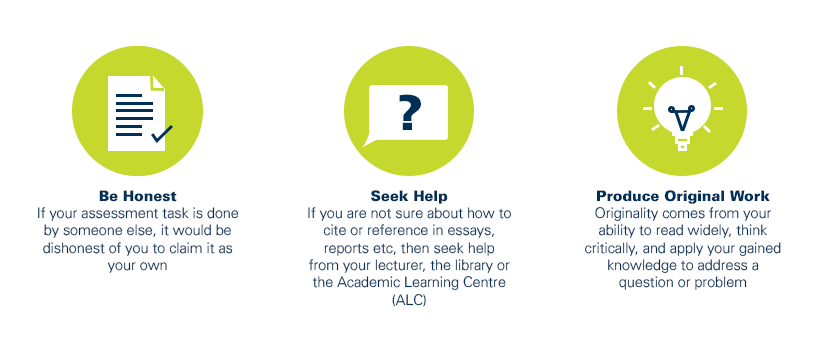
As a CQUniversity student you are expected to act honestly in all aspects of your academic work.
Any assessable work undertaken or submitted for review or assessment must be your own work. Assessable work is any type of work you do to meet the assessment requirements in the unit, including draft work submitted for review and feedback and final work to be assessed.
When you use the ideas, words or data of others in your assessment, you must thoroughly and clearly acknowledge the source of this information by using the correct referencing style for your unit. Using others’ work without proper acknowledgement may be considered a form of intellectual dishonesty.
Participating honestly, respectfully, responsibly, and fairly in your university study ensures the CQUniversity qualification you earn will be valued as a true indication of your individual academic achievement and will continue to receive the respect and recognition it deserves.
As a student, you are responsible for reading and following CQUniversity’s policies, including the Student Academic Integrity Policy and Procedure. This policy sets out CQUniversity’s expectations of you to act with integrity, examples of academic integrity breaches to avoid, the processes used to address alleged breaches of academic integrity, and potential penalties.
What is a breach of academic integrity?
A breach of academic integrity includes but is not limited to plagiarism, self-plagiarism, collusion, cheating, contract cheating, and academic misconduct. The Student Academic Integrity Policy and Procedure defines what these terms mean and gives examples.
Why is academic integrity important?
A breach of academic integrity may result in one or more penalties, including suspension or even expulsion from the University. It can also have negative implications for student visas and future enrolment at CQUniversity or elsewhere. Students who engage in contract cheating also risk being blackmailed by contract cheating services.
Where can I get assistance?
For academic advice and guidance, the Academic Learning Centre (ALC) can support you in becoming confident in completing assessments with integrity and of high standard.
What can you do to act with integrity?