Overview
This unit focuses on the development of clinical reasoning and decision making skills. You will consolidate, extend and refine application of cardiovascular knowledge and assessment protocols gained during the Bachelor of Echocardiography and Cardiac Physiology course to a variety of clinical scenarios, case studies and cardiac assessment data. You will evaluate data and generate differential diagnoses with consideration of best practice guidelines, including critical appraisal of echocardiographic scan quality and professional sonographer conduct. You will practice the application of professional dialogue, anticipating and communicating cardiovascular assessment outcomes using discipline specific terminology. Studies will nurture development of professional attributes necessary for the transition from student to independent practitioner.
Details
Pre-requisites or Co-requisites
Requisite Unit: ECHO13007 Cardiac Clinical Unit 3
Important note: Students enrolled in a subsequent unit who failed their pre-requisite unit, should drop the subsequent unit before the census date or within 10 working days of Fail grade notification. Students who do not drop the unit in this timeframe cannot later drop the unit without academic and financial liability. See details in the Assessment Policy and Procedure (Higher Education Coursework).
Offerings For Term 1 - 2026
Attendance Requirements
All on-campus students are expected to attend scheduled classes - in some units, these classes are identified as a mandatory (pass/fail) component and attendance is compulsory. International students, on a student visa, must maintain a full time study load and meet both attendance and academic progress requirements in each study period (satisfactory attendance for International students is defined as maintaining at least an 80% attendance record).
Recommended Student Time Commitment
Each 6-credit Postgraduate unit at CQUniversity requires an overall time commitment of an average of 12.5 hours of study per week, making a total of 150 hours for the unit.
Class Timetable
Assessment Overview
Assessment Grading
This is a graded unit: your overall grade will be calculated from the marks or grades for each assessment task, based on the relative weightings shown in the table above. You must obtain an overall mark for the unit of at least 50%, or an overall grade of 'pass' in order to pass the unit. If any 'pass/fail' tasks are shown in the table above they must also be completed successfully ('pass' grade). You must also meet any minimum mark requirements specified for a particular assessment task, as detailed in the 'assessment task' section (note that in some instances, the minimum mark for a task may be greater than 50%). Consult the University's Grades and Results Policy for more details of interim results and final grades.
All University policies are available on the CQUniversity Policy site.
You may wish to view these policies:
- Grades and Results Policy
- Assessment Policy and Procedure (Higher Education Coursework)
- Review of Grade Procedure
- Student Academic Integrity Policy and Procedure
- Academic Progression Policy and Procedure
- Student Refund and Credit Balance Policy and Procedure
- Complaints Policy and Procedure
- Information and Communications Technology Acceptable Use Policy and Procedure
This list is not an exhaustive list of all University policies. The full list of University policies are available on the CQUniversity Policy site.
Feedback, Recommendations and Responses
Every unit is reviewed for enhancement each year. At the most recent review, the following staff and student feedback items were identified and recommendations were made.
Feedback from Student Unit and Teaching Evaluations (SUTE) data
Feedback Fruits was a useful platform although unfamiliar and sometimes confusing to use.
External resources (Feedback Fruits explanatory videos) will be recommended to students, to enhance familiarity with the platform prior to assessment submission.
Feedback from SUTE data
Peer feedback components were valuable assessment strategies, relevant to the CV69 degree.
Peer feedback and reflection will continue to be a main strategy in teaching and assessment for this unit.
Feedback from SUTE data and student email communications to the unit coordinator.
Communication and support to students was effective and appreciated.
Communication and support is recognised as an important aspect for this final-year unit, where students are at varying stages in their clinical practicum experiences. Open communications should remain a focus in future deliveries.
- Apply an integrated understanding of echocardiographic theory, assessing cardiac structure and function through evaluation of both sonographic images and derived data
- Utilise appropriate professional dialogue when discussing referral indications, cardiac assessment outcomes and patient management strategies
- Critically appraise technical scan performance, echocardiographer professional behaviour and cardiac assessment outcomes, reflecting on best practice guidelines.
- Critically evaluate and synthesize current trends and challenges in the field of sonography.
1. Australian Sonographer Accreditation Registry (ASAR): Accreditation Standards for Cardiac Sonography - Foundation units of competence (Unit 1-5) and Critical Practice (Unit 8)
2. Edwards, C, Thoirs, K, Osborne, B, Slade, D, McDonald, S, Lombardo, P, et al. Australian sonographer competency—A new framework. Sonography. 2022; 9( 3): 108– 115. https://doi.org/10.1002/sono.12309
3. American Society of Echocardiography Guideline Documents
Alignment of Assessment Tasks to Learning Outcomes
| Assessment Tasks | Learning Outcomes | |||
|---|---|---|---|---|
| 1 | 2 | 3 | 4 | |
| 1 - Online Quiz(zes) - 60% | ||||
| 2 - Reflective Practice Assignment - 40% | ||||
Alignment of Graduate Attributes to Learning Outcomes
| Graduate Attributes | Learning Outcomes | |||
|---|---|---|---|---|
| 1 | 2 | 3 | 4 | |
| 1 - Knowledge | ||||
| 2 - Communication | ||||
| 3 - Cognitive, technical and creative skills | ||||
| 4 - Research | ||||
| 5 - Self-management | ||||
| 6 - Ethical and Professional Responsibility | ||||
| 7 - Leadership | ||||
| 8 - First Nations Knowledges | ||||
| 9 - Aboriginal and Torres Strait Islander Cultures | ||||
Textbooks
There are no required textbooks.
IT Resources
- CQUniversity Student Email
- Internet
- Unit Website (Moodle)
All submissions for this unit must use the referencing style: Vancouver
For further information, see the Assessment Tasks.
y.gao@cqu.edu.au
t.cremin@cqu.edu.au
p.boucaut@cqu.edu.au
Week 1
Begin Date: 09 Mar 2026Module/Topic
Module 1: Frameworks for Best Practice
Chapter
Events and Submissions/Topic
Week 2
Begin Date: 16 Mar 2026Module/Topic
Module 1: Frameworks for Best Practice
Chapter
Events and Submissions/Topic
Week 3
Begin Date: 23 Mar 2026Module/Topic
Module 2: Clinical Decision-Marking (CDM)
Chapter
Events and Submissions/Topic
Week 4
Begin Date: 30 Mar 2026Module/Topic
Module 2: Clinical Decision-Marking (CDM)
Chapter
Events and Submissions/Topic
Week 5
Begin Date: 06 Apr 2026Module/Topic
Module 2: Clinical Decision-Marking (CDM)
Chapter
Events and Submissions/Topic
Reflective Practice Assignment (video component) due Tuesday 7th April 2026 (5pm AEST).
Week 6
Begin Date: 13 Apr 2026Module/Topic
Module 2: Clinical Decision-Marking (CDM)
Chapter
Events and Submissions/Topic
Reflective Practice Assignment (feedback component) due Monday 13th April 2026 (5pm AEST).
Vacation Week
Begin Date: 20 Apr 2026Module/Topic
Chapter
Events and Submissions/Topic
Week 7
Begin Date: 27 Apr 2026Module/Topic
Module 3: Imaging in Practice
Chapter
Events and Submissions/Topic
Reflective Practice Assignment (feedback evaluation component) due Monday 27th April 2026 (5pm AEST).
Week 8
Begin Date: 04 May 2026Module/Topic
Module 3: Imaging in Practice
Chapter
Events and Submissions/Topic
Week 9
Begin Date: 11 May 2026Module/Topic
Module 3: Imaging in Practice
Chapter
Events and Submissions/Topic
Quiz 1 opens Monday 11th May 2026 (8am AEST)
Week 10
Begin Date: 18 May 2026Module/Topic
Module 4: Future Considerations in Echocardiography
Chapter
Events and Submissions/Topic
Quiz 1 closes Monday 18th May 2026 (6pm AEST).
Week 11
Begin Date: 25 May 2026Module/Topic
Module 4: Future Considerations in Echocardiography
Chapter
Events and Submissions/Topic
Week 12
Begin Date: 01 Jun 2026Module/Topic
Module 4 Review
Chapter
Events and Submissions/Topic
Quiz 2 opens Monday 1st June 2026 (8am AEST)
Exam Week
Begin Date: 08 Jun 2026Module/Topic
Chapter
Events and Submissions/Topic
Quiz 2 closes Monday 8th June 2026 (6pm AEST).
Vacation/Exam Week
Begin Date: 15 Jun 2026Module/Topic
Chapter
Events and Submissions/Topic
Unit Coordinator and Contact Details
The Unit Coordinators for ECHO28009 are Angie Gao and Tarryn Cremin, both based at the Sydney campus.
Angie Gao (Phone: (02) 9324 5033; Email: y.gao@cqu.edu.au) is available Monday to Wednesday and will manage the Unit Coordinator role from Week 1 to Week 7.
Tarryn Cremin (Phone: (02) 9324 5034; Email: t.cremin@cqu.edu.au) is available Monday to Thursday and will assume the Unit Coordinator role from Week 8 through to the end of the term.
Students are encouraged to contact the relevant Unit Coordinator based on the timing of their enquiry.
The content of this unit is organised into four (4) modules:
Module 1 introduces best practice frameworks in cardiac sonography. This module explores the professional and personal complexities of a career in cardiac sonography, considers industry-aligned expectations, and examines strategies to build resilience and develop professional identity.
Module 2 focuses on clinical decision-making and reflective practice. Students will explore how clinical information, professional interactions, and reflective practice inform decision-making as cardiac sonographers and support accurate interpretation of echocardiographic findings. The module emphasises applying theoretical and simulated learning to real-world clinical scenarios.
Module 3 explores echocardiographic imaging in clinical practice. This module extends imaging knowledge and considers both standard and non-standard techniques used to acquire diagnostic information in real clinical settings.
Module 4 examines future and emerging considerations in the field of cardiac sonography. This module encourages reflection on current and evolving professional issues and supports a forward-looking perspective as students progress toward graduation, accreditation, and independent professional practice.
Tutorials
Tutorials for this unit will be delivered ‘live’ online using Zoom with links provided on the unit Moodle site and will be held on Wednesday evening. These sessions will also be recorded and subsequently made available on Moodle. Tutorials are scheduled throughout the term to support discussion of module content.
1 Online Quiz(zes)
Modules 3 and 4 within the ECHO28009 unit will be linked to online quiz assessments. All content presented in lectures, tutorials and within prescribed readings for these modules is assessable.
Quiz 1 will assess your understanding of the content presented in Module 3 (Imaging in Practice)
Quiz 2 will assess your understanding of the content presented in Module 4 (Future Considerations in Echocardiography).
The parameters below apply to each of the two (2) quizzes:
- The online quiz will include multiple choice and short answer style questions.
- The online quiz will be open for 45 minutes.
- Once started, the quiz cannot be paused or restarted.
- Only one (1) attempt is permitted.
- While resources (such as lecture notes and prescribed readings) may be referred to throughout the quiz, students should rely on their own understanding of content material to answer questions within the allocated time. Since student responses must demonstrate authentic consideration of professional dialogue, the use of auxiliary digital technologies such as genAI and grammar checking software is not permitted.
- The quiz must be started at least 45 minutes prior to the closure time, to take advantage of the entire time allowance.
- Any 'open' (not submitted) attempts will automatically be submitted at the time of test closure.
- In the absence of an approved extension, students will receive a mark of zero (or fail) for this assessment, if it is not attempted by the scheduled date and time.
- The 72 hour grace period does not apply to this assessment.
Students are reminded that IT support from the university Information and Technology Division (TASAC) is only available during AEST business hours.
These online quiz assessments are to be undertaken as an individual. As with all other university examinations, colluding with other students on non-group work tasks is considered academic misconduct, and may lead to action being taken by the Deputy Dean of Learning and Teaching HMAS.
Level of GenAI use allowed:
Level 1: You must not use AI at any point during the assessment. You must demonstrate your core skills and knowledge.
Students are advised to refer to the ‘Assessment Policy and Procedure (Higher Education Coursework)’ document for additional university guidelines regarding assessments.
Quiz 1 opens Monday 11th May 2026 (8am AEST) and closes Monday 18th May 2026 (6pm AEST); Quiz 2 opens Monday 1st June (8am AEST) and closes Monday 8th June (6pm AEST)
Within two (2) weeks of each quiz submission date.
Each online quiz is worth 30% of the available marks for the unit. Quiz responses will be assessed according to the student’s:
- use of appropriate terminology and descriptors;
- depth of reflection;
- ability to succinctly respond with accurate answers;
- ability to appropriately interpret presented sonographic images and cardiac assessment data (applicable to quiz 1 only);
- demonstrated understanding of module content.
- Apply an integrated understanding of echocardiographic theory, assessing cardiac structure and function through evaluation of both sonographic images and derived data
- Utilise appropriate professional dialogue when discussing referral indications, cardiac assessment outcomes and patient management strategies
- Critically appraise technical scan performance, echocardiographer professional behaviour and cardiac assessment outcomes, reflecting on best practice guidelines.
- Critically evaluate and synthesize current trends and challenges in the field of sonography.
2 Reflective Practice Assignment
Assessment Overview:
The Reflective Practice Assignment is designed to simulate a collaborative clinical learning environment and has been developed with consideration of the Dreyfus Model of Skill Acquisition¹, the Professional Competency Framework for Sonographers², and best practice guidelines published by the American Society of Echocardiography (ASE)³.
This assessment task comprises three (3) components:
- Video presentation
- Peer feedback provision
- Evaluation of peer feedback
These components will be completed in a stepwise manner using the Feedback Fruits platform, which is accessible via the Assessment tab on the unit Moodle site.
Case Selection and Focus
For this assessment, students are required to select and present a clinical case encountered during their clinical placement. The selected case should centre on student–patient interaction, and may also include interaction with a supervising sonographer or cardiologist where relevant.
Students undertaking clinical practicum must source their case study from their placement site and adhere strictly to patient confidentiality protocols. Students not currently attending clinical practicum must contact the Unit Coordinator to obtain an appropriate case study for discussion.
The primary focus of this assessment is the demonstration of professional “soft skills” in echocardiographic practice.
Students should discuss their clinical decision-making process, particularly how scan strategy was adapted in response to patient/relatives communication or challenges encountered during the examination. Where appropriate, discussion of supervisor/cardiologist input and its contribution to learning and decision-making may be included.
This assessment is not intended to focus on detailed image interpretation, pathology description, or quantitative echocardiographic parameters. Instead, emphasis should be placed on:
- Patient communication and interaction
- Clinical reasoning and decision-making
- Adaptation of scan strategy in real-world practice
- Professional judgement in response to unexpected or complex situations
Students are required to present their case using a slide deck presentation, with their camera turned on, and record the presentation. The recorded presentation must be no longer than 8 minutes.
This task supports the development of reflective, patient-centred practice and provides an opportunity for students to demonstrate emerging clinical reasoning skills through effective communication, adaptability, and professional decision-making in echocardiography.
Component 1: Video Presentation
Guided by lecture content, tutorials, and provided exemplars, students will present a clinical case study to their peers via a recorded video presentation. The presentation should include discussion of:
- Pre-scan considerations (patient interaction and clinical context)
- Scan strategy and assessment approach (highlighting key considerations and adaptations)
- Post-scan considerations (learning outcomes identified by the student and how this may influence everyday/future practice)
Please refer to the academic integrity and referencing guidance below when preparing this component.
Component 2: Peer Feedback Provision
The Feedback Fruits platform will automatically allocate students to review peer video presentations once submissions are uploaded. Each student will be required to provide feedback to two (2) peers.
Peer feedback should be constructive, respectful, and professional, reflecting the collegial communication expected within a multidisciplinary healthcare team. Guidelines for providing effective feedback will be discussed in unit content, and structured prompts will be provided within the Feedback Fruits platform. Peer feedback will remain anonymous within the student cohort, but not to the Unit Coordinator.
Component 3: Feedback Evaluation
In the final component of the assessment, students are required to critically reflect on the peer feedback received, evaluating its usefulness and identifying areas for professional development where appropriate. Reflection guidance will be provided within unit materials.
Academic Integrity and Referencing
Academic integrity requirements apply to all components of this assessment, including referencing. The video presentation must include a written reference list. In accordance with Vancouver referencing guidelines, any use of generative artificial intelligence (genAI) must be referenced in-text and explicitly stated within the audio narration.
Use of Generative AI for this Assessment
Students are permitted to use Generative Artificial Intelligence (GenAI) for this assessment in a limited and transparent manner.
If GenAI is used in any capacity, it must be acknowledged and cited in accordance with CQUniversity guidelines (Academic Learning Centre). Students who choose to use GenAI are required to include the following declaration on a separate page at the end of the presentation:
“I have used (insert technology) to (describe how it was used) in accordance with the requirements of this unit. The reason for using this technology was to (explain why it was used). The details of how it was used include (provide a brief explanation). I hereby declare that this submission is an appropriate representation of my own individual skills and abilities and meets the requirements of the assessment task.”
Given the complexity of reflective practice and case-based discussion, students are strongly advised not to rely on large language models (LLMs). These tools often lack the specificity, contextual awareness, and clinical accuracy required to meaningfully interpret clinical scenarios and reflective experiences.
The 72 hour grace period does not apply to this assessment item.
Students should also refer to the Assessment Policy and Procedure (Higher Education Coursework) for further university guidance.
1. Dreyfus S. The Five-Stage Model of Adult Skill Acquisition. Bulletin of Science, Technology & Society. 2004;24(3):177-181.
2.Childs, Jessie; Thoirs, Kerry; Osborne, Brooke; Halligan, Toni; Stoodley, Paul; Quinton, Ann; et al. (2021): Professional Competency Framework for Sonographers. figshare. Online resource. https://doi.org/10.6084/m9.figshare.17148035.v2
3. American Society of Echocardiography. Organization of professionals committed to excellence in cardiovascular ultrasound [Internet]. Asecho.org. 2022 [cited 6 January 2022]. Available from: https://www.asecho.org/
Video presentation component due Tuesday 7th April 2026 (5pm AEST); feedback component due Monday 13th April 2026 (5pm AEST); feedback evaluation component due Monday 27th April 2026 (5pm AEST).
Within two (2) weeks of final submission date.
Students will be assessed on all three (3) components of this assessment task. Criterion descriptors in the assessment rubric (available on the Moodle site) will be considered in accordance with the unit-defined competency level ‘advanced beginner’, as detailed on the assessment rubric.
Since submission of individual components in this assessment item impacts peer assessments, late submissions will not be permitted. If assessments are not submitted by the deadlines without approved extension, this will result in a fail grade for this assessment.
- Apply an integrated understanding of echocardiographic theory, assessing cardiac structure and function through evaluation of both sonographic images and derived data
- Utilise appropriate professional dialogue when discussing referral indications, cardiac assessment outcomes and patient management strategies
- Critically appraise technical scan performance, echocardiographer professional behaviour and cardiac assessment outcomes, reflecting on best practice guidelines.
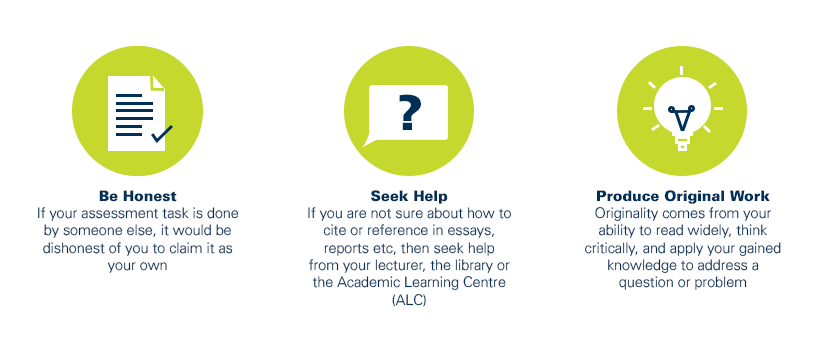
As a CQUniversity student you are expected to act honestly in all aspects of your academic work.
Any assessable work undertaken or submitted for review or assessment must be your own work. Assessable work is any type of work you do to meet the assessment requirements in the unit, including draft work submitted for review and feedback and final work to be assessed.
When you use the ideas, words or data of others in your assessment, you must thoroughly and clearly acknowledge the source of this information by using the correct referencing style for your unit. Using others’ work without proper acknowledgement may be considered a form of intellectual dishonesty.
Participating honestly, respectfully, responsibly, and fairly in your university study ensures the CQUniversity qualification you earn will be valued as a true indication of your individual academic achievement and will continue to receive the respect and recognition it deserves.
As a student, you are responsible for reading and following CQUniversity’s policies, including the Student Academic Integrity Policy and Procedure. This policy sets out CQUniversity’s expectations of you to act with integrity, examples of academic integrity breaches to avoid, the processes used to address alleged breaches of academic integrity, and potential penalties.
What is a breach of academic integrity?
A breach of academic integrity includes but is not limited to plagiarism, self-plagiarism, collusion, cheating, contract cheating, and academic misconduct. The Student Academic Integrity Policy and Procedure defines what these terms mean and gives examples.
Why is academic integrity important?
A breach of academic integrity may result in one or more penalties, including suspension or even expulsion from the University. It can also have negative implications for student visas and future enrolment at CQUniversity or elsewhere. Students who engage in contract cheating also risk being blackmailed by contract cheating services.
Where can I get assistance?
For academic advice and guidance, the Academic Learning Centre (ALC) can support you in becoming confident in completing assessments with integrity and of high standard.
What can you do to act with integrity?