Overview
In this unit you will compare and contrast the methodology and outcomes of several advanced echocardiographic and cardiac catheterisation procedures and alternative cardiac testing modalities including MRI, CT and Nuclear medicine. You will apply this knowledge to a variety of common cardiovascular pathologies frequently first assessed with echocardiography, within the setting of best practice and patient safety. You will evaluate a variety of cardiac assessment data, formulating differential diagnoses and management strategies.
Details
Pre-requisites or Co-requisites
Prerequisite ECHO12004 Cardiac Assessment Skills 1 OR ECHO12007 Cardiac Rhythm Assessment AND ECHO12003 Principles of Cardiac Assessment OR ECHO12008 Doppler Echocardiography AND ECHO12005 Cardiac Clinical Unit 2AND Co-requisite: ECHO13006 Adult Echocardiography
Important note: Students enrolled in a subsequent unit who failed their pre-requisite unit, should drop the subsequent unit before the census date or within 10 working days of Fail grade notification. Students who do not drop the unit in this timeframe cannot later drop the unit without academic and financial liability. See details in the Assessment Policy and Procedure (Higher Education Coursework).
Offerings For Term 1 - 2026
Attendance Requirements
All on-campus students are expected to attend scheduled classes - in some units, these classes are identified as a mandatory (pass/fail) component and attendance is compulsory. International students, on a student visa, must maintain a full time study load and meet both attendance and academic progress requirements in each study period (satisfactory attendance for International students is defined as maintaining at least an 80% attendance record).
Recommended Student Time Commitment
Each 6-credit Undergraduate unit at CQUniversity requires an overall time commitment of an average of 12.5 hours of study per week, making a total of 150 hours for the unit.
Class Timetable
Assessment Overview
Assessment Grading
This is a graded unit: your overall grade will be calculated from the marks or grades for each assessment task, based on the relative weightings shown in the table above. You must obtain an overall mark for the unit of at least 50%, or an overall grade of 'pass' in order to pass the unit. If any 'pass/fail' tasks are shown in the table above they must also be completed successfully ('pass' grade). You must also meet any minimum mark requirements specified for a particular assessment task, as detailed in the 'assessment task' section (note that in some instances, the minimum mark for a task may be greater than 50%). Consult the University's Grades and Results Policy for more details of interim results and final grades.
All University policies are available on the CQUniversity Policy site.
You may wish to view these policies:
- Grades and Results Policy
- Assessment Policy and Procedure (Higher Education Coursework)
- Review of Grade Procedure
- Student Academic Integrity Policy and Procedure
- Academic Progression Policy and Procedure
- Student Refund and Credit Balance Policy and Procedure
- Complaints Policy and Procedure
- Information and Communications Technology Acceptable Use Policy and Procedure
This list is not an exhaustive list of all University policies. The full list of University policies are available on the CQUniversity Policy site.
Feedback, Recommendations and Responses
Every unit is reviewed for enhancement each year. At the most recent review, the following staff and student feedback items were identified and recommendations were made.
Feedback from SUTE data
Several students felt it would be more beneficial to offer this unit prior to year 2 placement
Expanding the introduction provided in the unit orientation materials to explain why the unit is scheduled after Year 2 placement may help manage expectations. Emphasising the unit’s role in consolidating prior learning and applying it in a more complex clinical context could improve student understanding of its purpose within the broader course structure. The content is designed as an AQF Level 7 unit and builds on both earlier theory and clinical experience. The advanced imaging modalities and theoretical content rely on students having a clinical foundation for the material to be meaningful.
Feedback from Tutorials
Students appreciated the use of real-world case studies; however, some were concerned that similar formats would be used in the quiz and felt they lacked the knowledge to answer those types of questions confidently.
Continue to use real-world case studies to help students apply theoretical knowledge to clinical scenarios. Clarify that these cases are designed as learning tools to support knowledge development, not as an assessment strategy. Ensure appropriate scaffolding is provided so students feel supported in interpreting pathology and understanding how advanced imaging modalities are used in the cardiac industry to assess cardiac pathology and guide diagnosis.
- Discuss the clinical assessment and management strategy for a variety of cardiac conditions, with consideration of pathophysiological processes, best practice guidelines and patient safety
- Compare and contrast the methodology and outcomes of various cardiac assessment modalities, identifying discordant data
- Analyse case-based cardiac assessment data to formulate differential diagnoses
- Demonstrate professional communication skills.
Linked to the Australian Sonographer Accreditation Register Standards for Cardiac Sonography:
Foundation Units of Competence
- Unit 1: Deliver safe, patient centred service
- Unit 2: Practice within professional and ethical frameworks
- Unit 3: Locate, analyse and synthesise information to support evidence based practice
- Unit 4: Contribute to workplace health and safety and quality assurance
- Unit 5: Communicate effectively
Critical Practice Unit of Competence
- Unit 8: Cardiac
Alignment of Assessment Tasks to Learning Outcomes
| Assessment Tasks | Learning Outcomes | |||
|---|---|---|---|---|
| 1 | 2 | 3 | 4 | |
| 1 - Online Quiz(zes) - 40% | ||||
| 2 - Group Work - 60% | ||||
Alignment of Graduate Attributes to Learning Outcomes
| Graduate Attributes | Learning Outcomes | |||
|---|---|---|---|---|
| 1 | 2 | 3 | 4 | |
| 1 - Communication | ||||
| 2 - Problem Solving | ||||
| 3 - Critical Thinking | ||||
| 4 - Information Literacy | ||||
| 5 - Team Work | ||||
| 6 - Information Technology Competence | ||||
| 7 - Cross Cultural Competence | ||||
| 8 - Ethical practice | ||||
| 9 - Social Innovation | ||||
| 10 - First Nations Knowledges | ||||
| 11 - Aboriginal and Torres Strait Islander Cultures | ||||
Textbooks
ASE's Comprehensive Echocardiography
- 3rd Edition (2022)
- Authors: Roberto M. Lang, Goldestein, Kronzon, Khandheria, Mor-avi
- Elsevier
- Philadelphia Philadelphia , USA
- ISBN: 9780323698306
- Binding: Hardcover
A Sonographer's Guide to the Assessment of Heart Disease
- Edition: First (2014)
- Authors: Bonita Anderson
- MGA Graphics
- Brisbane Brisbane , QLD , Australia
- ISBN: 9780992322205
- Binding: Hardcover
IT Resources
- CQUniversity Student Email
- Internet
- Unit Website (Moodle)
All submissions for this unit must use the referencing style: Vancouver
For further information, see the Assessment Tasks.
s.singarayar@cqu.edu.au
p.boucaut@cqu.edu.au
Week 1
Begin Date: 09 Mar 2026Module/Topic
Module 1: Multimodality in Valvular Heart Disease
Chapter
See eReading list via Moodle
Events and Submissions/Topic
Week 2
Begin Date: 16 Mar 2026Module/Topic
Module 1: Multimodality in Valvular Heart Disease
Chapter
See eReading list via Moodle
Events and Submissions/Topic
Week 3
Begin Date: 23 Mar 2026Module/Topic
Module 1: Multimodality in Valvular Heart Disease
Chapter
See eReading list via Moodle
Events and Submissions/Topic
Week 4
Begin Date: 30 Mar 2026Module/Topic
Module 1: Multimodality in Valvular Heart Disease
Chapter
See eReading list via Moodle
Events and Submissions/Topic
Week 5
Begin Date: 06 Apr 2026Module/Topic
Module 1: Multimodality in Valvular Heart Disease
Chapter
See eReading list via Moodle
Events and Submissions/Topic
Online Quiz 1: Opens at 8:00 am (AEST) on Friday, 10th of April and closes at 8:00 pm (AEST) on Saturday, 11th of April.
Week 6
Begin Date: 13 Apr 2026Module/Topic
Module 2: Multimodality in Ischaemic Heart Disease
Chapter
See eReading list via Moodle
Events and Submissions/Topic
Vacation Week
Begin Date: 20 Apr 2026Module/Topic
Chapter
Events and Submissions/Topic
Week 7
Begin Date: 27 Apr 2026Module/Topic
Module 2: Multimodality in Ischaemic Heart Disease
Chapter
See eReading list via Moodle
Events and Submissions/Topic
Week 8
Begin Date: 04 May 2026Module/Topic
Module 2: Multimodality in Ischaemic Heart Disease
Chapter
See eReading list via Moodle
Events and Submissions/Topic
Week 9
Begin Date: 11 May 2026Module/Topic
Module 2: Multimodality in Ischaemic Heart Disease
Chapter
See eReading list via Moodle
Events and Submissions/Topic
Online Quiz 2: Opens at 8:00 am (AEST) on Friday, 15th of May and closes at 8:00 pm (AEST) on Saturday, 16th of May.
Week 10
Begin Date: 18 May 2026Module/Topic
Groups to review group work for submission
Chapter
Events and Submissions/Topic
Week 11
Begin Date: 25 May 2026Module/Topic
Groups to review group work for submission
Chapter
Events and Submissions/Topic
Week 12 - Group Work Due
Begin Date: 01 Jun 2026Module/Topic
Review group submission and submit.
Chapter
Events and Submissions/Topic
Group Work Due: 5:00 pm (AEST) Monday 1st June 2026
Exam Week
Begin Date: 08 Jun 2026Module/Topic
Chapter
Events and Submissions/Topic
Vacation/Exam Week
Begin Date: 15 Jun 2026Module/Topic
Chapter
Events and Submissions/Topic
Unit Coordinator and Contact Details
The Unit Coordinator for ECHO13008 is Sudeepthi Singarayar. The preferred method for contacting Sudeepthi is via the
Learning Community Q&A Forum located on the Moodle site for content-related questions. If the query is personal,
please email s.singarayar@cqu.edu.au or phone (02) 9324 5036. Sudeepthi's workdays are Wednesday, Thursday, and
Friday, and she is based at the Sydney Campus.
Unit Tutorials
This unit's tutorial will be delivered online using Zoom (the links required for accessing the tutorials are provided on
the Moodle site under the Virtual Classes tile). Tutorials are designed to complement the theories and principles presented in lectures. Note: Tutorials are recorded for educational purposes.
Unit Study Commitment
As per Australian educational standards, there is an expectation of 150 hours of engagement required to complete
learning and assessment tasks associated with this 6-credit point unit. (i.e. 12.5 hours per week). Weekly revision
material will be provided. No new lecture material will be presented from week 9 of the term. The final weeks will be used to prepare for your group and individual assessments.
1 Online Quiz(zes)
- This quiz will assess the topics covered during module 1.
- This quiz will assess the topics covered during module 2.
- To have a calculator available.
- Once the quiz is started, the online quiz cannot be paused or restarted.
- Only one attempt is permitted.
- The online quiz will automatically close and submit completed student answers once the allocated time has elapsed.
- The duration of this quiz is tailored to promote recall of fact, rather than research of answers unknown.
- You will be required to answer a variety of online questions. Questions may include multiple-choice, short answers and image interpretation format.
- The number of marks allocated for each question will be indicated within the online quiz. Question marks are allocated based on the accuracy, depth and breadth of required responses.
Level of GenAI use allowed:
Level 1: You must not use Al at any point during the assessment. You must demonstrate your core skills and knowledge.
The 72 hour grace period does not apply to this assessment item.
Online Quiz 1 will open from 8:00 am (AEST) on Friday 10th of April and will close at 8:00 pm (AEST) Saturday 11th of April. Online Quiz 2 will open from 8:00 am (AEST) on Friday 15th May and will close at 8:00 pm (AEST) Saturday 16th of May.
Results will be available two weeks after the assessment due date.
-
Use of appropriate terminology and descriptors as well as grammar and spelling.
-
Ability to appropriately interpret presented sonographic images and cardiac assessment data.
-
Ability to succinctly respond with accurate answers.
- Discuss the clinical assessment and management strategy for a variety of cardiac conditions, with consideration of pathophysiological processes, best practice guidelines and patient safety
- Compare and contrast the methodology and outcomes of various cardiac assessment modalities, identifying discordant data
- Analyse case-based cardiac assessment data to formulate differential diagnoses
- Demonstrate professional communication skills.
2 Group Work
Level of GenAI use allowed:
You may use AI for planning, idea development, and research. Your final submission should show how you have
developed and refined these ideas.
Sections (with suggested word limits):
1. Case Summary (~50–70 words)
- Summarise the patient scenario, including relevant history and presenting symptoms.
- Include a definition of the disease.
2. Echocardiography Findings (~150 words)
- Identify at least three key echo features.
- Explain how each reflects cardiac pathology.
3. Differential Diagnosis (~100 words)
- Suggest two alternative conditions that could present similarly.
- Include one distinguishing feature per condition.
4. Multimodality Imaging (~100 words)
- Choose one additional imaging modality (CMR, PET, CT, etc.).
- Describe its findings and how it complements echocardiography.
5. Management & Next Steps (~50–70 words)
- Suggest investigations or interventions.
- Provide a brief clinical justification.
Group Work Due 5:00 pm (AEST) Monday 1st June 2026.
Results will be available following the completion of the marking process, approximately two weeks after the assessment due date.
The following assessment criteria cues should be considered by students when completing each task component.
Part A: Individual Component
- Have you prioritised relevant information for inclusion?
- Is the information included accurate and evidence-based with relevant references?
- Does the information provided indicate that you understand the topic and the multi-modality technique that you have chosen?
- Have you used relevant images?
- Is your spelling and grammar exemplary?
- Have you adhered to the correct referencing style?
The Group work marking rubric can be found on the unit's Moodle site.
Part B: PowerPoint and recorded presentation
- Are your PowerPoint slides well collated with no breaches of academic integrity? Do not copy and paste information from other sources.
- Is the information included accurate and evidence-based with relevant references?
- Have you prioritised relevant information for inclusion?
- Does your content indicate that you understand the topic?
- Have you used images and graphics that are relevant and of satisfactory quality?
- Have you taken into account your specific audience?
- Do all speakers provide an engaging presentation, which is clearly audible?
- Is your spelling and grammar exemplary?
- Have you adhered to the correct referencing style and provided adequate acknowledgment to sources?
- Do all speakers speak clearly?
- Discuss the clinical assessment and management strategy for a variety of cardiac conditions, with consideration of pathophysiological processes, best practice guidelines and patient safety
- Compare and contrast the methodology and outcomes of various cardiac assessment modalities, identifying discordant data
- Analyse case-based cardiac assessment data to formulate differential diagnoses
- Demonstrate professional communication skills.
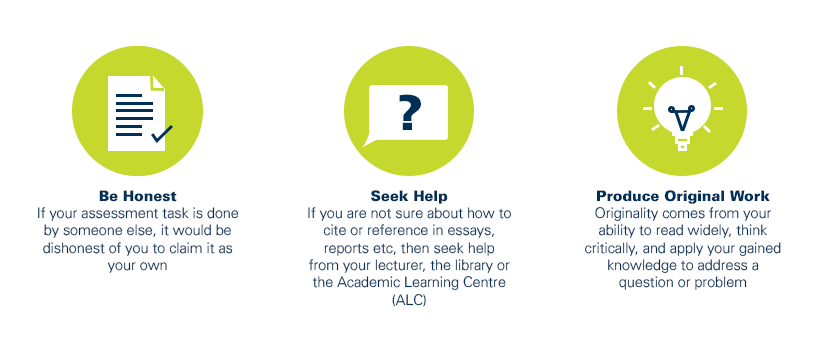
As a CQUniversity student you are expected to act honestly in all aspects of your academic work.
Any assessable work undertaken or submitted for review or assessment must be your own work. Assessable work is any type of work you do to meet the assessment requirements in the unit, including draft work submitted for review and feedback and final work to be assessed.
When you use the ideas, words or data of others in your assessment, you must thoroughly and clearly acknowledge the source of this information by using the correct referencing style for your unit. Using others’ work without proper acknowledgement may be considered a form of intellectual dishonesty.
Participating honestly, respectfully, responsibly, and fairly in your university study ensures the CQUniversity qualification you earn will be valued as a true indication of your individual academic achievement and will continue to receive the respect and recognition it deserves.
As a student, you are responsible for reading and following CQUniversity’s policies, including the Student Academic Integrity Policy and Procedure. This policy sets out CQUniversity’s expectations of you to act with integrity, examples of academic integrity breaches to avoid, the processes used to address alleged breaches of academic integrity, and potential penalties.
What is a breach of academic integrity?
A breach of academic integrity includes but is not limited to plagiarism, self-plagiarism, collusion, cheating, contract cheating, and academic misconduct. The Student Academic Integrity Policy and Procedure defines what these terms mean and gives examples.
Why is academic integrity important?
A breach of academic integrity may result in one or more penalties, including suspension or even expulsion from the University. It can also have negative implications for student visas and future enrolment at CQUniversity or elsewhere. Students who engage in contract cheating also risk being blackmailed by contract cheating services.
Where can I get assistance?
For academic advice and guidance, the Academic Learning Centre (ALC) can support you in becoming confident in completing assessments with integrity and of high standard.
What can you do to act with integrity?