Overview
Accurate analysis and assessment of complex cardiovascular disease and their pathological processes is a core part of all echocardiographic examinations. In preparation for clinical placement you will attain the knowledge and skills needed to analyse complex cardiovascular disease. This will include consideration of the echocardiographic generated images and assessment measures, haemodynamic calculations, pressures and valve prosthetics. You will apply knowledge to practical echocardiographic tasks in the laboratory setting, and utilise simulated clinical scenarios and case studies to analyse diagnostic data to provide differential diagnoses within an ethical framework of best practice and patient safety. You will demonstrate the professional knowledge, attitude and skills required to perform a complete echocardiographic study within a time frame related to clinical expectations. This unit prepares you for the clinical environment using the Assessment of Readiness for Clinical tool (ARC) in conjunction with other assessment tasks. Attendance at practical activities is a requirement of this unit.
Details
Pre-requisites or Co-requisites
Pre-requisites MPAT12001 Medical Pathophysiology AND ECHO12003 Principles of Cardiac Assessment OR ECHO12008 Doppler Echocardiography AND ECHO12005 Cardiac Clinical Unit 2
Important note: Students enrolled in a subsequent unit who failed their pre-requisite unit, should drop the subsequent unit before the census date or within 10 working days of Fail grade notification. Students who do not drop the unit in this timeframe cannot later drop the unit without academic and financial liability. See details in the Assessment Policy and Procedure (Higher Education Coursework).
Offerings For Term 1 - 2026
Attendance Requirements
All on-campus students are expected to attend scheduled classes - in some units, these classes are identified as a mandatory (pass/fail) component and attendance is compulsory. International students, on a student visa, must maintain a full time study load and meet both attendance and academic progress requirements in each study period (satisfactory attendance for International students is defined as maintaining at least an 80% attendance record).
Recommended Student Time Commitment
Each 12-credit Undergraduate unit at CQUniversity requires an overall time commitment of an average of 25 hours of study per week, making a total of 300 hours for the unit.
Class Timetable
Assessment Overview
Assessment Grading
This is a graded unit: your overall grade will be calculated from the marks or grades for each assessment task, based on the relative weightings shown in the table above. You must obtain an overall mark for the unit of at least 50%, or an overall grade of 'pass' in order to pass the unit. If any 'pass/fail' tasks are shown in the table above they must also be completed successfully ('pass' grade). You must also meet any minimum mark requirements specified for a particular assessment task, as detailed in the 'assessment task' section (note that in some instances, the minimum mark for a task may be greater than 50%). Consult the University's Grades and Results Policy for more details of interim results and final grades.
All University policies are available on the CQUniversity Policy site.
You may wish to view these policies:
- Grades and Results Policy
- Assessment Policy and Procedure (Higher Education Coursework)
- Review of Grade Procedure
- Student Academic Integrity Policy and Procedure
- Academic Progression Policy and Procedure
- Student Refund and Credit Balance Policy and Procedure
- Complaints Policy and Procedure
- Information and Communications Technology Acceptable Use Policy and Procedure
This list is not an exhaustive list of all University policies. The full list of University policies are available on the CQUniversity Policy site.
Feedback, Recommendations and Responses
Every unit is reviewed for enhancement each year. At the most recent review, the following staff and student feedback items were identified and recommendations were made.
Feedback from SUTE Unit Comments Report.
Concerns were raised about the high volume of content, which made it difficult to retain all the information, and the limited time available to prepare for the final exam.
Students will be reminded that third-year or double credit point units naturally require more commitment. Students will be encouraged to carefully review the unit profile and assessment schedule at the start of term to enable breakdown of tasks into manageable weekly goals. Students will be prompted more frequently to engage with support resources and activities and to reflect on study habits.
Feedback from SUTE Unit Comments Report & Email.
Unit coordinator support throughout the term was appreciated.
Continue to provide regular updates and clear guidance on assessments, expectations, and timelines to help students feel informed and supported. Build on successful engagement strategies by incorporating more interactive elements such as case studies and peer discussions. Continue to promote access to tutoring, consultation hours, and online resources, and encourage students to seek help early.
Feedback from Unit coordinator reflection.
Students tend to underperform in Part B of the practical measurement assessment (perhaps due to time constraints and its high-stakes nature) and clinical supervisor feedback suggests poor measurement performance during subsequent placement blocks, on occasion. Therefore a revised teaching and assessment strategy may better support student learning, measurement mastery and skill retention.
The implementation of a workbook-style assessment will be considered as part of the learning and teaching strategy to support progressive skill development. This approach encourages repeated practice and timely feedback, helping students build confidence and proficiency in measurement tasks over time.
- Differentiate between the aetiology, pathophysiology and echocardiographic assessment process associated with a variety of cardiovascular disease processes
- Perform and interpret measurements and advanced haemodynamic calculations applied to 2D, colour and spectral Doppler derived echocardiographic measures
- Differentiate prosthetic valve and valvular surgical intervention functionality and disease processes
- Analyse case-based clinical information to formulate differential diagnoses and plan patient management
- Perform an echocardiographic examination efficiently and effectively
- Display professional behaviour, teamwork and communication skills consistent with safe practice
- Apply reflective feedback to professional practice improvement.
Linked to National and International Standards
1. ASAR Accreditation Standards for Cardiac Sonography - critical practice Unit 8 - Cardiac, Foundation units of competence - 1 - 5.
2. European Association of Cardiovascular Imaging Core Syllabus
3. American Registry for Cardiac Sonography Core Syllabus
Alignment of Assessment Tasks to Learning Outcomes
| Assessment Tasks | Learning Outcomes | ||||||
|---|---|---|---|---|---|---|---|
| 1 | 2 | 3 | 4 | 5 | 6 | 7 | |
| 1 - In-class Test(s) - 50% | |||||||
| 2 - In-class Test(s) - 50% | |||||||
| 3 - Practical Assessment - 0% | |||||||
| 4 - Performance - 0% | |||||||
| 5 - Reflective Practice Assignment - 0% | |||||||
Alignment of Graduate Attributes to Learning Outcomes
| Graduate Attributes | Learning Outcomes | ||||||
|---|---|---|---|---|---|---|---|
| 1 | 2 | 3 | 4 | 5 | 6 | 7 | |
| 1 - Communication | |||||||
| 2 - Problem Solving | |||||||
| 3 - Critical Thinking | |||||||
| 4 - Information Literacy | |||||||
| 5 - Team Work | |||||||
| 6 - Information Technology Competence | |||||||
| 7 - Cross Cultural Competence | |||||||
| 8 - Ethical practice | |||||||
| 9 - Social Innovation | |||||||
| 10 - First Nations Knowledges | |||||||
| 11 - Aboriginal and Torres Strait Islander Cultures | |||||||
Textbooks
A Sonographer's Guide to the Assessment of Heart Disease
- Edition: 1st (2014)
- Authors: Bonita Anderson
- MGA Graphics
- BRISBANE BRISBANE , QUEENSLAND , AUSTRALIA
- ISBN: 9780992322205
- Binding: Hardcover
Basic to Advanced Clinical Echocardiography
- Edition: 1st (2020)
- Authors: Bonita Anderson, Margaret M. Park
- Wolters Kluwer
- USA
- ISBN: 9781975136253
- Binding: eBook
ASE's comprehensive echocardiography
- Edition: 3rd (2021)
- Authors: Lang, Goldestein, Kronzon, Khandheria, Mor-avi
- Elsevier Saunders
- Philadephia Philadephia , PA , USA
- ISBN: 9780323698306
- Binding: Other
IT Resources
- CQUniversity Student Email
- Internet
- Unit Website (Moodle)
All submissions for this unit must use the referencing style: Vancouver
For further information, see the Assessment Tasks.
s.m.cromb@cqu.edu.au
p.boucaut@cqu.edu.au
Week 1
Begin Date: 09 Mar 2026Module/Topic
Aortic and Pulmonary Valve Stenosis
Chapter
Events and Submissions/Topic
Week 2
Begin Date: 16 Mar 2026Module/Topic
Mitral and Tricuspid Valve Stenosis
Chapter
See e-Reading list
Events and Submissions/Topic
Week 3
Begin Date: 23 Mar 2026Module/Topic
Valvular Regurgitation
Chapter
See e-Reading list
Events and Submissions/Topic
Week 4
Begin Date: 30 Mar 2026Module/Topic
Prosthetic Valve
Chapter
See e-Reading list
Events and Submissions/Topic
Week 5
Begin Date: 06 Apr 2026Module/Topic
Hypertrophic Cardiomyopathy
Chapter
See e-Reading list
Events and Submissions/Topic
Echocardiographic Skills Assessment - Part B #1: Due Wednesday 8th April at 12:00pm AEST.
Week 6
Begin Date: 13 Apr 2026Module/Topic
Cardiomyopathies
Chapter
See e-Reading list
Events and Submissions/Topic
In-class Test 1: Wednesday 15th April at 9:00am (local campus time).
Vacation Week
Begin Date: 20 Apr 2026Module/Topic
Break Week
Chapter
Events and Submissions/Topic
Week 7
Begin Date: 27 Apr 2026Module/Topic
Pericardial Disease
Chapter
See e-Reading list
Events and Submissions/Topic
Week 8
Begin Date: 04 May 2026Module/Topic
Cardiac Tamponade & Constrictive Pericarditis
Chapter
See e-Reading list
Events and Submissions/Topic
MOCK Echocardiographic Skills Assessment - Part A: Scheduled for 7th and 8th May (specific times to be published on Moodle).
Week 9
Begin Date: 11 May 2026Module/Topic
Endocarditis & Cardiac Transplantation
Chapter
See e-Reading list
Events and Submissions/Topic
Week 10
Begin Date: 18 May 2026Module/Topic
Systemic Disorders 1
Chapter
See e-Reading list
Events and Submissions/Topic
Week 11
Begin Date: 25 May 2026Module/Topic
Systemic Disorders 2
Chapter
See e-Reading list
Events and Submissions/Topic
Echocardiographic Skills Assessment - Part B #2: Due Wednesday 27th May at 12:00pm AEST.
Echocardiographic Skills Assessment - Part A: Scheduled for 28th and 29th May (specific times to be published on Moodle).
Week 12
Begin Date: 01 Jun 2026Module/Topic
Chapter
Events and Submissions/Topic
In-Class Test 2: Wednesday 3rd June at 9:00am (local campus time).
Professional Behaviour and Lab Documentation and Formative Feedback and Self-Reflection: Due Friday 5th June at 12:00pm (AEST).
Exam Week
Begin Date: 08 Jun 2026Module/Topic
Chapter
Events and Submissions/Topic
Vacation/Exam Week
Begin Date: 15 Jun 2026Module/Topic
Chapter
Events and Submissions/Topic
The unit coordinator for ECHO13006 Adult Echocardiography is Shae Cromb. The most efficient and preferred method of contacting Shae is via the Q&A forum located on the unit Moodle site. If the query is personal in nature, please contact Shae directly via email (s.m.cromb@cqu.edu.au) or phone (08 9260 4053). Shae works from Perth and is available Wednesday to Friday.
Other academic staff may provide presentations and host tutorials as part of this unit's delivery. Contact details for other academic staff can be found on the Moodle site.
Lectures are used to present core information for weekly study, outlining the main theories and principles of the topic under consideration. Weekly revision material is provided and should be attempted to assist in preparation for the in- class tests and other assessments. Note that no new lecture material will be presented during week 12 of term as the in-class test will be scheduled in this week.
ECHO13006 tutorials focus on discussing the weekly content including revision questions, developing echocardiographic image interpretation skills, and contextualisation of key concepts in preparation for related assessments and clinical placement. Live Zoom tutorials provide an opportunity for discussion and interaction with other students and the tutor. It is important students take advantage of these interactive sessions and participate fully in order to broaden knowledge and experience with the course material. Questions posted to the Q&A forum or emailed to the unit coordinator may be used to guide tutorial content.
Note: Links required for accessing live Zoom tutorials are provided on the Moodle site. Tutorials will be recorded and published on the unit Moodle site. Tutorial participation will signify consent to the recording and publication for educational purposes.
Please ensure you review the welcome and assessment videos, available on the Moodle site, for further unit specific information.
1 In-class Test(s)
This test will be an in-class online test with closed book conditions at the campus of enrolment. It will assess all content from Weeks 1 to 5 inclusive. Room details will be published on the unit Moodle site.
The test will assess the theory and application of content and haemodynamic concepts taught in lectures, discussed in tutorial delivery and practised in the simulated laboratory setting. Questions may require students to perform mathematical calculations, interpret patient data, illustrate concepts or provide explanations and discussions. Questions similar in style to those found in the in-class test are provided in weekly revision material on the Moodle site. Revision questions will also be discussed during the tutorial and laboratory sessions, to help students prepare for this assessment task.
This test will be conducted at the student's campus of enrolment, with supervision and formal examination conditions as detailed in the CQU Assessment Procedures. As per CQU Assessment Procedures, this task is to be completed during the defined period. The 72-hour grace period does not apply to this assessment.
This test will be 180 minutes in duration. The test will automatically close and submit completed student answers once the allocated time has elapsed. If a student arrives late, they may enter the test room up to 30 minutes after the start of the test. The student will still be required to submit the test at the preset completion time. Students will not be allowed entry more than 30 minutes after the test starts. In the absence of an approved extension, this assessment cannot be completed at a later time, and a mark of zero (0) will be received for the assessment if it has not been attempted by the scheduled date and time.
A simple calculator (not a scientific calculator) will be required for this test.
Level of GenAI use allowed:
Level 1: You must not use AI at any point during the assessment. You must demonstrate your core skills and knowledge.
Week 6 - Wednesday 15th April at 9:00am local campus time.
Results will be available within two weeks of the due date.
This in-class test will assess the students' ability to:
- differentiate and discuss the aetiology, pathophysiology and echocardiographic assessment processes associated with a variety of cardiovascular diseases;
- analyse case-based clinical information to formulate differential diagnoses;
- interrogate measurements supplied;
- accurately apply appropriate haemodynamic calculations and interpret resulting values;
- demonstrate clinical reasoning;
- use appropriate terminology and descriptors as well as grammar and spelling.
The allocated number of marks for each question is indicated on the Moodle online test interface. Marks are allocated based on accuracy, depth and breadth of the required response.
- Differentiate between the aetiology, pathophysiology and echocardiographic assessment process associated with a variety of cardiovascular disease processes
- Perform and interpret measurements and advanced haemodynamic calculations applied to 2D, colour and spectral Doppler derived echocardiographic measures
- Differentiate prosthetic valve and valvular surgical intervention functionality and disease processes
- Analyse case-based clinical information to formulate differential diagnoses and plan patient management
2 In-class Test(s)
This test will be an in-class online test with closed book conditions at the student's campus of enrolment. It will assess all content from Weeks 6 to 11 inclusive. Room details will be published on the unit Moodle site.
The test will assess the theory and application of content and haemodynamic concepts taught in lectures, discussed in tutorial delivery and practised in the simulated laboratory setting. Questions may require you to perform mathematical calculations, interpret patient data, illustrate concepts or provide explanations and discussions. Questions similar in style to those found in the in-class test are provided in weekly revision material on the Moodle site. Revision questions will also be discussed during the tutorial and laboratory sessions, to help students prepare for this assessment task.
This test will be conducted at the student's campus of enrolment, with supervision and formal examination conditions as detailed in the CQU Assessment Procedures. As per CQU Assessment Procedures, this task is to be completed during the defined period. The 72-hour grace period does not apply to this assessment.
This test will be 180 minutes in duration. The test will automatically close and submit completed student answers once the allocated time has elapsed. If a student arrives late, they may enter the test room up to 30 minutes after the start of the test. The student will still be required to submit the test at the preset completion time. Students will not be allowed entry more than 30 minutes after the test starts. In the absence of an approved extension, this assessment cannot be completed at a later time, a mark of zero (0) will be received for the assessment if it has not been attempted by the scheduled date and time.
A simple calculator (not a scientific calculator) will be required for this test.
Level of GenAI use allowed:
Level 1: You must not use AI at any point during the assessment. You must demonstrate your core skills and knowledge.
Week 12 - Wednesday 3rd of June at 9:00am local campus time.
Results will be available within two weeks of the due date.
This in-class test will assess the students' ability to:
- differentiate and discuss the aetiology, pathophysiology and echocardiographic assessment processes associated with a variety of cardiovascular diseases;
- analyse case-based clinical information to formulate differential diagnoses;
- interrogate measurements supplied;
- accurately apply appropriate haemodynamic calculations and interpret resulting values;
- demonstrate clinical reasoning;
- use appropriate terminology and descriptors as well as grammar and spelling.
The allocated number of marks for each question is indicated on the Moodle online test interface. Marks are allocated based on accuracy, depth and breadth of the required response.
- Differentiate between the aetiology, pathophysiology and echocardiographic assessment process associated with a variety of cardiovascular disease processes
- Perform and interpret measurements and advanced haemodynamic calculations applied to 2D, colour and spectral Doppler derived echocardiographic measures
- Differentiate prosthetic valve and valvular surgical intervention functionality and disease processes
- Analyse case-based clinical information to formulate differential diagnoses and plan patient management
3 Practical Assessment
The Echocardiographic Skills Assessment is comprised of two parts — Part A 'Practical' and Part B 'Measurement Performance and Interpretation'.
PART A - Practical
Part A of the Echocardiography Skills Assessment incorporates both a Professional and Technical component and requires students to perform a comprehensive 2D, colour Doppler and spectral Doppler echocardiographic examination using ultrasound equipment. Students have 60 minutes in total to complete both the Professional and Technical components.
Students will be assessed according to the Part A - Assessment of Readiness for Clinical (ARC) tool, which is available on the unit Moodle site. This document details performance criteria the student must demonstrate competence in to pass the assessment.
Professional Component
The professional component of the assessment evaluates performance aspects of the sonographic exam such as communication (verbal, non-verbal, and written), professional behaviour, ergonomics, and patient care skills. This encompasses an assessment of pre-scan, scanning, and post-scan skills.
Technical Component
The technical component of the assessment evaluates the student's scanning technique, image optimisation, and ability to complete a comprehensive echocardiogram within a reasonable set time to an ‘Advanced Beginner' level of competency.
- The ARC tool details the required imaging sequence and performance criteria cues.
- Except for panning or sector sweeps, which are critiqued live or via video recording moderation, the collection of images stored by the student represent the echocardiographic examination performed.
- At the end of the examination the supervising tutor will acquire a variety of representative images. These images will be used during marking and moderation to ascertain achievable image quality.
Note: Part A (Practical) of the Echocardiography Skills Assessment will be video recorded for moderation purposes. The videos will not be released to students for review.
All students are required to make themselves available to act as a patient model for peer assessments. Students must additionally make themselves available for re-sit assessments if requested by the unit coordinator.
PART B - Interpretation and Measurement Performance
Part B of the Echocardiography Skills Assessment incorporates measurement performance, image interpretation and self-reflection components through completion of a Laboratory Workbook.
The Laboratory Workbook assessment task requires students to engage in seven (7) laboratory exercises designed to develop their echocardiography measurement and interpretation skills. The Laboratory Workbook aims to support learning by encouraging development in accurate measurement technique, precise documentation and analytical skills. Students may complete the Laboratory Workbook during the laboratory sessions or in their own time.
Students are required to:
- Apply best practice guidelines when performing measurements on echocardiographic images using discipline specific software.
- Transcribe precise measurements and save acquired images of measurement performance into the Laboratory Workbook.
- Understand and apply common reference ranges used to assess cardiac chamber size, systolic function, and right heart pressures.
- Calculate right ventricular systolic pressure.
- Apply current American Society of Echocardiography (ASE) Diastolic Function Algorithms.
- Recognise limitations of provided images and measurements.
- Document image interpretation using discipline specific conventions, including rationale, replicating clinical reporting.
- Provide a meaningful reflection demonstrating self-awareness by identifying strengths and weaknesses in skill development.
The Laboratory Workbook must be uploaded as two separate submissions:
- The first submission includes work completed from laboratory sessions 1 to 4 inclusive.
- The second submission includes work completed from laboratory sessions 5 to 7 inclusive.
Individual student feedback will be provided only where significant performance errors are identified.
Students are advised to refer to the 'Assessment Policy and Procedure (Higher Education Coursework)' document for additional university guidelines regarding assessments.
The 72-hour grace period does not apply to this assessment. Due to the pass/fail nature of assessment components, there is no opportunity to apply a 5% penalty due to late submission. If a student does not attend a laboratory session for any reason they are still required to submit the completed Laboratory Workbook by the specified due date. In the absence of an approved extension, this assessment cannot be completed at a later time and students will receive a FAIL for this assessment item.
Level of GenAI use allowed:
Level 1: You must not use AI at any point during the assessment. You must demonstrate your core skills and knowledge.
Part A will be conducted in Week 11. Re-sit assessments will be held during the end of term exam week. Students will be advised of scheduling via the unit Moodle site. The first submission for Part B is due in Week 5 on Wednesday 8th June at 12:00pm AEST. The second submission for Part B is due in Week 11 on Wednesday 27th May at 12:00pm AEST.
Results will be available within two weeks of the respective due dates for each component.
Part A 'Practical' and Part B 'Measurement Performance and Interpretation' are assessed as independent components constituting the overall Echocardiography Skills Assessment.
PART A - Practical
To pass Part A of this assessment, a student must be deemed competent in both the Professional and Technical components. To pass these components, ALL criteria must be demonstrated to the appropriate level of competence as detailed on the Part A - Assessment of Readiness for Clinical (ARC) Tool. Students are advised to carefully review this documents which is available on the unit Moodle site.
The professional and technical components are graded separately so that if one is passed and the other is not, only the failed component must be repeated to pass.
There is only ONE opportunity to re-sit either component of this assessment item.
PART B - Measurement Performance and Interpretation
To pass Part B of this assessment, ALL sections in the Laboratory Workbook must be completed.
Students must demonstrate:
- Reasonable accuracy and consistency in measurement technique and image interpretation.
- Understanding and appropriate application of current American Society of Echocardiography (ASE) reference ranges.
- Reflective discussion with insight into individual performance showing ability to critically examine where further development is needed.
There is only ONE opportunity to re-submit this assessment item.
MOCK Examination
Students will be provided with a single opportunity to attempt Part A of the Echocardiography Skills Assessment under mock examination conditions. Individual feedback will be provided to students after completing the mock assessment. Students will receive a completed MOCK Part A - Assessment of Readiness for Clinical (ARC) Tool following marking. Scanning feedback will be provided verbally by the tutor supervising each individual student mock practical scanning assessment.
The MOCK assessment will be delivered as part of the routine laboratory sessions.
Note: there is no opportunity for rescheduling of missed laboratory sessions and any academic impact resulting from absence remains the student’s responsibility.
- Perform and interpret measurements and advanced haemodynamic calculations applied to 2D, colour and spectral Doppler derived echocardiographic measures
- Perform an echocardiographic examination efficiently and effectively
4 Performance
The purpose of this assessment is to ensure that students are well-equipped to embody the high standards of professionalism that are expected from CQUniversity students while on their follow-on clinical placement blocks. Professional behaviour is a critical part of any medical imaging profession and encompasses the manner in which we treat our colleagues, patients and the professional settings and equipment we interact with. Exemplary professional behaviour is highly valued by clinical supervisors and this information may be used to endorse students for placements if requested by clinical sites.
This assessment requires students to treat each of the lab sessions as a scheduled 'work shift' and to exhibit high quality professional attributes. This assessment is based on a continuous and ongoing evaluation of student application and attendance during labs, and behaviour exhibited during the time spent studying this unit up until the completion of all formal assessments. Aspects of professionalism will be assessed across multiple levels including, but not limited to: maintenance of laboratory documentation, Moodle forums, online tutorials, lab sessions (both peer-assisted and tutor-assisted), interactions with peers and staff, social media, phone calls and all official correspondence with university staff, peers and the community.
Students are required to maintain accurate laboratory documentation and conduct themselves in a professional manner at all times. Instances of substandard professional behaviour may result in a Lapse in Professionalism (LiP) point being awarded to the offending student.
LiPs may be issued in three different categories:
- Professional behaviour towards colleagues and staff
- Professional behaviour towards patients
- Professional behaviour towards professional settings and equipment
Further information is detailed in the Expected Professional Behaviour and LiP Allocation document, which is available on the Moodle site. Students are encouraged to review this document to be sure of behavioural expectations. Students should also be familiar with the CQUniversity Student Charter as well as the Australasian Sonographers Association (ASA) Code of Conduct (available in the e-Reading list).
Absenteeism
Skills labs for this unit are mandatory. Students must advise the unit coordinator before the start of compulsory labs if unable to attend. Failure to notify staff appropriately before the start of a missed lab will result in a LiP (Lapse in Professionalism) except in extraordinary circumstances. Lateness to labs may also result in a LiP, whether notice is given or not. Labs missed for a valid reason (eg. illness or injury) require supporting documentation. Medical or health-related certificates must be in the approved formats articulated in the CQUniversity Assessment Policy and Procedure (HE Coursework).
Any missed labs must be clearly marked on the Lab Attendance Page and Reflective Feedback Form. A tutor's signature is not required in this case. There is no opportunity to 'make up' missed lab sessions.
Peer Assisted Practice (PAP) Sessions
Students are offered regular PAP sessions, which are scheduled through Google Doc links on the Moodle site. Penalties will apply if instructions and rules disclosed on these documents are not adhered to. Failure to abide by these regulations may result in a LiP and removal of attendance privileges.
Tutor Assisted Practice (TAP) Sessions
Students are offered several TAP sessions throughout the term, which are scheduled through Google Doc links on the Moodle site. A tutor will be present to offer direct assistance to students in a group setting. Penalties will apply if instructions and rules disclosed on these documents are not adhered to. Failure to abide by these regulations may result in a LiP and removal of attendance privileges.
The 72-hour grace period does not apply to this assessment.
Level of GenAI use allowed:
Level 1: You must not use AI at any point during the assessment. You must demonstrate your core skills and knowledge.
The Lab Agreement Form and Consent Form are due Wednesday 11th March at 12:00pm (AEST). The Lab Attendance and Professional Behaviour Assessment documents are due Friday 5th June at 12:00pm (AEST).
Results will be available within two weeks of the final due date.
This assessment incorporates maintenance of pertinent lab documentation including lab attendance and any Lapse in Professionalism (LiP) points accrued throughout unit delivery. To pass this unit students need to consistently display a high standard of professional behaviour including, but not limited to, punctual lab attendance. All interactions with staff and peers pertaining to this unit will be treated as a replica of the clinical work environment, and students are expected to demonstrate the professional behaviour expected in a formal work environment.
Should a student acquire more than three (3) LiPs, this assessment will automatically be graded a FAIL. If any exhibited attitude or behaviour is deemed as unsafe or inappropriate, this assessment may be graded as a FAIL at the discretion of the unit coordinator.
Students are required to complete the following documentation and submit to Moodle in PDF format. All documents are available on the unit Moodle page.
- A signed Lab Agreement Form
- A signed Consent Form - Sonographic Examination for Teaching Purposes
- A completed and signed Lab Attendance and Professional Behaviour Assessment form
Note that the Lab Agreement Form and the Consent Form are due prior to commencing lab sessions in Week 1 and must be uploaded to Assessment 4a on the unit Moodle site.
To PASS this assessment, all documentation must be completed appropriately and submitted by the due date and time. All documents must be legible, labelled appropriately and uploaded in PDF format.
- Display professional behaviour, teamwork and communication skills consistent with safe practice
5 Reflective Practice Assignment
The ability to set goals, self-reflect and adopt feedback are tools to aid the progress of knowledge and skill development. These abilities also address industry requirements, whereby professionals must perform continuing professional development (CPD) activities to maintain accreditation.
Completion of these documents encourages students to develop self-reflection skills, apply goal-setting strategies and implement feedback for performance improvement. Feedback forms must be completed, signed by a tutor where applicable, and submitted to Moodle as one PDF file by the due date. Formative Feedback Forms must be completed BEFORE leaving at the end of each lab (as you would be required to complete documentation for each patient's scan before the end of a clinical shift).
Level of GenAI use allowed:
Level 1: You must not use AI at any point during the assessment. You must demonstrate your core skills and knowledge.
Week 12 - Friday 5th June at 12:00pm (AEST).
Results will be available within two weeks of the due date.
The Formative Feedback and Self-Reflection document is available on the Moodle site and must be presented to the supervising tutor at each of the tutorial lab sessions.
To PASS this assessment, all documentation must be completed appropriately and submitted by the due date and time. All documents must be legible, labelled appropriately and uploaded in PDF format.
- Apply reflective feedback to professional practice improvement.
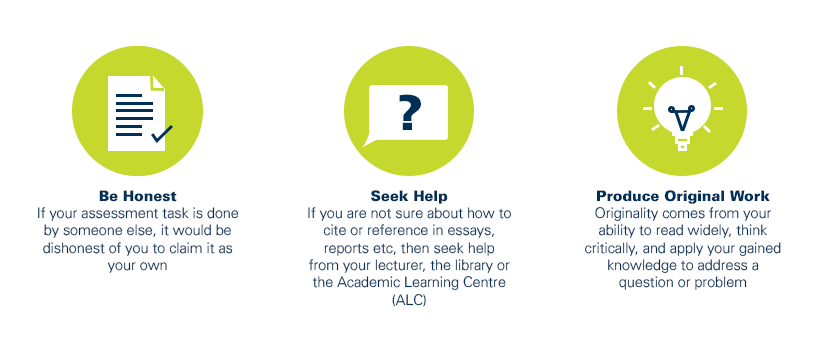
As a CQUniversity student you are expected to act honestly in all aspects of your academic work.
Any assessable work undertaken or submitted for review or assessment must be your own work. Assessable work is any type of work you do to meet the assessment requirements in the unit, including draft work submitted for review and feedback and final work to be assessed.
When you use the ideas, words or data of others in your assessment, you must thoroughly and clearly acknowledge the source of this information by using the correct referencing style for your unit. Using others’ work without proper acknowledgement may be considered a form of intellectual dishonesty.
Participating honestly, respectfully, responsibly, and fairly in your university study ensures the CQUniversity qualification you earn will be valued as a true indication of your individual academic achievement and will continue to receive the respect and recognition it deserves.
As a student, you are responsible for reading and following CQUniversity’s policies, including the Student Academic Integrity Policy and Procedure. This policy sets out CQUniversity’s expectations of you to act with integrity, examples of academic integrity breaches to avoid, the processes used to address alleged breaches of academic integrity, and potential penalties.
What is a breach of academic integrity?
A breach of academic integrity includes but is not limited to plagiarism, self-plagiarism, collusion, cheating, contract cheating, and academic misconduct. The Student Academic Integrity Policy and Procedure defines what these terms mean and gives examples.
Why is academic integrity important?
A breach of academic integrity may result in one or more penalties, including suspension or even expulsion from the University. It can also have negative implications for student visas and future enrolment at CQUniversity or elsewhere. Students who engage in contract cheating also risk being blackmailed by contract cheating services.
Where can I get assistance?
For academic advice and guidance, the Academic Learning Centre (ALC) can support you in becoming confident in completing assessments with integrity and of high standard.
What can you do to act with integrity?