Overview
The accurate diagnosis of cardiac conditions requires comprehensive knowledge of cardiac pathophysiology, and the outcomes of a variety of cardiovascular assessment procedures. In this unit you will be introduced to cardiac assessment within the catheterisation laboratory. You will learn how to interpret a 12-lead electrocardiogram (ECG), and how to assess cardiac structure and function by performing a two-dimensional echocardiographic examination. Within the ethical framework of best practice, you will examine simulated case-based clinical information. You will explore the outcomes of cardiac diagnostic procedures, formulate differential diagnoses and patient management strategies for a variety of common cardiovascular pathologies. Attendance at practical activities is a requirement of this unit.
Details
Pre-requisites or Co-requisites
Pre-requisite ECHO11003 Fundamentals of Cardiac Science AND ALLH11009 Research Methods for Health Professionals AND MEDI11004 Professional Practice AND ECHO11002 Cardiac Structure and Function and ECHO11004 Biochemistry for Cardiac Pharmacology Co-requisiteMEDS12001 Physics of Ultrasound and MPAT12001 Medical Pathophysiology
Important note: Students enrolled in a subsequent unit who failed their pre-requisite unit, should drop the subsequent unit before the census date or within 10 working days of Fail grade notification. Students who do not drop the unit in this timeframe cannot later drop the unit without academic and financial liability. See details in the Assessment Policy and Procedure (Higher Education Coursework).
Offerings For Term 1 - 2026
Attendance Requirements
All on-campus students are expected to attend scheduled classes - in some units, these classes are identified as a mandatory (pass/fail) component and attendance is compulsory. International students, on a student visa, must maintain a full time study load and meet both attendance and academic progress requirements in each study period (satisfactory attendance for International students is defined as maintaining at least an 80% attendance record).
Recommended Student Time Commitment
Each 12-credit Undergraduate unit at CQUniversity requires an overall time commitment of an average of 25 hours of study per week, making a total of 300 hours for the unit.
Class Timetable
Assessment Overview
Assessment Grading
This is a graded unit: your overall grade will be calculated from the marks or grades for each assessment task, based on the relative weightings shown in the table above. You must obtain an overall mark for the unit of at least 50%, or an overall grade of 'pass' in order to pass the unit. If any 'pass/fail' tasks are shown in the table above they must also be completed successfully ('pass' grade). You must also meet any minimum mark requirements specified for a particular assessment task, as detailed in the 'assessment task' section (note that in some instances, the minimum mark for a task may be greater than 50%). Consult the University's Grades and Results Policy for more details of interim results and final grades.
All University policies are available on the CQUniversity Policy site.
You may wish to view these policies:
- Grades and Results Policy
- Assessment Policy and Procedure (Higher Education Coursework)
- Review of Grade Procedure
- Student Academic Integrity Policy and Procedure
- Academic Progression Policy and Procedure
- Student Refund and Credit Balance Policy and Procedure
- Complaints Policy and Procedure
- Information and Communications Technology Acceptable Use Policy and Procedure
This list is not an exhaustive list of all University policies. The full list of University policies are available on the CQUniversity Policy site.
Feedback, Recommendations and Responses
Every unit is reviewed for enhancement each year. At the most recent review, the following staff and student feedback items were identified and recommendations were made.
Feedback from SUTE Feedback
Students would like access to measurement software at home.
Echocardiography students will have access to a new online measurement software from Term 2, 2025, following the university’s recent investment in the Phillips IntelliSpace CardioVascular web-based platform. This will allow use from home and support more flexible learning.
Feedback from SUTE Feedback
Students would like more guidance on the mark allocation for the written assessment.
Students were provided with a detailed marking rubric outlining mark allocation. Students may benefit from further explanation of the marking rubric and how the marks relate to the questions in the assessment, either in the unpacking of the assessment video or within a tutorial.
Feedback from SUTE Feedback
Students felt that too many assessments were due at the same time and suggested that deadlines could be more evenly spaced.
Scheduling should be reviewed to explore options for better spacing of assessments, aiming to support workload balance and reduce pressure.
Feedback from SUTE and CQU Success Feedback
Some students felt the lecture slides lacked sufficient detail.
The lecture slides are designed to highlight key concepts and encourage active listening and note-taking, which are essential for deeper understanding and retention. Students will continue to be supported through a range of learning resources and activities to reinforce their understanding.
Feedback from SUTE Feedback
Students noted inconsistencies in feedback between tutors and expressed a preference for feedback that not only highlights areas for improvement but also provides constructive guidance on how to improve, rather than focusing solely on what was done incorrectly.
A standardised feedback framework will be crafted and provided to all tutors. It should emphasise constructive guidance, helping students understand not only what needs improvement but also how to improve. A Zoom session with tutors may also be beneficial in supporting this approach and enhancing the overall learning experience.
- Perform the standard two-dimensional echocardiographic protocol including associated anatomical quantification.
- Formulate and evaluate reasoned arguments for the exclusion of artefactual and discordant two-dimensional echocardiographic findings.
- Analyse case-based clinical information to formulate differential diagnoses and plan patient management strategies for a variety of common cardiovascular pathologies.
- Discuss common cardiac catheterisation procedures including radiation safety.
- Analyse the output of 12-lead electrocardiogram (ECG) studies.
- Apply professional behaviour, teamwork and communication skills consistent with safe practice.
- Apply reflective feedback to professional practice improvement.
Linked to National and International Standards
1. ASAR Accreditation Standards for Cardiac Sonography - critical practice Unit 8 - Cardiac, Foundation units of competence - 1 - 5.
2. European Association of Cardiovascular Imaging Core Syllabus
3. American Registry for Cardiac Sonography Core Syllabus
Alignment of Assessment Tasks to Learning Outcomes
| Assessment Tasks | Learning Outcomes | ||||||
|---|---|---|---|---|---|---|---|
| 1 | 2 | 3 | 4 | 5 | 6 | 7 | |
| 1 - Online Quiz(zes) - 20% | |||||||
| 2 - Written Assessment - 30% | |||||||
| 3 - Practical Assessment - 0% | |||||||
| 4 - Performance - 0% | |||||||
| 5 - Reflective Practice Assignment - 0% | |||||||
| 6 - In-class Test(s) - 50% | |||||||
Alignment of Graduate Attributes to Learning Outcomes
| Graduate Attributes | Learning Outcomes | ||||||
|---|---|---|---|---|---|---|---|
| 1 | 2 | 3 | 4 | 5 | 6 | 7 | |
| 1 - Communication | |||||||
| 2 - Problem Solving | |||||||
| 3 - Critical Thinking | |||||||
| 4 - Information Literacy | |||||||
| 5 - Team Work | |||||||
| 6 - Information Technology Competence | |||||||
| 7 - Cross Cultural Competence | |||||||
| 8 - Ethical practice | |||||||
| 9 - Social Innovation | |||||||
| 10 - First Nations Knowledges | |||||||
| 11 - Aboriginal and Torres Strait Islander Cultures | |||||||
Textbooks
12-lead ECG. The Art of interpretation
- Edition: 2nd (2015)
- Authors: Garcia
- Jones & Bartlett Learning
- Burlington Burlington , MA , United States of America
- ISBN: 9780763773519
- Binding: Other
A Sonographer’s Guide to the Assessment of Heart Disease
- Edition: 1st (2016)
- Authors: Anderson
- Echotext Pty Ltd
- Australia
- ISBN: 9780992322205
- Binding: Hardcover
Echocardiography: The Normal Examination and Echocardiographic Measurements
- Edition: 3rd (2017)
- Authors: Anderson
- Echotext Pty Ltd
- Australia
- ISBN: 9780992322212
- Binding: Hardcover
Invasive Cardiology: a Manual for Cath Lab Personnel with Navigate Advantage Access
- Edition: 4th (2024)
- Authors: Sandy Watson and Kenneth A. Gorski
- Jones & Bartlett Learning, LLC
- Burlington Burlington , MA , United States of America
- ISBN: 9781284222128
EBook ISBN provided, Available as a print book 9781284222111
- Binding: eBook
IT Resources
- CQUniversity Student Email
- Internet
- Unit Website (Moodle)
All submissions for this unit must use the referencing style: Vancouver
For further information, see the Assessment Tasks.
k.cumins@cqu.edu.au
p.boucaut@cqu.edu.au
Week 1
Begin Date: 09 Mar 2026Module/Topic
CCL: Purpose, procedures, and equipment.
ECG: ECG interpretation: The basics. P waves.
Echo: Echocardiographic windows and M-mode and two-dimensional protocol, M-mode and two-dimensional image optimisation, and M-mode measurements.
Chapter
See eReading List via Moodle.
Events and Submissions/Topic
Laboratory Agreement Form and Consent Form to be completed during the first laboratory session in week 1.
Week 2
Begin Date: 16 Mar 2026Module/Topic
CCL: Radiation.
ECG: P-R interval, Q waves, QRS Complex.
Echo: M-mode and two-dimensional left heart measurements.
Chapter
See eReading List via Moodle.
Events and Submissions/Topic
Week 3
Begin Date: 23 Mar 2026Module/Topic
CCL: Pressure transducers.
ECG: ST segment, T waves, Q-T interval.
Echo: M-mode and two-dimensional right heart measurements.
Chapter
See eReading List via Moodle.
Events and Submissions/Topic
Week 4
Begin Date: 30 Mar 2026Module/Topic
CCL: Haemodynamics.
ECG: Interpretation.
Echo: Advanced two-dimensional image optimisation, cardiac anatomical variants, and sonographer ergonomics.
Chapter
See eReading List via Moodle.
Events and Submissions/Topic
Week 5
Begin Date: 06 Apr 2026Module/Topic
CCL: Determining cardiac output (CO).
ECG: Identifying arrhythmias.
Echo: Two-dimensional assessment of left ventricular regional wall motion abnormalities.
Chapter
See eReading List via Moodle.
Events and Submissions/Topic
Echocardiography Measurement Workbook, Part 1 Due: Wednesday (8th April 2026) at 2:00 pm AEST.
Week 6
Begin Date: 13 Apr 2026Module/Topic
Echo: Assessment of chest pain
Chapter
See eReading List via Moodle.
Events and Submissions/Topic
ECG Online Quiz will open at 8:00 am (AEST) on Tuesday, 14th April and will close at 8:00 pm (AEST) on Friday, 17th April 2026.
Break Week
Begin Date: 20 Apr 2026Module/Topic
Chapter
Events and Submissions/Topic
Week 7
Begin Date: 27 Apr 2026Module/Topic
Echo: M-mode and two-dimensional assessment of aortic valve anatomy and disease, and aortopathies.
Chapter
See eReading List via Moodle.
Events and Submissions/Topic
Week 8
Begin Date: 04 May 2026Module/Topic
Echo: M-mode and two-dimensional assessment of mitral valve anatomy and disease.
Chapter
See eReading List via Moodle.
Events and Submissions/Topic
Week 9
Begin Date: 11 May 2026Module/Topic
Echo: M-mode and two-dimensional assessment of tricuspid and pulmonary valve anatomy and disease.
Chapter
See eReading List via Moodle.
Events and Submissions/Topic
Week 10
Begin Date: 18 May 2026Module/Topic
Echo: Pericardial effusions.
Chapter
See eReading List via Moodle.
Events and Submissions/Topic
Echocardiographic Skills Assessment is scheduled week 10.
Week 11
Begin Date: 25 May 2026Module/Topic
Echo: Two-dimensional assessment of cardiac masses.
Chapter
See eReading List via Moodle.
Events and Submissions/Topic
Echocardiography Measurement Workbook, Part 2 Due: Wednesday (25th May 2026) at 12:00 pm AEST.
Week 12
Begin Date: 01 Jun 2026Module/Topic
Revision
Chapter
Events and Submissions/Topic
Echocardiographic Skills Assessment Re-sit scheduled week 12.
Professional Behaviour and Laboratory Attendance Forms are to be completed and uploaded to Moodle by Friday (5th June 2026) 8:00 pm AEST.
In-Class Test Due: Week 12 Tuesday (2 June 2026) 9:00 am AEST
Exam Week
Begin Date: 08 Jun 2026Module/Topic
Chapter
Events and Submissions/Topic
Vacation/Exam Week
Begin Date: 15 Jun 2026Module/Topic
Chapter
Events and Submissions/Topic
The Unit Coordinator for ECHO12006 is Katrina Cumins. The most efficient and preferred method of contacting Katrina, and other staff involved in the running of this unit, is via the Q&A forum located on the unit Moodle site. If your query is of a personal nature, please contact Katrina directly via email (k.cumins@cqu.edu.au). While Katrina will endeavour to deal with all enquiries as soon as possible, please be aware she works a three-day week at CQUniversity, Monday - Wednesday.
Multiple academic staff will be providing presentations and hosting tutorials as part of this unit's delivery. Contact details for other academic staff can be found on the Moodle site.
Students are encouraged to use the Learning Community Q&A forum on the ECHO12006 Moodle site as the first point of contact. Prioritising the forum allows the entire cohort to view and benefit from questions and answers. Forums are monitored and responses will be provided in a timely manner. Students are encouraged to review the CQUniversity Student Charter and follow advice on appropriate conduct within the university environment (on-campus and online).
ECHO12006 consists of weekly lectures, readings, live tutorials, and laboratory sessions. Lectures present central information, with essential and supporting resources outlined on the ECHO12006 eReading List. Tutorials are held via Zoom, with specific meeting times and access details posted on the ECHO12006 Moodle site under Virtual Classes. Tutorials are designed to be interactive and focus on the clarification of unit concepts, application of knowledge, and preparation for assessments. Tutorials are recorded for educational purposes and may be posted on the ECHO12006 Moodle site. If you have concerns about being recorded please adjust your audio/visual settings as appropriate. Your participation implies consent for recorded tutorials.
The laboratory induction and all skills laboratory sessions for ECHO12006 are mandatory. The Mandatory Laboratory Induction must be completed during the first laboratory session. Laboratory Documents (Laboratory Agreement Form + Consent Form) are available on the ECHO12006 Moodle site and must be completed before accessing ECHO12006 on-campus activities. Please review the Laboratory Resources tile on the ECHO12006 Moodle site. Laboratory sessions that are not attended must be accompanied by appropriate documentation and cannot be attended at a later date. All students are to demonstrate appropriate professional behaviour, including appropriate dress (see the CV69 Course Dress Code). All students must be available to act as a patient model throughout the term, as well as during mock practical assessments, practical assessments and re-sit practical assessments.
Further unit information is available on the ECHO12006 Moodle site.
1 Online Quiz(zes)
The ability to correctly analyse, interpret and understand a 12-lead electrocardiogram (ECG) and background theory is crucial in a professional cardiac diagnostic role. Comprehensive ECG analysis and interpretation can provide vital information about the location and nature of heart disease.
Students will be required to recall relevant theoretical concepts as well as perform accurate ECG interpretation following a methodological approach as outlined in lectures. The Online Quiz will assess all ECG content in weeks 1-5 inclusive.
Students will have 60 minutes to complete the quiz once it is started.
- This assessment is open book. You may benefit from having normal electrocardiographic reference ranges and a calculator available when attempting the quiz.
- This assessment is to be undertaken as an individual. As with all other university assessments, colluding with other students on non-group work tasks is considered academic misconduct, and may lead to action being taken by the Deputy Dean of Learning and Teaching HMAS.
The Online Quiz will be accessible through the assessment tab on Moodle.
It is important that you commence the Online Quiz before 7:00 pm (AEST) on Friday the 17th of April 2026. If you have not completed the test by 8:00 pm on Friday, your test may be submitted as incomplete or with no answers.
Please note:
- Once started, the quiz cannot be paused or restarted
- Only one attempt is permitted
- The Online Quiz will automatically close at 8:00 pm (AEST) on Friday, 17th of April 2026.
In the absence of an approved extension, the ECG Online Quiz cannot be completed at a later time.
The 72-hour grace period does not apply to this assessment.
Students are reminded that IT support from the university's Information and Technology Division (TASAC) is only available during AEST business hours.
- If attempt issues occur outside of business hours, students should immediately email the Unit Coordinator documenting difficulties.
- Advice should include the date and time of the incident and a screenshot from the PC display if an error is evident.
- Incidents will be considered on a case-by-case basis. There is no guarantee extra quiz attempts will be offered.
Students are advised to refer to the 'Assessment Policy and Procedure (Higher Education Coursework)' document for additional university assessment guidelines.
Level of GenAI use allowed:
Level 1: You must not use AI at any point during the assessment. You must demonstrate your core skills and knowledge.
The ECG Online Quiz will open on Tuesday (14th April 2026) 8:00 am (AEST) and will close on Friday (17th April 2026) 8:00 pm (AEST) .
Feedback will be provided to students within two weeks of submission.
Students will be assessed on their ability to recall theory and accurately interpret a 12-lead ECG using the methodological approach available on Moodle. Marks will be awarded based on the student's ability to:
- Recall 12-lead ECG theory
- Analyse calibration settings;
- Analyse cardiac rhythm, rate, and axis;
- Identify common arrhythmias; and
- Utilise correct terminology in interpreting ECG waveforms, segments, intervals, and associated anomalies.
No submission method provided.
- Analyse the output of 12-lead electrocardiogram (ECG) studies.
2 Written Assessment
This written assessment task requires you to explore a range of common cardiovascular pathologies. You will analyse provided clinical information, including the outcomes of a variety of cardiac diagnostic testing procedures. Your conclusions will be used to confirm patient diagnosis and strategise plausible management strategies.
Case Study:
An 85‑year‑old female presents with progressive chest pain and worsening shortness of breath. Over recent weeks, she has developed increasing orthopnoea, requiring several pillows at night, as well as episodes of paroxysmal nocturnal dyspnoea. She also reports marked bilateral lower‑limb oedema and a noticeable decline in functional capacity, becoming breathless with minimal exertion. Her vital signs are stable aside from mild tachycardia.
The combination of chest discomfort, heart failure symptoms, and abnormal cardiovascular findings prompts further evaluation with ECG and echocardiography to assess for potential structural heart disease.
The clinical picture is compatible with several cardiac pathologies, and echocardiographic imaging will be essential in distinguishing between;
- Dilated cardiomyopathy, characterised by ventricular dilation and systolic dysfunction, or
- Hypertensive heart disease, which may present with concentric left ventricular hypertrophy, especially in an elderly patient with long‑standing or under‑recognised hypertension.
Both conditions could explain the patient’s presenting symptoms, making it crucial to exclude these differential diagnoses.
Selected diagnostic imaging and testing outcomes can be viewed on the unit Moodle site under the Assessment tile.
Considering the 2D echocardiographic findings presented, respond to the following prompts:
- Which cardiac condition (dilated cardiomyopathy or hypertensive heart disease) does the patient likely have? Justify your answer.
- Discuss the aetiology of this cardiac condition.
- Explain why or how this condition may have caused the patient's presenting symptoms.
- Discuss the pathophysiology of this cardiac condition.
- Interpret the 12‑lead ECG provided. Describe the significant findings and discuss how these relate to the underlying cardiac condition in this patient. Briefly explain the pathophysiological mechanisms responsible for these ECG changes.
- Quantify the left ventricular volume and ejection fraction, and identify any erroneous echocardiographic measurement data presented. Include rationale for your conclusions. Compare the ejection fraction you calculated with normal reference ranges. Based on your findings, how does the EF support the diagnosis of dilated cardiomyopathy in this patient?
- Discuss the other 2D and M-Mode echocardiographic features of this cardiac condition evident in the case study.
- Briefly discuss one way in which this cardiac condition may be managed.
Word Count 1400 (+/- 10%)
The written assessment must be presented in a scholarly manner. Accurate spelling and grammar, use of discipline-specific language, paraphrasing and referencing including intext citation must be demonstrated.
Research for this assessment task is to be limited to:
- The literature sources provided on the unit Moodle eReading list (including prescribed textbooks)
- No more than three (3) additional independently sourced journal articles.
The reference list is not included in the word count. Content beyond the word limit will not be marked.
Further information regarding the task descriptor and assessment criteria can be viewed in the Unit Profile, published under the information tab at the top left-hand side of the unit Moodle site.
Students are advised to review and utilise the "Written Task Rubric" document.
Level of GenAI use allowed:
Level 2: You may use Al for planning, idea development, and research. Your final submission should show how you have developed and refined these ideas.
Week 8 Wednesday (6 May 2026) 12:00 pm AEST
Feedback will be provided to students within two weeks of submission.
A detailed marking rubric is published on the ECHO12006 Moodle site, with grading based on the student's ability to:
- Analyse and discuss cardiovascular findings;
- Research and evaluate topics;
- Apply academic referencing protocols;
- Apply scholarly presentation standards; and
- Apply critical reflection to practice.
- Analyse case-based clinical information to formulate differential diagnoses and plan patient management strategies for a variety of common cardiovascular pathologies.
- Analyse the output of 12-lead electrocardiogram (ECG) studies.
3 Practical Assessment
The Echocardiographic Skills Assessment is comprised of two parts— Part A 'Practical' and Part B 'Measurement Performance'.
PART A - Practical
Part A of the Echocardiography Skills Assessment incorporates both a Professional and Technical component and requires students to perform a complete M-mode and two-dimensional echocardiographic examination using ultrasound equipment. Students have 70 minutes in total to complete both the Professional and Technical components.
Students will be assessed according to the Part A - Assessment of Readiness for Clinical (ARC) tool, which is available on the unit Moodle site. This document details performance criteria the student must demonstrate competence in to pass the assessment.
Professional Component
The professional component of the assessment evaluates performance aspects of the sonographic exam such as communication (verbal, non-verbal, and written), professional behaviour, ergonomics, and patient care skills. This encompasses an assessment of pre-scan, scanning, and post-scan skills.
Technical Component
The technical component of the assessment evaluates the student's scanning technique, image optimisation, and ability to complete an M-mode and two-dimensional echocardiogram within a reasonable set time to a 'Novice' level of competency.
- The ARC tool details the required imaging sequence and performance criteria cues.
- Except for panning or sector sweeps, which are critiqued live or via video recording moderation, the collection of images stored by the student represent the echocardiographic examination performed.
- At the end of the examination, the supervising tutor will acquire a variety of representative images. These images will be used during marking and moderation to ascertain achievable image quality.
Note: Part A (Practical) of the Echocardiography Skills Assessment will be video recorded for moderation purposes. The videos will not be released to students for review.
All students are required to make themselves available to act as a patient model for peer assessments. Students must additionally make themselves available for re-sit assessments if requested by the unit coordinator.
PART B - Measurement Performance
Part B of the Echocardiography Skills Assessment incorporates M-mode and two-dimensional measurement performance and self-reflection components through completion of a Laboratory Workbook.
The Laboratory Workbook assessment task requires students to engage in six (6) laboratory exercises designed to develop their echocardiography measurement skills. There are six compulsory laboratory sessions where students will be required to take precise measurements and input their measured images and values into the designated fields within the workbook. Each laboratory session concludes with several questions, which the student must complete to demonstrate their understanding. Students may complete the laboratory workbook questions during the lab sessions or later in their own time.
The final laboratory workbook task requires students to perform a series of measurements and then reflect on their own measurements for accuracy and precision. This laboratory workbook aims to develop student's accuracy in measurement technique, emphasise the importance of precise documentation, and improve analytical skills through question completion.
Students are required to:
- Apply best practice guidelines when performing M-mode and two-dimensional measurements on echocardiographic images using discipline-specific software.
- Transcribe precise measurements and save acquired images of measurement performance into the Laboratory Workbook.
- Provide a meaningful reflection demonstrating self-awareness by identifying strengths and weaknesses in skill development.
The Laboratory Workbook must be uploaded as two separate submissions:
- Part 1 is to be submitted in Week 5. Part 1 will comprise labs 1 - 4.
- Part 2 is to be submitted in Week 11. Part 2 will comprise labs 5 - 6 and the final measurement task.
Submissions are to be uploaded to Moodle via the link provided in the Assessment tile.
Individual student feedback will be provided only where performance deficits are identified.
Students are advised to refer to the 'Assessment Policy and Procedure (Higher Education Coursework)' document for additional university guidelines regarding assessments.
The 72-hour grace period does not apply to this assessment. Due to the pass/fail nature of assessment components, there is no opportunity to apply a 5% penalty due to late submission. If a student does not attend a lab session for any reason, they are still required to submit the completed Laboratory Workbook by the due date. In the absence of an approved extension, this assessment cannot be completed at a later time and students will receive a FAIL for this assessment item.
Level of GenAI use allowed:
Level 1: You must not use AI at any point during the assessment. You must demonstrate your core skills and knowledge.
The Skills Assessment will be completed during Week 10. The Re-sit Skills Assessment will be completed during Week 12. Schedules will be posted on the ECHO12006 Moodle site. The Echocardiography Laboratory Workbook is to be submitted in two parts. Part 1 due: 2:00 pm (AEST) Wednesday 8th April, Week 5. Part 2 due: 12:00 pm (AEST), Monday 25th May, Week 11.
Feedback will be provided to students within two weeks of submission.
Part A 'Practical' and Part B 'Measurement Performance' are assessed as independent components constituting the overall Echocardiography Skills Assessment.
PART A - Practical
To pass Part A of this assessment, a student must be deemed competent in both the Professional and Technical components. To pass these components, ALL criteria must be demonstrated to the appropriate level of competence detailed in the Part A - Assessment of Readiness for Clinical (ARC) Tool. Students are advised to carefully review this document, which is available on the unit Moodle site.
The professional and technical components are graded separately so that if one is passed and the other is not, only the failed component must be repeated to pass.
There is only ONE opportunity to re-sit either component of this assessment item.
PART B - Measurement Workbook
To pass Part B of this assessment, ALL sections in the Laboratory Workbook must be completed.
Students must demonstrate:
- Reasonable accuracy and consistency in measurement technique.
- Reflective discussion with insight into individual performance showing ability to critically examine where further development is needed.
There is only ONE opportunity to re-submit this assessment item.
Mock Examination
Students will be provided with a single opportunity to attempt the Echocardiography Skills Assessment under mock examination conditions. Individual feedback will be provided to students after completing the mock assessment. Students will receive a completed MOCK Part A - Assessment of Readiness for Clinical (ARC) Tool following marking. Scanning feedback will be provided verbally by the tutor supervising each individual student mock practical scanning assessment.
The mock assessment will be delivered as part of the routine laboratory sessions.
Note: there is no opportunity for rescheduling of missed laboratory sessions and any academic impact resulting from absence remains the student’s responsibility.
- Perform the standard two-dimensional echocardiographic protocol including associated anatomical quantification.
- Formulate and evaluate reasoned arguments for the exclusion of artefactual and discordant two-dimensional echocardiographic findings.
- Apply professional behaviour, teamwork and communication skills consistent with safe practice.
4 Performance
The purpose of this assessment is to ensure that students from the echocardiography course are well-equipped to embody the high standards of professionalism that are expected from CQUniversity students while on clinical placement blocks. Professional behaviour is a critical part of any medical imaging profession and encompasses the manner in which we treat our colleagues, patients and the professional settings and equipment we interact with. Exemplary professional behaviour is highly valued by clinical supervisors and this information may be used to endorse students for placements if requested by clinical sites.
This assessment requires students to treat each of the lab sessions as a scheduled "work shift" and to exhibit high-quality professional attributes. This assessment is based on a continuous and ongoing evaluation of student application and attendance during labs, and behaviour exhibited during the time spent studying this unit up until the completion of all formal assessments. Aspects of professionalism will be assessed across multiple levels including, but not limited to: maintenance of laboratory documentation, Moodle forums, online tutorials, lab sessions (both peer-assisted and tutor assisted), interactions with peers and staff, social media, phone calls and all official correspondence with university staff, peers and the community.
Instances of substandard professional behaviour will result in a Lapse in Professionalism (LiP) point being awarded to the offending student. Should a student acquire more than three (3) LiPs, this assessment will automatically be graded a FAIL.
LiPs may be issued in three different categories:
- Professional behaviour towards colleagues and staff
- Professional behaviour towards patients
- Professional behaviour towards professional settings and equipment.
Further information is detailed in the Expected Professional Behaviour and LiP Allocation document, which is available on the Moodle site. Students are encouraged to review this document to be sure of behavioural expectations. Students should also be familiar with the CQUniversity Student Charter as well as the Australasian Sonographers Association (ASA) Code of Conduct (available online).
If an unprofessional attitude or behaviour is reported by fellow classmates and not witnessed by a staff member, a written warning detailing the allegations will be issued to the student and the student's response will be documented. If further evidence of ongoing unprofessional behaviour arises then a LiP may be awarded. If any exhibited attitude or behaviour is deemed as unsafe or inappropriate, this assessment will be graded as a FAIL at the discretion of the unit coordinator.
Absenteeism
Skills labs for this unit are mandatory. Students must advise the unit coordinator before the start of compulsory labs if unable to attend. Failure to notify staff (via email or phone) before the start of a missed lab will result in a LiP (Lapse in Professionalism) except in extraordinary circumstances. Lateness to labs may result in a LiP, whether notice is given or not. Labs missed for a valid reason (eg. illness or injury) require supporting documentation. Medical or health-related certificates must be in the approved formats articulated in the CQUniversity Assessment Policy and Procedure (HE Coursework), section 5.
Any missed labs must be clearly marked on the Lab Attendance Page and Reflective Feedback Form. A tutor's signature is not required in this case. There is no opportunity to 'make up' missed lab sessions.
Peer-Assisted Practice (PAP) Sessions
Students are offered regular peer-assisted practice sessions, which are scheduled through Google Doc links on the Moodle site. Penalties will be applied if instructions and rules disclosed on these documents are not adhered to. Failure to abide by these regulations may result in a LiP and removal of attendance privileges.
Tutor Assisted Practice (TAP) Sessions
Students are offered several TAP sessions throughout the term, which are scheduled through Google Doc links on the Moodle site. A tutor will be present to offer direct assistance to students in a group setting.
Level of GenAI use allowed:
Level 1: You must not use AI at any point during the assessment. You must demonstrate your core skills and knowledge.
Laboratory Agreement Form and Consent Form in the first laboratory session in week 1; Professional Behaviour Rubric Form and Laboratory Attendance Form due via Moodle by Friday 5th June 2026 at 8:00 pm (AEST).
This assessment incorporates maintenance of pertinent lab documentation including lab attendance and any Lapse in Professionalism (LiP) points accrued throughout unit delivery. To pass this unit students need to consistently display a high standard of professional behaviour including, but not limited to, punctual lab attendance. All interactions with staff and peers pertaining to this unit will be treated as a replica of the clinical work environment, and students are expected to demonstrate the professional behaviour expected in a formal work environment. No more than three (3) Lapses in
Professionalism are permitted to pass the unit.
Students are required to complete the following documentation and submit to Moodle in PDF format. All documents are available on the unit Moodle page.
- A signed Lab Agreement Form (to be completed in the first laboratory session in week 1).
- A signed Consent Form - Sonographic Examination for Teaching Purposes (to be completed in the first laboratory session in week 1).
- A completed and signed Lab Attendance and Professional Behaviour Assessment form (signed and uploaded to Moodle by week 12, Friday 5th June at 8:00 pm (AEST) ).
The "Laboratory Agreement Form" and "Consent Form", as well as the Mandatory Laboratory Induction, must be completed in the first laboratory session in week 1. Students cannot participate in laboratory activities until these documents are completed.
To PASS this assessment, all documentation must be completed appropriately, legible, labelled appropriately and submitted by the due date and time.
- Apply professional behaviour, teamwork and communication skills consistent with safe practice.
5 Reflective Practice Assignment
The ability to set goals, self-reflect, and take advantage of feedback, are important to aid the progress of knowledge and skill development. These abilities also address industry requirements, whereby professionals must perform continuing professional development (CPD) activities.
Students are to develop goal-setting, reflection, and feedback skills through weekly activities:
- Formative Feedback Forms (one for each laboratory session; a total of six forms). Each form must include goal-setting and self-reflection, tutor feedback, and tutor signature. The feedback form must be completed before leaving the associated laboratory session.
- Mock Assessment Reflection. This form must include a reflection on areas of strength and areas for improvement in preparation for the Skills Assessment.
The "Formative Feedback and Self-Reflection Forms" are available on the ECHO12006 Moodle site.
Level of GenAI use allowed:
Level 1: You must not use AI at any point during the assessment. You must demonstrate your core skills and knowledge.
Week 9 Friday (15 May 2026) 12:00 pm AEST
Feedback will be provided to students within two weeks of submission.
The Formative Feedback and Self-Reflection document is available on the Moodle site and must be presented to the supervising tutor at each of the tutorial lab sessions.
To PASS this assessment, all documentation must be completed appropriately and submitted by the due date and time.
All documents must be legible, labelled appropriately and uploaded in PDF format.
- Apply reflective feedback to professional practice improvement.
6 In-class Test(s)
This test will be a written test performed in-class with closed-book conditions at the campus of your enrolment. Room details will be published on the unit Moodle site.
If you arrive late, you may enter the test room up to 30 minutes after the start of the test; you will still be required to finish your test at the preset completion time. You will not be allowed entry more than 30 minutes after the test starts.
In the absence of an approved extension, you cannot complete this assessment at a later time, and you will receive a mark of zero (0) for the assessment if you have not completed it by the scheduled date and time.
This test will be conducted with invigilation and formal examination conditions as detailed in the CQU Assessment Procedures. As per CQU Assessment Procedures, this task is to be completed at the timetabled date and time. There is no opportunity to apply a late penalty.
Students are advised to refer to the 'Assessment Policy and Procedure (Higher Education Coursework) document for additional university guidelines regarding assessments.
The In-Class Test will assess your understanding of all echocardiography and cardiac catheterisation content presented in this unit. Questions may be drawn from lectures, additional resources provided (e.g. prescribed readings) or tutorial presentations.
- There will be 10 minutes perusal time.
- The test duration will be 180 minutes.
- You will be required to answer a variety of online questions. Questions may include multiple choice, short answer, essay style or image interpretation format.
- Question marks are allocated based on the accuracy, depth, and breadth of required responses. The number of marks allocated for each question will be indicated within the In-Class Test.
- It is recommended that you have a simple calculator available when sitting the test.
This assessment will be attempted individually. Colluding with other students on non-group work tasks is considered academic misconduct. Any breaches of academic misconduct may lead to action being taken by the Deputy Dean of Learning and Teaching, HMAS.
The 72-hour grace period does not apply to this assessment.
Level of GenAI use allowed:
Level 1: You must not use AI at any point during the assessment. You must demonstrate your core skills and knowledge.
Week 12 Tuesday (2 June 2026) 9:00 am AEST
Results will be available within two weeks of the due date.
The allocated number of marks for each question is indicated on the In-Class Test paper. Marks are allocated based on accuracy, depth and breadth of the required response.
Marks allocated to student responses will reflect the student's ability to:
- Evaluate cardiac imaging findings;
- Analyse clinical information;
- Discuss cardiac procedures; and
- Use discipline-specific terminology.
No submission method provided.
- Formulate and evaluate reasoned arguments for the exclusion of artefactual and discordant two-dimensional echocardiographic findings.
- Analyse case-based clinical information to formulate differential diagnoses and plan patient management strategies for a variety of common cardiovascular pathologies.
- Discuss common cardiac catheterisation procedures including radiation safety.
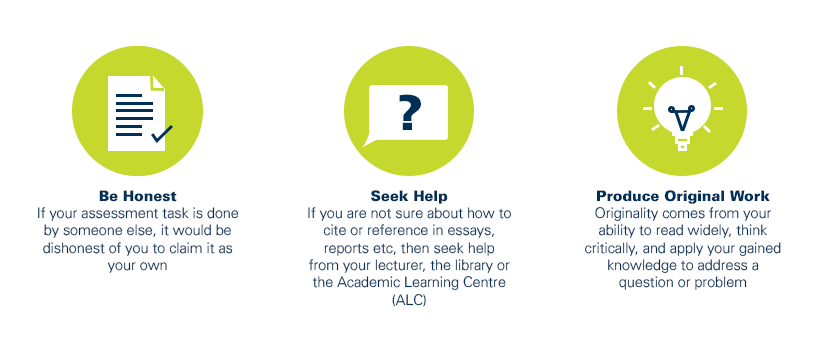
As a CQUniversity student you are expected to act honestly in all aspects of your academic work.
Any assessable work undertaken or submitted for review or assessment must be your own work. Assessable work is any type of work you do to meet the assessment requirements in the unit, including draft work submitted for review and feedback and final work to be assessed.
When you use the ideas, words or data of others in your assessment, you must thoroughly and clearly acknowledge the source of this information by using the correct referencing style for your unit. Using others’ work without proper acknowledgement may be considered a form of intellectual dishonesty.
Participating honestly, respectfully, responsibly, and fairly in your university study ensures the CQUniversity qualification you earn will be valued as a true indication of your individual academic achievement and will continue to receive the respect and recognition it deserves.
As a student, you are responsible for reading and following CQUniversity’s policies, including the Student Academic Integrity Policy and Procedure. This policy sets out CQUniversity’s expectations of you to act with integrity, examples of academic integrity breaches to avoid, the processes used to address alleged breaches of academic integrity, and potential penalties.
What is a breach of academic integrity?
A breach of academic integrity includes but is not limited to plagiarism, self-plagiarism, collusion, cheating, contract cheating, and academic misconduct. The Student Academic Integrity Policy and Procedure defines what these terms mean and gives examples.
Why is academic integrity important?
A breach of academic integrity may result in one or more penalties, including suspension or even expulsion from the University. It can also have negative implications for student visas and future enrolment at CQUniversity or elsewhere. Students who engage in contract cheating also risk being blackmailed by contract cheating services.
Where can I get assistance?
For academic advice and guidance, the Academic Learning Centre (ALC) can support you in becoming confident in completing assessments with integrity and of high standard.
What can you do to act with integrity?