Overview
This clinical unit will provide opportunities to apply and integrate both theoretical and practical knowledge, skills and professional behaviours in the clinical environment. In addition to the consolidation of skills in electrophysiological assessment, you will be exposed to a range of cardiovascular assessment techniques, including echocardiography. Using clinical cases you will analyse and reflect upon the information provided to produce provisional differential diagnoses and patient management plans within an ethical framework of best practice and patient safety. Behavioural aspects of professional practice are emphasised and you are expected to reflect on your own performance and exhibit the highest level of safe patient care. Critical appraisal of performance will enable you to advance your professional, technical and analytical skills in a work setting under qualified supervision.
Details
Pre-requisites or Co-requisites
Pre-requisites: ECHO12003 Principles of Cardiac Assessment and ECHO12004 Cardiac Assessment Skills 1 OR ECHO12008 Doppler Echocardiography and ECHO12007 Cardiac Rhythm Assessment. Both ECHO12003 Principles of Cardiac Assessment and ECHO12004 Cardiac Assessment Skills 1 OR ECHO12008 Doppler Echocardiography and ECHO12007 Cardiac Rhythm Assessment must have been successfully completed within the last twelve months. Should this time limit have elapsed the student must successfully complete one (or more) technical skill, professional behaviour and diagnostic knowledge-based assessment(s) (after completion of technical skill / knowledge revision). Details of this will be articulated in a learning contract created by the Head of Course or designate.
Important note: Students enrolled in a subsequent unit who failed their pre-requisite unit, should drop the subsequent unit before the census date or within 10 working days of Fail grade notification. Students who do not drop the unit in this timeframe cannot later drop the unit without academic and financial liability. See details in the Assessment Policy and Procedure (Higher Education Coursework).
Offerings For Term 3 - 2026
Attendance Requirements
All on-campus students are expected to attend scheduled classes - in some units, these classes are identified as a mandatory (pass/fail) component and attendance is compulsory. International students, on a student visa, must maintain a full time study load and meet both attendance and academic progress requirements in each study period (satisfactory attendance for International students is defined as maintaining at least an 80% attendance record).
Recommended Student Time Commitment
Each 6-credit Undergraduate unit at CQUniversity requires an overall time commitment of an average of 12.5 hours of study per week, making a total of 150 hours for the unit.
Class Timetable
Assessment Overview
| Assessment Task | Part Weighting (% of assessment) |
Assessment Security Level | Gen AI Guidance Levels |
|---|---|---|---|
| 1. Portfolio (Pass/Fail ) | |||
| ECG Portfolio (Portfolio) | 100% | Medium | No Gen AI Use |
| 2. Online Quiz(zes) (Pass/Fail ) | |||
| ECG Quiz(zes) (Online Quiz(zes)) | 100% | Low | No Gen AI Use |
| 3. Practical Assessment (Pass/Fail ) | |||
| ECG Practical (Practical Assessment) | 100% | High | No Gen AI Use |
| 4. Practical Assessment (Pass/Fail ) | |||
| ECHO Practical (Practical Assessment) | 100% | High | No Gen AI Use |
| 5. Performance (Pass/Fail ) | |||
| Global Assessment of Professional Attributes (GAPA) (Performance) | 100% | High | No Gen AI Use |
| 6. Learning logs / diaries / Journal / log books (Pass/Fail ) | |||
| Clinical Case Log Book (Learning logs / diaries / Journal / log books) | 100% | High | No Gen AI Use |
| 7. Professional Practice Placement (Pass/Fail ) | |||
| Clinical Attendance Log Book (Professional Practice Placement) | 100% | High | No Gen AI Use |
Assessment Grading
This is a pass/fail (non-graded) unit. To pass the unit, you must pass all of the individual assessment tasks shown in the table above.
All University policies are available on the CQUniversity Policy site.
You may wish to view these policies:
- Grades and Results Policy
- Assessment Policy and Procedure (Higher Education Coursework)
- Review of Grade Procedure
- Student Academic Integrity Policy and Procedure
- Academic Progression Policy and Procedure
- Student Refund and Credit Balance Policy and Procedure
- Complaints Policy and Procedure
- Information and Communications Technology Acceptable Use Policy and Procedure
This list is not an exhaustive list of all University policies. The full list of University policies are available on the CQUniversity Policy site.
Feedback, Recommendations and Responses
Every unit is reviewed for enhancement each year. At the most recent review, the following staff and student feedback items were identified and recommendations were made.
Feedback from Student feedback
A student suggested that having a chat forum to ask placement‑related questions and discuss tutorial topics would be helpful.
In future deliveries, the UC will provide students with additional reminders about existing chat forums, to encourage consistent communication and support throughout placement.
Feedback from Student feedback
Students reported that the tutorials were most helpful when they focused on practical and clinically relevant content. They also appreciated the additional guidance around assessments and support resolving any placement challenges as they arose.
The UC will continue to provide structured tutorials, to support learning, maintain engagement, and offer students a consistent space to raise and resolve placement‑related issues. Ensuring these sessions remain aligned with assessment outcomes and focused on practical needs will further strengthen student progress and overall satisfaction.
- Perform electrophysiological and echocardiographic assessment on the cardiovascular system
- Analyse and communicate the outcomes of cardiac assessment including consideration of quality assurance
- Apply professional behaviour consistent with safe practice
- Analyse, and critically reflect upon, clinical cases involving various cardiac assessment techniques
- Attend clinical placement as per external accreditation requirements (Australian Sonographer Accreditation Registry).
Linked to National and International Standards
1. ASAR Accreditation Standards for Cardiac Sonography - critical practice Unit 8 - Cardiac, Foundation units of competence 1 - 5.
2. European Association of Cardiovascular Imaging Core Syllabus.
3. American Registry for Cardiac Sonography Core Syllabus.
Alignment of Assessment Tasks to Learning Outcomes
| Assessment Tasks | Learning Outcomes | ||||
|---|---|---|---|---|---|
| 1 | 2 | 3 | 4 | 5 | |
|
1.
Assessment 1
(Pass/Fail )
Portfolio
|
|||||
|
2.
Assessment 2
(Pass/Fail )
Online Quiz(zes)
|
|||||
|
3.
Assessment 3
(Pass/Fail )
Practical Assessment
|
|||||
|
4.
Assessment 4
(Pass/Fail )
Practical Assessment
|
|||||
|
5.
Assessment 5
(Pass/Fail )
Performance
|
|||||
|
6.
Assessment 6
(Pass/Fail )
Learning logs / diaries / Journal / log books
|
|||||
|
7.
Assessment 7
(Pass/Fail )
Professional Practice Placement
|
|||||
Alignment of Graduate Attributes to Learning Outcomes
| Graduate Attributes | Learning Outcomes | ||||
|---|---|---|---|---|---|
| 1 | 2 | 3 | 4 | 5 | |
| 1 - Communication | |||||
| 2 - Problem Solving | |||||
| 3 - Critical Thinking | |||||
| 4 - Information Literacy | |||||
| 5 - Team Work | |||||
| 6 - Information Technology Competence | |||||
| 7 - Cross Cultural Competence | |||||
| 8 - Ethical practice | |||||
| 9 - Social Innovation | |||||
| 10 - First Nations Knowledges | |||||
| 11 - Aboriginal and Torres Strait Islander Cultures | |||||
Textbooks
Echocardiography: The Normal Examination and Echocardiographic Measurements
- Edition: 3RD (2016)
- Authors: Bonita Anderson
- Echotext Pty Ltd
- Brisbane Brisbane , QLD , Australia
- ISBN: 9780992322212
- Binding: Hardcover
12-Lead ECG: The Art of Interpretation
- Edition: 2ND (2015)
- Authors: Garcia, Tomas B.,
- Jones & Bartlett Learning
- Burlington Burlington , United States
- ISBN: 9780763773519
- Binding: Paperback
IT Resources
- CQUniversity Student Email
- Internet
- Unit Website (Moodle)
All submissions for this unit must use the referencing style: Vancouver
For further information, see the Assessment Tasks.
a.rickwood@cqu.edu.au
p.boucaut@cqu.edu.au
Cardiac Clinical Unit 2 Practium - Block 1: 26/10/26 - 18/12/26. Block 2: 11/01/27 - 05/03/27
Begin Date: N/AModule/Topic
Content themes will be grouped and
presented in a modularised format on
the Moodle site.
Chapter
See eReading list
Events and Submissions/Topic
Practicum blocks will occur within a clinical placement window spanning across term three (3) on the academic
calendar.
Most assessment due dates are determined by each student’s individual practicum commencement date.
Online Quiz(zes) due dates align with the Term 3 academic calendar.
Detailed information regarding assessment due dates is provided in the Unit Profile.
The Work Integrated Learning (WIL) team will allocate student placements and advise practicum commencement
dates.
The unit coordinator for ECHO12005 Cardiac Clinical Unit 2 is Aidan Rickwood. The most efficient and preferred method of contacting Aidan is via the Q&A forum located on the unit Moodle site. If your query is of a personal nature, please contact Aidan directly via email (a.rickwood@cqu.edu.au) or phone (08 9260 4034). Aidan is based in Perth, and his normal workday pattern is Monday to Wednesday. Outside of these hours, email and forum responses may be delayed. If enquiry is urgent, please contact the Head of Course Paula Boucaut via p.boucaut@cqu.edu.au.
This unit is designed as a multi-modality placement to enable familiarisation within the cardiology department or clinic.
This placement opportunity will provide students with their first opportunity to apply and integrate theory, practical skills, and professional behaviour into a clinical setting.
Students are required to complete 320 hours (8 weeks) of clinical placement in this unit.
- A minimum of 80 hours of direct echocardiography observation / participation must be achieved during this 8-week clinical practicum block to meet Australian Sonographer Accreditation Registry (ASAR) requirements.
- As placements may be located throughout Australia and availability is limited in each community, students may be allocated to clinical sites that are not of their choosing.
- 100% attendance is required when undertaking clinical placement. Students must prepare financially and personally to relocate for placements.
- Placement blocks are not automatically extended beyond individually advised start/finish dates due to student absences mid practicum. Placement adjustments or extensions require Clinical Supervisor, Unit Coordinator and Head of Course approval.
- If there are gazetted public holidays during allocated practicum blocks, these can be entered as 8 hours on the clinical attendance form and do not need to be 'made up'.
- If a student is sick, please advise the Clinical Supervisor and Unit Coordinator on the day as these hours may need to be ‘made up’. A medical certificate will be required by the Unit Coordinator.
In the absence of timely notifications and submission of appropriate documentation, attendance shortfalls may delay student graduation, with outstanding hours requiring completion during an alternative practicum experience.
- Please advise the Unit Coordinator in writing if there is a need to extend the placement end date in order to complete unit requirements.
- If students complete the minimum 320 hours prior to the end of the clinical placement block, they are required to continue attending placement until the placement's prescribed finish date (unless an alteration to the standard placement block has been approved by the Head of Course and the Clinical Supervisor in writing).
Zoom tutorial times and meeting IDs will be posted on the unit Moodle site. Whilst attendance is strongly encouraged, tutorials will be recorded and subsequently posted to Moodle for review by those who cannot attend.
A variety of reading resources and journal articles are detailed in the eReading list. Students are encouraged to review resources to support placement experience.
This is a PASS/FAIL non-graded unit. All coursework must be submitted by the published assessment due dates. If you are experiencing difficulty meeting unit assessment requirements, please urgently contact the Unit Coordinator via email to discuss your concerns and request an extension with supporting documentation. All assessment tasks must be successfully completed to pass the unit overall.
1. Portfolio ( Pass/Fail )
Portfolio
The recording of the heart’s electrical activity through the performance of a 12 lead Electrocardiogram (ECG) is vital in the monitoring, diagnosis, and treatment of various patients. This cardiac assessment tool is only beneficial however, when accurate clinical measurement (analysis and communication) strategies are applied. This Portfolio assessment requires students to reflect upon their ability to accurately analyse and communicate the outcome of an adult 12 lead Electrocardiogram (ECG) during routine clinical practice.
During clinical practicum, students are requested to collect five (5) ECG traces, with a trace representative from each of the following categories:
1. Sinus rhythm, tachycardia, bradycardia, or arrhythmia
2. Atrial fibrillation or ectopy
3. Bundle branch block (LBBB or RBBB) or AV block (1st, 2nd, or 3rd degree)
4. Acute myocardial infarction or ischaemia
5. Artefact anomaly (i.e. electrical, wandering baseline, muscle tremor, lead attachment or calibration error)
(Students who are unable to collect representative cases by week four (4) of clinical practicum, should contact their Unit Coordinator for exemplars.)
Students are then required to complete the 'ECG assessment template' available on the unit Moodle site for sections 1a and 1b of this assessment task.
An example of this assessment item can be found on the Moodle site.
1a
For ECG traces from categories 1-4, students are required to:
- apply the Step-wise method of interpretation.
- summate key ECG features in preparation for communication of assessment outcome to a nominated Clinical Supervisor.
For the ECG trace from category five (5), students must:
- identify key ECG findings that are associated with the demonstrated artefact.
- explain why the artefact anomaly likely occurred.
- postulate how the cardiac physiologist could reduce or eliminate the artefact anomaly during routine practice.
For all ECG traces, students must complete a comprehensive measurement assessment, demonstrate correct measurement units and list corresponding normal reference values. Rationale must be provided for any abnormal measurement findings or measurements not performed.
At a mutually convenient time, students are responsible for scheduling a review of the five (5) ECG traces analysed in Part A with their nominated Clinical Supervisor.
Students are required to document Clinical Supervisor feedback, noting any errors in clinical measurement (analysis or communication) strategies applied.
1b
Students are required to reflect on their Clinical Supervisor feedback, identifying performance strength/weakness, and develop a strategy for skills improvement where applicable.
The 72-hour grace period does not apply to this assessment.
Level of GenAI use allowance:
Level 1: You must not use AI at any point during this assessment. You must demonstrate your core stills knowledge.
This assessment is to be undertaken as an individual. As with all other university assessments, colluding with other students on non-group work tasks is considered academic misconduct, and may lead to action being taken the Deputy Dean of Learning and Teaching HMAS.
Students are advised to refer to the 'Assessment Policy and Procedure (Higher Education Coursework)' document for
additional university guidelines regarding assessments.
Friday 8:00 pm (AEST) Week 6 of clinical practicum block allocation.
Individual student results will be made available within two (2) weeks of submission.
To facilitate Unit Coordinator review of assessment outcomes, a copy of clinically collected ECG traces must be submitted.
To PASS this assessment:
Students are required to successfully demonstrate all marking rubric criteria to their assigned Clinical Supervisor.
The marking rubric can be found on the unit Moodle site.
In the absence of an approved extension, given there is no opportunity to apply a late penalty, any submission that is late will be awarded a FAIL.
In the event that a student does not achieve a PASS, students will only be given ONE opportunity to revise and resubmit their ECG portfolio.
- Any student who fails the first attempt will be offered additional feedback from the Unit Coordinator or nominated representative.
- Following additional feedback provision, the ECG portfolio re-submission will be required within 7 days.
- Analyse and communicate the outcomes of cardiac assessment including consideration of quality assurance
- Analyse, and critically reflect upon, clinical cases involving various cardiac assessment techniques
2. Online Quiz(zes) ( Pass/Fail )
Online Quiz(zes)
This assessment task will require you to complete three (3) separate quizzes.
Questions posed in each quiz will assess your ability to:
- apply a 'Step-wise method' of 12-Lead ECG interpretation.
- interpret the outcome of various forms of electrocardiogram (ECG) studies. For example, 12-Lead, 3-Lead and 1-Lead ECG strips.
- construct links between cardiovascular disease presentation, assessment, and patient outcomes.
Students will be allowed two attempts at each quiz but no additional attempts will be provided.
- It is not compulsory to attempt each quiz two times.
- The highest grade achieved will serve as the final score for that quiz.
Each quiz will be marked out of 30 marks. There will be 30 minutes to complete each quiz.
- The number of marks allocated for each question will be indicated within the quiz.
- Question marks are allocated based on the accuracy, depth, and breadth of required responses and the question pool is randomised.
You may benefit from having normal Electrocardiographic reference ranges and a
calculator available when attempting the quiz.
The topic focus for each quiz is listed below:
- Quiz 1 - Arrhythmias
- Quiz 2 - Heart block
- Quiz 3 - Myocardial infarction
To offer flexibility, all three (3) quizzes will be simultaneously open. It is not a requirement that students are actively undertaking clinical placement at the time of quiz attempt. The duration of each quiz is tailored to promote recall of fact, rather than research of answers unknown. There is no time delay between attempts. Once started, each quiz attempt cannot be paused or restarted.
Students are reminded that IT support from the university Information and Technology Division (TASAC) is only available during AEST business hours.
- If attempt issues occur outside of business hours, students should immediately email the Unit Coordinator documenting difficulties.
- Advice should include date and time of incident and screen shot from PC display if error evident.
- Incidents will be considered on a case-by-case basis. There are no guarantee extra quiz attempts will be offered.
The 72-hour grace period does not apply to this assessment.
Level of GenAI use allowance:
Level 1: You must not use AI at any point during this assessment. You must demonstrate your core stills knowledge.
This assessment is to be undertaken as an individual. As with all other university assessments, colluding with other
students on non-group work tasks is considered academic misconduct, and may lead to action being taken the Deputy
Dean of Learning and Teaching HMAS.
Students are advised to refer to the 'Assessment Policy and Procedure (Higher Education Coursework)' document for additional university guidelines regarding assessments.
Quiz attempts are required to be completed by 11:59pm AEST, 12th February 2027, Friday week 12. In the case where students would like to utilise both attempts of each quiz, both attempts need to be completed by the due date and time.
Students will be provided with their results for the quiz once they have completed the attempt. Additional individualised feedback is available from the Unit Coordinator (UC) on request. If a face-to-face meeting is requested, the UC will arrange a zoom meeting to discuss the quiz results within two weeks of the request.
Question responses will be assessed according to the:
- use of appropriate terminology and descriptors.
- student’s ability to appropriately interpret electrocardiogram (ECG) studies, including application of the step-wise interrogation method.
- student's ability to succinctly respond with accurate answers, constructing links between cardiovascular disease presentation, assessment, and patient outcomes.
In the absence of an approved extension, given there is no opportunity to apply a late penalty, any submission that is late will be awarded a mark of zero (or FAIL).
The Online Quiz(zes) will be accessible through the assessment tab on Moodle.
- Analyse and communicate the outcomes of cardiac assessment including consideration of quality assurance
- Analyse, and critically reflect upon, clinical cases involving various cardiac assessment techniques
3. Practical Assessment ( Pass/Fail )
Practical Assessment
A 12-lead Electrocardiogram (ECG) is one of the simplest and fastest tests used by clinicians to evaluate cardiac
abnormalities. The systematic approach and application of positioning the 12-lead ECG is universal. This helps to ensure
that, when a person's ECGs are compared, any changes on the ECG are due to cardiac injury. The analysis of ECG
signals recorded from misplaced electrodes can lead to misinterpretation or even to significant diagnostic errors.
The objective of this assessment task is to demonstrate competency in independently performing a 12-Lead ECG in line
with safe practice principles, within a set time frame (20 min).
Students are responsible for scheduling their practical assessment with their Clinical Supervisor, at a mutually convenient time.
- This assessment task must be attempted prior to the completion of the clinical placement block.
- It is recommended that the first attempt takes place prior to the 7th week of the practicum, to allow time for re-attempt if required.
The 72-hour grace period does not apply to this assessment.
Level of GenAI use allowance:
Level 1: You must not use AI at any point during this assessment. You must demonstrate your core stills knowledge.
Students are advised to refer to the 'Assessment Policy and Procedure (Higher Education Coursework)' document for
additional university guidelines regarding assessments.
A completed Standard 12-Lead ECG Performance ARC tool must be submitted by Monday 5.00pm AEST, week 8 of clinical placement block.
Clinical Supervisors will provide direct feedback following practical assessment through both verbal conversation and return of the completed ARC tool. Any student who fails the first attempt will be provided additional counsel by the Unit Coordinator prior to reattempt.
To PASS this assessment:
Students must successfully demonstrate ALL criteria descriptors as specified on the Standard 12-Lead ECG 'Assessment of Readiness for
Clinical' (ARC) tool.
The ARC tool can be found on the unit Moodle site.
In the absence of an approved extension, given there is no opportunity to apply a late penalty, any submission that is
late will be awarded a FAIL.
Should a student fail the first attempt at this assessment task, only one re-attempt will be permitted.
- Any student who fails the first attempt is encouraged to seek additional counsel from the Unit Coordinator prior to re-attempt.
- The student will be required to consider feedback and develop a strategy to improve their performance.
- Perform electrophysiological and echocardiographic assessment on the cardiovascular system
- Analyse and communicate the outcomes of cardiac assessment including consideration of quality assurance
4. Practical Assessment ( Pass/Fail )
Practical Assessment
In preparation for clinical placement, simulation scanning laboratories offer a safe environment where students can learn
and practice, without the pressure of real-world performance. This assessment task will evaluate your adaptation of
practical simulation scanning skills and safe practice to clinical practice.
This practical assessment requires
1. Demonstration of safe practice including hand hygiene and scanning ergonomics.
2. Acquisition of standard imaging windows with correct:
- probe manipulation
- image plane identification
- identification of key anatomical landmarks.
Students are responsible for scheduling the practical assessment with the Clinical Supervisor, at a mutually
convenient time.
- This assessment task must be attempted prior to the completion of the clinical placement block.
- It is recommended that the first attempt takes place prior to the 7th week of the practicum, to allow time for re-attempt if required.
The 72-hour grace period does not apply to this assessment.
Level of GenAI use allowance:
Level 1: You must not use AI at any point during this assessment. You must demonstrate your core stills knowledge.
Students are advised to refer to the 'Assessment Policy and Procedure (Higher Education Coursework)' document for
additional university guidelines regarding assessments.
A completed Echocardiographic Practical Assessment ARC tool must be submitted by Monday 5.00pm AEST, week 8 of clinical placement block.
Clinical Supervisors will provide direct feedback following practical assessment through both verbal conversation and return of the completed ARC tool. Any student who fails the first attempt will be provided additional counsel by the Unit Coordinator or nominated person prior to reattempt.
To PASS this assessment:
Students must successfully demonstrate ALL criteria descriptors as specified on the Echocardiographic Practical Assessment 'Assessment of Readiness for Clinical' (ARC) tool.
The ARC tool can be found on the unit Moodle site.
In the absence of an approved extension, given there is no opportunity to apply a late penalty, any submission that is
late will be awarded a FAIL.
Should a student fail the first attempt at this assessment task, only one re-attempt will be permitted.
- Any student who fails the first attempt is encouraged to seek additional counsel from the Unit Coordinator prior to re-attempt.
- The student will be required to consider feedback and develop a strategy to improve performance.
- Perform electrophysiological and echocardiographic assessment on the cardiovascular system
- Analyse and communicate the outcomes of cardiac assessment including consideration of quality assurance
5. Performance ( Pass/Fail )
Performance
Clinical placement occurs in the professional workplace. As a clinical student, you are provided access to that workplace on the condition that behaviours and attributes of a healthcare professional are demonstrated while presenting a positive image to the clinical facility's staff and clients/patients. Australian sonography students must also be consistently working towards compliance with the ASA Sonography Code of Conduct.
Clinical sites mention professional behaviour, particularly teamwork and empathy, as paramount in their decision to employ a cardiac sonographer. This assessment considers your ability to communicate professionally with a diverse cultural audience of patients, staff, and the general public, demonstrate professional respect for all, and function as a reliable, well organised member of the health team.
The Clinical Supervisor or delegate, will be working with the student in the clinical setting, directly observing the student's day-to-day performance. These observations and collected feedback relate to the student's demonstrated knowledge, skills and behaviours over a span of time, not limited to a particular cardiac modality, scan type or patient case. The observations and feedback are then used to complete the Global Assessment of Professional Attributes (GAPA) form which can be found on the unit Moodle site.
There are three main sections to the GAPA form:
- Section 1: Applied knowledge
- Section 2: Psychomotor Skills and Standard of Work
- Section 3: Professionalism
In each section there are multiple performance cues that are required to be demonstrated throughout the placement. The assessor will score the student's performance based on how frequently and to what extent the student demonstrates each of the listed behaviours and attributes. The assessor is also encouraged to provide comments to expand on the scoring feedback. This assessment occurs TWICE during the placement. Students are responsible for scheduling their GAPA assessments with their Clinical Supervisor, at a mutually convenient time.
The first GAPA occurs at the mid-placement point, at the end of Placement Week 4.
The mid-placement GAPA assessment is formative, meaning it is a progress check designed to provide the student and Unit Coordinator with documented feedback. The student is expected to use feedback to reflect on the performance, develop an action plan to address any areas of performance that are not yet at the target level for this placement, and use the remaining weeks of placement to achieve those targets. For any behaviour that the student scores well on at the mid-placement assessment, it is expected that the student will continue to meet that level of performance or surpass it for the rest of the placement. Any performance descriptors not satisfactorily demonstrated are to be scored 0 by the Clinical Supervisor.
If more than 50% of the performance descriptors are not demonstrated in the mid placement GAPA, a student will be regarded as a 'Student at Risk' of failing the clinical unit overall.
A student at risk:
- will be required to meet with the Unit Coordinator to discuss behavioural deficits, or to engage in email correspondence to the same effect
- must consider feedback and implement strategies for improvement
- will again be assessed a short time after an unsatisfactory mid placement GAPA, at a time requested by the Clinical Supervisor and/or Unit Coordinator
- will be awarded a fail grade for ECHO12005 Cardiac Clinical Unit 2, if unsatisfactory scores are achieved in the second 'final' GAPA, or improvements in performance are inadequate despite feedback provision.
A university representative will call or visit the clinical site during this process.
The final GAPA assessment is summative. By the end of the 8-week clinical practicum block, students must demonstrate
ALL criteria descriptors at a NOVICE (Level 1) competency level.
(As this placement is the first of four in the CV69 course offering, students should use feedback in this end-of-placement
assessment to inform their plans for improvement in the students' subsequent placements.)
Occasionally student behaviour is beyond acceptable risk to clinical sites. Clinical Supervisors must contact CQUniversity academics immediately when this occurs.
- A GAPA assessment is requested at this time (which could be at any time during placement).
- If the outcome of this GAPA is unsatisfactory, and/or the site feedback indicates that they can no longer host the student due to the risk incurred, then this one GAPA alone, or site refusal to host, will constitute a FAIL.
- Where such risk exists, placement will terminate immediately.
- It is difficult to place such students in the clinical environment again and hence continued progress within the echocardiography course may be at risk.
Students who fail a clinical placement unit will be required to meet with the Head of Course to discuss the instigation of
an individual learning contract, with a view to remedying the student's skills, technical issues and/or behavioural issues.
A learning contract:
- is individualised to the student, year level and situation at hand
- will detail individual learning objectives which must be achieved within a given time-frame
- will identify available learning resources and support strategies
- may mandate student attendance at practical labs for tuition
- may include progress checks (practical and/or theoretical tests) to ascertain improvement and maintenance of currency.
The 72-hour grace period does not apply to this assessment.
Level of GenAI use allowance:
Level 1: You must not use AI at any point during this assessment. You must demonstrate your core stills knowledge.
Students are advised to refer to the 'Assessment Policy and Procedure (Higher Education Coursework)' document for
additional university guidelines regarding assessments.
Due Date Mid Placement GAPA: Monday 5.00pm AEST starting week 5 of clinical placement block. Due Date Final GAPA: First Monday 5.00pm AEST, following completion of clinical placement block.
Feedback will be provided to students identified at risk of failing on the mid term GAPA within 5 business days of GAPA submission.
Assessment will be conducted by the student’s allocated Clinical Supervisor using the Global Assessment of Professional Attributes (GAPA) tool.
The marking tool can be found on the unit Moodle site.
By the end of the 8-week clinical practicum block, students must demonstrate ALL criteria descriptors listed on the
marking tool at a NOVICE (Level 1) competency level.
‘Novice’ students are at the first level of skill acquisition.
- Students remember, understand, and recall theoretical concepts but may not associate these concepts to clinical context.
- Direct supervision and clear instruction are usually required, and students are often unaware of their own limitations.
- Students are relatively unfamiliar with professional standards and may not communicate effectively in the clinical environment.
Students at a ‘Novice’ level:
- Demonstrate awareness of listed behavioural attribute and its importance in practice.
- Frequently require supervision and assistance to perform tasks.
In the absence of an approved extension, given there is no opportunity to apply a late penalty, any submission that is
late will be awarded a FAIL
- Apply professional behaviour consistent with safe practice
6. Learning logs / diaries / Journal / log books ( Pass/Fail )
Learning logs / diaries / Journal / log books
The Clinical Case Logbook is a document designed to track clinical experience. Whilst on clinical placement, students are required to maintain a record of ALL clinical cases that they observe, participate in or perform.
It is recommended that:
- the Clinical Case Logbook is completed at the end of each clinical day.
- students analyse this record at regular intervals to assist in the formulation of learning goals that will support the achievement of unit outcomes.
The Clinical Case Logbook summates clinical case exposure into two tables (non-echo and echo activities), documenting the weekly cumulative case volume under descriptive category titles.
- Echocardiography cases will be categorised under the following titles: Transthoracic (TTE), Transoesophageal (TOE), Stress echo (SE), Dobutamine echo (DSE), and other.
- Other cardiac measurement modality cases will be categorised under the following titles: ECG, Exercise stress testing (EST), Holter monitoring, Blood pressure monitoring (BP), Cath lab, Electrophysiology studies (EP), Cardiac rhythm management procedures / Pacemaker checks (CRM), and other.
Each week of the logbook must be signed by the Clinical Supervisor, appropriately qualified medical practitioner, or the cardiac sonographer delegated by the Clinical Supervisor.
Maintenance of a Clinical Case Logbook helps to ensure that:
- an acceptable volume of clinical work is achieved
- exposure to a reasonable case variety is achieved to support development of key practical skills
The 72-hour grace period does not apply to this assessment.
Level of GenAI use allowance:
Level 1: You must not use AI at any point during this assessment. You must demonstrate your core stills knowledge.
Students are advised to refer to the 'Assessment Policy and Procedure (Higher Education Coursework)' document for additional university guidelines regarding assessments.
The Clinical Case Log Book must be submitted by the first Monday 5.00pm (AEST), following the completion of the 8- week clinical placement block.
Feedback will be provided within two weeks of submission.
In order to achieve an overall grade of PASS for this assessment task, students must:
- Observe, participate in, or perform a minimum of 20 echocardiography cases, from any category during clinical placement.
- Perform a minimum of 20 standard 12-lead ECGs in line with safe practice principles.
- Ensure logbook is signed by the Clinical Supervisor, appropriately qualified medical practitioner, or the cardiac sonographer delegated by the Clinical Supervisor.
- Ensure documentation is submitted by the due date.
In the absence of an approved extension, given there is no opportunity to apply a late penalty, any submission that is
late will be awarded a FAIL.
Document submission needs to adhere to guidelines of the assessment.
- Perform electrophysiological and echocardiographic assessment on the cardiovascular system
7. Professional Practice Placement ( Pass/Fail )
Professional Practice Placement
The ECHO12005 clinical practicum experience is 8-weeks in duration. Students are expected to undertake clinical placement in a full-time capacity, working 40 hours per week equivalent.
During this 8-week (320 hour) clinical practicum, students must:
- achieve a minimum of 80 hours (2 weeks x 40 hours) of direct echocardiography observance/participation approved by an ASAR registered Clinical Supervisor or appropriately qualified medical practitioner.
- complete an additional 240 hours (6 weeks x 40 hours) of multimodality exposure within the cardiac department.
As students are experiencing the ‘real’ work life of an Echocardiographer / Cardiac physiologist, they may be required to
work outside of a nine to five, Monday to Friday roster and travel to various site locations.
Students will be required to submit the Clinical Attendance Logbook in two parts, to enable check of attendance
compliance mid-practicum.
7a. A mid-placement Clinical Attendance Logbook following the completion of 4-weeks of clinical placement.
7b. The end of placement final Clinical Attendance Logbook following the completion of the 8-week clinical placement
block. This submission documents the final 4-weeks of clinical placement.
Once students have completed the minimum number of hours, they are required to continue attending placement until
the placement’s prescribed finish date unless an alteration to the standard placement block has been approved by the
Head of Course and the Clinical Supervisor.
Students are advised to refer to the 'Bachelor of Echocardiography and Cardiac Physiology Student and Clinical Supervisor Handbook' document for additional information. This document is available through the Work Integrated Learning - Sonia Online site, and the ECHO12005 Moodle site.
Clinical Attendance Requirements
The Clinical Attendance Log Book is available on the Moodle site. Students should review the form carefully to ensure they understand the attendance requirements and documentation procedures.
Students must achieve 100% attendance for clinical placement. Any absence from a scheduled placement must be approved by the Head of Course and/or Unit Coordinator.
All clinical placement hours must be recorded in the Clinical Attendance Log Book and signed by the Clinical Supervisor, or a sonographer delegated by the Clinical Supervisor.
Leave and Absence Requirements
Any absence from the clinical placement site must be appropriately documented.
Students must not arrange holidays, recreational leave, or personal appointments during clinical placement periods.
Students who will be late or absent must notify their Clinical Supervisor and Unit Coordinator before their scheduled start time on the affected day.
For absences due to illness or injury, students must phone their Clinical Supervisor, email their Unit Coordinator, and provide a medical certificate or statutory declaration.
Any injury sustained during placement must be reported immediately to the Clinical Supervisor and Unit Coordinator.
Medical clearance may be required before a student can return to placement following illness or injury.
Public Holidays and University Vacation Periods
Public holidays recognised by CQUniversity are listed in the Academic Calendar.
Where a public holiday falls during a clinical placement block, students may record 8 hours for that day in their Attendance Log Book, and these hours do not need to be made up.
Students are expected to attend clinical placement during any University vacation period that coincides with their placement.
Clinical placement attendance takes precedence over personal work commitments.
COVID-19 Disruptions
Absences from clinical placement due to compliance with government or departmental COVID-19 health and safety directives should be recorded in the Attendance Log Book using the acronym CD. During placement suspensions, students who are also employed in a healthcare setting may be able to continue attending their workplace in their capacity as an essential healthcare worker.
These arrangements are governed by the student’s employment contract and are separate from university clinical placement requirements.
Employment hours completed during a placement suspension may be recorded using the Outside Clinical Placement Attendance Form, provided the activities align with the placement learning objectives.
Whether clinical placement hours missed due to illness, injury or COVID-19 disruptions must be made up will be determined on a case-by-case basis.
The 72-hour grace period does not apply to this assessment.
Level of GenAI use allowance:
Level 1: You must not use AI at any point during this assessment. You must demonstrate your core stills knowledge.
Students are advised to refer to the 'Assessment Policy and Procedure (Higher Education Coursework)' document for
additional university guidelines regarding assessments.
A mid-placement Clinical Attendance Logbook must be submitted by Monday 5.00pm (AEST), week 5 of clinical placement. The final Clinical Attendance Logbook must be submitted by the first Monday 5.00pm (AEST), following the completion of the 8-week clinical placement block.
Feedback will be provided within two weeks of submission.
In order to achieve an overall grade of PASS for this assessment task, students must:
- Document completion of the minimum number of hours of clinical practicum.
- Ensure log book is signed by the Clinical Supervisor, appropriately qualified medical practitioner, or the cardiac sonographer delegated by the Clinical Supervisor.
- Ensure documentation is submitted by the due date.
In the absence of an approved extension, given there is no opportunity to apply a late penalty, any submission that is
late will be awarded a FAIL.
- Attend clinical placement as per external accreditation requirements (Australian Sonographer Accreditation Registry).
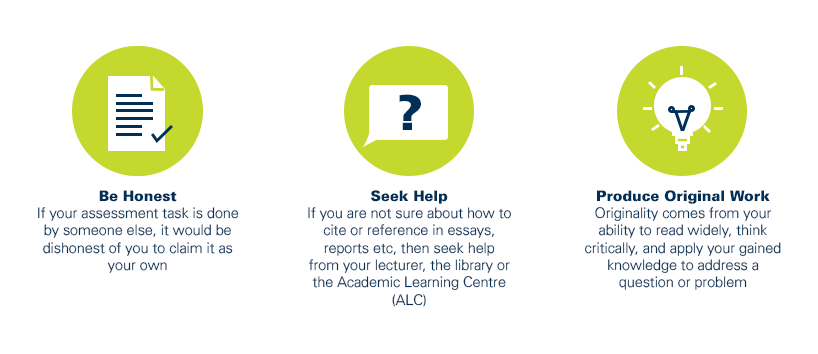
As a CQUniversity student you are expected to act honestly in all aspects of your academic work.
Any assessable work undertaken or submitted for review or assessment must be your own work. Assessable work is any type of work you do to meet the assessment requirements in the unit, including draft work submitted for review and feedback and final work to be assessed.
When you use the ideas, words or data of others in your assessment, you must thoroughly and clearly acknowledge the source of this information by using the correct referencing style for your unit. Using others’ work without proper acknowledgement may be considered a form of intellectual dishonesty.
Participating honestly, respectfully, responsibly, and fairly in your university study ensures the CQUniversity qualification you earn will be valued as a true indication of your individual academic achievement and will continue to receive the respect and recognition it deserves.
As a student, you are responsible for reading and following CQUniversity’s policies, including the Student Academic Integrity Policy and Procedure. This policy sets out CQUniversity’s expectations of you to act with integrity, examples of academic integrity breaches to avoid, the processes used to address alleged breaches of academic integrity, and potential penalties.
What is a breach of academic integrity?
A breach of academic integrity includes but is not limited to plagiarism, self-plagiarism, collusion, cheating, contract cheating, and academic misconduct. The Student Academic Integrity Policy and Procedure defines what these terms mean and gives examples.
Why is academic integrity important?
A breach of academic integrity may result in one or more penalties, including suspension or even expulsion from the University. It can also have negative implications for student visas and future enrolment at CQUniversity or elsewhere. Students who engage in contract cheating also risk being blackmailed by contract cheating services.
Where can I get assistance?
For academic advice and guidance, the Academic Learning Centre (ALC) can support you in becoming confident in completing assessments with integrity and of high standard.
What can you do to act with integrity?