Overview
This unit provides an insight into the science of cardiac assessment by exploring the role and scope of practice of the cardiac physiologist and echocardiographer within the Australian health care system. You will acquire knowledge of communication strategies used in clinical practice and explore the types of cardiac testing procedures available and the outcomes of those assessments. You will apply your knowledge and skills to demonstrate procedures for the provision of safe patient care, ultrasound scanning coordination, spatial awareness and grey-scale pattern recognition in a simulated clinical environment. The aim of this unit is to provide introductory knowledge and skill that will support your learning throughout the Echocardiography / Cardiac Physiology course.
Details
Pre-requisites or Co-requisites
Pre-requisite Students must be enrolled in CV69 Bachelor of Echocardiography and Cardiac Physiology / Graduate Diploma of Echocardiography
Important note: Students enrolled in a subsequent unit who failed their pre-requisite unit, should drop the subsequent unit before the census date or within 10 working days of Fail grade notification. Students who do not drop the unit in this timeframe cannot later drop the unit without academic and financial liability. See details in the Assessment Policy and Procedure (Higher Education Coursework).
Offerings For Term 1 - 2026
Attendance Requirements
All on-campus students are expected to attend scheduled classes - in some units, these classes are identified as a mandatory (pass/fail) component and attendance is compulsory. International students, on a student visa, must maintain a full time study load and meet both attendance and academic progress requirements in each study period (satisfactory attendance for International students is defined as maintaining at least an 80% attendance record).
Recommended Student Time Commitment
Each 6-credit Undergraduate unit at CQUniversity requires an overall time commitment of an average of 12.5 hours of study per week, making a total of 150 hours for the unit.
Class Timetable
Assessment Overview
Assessment Grading
This is a graded unit: your overall grade will be calculated from the marks or grades for each assessment task, based on the relative weightings shown in the table above. You must obtain an overall mark for the unit of at least 50%, or an overall grade of 'pass' in order to pass the unit. If any 'pass/fail' tasks are shown in the table above they must also be completed successfully ('pass' grade). You must also meet any minimum mark requirements specified for a particular assessment task, as detailed in the 'assessment task' section (note that in some instances, the minimum mark for a task may be greater than 50%). Consult the University's Grades and Results Policy for more details of interim results and final grades.
All University policies are available on the CQUniversity Policy site.
You may wish to view these policies:
- Grades and Results Policy
- Assessment Policy and Procedure (Higher Education Coursework)
- Review of Grade Procedure
- Student Academic Integrity Policy and Procedure
- Academic Progression Policy and Procedure
- Student Refund and Credit Balance Policy and Procedure
- Complaints Policy and Procedure
- Information and Communications Technology Acceptable Use Policy and Procedure
This list is not an exhaustive list of all University policies. The full list of University policies are available on the CQUniversity Policy site.
Feedback, Recommendations and Responses
Every unit is reviewed for enhancement each year. At the most recent review, the following staff and student feedback items were identified and recommendations were made.
Feedback from CQU success
Students expressed a preference for more frequent quizzes throughout the term to build familiarity with online testing and reduce anxiety associated with single high-stakes final test.
To support continuous learning and reduce the pressure of a single high-stake final assessment, three smaller online quizzes may be introduced throughout the term, contributing to the overall unit grade. This approach also promotes academic integrity by diversifying assessment timing and format.
Feedback from CQU success & SUTE
Students responded positively to the improved residential school format which incorporated more hands on scanning time and smaller group activities.
Retain the current residential school format, given consistently strong positive student feedback, highlighting the value of extended scanning time and small group interaction.
- Define the scope of practice and professional requirements of cardiac physiologists and echocardiographers, including legal and ethical considerations
- Discuss the provision of cardiac assessment within the context of general diagnostic services in the Australian health care system
- Apply common communication strategies used in the healthcare environment
- Apply introductory level knowledge of ultrasound equipment, image acquisition and interpretation, body and cardiac imaging planes, using appropriate terminology
- Demonstrate knowledge of safe practice, including infection control and ergonomic principles.
1. Australian Sonographer Accreditation Registry (ASAR): Accreditation Standards for Cardiac Sonography - Foundation units of competence (Unit 1-5) and Critical Practice (Unit 8).
2. Edwards, C, Thoirs, K, Osborne, B, Slade, D, McDonald, S, Lombardo, P, et al. Australian sonographer competency—A new framework. Sonography. 2022; 9( 3): 108– 115. https://doi.org/10.1002/sono.12309.
3. American Society of Echocardiography Guideline Documents.
Alignment of Assessment Tasks to Learning Outcomes
| Assessment Tasks | Learning Outcomes | ||||
|---|---|---|---|---|---|
| 1 | 2 | 3 | 4 | 5 | |
| 1 - Written Assessment - 40% | |||||
| 2 - Online Quiz(zes) - 30% | |||||
| 3 - Practical Assessment - 0% | |||||
| 4 - Online Test - 30% | |||||
Alignment of Graduate Attributes to Learning Outcomes
| Graduate Attributes | Learning Outcomes | ||||
|---|---|---|---|---|---|
| 1 | 2 | 3 | 4 | 5 | |
| 1 - Communication | |||||
| 2 - Problem Solving | |||||
| 3 - Critical Thinking | |||||
| 4 - Information Literacy | |||||
| 5 - Team Work | |||||
| 6 - Information Technology Competence | |||||
| 7 - Cross Cultural Competence | |||||
| 8 - Ethical practice | |||||
| 9 - Social Innovation | |||||
| 10 - First Nations Knowledges | |||||
| 11 - Aboriginal and Torres Strait Islander Cultures | |||||
Textbooks
The Normal Examination and Echocardiographic Measurements
- Edition: 3rd (2017)
- Authors: Bonita Anderson
- Echotext Pty Ltd
- ISBN: 9780992322212; 0992322219
The prescribed textbook can be purchased from the CQUniversity Bookshop, https://shop.cqu.edu.au (search the unit code).
Recommended journals, documents and articles on the e-Reading list will be available online.
You will need access to the following IT resources:
CQUniversity student email
Internet
Unit website (Moodle)
IT Resources
- CQUniversity Student Email
- Internet
- Unit Website (Moodle)
All submissions for this unit must use the referencing style: Vancouver
For further information, see the Assessment Tasks.
k.prince@cqu.edu.au
p.boucaut@cqu.edu.au
Week 1
Begin Date: 09 Mar 2026Module/Topic
Role and scope of practice
Chapter
See eReading list for additional online resources, ie: supporting articles and documents.
Events and Submissions/Topic
Order CQUniversity uniform from the University Shop for Residential school. Order the Prescribed texbook (hard copy only available).
Week 2
Begin Date: 16 Mar 2026Module/Topic
Legal and ethical frameworks
Chapter
See eReading list for additional online resources, ie: supporting articles and documents.
Events and Submissions/Topic
Week 3
Begin Date: 23 Mar 2026Module/Topic
Communication
Chapter
See eReading list for additional online resources, ie: supporting articles and documents.
Events and Submissions/Topic
Week 4
Begin Date: 30 Mar 2026Module/Topic
Infection control and vital signs
Chapter
See eReading list for additional online resources, ie: supporting articles and documents.
Events and Submissions/Topic
Week 5
Begin Date: 06 Apr 2026Module/Topic
The Australian health care system
Chapter
See eReading list for additional online resources, ie: supporting articles and documents.
Events and Submissions/Topic
Week 6
Begin Date: 13 Apr 2026Module/Topic
Diagnostic services
Chapter
See eReading list for additional online resources, ie: supporting articles and documents.
Events and Submissions/Topic
Vacation Week
Begin Date: 20 Apr 2026Module/Topic
Chapter
Events and Submissions/Topic
Week 7
Begin Date: 27 Apr 2026Module/Topic
Gross cardiac anatomy
Chapter
See eReading list for additional online resources, ie: supporting articles and documents.
Events and Submissions/Topic
Week 8
Begin Date: 04 May 2026Module/Topic
2D Echocardiography and image orientation
Chapter
See eReading list for additional online resources, ie: supporting articles and documents.
Events and Submissions/Topic
Week 9
Begin Date: 11 May 2026Module/Topic
Residential school
Chapter
See eReading list and additional resources for supporting documents and videos.
Events and Submissions/Topic
Week 10
Begin Date: 18 May 2026Module/Topic
Clinical indications
Chapter
See eReading list for additional online resources, ie: supporting articles and documents.
Events and Submissions/Topic
Week 11
Begin Date: 25 May 2026Module/Topic
Safe practice
Chapter
See eReading list for additional online resources, ie: supporting articles and documents.
Events and Submissions/Topic
Week 12
Begin Date: 01 Jun 2026Module/Topic
Revision
Chapter
Events and Submissions/Topic
Exam Week
Begin Date: 08 Jun 2026Module/Topic
Chapter
Events and Submissions/Topic
Vacation/Exam Week
Begin Date: 15 Jun 2026Module/Topic
Chapter
Events and Submissions/Topic
Unit Coordinator and Contact Details
Your unit coordinator for ECHO11003 Fundamentals of Cardiac Science is Kim Prince. The most efficient and preferred method of contacting Kim is via the Q&A forum located on the unit Moodle site. However, if your query is of a personal nature, please contact the unit coordinator directly via email: k.prince@cqu.edu.au or phone: 07 3023 4244. Kim's office days are Wednesday, Thursday and Friday and she is located in Brisbane.
Tutorials
Tutorials for this unit will be delivered ‘live’ online using Zoom with links provided on the unit Moodle site and will be held on Wednesday afternoons. These sessions will also be recorded and subsequently made available on Moodle. The tutorials will incorporate a discussion of the weekly content delivered and associated revision material. Tutorials will support student preparation for assessment tasks, including advice pertaining to academic writing and referencing.
Academic Learning Centre (ALC) and Library staff may occasionally attend tutorials to promote wider university services available to students. Students are strongly encouraged to attend live tutorial offerings.
Unit Study Commitment
Each 6-credit Undergraduate unit at CQUniversity requires an overall time commitment of an average of 12.5hrs of study per week. An example of estimated time management for this unit is below:
- 3 hours watching recorded lectures
- 2 hours completing recommended readings
- 1.5 hours creating study notes
- 1 hour completing weekly study or revision questions
- 1 hour participating in/or viewing the weekly tutorial
- 4 hours preparing for the written assessment, practical assessments or the final test.
It is important for you to keep up to date week by week with the learning in this unit. Regular engagement with the learning activities provided is essential to allow yourself to keep up to date and achieve success in this unit.
Compulsory Residential School
Attendance at Residential School is mandatory for the full two days and is to be completed at the campus of enrolment only. Failure to attend the two days may result in a fail grade. To comply with CQUniversity's Occupational Health and Safety Policy, students are required to complete a lab induction specific to their campus of enrolment prior to on-campus attendance. Instructions along with a link to relevant documents can be found on the unit Moodle site. Please ensure that you complete all of the activities listed under the orientation tile on the Moodle site upon first enrolment.
There are four assessment tasks associated with this unit:
1. Online Quiz (30%)
2. Written assessment (40%)
3. Practical assessment (pass/fail)
4. Online test (30%)
Please refer to the assessment information section of this unit profile for more details. A pass grade for every assessment must be obtained in order to successfully pass this unit.
1 Online Quiz(zes)
Students are required to respond to a series of questions via an online quiz, within the prescribed time frame. This online quiz will assess the student's understanding of the content presented throughout the unit delivery. Questions will be drawn from a resource bank, to allow the online quiz to be different for each student. All unit content presented in lectures, tutorial presentations, at the residential school and within the prescribed and suggested readings is assessable from weeks 1 through to 5. The online quiz may include multiple choice, short answer, matching or interpretation style questions. The online quizzes must be attempted and pass grade obtained to receive overall unit completion.
The time allocated for perusal and completion of the online quiz is 50min in total. Notify relevant staff and TaSAC if technical issues arise during the online quiz. TaSAC is available for immediate assistance during AEST business hours only. It is important that you commence the online quiz before 7:00pm AEST Friday 17th April 2026. If you have not completed the quiz by this time, the test will automatically close and submit student answers once the allocated time has elapsed.
Please note:
- Once started, the online quiz cannot be paused or restarted.
- Only one attempt is permitted.
- The online quiz will automatically close at 8:00pm AEST on Friday 17th April 2026.
In the absence of an approved extension, the online test cannot be completed at a later time. The 72 hour grace period does not apply to this assessment.
If attempt issues occur outside of business hours, students should immediately email the Unit Coordinator documenting difficulties. Advice should include the date and time of the incidence and a screenshot of the PC display if an error is evident. Incidents will be considered on a case-by-case basis. There is no guarantee extra test attempts will be offered. Students are advised to refer to the 'Assessment Policy and procedure' (Higher Education Coursework) document for additional university assessment guidelines.
Level of GenAI use allowed:
Level 1: You must not use AI at any point during the assessment. You must demonstrate your core skills and knowledge.
Week 6 Friday (17 Apr 2026) 8:00 pm AEST
Individual results will be published within two (2) weeks of the due date.
Question responses will be assessed according to your ability to:
- Demonstrate sound knowledge of the scope and requirements of cardiac physiologists within the context of the current Australian health care system.
- Use appropriate terminology and descriptors as well as grammar and spelling.
- Appropriately interpret presented sonographic images and cardiac assessment data.
- Succinctly respond with accurate answers.
- Define the scope of practice and professional requirements of cardiac physiologists and echocardiographers, including legal and ethical considerations
- Discuss the provision of cardiac assessment within the context of general diagnostic services in the Australian health care system
- Apply common communication strategies used in the healthcare environment
2 Written Assessment
Students are required to complete a written assessment comprising of three parts. Students must draw on information from credible sources such as peer-reviewed journal articles, sonography textbooks, and guidelines from professional associations to complete the assessment.
Presentation requirements:
Assessments must be submitted as a Word document with 1.5 line spacing and using 12 point font (not including headings). Include a separate title page with student name, student number, word count and assessment title. Include a numbered reference list in the CQU Vancouver format on a separate page at the end of the assessment for the entire assessment.
Referencing requirements:
This assessment requires students to conduct independent research and support their responses using the CQUniversity Vancouver referencing style. Sources must be clearly identified through accurate in-text citations and a seperate reference list. The reference list must include at least three (3) contemporary peer-reviewed journal articles published within the last 10 years. All in-text citations and reference list entries must be correctly formatted according to the CQU Vancouver referencing guidelines.
Level of GenAI use allowed:
Level 2: You may use AI for planning, idea development and research. Your final submission should show how you have developed and refined these ideas.
If Generative AI is used in any way, it must be cited as per the CQU Guidelines (Academic Learning Centre). If students choose to use GenAI, the following statement must be completed and included on a separate page at the end of the assessment: "I have used (insert technology) to (insert how you used this) in accordance with the requirements of this unit. The reason I used this was to (explain why you used it). The details of how I used it as (insert how). I hear by declare that the submission is an appropriate representation of my individual skills and abilities to meet the requirements of the task/s".
As per academic writing requirements and assessment criteria, citations of information must be from the primary source (ie: information returned by AI must be fact-checked and referenced from the original source as well as the AI source). There is information and links on CQU's Academic Learning Centre (ALC) site and the Moodle site that can assist with referencing AI. The task is intended for students to demonstrate understanding of the unit's learning outcomes and failure to cite primary sources as well as AI sources could be considered a breach of academic integrity.
Research topics: The assessment has three (3) parts (A, B and C), with each part covering a different research topic.
Part A: Australian cardiovascular disease statistics
Using data from the Australian Institute of Health and Welfare (AIHW) on cardiovascular disease (CVD) hospital admissions in Australia (www.aiwh.gov.au), respond to the following:
1. Analyse differences in hospitalisation rates between:
- People living in urban (major cities) compared with those living in rural and remote areas.
- Aboriginal and Torres Strait Islander peoples compared with non-Indigenous Australians.
Your response should:
- Identify the main differences between these groups.
- Explain, in simple terms, why these differences might occur.
2. Explain how these hospitalisation patterns might affect sonographers in terms of:
- Workload.
- Types of cardiac conditions encountered.
- Service delivery in different locations.
Part B: Artificial Intelligence in Cardiovascular Care
Using Australian examples and credible academic or healthcare sources, respond to the following:
1. Describe two (2) ways artificial intelligence (AI) is used in cardiovascular care in Australia, explaining the purpose of each in clinical practice and providing:
- One example for risk prediction.
- One example for cardiac imaging (eg: echocardiography).
2. List two (2) benefits and two (2) limitations of AI in cardiovascular care.
- Briefly explain how these might affect diagnostic accuracy, efficiency and/or staff workload.
3. Explain the purpose of the My Health Records Act 2012.
- Focus on description and explanation within the healthcare setting, not technical or engineering details.
Part C: Cardiac testing and the role of the cardiac physiologist
1. Discuss the differences between echocardiography and cardiac catheterisation as diagnostic approaches to cardiac assessment, focusing on:
- Safety.
- Radiation use.
- Diagnostic strengths.
- Diagnostic limitations.
2. Discuss how cardiac physiologists support patient safety and quality care in diagnostic echocardiography, focusing on:
- Professional responsibilities in patient preparation and clinical practice.
- The role of communication in promoting patient comfort, cooperation and understanding.
The assessment word count is capped at 1200 words. Each part will require a response of 300-400 words.
The following items are included in the word count:
- All body text paragraph.
- Any written explanations or interpretations of tables, figures or images.
The following items are excluded from the word count:
- Headings and subheadings.
- Images, tables, figures.
- Indexes, and reference lists.
Late submissions:
Without an approved extension request or the student does not demonstrate sound reasons for a late request, a penalty of five percent (5%) of the total available marks for the assessment will be deducted for each full or part calendar day the assessment task is overdue past the 72hour grace period.
Week 7 Tuesday (28 Apr 2026) 5:00 pm AEST
Individual results will be published within two (2) weeks of the due date.
Students will be assessed on the following criteria:
- Quality of submission addressing the topics in the prompts clearly and concisely.
- Relevant and appropriate discussion and analysis of each topic.
- Accuracy of spelling and grammar.
- Correct use of medical and sonographic terminology.
- Appropriateness of the reviewed literature.
- Correct and accurate referencing.
- Academic writing and expression.
- All text, images, diagrams and tables correctly referenced and the word limit is adhered to.
A detailed marking rubric/criteria for this assessment will be made available on the unit Moodle site.
- Define the scope of practice and professional requirements of cardiac physiologists and echocardiographers, including legal and ethical considerations
- Discuss the provision of cardiac assessment within the context of general diagnostic services in the Australian health care system
3 Practical Assessment
This assessment includes two practical tasks, Part A and Part B which will be completed during residential school attendance in-person under supervision. Each task is described below.
Practical assessment Part A: Hand hygiene.
- Students will be required to demonstrate that they can achieve hand hygiene by effectively and safely washing their hands with soap and water.
Practical assessment Part B: Introduction to Echocardiographic scanning skills.
- Students will be required to demonstrate basic skills in cardiac ultrasound scanning and probe handling whilst communicating and interacting with the patient model professionally.
A time limit of 10min will be applied to the practical assessment Part B. All students must be available to act as patient models for peer practical assessments.
Level of GenAI use allowed:
Level 1: You must not use AI at any point during the assessment. You must demonstrate your core skills and knowledge.
Week 9 Friday (15 May 2026) 3:00 pm AEST
Immediate feedback.
Marking rubrics for assessment Parts A and B are available on Moodle. Students will be assessed on their ability to:
- Demonstrate safe hand hygiene principles.
- Demonstrate professional behaviour and safe practice.
- Identify sector orientation.
- Manipulation of transducer, including the use of appropriate terminology.
- Demonstrate professional behaviour, clear explanation of the test.
- Reflect on residential school experiences and learnings.
To be deemed competent and pass, all action criteria boxes must be performed correctly in Part A and Part B. Practical parts A and B are graded separately so that if one is passed and the other is not, only the failed task must be repeated successfully to pass overall. Following provision of assessment feedback only one opportunity for re-sit of any failed tasks will be provided. Practical assessment re-sits will be held on the same day as the original attempt (Friday 15th May 2026). All enrolled students must be available to act as a patient model for peer re-sits if requested by the Unit Coordinator.
The 72 hour grace period does not apply to this assessment.
- Apply common communication strategies used in the healthcare environment
- Apply introductory level knowledge of ultrasound equipment, image acquisition and interpretation, body and cardiac imaging planes, using appropriate terminology
- Demonstrate knowledge of safe practice, including infection control and ergonomic principles.
4 Online Test
Students are required to respond to a series of questions via an online test, within the prescribed time frame. This online test will assess the student's understanding of the content presented from week 6 through to 11 of the unit delivery. Questions will be drawn from a resource bank, to allow the online test to be different. All unit content presented in lectures, tutorial presentations, at the residential school and within the prescribed and suggested readings is assessable. The online test may include multiple choice, short answer, matching or image interpretation style questions. The online test must be attempted and pass grade obtained to receive overall unit completion.
The time allocated for perusal and completion of the online test is 50min in total. Notify relevant staff and TaSAC if technical issues arise during the online quiz. TaSAC is available for immediate assistance during AEST business hours only. It is important that you commence the online test before 7:00pm AEST Friday 5th June 2026. If you have not completed the test by this time, the test will automatically close and submit student answers once the allocated time has elapsed.
Please note:
- Once started, the online test cannot be paused or restarted.
- Only one attempt is permitted.
- The online test will automatically close at 8:00pm AEST on Friday 5th June 2026.
In the absence of an approved extension, the online test cannot be completed at a later time. The 72 hour grace period does not apply to this assessment.
If attempt issues occur outside of business hours, students should immediately email the Unit Coordinator documenting difficulties. Advice should include the date and time of the incidence and a screenshot of the PC display if an error is evident. Incidents will be considered on a case-by-case basis. There is no guarantee extra test attempts will be offered. Students are advised to refer to the 'Assessment Policy and procedure' (Higher Education Coursework) document for additional university assessment guidelines.
Level of GenAI use allowed:
Level 1: You must not use AI at any point during the assessment. You must demonstrate your core skills and knowledge.
Week 12 Friday (5 June 2026) 8:00 pm AEST
Individual results will be published within two (2) weeks of the due date.
Question responses will be assessed according to your ability to:
- Demonstrate sound knowledge of the scope and requirements of cardiac physiologists within the context of the current Australian health care system.
- Use appropriate terminology and descriptors as well as grammar and spelling.
- Appropriately interpret presented sonographic images and cardiac assessment data.
- Succinctly respond with accurate answers.
- Apply introductory level knowledge of ultrasound equipment, image acquisition and interpretation, body and cardiac imaging planes, using appropriate terminology
- Demonstrate knowledge of safe practice, including infection control and ergonomic principles.
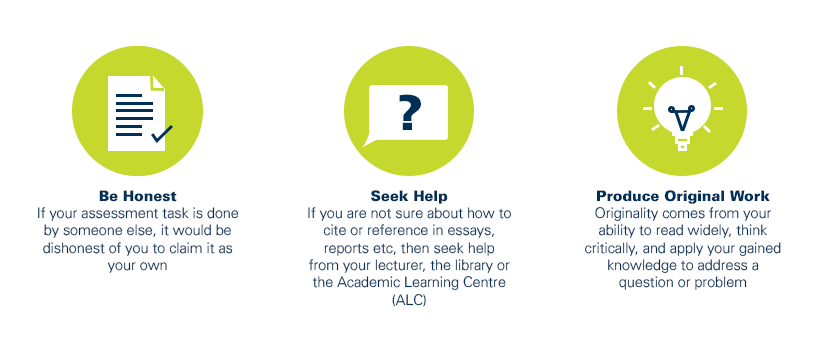
As a CQUniversity student you are expected to act honestly in all aspects of your academic work.
Any assessable work undertaken or submitted for review or assessment must be your own work. Assessable work is any type of work you do to meet the assessment requirements in the unit, including draft work submitted for review and feedback and final work to be assessed.
When you use the ideas, words or data of others in your assessment, you must thoroughly and clearly acknowledge the source of this information by using the correct referencing style for your unit. Using others’ work without proper acknowledgement may be considered a form of intellectual dishonesty.
Participating honestly, respectfully, responsibly, and fairly in your university study ensures the CQUniversity qualification you earn will be valued as a true indication of your individual academic achievement and will continue to receive the respect and recognition it deserves.
As a student, you are responsible for reading and following CQUniversity’s policies, including the Student Academic Integrity Policy and Procedure. This policy sets out CQUniversity’s expectations of you to act with integrity, examples of academic integrity breaches to avoid, the processes used to address alleged breaches of academic integrity, and potential penalties.
What is a breach of academic integrity?
A breach of academic integrity includes but is not limited to plagiarism, self-plagiarism, collusion, cheating, contract cheating, and academic misconduct. The Student Academic Integrity Policy and Procedure defines what these terms mean and gives examples.
Why is academic integrity important?
A breach of academic integrity may result in one or more penalties, including suspension or even expulsion from the University. It can also have negative implications for student visas and future enrolment at CQUniversity or elsewhere. Students who engage in contract cheating also risk being blackmailed by contract cheating services.
Where can I get assistance?
For academic advice and guidance, the Academic Learning Centre (ALC) can support you in becoming confident in completing assessments with integrity and of high standard.
What can you do to act with integrity?