Overview
This unit provides students with a comprehensive understanding of disaster risk, reduction, and resilience within the Sendai Framework for Disaster Risk Reduction. You will critically analyse these concepts and gain skills in applying the Sendai Framework for Disaster Risk Reduction principles to community-level activities and initiatives while aligning them with the United Nations Sustainable Development Goals (SDGs). Through this unit, you will learn how to develop appropriate disaster risk reduction strategies at a community level and facilitate collaborative and evidence-based decision-making regarding disaster resilience, preparedness, and hazard mitigation while addressing the interconnected goals of sustainable development. In this unit, you will learn how to reduce disaster risk through sustainable planning, building community partnerships, reducing vulnerability and increasing resilience, with a particular emphasis on risks that impact public health.
Details
Pre-requisites or Co-requisites
Pre-requisites Students enrolled in the CM40 Bachelor of Paramedic Science/Graduate Certificate in Emergency and Disaster Management must have a minimum of 72 credit points to enrol in this unit.
Important note: Students enrolled in a subsequent unit who failed their pre-requisite unit, should drop the subsequent unit before the census date or within 10 working days of Fail grade notification. Students who do not drop the unit in this timeframe cannot later drop the unit without academic and financial liability. See details in the Assessment Policy and Procedure (Higher Education Coursework).
Offerings For Term 3 - 2026
Attendance Requirements
All on-campus students are expected to attend scheduled classes - in some units, these classes are identified as a mandatory (pass/fail) component and attendance is compulsory. International students, on a student visa, must maintain a full time study load and meet both attendance and academic progress requirements in each study period (satisfactory attendance for International students is defined as maintaining at least an 80% attendance record).
Recommended Student Time Commitment
Each 6-credit Postgraduate unit at CQUniversity requires an overall time commitment of an average of 12.5 hours of study per week, making a total of 150 hours for the unit.
Class Timetable
Assessment Overview
| Assessment Task | Part Weighting (% of assessment) |
Assessment Security Level | Gen AI Guidance Levels |
|---|---|---|---|
| 1. Community-Based Disaster Resilience (30% of unit ) | |||
| Community-Based Disaster Resilience (Written Assessment) | 100% of 30% | Low | AI-Assisted (Guided Collaboration) |
| 2. Improving Disaster Resilience in the Community (40% of unit ) | |||
| Improving Disaster Resilience in the Community (Written Assessment) | 100% of 40% | Low | AI-Assisted (Guided Collaboration) |
| 3. Community Resilience Plan Presentation (30% of unit ) | |||
| Community Resilience Plan Presentation (Presentation) | 100% of 30% | Low | AI-Assisted (Guided Collaboration) |
Assessment Grading
This is a graded unit: your overall grade will be calculated from the marks or grades for each assessment task, based on the relative weightings shown in the table above. You must obtain an overall mark for the unit of at least 50%, or an overall grade of 'pass' in order to pass the unit. If any 'pass/fail' tasks are shown in the table above they must also be completed successfully ('pass' grade). You must also meet any minimum mark requirements specified for a particular assessment task, as detailed in the 'assessment task' section (note that in some instances, the minimum mark for a task may be greater than 50%). Consult the University's Grades and Results Policy for more details of interim results and final grades.
All University policies are available on the CQUniversity Policy site.
You may wish to view these policies:
- Grades and Results Policy
- Assessment Policy and Procedure (Higher Education Coursework)
- Review of Grade Procedure
- Student Academic Integrity Policy and Procedure
- Academic Progression Policy and Procedure
- Student Refund and Credit Balance Policy and Procedure
- Complaints Policy and Procedure
- Information and Communications Technology Acceptable Use Policy and Procedure
This list is not an exhaustive list of all University policies. The full list of University policies are available on the CQUniversity Policy site.
Feedback, Recommendations and Responses
Every unit is reviewed for enhancement each year. At the most recent review, the following staff and student feedback items were identified and recommendations were made.
Feedback from SUTE
Assessment feedback to be more consistent across assessments.
To provide clearer guidance to casual markers regarding the requirements for feedback as effectively as possible.
- Critically analyse the concepts of disaster risk, disaster risk reduction and disaster resilience
- Apply the principles of the Sendai Framework for Disaster Risk Reduction to community-level activities aligned with the Sustainable Development Goals
- Develop appropriate disaster risk reduction strategies at a community level
- Facilitate collaborative and evidence-based decision-making regarding disaster resilience, preparedness and hazard mitigation.
Not applicable.
Alignment of Assessment Tasks to Learning Outcomes
| Assessment Tasks | Learning Outcomes | |||
|---|---|---|---|---|
| 1 | 2 | 3 | 4 | |
|
1.
Assessment 1
(30% of unit )
Written Assessment
|
||||
|
2.
Assessment 2
(40% of unit )
Written Assessment
|
||||
|
3.
Assessment 3
(30% of unit )
Presentation
|
||||
Alignment of Graduate Attributes to Learning Outcomes
| Graduate Attributes | Learning Outcomes | |||
|---|---|---|---|---|
| 1 | 2 | 3 | 4 | |
| 1 - Knowledge | ||||
| 2 - Communication | ||||
| 3 - Cognitive, technical and creative skills | ||||
| 4 - Research | ||||
| 5 - Self-management | ||||
| 6 - Ethical and Professional Responsibility | ||||
| 7 - Leadership | ||||
| 8 - First Nations Knowledges | ||||
Textbooks
There are no required textbooks.
IT Resources
- CQUniversity Student Email
- Internet
- Unit Website (Moodle)
- Zoom Access - camera and mircrophone
All submissions for this unit must use the referencing style: American Psychological Association 7th Edition (APA 7th edition)
For further information, see the Assessment Tasks.
j.moy@cqu.edu.au
Week 1
Begin Date: 09 Nov 2026Module/Topic
Theme One:
- Defining disasters and disaster risk reduction
- The Sendai Framework of Disaster Risk Reduction
- United Nations Sustainable Development Goals.
Chapter
Events and Submissions/Topic
Recorded Online Virtual TUTORIAL SESSION: Introduction and Unit Overview - IMPORTANT TO ATTEND!
(FRIDAY 9am - 10 am AEST - QLD time)
Future sessions will occur on a THURSDAY at the same
Week 2
Begin Date: 16 Nov 2026Module/Topic
Theme One:
- Defining disasters and disaster risk reduction
- The Sendai Framework of Disaster Risk Reduction
- United Nations Sustainable Development Goals.
Chapter
Events and Submissions/Topic
Online Virtual TUTORIAL SESSION
(Thursday 9am - 10 am AEST - QLD time)
Week 3
Begin Date: 23 Nov 2026Module/Topic
Theme Two:
- Understanding disaster risk
Chapter
Events and Submissions/Topic
Online Virtual TUTORIAL SESSION
(Thursday 9am - 10 am AEST - QLD time)
Week 4
Begin Date: 30 Nov 2026Module/Topic
Theme Two:
- Understanding disaster risk
Chapter
Events and Submissions/Topic
Online Virtual TUTORIAL SESSION
(Thursday 9am - 10 am AEST - QLD time)
Week 5
Begin Date: 07 Dec 2026Module/Topic
Theme Three:
- Managing disaster risk
Chapter
Events and Submissions/Topic
NO TUTORIAL SESSION THIS WEEK
Community-Based Disaster Resilience Due: Week 5 Wednesday (9 Dec 2026) 5:00 pm AEST
Week 6
Begin Date: 14 Dec 2026Module/Topic
Theme Three:
- Managing disaster risk
Chapter
Events and Submissions/Topic
Online Virtual TUTORIAL SESSION
(Thursday 9am - 10 am AEST - QLD time)
Mid-Term Break
Begin Date: 21 Dec 2026Module/Topic
Chapter
Events and Submissions/Topic
NO TUTORIAL SESSION THIS WEEK
Week 7
Begin Date: 04 Jan 2027Module/Topic
Theme Four:
- Resourcing Disaster Risk Reduction for Resilience
Chapter
Events and Submissions/Topic
Online Virtual TUTORIAL SESSION
(Thursday 9am - 10 am AEST - QLD time)
Week 8
Begin Date: 11 Jan 2027Module/Topic
Theme Four:
- Resourcing Disaster Risk Reduction for Resilience
Chapter
Events and Submissions/Topic
Online Virtual TUTORIAL SESSION
(Thursday 9am - 10 am AEST - QLD time)
Week 9
Begin Date: 18 Jan 2027Module/Topic
Theme Four:
- Resourcing Disaster Risk Reduction for Resilience
Chapter
Events and Submissions/Topic
Online Virtual TUTORIAL SESSION
(Thursday 9am - 10 am AEST - QLD time)
Improving Disaster Resilience in the Community Due: Week 9 Wednesday (20 Jan 2027) 5:00 pm AEST
Week 10
Begin Date: 25 Jan 2027Module/Topic
Theme Five:
- Disaster Preparedness for Effective Post-disaster Actions
Chapter
Events and Submissions/Topic
Online Virtual TUTORIAL SESSION
(Thursday 9am - 10 am AEST - QLD time)
Week 11
Begin Date: 01 Feb 2027Module/Topic
Theme Five:
- Disaster Preparedness for Effective Post-disaster Actions
Chapter
Events and Submissions/Topic
Online Virtual TUTORIAL SESSION
(Thursday 9am - 10 am AEST - QLD time)
Week 12
Begin Date: 08 Feb 2027Module/Topic
Theme Five:
- Disaster Preparedness for Effective Post-disaster Actions
Chapter
Events and Submissions/Topic
NO TUTORIAL SESSION THIS WEEK
Community Resilience Plan Presentation Due: Week 12 Wednesday (10 Feb 2027) 5:00 pm AEST
Exam Week
Begin Date: 15 Feb 2027Module/Topic
Chapter
Events and Submissions/Topic
Week 12
Begin Date: 07 Feb 2028Module/Topic
Theme Five:
- Disaster Preparedness for Effective Post-disaster Actions
Chapter
Events and Submissions/Topic
Online Virtual Drop-in Session
NO DROP IN SESSION THIS WEEK
IT IS STRONGLY RECOMMEND THAT ALL STUDENTS ATTEND THE WEEKLY ONLINE VIRTUAL TUTORIAL SESSIONS.
THIS IS WHERE COURSE CONTENT IS DISCUSSED, AND IMPORTNAT INFORMATOIN RELATING TO ASSESSMENT ITEMS IS ALSO SHARED.
I HOPE TO SEE YOU ALL THERE. THESE WILL BE RECORDED, AND MADE AVAILABLE WITH 24 HOURS OF THE LIVE PRESENTATION.
HOWEVER, BUT STUDENTS WHO CAN ATTEND THESE LIVE TUTORIAL SESSIONS, ARE STRONGLY ENCOURAGED TO DO.
"THE STUDENTS WHO USUALLY GET THE BEST MARKS, ATTEND, OR VIEW THESE IMPORTANT TUTORIAL SESSIONS"
JOHN MOY, LECTURER
IMPORTANT !
Structure and approach to the unit
Students are required to work through materials and resources on the weekly Moodle page each week, and prior to attending tutorials. Completing the resources provides the basis for further exploration and application of concepts to activities and assessment task development during tutorials. If, however, you are unable to complete the materials in any particular week, do still come along to the tutorial. Still coming along will enable you to hear and engage with discussions (and you may still be able to contribute by drawing on your existing knowledge or by asking questions for discussion), and will help to keep you on-track in the unit and prevent falling further behind.
Use of Generative Artificial Intelligence (GenAI) in this unit
In this unit, students are permitted to utilise GenAI tools in restricted ways to enhance their learning and creativity. For assessment tasks, the permissions may vary; please check the precise permissions, indicated under the assessment task information in this unit profile and on the unit Moodle site, for details pertaining to each specific assessment task.
In cases where GenAI is used with permission, it is imperative to use these tools with integrity.
This means:
Acknowledging AI Assistance: Clearly indicate when and how AI tools have been used in your work.
Originality: Ensure that your submissions reflect your own understanding and effort. AI tools should support, not replace, your critical thinking and creativity.
Ethical Use: Do not use AI to generate content that misrepresents your abilities or knowledge. Plagiarism, even with AI-generated content, is strictly prohibited.
Respect for Guidelines: Follow all academic guidelines and policies regarding the use of GenAI tools in your coursework. By adhering to these principles, you contribute to a fair and honest academic environment that values genuine learning and integrity. Use of GenAI outside of these guidelines may be considered to be a breach of academic integrity, which will be officially reported and acted upon.
This statement was developed with assistance from Microsoft Copilot :)
1. Community-Based Disaster Resilience ( 30% of unit )
Written Assessment
Task Description
Please note that Assessment Tasks One, Two, and Three are linked.
You must choose one (1) case study only from the list below:
Cyclone Gabrielle (New Zealand, 2023)
Turkiye-Syria Earthquake (2023)
Tropical Cyclone Jasper (Far North Queensland, 2023)
Victorian Thunderstorm Asthma Event (2016)
Lismore Floods (NSW)
Task Description
Assessment Task One asks you to apply the Sendai Framework principles to evaluate community disaster resilience and identify opportunities to strengthen resilience at a local level.
You have been tasked with presenting an initial report to your local Government Disaster Management Group in relation to the chosen case study and its local community implementation and engagement plan. To do this, you will apply the Sendai Framework for Disaster Risk Reduction to the community from your case study. The report will be 2000 words (±10% deviation accepted) and must address all of the following key components:
1. Provide an overarching explanation of the Sendai Framework for Disaster Risk Reduction and briefly describe the targets and priorities for action
2. Describe a specific geographical community (town or city) that will be the focus of your report (from your chosen case study).
3. Describe the geography of your community and include a suitable map showing the location of your chosen town/ city, in relation to its surrounds. A map MUST be included
4. Describe the socio-economic and cultural characteristics of your chosen community.
5. Identify and evaluate the key factors that influence disaster resilience within your chosen community, including natural hazards, community vulnerabilities and community capacities.
Please see the Assessment One Criteria, marking rubric and template on your Moodle page for further information.
This is an individual assessment, and teamwork is not permitted for this assessment.
Generative AI (GenAI): Level of GenAI use allowed:
AI-Assisted (Guided Collaboration) - Guide Assured
You may use Generative AI tools to support planning, brainstorming, idea development, and preliminary research only. AI may help you explore concepts, generate questions, or identify relevant topics; however, the analysis, interpretation, critical thinking, and final written submission must be your own work. You must critically evaluate any AI-generated content and remain responsible for the accuracy, quality, and integrity of your assessment. Any use of GenAI must be acknowledged in accordance with unit requirements.
AI-assisted editing: No new content can be generated using AI. AI can be used for searching literature and for brainstorming when selecting relevant literature, as well as to enhance presentation structure. AI can be used to improve clarity and quality of writing and presentation structure.
STUDENTS MUST INCLUDE GEN-AI USE DECLARATION
IMPORTANT: Regardless of the level of Generative AI use allowed in this assessment, students must verify every citation and reference listed in their work, including those suggested by GenAI. If a cited source cannot be located or verified, the citation or reference must not be used. Failure to undertake this action may result in the submission of a potential academic integrity breach allegation.
Choose your appropriate AI declaration. Complete relevant details.
Suggested wording for AI use declaration:
AI Use Declaration (include at the bottom of your title page)
In completing this Assessment Task, I acknowledge the use of [specify the GenAI tools/platforms] to guide the [specific process/es: brainstorming, drafting, research assistance, editing, etc.]. The output from these prompts was used to [explain how the output from GenAI was critically evaluated to use in your own work]. I confirm that all AI-generated content underwent thorough review and evaluation and the final output accurately reflects my own understanding, knowledge and intended meaning. While AI assistance was used in the process, I maintain full responsibility for the content, its accuracy, and its presentation and can explain and justify all inclusions. This declaration is included to ensure transparency and to formally acknowledge the role of AI in the completion of this assessment task.
Complete this declaration if you did NOT use AI:
In completing this Assessment Task, I confirm that this work is entirely my own and I have not used any Generative AI tools. This assessment task accurately reflects my own understanding, knowledge, and intended meaning.
Week 5 Wednesday (9 Dec 2026) 5:00 pm AEST
Submitted as a word document on Moodle
Mid-Term Break Wednesday (23 Dec 2026)
Assessment will usually be returned within two weeks of the due date
The assessment criteria for this unit are in the form of a rubric, which is available from the Moodle unit site. Broadly, you will be assessed on:
Use of the literature
Knowledge of the Sendai Framework for Disaster Risk Reduction
Application of knowledge and skills related to emergency and disaster management
Communication and presentation.
- Critically analyse the concepts of disaster risk, disaster risk reduction and disaster resilience
- Apply the principles of the Sendai Framework for Disaster Risk Reduction to community-level activities aligned with the Sustainable Development Goals
2. Improving Disaster Resilience in the Community ( 40% of unit )
Written Assessment
Task Description
Please note that Assessment Tasks One, Two, and Three are linked.
You have been tasked with preparing a second report for your local council on a Community Resilience Action Plan. Building on Assessment Task One and your selected case study, identify and develop three evidence-based resilience initiatives that will strengthen the community's ability to prepare for, withstand, respond to and recover from future disaster events. Your proposed initiatives should align with the principles and priorities of the Sendai Framework and include appropriate stakeholder engagement and implementation measures. Adapted from the original assessment structure.
Task Instructions:
Your report should be 2,500 words (±10% deviation accepted) and address all of the following key areas:
Identify and describe existing disaster resilience enhancement strategies in your chosen geographical community.
Propose at least three evidence-based resilience initiatives for your chosen community and align these with the Sendai Framework principles.
Discuss how these initiativesA may be implemented at the community level.
Identify and describe three key stakeholders, (e.g. government, emergency services agencies, community organisations) that could contribute to your disaster risk reduction strategies.
Describe how you would engage and use each of these key stakeholders in your strategies and the resilience enhancement process.
You must include an Executive Summary as part of your report.
Please see the Assessment Two Criteria, marking rubric and supporting assessment resources on your Moodle page for further information.
This is an individual assessment, and teamwork is not permitted for this assessment.
Generative AI (GenAI): Level of GenAI use allowed:
AI-Assisted (Guided Collaboration) - Guide Assured
You may use Generative AI tools to support planning, brainstorming, idea development, and preliminary research only. AI may help you explore concepts, generate questions, or identify relevant topics; however, the analysis, interpretation, critical thinking, and final written submission must be your own work. You must critically evaluate any AI-generated content and remain responsible for the accuracy, quality, and integrity of your assessment. Any use of GenAI must be acknowledged in accordance with unit requirements.
AI-assisted editing: No new content can be generated using AI. AI can be used for searching literature and for brainstorming when selecting relevant literature, as well as to enhance presentation structure. AI can be used to improve clarity and quality of writing and presentation structure.
STUDENTS MUST INCLUDE GEN-AI USE DECLARATION
Choose your appropriate AI declaration. Complete relevant details.
Suggested wording for AI use declaration:
AI Use Declaration (include at the bottom of your title page)
In completing this Assessment Task, I acknowledge the use of [specify the GenAI tools/platforms] to guide the [specific process/es: brainstorming, drafting, research assistance, editing, etc.]. The output from these prompts was used to [explain how the output from GenAI was critically evaluated to use in your own work]. I confirm that all AI-generated content underwent thorough review and evaluation and the final output accurately reflects my own understanding, knowledge and intended meaning. While AI assistance was used in the process, I maintain full responsibility for the content, its accuracy, and its presentation and can explain and justify all inclusions. This declaration is included to ensure transparency and to formally acknowledge the role of AI in the completion of this assessment task.
Complete this declaration if you did NOT use AI:
In completing this Assessment Task, I confirm that this work is entirely my own and I have not used any Generative AI tools. This assessment task accurately reflects my own understanding, knowledge, and intended meaning.
Week 9 Wednesday (20 Jan 2027) 5:00 pm AEST
Submitted as a word document on Moodle
Week 11 Wednesday (3 Feb 2027)
Return date to students approximately 2 weeks after submission
The assessment criteria for this unit are in the form of a rubric, which is available from the Moodle unit site. Broadly, you will be assessed on:
Use of the literature
Knowledge of the Sendai Framework for Disaster Risk Reduction
Application of knowledge and skills related to emergency and disaster management
Collaboration between community and emergency and disaster management
Communication and presentation.
- Critically analyse the concepts of disaster risk, disaster risk reduction and disaster resilience
- Apply the principles of the Sendai Framework for Disaster Risk Reduction to community-level activities aligned with the Sustainable Development Goals
- Develop appropriate disaster risk reduction strategies at a community level
- Facilitate collaborative and evidence-based decision-making regarding disaster resilience, preparedness and hazard mitigation.
3. Community Resilience Plan Presentation ( 30% of unit )
Presentation
Task Description
Based on your community analysis, present three evidence-based resilience initiatives that will strengthen the community's ability to prepare for, withstand, respond to and recover from disaster events. Outline how these initiatives will be implemented, resourced and monitored/evaluated.
You will prepare and present an eight-minute PowerPoint presentation that includes the following key points:
1. A brief summary of your chosen community, including its identified hazards, risk and vulnerability.
2. A description and analysis of three resilience initiatives, in line with the Sendai Framework, that would reduce the community’s vulnerability and enhance its resilience.
3. A comprehensive Implementation Plan for your proposed disaster risk reduction strategies.
4. A clear outline of the key steps and primary actions that would be undertaken to implement your proposed disaster risk reduction strategies.
5. A list and description of key stakeholders (you identified these in Assessment Task one) and resources (consider financial, human and physical resources) that may be required to implement these strategies.
6. An Action Plan that should outline how these initiatives would be implemented, resourced and monitored/evaluated.
Submission Instructions:
You will upload two documents as part of your submission. A PowerPoint Presentation with embedded audio and a PDF/Word Document with your 'speaker notes'/transcript (this document you put through Turnitin)
Submit your assessment as a Power Point Presentation with an embedded audio recording via Moodle.
Include in-text references and a reference list.
Your presentation must contain no more than 12 slides, with the first slide including the title, your name, and student number, the second slide being the traditional owners recognition, and the last slide being your reference list.
Upload a PDF or Word document of your ‘speaker notes’ (presentation transcript) to Moodle.
The audio presentation must not exceed eight minutes in length.
Please see the Assessment Three Criteria, marking rubric and other supporting resources under the Assessment Tile in Moodle for further information.
This is an individual assessment, and teamwork is not permitted for this assessment.
Generative AI (GenAI): Level of GenAI use allowed:
AI-Assisted (Guided Collaboration) - Guide Assured
You may use Generative AI tools to support planning, brainstorming, idea development, and preliminary research only. AI may help you explore concepts, generate questions, or identify relevant topics; however, the analysis, interpretation, critical thinking, and final written submission must be your own work. You must critically evaluate any AI-generated content and remain responsible for the accuracy, quality, and integrity of your assessment. Any use of GenAI must be acknowledged in accordance with unit requirements.
AI-assisted editing: No new content can be generated using AI. AI can be used for searching literature and for brainstorming when selecting relevant literature, as well as to enhance presentation structure. AI can be used to improve clarity and quality of writing and presentation structure.
STUDENTS MUST INCLUDE GEN-AI USE DECLARATION
Choose your appropriate AI declaration. Complete relevant details.
Suggested wording for AI use declaration:
AI Use Declaration (include at the bottom of your title page)
In completing this Assessment Task, I acknowledge the use of [specify the GenAI tools/platforms] to guide the [specific process/es: brainstorming, drafting, research assistance, editing, etc.]. The output from these prompts was used to [explain how the output from GenAI was critically evaluated to use in your own work]. I confirm that all AI-generated content underwent thorough review and evaluation and the final output accurately reflects my own understanding, knowledge and intended meaning. While AI assistance was used in the process, I maintain full responsibility for the content, its accuracy, and its presentation and can explain and justify all inclusions. This declaration is included to ensure transparency and to formally acknowledge the role of AI in the completion of this assessment task.
Complete this declaration if you did NOT use AI:
In completing this Assessment Task, I confirm that this work is entirely my own and I have not used any Generative AI tools. This assessment task accurately reflects my own understanding, knowledge, and intended meaning.
Week 12 Wednesday (10 Feb 2027) 5:00 pm AEST
Submitted as a PowerPoint with a transcript/speaker notes and references in Moodle
Week 12 Wednesday (10 Feb 2027)
Return date to students approximately 1 week after submission
The assessment criteria for this unit are in the form of a rubric, which is available from the Moodle unit site. Broadly, you will be assessed on:
Use of the literature
Knowledge of the Sendai Framework for Disaster Risk Reduction
Application of knowledge and skills related to emergency and disaster management
Collaboration between community and emergency and disaster management
Communication and presentation
- Develop appropriate disaster risk reduction strategies at a community level
- Facilitate collaborative and evidence-based decision-making regarding disaster resilience, preparedness and hazard mitigation.
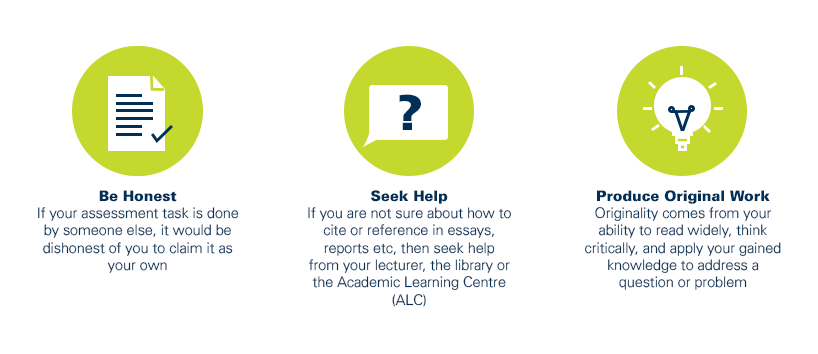
As a CQUniversity student you are expected to act honestly in all aspects of your academic work.
Any assessable work undertaken or submitted for review or assessment must be your own work. Assessable work is any type of work you do to meet the assessment requirements in the unit, including draft work submitted for review and feedback and final work to be assessed.
When you use the ideas, words or data of others in your assessment, you must thoroughly and clearly acknowledge the source of this information by using the correct referencing style for your unit. Using others’ work without proper acknowledgement may be considered a form of intellectual dishonesty.
Participating honestly, respectfully, responsibly, and fairly in your university study ensures the CQUniversity qualification you earn will be valued as a true indication of your individual academic achievement and will continue to receive the respect and recognition it deserves.
As a student, you are responsible for reading and following CQUniversity’s policies, including the Student Academic Integrity Policy and Procedure. This policy sets out CQUniversity’s expectations of you to act with integrity, examples of academic integrity breaches to avoid, the processes used to address alleged breaches of academic integrity, and potential penalties.
What is a breach of academic integrity?
A breach of academic integrity includes but is not limited to plagiarism, self-plagiarism, collusion, cheating, contract cheating, and academic misconduct. The Student Academic Integrity Policy and Procedure defines what these terms mean and gives examples.
Why is academic integrity important?
A breach of academic integrity may result in one or more penalties, including suspension or even expulsion from the University. It can also have negative implications for student visas and future enrolment at CQUniversity or elsewhere. Students who engage in contract cheating also risk being blackmailed by contract cheating services.
Where can I get assistance?
For academic advice and guidance, the Academic Learning Centre (ALC) can support you in becoming confident in completing assessments with integrity and of high standard.
What can you do to act with integrity?