Overview
This is a foundational unit that introduces the fundamental concepts and frameworks that underpin the effective management of emergencies and disasters. You will gain a basic understanding of the nature of hazards and disasters and will Introduce the key stakeholders involved with emergency and disaster management, explore the historic and contemporary principles, policies, and legal frameworks guiding the field of practice. The unit will explore local and global concepts of emergency and disaster management and the models, systems and processes required to effectively mitigate, prepare, respond and recover from various disasters.
Details
Pre-requisites or Co-requisites
Students enrolled in the CM40 Bachelor of Paramedic Science/Graduate Certificate in Emergency and Disaster Management must have completed a minimum of 72 credit points. Students enrolled in the CC59 Bachelor of Public Health must have completed a minimum of 72 credit points.
Important note: Students enrolled in a subsequent unit who failed their pre-requisite unit, should drop the subsequent unit before the census date or within 10 working days of Fail grade notification. Students who do not drop the unit in this timeframe cannot later drop the unit without academic and financial liability. See details in the Assessment Policy and Procedure (Higher Education Coursework).
Offerings For Term 3 - 2026
Attendance Requirements
All on-campus students are expected to attend scheduled classes - in some units, these classes are identified as a mandatory (pass/fail) component and attendance is compulsory. International students, on a student visa, must maintain a full time study load and meet both attendance and academic progress requirements in each study period (satisfactory attendance for International students is defined as maintaining at least an 80% attendance record).
Recommended Student Time Commitment
Each 6-credit Postgraduate unit at CQUniversity requires an overall time commitment of an average of 12.5 hours of study per week, making a total of 150 hours for the unit.
Class Timetable
Assessment Overview
| Assessment Task | Part Weighting (% of assessment) |
Assessment Security Level | Gen AI Guidance Levels |
|---|---|---|---|
| 1. ASSESSMENT 1 (40% of unit ) | |||
| Poster Presentation (Presentation) | 100% of 40% | Low | AI-Assisted (Guided Collaboration) |
| 2. ASSESSMENT 2 (60% of unit ) | |||
| Disaster Event - Case Vignette (Written Assessment) | 100% of 60% | Low | AI-Assisted (Guided Collaboration) |
Assessment Grading
This is a graded unit: your overall grade will be calculated from the marks or grades for each assessment task, based on the relative weightings shown in the table above. You must obtain an overall mark for the unit of at least 50%, or an overall grade of 'pass' in order to pass the unit. If any 'pass/fail' tasks are shown in the table above they must also be completed successfully ('pass' grade). You must also meet any minimum mark requirements specified for a particular assessment task, as detailed in the 'assessment task' section (note that in some instances, the minimum mark for a task may be greater than 50%). Consult the University's Grades and Results Policy for more details of interim results and final grades.
All University policies are available on the CQUniversity Policy site.
You may wish to view these policies:
- Grades and Results Policy
- Assessment Policy and Procedure (Higher Education Coursework)
- Review of Grade Procedure
- Student Academic Integrity Policy and Procedure
- Academic Progression Policy and Procedure
- Student Refund and Credit Balance Policy and Procedure
- Complaints Policy and Procedure
- Information and Communications Technology Acceptable Use Policy and Procedure
This list is not an exhaustive list of all University policies. The full list of University policies are available on the CQUniversity Policy site.
Feedback, Recommendations and Responses
Every unit is reviewed for enhancement each year. At the most recent review, the following staff and student feedback items were identified and recommendations were made.
Feedback from Formal feedback, discussion with students
Some students have requested additional discussion and clarification on how to meet the requirements of the unit's specified level of permitted generative AI use.
Additional discussion on permitted uses of generative AI will be incorporated into assessment instructions and in-class discussion, beginning later in 2026.
Feedback from Discussion with students, instructor reflection, discussions with EDM staff
Supplemental materials on anthropogenic disasters would add an additional dimension to the unit's focus, and in particular support the existing content on politics, policy, and systemic issues.
Ongoing review of extension materials and incorporation of new material will include a focus on appropriate studies of anthropogenic disasters, especially material that directly relates to existing content on politics and policy.
Feedback from Self-assessment
Assessments to be reviewed for GenAI security as per the Guided-Assured Assessment Model.
Review assessments for the next offering to consider the Guided-Assured Assessment Model.
- Evaluate the characteristics of natural and human-caused hazards and vulnerabilities particular to global, regional and national emergency and disaster contexts
- Explain the principles of Emergency and Disaster Management using the prevention, preparedness, response and recovery (PPRR) model
- Analyse how environmental, political and social vulnerability differs from traditional approaches to disasters and emergency management
- Locate appropriate peer-reviewed and grey literature relevant to emergency and disaster management
- Conduct a social vulnerability analysis relevant to the emergency and disaster management context
- Identify limitations and opportunities that promote or restrict strategies for addressing vulnerability in the context of the United Nations' Sendai framework and Sustainable Development Goals (SDGs).
Alignment of Assessment Tasks to Learning Outcomes
| Assessment Tasks | Learning Outcomes | |||||
|---|---|---|---|---|---|---|
| 1 | 2 | 3 | 4 | 5 | 6 | |
|
1.
Assessment 1
(40% of unit )
Presentation
|
||||||
|
2.
Assessment 2
(60% of unit )
Written Assessment
|
||||||
Alignment of Graduate Attributes to Learning Outcomes
| Graduate Attributes | Learning Outcomes | |||||
|---|---|---|---|---|---|---|
| 1 | 2 | 3 | 4 | 5 | 6 | |
| 1 - Knowledge | ||||||
| 2 - Communication | ||||||
| 3 - Cognitive, technical and creative skills | ||||||
| 4 - Research | ||||||
| 5 - Self-management | ||||||
| 6 - Ethical and Professional Responsibility | ||||||
| 7 - Leadership | ||||||
| 8 - First Nations Knowledges | ||||||
| 9 - Aboriginal and Torres Strait Islander Cultures | ||||||
Textbooks
There are no required textbooks.
IT Resources
- CQUniversity Student Email
- Internet
- Unit Website (Moodle)
All submissions for this unit must use the referencing style: American Psychological Association 7th Edition (APA 7th edition)
For further information, see the Assessment Tasks.
d.fanany@cqu.edu.au
Week 1
Begin Date: 09 Nov 2026Module/Topic
Module 1: Emergency and Disaster Management Background
Chapter
See study guide for discussion and reading activities.
Events and Submissions/Topic
Prevention and Preparedness
Week 2
Begin Date: 16 Nov 2026Module/Topic
Module 1: Emergency and Disaster Management Background
Chapter
See study guide for discussion and reading activities.
Events and Submissions/Topic
Response and Recovery
Week 3
Begin Date: 23 Nov 2026Module/Topic
Module 1: Emergency and Disaster Management Background
Chapter
See study guide for discussion and reading activities.
Events and Submissions/Topic
Topic: Assessing Vulnerability
Week 4
Begin Date: 30 Nov 2026Module/Topic
Module 1: Emergency and Disaster Management Background
Chapter
See study guide for discussion and reading activities.
Events and Submissions/Topic
Systems Perspectives in Emergency and Disaster Management
Week 5
Begin Date: 07 Dec 2026Module/Topic
Module 2: The Emergency and Disaster Management Context
Chapter
See study guide for discussion and reading activities.
Events and Submissions/Topic
Topic: Elements of Risk
Poster Presentation Due: Week 5 Wednesday (9 Dec 2026) 5:00 pm AEST
Week 6
Begin Date: 14 Dec 2026Module/Topic
Module 2: The Emergency and Disaster Management Context
Chapter
See study guide for discussion and reading activities.
Events and Submissions/Topic
Economic and Financial Perspectives
Mid-Term Break
Begin Date: 21 Dec 2026Module/Topic
Chapter
Events and Submissions/Topic
Week 7
Begin Date: 04 Jan 2027Module/Topic
Module 2: The Emergency and Disaster Management Context
Chapter
See study guide for discussion and reading activities.
Events and Submissions/Topic
Political and Policy Approaches to Emergency and Disaster Management
Week 8
Begin Date: 11 Jan 2027Module/Topic
Module 2: The Emergency and Disaster Management Context
Chapter
See study guide for discussion and reading activities.
Events and Submissions/Topic
International Perspectives on Emergency and Disaster Management
Week 9
Begin Date: 18 Jan 2027Module/Topic
Module 3: Emergency Management Futures
Chapter
See study guide for discussion and reading activities.
Events and Submissions/Topic
Disaster-Conscious Economics
Week 10
Begin Date: 25 Jan 2027Module/Topic
Module 3: Emergency Management Futures
Chapter
See study guide for discussion and reading activities.
Events and Submissions/Topic
Technological Advancement and Disruption
Week 11
Begin Date: 01 Feb 2027Module/Topic
Module 3: Emergency Management Futures
Chapter
See study guide for discussion and reading activities.
Events and Submissions/Topic
Demographic Impacts on Emergency Management
Week 12
Begin Date: 08 Feb 2027Module/Topic
Module 3: Emergency Management Futures
Chapter
See study guide for discussion and reading activities.
Events and Submissions/Topic
Topic: Climate Change
Disaster Event - Case Vignette Due: Week 12 Friday (12 Feb 2027) 5:00 pm AEST
Exam Week
Begin Date: 15 Feb 2027Module/Topic
Chapter
Events and Submissions/Topic
1. ASSESSMENT 1 ( 40% of unit )
Presentation
Important: This is an individual assessment task, with a Level of GenAI use allowed being Level 2, AI Planning.
You will select ONE (1) significant disaster event the list of historical emergency management events which is provided on the Moodle site (under the Assessment Task 1 - Poster Presentation) located under the Assessment Tile.
You will produce a one-slide poster presentation, that describes and analyses your selected disaster event.
Additionally, you may use PowerPoint's in-app notes function (which usually appears in the form of a text box at the bottom of the page) to add a small amount of additional content, if you feel there was anything that needed to be presented in shorter form on the poster but that would benefit from slightly more explanation. Your more detailed explanation is to be included in the in-app notes function section. However, the primary part of your submission must be the poster, and your final submission must be the poster, and it must function as a standalone visual. The poster content must communicate its message without additional context.
Examples of poster presentation layouts and templates are available on Moodle.
You must choose one (1) disaster event only from the list provided (see end of this task).
You must create a Poster (and notes) that must cover EACH (all) of the following points:
1. A concise description of the disaster event, including when and where it occurred, what happened, and the scale of the event;
2. An explanation of the direct and indirect impacts on people, communities, infrastructure, the environment, and essential services;
3. An identification of the key hazards associated with the event and how these hazards created risks for people living nearby or farther away;
4. An explanation of the vulnerability factors that increased the level of risk for affected communities, such as location, demographics, social disadvantage, housing, infrastructure, access to warnings, health status, mobility, or isolation;
5. A brief analysis of how the event was managed across the prevention, preparedness, response, and recovery framework;
6. A brief statement identifying the key lesson that emergency managers, governments, or communities should learn from this event;
7. Evidence from 6 or more credible, peer-reviewed sources to support your analysis, with appropriate referencing, in-text and a reference list.
8. You must include at least two appropriate supporting images.
Students are strongly encouraged to use the CQU 7 Step Search Strategy for this Assessment task 1.
This assessment is worth 40% of the overall grade for this Unit. This Assessment Task is due by Wednesday, 5 pm, Week 5.
List of Disaster Events – CHOOSE ONE (1) ONLY
You must choose one (1) of these disaster events to be the subject of your Poster:
1. Cyclone Seroja (Indonesia, Timor-Leste, and Western Australia, April 2021)
2. Sidoarjo Mud Volcano (East Java, Indonesia, May 2006-present)
3. Nepal-Tibet Floods (August 26th, 2026)
4. Great East Japan Earthquake (Tohoku, Japan, March 11 2011)
5. Ever Given Suez Canal Obstruction (Egypt, March 23-29 2021)
Generative AI (GenAI): Level of GenAI use allowed: AI-Assisted (Guided Collaboration)
You may use Generative AI tools to support planning, brainstorming, idea development, and preliminary research only. AI may help you explore concepts, generate questions, or identify relevant topics; however, the analysis, interpretation, critical thinking, and final written submission must be your own work. You must critically evaluate any AI-generated content and remain responsible for the accuracy, quality, and integrity of your assessment. Any use of GenAI must be acknowledged in accordance with unit requirements.
Suggested wording for AI use declaration:
AI Use Declaration (include at the bottom of your title page)
In completing this Assessment Task, I acknowledge the use of [specify the GenAI tools/platforms] to guide the [specific process/es: brainstorming, drafting, research assistance, editing, etc.]. The output from these prompts was used to [explain how the output from GenAI was critically evaluated to use in your own work]. I confirm that all AI-generated content underwent thorough review and evaluation and the final output accurately reflects my own understanding, knowledge and intended meaning. While AI assistance was used in the process, I maintain full responsibility for the content, its accuracy, and its presentation and can explain and justify all inclusions. This declaration is included to ensure transparency and to formally acknowledge the role of AI in the completion of this assessment task.
Week 5 Wednesday (9 Dec 2026) 5:00 pm AEST
Upload the completed poster presentation to Moodle; PowerPoint format recommended
Week 7 Wednesday (6 Jan 2027)
Assessment will usually be returned as per the date above
1. Description of events and their direct impact
2. Characterisation of hazards and risks arising from the event
3. Identification of factors impacting on vulnerability
4. Discussion of PPRR applicability to the event
5. Appropriate academic writing style and referencing
6. Presentation (formatting) of Poster
Note: the complete marking rubric will be available on the unit's Moodle site, from week 1 of the term.
- Evaluate the characteristics of natural and human-caused hazards and vulnerabilities particular to global, regional and national emergency and disaster contexts
- Explain the principles of Emergency and Disaster Management using the prevention, preparedness, response and recovery (PPRR) model
- Locate appropriate peer-reviewed and grey literature relevant to emergency and disaster management
- Conduct a social vulnerability analysis relevant to the emergency and disaster management context
2. ASSESSMENT 2 ( 60% of unit )
Written Assessment
Important: This is an individual assessment, and the level of GenAI use allowed is AI-Assisted (Guided Collaboration). Full description below.
Assessment Task 2 asks you to choose your own disaster event that has occurred anywhere in the world.
You will then prepare a written case vignette (maximum 3,000 words). In your case vignette, you must describe and analyse your selected disaster event and consider how future impacts from a similar event could be reduced. Your response should identify the hazard characteristics, the exposed populations and assets, the social vulnerability factors that shaped the consequences of the event, and the strategies that could strengthen future disaster risk reduction and community resilience.
Your analysis must apply relevant ideas from the Sendai Framework for Disaster Risk Reduction and, where appropriate, the Sustainable Development Goals. You should support your discussion with credible peer-reviewed and grey literature.
In answering this question, you must include each (all) of the following components:
1) Disaster event overview - describe the selected disaster event, including when and where it occurred, the type of hazard involved, the scale of the event, and the main consequences for the affected community.
2) Hazard characteristics and risk - analyse the characteristics of the hazard or hazards involved in the event. Explain how these characteristics created risk for people, infrastructure, essential services, the environment, and community functioning.
3) Community exposure - identify who or what was exposed to the hazard. This may include geographic areas, settlements, infrastructure, critical services, industries, cultural assets, environmental values, or particular groups within the population.
4) Social vulnerability and differential impact - analyse the social, economic, demographic, cultural, political, environmental, or health-related factors that made some people or groups more vulnerable than others. Consider, for example, whether vulnerability differed across age, disability, income, housing, language, mobility, remoteness, access to services, First Nations status, migrant status, or other relevant factors.
5) Community impact and resilience - discuss how the disaster affected the community before, during, and after the event. This should include both immediate impacts and longer-term recovery issues. You should identify existing community strengths, capabilities, networks, or resilience factors that helped reduce harm or support recovery.
6) Application of the Sendai Framework and SDGs - Apply the perspective of the Sendai Framework to the selected disaster event. Explain how one or more Sendai priorities could be used to reduce future disaster risk, strengthen preparedness, reduce vulnerability, and improve resilience. Where relevant, you should also link their discussion to appropriate Sustainable Development Goals.
7) Risk reduction and resilience strategies - recommend practical strategies that governments, emergency services, community organisations, businesses, and/or community members could use to reduce vulnerability and improve resilience before a similar event occurs again. These strategies should be realistic, evidence-informed, and connected to the Sendai Framework.
8) Support the case vignette with credible peer-reviewed and grey literature. This may include academic journal articles, government reports, inquiry reports, emergency management reviews, NGO reports, UN documents, and reputable disaster databases.
Important:
• You must write/ format your case vignette according to the standard report structure (refer to template provided)
• You must use the CQU 7-step search strategy to carry out your search for additional sources. The 7-step strategy is detailed in full on this unit's Moodle site.
• You must include a copy of your documented use of the CQU 7-step search strategy as an Appendix to your case-vignette.
Generative AI (GenAI): Level of GenAI use allowed: AI-Assisted (Guided Collaboration)
You may use Generative AI tools to support planning, brainstorming, idea development, and preliminary research only. AI may help you explore concepts, generate questions, or identify relevant topics; however, the analysis, interpretation, critical thinking, and final written submission must be your own work. You must critically evaluate any AI-generated content and remain responsible for the accuracy, quality, and integrity of your assessment. Any use of GenAI must be acknowledged in accordance with unit requirements.
Suggested wording for AI use declaration:
AI Use Declaration (include at the bottom of your title page)
In completing this Assessment Task, I acknowledge the use of [specify the GenAI tools/platforms] to guide the [specific process/es: brainstorming, drafting, research assistance, editing, etc.]. The output from these prompts was used to [explain how the output from GenAI was critically evaluated to use in your own work]. I confirm that all AI-generated content underwent thorough review and evaluation and the final output accurately reflects my own understanding, knowledge and intended meaning. While AI assistance was used in the process, I maintain full responsibility for the content, its accuracy, and its presentation and can explain and justify all inclusions. This declaration is included to ensure transparency and to formally acknowledge the role of AI in the completion of this assessment task.
Week 12 Friday (12 Feb 2027) 5:00 pm AEST
Assessment will usually be returned within three weeks of the due date.
1. Chosen disaster event description - Clearly describes the selected disaster event, including location, date, hazard type, scale, and main consequences.
2. Hazard, risk and exposure analysis - Identifies the hazard characteristics and explains how people, places, infrastructure, services, and environments were exposed to risk.
3. Social vulnerability analysis - Analyses the social, economic, demographic, cultural, political, environmental, or health-related factors that made some groups more vulnerable than others.
4. Community impact and resilience - Explains the immediate and longer-term impacts on the community and identifies resilience factors, strengths, or capacities that supported recovery.
5. Application of the Sendai Framework and SDGs - Applies relevant Sendai Framework priorities and, where appropriate, relevant Sustainable Development Goals to the selected event.
6. Risk reduction and resilience strategies - Recommends realistic, evidence-informed strategies to reduce future vulnerability and strengthen community resilience.
7. Use of evidence and research - Uses credible peer-reviewed and grey literature, such as academic articles, government reports, inquiry reports, NGO reports, UN documents, and disaster databases.
8. Structure, clarity and academic writing - Presents a clear, well-organised case vignette within the word limit, using appropriate academic writing, referencing, and student’s own words consistent with the Level 2 AI Planning requirement.
Note: the complete marking rubric will be available on the unit's Moodle site, from week 1 of the term.
- Evaluate the characteristics of natural and human-caused hazards and vulnerabilities particular to global, regional and national emergency and disaster contexts
- Explain the principles of Emergency and Disaster Management using the prevention, preparedness, response and recovery (PPRR) model
- Analyse how environmental, political and social vulnerability differs from traditional approaches to disasters and emergency management
- Locate appropriate peer-reviewed and grey literature relevant to emergency and disaster management
- Conduct a social vulnerability analysis relevant to the emergency and disaster management context
- Identify limitations and opportunities that promote or restrict strategies for addressing vulnerability in the context of the United Nations' Sendai framework and Sustainable Development Goals (SDGs).
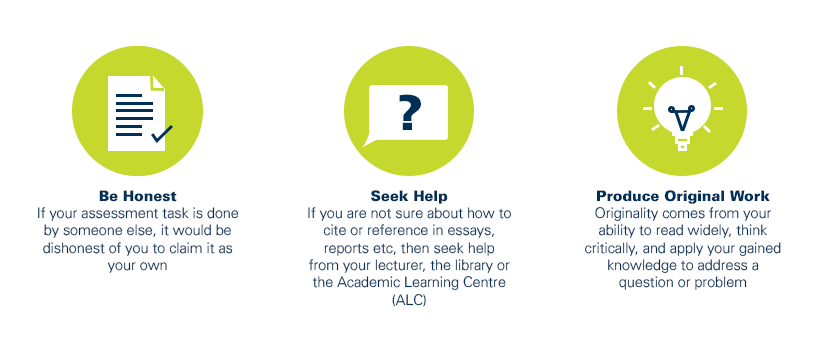
As a CQUniversity student you are expected to act honestly in all aspects of your academic work.
Any assessable work undertaken or submitted for review or assessment must be your own work. Assessable work is any type of work you do to meet the assessment requirements in the unit, including draft work submitted for review and feedback and final work to be assessed.
When you use the ideas, words or data of others in your assessment, you must thoroughly and clearly acknowledge the source of this information by using the correct referencing style for your unit. Using others’ work without proper acknowledgement may be considered a form of intellectual dishonesty.
Participating honestly, respectfully, responsibly, and fairly in your university study ensures the CQUniversity qualification you earn will be valued as a true indication of your individual academic achievement and will continue to receive the respect and recognition it deserves.
As a student, you are responsible for reading and following CQUniversity’s policies, including the Student Academic Integrity Policy and Procedure. This policy sets out CQUniversity’s expectations of you to act with integrity, examples of academic integrity breaches to avoid, the processes used to address alleged breaches of academic integrity, and potential penalties.
What is a breach of academic integrity?
A breach of academic integrity includes but is not limited to plagiarism, self-plagiarism, collusion, cheating, contract cheating, and academic misconduct. The Student Academic Integrity Policy and Procedure defines what these terms mean and gives examples.
Why is academic integrity important?
A breach of academic integrity may result in one or more penalties, including suspension or even expulsion from the University. It can also have negative implications for student visas and future enrolment at CQUniversity or elsewhere. Students who engage in contract cheating also risk being blackmailed by contract cheating services.
Where can I get assistance?
For academic advice and guidance, the Academic Learning Centre (ALC) can support you in becoming confident in completing assessments with integrity and of high standard.
What can you do to act with integrity?