Overview
In this unit, you will learn the history and theory of documentary, and about current trends in industry practice. Through a series of individual exercises, you will gain skills in project development, sound and vision capture, and documentary editing using industry-standard software. You will apply these skills in the production of your own short documentary. You will be encouraged to find your authentic voice and visual style, and will be introduced to the ethical and legal considerations for documentary practice.
Details
Pre-requisites or Co-requisites
Prerequisite: MMST11009 Digital Video and Audio
Important note: Students enrolled in a subsequent unit who failed their pre-requisite unit, should drop the subsequent unit before the census date or within 10 working days of Fail grade notification. Students who do not drop the unit in this timeframe cannot later drop the unit without academic and financial liability. See details in the Assessment Policy and Procedure (Higher Education Coursework).
Offerings For Term 1 - 2026
Attendance Requirements
All on-campus students are expected to attend scheduled classes - in some units, these classes are identified as a mandatory (pass/fail) component and attendance is compulsory. International students, on a student visa, must maintain a full time study load and meet both attendance and academic progress requirements in each study period (satisfactory attendance for International students is defined as maintaining at least an 80% attendance record).
Recommended Student Time Commitment
Each 6-credit Undergraduate unit at CQUniversity requires an overall time commitment of an average of 12.5 hours of study per week, making a total of 150 hours for the unit.
Class Timetable
Assessment Overview
Assessment Grading
This is a graded unit: your overall grade will be calculated from the marks or grades for each assessment task, based on the relative weightings shown in the table above. You must obtain an overall mark for the unit of at least 50%, or an overall grade of 'pass' in order to pass the unit. If any 'pass/fail' tasks are shown in the table above they must also be completed successfully ('pass' grade). You must also meet any minimum mark requirements specified for a particular assessment task, as detailed in the 'assessment task' section (note that in some instances, the minimum mark for a task may be greater than 50%). Consult the University's Grades and Results Policy for more details of interim results and final grades.
All University policies are available on the CQUniversity Policy site.
You may wish to view these policies:
- Grades and Results Policy
- Assessment Policy and Procedure (Higher Education Coursework)
- Review of Grade Procedure
- Student Academic Integrity Policy and Procedure
- Academic Progression Policy and Procedure
- Student Refund and Credit Balance Policy and Procedure
- Complaints Policy and Procedure
- Information and Communications Technology Acceptable Use Policy and Procedure
This list is not an exhaustive list of all University policies. The full list of University policies are available on the CQUniversity Policy site.
- Integrate a theoretical understanding of documentary practice and audiovisual skills in the creation of a completed documentary project.
- Apply documentary editing principles in the creation of a documentary using industry-standard editing software.
- Manage media files and workflow through the stages of development, pre-production, production, post-production and distribution
- Reflect critically on one's own professional documentary practice within an industry-standard ethical framework.
Alignment of Assessment Tasks to Learning Outcomes
| Assessment Tasks | Learning Outcomes | |||
|---|---|---|---|---|
| 1 | 2 | 3 | 4 | |
| 1 - Practical Assessment - 40% | ||||
| 2 - Practical Assessment - 60% | ||||
Alignment of Graduate Attributes to Learning Outcomes
| Graduate Attributes | Learning Outcomes | |||
|---|---|---|---|---|
| 1 | 2 | 3 | 4 | |
| 1 - Communication | ||||
| 2 - Problem Solving | ||||
| 3 - Critical Thinking | ||||
| 4 - Information Literacy | ||||
| 5 - Team Work | ||||
| 6 - Information Technology Competence | ||||
| 7 - Cross Cultural Competence | ||||
| 8 - Ethical practice | ||||
| 9 - Social Innovation | ||||
| 10 - First Nations Knowledges | ||||
| 11 - Aboriginal and Torres Strait Islander Cultures | ||||
Textbooks
There are no required textbooks.
Additional Textbook Information
All texts and references for this Unit are available online. Details are available on the Unit Moodle website.
IT Resources
- CQUniversity Student Email
- Internet
- Unit Website (Moodle)
- Camera and microphone for attending Zoom tutorials and completing presentation assessment task
- Students will require access to video editing software (Adobe Premiere Pro or DaVInci Resolve free version are recommended)
- Access to a digital camera and microphone for creating a documentary and completing assessment tasks (a smartphone with video and audio capabilities is sufficient)
All submissions for this unit must use the referencing style: American Psychological Association 7th Edition (APA 7th edition)
For further information, see the Assessment Tasks.
j.cattoni@cqu.edu.au
Week 1
Begin Date: 09 Mar 2026Module/Topic
Documentary as Storytelling
Finding Your Unique Lens
Chapter
Events and Submissions/Topic
Week 2
Begin Date: 16 Mar 2026Module/Topic
Voice in Documentary
Narrative Structure
Chapter
Events and Submissions/Topic
Week 3
Begin Date: 23 Mar 2026Module/Topic
Visual Storytelling
Image Choices
Chapter
Events and Submissions/Topic
Week 4
Begin Date: 30 Mar 2026Module/Topic
File Management
Editing in Documentary
Chapter
Events and Submissions/Topic
Week 5
Begin Date: 06 Apr 2026Module/Topic
Finalising Your Digital Story
Pitching Your Documentary Project
Chapter
Events and Submissions/Topic
Compulsory Peer Review of Digital Story & Documentary Project Proposal
Week 6
Begin Date: 13 Apr 2026Module/Topic
Telling Other People's Stories
Legal and Ethical Frameworks
Chapter
Events and Submissions/Topic
Safety Report Sign Off
DOCUMENTARY DEVELOPMENT WORKBOOK Due: Week 6 Friday (17 Apr 2026) 11:59 pm AEST
Vacation Week
Begin Date: 20 Apr 2026Module/Topic
Chapter
Events and Submissions/Topic
Week 7
Begin Date: 27 Apr 2026Module/Topic
Documentary Production: Shooting Your Documentary
File Integrity
Chapter
Events and Submissions/Topic
Flexible Tutorial Attendance this Week
Week 8
Begin Date: 04 May 2026Module/Topic
Documentary Post-Production 1
Assembly & Structure
Chapter
Events and Submissions/Topic
Week 9
Begin Date: 11 May 2026Module/Topic
Documentary Post-Production 2
Refining the Edit
Chapter
Events and Submissions/Topic
Compulsory Rough-Cut Screenings
Week 10
Begin Date: 18 May 2026Module/Topic
Documentary Post-Production 3
Colour Correction, Grading & Graphics
Chapter
Events and Submissions/Topic
Compulsory Rough-Cut Screenings
Week 11
Begin Date: 25 May 2026Module/Topic
Documentary Post-Production 4
Sound Mixing & Final Polish
Chapter
Events and Submissions/Topic
Week 12
Begin Date: 01 Jun 2026Module/Topic
Screenings & Reflection
Professional Practice
Chapter
Events and Submissions/Topic
Exam Week
Begin Date: 08 Jun 2026Module/Topic
Chapter
Events and Submissions/Topic
Vacation/Exam Week
Begin Date: 15 Jun 2026Module/Topic
Chapter
Events and Submissions/Topic
1 Practical Assessment
The Documentary Development Workbook is a comprehensive learning tool that guides you through the essential skills of documentary practice. Through weekly exercises, you'll develop your documentary lens, create a personal digital story, reflect on your process, and prepare for your first documentary project. This workbook approach allows you to build foundational storytelling, technical, and editing skills through creating a 2–3-minute digital story around your own experiences. You'll then apply these skills to documenting the story of another person in Assignment 2. Digital storytelling uses personal narrative, voiceover, images, footage and music to tell authentic stories. You control what you share and a framework for choosing and developing your story is provided on the Moodle website.
What You'll Complete in Your Workbook
- Weekly Development Exercises (Weeks 1-6): Guided exercises building your skills and understanding
- Digital Story (2-3 minutes): Your first-person story told through voiceover + vision + music
- Documentary Proposal (2 pages): The story you will tell in Assignment 2, why, and how
- Safety Report: Risk assessment for Assignment 2 production (must be signed off)
- A reflective statement on your learnings
A workbook template will guide you through the weekly exercises. Full assignment details are provided on the Unit Moodle site.
Compulsory Requirements
Week 5 peer review (must attend to give/receive feedback)
Safety report sign-off (before filming Assignment 2)
What You'll Need to Submit
1. Completed Assignment 1 Workbook Template (PDF)
2. Digital story via Echo360 (MP4, 1080p 25fps)
3. 2-page proposal (PDF)
4. Signed Safety report (PDF)
5. ZIP file of all documentation
Please note: The 72-Hour grace period applies to Assignment 1
If you need longer than 72 hours, you'll still need to use the normal Assessment Extension System process.
AI Assessment Scale Level 3: AI for Drafting and Refinement of Script and Submission Template
- You may use AI to assist with specific tasks such as drafting text, refining, and evaluating your work.
- You must critically evaluate and modify any AI-generated content.
- Any misuse or lack of disclosure regarding AI tools will be considered a breach of academic integrity.
AI Assessment Scale Level 5: Creative AI Integration and Co-Design for Digital Story
- You can use AI creatively to solve the task, potentially co-designing new approaches with your instructor.
- You many use AI to generate some of your visual content but this should be appropriately credited.
- Any misuse or lack of disclosure regarding AI tools will be considered a breach of academic integrity.
Week 6 Friday (17 Apr 2026) 11:59 pm AEST
Submit via Moodle
Week 7 Friday (1 May 2026)
Two weeks following submission
Demonstrates attention to completion of the task (20%)
Creates impactful storytelling (20%)
Applies visual and audio principles (20%)
Demonstrates creative experimentation (20%)
Presents professional documentation (20%)
Please refer to the unit website (Moodle) for a detailed assessment description and criteria.
HD = professional/broadcast standard
D = strong work with minor issues
C = adequate/competent with some problems
P = basic/minimal standard with multiple issues
F = insufficient/incomplete/not done
- Integrate a theoretical understanding of documentary practice and audiovisual skills in the creation of a completed documentary project.
- Manage media files and workflow through the stages of development, pre-production, production, post-production and distribution
2 Practical Assessment
You will create a 3-5 minute documentary to a standard suitable for entry into a film festival. The subject of your documentary can be of your own choosing but must be about someone other than yourself. However, you can appear as an on-screen secondary character. The documentary will integrate the skills learned in Assignment 1 (storytelling, editing, sound, structure, ethical practice) and apply them to documenting another person's story. You will work as a "total filmmaker" - responsible for directing, cinematography, and editing, however students can work as crew on each other's projects.
Assignment requirements include participating in compulsory rough-cut screenings, developing an Electronic Press Kit (EPK), writing a critical reflective statement, and properly crediting all third-party materials - all of which reflect standard industry practice. Students must conduct themselves professionally and ethically and must adhere to the signed safety report from Assignment 1.
What You'll Need to Include in Your Documentary
- An interview (in vision or audio only)
- Intentional visual storytelling that drives the narrative
- Cohesive story in vision and audio
- Duration of 3-5 minutes (+/- 10%)
- Opening title and end credits
- Colour corrected and sound mixed
Compulsory Requirements
Week 8 & 9 peer rough cut screenings (must attend to give/receive feedback)
What You'll Need to Submit
- Completed Assignment 2 Template (PDF)
- Documentary via Echo360 (MP4, 1080p 25fps)
- All permissions (releases, location agreements, music licenses)
- EPK (Electronic Press Kit) for festival submission, template provided
- 250-word critical reflection (5-question framework provided)
A submission template will guide you in the completion of the assignment requirements. Full assignment details are provided on the Unit Moodle site.
Please note: The 72-Hour grace period applies to Assignment 2
If you need longer than 72 hours, you'll still need to use the normal Assessment Extension System process.
AI Assessment Scale: Level 2 AI for Planning and Research
- You may use AI for planning, idea development, and research.
- Your final submission should show how you have developed and refined these ideas.
- Any misuse or lack of disclosure regarding AI tools will be considered a breach of academic integrity
With the approval of the Unit Coordinator you may be permitted to use Level 5
(Negotiable) AI Assessment Scale Level 5: Creative AI Integration in your Short Documentary
- You can use AI creatively to solve the task, potentially co-designing new approaches with your instructor.
- You many use AI to generate some of your visual content but this should be appropriately credited.
- Any misuse or lack of disclosure regarding AI tools will be considered a breach of academic integrity.
Exam Week Monday (8 June 2026) 11:59 pm AEST
Submit via Moodle
Vacation/Exam Week Friday (19 June 2026)
Two weeks following submission
Completes all requirements of the task to a professional standard (20%)
Creates impactful storytelling (20%)
Demonstrates ethical and legal documentary practice (20%)
Applies technical and creative skills (20%)
Engages in critical reflection and participatory practice (20%)
Please refer to the unit website (Moodle) for a detailed assessment description and criteria.
HD = professional/festival/broadcast standard
D = strong work with minor issues
C = adequate/competent with some problems
P = basic/minimal standard with multiple issues
F = insufficient/incomplete/not done
- Apply documentary editing principles in the creation of a documentary using industry-standard editing software.
- Manage media files and workflow through the stages of development, pre-production, production, post-production and distribution
- Reflect critically on one's own professional documentary practice within an industry-standard ethical framework.
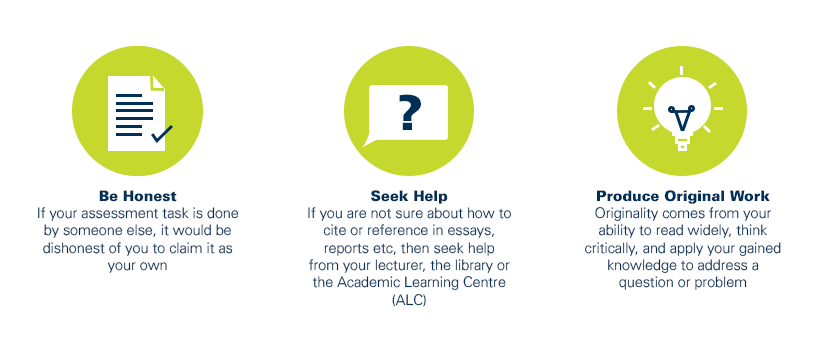
As a CQUniversity student you are expected to act honestly in all aspects of your academic work.
Any assessable work undertaken or submitted for review or assessment must be your own work. Assessable work is any type of work you do to meet the assessment requirements in the unit, including draft work submitted for review and feedback and final work to be assessed.
When you use the ideas, words or data of others in your assessment, you must thoroughly and clearly acknowledge the source of this information by using the correct referencing style for your unit. Using others’ work without proper acknowledgement may be considered a form of intellectual dishonesty.
Participating honestly, respectfully, responsibly, and fairly in your university study ensures the CQUniversity qualification you earn will be valued as a true indication of your individual academic achievement and will continue to receive the respect and recognition it deserves.
As a student, you are responsible for reading and following CQUniversity’s policies, including the Student Academic Integrity Policy and Procedure. This policy sets out CQUniversity’s expectations of you to act with integrity, examples of academic integrity breaches to avoid, the processes used to address alleged breaches of academic integrity, and potential penalties.
What is a breach of academic integrity?
A breach of academic integrity includes but is not limited to plagiarism, self-plagiarism, collusion, cheating, contract cheating, and academic misconduct. The Student Academic Integrity Policy and Procedure defines what these terms mean and gives examples.
Why is academic integrity important?
A breach of academic integrity may result in one or more penalties, including suspension or even expulsion from the University. It can also have negative implications for student visas and future enrolment at CQUniversity or elsewhere. Students who engage in contract cheating also risk being blackmailed by contract cheating services.
Where can I get assistance?
For academic advice and guidance, the Academic Learning Centre (ALC) can support you in becoming confident in completing assessments with integrity and of high standard.
What can you do to act with integrity?