Overview
This unit introduces you to the theory and practice of case management in criminal justice and related human service contexts. The aim of case management is to provide a consistent quality service as offenders pass through the complex criminal justice system. Effective case management can reduce incarceration, reoffending (recidivism), manage integration of offenders and those with mental illness back into society with meaningful employment, reunite and support families and prevent substance abuse. Case management can involve dealing with parole conditions and monitoring and engagement with court-ordered diversion programs. You will consider client intake and assessment, identification and troubleshooting issues, creating a management plan, dealing with difficult or uncooperative clients, providing support whilst maintaining a safe working environment and monitoring systems.
Details
Pre-requisites or Co-requisites
There are no requisites for this unit.
Important note: Students enrolled in a subsequent unit who failed their pre-requisite unit, should drop the subsequent unit before the census date or within 10 working days of Fail grade notification. Students who do not drop the unit in this timeframe cannot later drop the unit without academic and financial liability. See details in the Assessment Policy and Procedure (Higher Education Coursework).
Offerings For Term 1 - 2026
Attendance Requirements
All on-campus students are expected to attend scheduled classes - in some units, these classes are identified as a mandatory (pass/fail) component and attendance is compulsory. International students, on a student visa, must maintain a full time study load and meet both attendance and academic progress requirements in each study period (satisfactory attendance for International students is defined as maintaining at least an 80% attendance record).
Recommended Student Time Commitment
Each 6-credit Undergraduate unit at CQUniversity requires an overall time commitment of an average of 12.5 hours of study per week, making a total of 150 hours for the unit.
Class Timetable
Assessment Overview
Assessment Grading
This is a graded unit: your overall grade will be calculated from the marks or grades for each assessment task, based on the relative weightings shown in the table above. You must obtain an overall mark for the unit of at least 50%, or an overall grade of 'pass' in order to pass the unit. If any 'pass/fail' tasks are shown in the table above they must also be completed successfully ('pass' grade). You must also meet any minimum mark requirements specified for a particular assessment task, as detailed in the 'assessment task' section (note that in some instances, the minimum mark for a task may be greater than 50%). Consult the University's Grades and Results Policy for more details of interim results and final grades.
All University policies are available on the CQUniversity Policy site.
You may wish to view these policies:
- Grades and Results Policy
- Assessment Policy and Procedure (Higher Education Coursework)
- Review of Grade Procedure
- Student Academic Integrity Policy and Procedure
- Academic Progression Policy and Procedure
- Student Refund and Credit Balance Policy and Procedure
- Complaints Policy and Procedure
- Information and Communications Technology Acceptable Use Policy and Procedure
This list is not an exhaustive list of all University policies. The full list of University policies are available on the CQUniversity Policy site.
Feedback, Recommendations and Responses
Every unit is reviewed for enhancement each year. At the most recent review, the following staff and student feedback items were identified and recommendations were made.
Feedback from SUTE
Lectures need further connections to real-world practice.
Guest lecturers or speakers with lived- or work- experience or practitioners will be invited to participate in recordings or live discussions to help connect students with real-world practice and to help bridge the gap between theory and practice.
Feedback from SUTE
Some content does not reflect current frontline realities.
Updates will be made to unit content to reflect current concerns and issues in case management, including learning activities that challenge assumptions and deepen critical thinking. Guests with lived experience will be invited to attend live workshops to provide an opportunity for students to connect the unit's learning content with the guest's case management experiences.
- Discuss the theoretical and practical applications of case management
- Plan case management strategies for different types of client
- Outline strategies to deal with ethical, safety, privacy and confidentiality issues in case management
- Integrate various resources and networks to support case management plans.
Alignment of Assessment Tasks to Learning Outcomes
| Assessment Tasks | Learning Outcomes | |||
|---|---|---|---|---|
| 1 | 2 | 3 | 4 | |
| 1 - Learning logs / diaries / Journal / log books - 30% | ||||
| 2 - Written Assessment - 40% | ||||
| 3 - Online Test - 30% | ||||
Alignment of Graduate Attributes to Learning Outcomes
| Graduate Attributes | Learning Outcomes | |||
|---|---|---|---|---|
| 1 | 2 | 3 | 4 | |
| 1 - Communication | ||||
| 2 - Problem Solving | ||||
| 3 - Critical Thinking | ||||
| 4 - Information Literacy | ||||
| 5 - Team Work | ||||
| 6 - Information Technology Competence | ||||
| 7 - Cross Cultural Competence | ||||
| 8 - Ethical practice | ||||
| 9 - Social Innovation | ||||
| 10 - First Nations Knowledges | ||||
| 11 - Aboriginal and Torres Strait Islander Cultures | ||||
Alignment of Assessment Tasks to Graduate Attributes
| Assessment Tasks | Graduate Attributes | ||||||||||
|---|---|---|---|---|---|---|---|---|---|---|---|
| 1 | 2 | 3 | 4 | 5 | 6 | 7 | 8 | 9 | 10 | 11 | |
| 1 - Learning logs / diaries / Journal / log books - 30% | |||||||||||
| 2 - Written Assessment - 40% | |||||||||||
| 3 - Online Test - 30% | |||||||||||
Textbooks
There are no required textbooks.
IT Resources
- CQUniversity Student Email
- Internet
- Unit Website (Moodle)
All submissions for this unit must use the referencing style: American Psychological Association 7th Edition (APA 7th edition)
For further information, see the Assessment Tasks.
j.hotten@cqu.edu.au
Module 1 Introduction - What works in offender rehabilitation
Begin Date: 09 Mar 2026Module/Topic
Introduction - What works in offender rehabilitation
Chapter
Productivity Commission. (2021). Australia’s prison dilemma: Research paper. https://www.pc.gov.au/inquiries-and-research/prison-dilemma/
Forsberg, L., & Douglas, T. (2020). What is criminal rehabilitation? Criminal Law and Philosophy, 16(1), 103-126. https://doi.org/10.1007/s11572-020-09547-4
Events and Submissions/Topic
Module 2 Case management in the criminal justice system
Begin Date: 16 Mar 2026Module/Topic
Case management in the criminal justice system
Chapter
Sheehan, R. (2022). Evidence-based community supervision models that work: The Australian approach. In S. L. Brown, L. Gelsthorpe, L. A. Craig, & L. Dixon (Eds.), The Wiley handbook on what works with girls and women in conflict with the law: A critical review of theory, practice, and policy (1st ed., pp. 396-414). John Wiley & Sons, Incorporated.
Williams, G. C., & Schaefer, L. (2024). Proposed principles for procedurally just probation and parole practices. Corrections: Policy, practice and research, 9(2), 167-191. https://doi.org/10.1080/23774657.2022.2048978
Events and Submissions/Topic
Module 3 Assessing risk
Begin Date: 23 Mar 2026Module/Topic
Assessing risk
Chapter
Bonta, J. & Andrews, D.A. (2007). Risk-Need-Responsivity Model for Offender Assessment and Treatment. https://www.researchgate.net/publication/310747116_Risk-Need- Responsivity_Model_for_Offender_Assessment_and_Rehabilitation
Taxman, F. S., & Smith, L. (2021). Risk-Need-Responsivity (RNR) classification models: Still evolving. Aggression and Violent Behavior, 59(1), 1-11. https://doi.org/10.1016/j.avb.2020.101459
Events and Submissions/Topic
Module 4 A better life - Strengths-based approaches to case management
Begin Date: 30 Mar 2026Module/Topic
A better life - Strengths-based approaches to case management
Chapter
Gålnander, R. (2024). Persist to desist: How to maintain desistance from crime in the face of severe setbacks. Criminology and Criminal Justice, 24(5), 939-954. https://doi.org/10.1177/17488958241260561
Dickson, S. R., & Willis, G. M. (2022). The Good Lives Model: Next steps in research and practice. In C. M. Langton & J. R. Worling (Eds.). Facilitating desistance from aggression and crime: Theory, research, and strength-based practices (1st ed., pp. 582-605). John Wiley & Sons, Incorporated.
Events and Submissions/Topic
Module 5 What causes crime - Introducing risks and needs
Begin Date: 06 Apr 2026Module/Topic
What causes crime - Introducing risks and needs
Chapter
McNamara, L., Quilter, J., Walsh, T. & Anthony, T. (2021). Homelessness and Contact with the Criminal Justice System: Insights from Specialist Lawyers and Allied Health Professionals in Australia. International Journal for Crime, Justice & Social Democracy 10(1), 111-129. https://cqu.primo.exlibrisgroup.com/permalink/61CQU_INST/669qn3/cdi_doaj_primary_oai_doaj_org_article_e722e9bc6fcc43b599fdd43ba25b64d7
McCausland, R., & Baldry, E. (2023). Who does Australia lock up? The social determinants of justice. International Journal of Crime, Justice and Social Democracy, 12(3), 37-53. https://doi.org/10.5204/ijcjsd.2504
Events and Submissions/Topic
Assessment 2 - Online test 1 due
Online quizzes Due: Week 5 Monday (6 Apr 2026) 6:00 am AEST
Module 6 Education, employment and crime
Begin Date: 13 Apr 2026Module/Topic
Education, employment and crime
Chapter
Ollerton, J., Giles, M. J., Baldry, E., & Cale, J. (2022). The efficacy of outsourced employment services for adults exiting Australian prisons. International Journal of Offender Therapy and Comparative Criminology, 68(8), 806-824. https://doi.org/10.1177/0306624X221102840
Bahn, S. (2014). Community Safety and Recidivism in Australia: Breaking the Cycle of Reoffending to Produce Safer Communities Through Vocational Training. International Journal of Training Research 9(3), 261-266. https://cqu.primo.exlibrisgroup.com/permalink/61CQU_INST/669qn3/cdi_rmit_collectionsjats_10_3316_informit_431870303246446
Events and Submissions/Topic
Assessment 1 - Workbook (Learning log/diaries/journal/log books) Part 1 due
Case management practice workbook Due: Week 6 Wednesday (15 Apr 2026) 9:00 am AEST
Vacation Week
Begin Date: 20 Apr 2026Module/Topic
Vacation Week
Chapter
Events and Submissions/Topic
Module 7 Cognitive and criminal behaviour
Begin Date: 27 Apr 2026Module/Topic
Cognitive and criminal behaviour
Chapter
Skeem, J.L., Manchak, S. & Peterson, J.K. (2011). Correctional Policy for Offenders with Mental Illness: Creating a New Paradigm for Recidivism Reduction. Law & Human Behaviour 35(2), 110-126. https://link-springer-com.ezproxy.cqu.edu.au/article/10.1007/s10979-010-9223-7
Manjunath, A., Gillham, R., Samele, C. & Taylor, P.J. (2018). Serving a Community Sentence with a Mental Health Treatment Requirement: Offenders’ Perspectives. Criminal Behaviour & Mental Health 28(6), 492-502. https://doi-org.ezproxy.cqu.edu.au/10.1002/cbm.2096
Events and Submissions/Topic
Module 8 Substance abuse and crime
Begin Date: 04 May 2026Module/Topic
Substance abuse and crime
Chapter
Payne, J. & Gaffney, A. (2012). How much crime is drug or alcohol related? Self-reported attributions of police detainees. Trends and Issues in Crime and Criminal Justice, Australian Institute of Criminology. https://www.aic.gov.au/sites/default/files/2020-05/tandi439.pdf
Bartle, J. & Lee, N. (2018, September 7). Prisoners need drug and alcohol treatment but AA programs aren’t the answer. The Conversation. https://theconversation.com/prisoners-need- drug-and-alcohol-treatments-but-aa-programs-arent-the-answer-102268
Events and Submissions/Topic
Module 9 Anger, aggression and violence
Begin Date: 11 May 2026Module/Topic
Anger, aggression and violence
Chapter
Dellar, K. (2024). Evaluating the effectiveness of the emotional management programme for male adolescent offenders in custody. Youth Justice, 24(3), 392-408. DOI: 10.1177/14732254231223645
Turner, A., Thomas, N., Menih, H., & Collins, A. (2025). Inner Peace: Evaluating a complementary program promoting intra-personal peace at Adelaide Women’s Prison, Australia. International Journal of Offender Therapy and Comparative Criminology, 16(15), 2084-2102. DOI: 10.1177/0306624X241246099
Events and Submissions/Topic
Module 10 Criminalising Indigenous people
Begin Date: 18 May 2026Module/Topic
Criminalising Indigenous people
Chapter
Cunneen, C. (2018). Racism, Discrimination and the Over-Representation of Indigenous People in the Criminal Justice System: Some Conceptual and Explanatory Issues. Current Issues in Criminal Justice 17(3), 329-346. https://doi-org.ezproxy.cqu.edu.au/ 10.1080/10345329.2006.12036363
Anderson, J. (2022). The case for using culturally relevant values in restorative justice programming for Australian Aboriginal prisoners. International Journal of Restorative Justice, 5(2), 192-214. DOI: 10.553/TIJRJ.000118
Events and Submissions/Topic
Assessment 1 Workbook (Learning log/diaries/journal/log books) Part 2 due
Module 11 Parole and probation
Begin Date: 25 May 2026Module/Topic
Parole and probation
Chapter
Insight. (2013). Parole [Video]. SBS On Demand. https://online.clickview.com.au/share?sharecode=cd841fc4
Henshaw, M., Bartels, L. & Hopkins, A. (2019). To COMMIT is just the beginning: applying therapeutic justice to reform parole in Australia. University of New South Wales Law Journal 42(4), 1411-1442. https://cqu-a.alma.exlibrisgroup.com/leganto/public/61CQU_INST/citation/15341919490003441?auth= SAML
Events and Submissions/Topic
Assessment 2 Online test 2 due
Module 12 Wrap-up - Revisiting what works
Begin Date: 01 Jun 2026Module/Topic
Wrap-up - Revisiting what works
Chapter
Day, A. (2020). At a Crossroads? Offender Rehabilitation in Australian Prisons. Psychiatry, Psychology & Law 27(6), 939-949. https://cqu-a.alma.exlibrisgroup.com/leganto/public/61CQU_INST/lists/15341919180003441?auth=SAML§ion=15341919510003441
Events and Submissions/Topic
Assessment 3 Comprehensive case management report (Written assessment) due
Comprehensive case management report Due: Week 12 Tuesday (2 June 2026) 9:00 am AEST
Exam Week
Begin Date: 08 Jun 2026Module/Topic
Chapter
Events and Submissions/Topic
Vacation/Exam Week
Begin Date: 15 Jun 2026Module/Topic
Chapter
Events and Submissions/Topic
1 Learning logs / diaries / Journal / log books
Assessment 1: Case management practice workbook (Parts 1 & 2)
In this two‑part workbook, you will apply core case management frameworks to a developing client scenario. You will choose one client (Julie or John) and progressively analyse their needs as new weekly information becomes available across the term.
Part 1 (Modules 1–5) focuses on early engagement and assessment. You will complete a preliminary Risk–Needs–Responsivity (RNR) assessment, develop an initial Good Lives Model (GLM) case plan, and identify priority needs, goals, and responsivity considerations. This part represents your first iteration of the case plan, based only on information available in the early weeks.
Part 2 (Modules 6–9) requires you to update and expand your approach as the case becomes more complex. You will respond to new developments (“the spanner in the works”) by analysing ethical and legal issues, designing a multi‑agency collaboration plan, mapping service pathways, developing a monitoring and evaluation logic model, and reflecting on potential practitioner biases. This second stage represents practice‑ready, advanced case management decision‑making in a dynamic client context.
Together, Parts 1 and 2 assess your ability to think and work like a case management practitioner: integrating theory with real‑world complexity, responding to emerging risk, and applying ethical, collaborative, and client‑centred practice.
Week 6 Wednesday (15 Apr 2026) 9:00 am AEST
Submission point is in the unit's Moodle site. Time is Queensland's time - AEST.
Week 7 Wednesday (29 Apr 2026)
Part 1
|
Criterion |
High Distinction (85-100) |
Distinction (75-84) |
Credit (65-74) |
Pass (50-64) |
Fail (<50) |
|
Clarity & Structure 20% |
All sections are complete, well‑organised, and easy to follow. Information is logically sequenced, and tables are used effectively. Responses clearly address each prompt in the template. |
Structure is clear with only minor lapses in flow or completeness. Most sections are well‑organised and align with template requirements.
|
Organisation is adequate but some sections lack detail or contain minor structural gaps. Some responses may not fully align with prompts. |
Structure is basic or uneven. Several sections are incomplete, unclear, or poorly aligned with instructions.
|
Work is disorganised, difficult to follow, or large components are missing. Template not meaningfully followed.
|
|
Evidence & Case Integration 25% |
Integrates case information comprehensively and accurately. All examples and indicators are highly relevant and show strong understanding of the client’s circumstances. |
Uses relevant case details consistently, with only minor gaps. Examples generally support the analysis.
|
Some case details are used but may be limited, incomplete, or occasionally misaligned with the client profile.
|
Minimal integration of case information; examples may be vague, generic, or only loosely connected to the client.
|
Little or no accurate use of case details, or major inaccuracies that undermine the analysis.
|
|
Theory & Framework Application 25% |
Demonstrates highly accurate, insightful application of both RNR and GLM. Analysis clearly differentiates risk/need factors, responsivity issues, and strengths. Recommendations reflect strong theoretical understanding. |
Shows sound understanding of responsivity needs and bias awareness, with some detail missing. Strategies are appropriate and mostly relevant.
|
Mentions responsivity and/or bias but in a limited or generalised way. Strategies may lack depth or specificity.
|
Minimal or unclear consideration of responsivity or bias. Strategies are vague or impractical.
|
No meaningful recognition of responsivity issues or practitioner bias. Strategies absent or inappropriate.
|
|
Responsivity & Bias Awareness 20% |
Provides detailed, practical responsivity strategies. Demonstrates strong awareness of potential biases and how they may affect practice. Adaptations are clearly linked to client presentation. |
Shows sound understanding of responsivity needs and bias awareness, with some detail missing. Strategies are appropriate and mostly relevant.
|
Mentions responsivity and/or bias but in a limited or generalised way. Strategies may lack depth or specificity.
|
Minimal or unclear consideration of responsivity or bias. Strategies are vague or impractical.
|
No meaningful recognition of responsivity issues or practitioner bias. Strategies absent or inappropriate.
|
|
Professional Presentation 10% |
Highly professional and polished. Writing is clear and error‑free. Formatting is consistent and aligns with the template.
|
Mostly professional with minor errors or inconsistencies. Writing remains clear and appropriate.
|
Frequent minor errors or some formatting inconsistencies. Writing is understandable but uneven. |
Noticeable errors, unclear phrasing, or poor formatting affect readability.
|
Unprofessional, unclear, or poorly formatted. Errors significantly impede understanding.
|
Part 2
|
Criterion |
High Distinction (85-100) |
Distinction (75-84) |
Credit (65-74) |
Pass (50-64) |
Fail (<50) |
|
Clarity & Structure 20% |
All five sections are complete, highly organised, and easy to follow. The structure closely follows the template. Ideas flow logically and tables are fully and clearly populated. |
Very clear structure with only minor lapses in flow or detail. All sections completed with mostly effective organisation.
|
Generally clear but some sections lack detail, contain gaps, or are unevenly developed. Structure broadly follows the template.
|
Basic structure with noticeable omissions or unclear organisation. Some required components are incomplete.
|
Disorganised or significantly incomplete. Major components missing or not aligned with the template.
|
|
Evidence & Case Integration 25% |
Consistently integrates detailed, accurate and highly relevant case information (including the new case developments). Shows strong insight into how complexity affects planning and risk. |
Good integration of case facts with minor gaps. Most examples are relevant and linked to the updated scenario.
|
Some case information used, though occasionally generic or incomplete. Links to the updated information may be weak.
|
Minimal or vague use of case details. Limited connection to the "spanner" or later modules.
|
Inaccurate, missing, or invented case information. No meaningful link to the scenario.
|
|
Theory & Framework Application 25% |
Sophisticated and accurate application of ethical reasoning, interagency principles, service system knowledge, and monitoring/evaluation frameworks. Demonstrates professional judgment and clear linkage between frameworks and decisions. |
Strong application with only minor conceptual or practical gaps. Framework links are mostly clear and well‑reasoned.
|
Basic but generally correct application; lacks analytical depth or contains uneven coverage of frameworks.
|
Limited or superficial application. Frameworks may be partially misunderstood or inconsistently applied.
|
Incorrect, missing, or conceptually flawed use of ethical, collaboration, or M&E frameworks.
|
|
Responsivity & Bias Awareness 20% |
Provides detailed, thoughtful responsivity strategies clearly linked to the client’s needs. Bias reflection is deep, honest, and demonstrates professional insight into how assumptions shape practice. |
Good awareness of responsivity and bias, with some detail or depth missing. Strategies are mostly appropriate and client‑specific.
|
Mentions responsivity and/or bias but at a general level. Limited connection to the case or to practitioner self‑awareness.
|
Minimal or unclear mention of responsivity. Bias reflection is brief, superficial, or generic.
|
No meaningful consideration of responsivity or bias, or inappropriate responses that undermine professional practice.
|
|
Professional Presentation 10% |
Highly professional, polished writing with consistent formatting. Minimal or no errors. Tone appropriate to case‑management practice. |
Generally professional with minor errors. Formatting and tone are mostly consistent.
|
Noticeable errors or inconsistent formatting, but writing remains understandable.
|
Frequent errors or unclear writing. Tone may be inconsistent or unprofessional at times.
|
Unprofessional, unclear, or error‑ridden. Hard to read or poorly presented.
|
- Discuss the theoretical and practical applications of case management
- Outline strategies to deal with ethical, safety, privacy and confidentiality issues in case management
- Problem Solving
- Information Literacy
- Information Technology Competence
- Cross Cultural Competence
- Ethical practice
- Social Innovation
2 Online Test
The online quizzes are designed to gauge your comprehension and help you to engage with course content. They are based only on the set readings and content contained in weekly learning modules. They will not assess content from additional or optional resources. No further research will be required.
The two quizzes will take place on weeks 5 and 11. Each quiz will contain 15 questions drawn randomly from a larger pool. Questions will be worth 1% each for a total of 30% (15% per quiz). Quizzes are timed and will auto-submit after 1-hour.
Week 5 Monday (6 Apr 2026) 6:00 am AEST
Each quiz opens for 1 week - Monday morning to Sunday night. Once you start - 1 hour timer.
Results returned when quiz closes on Sunday night.
- Comprehension of set reading materials and module content
- Evaluating and responding to questions using evidence provided in the study guide, lectures, workshops, and set reading materials
- Discuss the theoretical and practical applications of case management
- Outline strategies to deal with ethical, safety, privacy and confidentiality issues in case management
- Integrate various resources and networks to support case management plans.
- Communication
- Problem Solving
- Information Literacy
- Information Technology Competence
- Cross Cultural Competence
- Ethical practice
- Social Innovation
3 Written Assessment
Assessment 3 is a case management report that brings together the full range of case management skills developed across the term. While Assessment 1 focuses on early assessment, engagement, and initial planning, Assessment 3 requires you to demonstrate advanced, practitioner-level thinking by producing a comprehensive, integrated case management portfolio for one client. The specific client will be selected from several provided scenarios. In this assessment, you will conduct a holistic needs analysis, drawing on frameworks such as strengths-based practice, trauma-informed care, the Good Lives Model, and risk/needs assessment. You will then design a full case management plan that includes measurable goals, tailored intervention strategies, timelines, review points, and collaboration/referral approaches. This assessment requires you to develop a complete, structured plan that demonstrates long‑term thinking, sequencing, and professional decision-making. You will also address ethical, safety, privacy, and confidentiality considerations, and outline how external networks and services will be integrated to support the client. This report mirrors real-world professional documentation and showcases your ability to synthesise theory, practice, and interagency work in a complex case.
Week 12 Tuesday (2 June 2026) 9:00 am AEST
Submission via Moodle
Withheld until certification of grades
|
Criterion |
High Distinction (85–100) |
Distinction (75–84) |
Credit (65–74) |
Pass (50–64) |
N/P (<50) |
|
Theory–Practice Integration 25% |
Demonstrates sophisticated and precise application of multiple relevant frameworks (e.g., GLM, RNR, strengths-based, trauma-informed). Theory is seamlessly integrated throughout with clear, defensible rationales that directly shape assessment priorities and case planning. |
Applies two or more frameworks accurately and purposefully. Theory–practice links are clear and consistently embedded in assessment and planning decisions. |
Applies at least one relevant framework with generally accurate interpretation. Some theory–practice links evident, though occasionally descriptive or underdeveloped. |
Demonstrates basic understanding of theoretical concepts but links to practice are limited, vague, or inconsistently applied. Mostly descriptive. |
Inaccurate, missing, or superficial use of theory. No meaningful connection between theoretical concepts and practice decisions. |
|
Case Plan Quality & Tailoring 30% |
Case plan demonstrates exceptional clarity and realism. Goals are specific, measurable, and logically sequenced. Strategies are evidence‑based, highly tailored to client context (culture, age, identity, justice needs, disability, AOD, etc.), and include clear timelines, engagement considerations, and review mechanisms. |
Goals are clear and realistic. Strategies are well‑supported and tailored to key aspects of client context. Timeline and review processes are appropriate and feasible. |
Goals are mostly clear and appropriate. Strategies are partly tailored but may be generic at times. Timeline and review processes are present but lack depth. |
Goals and strategies are present but unclear, generic, or inconsistently linked to identified needs. Limited feasibility or tailoring. |
Goals missing or inappropriate. Strategies lack feasibility or relevance. Little to no connection between needs and planning. |
|
Ethics, Safety, Privacy & Confidentiality 20% |
Provides insightful and comprehensive analysis of ethical, safety, privacy, and confidentiality issues. Demonstrates strong understanding of legal and policy obligations and applies them to the client context with realistic, defensible actions. |
Provides clear and accurate discussion of ethical obligations, safety considerations, and privacy/confidentiality requirements. Responses are appropriate and contextually relevant. |
Addresses key ethical and safety issues with generally accurate reasoning. Some gaps or generalisations present. |
Ethical and safety considerations are superficially addressed. Some obligations misunderstood or unclear. |
Ethical and safety issues missing, inaccurate, or critically misunderstood. Risks remain unaddressed. |
|
Networks & Integration 15% |
Demonstrates strategic and systems‑aware integration of services. Identifies appropriate resources, anticipates realistic barriers (e.g., eligibility, waitlists, cultural safety), and clearly articulates coordination processes such as warm handovers or case conferencing. |
Identifies suitable referral pathways and explains how coordination will occur. Some anticipation of barriers and practical strategies to manage them. |
Identifies relevant services with basic rationale. Coordination methods or barrier identification are present but underdeveloped. |
Services listed with minimal explanation. Limited consideration of access issues or coordination. |
Services inappropriate, absent, or not linked to the case plan. No consideration of integration. |
|
Academic Writing & Referencing |
Writing is highly professional, concise, logically structured, and error‑free. APA referencing is correct and consistently applied. |
Clear, coherent writing with minor errors. APA referencing mostly accurate with only small inconsistencies. |
Generally clear writing with some repetition or clarity issues. APA style mostly correct with a few errors. |
Writing understandable but inconsistently structured or containing frequent errors. APA style inconsistently applied. |
Poor clarity and organisation. Numerous grammatical or formatting errors. APA referencing largely incorrect or absent. |
- Plan case management strategies for different types of client
- Integrate various resources and networks to support case management plans.
- Communication
- Problem Solving
- Information Literacy
- Information Technology Competence
- Cross Cultural Competence
- Ethical practice
- Social Innovation
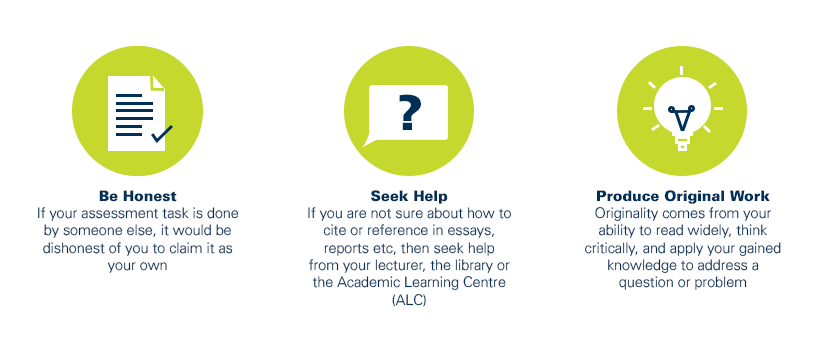
As a CQUniversity student you are expected to act honestly in all aspects of your academic work.
Any assessable work undertaken or submitted for review or assessment must be your own work. Assessable work is any type of work you do to meet the assessment requirements in the unit, including draft work submitted for review and feedback and final work to be assessed.
When you use the ideas, words or data of others in your assessment, you must thoroughly and clearly acknowledge the source of this information by using the correct referencing style for your unit. Using others’ work without proper acknowledgement may be considered a form of intellectual dishonesty.
Participating honestly, respectfully, responsibly, and fairly in your university study ensures the CQUniversity qualification you earn will be valued as a true indication of your individual academic achievement and will continue to receive the respect and recognition it deserves.
As a student, you are responsible for reading and following CQUniversity’s policies, including the Student Academic Integrity Policy and Procedure. This policy sets out CQUniversity’s expectations of you to act with integrity, examples of academic integrity breaches to avoid, the processes used to address alleged breaches of academic integrity, and potential penalties.
What is a breach of academic integrity?
A breach of academic integrity includes but is not limited to plagiarism, self-plagiarism, collusion, cheating, contract cheating, and academic misconduct. The Student Academic Integrity Policy and Procedure defines what these terms mean and gives examples.
Why is academic integrity important?
A breach of academic integrity may result in one or more penalties, including suspension or even expulsion from the University. It can also have negative implications for student visas and future enrolment at CQUniversity or elsewhere. Students who engage in contract cheating also risk being blackmailed by contract cheating services.
Where can I get assistance?
For academic advice and guidance, the Academic Learning Centre (ALC) can support you in becoming confident in completing assessments with integrity and of high standard.
What can you do to act with integrity?