Overview
While much of the criminal justice system is oriented toward street crime there are important mechanisms that seek to regulate the crimes of the powerful including white collar crime, organised crime, institutional crime and corruption. In this unit you will examine the distinctive position of each of these forms of crime and the major hurdles they present for law enforcement and the courts. You will critically examine the different institutional responses to crimes of the powerful particularly in structures of accountability and the creation of regulatory agencies. You will also discuss emerging areas of study such as systemic inequality and generational crime. This knowledge will be applied through the development of an organisational audit or compliance plan that regulates illegal behaviour.
Details
Pre-requisites or Co-requisites
There are no requisites for this unit.
Important note: Students enrolled in a subsequent unit who failed their pre-requisite unit, should drop the subsequent unit before the census date or within 10 working days of Fail grade notification. Students who do not drop the unit in this timeframe cannot later drop the unit without academic and financial liability. See details in the Assessment Policy and Procedure (Higher Education Coursework).
Offerings For Term 2 - 2026
Attendance Requirements
All on-campus students are expected to attend scheduled classes - in some units, these classes are identified as a mandatory (pass/fail) component and attendance is compulsory. International students, on a student visa, must maintain a full time study load and meet both attendance and academic progress requirements in each study period (satisfactory attendance for International students is defined as maintaining at least an 80% attendance record).
Recommended Student Time Commitment
Each 6-credit Undergraduate unit at CQUniversity requires an overall time commitment of an average of 12.5 hours of study per week, making a total of 150 hours for the unit.
Class Timetable
Assessment Overview
Assessment Grading
This is a graded unit: your overall grade will be calculated from the marks or grades for each assessment task, based on the relative weightings shown in the table above. You must obtain an overall mark for the unit of at least 50%, or an overall grade of 'pass' in order to pass the unit. If any 'pass/fail' tasks are shown in the table above they must also be completed successfully ('pass' grade). You must also meet any minimum mark requirements specified for a particular assessment task, as detailed in the 'assessment task' section (note that in some instances, the minimum mark for a task may be greater than 50%). Consult the University's Grades and Results Policy for more details of interim results and final grades.
All University policies are available on the CQUniversity Policy site.
You may wish to view these policies:
- Grades and Results Policy
- Assessment Policy and Procedure (Higher Education Coursework)
- Review of Grade Procedure
- Student Academic Integrity Policy and Procedure
- Academic Progression Policy and Procedure
- Student Refund and Credit Balance Policy and Procedure
- Complaints Policy and Procedure
- Information and Communications Technology Acceptable Use Policy and Procedure
This list is not an exhaustive list of all University policies. The full list of University policies are available on the CQUniversity Policy site.
Feedback, Recommendations and Responses
Every unit is reviewed for enhancement each year. At the most recent review, the following staff and student feedback items were identified and recommendations were made.
Feedback from Qualitative SUTE data
Real world perspectives and engaging conversations are encouraging critical thinking about crimes of the powerful.
Further develop content and activities to encourage critical thinking and analysis, whilst applying concepts and theories to concrete situations. Maintain focus on contemporary real-world events via engaging conversations.
Feedback from Qualitative SUTE data
The teaching style is engaging and encourages meaningful study.
Continue with the current approach to teaching and keep activities that encourage exploration, curiosity and open conversation.
Feedback from Qualitative SUTE data
Clarity of assessment expectations and feedback could be improved.
Expectations for assessments will be made clearer, and teaching staff will encourage questions and discussion of requirements. Notifications will be made to students about feedback and where to access it.
Feedback from Qualitative SUTE data
Content could be more socially critical and contemporary.
Continue to revise and add socially critical content that examine power structures, inequality, and systemic harm to deepen critical engagement.
- Debate the underlying social factors that shape crimes of the powerful in Australia and internationally
- Develop an accountability-based organisational audit or compliance plan
- Discuss different regulatory approaches to crimes of the powerful
- Identify the organisational factors and structures that underpin white collar, organised and institutional crime
- Use criminology theory to evaluate the success of anti-corruption programs.
No external accreditation is relevant to this award.
Alignment of Assessment Tasks to Learning Outcomes
| Assessment Tasks | Learning Outcomes | ||||
|---|---|---|---|---|---|
| 1 | 2 | 3 | 4 | 5 | |
| 1 - Written Assessment - 50% | |||||
| 2 - Online Quiz(zes) - 20% | |||||
| 3 - Learning logs / diaries / Journal / log books - 30% | |||||
Alignment of Graduate Attributes to Learning Outcomes
| Graduate Attributes | Learning Outcomes | ||||
|---|---|---|---|---|---|
| 1 | 2 | 3 | 4 | 5 | |
| 1 - Communication | |||||
| 2 - Problem Solving | |||||
| 3 - Critical Thinking | |||||
| 4 - Information Literacy | |||||
| 5 - Team Work | |||||
| 6 - Information Technology Competence | |||||
| 7 - Cross Cultural Competence | |||||
| 8 - Ethical practice | |||||
| 9 - Social Innovation | |||||
| 10 - First Nations Knowledges | |||||
| 11 - Aboriginal and Torres Strait Islander Cultures | |||||
Textbooks
There are no required textbooks.
IT Resources
- CQUniversity Student Email
- Internet
- Unit Website (Moodle)
- Padlet
All submissions for this unit must use the referencing style: American Psychological Association 7th Edition (APA 7th edition)
For further information, see the Assessment Tasks.
j.hotten@cqu.edu.au
Week 1 - Introduction - Criminology's class divide
Begin Date: 13 Jul 2026Module/Topic
Introduction - Criminology's class divide
Chapter
Braithwaite, J. (1982). Paradoxes of class bias in criminal justice. In H. Pepinsky (Ed.). Breaking the criminological mold: New premises, new directions. Sage.
Events and Submissions/Topic
Week 2 - White-collar crime I - 'Discovering' white-collar crime
Begin Date: 20 Jul 2026Module/Topic
White-collar crime I - 'Discovering' white-collar crime
Chapter
Jordanoska, A. & Schoultz, I. (2019). The 'Discovery' of White-Collar Crime: The Legacy of Edwin Sutherland. In M.L. Rorie & C.F. Wellford (Eds.) The Handbook of White-Collar Crime, John Wiley & Sons, pp. 3-15. https://ebookcentral.proquest.com/lib/cqu/reader.action?docID=5896936&ppg=29
Benson, M.L. & Stadler, W.A. (2012). Revisiting the Guilty Mind: The Neutralisation of White-Collar Crime. Criminal Justice Review 37(4), 494-509. https://doi-org.ezproxy.cqu.edu.au/10.1177/0734016812465618
Events and Submissions/Topic
Week 3 - White-collar crime II - Crime or legal harm
Begin Date: 27 Jul 2026Module/Topic
White-collar crime II - Crime or legal harm
Chapter
Hillyard, P. & Tombs, S. (2007). From ‘Crime’ to Social Harm? Crime, Law & Social Change 48, 9-25. https://link-springer-com.ezproxy.cqu.edu.au/article/10.1007/s10611-007-9079-z
Evertsson, N. (2016). Corporate Tax Avoidance: A Crime of Globalisation. Crime, Law & Social Change 66(2), 199-216.
https://link-springer-com.ezproxy.cqu.edu.au/article/10.1007/s10611-016-9620-z
Events and Submissions/Topic
Week 4 - Political corruption I - Grand corruption
Begin Date: 03 Aug 2026Module/Topic
Political corruption I - Grand corruption
Chapter
Funderberk, C. (2012). Political Corruption: Causes and Consequences. In C. Funderberk (Ed.) Political Corruption in Comparative Perspective: Sources, Status and Prospects. Taylor & Francis, pp. 1-18. https://ebookcentral.proquest.com/lib/cqu/reader.action?docID=5208371&ppg=16
MacWilliam, S. & Rafferty, M. (2017). From Development to Grand Corruption to Governance. International Journal for Crime, Justice & Social Democracy 6(4), 12-28. https://doi.org/10.5204/ijcjsd.v6i4.443
Transparency International (2021). The Relationship Between Corruption and Protest. https://knowledgehub.transparency.org/assets/uploads/helpdesk/Relationship-between-corruption-and-protest_2021.pdf
Events and Submissions/Topic
Assessment 1: Online quiz 1
Week 5 - Political corruption II - 'Soft' corruption
Begin Date: 10 Aug 2026Module/Topic
Political corruption II - 'Soft' corruption
Chapter
Schluter, W.E. (2017). Soft Corruption: The Problem. In Soft Corruption: How Unethical Conduct Undermines Good Government and What to Do About It. Rutgers University Press, pp. 1-16. https://ebookcentral.proquest.com/lib/cqu/detail.action?pq-origsite=primo&docID=4789870
Graycar, A. (2017). 17: Corruption. In Deckert, A. & Sarre, R. (Eds.) The Palgrave Handbook of Australian and New Zealand Criminology, Crime and Justice, Palgrave Macmillan, pp. 251-266. https://ebookcentral.proquest.com/lib/cqu/reader.action?docID=5123292&ppg=270
Events and Submissions/Topic
Week 6 - Crimes of the state, crimes against humanity, and the International Criminal Law
Begin Date: 17 Aug 2026Module/Topic
Crimes of the state, crimes against humanity, and the International Criminal Law
Chapter
Bassiouini, M.C. (2010). Introduction: Crimes of State and Other Forms of Collective Group Violence by Non-State Actors. In Rothe et.al. (Eds.) State Crime: Current Perspectives, Rutgers University Press, pp. 1-21.
https://ebookcentral.proquest.com/lib/cqu/reader.action?docID=816482&ppg=14
Mullins, C.W. (2010). The Current Status and Role of the International Criminal Court. In Rothe et.al. (Eds.) State Crime: Current Perspectives, Rutgers University Press, pp. 275-292. https://ebookcentral.proquest.com/lib/cqu/reader.action?docID=816482&ppg=288
Kramer, R. & Michalowski, R. (2005). War, Aggression & State Crime: A Criminological Analysis of the Invasion and Occupation of Iraq. British Journal of Criminology 45(4), 446-469. https://www-jstor-org.ezproxy.cqu.edu.au/stable/23639249?sid=primo
Events and Submissions/Topic
Vacation Week
Begin Date: 24 Aug 2026Module/Topic
Vacation Week
Chapter
Events and Submissions/Topic
Week 7 - Colonialism and crimes of the powerful
Begin Date: 31 Aug 2026Module/Topic
Colonialism and crimes of the powerful
Chapter
Agozino, B. (2003). Introduction. In Counter-Colonial Criminology: A Critique of Imperialist Reason. Pluto Press, pp. 1-12. https://ebookcentral.proquest.com/lib/cqu/reader.action?docID=3386251&ppg=13
Comack, E. (2018). Corporate Colonialism and the 'Crimes of the Powerful' Committed Against the Indigenous Peoples of Canada. Critical Criminology 16(4), 455-471. https://link-springer-com.ezproxy.cqu.edu.au/article/10.1007/s10612-018-9414-y
Michalowski, R. (2009). Power, Crime and Criminology in the New Imperial Age. Crime, Law & Social Change 51(3-4), 303-325. https://link-springer-com.ezproxy.cqu.edu.au/article/10.1007/s10611-008-9163-z
Events and Submissions/Topic
Week 8 - Who watches the watchers - Police corruption and brutality
Begin Date: 07 Sep 2026Module/Topic
Who watches the watchers - Police corruption and brutality
Chapter
Punch, M. (2000). Police Corruption and its Prevention. European Journal on Criminal Policy and Research 8(3), 301-324. https://link-springer-com.ezproxy.cqu.edu.au/article/10.1023/A%3A1008777013115
Cunneen, C. (2020, September 30). "The Torment of Our Powerlessness": Police Violence Against Aboriginal People in Australia. Harvard International Review. https://hir.harvard.edu/police-violence-australia-aboriginals/
McCulloch, J. & Maguire, M. (2020, November 30). Lawyer X inquiry calls for sweeping change to Victoria Police, but is it enough to bring real accountability? The Conversation. https://theconversation.com/lawyer-x-inquiry-calls-for-sweeping-change-to-victoria-police-but-is-it-enough-to-bring-real-accountability-147836
Events and Submissions/Topic
Assessment 1: Online quiz 2
Workbook Due: Week 8 Tuesday (8 Sept 2026) 11:00 am AEST
Week 9 - Environmental crime and green criminology
Begin Date: 14 Sep 2026Module/Topic
Environmental crime and green criminology
Chapter
White, R. & Monod, S.W. (2017). 41: Green Criminology. In Deckert, A. & Sarre, R. (Eds.) The Palgrave Handbook of Australian and New Zealand Criminology, Crime and Justice, Palgrave Macmillan, pp. 617-631. https://ebookcentral.proquest.com/lib/cqu/reader.action?docID=5123292&ppg=621
Bittle, S. & Hebert, J. (2019). Chapter 30: Controlling Corporate Crimes in Times of De-regulation and Re-regulation. In Rorie, M.L. & Wellford, C.F. (Eds.) The
Handbook of White-Collar Crime, John Wiley & Sons, pp. 484-498. https://ebookcentral.proquest.com/lib/cqu/reader.action?docID=5896936&ppg=510
Events and Submissions/Topic
Week 10 - Corporate crime, wage theft, and exploitation
Begin Date: 21 Sep 2026Module/Topic
Corporate crime, wage theft, and exploitation
Chapter
Davies, J. (2020). Criminological Reflections on the Regulation and Governance of Labour Exploitation. Trends in Organised Crime 23(1), 57-76. http://dx.doi.org.ezproxy.cqu.edu.au/10.1007/s12117-019-09370-x
Friedrichs, D. (2008). Exorbitant CEO Compensation: Just Reward or Grand Theft? Crime, Law & Social Change 51(1), 45-72. https://link-springer-com.ezproxy.cqu.edu.au/article/10.1007/s10611-008-9144-2
Events and Submissions/Topic
Assessment 2: Workbook
Week 11 - State-corporate crime, organised crime, and capitalist political economy
Begin Date: 28 Sep 2026Module/Topic
State-corporate crime, organised crime, and capitalist political economy
Chapter
Whyte, D. (2014). Regimes of Permission and State-
Corporate Crime. State Crime Journal 3(2), 237-246.
https://doi.org/10.13169/statecrime.3.2.0237
Rothe, D.L. & Kauzlarich, D. (2016). Power, Organised Crime Networks, and the Elite. In Crimes of the Powerful: An Introduction, Routledge, London, pp. 134-145.
https://doi-org.ezproxy.cqu.edu.au/10.4324/9781315756776
Chambliss, W. J. (1975). Towards a political economy of crime. Theory and Society, 2(2)m pp. 149-170.
Events and Submissions/Topic
Week 12 - Towards a power-conscious criminology
Begin Date: 05 Oct 2026Module/Topic
Towards a power-conscious criminology
Chapter
Rothe, D. & Kauzlarich, D. (2016). Chapter 5: The Symbiotic Nature of Crimes of the Powerful. Crimes of the Powerful: An Introduction. Routledge, London, pp.
65-73. https://doi-org.ezproxy.cqu.edu.au/10.4324/9781315756776
Kramer, R.C. (2016). State Crime, the Prophetic Voice and Public Criminology Activism. Critical Criminology 24(4), 519-532. https://link-springer-com.ezproxy.cqu.edu.au/article/10.1007/s10612-016-9331-x
Events and Submissions/Topic
Assessment 3: Case study & proposal
Case study and proposal Due: Week 12 Wednesday (7 Oct 2026) 11:00 am AEST
Exam Week
Begin Date: 12 Oct 2026Module/Topic
Chapter
Events and Submissions/Topic
Vacation/Exam Week
Begin Date: 19 Oct 2026Module/Topic
Chapter
Events and Submissions/Topic
1 Online Quiz(zes)
There are two quizzes - the first in week 4 (questions about weeks 1-3) & the second in week 10 (questions about weeks 4-9).
Quiz opens Mon 6am to Sun 11:59pm in weeks 4 and 10. Both quizzes have a 1-hour timer.
Each quiz is worth 10%, making a total of 20%.
No AI permitted. No grace period.
The quiz is designed to help you gauge your comprehension and to engage with course content. No further research required, and will not be tested on content from optional or additional readings. It will be based on set readings and content. Each quiz has 10 questions drawn randomly from a larger question pool.
The quizzes are accessible in week 4 (6am Monday 3 August to 11:59pm Sunday 9 August) and week 10 (6am Monday 21 September to 11:59pm Sunday 27 September)
Quiz 1 returned week 5 and quiz 2 returned week 11
Comprehension and engagement with course content.
- Identify the organisational factors and structures that underpin white collar, organised and institutional crime
- Use criminology theory to evaluate the success of anti-corruption programs.
2 Learning logs / diaries / Journal / log books
Due in week 8. AI level 2 permitted. The grace period applies to this assessment.
Word count: 1500 words (5 x 300-word responses) (+/- 10%)
This assessment asks you to critically engage with key concepts explored in Weeks 1–7 of the unit. You will select from a range of short workbook activities linked to weekly topics, allowing choice and flexibility in how you explore unit ideas and case studies. You will complete five (5) short written responses of approximately 300 words each. Activities are designed to encourage the application of criminological concepts, the analysis of contemporary examples, reflections on systems of power, and the practice of critical discussion skills. You are expected to support claims with relevant academic and/or credible sources and include appropriate in-text citations and a reference list.
Week 8 Tuesday (8 Sept 2026) 11:00 am AEST
Submission point is in the unit's Moodle site. Time is Queensland's time - AEST.
Week 10 Friday (25 Sept 2026)
Marking criteria:
- Understanding and application of key concepts
- Critical analysis and discussion
- Engagement with evidence and sources
- Conciseness and communication
- Referencing and academic conventions
- Debate the underlying social factors that shape crimes of the powerful in Australia and internationally
- Develop an accountability-based organisational audit or compliance plan
- Discuss different regulatory approaches to crimes of the powerful
- Use criminology theory to evaluate the success of anti-corruption programs.
3 Written Assessment
Due in week 12. AI level 2 permitted. The grace period applies to this assessment.
Word count: 2000 words (+/- 10%)
This assessment requires you to examine and critically analyse a case connected to crimes of the powerful. You will apply concepts, theories, and issues explored throughout the unit to analyse how power, harm, criminalisation, regulation, and accountability operate within your chosen case study. You will also develop a brief proposal outlining practical strategies, reforms, or responses aimed at addressing the issue moving forward.
Week 12 Wednesday (7 Oct 2026) 11:00 am AEST
Submission point is in the unit's Moodle site. Time is Queensland's time - AEST.
Results and feedback will be released along with unit results on the Certification of Grades date.
Marking criteria:
- Understanding of the case study
- Application of criminological concepts and theories
- Critical analysis of power, harm, and accountability
- Quality and feasibility of proposal
- Use of sources and evidence
- Communication, structure, and conciseness
- Referencing and academic conventions
- Debate the underlying social factors that shape crimes of the powerful in Australia and internationally
- Develop an accountability-based organisational audit or compliance plan
- Discuss different regulatory approaches to crimes of the powerful
- Identify the organisational factors and structures that underpin white collar, organised and institutional crime
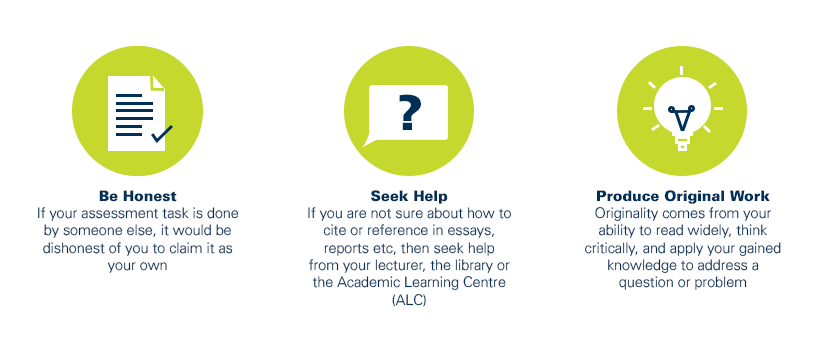
As a CQUniversity student you are expected to act honestly in all aspects of your academic work.
Any assessable work undertaken or submitted for review or assessment must be your own work. Assessable work is any type of work you do to meet the assessment requirements in the unit, including draft work submitted for review and feedback and final work to be assessed.
When you use the ideas, words or data of others in your assessment, you must thoroughly and clearly acknowledge the source of this information by using the correct referencing style for your unit. Using others’ work without proper acknowledgement may be considered a form of intellectual dishonesty.
Participating honestly, respectfully, responsibly, and fairly in your university study ensures the CQUniversity qualification you earn will be valued as a true indication of your individual academic achievement and will continue to receive the respect and recognition it deserves.
As a student, you are responsible for reading and following CQUniversity’s policies, including the Student Academic Integrity Policy and Procedure. This policy sets out CQUniversity’s expectations of you to act with integrity, examples of academic integrity breaches to avoid, the processes used to address alleged breaches of academic integrity, and potential penalties.
What is a breach of academic integrity?
A breach of academic integrity includes but is not limited to plagiarism, self-plagiarism, collusion, cheating, contract cheating, and academic misconduct. The Student Academic Integrity Policy and Procedure defines what these terms mean and gives examples.
Why is academic integrity important?
A breach of academic integrity may result in one or more penalties, including suspension or even expulsion from the University. It can also have negative implications for student visas and future enrolment at CQUniversity or elsewhere. Students who engage in contract cheating also risk being blackmailed by contract cheating services.
Where can I get assistance?
For academic advice and guidance, the Academic Learning Centre (ALC) can support you in becoming confident in completing assessments with integrity and of high standard.
What can you do to act with integrity?