Overview
In this unit you will examine the justice systems and practices of Indigenous Australian communities and their relationships with Western justice institutions. Indigenous Australian understandings of Western law and justice will also be compared to the situations and principles of international Indigenous communities. You will discuss and evaluate community justice innovations that seek to respond to Indigenous interests and to embrace Indigenous perspectives and voices. Through analysis of these innovations you will demonstrate the importance of empowering communities to find solutions to their problems. You will develop skills to identify the position of Indigenous people within the Western criminal justice system and you will develop your Indigenous cultural competency to a higher level.
Details
Pre-requisites or Co-requisites
There are no requisites for this unit.
Important note: Students enrolled in a subsequent unit who failed their pre-requisite unit, should drop the subsequent unit before the census date or within 10 working days of Fail grade notification. Students who do not drop the unit in this timeframe cannot later drop the unit without academic and financial liability. See details in the Assessment Policy and Procedure (Higher Education Coursework).
Offerings For Term 1 - 2026
Attendance Requirements
All on-campus students are expected to attend scheduled classes - in some units, these classes are identified as a mandatory (pass/fail) component and attendance is compulsory. International students, on a student visa, must maintain a full time study load and meet both attendance and academic progress requirements in each study period (satisfactory attendance for International students is defined as maintaining at least an 80% attendance record).
Recommended Student Time Commitment
Each 6-credit Undergraduate unit at CQUniversity requires an overall time commitment of an average of 12.5 hours of study per week, making a total of 150 hours for the unit.
Class Timetable
Assessment Overview
Assessment Grading
This is a graded unit: your overall grade will be calculated from the marks or grades for each assessment task, based on the relative weightings shown in the table above. You must obtain an overall mark for the unit of at least 50%, or an overall grade of 'pass' in order to pass the unit. If any 'pass/fail' tasks are shown in the table above they must also be completed successfully ('pass' grade). You must also meet any minimum mark requirements specified for a particular assessment task, as detailed in the 'assessment task' section (note that in some instances, the minimum mark for a task may be greater than 50%). Consult the University's Grades and Results Policy for more details of interim results and final grades.
All University policies are available on the CQUniversity Policy site.
You may wish to view these policies:
- Grades and Results Policy
- Assessment Policy and Procedure (Higher Education Coursework)
- Review of Grade Procedure
- Student Academic Integrity Policy and Procedure
- Academic Progression Policy and Procedure
- Student Refund and Credit Balance Policy and Procedure
- Complaints Policy and Procedure
- Information and Communications Technology Acceptable Use Policy and Procedure
This list is not an exhaustive list of all University policies. The full list of University policies are available on the CQUniversity Policy site.
Feedback, Recommendations and Responses
Every unit is reviewed for enhancement each year. At the most recent review, the following staff and student feedback items were identified and recommendations were made.
Feedback from Student feedback
Integration of First Nations voices in workshops
The representation of First Nations perspectives could be enhanced through the introduction of Indigenous guest speakers during the workshops who can share their lived experience with students directly.
Feedback from Educator observation
Alternate engagement and peer interaction opportunities aside from the weekly workshops
The weekly workshops, while valuable for student learning, consistently yield low attendance. Additional opportunities for engagement and interaction, such as peer learning groups or forums should be explored, providing students with a diversity of ways to interact with one another and the unit.
- Compare and contrast the key features of Indigenous justice and differences from the Western justice system
- Critically express the importance of listening to and empowering communities
- Discuss the effectiveness of Indigenous justice projects in Australia and overseas
- Evaluate innovations and programs in the Indigenous justice field
- Explore best practice for the development and implementation of Indigenous cultural competency at a professional level.
Alignment of Assessment Tasks to Learning Outcomes
| Assessment Tasks | Learning Outcomes | ||||
|---|---|---|---|---|---|
| 1 | 2 | 3 | 4 | 5 | |
| 1 - Written Assessment - 40% | |||||
| 2 - Research Assignment - 30% | |||||
| 3 - Learning logs / diaries / Journal / log books - 30% | |||||
Alignment of Graduate Attributes to Learning Outcomes
| Graduate Attributes | Learning Outcomes | ||||
|---|---|---|---|---|---|
| 1 | 2 | 3 | 4 | 5 | |
| 1 - Communication | |||||
| 2 - Problem Solving | |||||
| 3 - Critical Thinking | |||||
| 4 - Information Literacy | |||||
| 5 - Team Work | |||||
| 6 - Information Technology Competence | |||||
| 7 - Cross Cultural Competence | |||||
| 8 - Ethical practice | |||||
| 9 - Social Innovation | |||||
| 10 - First Nations Knowledges | |||||
| 11 - Aboriginal and Torres Strait Islander Cultures | |||||
Textbooks
There are no required textbooks.
IT Resources
- CQUniversity Student Email
- Internet
- Unit Website (Moodle)
- MS Teams
All submissions for this unit must use the referencing style: American Psychological Association 7th Edition (APA 7th edition)
For further information, see the Assessment Tasks.
r.hale@cqu.edu.au
Week 1
Begin Date: 09 Mar 2026Module/Topic
Planet Justice: Introduction to the unit
Chapter
UN Declaration on the Rights of Indigenous Peoples (2007).
United Nations (2009) 'State of the World's Indigenous Peoples Vol 1', pp 1-11 https://www.un.org/development/desa/indigenouspeoples/publications/state-of-the-worlds-indigenous-peoples.html
Events and Submissions/Topic
Week 2
Begin Date: 16 Mar 2026Module/Topic
Indigenous representation: who speaks for the 'people'?
Chapter
Maddison, S. (2010). White Parliament, Black Politics: The Dilemmas of Indigenous Parliamentary Representation. Australian Journal of Political Science, 45(4), 663–680. https://cqu.primo.exlibrisgroup.com/permalink/61CQU_INST/669qn3/cdi_informaworld_taylorfrancis_310_1080_10361146_2010_517180
Harris, B. (2023). Chapter 8: The voice to parliament (p. 217-228). In Harris, B. Indigenous Peoples and Constitutional Reform in Australia: Beyond Mere Recognition (1st ed.). Springer. https://cqu.primo.exlibrisgroup.com/permalink/61CQU_INST/669qn3/cdi_askewsholts_vlebooks_9789819971213
Events and Submissions/Topic
Week 3
Begin Date: 23 Mar 2026Module/Topic
Examining history: Who speaks for the past?
Chapter
Blagg, H., & Anthony, T (2019). "Postcolonial Criminology: “The Past Isn’t Over…” (pp 3-54). Decolonising Criminology. London: Palgrave Macmillan UK. https://cqu.primo.exlibrisgroup.com/permalink/61CQU_INST/669qn3/cdi_springer_books_10_1057_978_1_137_53247_3_2
Peters-Little., F (2010). Introduction (pp1-16). In Peters-Little, F., Curthoys, A., & Docker, J. (Eds.). (2010). Passionate histories: myth, memory and Indigenous Australia (1st ed.). ANU E Press & Aboriginal History Inc. https://library.oapen.org/bitstream/handle/20.500.12657/33665/459436.pdf;jsessionid=6A2246E95F2AE6D31638AB644CDCB4EA?sequence=1
Events and Submissions/Topic
Week 4
Begin Date: 30 Mar 2026Module/Topic
Extending history: The legacy of the colonisers
Chapter
Samir Shaheen-Hussain. (2020). Chapter 11: Breaking Up Families: Child Welfare Services,
Mass Evacuations, and Medical Disappearance. In Fighting for a Hand to Hold: Confronting Medical Colonialism Against Indigenous Children in Canada. McGill-Queen’s University Press. https://cqu.primo.exlibrisgroup.com/permalink/61CQU_INST/rpphdm/alma991001822940803441
Hand, C.A., Hankes, J., & House, T. (2012) Restorative justice: the indigenous justice system. Contemporary Justice Review, 15(4), 449-467. https://cqu.primo.exlibrisgroup.com/permalink/61CQU_INST/669qn3/cdi_proquest_journals_1221944260
Blagg, H., Tulich, T., & Bush, Z. (2017). Indefinite Detention Meets Colonial Dispossession: Indigenous Youths with Foetal Alcohol Spectrum Disorders in a White Settler Justice System. Social & legal studies, 26(3), 333–358. https://cqu.primo.exlibrisgroup.com/permalink/61CQU_INST/669qn3/cdi_crossref_primary_10_1177_0964663916676650
Events and Submissions/Topic
LEARNING LOG 1 DUE
Week 5
Begin Date: 06 Apr 2026Module/Topic
Analysing media: Images of Indigeneity
Chapter
Spiegel, S. J, Thomas, S., O'Neill, K., Brondgeest, C., Thomas, J., Beltran, J., Hunt, T., & Yassi., A. (2020). Visual Storytelling, Intergenerational Environmental Justice and Indigenous Sovereignty: Exploring Images and Stories amid a Contested Oil Pipeline Project. International Journal of Environmental Research and Public Health, 17(7), 2362. https://cqu.primo.exlibrisgroup.com/permalink/61CQU_INST/669qn3/cdi_webofscience_primary_000530763300194CitationCount
Albarrán‐Torres, C., & Lynch, A. (2024). Predator’s Prey: Reframing indigenous representation and Hollywood franchise cinema in the age of SVOD. Journal of Popular Culture, 57(3), 175–188.
https://cqu.primo.exlibrisgroup.com/permalink/61CQU_INST/669qn3/cdi_proquest_journals_3064520925
Anderson, B. (2022). “Abnormal mental health” and a blameless state-Canadian media representations of Indigenous suicide. International Journal of Critical Indigenous Studies, 15(1), 58–82.
https://cqu.primo.exlibrisgroup.com/permalink/61CQU_INST/669qn3/cdi_proquest_journals_2917613227
Events and Submissions/Topic
RESEARCH PRESENTATION DUE
Research presentation Due: Week 5 Thursday (9 Apr 2026) 11:59 pm AEST
Week 6
Begin Date: 13 Apr 2026Module/Topic
Contemporary colonialism: The state and structural violence
Chapter
Alfred, T., & Contassel, J., (2005). Being Indigenous: resurgence against contemporary colonialism. Government and opposition, 40(4), 597-614. https://doi.org/10.1111/j.1477-7053.2005.00166.x
Emery-Whittington, Isla G. "Occupational Justice—Colonial Business as Usual? Indigenous Observations from Aotearoa New Zealand. Canadian Journal of Occupational Therapy, 88(2), 153-62. https://cqu.primo.exlibrisgroup.com/permalink/61CQU_INST/669qn3/cdi_sage_journals_10_1177_00084174211005891
ADDITIONAL READING [FOR EXAMPLES]
Maddison, S. (2013). Indigenous identity, “authenticity” and the structural violence of settler colonialism. Identities, 20(3), 288–303. https://cqu.primo.exlibrisgroup.com/permalink/61CQU_INST/669qn3/cdi_crossref_primary_10_1080_1070289X_2013_806267
Vincent Eagan. (2020). Structural violence in unexpected indigenous police custody deaths; Canada and Australia. Salus Journal, 8(1), 33–61. https://cqu.primo.exlibrisgroup.com/permalink/61CQU_INST/669qn3/cdi_doaj_primary_oai_doaj_org_article_546230e1af614bbb992d0fc01c06e3aa
Events and Submissions/Topic
Vacation Week
Begin Date: 20 Apr 2026Module/Topic
No class
Chapter
Please catchup on any readings you have not done
Events and Submissions/Topic
Week 7
Begin Date: 27 Apr 2026Module/Topic
Space and Place: Indigenous connection to Country and continued global dispossession.
Chapter
Blagg., A., & Anthony, T. (2019). Chapter 3: Who Speaks for Place. In H., Blagg, & T., Anthony. Decolonising criminology: Imagining justice in a postcolonial world. Palgrave Macmillan UK. https://cqu.primo.exlibrisgroup.com/permalink/61CQU_INST/669qn3/cdi_springer_books_10_1057_978_1_137_53247_3_3
Bywater, E., & Fredericks, B. (2024). Country under Concrete: Enduring Indigenous Connections to Country amidst Development. M/C Journal, 27(5). https://cqu.primo.exlibrisgroup.com/permalink/61CQU_INST/669qn3/cdi_crossref_primary_10_5204_mcj_3087
Green, D., & Minchin, L. (2014). Living on Climate-Changed Country: Indigenous Health, Well-Being and Climate Change in Remote Australian Communities. EcoHealth, 11(2), 263–272. https://cqu.primo.exlibrisgroup.com/permalink/61CQU_INST/669qn3/cdi_proquest_miscellaneous_1539467729
Events and Submissions/Topic
Week 8
Begin Date: 04 May 2026Module/Topic
Indigenous self-determination promises and challenges
Chapter
Cornell., S. (2018) Justice as Position, Justice as Practice: Indigenous Governance at the Boundary. In S., Hendry. Indigenous Justice: New Tools, Approaches, and Spaces. Palgrave Macmillan UK. https://ebookcentral.proquest.com/lib/cqu/detail.action?docID=5398697.
Broderstad, E. G. (2011). The promises and challenges of indigenous self-determination: The Sami case. International Journal, 66(4), 893–907. https://cqu.primo.exlibrisgroup.com/permalink/61CQU_INST/669qn3/cdi_gale_infotracgeneralonefile_A279137185
ADDITIONAL READING
Billington, L. N. (2023). Colonial goals through colonial gaols: The imperative of Indigenous self-centered self-determination for Indigenous decarceration. Law, Text, Culture, 27(1), 85–120. https://cqu.primo.exlibrisgroup.com/permalink/61CQU_INST/669qn3/cdi_rmit_collectionsjats_search_informit_org_doi_10_3316_informit_t2024050900011801981659360
Vanthuyne, K. (2021). “I Want to Move Forward. You Can Move Forward too.” Articulating Indigenous Self-Determination at the Truth and Reconciliation Commission of Canada. Human Rights Quarterly, 43(2), 355–377. https://cqu.primo.exlibrisgroup.com/permalink/61CQU_INST/669qn3/cdi_crossref_primary_10_1353_hrq_2021_0023
Events and Submissions/Topic
LEARNING LOG 2 DUE
Week 9
Begin Date: 11 May 2026Module/Topic
Indigenous victimisation: harms against Indigenous peoples globally
Chapter
De Carvalho, s., Goyes, D.R., & Vegh Weis, V. (2021). Politics and Indigenous Victimization: The Case of Brazil. The British Journal of Criminology, Volume 61 (1), 251–271. https://cqu.primo.exlibrisgroup.com/permalink/61CQU_INST/669qn3/cdi_webofscience_primary_000606839000013CitationCount
Ewanation, L., & Maeder, E. M. (2023). Let’s (not) talk about race: comparing mock jurors’ verdicts and deliberation content in a case of lethal police use of force with a White or Indigenous victim. Psychology, Crime & Law, ahead-of-print(ahead-of-print), 1–31. https://cqu.primo.exlibrisgroup.com/permalink/61CQU_INST/669qn3/cdi_scopus_primary_2_s2_0_85161468149
ADDITIONAL READING
Nicholas, L., & Thomas., S. (2022). The natural and built rural environments as victims. In R, Hale., & A., Harkness (eds). Rural victims of crime. Taylor & Francis. https://cqu.primo.exlibrisgroup.com/permalink/61CQU_INST/669qn3/cdi_informaworld_taylorfrancisbooks_10_4324_9781003132691_23_version2
Events and Submissions/Topic
Week 10
Begin Date: 18 May 2026Module/Topic
Indigenous knowledge: Designing for justice
Chapter
Spencer, M. S., Fentress, T., Touch, A., & Hernandez, J. (2020). Environmental Justice, Indigenous Knowledge Systems, and Native Hawaiians and Other Pacific Islanders. Human Biology, 92(1), 45–57. https://cqu.primo.exlibrisgroup.com/permalink/61CQU_INST/669qn3/cdi_proquest_miscellaneous_2464146545
Poiner, H., & Drake, C. (2021). Transformative or Tokenistic? Exploring the Legitimacy of Participatory Design Methods within an Indigenous Context. M/C Journal, 24(4). https://cqu.primo.exlibrisgroup.com/permalink/61CQU_INST/669qn3/cdi_crossref_primary_10_5204_mcj_2809
ADDITIONAL READING
Liddell, J. L., Kington, S. G., & Wright, D. C. (2024). Environmental Reproductive Justice, Indigenous Health Knowledge and Indigenous Women on the Climate Frontlines. Social Justice Research, 37(4), 424–446. https://cqu.primo.exlibrisgroup.com/permalink/61CQU_INST/669qn3/cdi_webofscience_primary_001285244600002
Events and Submissions/Topic
Week 11
Begin Date: 25 May 2026Module/Topic
Decolonisation: The way forward
Chapter
Murdoch, D. J., & McGuire, M. M. (2022). Decolonizing Criminology: Exploring Criminal Justice Decision-Making through Strategic Use of Indigenous Literature and Scholarship. Journal of Criminal Justice Education, 33(3), 325–346. https://cqu.primo.exlibrisgroup.com/permalink/61CQU_INST/669qn3/cdi_crossref_primary_10_1080_10511253_2021_1958883
Toi, S. (2018) Mana Wahine: Decolonizing Governance? In Hendry, E. Indigenous Justice: New Tools, Approaches, and Spaces. Palgrave Macmillan UK. https://ebookcentral.proquest.com/lib/cqu/detail.action?docID=5398697.
Events and Submissions/Topic
RESEARCH PITCH DUE
Research-based pitch Due: Week 11 Thursday (28 May 2026) 11:59 pm AEST
Week 12
Begin Date: 01 Jun 2026Module/Topic
Reflections: Applying the course learnings in practice
Chapter
Nil
Events and Submissions/Topic
LEARNING LOG 3 DUE
Learning logs (videos) Due: Week 12 Thursday (4 June 2026) 11:59 pm AEST
Exam Week
Begin Date: 08 Jun 2026Module/Topic
No exam for this unit
Chapter
Events and Submissions/Topic
Vacation/Exam Week
Begin Date: 15 Jun 2026Module/Topic
Chapter
Events and Submissions/Topic
1 Learning logs / diaries / Journal / log books
Worth: 30% (10% per item)
Length: 3 x 3-5 minute videos
Due dates
LOG 1 - Week 4
LOG 2 - Week 8
LOG 3 - Week 12
THE TASK
This task requires you to present three learning log videos at the beginning, middle and end of the term, documenting your experience within the unit.
Each video log should be between 3-5 minutes in length.
The video should be you speaking to the camera, or over the top of slides. Do not read from a script.
Further details and support regarding how to record your video will be provided in class.
Your videos should be reflective, capturing your own personal perspective of engaging with the learning content. It is not an evaluation of the unit content (e.g. assignments/Moodle site) or teaching style (that can be provided at the end of the term via the Student evaluation survey).
Personal prose are entirely acceptable ("I", "my"). Your tone can be more casual/conversational (though it must still be appropriate), and you do not require any references for this task.
WHAT CAN I TALK ABOUT?
The following questions may serve as inspiration for your videos. You may wish to take notes throughout the term to capture your thoughts, ready to present in your learning log:-
- What has the experience of learning about Indigenous Justice been like for you so far - Has it challenged you? If so, how? Why do you think this is so?
- Have there been any particular topics or issues that have stood out to you/surprised you/captured your attention? Why do you think this is so?
- Do you have a good understanding of Indigenous Justice? How would you rate your understanding? Is there a reason for this?
- Has your understanding of the key themes changed/improved/developed throughout the term? If so, how?
- What are some questions that have come up for you which you would like to explore further?
- Has the unit made you consider your own position, either as an Indigenous or non-indigenous person? If so, in what ways?
- How do you engage with Indigenous knowledge? Would you like to engage more/in different ways? How/Why?
- How could your learning in this unit impact you as an individual, a citizen, a scholar, a practitioner?
You are not bound by these questions and may cover other topics that are relevant to your own learning experience. It is up to you what you include in your log, however, please ensure that it is relevant to the unit content and does not digress too far from the themes of the unit.
NOTE ON DISCLOSURE AND SELF CARE - It is important to remember that, whilst this is a reflective activity, you are not expected to disclose personal experiences or details that you are not comfortable sharing. Only the unit coordinator will view your submission. If a second marker is required, you will be notified about this to ensure you are comfortable with them viewing your assignment. Should you have any concerns about this task or find it upsetting in any way, please contact the unit coordinator or another source of support, including the freely available CQU counselling service. If you require an alternative to this task for legitimate reason, please discuss with the unit coordinator.
HOW WILL I BE GRADED?
Each video is worth 10 marks determined by your depth of engagement with and reflection on the learning materials, and the relevance of the entry to the topics studied for that particular part of the term.
AI use: LEVEL 1 - cannot be used at any point for this task. You must show your core skills and knowledge by ensuring all ideas and writing are your own. Any misuse or lack of disclosure regarding the use of AI tools will be considered a breach of academic integrity
Week 12 Thursday (4 June 2026) 11:59 pm AEST
Submit via the drop box on Moodle
Within two weeks of timely submission
- Quality, depth and relevance of log one /10
- Quality, depth and relevance of log two /10
- Quality, depth and relevance of log three /10
- Compare and contrast the key features of Indigenous justice and differences from the Western justice system
- Critically express the importance of listening to and empowering communities
- Discuss the effectiveness of Indigenous justice projects in Australia and overseas
- Evaluate innovations and programs in the Indigenous justice field
- Explore best practice for the development and implementation of Indigenous cultural competency at a professional level.
2 Research Assignment
Worth: 30%
Length: 10-12 mins
Due: Week 5
The task
The purpose of this assessment is to learn from Indigenous communities by researching an issue from an Indigenous perspective.
First, select an issue (this means a problem or dilemma) affecting an Indigenous community from anywhere in the world. Examples will be discussed in class.
Then, conduct research into the issue/problem based on sources originating from Indigenous peoples' and communities.
The purpose
The purpose of this task is for you to engage with Indigenous perspectives, which are so often left out of academic discussions, policy decisions, and reform initiatives.
At least 6 different sources are required for this assignment. These must come from Indigenous authors or organisations.
You may use a mixture of source typies, including: Scholarly sources (academic journal articles, book chapters); Grey literature (evaluations, project papers, annual reports); Creative outputs such as novels, creative writing, and media (videos, interviews, podcasts); and Policy papers.
So long as the source is authored or produced by Indigenous peoples or an Indigenous led agency/organisation, and represents the perspective of First nations peoples, it can be used.
Format
Once you have researched the issue, you must present your learnings in a 10-12 minute narrated video presentation. This can be done as audio over the top of slides/visuals or speaking directly to camera (whichever you prefer). If you require assistance with technology please contact the Academic Learning Center, TASAC, or the Unit Coordinator.
Presentation content
- Outline the issue clearly - what is it? where is it happening?
- Present the findings of your research - what did the research tell you about the issue? For example, how is it impacting First Nations peoples? What do First Nations peoples believe is the source of the issue? What do Indigenous peoples propose can be done about the issue? [in doing so, be sure to note where you got this information from by mentioning the source/authors' name].
- Summarise the importance of listening to and empowering First Nations communities based on your experience undertaking this task.
What to submit
Submit the video file [MP4] OR a link to the video [URL] in the comment box on Moodle + submit the full reference list [word file] for marking.
AI USE: LEVEL 2: AI may be used for planning, idea development, and research. This means you can use AI to help identify a relevant issue to choose and to locate appropriate sources of information. It cannot, however, be used to generate the content of your assignment. You must reflect your own learning and understanding of the chosen topic based on the research you have conducted.
Week 5 Thursday (9 Apr 2026) 11:59 pm AEST
Submit via Moodle submission box
Within two weeks of timely submission
- Depth of engagement with First Nations perspectives /10
- Extent of understanding of the chosen issue /8
- Understanding of the aim and purpose of the assessment task /6
- Quality of presentation (including verbal presentation, slides, length) /6
- Critically express the importance of listening to and empowering communities
3 Written Assessment
WORTH: 40% of overall grade
LENGTH: 1800 words (+/- 10%)
DUE: Week 11
THE TASK
Using the issue you chose for your research presentation (ideally), develop a pitch about how the issue/problem can be addressed. The pitch should be grounded in Indigenous knowledge and the perspectives of First Nations communities.
First, the paper should briefly outline the issue or problem - where is it occurring? what is occurring? why is it happening? who does it impact? etc. However, do not use the same text from assessment 1, as this is considered self-plagiarism. Instead, briefly summarise the issue in your own words.
Then, make a persuasive, evidence-based pitch to address the issue, including:
- The recommended actions or measures to address the issue - what can be done?
- The required resources or infrastructure - skills/knowledge/materials/spaces/practices/policies/legislation etc.
- The risks and challenges of the approach versus the benefits - what should be considered prior to implementing? who will benefit and how?
SOURCES AND EVIDENCE
In presenting the above, you must support your pitch with evidence and examples. Present examples of initiatives/programs that have been undertaken (anywhere in the world) which have shown success. Site the sources of this information, e.g. evaluations, reviews, journal articles.
Be sure to include references to support your pitch, including sources derived from First Nations perspectives. A minimum of 8 sources should be used. At least 4 of the sources should be from Indigenous perspectives (similiar to the sources used in assessment 1).
AI use: Level 2 - AI may be used to assist in planning this assessment, including researching and developing ideas. Your final assignment should show that you have refined and developed these ideas further and should be written without the assistance of generative AI. Any misuse or lack of disclosure regarding the use of AI tools will be considered a breach of academic integrity
Week 11 Thursday (28 May 2026) 11:59 pm AEST
Submit via Moodle submission box
Within 2 weeks of submission for on-time submissions.
- Relevance and understanding of chosen issue /5
- Quality and depth of pitch /10
- Integration of evidence and examples to support pitch /9
- Engagement with Indigenous knowledge and perspectives /9
- Quality of written piece (presentation/structure/spelling/grammar) /7
- Compare and contrast the key features of Indigenous justice and differences from the Western justice system
- Discuss the effectiveness of Indigenous justice projects in Australia and overseas
- Evaluate innovations and programs in the Indigenous justice field
- Explore best practice for the development and implementation of Indigenous cultural competency at a professional level.
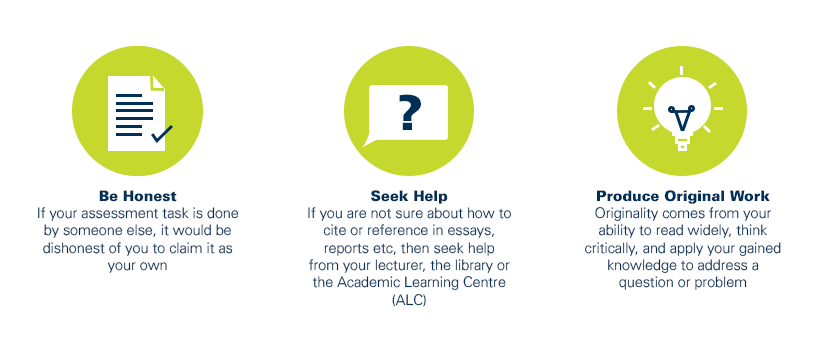
As a CQUniversity student you are expected to act honestly in all aspects of your academic work.
Any assessable work undertaken or submitted for review or assessment must be your own work. Assessable work is any type of work you do to meet the assessment requirements in the unit, including draft work submitted for review and feedback and final work to be assessed.
When you use the ideas, words or data of others in your assessment, you must thoroughly and clearly acknowledge the source of this information by using the correct referencing style for your unit. Using others’ work without proper acknowledgement may be considered a form of intellectual dishonesty.
Participating honestly, respectfully, responsibly, and fairly in your university study ensures the CQUniversity qualification you earn will be valued as a true indication of your individual academic achievement and will continue to receive the respect and recognition it deserves.
As a student, you are responsible for reading and following CQUniversity’s policies, including the Student Academic Integrity Policy and Procedure. This policy sets out CQUniversity’s expectations of you to act with integrity, examples of academic integrity breaches to avoid, the processes used to address alleged breaches of academic integrity, and potential penalties.
What is a breach of academic integrity?
A breach of academic integrity includes but is not limited to plagiarism, self-plagiarism, collusion, cheating, contract cheating, and academic misconduct. The Student Academic Integrity Policy and Procedure defines what these terms mean and gives examples.
Why is academic integrity important?
A breach of academic integrity may result in one or more penalties, including suspension or even expulsion from the University. It can also have negative implications for student visas and future enrolment at CQUniversity or elsewhere. Students who engage in contract cheating also risk being blackmailed by contract cheating services.
Where can I get assistance?
For academic advice and guidance, the Academic Learning Centre (ALC) can support you in becoming confident in completing assessments with integrity and of high standard.
What can you do to act with integrity?