Overview
Systems of social control can possess a different character depending on whether you are a proponent of regulation or the subject of it. In this unit you will explore the ideas of conformity and delinquency through the lens of regulatory and systems theories in order to understand the impact of the criminal justice system on non-conforming members of society. Regulatory standards change over time and you will consider the history of moral and social regulation and achieve an appreciation of the influence of changing social mores on the criminal justice system, on outsiders and on marginalised communities. These mechanisms of control, both formal and informal, involve an intersection of criminal justice with other disciplines and agencies such as mental health or public planning. In contrast you will also examine the role of other regulatory systems, such as human rights and civil liberties, in protecting individuals from authoritarian control. During this unit you will debate a gamut of different issues including regulation of sexuality, drug use (illicit and legal drugs), control of youth cultures, hate crime, causing offense and supporting terrorism.
Details
Pre-requisites or Co-requisites
There are no requisites for this unit.
Important note: Students enrolled in a subsequent unit who failed their pre-requisite unit, should drop the subsequent unit before the census date or within 10 working days of Fail grade notification. Students who do not drop the unit in this timeframe cannot later drop the unit without academic and financial liability. See details in the Assessment Policy and Procedure (Higher Education Coursework).
Offerings For Term 2 - 2026
Attendance Requirements
All on-campus students are expected to attend scheduled classes - in some units, these classes are identified as a mandatory (pass/fail) component and attendance is compulsory. International students, on a student visa, must maintain a full time study load and meet both attendance and academic progress requirements in each study period (satisfactory attendance for International students is defined as maintaining at least an 80% attendance record).
Recommended Student Time Commitment
Each 6-credit Undergraduate unit at CQUniversity requires an overall time commitment of an average of 12.5 hours of study per week, making a total of 150 hours for the unit.
Class Timetable
Assessment Overview
Assessment Grading
This is a graded unit: your overall grade will be calculated from the marks or grades for each assessment task, based on the relative weightings shown in the table above. You must obtain an overall mark for the unit of at least 50%, or an overall grade of 'pass' in order to pass the unit. If any 'pass/fail' tasks are shown in the table above they must also be completed successfully ('pass' grade). You must also meet any minimum mark requirements specified for a particular assessment task, as detailed in the 'assessment task' section (note that in some instances, the minimum mark for a task may be greater than 50%). Consult the University's Grades and Results Policy for more details of interim results and final grades.
All University policies are available on the CQUniversity Policy site.
You may wish to view these policies:
- Grades and Results Policy
- Assessment Policy and Procedure (Higher Education Coursework)
- Review of Grade Procedure
- Student Academic Integrity Policy and Procedure
- Academic Progression Policy and Procedure
- Student Refund and Credit Balance Policy and Procedure
- Complaints Policy and Procedure
- Information and Communications Technology Acceptable Use Policy and Procedure
This list is not an exhaustive list of all University policies. The full list of University policies are available on the CQUniversity Policy site.
Feedback, Recommendations and Responses
Every unit is reviewed for enhancement each year. At the most recent review, the following staff and student feedback items were identified and recommendations were made.
Feedback from SUTE, Student communication
The UC was commended by students for allowing and exploring expression of differing viewpoints and encouraging open communication during workshops
The UC will maintain the open style of workshops and continue to encourage the sharing of viewpoints in relation to unit content and relevant current affairs.
Feedback from Student communication
Students enjoyed the guest lectures and found them beneficial for their learning and application of knowledge to real world contexts.
The UC will maintain the guest lecture series for 2026.
Feedback from SUTE
Students found the Unit content engaging and interesting
The contemporary criminological topics will be reviewed and updated where necessary to maintain the cutting edge and engaging content of the unit.
- Analyse how different concepts of delinquency and social order define the regulatory role of the criminal justice system
- Appraise the situation of socially marginalised people who are subject to systems of authoritarian control
- Explain the social, historical and cultural intersection of systems of control originating in different disciplines and institutions
- Identify cases of social control and critically examine the regulatory foundation and assessment of risk
- Use regulatory theory to examine the methods by which societies seek to control behaviour through criminal law and consider balancing protections such as human rights.
No external accreditation is relevant to this award.
Alignment of Assessment Tasks to Learning Outcomes
| Assessment Tasks | Learning Outcomes | ||||
|---|---|---|---|---|---|
| 1 | 2 | 3 | 4 | 5 | |
| 1 - Case Study - 40% | |||||
| 2 - Online Quiz(zes) - 20% | |||||
| 3 - Learning logs / diaries / Journal / log books - 40% | |||||
Alignment of Graduate Attributes to Learning Outcomes
| Graduate Attributes | Learning Outcomes | ||||
|---|---|---|---|---|---|
| 1 | 2 | 3 | 4 | 5 | |
| 1 - Communication | |||||
| 2 - Problem Solving | |||||
| 3 - Critical Thinking | |||||
| 4 - Information Literacy | |||||
| 5 - Team Work | |||||
| 6 - Information Technology Competence | |||||
| 7 - Cross Cultural Competence | |||||
| 8 - Ethical practice | |||||
| 9 - Social Innovation | |||||
| 10 - First Nations Knowledges | |||||
| 11 - Aboriginal and Torres Strait Islander Cultures | |||||
Textbooks
There are no required textbooks.
IT Resources
- CQUniversity Student Email
- Internet
- Unit Website (Moodle)
All submissions for this unit must use the referencing style: American Psychological Association 7th Edition (APA 7th edition)
For further information, see the Assessment Tasks.
e.turley@cqu.edu.au
c.chatham@cqu.edu.au
INTRODUCTION: CRIME, DEVIANCE AND CONTROL
Begin Date: 13 Jul 2026Module/Topic
Introduction to the Unit
What is crime, deviance and control?
Chapter
Ben-Yehuda, N. (2012). Deviance A Sociology of Unconventionalities. In Ritzer, G. (ed). The Wiley‐Blackwell Companion to Sociology. Blackwell Publishing: MA.
Hoppe, T. (2013). Controlling Sex in the Name of “Public Health”: Social Control and Michigan HIV Law. Social Problems, 60,1, 27-49.
Events and Submissions/Topic
THEORISING DEVIANCE AND CONTROL
Begin Date: 20 Jul 2026Module/Topic
The role of theory in explanations of crime, deviance and control
Chapter
Meneses, R.A., & Akers, R.L. (2011). A Comparison of Four General Theories of Crime and Deviance: Marijuana Use Among American and Bolivian University Students. International Criminal Justice Review, 21, 4, 333-352.
Warner, B. (2014). Neighborhood factors related to the likelihood of successful informal social control efforts. Journal of Criminal Justice, 42, 5, 421-430.
Ngo, F.T., Paternoster, R., Curran, J. & MacKenzie, D.L. (2011). Role-Taking and Recidivism: A Test of Differential Social Control Theory. Justice Quarterly, 28, 5. 667-697.
Events and Submissions/Topic
PSYCHOLOGICAL APPROACHES TO DEVIANCE AND CONTROL
Begin Date: 27 Jul 2026Module/Topic
Psychological diagnosis as an agent of social control
Chapter
Joseph, S. (2007). Agents of social control?. The Psychologist, 20, 429-431.
Wakefield, J. (2013). DSM-5 and the General Definition of Personality Disorder. Clinical Social Work Journal, 41, 168-183.
Dixon, J. (2015). Treatment, deterrence or labelling: mentally disordered offenders’ perspectives on social control. Sociology of Health and Illness, 37, 8, 1299-1313.
Events and Submissions/Topic
FEMINISM, MASCULINITIES, GENDER AND CRIME
Begin Date: 03 Aug 2026Module/Topic
The complexities of studying gender and crime
Feminist criminology
Chapter
Sharp, S.F. (2009). Feminist Criminology. In Mitchell Miller, J. (Ed). 21st Century Criminology A Reference Handbook (p 245-252). Sage: London.
Chesney-Lind, M. & Morash, M. (2013). Transformative Feminist Criminology: A Critical Re-thinking of a Discipline. Critical criminology, 21, 287-304.
Haynes, R.M., Lorenz, K. & Bell, K.A. 92013). Victim Blaming Others: Rape Myth Acceptance and the Just World Belief. Feminist Criminology, 8 (3), 202-222.
Events and Submissions/Topic
CONVICT CRIMINOLOGY
Begin Date: 10 Aug 2026Module/Topic
A critical alternative to the ways mainstream criminology understands crime and justice, pioneered by people who have direct experience with the criminal justice system.
Chapter
NNewbold, G. (2017). Convict Criminology In A. Deckert and R. Sarre (eds). The Palgrave Handbook of Australian and New Zealand Criminology, Crime and Justice. Pp.603-617.
Williams, D.J., Bischoff, D., Casey, T. & Burnett, J. (2014). “Mom, They are Going to Kill My Dad!” A Personal Narrative on Capital Punishment From a Convict Criminology Perspective. Critical Criminology, 22, 3. 389-401.
Events and Submissions/Topic
ASSESSMENT INFORMATION SESSION
Begin Date: 17 Aug 2026Module/Topic
Information session for the case study assessment
Chapter
N/A
Events and Submissions/Topic
Vacation Week
Begin Date: 24 Aug 2026Module/Topic
Chapter
Events and Submissions/Topic
Learning Log portfolio due on Thursday 27 August at 9am AEST
Learning Log Portfolio Due: Vacation Week Thursday (27 Aug 2026) 9:00 am AEST
QUEER CRIMINOLOGY
Begin Date: 31 Aug 2026Module/Topic
Queer criminology is a form of critical criminology and it is interested in the relationship between gender, sexual minorities, crime, deviance and the criminal justice system.
Chapter
Ball, M. (2016). Queer Criminology as Activism. Critical Criminology, 24, 473–487.
Buist, C.L. & Stone, C. (2014). Transgender Victims and Offenders: Failures of the United States Criminal Justice System and the Necessity of Queer Criminology. Critical Criminology, 22, 35–47.
Events and Submissions/Topic
GREEN CRIMINOLOGY
Begin Date: 07 Sep 2026Module/Topic
The effect of regulation on the environment and environmental crimes
Chapter
Nurse, A. (2017). Green criminology: shining a critical lens on environmental harm. Palgrave Communications, 3, 10. 1-4.
Brisman, A. (2014). Of Theory and Meaning in Green Criminology. International Journal for Crime, Justice and Social Democracy, 3, 2, 21‐34.
Johnson, H., South, N., & Walters, R. (2016). The commodification and exploitation of fresh water: Property, human rights and green criminology. International Journal of Law, Crime and Justice, 44, 146-162.
Lynch, M.J., Stretesky, P. & Long, M. (2018). Green criminology and native peoples: The treadmill of production and the killing of indigenous environmental activists. Theoretical Criminology, 22, 3, 318-341.
Events and Submissions/Topic
Quiz opens on Wednesday 9 September at 9am AEST
SUBCULTURES
Begin Date: 14 Sep 2026Module/Topic
Subculture, deviance and social control
Chapter
Barmaki, R. (2016). On the Origin of the Concept of “Deviant Subculture” in Criminology: W. I. Thomas and the Chicago School of Sociology. Deviant Behaviour, 37, 7, 795-810.
Raitanen, J. & Oksanen, A. (2018). Global Online Subculture Surrounding School Shootings. American Behavioral Scientist, 62, 2, 195-209.
Nwalozie, C.J. (2015). Rethinking Subculture and Subcultural Theory in the Study of Youth Crime - A Theoretical Discourse. Journal of Theoretical & Philosophical Criminology, 7, 1, 1-16.
Deshotels, T.H. & Forsyth, C.J. (2019). Conjuring, Expanding, and Blurring Boundaries of Sexual Subcultures: The Grounding of the Fluid. Deviant Behaviour, 1-10
Events and Submissions/Topic
Quiz closes on Wednesday 16 September at 9am AEST
REGULATION OF SEX WORK
Begin Date: 21 Sep 2026Module/Topic
The global differences in the regulation of sex work
Chapter
O'Neill, M. (2010). Cultural Criminology and Sex Work: Resisting Regulation through Radical Democracy and Participatory Action Research (PAR). Journal of Law and Society, 37, 1.210-232.
Jeffreys, E., O’Brien, E., & Fawkes, J. (2019). The Case for Decriminalisation: Sex Work and the Law in Queensland. Crime and Justice Briefing Paper, 1.
Schmidt, J. (2017). The regulation of sex work in Aotearoa/New Zealand: An overview. Women’s Studies Journal, 31, 2, 35-49.
Events and Submissions/Topic
RACE, ETHNICITY AND THE CRIMINAL JUSTICE SYSTEM
Begin Date: 28 Sep 2026Module/Topic
Exploring racial and ethnic bias in the criminal justice system
The overrepresentation of People of Colour in the criminal justice system
Chapter
Lehemann, P. (2020). Race, Ethnicity, Crime Type, and the Sentencing of Violent Felony Offenders. Crime & Delinquency, 66(6-7), 770-805.
Patel. T. G. (2018). Race/Ethnicity, Crime and Social Control: An Introduction. Social Sciences, 7 (12), 2-8.
Brookman, R.P. & K. Weiner. (2017). Predicting punitive attitudes to sentencing: Does the public's perceptions of crime and Indigenous Australians matter?. Australian and New Zealand Journal of Criminology, 50 (1), 56-77.
Events and Submissions/Topic
UNIT REVISION & PEER DISCUSSION
Begin Date: 05 Oct 2026Module/Topic
Assessment
Unit revision & discussion
Chapter
N/A
Events and Submissions/Topic
Case study due on Thursday 8 October at 9am AEST
Case Study Due: Week 12 Thursday (8 Oct 2026) 9:00 am AEST
Exam Week
Begin Date: 12 Oct 2026Module/Topic
Chapter
Events and Submissions/Topic
Vacation/Exam Week
Begin Date: 19 Oct 2026Module/Topic
Chapter
Events and Submissions/Topic
Unit Coordinator:
Chantelle Chatham
c.chatham@cqu.edu.au
Please note, Chantelle is working for CQU in a part time capacity.
1 Learning logs / diaries / Journal / log books
Students will submit a learning log portfolio consisting of short activities relating to criminology to demonstrate their knowledge and understanding of various criminological issues relating to crime and control. The learning log will consist of several activities provided in the study guide.
Students are provided with a task to complete for 10 weeks in the study guide (there are no tasks to complete for modules 6 and 12). These short tasks make up the learning log, and there are 10 tasks in total. Each task is relevant to that module’s particular topic and will develop your knowledge and reflections in relation to crime and control.
Word length per task is 300-330 words. There are 10 tasks to complete, and students will submit any 5 of these tasks to form the learning log. Students can choose which 5 tasks to submit for assessment. Word limit: 1600 words (+/-10%).
Be aware that the teaching for some of the optional learning logs are taught after the submission date for this assessment - more explanation of this will take place in class.
Responses must be written as complete sentences except where tables or bullet points are appropriate.
Students should include a separate reference list at the end of the portfolio for all material cited. Referencing must adhere to American Psychological Association (APA) guidelines, which can be found here. The reference list is not included in the word limit. More information relating to referencing can be found here.
Lecture notes should not be used as part of the reference list, instead students should find the original source/author. Remember to avoid non-scholarly sources such as dictionaries and Wikipedia.
Submission guidelines
The first page of the assignment is to be a title page containing: the assessment title, your name and student identification, the unit name and unit code, and the due date.
A contents page is required at the beginning of the portfolio and pages should be numbered.
Use 11 or 12 point font size, a sensible font, and 1.5 or double line spacing.
Submission is via Moodle.
Level of Gen AI use allowed:
Level 2: You may use Al for planning, idea development, and research. Your final submission should show how you have developed and refined these ideas.
Grace period/Extensions:
The automatic 72-hour grace period applies to this assessment, meaning you can submit the assessment within 72 hours of the due time without any penalty without a need to apply for an extension. Submitting your assignment after the grace period without an extension in place will result in late penalties. Late penalties are 5% of the value of the task, per calendar day. If you require an extension, please submit a request via the Moodle 'support' tab before the assessment due date.
Vacation Week Thursday (27 Aug 2026) 9:00 am AEST
Via Moodle
Within 2 weeks of timely submission
Application of theory from the unit
Application of concepts from the unit
Independent research conducted
Professional presentation
- Appraise the situation of socially marginalised people who are subject to systems of authoritarian control
- Explain the social, historical and cultural intersection of systems of control originating in different disciplines and institutions
- Identify cases of social control and critically examine the regulatory foundation and assessment of risk
- Use regulatory theory to examine the methods by which societies seek to control behaviour through criminal law and consider balancing protections such as human rights.
2 Online Quiz(zes)
This quiz will consist of both multiple choice and short answer questions.
The quiz will open on Wednesday at 9am (AEST) in week 8 (09/09/2026) and close on Wednesday in week 9 (16/09/2026) at 9am (AEST).
This is an online multiple choice and short answer assessment. The questions will be drawn from the material from weeks 1-7 only. The quiz will include material from lectures, workshops, readings and other resources.
The quiz will consist of 20 questions. Students will have to complete this assessment in one session. You will have 2 hours to complete the quiz. Multiple attempts will not be available, so think carefully about your responses. You will not be able to go back and change your responses.
Marks will be available on Moodle after the quiz has closed. You will not be able to see your marks for the quiz until it has closed.
The 72-hour grace period does not apply to this assessment
Gen AI Use: The use of Gen AI is not permitted for this assessment.
Quiz hosted via Moodle and is open for 1 week
Marks will be available on Moodle after the quiz has closed
Knowledge of course content including readings, resources and workshop activities
Application of theory to practical situations
Understanding of the context of regulatory control on crime and deviance
- Analyse how different concepts of delinquency and social order define the regulatory role of the criminal justice system
- Explain the social, historical and cultural intersection of systems of control originating in different disciplines and institutions
3 Case Study
A case study requires you to analyse and write about a person, a scenario, an event or an organisation. You will be given a choice of topics on which to base your case study, and these will be drawn from the modules covered in the unit. The purpose of a case study is to apply the concepts and theories you have learnt about in Crime & Control unit to the particular case you have selected.
What is a case?
A case can be an event, a problem, a process, an activity, an organisation, an individual person or a group of people.
What is a case study?
A case study is an in-depth exploration or examination of one of the above. A case study should be highly descriptive, nuanced, detailed and should emphasise the specific context(s) of the example being examined.
Your case study will be focusing on a deviant or marginalised group in society.
Assessment instructions
For this assessment you are required to produce a case study focusing on the legal and/or societal regulation of a deviant or marginalised group in society. You will explore:
· Who the marginalised or deviant group is
· the reasons for control (these may be legal or social or both)
· the regulatory strategies employed
· the balancing protections in place such as human rights and civil liberties
Students will be able to choose their case from a choice of topics provided, which will be drawn from the Crime & Control modules. You can choose to focus your case within an Australian context or another global context, or you can compare and contrast various global and political contexts from around the world.
You are required to identify, describe and explain the current issues related to the deviant or marginalised group and the current regulatory policies in place to control that particular group.
1. Identify and describe the marginalised or deviant group that you have selected for the case study
2. Describe and explain the current issues or problems relating to the group you have selected for the case study
3. Describe the historical and current context of the issue or problem
· Why is the group considered problematic in their country/culture/society?
· Has this changed or developed over time or during different political periods?
4. Critically evaluate how the issues are framed or positioned by the government or by society, drawing on theoretical perspectives from the unit
5. Describe and explain the current laws and policies that shape or are designed to respond to the problem
6. Describe and explain the current balancing protections in place e.g. human rights and civil liberties. The balancing protections may be formal or informal, organised by charities, NGOs, etc
7. Conclude the case study by providing an overview of the main points
Content:
Make sure you provide a short summary of the case at the beginning. This will provide context for the rest of your analysis. The main part of the assessment will involve you discussing the issues and problems relating to the case and applying the concepts and theories you have learnt about to the case study. This means that you will be referencing research and theory to support your ideas. You should also include details of relevant policies and laws if these are important to your case.
Structure:
A case study can be structured in the same way as an essay, with an introduction, a series of body paragraphs and a conclusion. However, unlike essays, case studies usually have headings based on information in the task description or marking criteria. It is strongly suggested that you include subheadings to structure the case study, for example Summary of the case, Identification of main issues, Regulatory strategies etc. the choice of subheadings will depend on the topic and content of the case study.
Make sure you have a good balance between describing your case study and analysing it. Many students fall into the trap of being too descriptive when writing about their case. Some ways to include analysis are:
Explaining and giving reasons
Comparing and contrasting
Making suggestions and recommendations
Supporting your ideas with information from sources
Style:
Case studies require you to write in the third person (people’s names, he/she/they, and so forth) when discussing the theories or research of authors, the group, the professionals or the organisations involved in the case. You should write the case study in a formal, academic style. You can include images and pictures in your case study, as long as they are correctly referenced and openly available.
Submission guidance:
The first page of the assignment is to be a title page containing: the assessment title, your name and student identification, the unit name and unit code, and the due date.
Use 11 or 12point font size, a sensible font, and 1.5 or double line spacing. Do not make the text too small.
The reference list is not included in the word limit. Word limit: 1500 words.
Submission is via Moodle.
Level of Gen AI use allowed:
Level 3: You may use Al to assist with specific tasks such as planning, drafting text and refining or evaluating your work. You must critically evaluate and modify any AI generated content you use.
Grace period/Extensions
The automatic 72-hour grace period applies to this assessment, meaning you can submit the assessment within 72 hours of the due time without any penalty without a need to apply for an extension. Submitting your assignment after the grace period without an extension in place will result in late penalties. Late penalties are 5% of the value of the task, per calendar day. If you require an extension, please submit a request via the Moodle 'support' tab before the assessment due date.
Week 12 Thursday (8 Oct 2026) 9:00 am AEST
Submission is via Moodle
Grades will be released after certification of grades date
Relevance of chosen topic to criminology
Appropriateness of selected topic for a case study
Application of theory to practical situations
Understanding of the context(s) of social and regulatory control as applied to marginalised groups
- Analyse how different concepts of delinquency and social order define the regulatory role of the criminal justice system
- Appraise the situation of socially marginalised people who are subject to systems of authoritarian control
- Identify cases of social control and critically examine the regulatory foundation and assessment of risk
- Use regulatory theory to examine the methods by which societies seek to control behaviour through criminal law and consider balancing protections such as human rights.
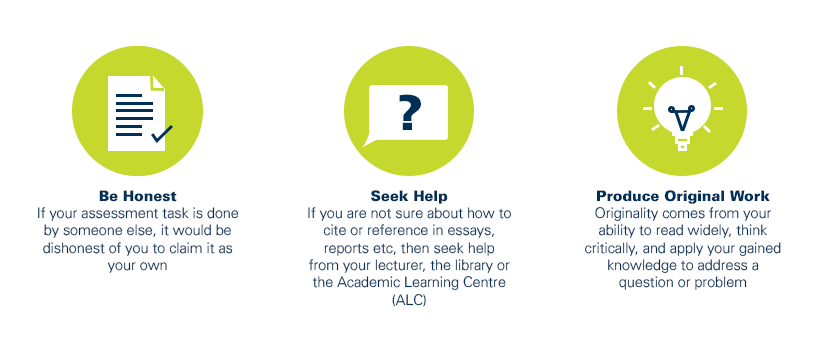
As a CQUniversity student you are expected to act honestly in all aspects of your academic work.
Any assessable work undertaken or submitted for review or assessment must be your own work. Assessable work is any type of work you do to meet the assessment requirements in the unit, including draft work submitted for review and feedback and final work to be assessed.
When you use the ideas, words or data of others in your assessment, you must thoroughly and clearly acknowledge the source of this information by using the correct referencing style for your unit. Using others’ work without proper acknowledgement may be considered a form of intellectual dishonesty.
Participating honestly, respectfully, responsibly, and fairly in your university study ensures the CQUniversity qualification you earn will be valued as a true indication of your individual academic achievement and will continue to receive the respect and recognition it deserves.
As a student, you are responsible for reading and following CQUniversity’s policies, including the Student Academic Integrity Policy and Procedure. This policy sets out CQUniversity’s expectations of you to act with integrity, examples of academic integrity breaches to avoid, the processes used to address alleged breaches of academic integrity, and potential penalties.
What is a breach of academic integrity?
A breach of academic integrity includes but is not limited to plagiarism, self-plagiarism, collusion, cheating, contract cheating, and academic misconduct. The Student Academic Integrity Policy and Procedure defines what these terms mean and gives examples.
Why is academic integrity important?
A breach of academic integrity may result in one or more penalties, including suspension or even expulsion from the University. It can also have negative implications for student visas and future enrolment at CQUniversity or elsewhere. Students who engage in contract cheating also risk being blackmailed by contract cheating services.
Where can I get assistance?
For academic advice and guidance, the Academic Learning Centre (ALC) can support you in becoming confident in completing assessments with integrity and of high standard.
What can you do to act with integrity?