Overview
This unit extends your basic knowledge of the theoretical underpinnings of criminology by considering a broad range of interdisciplinary contemporary theories of crime and penology. You will investigate how these theories can inform research, legislation, law enforcement and regulatory responses to crime. You will examine theoretical and practical case studies to consider how different theoretical approaches may lead to different and perhaps contradictory outcomes. This unit will also develop your methodological analysis skills, examining qualitative and quantitative data to test models suggested by theories of crime.
Details
Pre-requisites or Co-requisites
There are no requisites for this unit.
Important note: Students enrolled in a subsequent unit who failed their pre-requisite unit, should drop the subsequent unit before the census date or within 10 working days of Fail grade notification. Students who do not drop the unit in this timeframe cannot later drop the unit without academic and financial liability. See details in the Assessment Policy and Procedure (Higher Education Coursework).
Offerings For Term 2 - 2026
Attendance Requirements
All on-campus students are expected to attend scheduled classes - in some units, these classes are identified as a mandatory (pass/fail) component and attendance is compulsory. International students, on a student visa, must maintain a full time study load and meet both attendance and academic progress requirements in each study period (satisfactory attendance for International students is defined as maintaining at least an 80% attendance record).
Recommended Student Time Commitment
Each 6-credit Undergraduate unit at CQUniversity requires an overall time commitment of an average of 12.5 hours of study per week, making a total of 150 hours for the unit.
Class Timetable
Assessment Overview
Assessment Grading
This is a graded unit: your overall grade will be calculated from the marks or grades for each assessment task, based on the relative weightings shown in the table above. You must obtain an overall mark for the unit of at least 50%, or an overall grade of 'pass' in order to pass the unit. If any 'pass/fail' tasks are shown in the table above they must also be completed successfully ('pass' grade). You must also meet any minimum mark requirements specified for a particular assessment task, as detailed in the 'assessment task' section (note that in some instances, the minimum mark for a task may be greater than 50%). Consult the University's Grades and Results Policy for more details of interim results and final grades.
All University policies are available on the CQUniversity Policy site.
You may wish to view these policies:
- Grades and Results Policy
- Assessment Policy and Procedure (Higher Education Coursework)
- Review of Grade Procedure
- Student Academic Integrity Policy and Procedure
- Academic Progression Policy and Procedure
- Student Refund and Credit Balance Policy and Procedure
- Complaints Policy and Procedure
- Information and Communications Technology Acceptable Use Policy and Procedure
This list is not an exhaustive list of all University policies. The full list of University policies are available on the CQUniversity Policy site.
Feedback, Recommendations and Responses
Every unit is reviewed for enhancement each year. At the most recent review, the following staff and student feedback items were identified and recommendations were made.
Feedback from SUTE
Timing of assessment items could be adjusted to improve studies and focus.
Adjust timing of assessment items to facilitate better use of feedback and improved learning outcomes.
Feedback from SUTE
The unit was engaging and challenging, yet easy to follow.
Continue to provide an engaging and challenging learning experience.
Feedback from SUTE
Assessment instructions are clear, making assessment completion manageable.
Continue to provide assessment tasks that have clear instructions and can be completed within realistic timeframes.
Feedback from SUTE
Real world examples and links were interesting and helped with understanding criminology theories.
Continue to provide examples and links that are engaging and useful for learning criminology theories.
- Critique, analyse and reflect on interdisciplinary contemporary theories of crime, their policy implications and practical outcomes
- Research and develop a systematic approach to evaluating the effectiveness of criminology theories in managing criminal activity
- Conceptualise crime using a variety of disciplines, discuss theories based on these conceptualisations, and how these theories influence law and social policy.
Alignment of Assessment Tasks to Learning Outcomes
| Assessment Tasks | Learning Outcomes | ||
|---|---|---|---|
| 1 | 2 | 3 | |
| 1 - Online Quiz(zes) - 15% | |||
| 2 - Case Study - 40% | |||
| 3 - Written Assessment - 45% | |||
Alignment of Graduate Attributes to Learning Outcomes
| Graduate Attributes | Learning Outcomes | ||
|---|---|---|---|
| 1 | 2 | 3 | |
| 1 - Communication | |||
| 2 - Problem Solving | |||
| 3 - Critical Thinking | |||
| 4 - Information Literacy | |||
| 5 - Team Work | |||
| 6 - Information Technology Competence | |||
| 7 - Cross Cultural Competence | |||
| 8 - Ethical practice | |||
| 9 - Social Innovation | |||
| 10 - First Nations Knowledges | |||
| 11 - Aboriginal and Torres Strait Islander Cultures | |||
Alignment of Assessment Tasks to Graduate Attributes
| Assessment Tasks | Graduate Attributes | ||||||||||
|---|---|---|---|---|---|---|---|---|---|---|---|
| 1 | 2 | 3 | 4 | 5 | 6 | 7 | 8 | 9 | 10 | 11 | |
| 1 - Online Quiz(zes) - 15% | |||||||||||
| 2 - Case Study - 40% | |||||||||||
| 3 - Written Assessment - 45% | |||||||||||
Textbooks
There are no required textbooks.
IT Resources
- CQUniversity Student Email
- Internet
- Unit Website (Moodle)
All submissions for this unit must use the referencing style: American Psychological Association 7th Edition (APA 7th edition)
For further information, see the Assessment Tasks.
j.hotten@cqu.edu.au
Week 1 - Introduction & Pre-classical criminology
Begin Date: 13 Jul 2026Module/Topic
Introduction & Pre-classical criminology
Chapter
Simpson, S. (2000). Of crime and criminality: The use of theory in everyday life. Pine Forge Press.
Read only: Intro chapter: Criminology, criminologists, and criminological theory, pp. xvii-xxxiii
Events and Submissions/Topic
Week 2 - Classical criminology
Begin Date: 20 Jul 2026Module/Topic
Classical criminology
Chapter
Leclerc, B., & Wortley, R. (2013). The reasoning criminal: Twenty-five years on. In B. Leclerc, & R. Wortley (Eds.), Cognition and crime: Offender decision making and script analysis (1st ed., pp. 27-40). Taylor & Francis Group.
Nagin, D. S. (2013). Deterrence in the twenty-first century. Crime and Justice, 42(1), pp. 199-263.
Clarke, R. V., & Cornish, D. B. (1985). Modeling offenders’ decisions: A framework for research and policy. Crime and Justice, 6(1), pp. 147-185.
Cohen, L. E., & Felson, M. (1979). Social change and crime rate trends: A routine activity approach. American Sociological Review, 44(4), pp. 588-608.
Events and Submissions/Topic
Week 3 - Biological criminology
Begin Date: 27 Jul 2026Module/Topic
Biological criminology
Chapter
Peacock, D. (2025). Eugenics, disability, and crime. In S. J. Macdonald & D. Peacock (Eds.). The Routledge handbook of disability, crime, and justice (1st ed., pp. 88-102). Routledge.
Wright, J. P., & Boisvert, D. (2009). What biosocial criminology offers criminology. Criminal Justice and Behavior, 36(11), pp. 1228-1240.
Events and Submissions/Topic
Week 4 - Anomie and strain theories
Begin Date: 03 Aug 2026Module/Topic
Anomie and strain theories
Chapter
DiCristina, B. (2016). Durkheim’s theory of anomie and crime: A clarification and elaboration. Australian & New Zealand Journal of Criminology, 49(3), 311-331. DOI:10.1177/0004865815585391
Agnew, R. (1992). Foundation for a general strain theory of crime and delinquency. Criminology, 30(1), pp. 47-88.
Heckert, A., & Heckert, D. M. (2004). Using an integrated typology of deviance to expand on Merton’s anomie theory. Criminal Justice Studies, 17(1), pp. 75-90.
Events and Submissions/Topic
Week 5 - Social disorganisation theories
Begin Date: 10 Aug 2026Module/Topic
Social disorganisation theories
Chapter
Jobes, P. C., Barclay, E., Weinand, H., & Donnermeyer, J. F. (2004). A structural analysis of social disorganisation and crime in rural communities in Australia. Australian & New Zealand Journal of Criminology, 37(1), pp. 114-140.
Sampson, R. J., Raudenbush, S. W., & Earls, F. (1997). Neighborhoods and Violent Crime: A Multilevel Study of Collective Efficacy. Science (American Association for the Advancement of Science), 277(1), pp. 918-924.
Events and Submissions/Topic
Week 6 - Social learning theories
Begin Date: 17 Aug 2026Module/Topic
Social learning theories
Chapter
Akers, R. L. (1996). Is differential association/social learning culture deviance theory? Criminology, 34(2), pp. 229-247.
Chi-mei, J. L. (2008). Neutralization techniques, crime decision-making and juvenile thieves. International Journal of Adolescence and Youth, 14(3), pp. 251-265.
Events and Submissions/Topic
Assessment 1 - Online quiz
Vacation week
Begin Date: 24 Aug 2026Module/Topic
Chapter
Events and Submissions/Topic
Week 7 - Control theories
Begin Date: 31 Aug 2026Module/Topic
Control theories
Chapter
Costello, B. J., & Laub, J. H. (2020). Social control theory: The legacy of Travis Hirschi’s causes of delinquency. Annual Review of Criminology, 3(1), pp. 21-41.
Hay, C., & Forrest, W. (2006). The development of self-control: Examining self-control theory’s stability thesis. Criminology, 44(4), pp. 739-774.
Vito, A. G., Schaefer, B., Higgins, G. E., Marcum, C., & Ricketts, M. (2019). Self-control, social learning theory, social bonds and binge drinking: Results from a national sample. Journal of Substance Use, 24(6), pp. 655-659.
Events and Submissions/Topic
Week 8 - Labelling theories
Begin Date: 07 Sep 2026Module/Topic
Labelling theories
Chapter
Matsueda, R. L. (1992). Reflected appraisals, parental labeling, and delinquency: Specifying a symbolic interactionist theory. The American Journal of Sociology, 97(6), pp. 1577-1611.
Paternoster, R., & Iovanni, L. (1989). The labeling perspective and delinquency: An elaboration of the theory and as assessment of the evidence. Justice Quarterly, 6(3), pp.359-394.
Harris, N. (2006). Reintegrative shaming, shame, and criminal justice. Journal of Social Issues, 62(2), pp. 327-346.
Events and Submissions/Topic
Week 9 - Conflict theories & critical criminology
Begin Date: 14 Sep 2026Module/Topic
Conflict theories & critical criminology
Chapter
DeKeseredy, W. S. (2021). Contemporary critical criminology. Taylor & Francis Group.
Set reading: Chapter 1: What is critical criminology? Pp. 22-52
Harman, J. L., & Sundt, J. L. (2011). The rise of feminist criminology: Freda Adler. In F. T. Cullen, C. L. Johson, A. J. Myer, & F. Adler. (Eds.). The origins of American criminology. (1st ed., pp. 205-220). Routledge.
Donnermeyer, J. F., & DeKeseredy, W. (2008). Toward a rural critical criminology. Southern Rural Sociology, 23(2), pp. 4-28.
Events and Submissions/Topic
Assessment 2 - Case study - Theory in practice
Case study - Theory in practice Due: Week 9 Wednesday (16 Sept 2026) 11:00 am AEST
Week 10 - Developmental and life-course criminology
Begin Date: 21 Sep 2026Module/Topic
Developmental and life-course criminology
Chapter
Moffitt, T. E. (1993). Adolescence-Limited and Life-Course-Persistent Antisocial Behavior: A Developmental Taxonomy. Psychological Review, 100(4), 674 – 701.
Laub, J. H., & Sampson, R. J. (1993). Turning points in the life course: Why change matters to the study of crime. Criminology, 31(3), 301 – 325.
Farrington, D. P. (2003). Developmental and life-course criminology: Key theoretical and empirical issues. Criminology (Beverly Hills), 41(2), 221 - 225.
Events and Submissions/Topic
Week 11 - Comparative criminology
Begin Date: 28 Sep 2026Module/Topic
Comparative criminology
Chapter
Karstedt, S. (2001). Comparing cultures, comparing crime: Challenges, prospects and problems for a global criminology. Crime, law, and social change, 36(3), 285 – 308.
Suzuki, M., & Pai, C-F. (2019). Towards Culture-Inclusive Criminology in Asia. International Annals of Criminology, 57(1-2), 8-24.
Ferrell, J., Hayward, K. J., & Young, J. (2015). Cultural criminology: An invitation. SAGE. Only chapter 1, pp. 20-58.
Events and Submissions/Topic
Week 12 - Integrating, applying, and critiquing criminological theory
Begin Date: 05 Oct 2026Module/Topic
Integrating, applying, and critiquing criminological theory
Chapter
No readings
Events and Submissions/Topic
Assessment 3 - Written assessment - Criminology theory in popular crime media
Written assessment - Criminology theory in popular crime media Due: Week 12 Wednesday (7 Oct 2026) 11:00 am AEST
Exam Week
Begin Date: 12 Oct 2026Module/Topic
Chapter
Events and Submissions/Topic
Vacation/Exam Week
Begin Date: 19 Oct 2026Module/Topic
Chapter
Events and Submissions/Topic
1 Online Quiz(zes)
Due in week 6. Quiz access is open Mon 6am to Sun 11:59pm. Quiz has a 1-hour timer.
No AI permitted. No grace period.
The quiz is designed to help you gauge your comprehension and to engage with course content. It will be based on set readings and content contained in modules 1-5. No further research will be required, and you will not be tested on content from optional or additional readings. The quiz has 15 questions drawn randomly from a larger pool.
The quiz is accessible all week 6 from 6am Monday 17 August to 11:59pm Sunday 23 August.
Vacation Week Monday (24 Aug 2026)
Results released when quiz closes on Sunday
Quiz questions will be based on set readings and content contained in modules 1-5.
- Critique, analyse and reflect on interdisciplinary contemporary theories of crime, their policy implications and practical outcomes
- Critical Thinking
- Information Literacy
2 Case Study
Due in week 9. AI level 2 permitted. The grace period applies to this assessment.
Word count: 1,500 words (3 × 500-word case studies) (+/-10%)
This assessment requires you to select three different criminology theories. For each theory, you will apply it to one real or hypothetical case study to demonstrate the theory in practice. Each case study should demonstrate how the chosen theory explains the causes, context, or consequences of the criminal behaviour involved. This task emphasises theoretical application, critical thinking, and concise academic writing.
Week 9 Wednesday (16 Sept 2026) 11:00 am AEST
Submission point is in the unit's Moodle site. Time is Queensland's time - AEST.
Week 11 Friday (2 Oct 2026)
Marking criteria:
Demonstrate understanding of each criminological theory and its core concepts.
Apply theoretical knowledge to a diverse crime scenario.
Critically analyse the social, psychological, or structural factors influencing the crime.
Communicate ideas clearly and concisely in written form; referencing; engaging with sources.
- Research and develop a systematic approach to evaluating the effectiveness of criminology theories in managing criminal activity
- Conceptualise crime using a variety of disciplines, discuss theories based on these conceptualisations, and how these theories influence law and social policy.
- Problem Solving
- Cross Cultural Competence
- Ethical practice
- Social Innovation
3 Written Assessment
Due in week 12. AI level 2 permitted. The grace period applies to this assessment.
Word count: 1800 words (+/- 10%)
This assessment invites you to critically analyse how criminology theories are represented – explicitly or implicitly – in a crime-related media source. You will select a crime TV show, film, true crime documentary, podcast, or another source, and examine how it reflects, distorts, or challenges criminology theory. Your focus should be on theoretical interpretation, not on the factual accuracy of the case of media content.
Week 12 Wednesday (7 Oct 2026) 11:00 am AEST
Withheld until certification of grades
Marking criteria:
- Understanding of criminology theories
- Depth of media-theory analysis
- Critical thinking and argumentation
- Use of scholarly sources
- Structure, clarity, and academic writing
- Referencing and citation
- Research and develop a systematic approach to evaluating the effectiveness of criminology theories in managing criminal activity
- Conceptualise crime using a variety of disciplines, discuss theories based on these conceptualisations, and how these theories influence law and social policy.
- Problem Solving
- Cross Cultural Competence
- Ethical practice
- Social Innovation
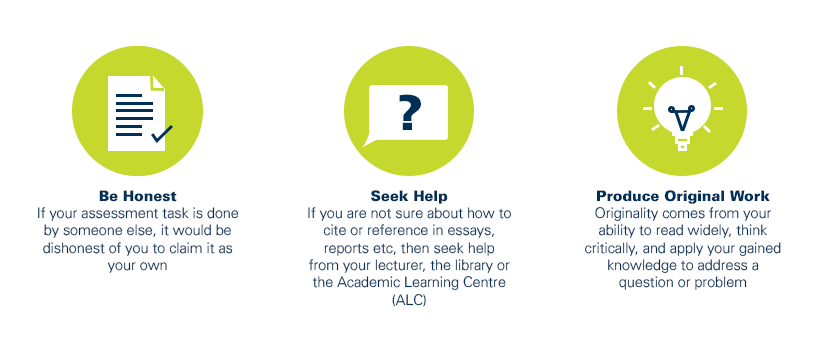
As a CQUniversity student you are expected to act honestly in all aspects of your academic work.
Any assessable work undertaken or submitted for review or assessment must be your own work. Assessable work is any type of work you do to meet the assessment requirements in the unit, including draft work submitted for review and feedback and final work to be assessed.
When you use the ideas, words or data of others in your assessment, you must thoroughly and clearly acknowledge the source of this information by using the correct referencing style for your unit. Using others’ work without proper acknowledgement may be considered a form of intellectual dishonesty.
Participating honestly, respectfully, responsibly, and fairly in your university study ensures the CQUniversity qualification you earn will be valued as a true indication of your individual academic achievement and will continue to receive the respect and recognition it deserves.
As a student, you are responsible for reading and following CQUniversity’s policies, including the Student Academic Integrity Policy and Procedure. This policy sets out CQUniversity’s expectations of you to act with integrity, examples of academic integrity breaches to avoid, the processes used to address alleged breaches of academic integrity, and potential penalties.
What is a breach of academic integrity?
A breach of academic integrity includes but is not limited to plagiarism, self-plagiarism, collusion, cheating, contract cheating, and academic misconduct. The Student Academic Integrity Policy and Procedure defines what these terms mean and gives examples.
Why is academic integrity important?
A breach of academic integrity may result in one or more penalties, including suspension or even expulsion from the University. It can also have negative implications for student visas and future enrolment at CQUniversity or elsewhere. Students who engage in contract cheating also risk being blackmailed by contract cheating services.
Where can I get assistance?
For academic advice and guidance, the Academic Learning Centre (ALC) can support you in becoming confident in completing assessments with integrity and of high standard.
What can you do to act with integrity?