Overview
This foundational unit provides you with the knowledge and skills to work effectively within Indigenous contexts of the Criminal Justice System. This unit responds to the over-representation of Indigenous Australians within the criminal justice system, as offenders and as victims. You will discuss the impact of invasion and economic disenfranchisement on individuals and communities and explain systemic responses in policing, courts and corrections. Through the curriculum, you will be equipped with the skills and expertise to work toward sustainable societies that respond to inclusiveness based on respect for human rights, the rule of law and good governance. This unit explores the position of Indigenous Australians before the Western justice system and provides you with the attributes that allow you to be an active citizen engaged in reconciliation and social justice for Indigenous Australians.
Details
Pre-requisites or Co-requisites
There are no requisites for this unit.
Important note: Students enrolled in a subsequent unit who failed their pre-requisite unit, should drop the subsequent unit before the census date or within 10 working days of Fail grade notification. Students who do not drop the unit in this timeframe cannot later drop the unit without academic and financial liability. See details in the Assessment Policy and Procedure (Higher Education Coursework).
Offerings For Term 2 - 2026
Attendance Requirements
All on-campus students are expected to attend scheduled classes - in some units, these classes are identified as a mandatory (pass/fail) component and attendance is compulsory. International students, on a student visa, must maintain a full time study load and meet both attendance and academic progress requirements in each study period (satisfactory attendance for International students is defined as maintaining at least an 80% attendance record).
Recommended Student Time Commitment
Each 6-credit Undergraduate unit at CQUniversity requires an overall time commitment of an average of 12.5 hours of study per week, making a total of 150 hours for the unit.
Class Timetable
Assessment Overview
Assessment Grading
This is a graded unit: your overall grade will be calculated from the marks or grades for each assessment task, based on the relative weightings shown in the table above. You must obtain an overall mark for the unit of at least 50%, or an overall grade of 'pass' in order to pass the unit. If any 'pass/fail' tasks are shown in the table above they must also be completed successfully ('pass' grade). You must also meet any minimum mark requirements specified for a particular assessment task, as detailed in the 'assessment task' section (note that in some instances, the minimum mark for a task may be greater than 50%). Consult the University's Grades and Results Policy for more details of interim results and final grades.
All University policies are available on the CQUniversity Policy site.
You may wish to view these policies:
- Grades and Results Policy
- Assessment Policy and Procedure (Higher Education Coursework)
- Review of Grade Procedure
- Student Academic Integrity Policy and Procedure
- Academic Progression Policy and Procedure
- Student Refund and Credit Balance Policy and Procedure
- Complaints Policy and Procedure
- Information and Communications Technology Acceptable Use Policy and Procedure
This list is not an exhaustive list of all University policies. The full list of University policies are available on the CQUniversity Policy site.
Feedback, Recommendations and Responses
Every unit is reviewed for enhancement each year. At the most recent review, the following staff and student feedback items were identified and recommendations were made.
Feedback from Student evaluations
The final assessment items are due too close together at the end of the term, therefore feedback cannot be incorporated to improve assessment outcomes.
Split the unit diary into two due dates - one in the middle and one at the end of the term - enabling students the opportunity to embed formative feedback into future assessments.
Feedback from Student and educator feedback
Continue to embed First Nations perspectives into the unit, including the provision of guest speakers.
At least one guest speaker should be engaged to deliver content during the workshop, providing students with the experience of hearing first-hand from a First Nations community member.
- Critique the connections between the criminal justice system, health, mental health and poverty, particularly for Indigenous Australian youth
- Critically reflect on current strategies that aim to improve relations between Indigenous Australians and criminal justice agencies
- Discuss the impact of historical and contemporary approaches to criminal justice on Indigenous Australians
- Discuss theories of colonialism and post-colonialism as they pertain to contemporary Australian justice issues
- Communicate using fundamental Indigenous Australian cultural competency.
No external accreditation is relevant to this award.
Alignment of Assessment Tasks to Learning Outcomes
| Assessment Tasks | Learning Outcomes | ||||
|---|---|---|---|---|---|
| 1 | 2 | 3 | 4 | 5 | |
| 1 - Case Study - 25% | |||||
| 2 - Presentation - 35% | |||||
| 3 - Written Assessment - 40% | |||||
Alignment of Graduate Attributes to Learning Outcomes
| Graduate Attributes | Learning Outcomes | ||||
|---|---|---|---|---|---|
| 1 | 2 | 3 | 4 | 5 | |
| 1 - Communication | |||||
| 2 - Problem Solving | |||||
| 3 - Critical Thinking | |||||
| 4 - Information Literacy | |||||
| 5 - Team Work | |||||
| 6 - Information Technology Competence | |||||
| 7 - Cross Cultural Competence | |||||
| 8 - Ethical practice | |||||
| 9 - Social Innovation | |||||
| 10 - First Nations Knowledges | |||||
| 11 - Aboriginal and Torres Strait Islander Cultures | |||||
Textbooks
There are no required textbooks.
IT Resources
- CQUniversity Student Email
- Internet
- Unit Website (Moodle)
All submissions for this unit must use the referencing style: American Psychological Association 7th Edition (APA 7th edition)
For further information, see the Assessment Tasks.
r.hale@cqu.edu.au
Week 1
Begin Date: 13 Jul 2026Module/Topic
Introduction to unit
Chapter
Cunneen, C. & Tauri, J. (2016). Introduction. In Indigenous Criminology, Policy Press, Bristol, pp. 1-22. https://ebookcentral.proquest.com/lib/cqu/reader.action?docID=4584969&ppg=12
Events and Submissions/Topic
Week 2
Begin Date: 20 Jul 2026Module/Topic
The history wars
Chapter
Brantlinger, P. (2004). Black Armband? versus? White Blindfold? History in Australia. Victorian Studies, 46(4), 655–674.https://doi.org/10.2979/VIC.2004.46.4.655
Events and Submissions/Topic
Week 3
Begin Date: 27 Jul 2026Module/Topic
First Nations disadvantage in Australia
Chapter
Steering Committee for the Review of Government Service Provision (2020). Overcoming Indigenous Disadvantage: Key Indicators 2020. Australian Productivity Commission: Canberra. Overcoming Indigenous Disadvantage: Key Indicators 2020 - Report (pc.gov.au)
Events and Submissions/Topic
Week 4
Begin Date: 03 Aug 2026Module/Topic
The law and Indigenous Australians
Chapter
Behrendt, L. (2021). Chapter 26: Ten Key Legal Decisions (Plus One to Keep an Eye On). In Indigenous Australia for Dummies, John Wiley & Sons, Milton, pp. 469-475. https://ebookcentral.proquest.com/lib/cqu/reader.action?docID=6498786&ppg=489
Castan Centre for Human Rights Law (2020). What is the Northern Territory Intervention? The Northern Territory Intervention: An Evaluation, pp. 7-9. https://www.monash.edu/law/research/centres/castancentre/our-areas-of-work/indigenous/the-northern-territory-intervention/the-northern-territory-intervention-an-evaluation/what-is-the-northern-territory-intervention
Events and Submissions/Topic
Week 5
Begin Date: 10 Aug 2026Module/Topic
Indigenous Australians and the police
Chapter
Blagg, H. & Anthony, T. (2019). Postcolonial Criminology: “The Past Isn’t Over…” In Decolonising Criminology: Imagining Justice in a Postcolonial World, Palgrave Macmillan, pp. 31-54. https://ebookcentral.proquest.com/lib/cqu/reader.action?docID=5983950&ppg=47
Cunneen, C. (2020). The Torment of our Powerlessness: Police Violence Against Aboriginal People in Australia. Harvard International Review. https://hir.harvard.edu/police-violence-australia-aboriginals/
Events and Submissions/Topic
Week 6
Begin Date: 17 Aug 2026Module/Topic
First Nations peoples and access to justice
Chapter
Corrigan, .(2018). Aboriginal justice: Major report makes key access to justice recommendations to reduce indigenous incarceration. Bulletin (Law Society of South Australia), 40(3), 34–36.
Events and Submissions/Topic
Vacation Week
Begin Date: 24 Aug 2026Module/Topic
Chapter
Events and Submissions/Topic
Week 7
Begin Date: 31 Aug 2026Module/Topic
Indigenous Australians and the corrections system
Chapter
Royal Commission into Aboriginal Deaths in Custody (1991). Chapter 1: Overview. http://www.austlii.edu.au/au/other/IndigLRes/rciadic/national/vol1/
Events and Submissions/Topic
Week 8
Begin Date: 07 Sep 2026Module/Topic
Indigenous child welfare and Youth Justice in Australia
Chapter
Human Rights and Equal Opportunity Commission (1997). Chapter 2: National Overview. Bringing Them Home: Report of the National Inquiry into the Separation of Aboriginal and Torres Strait Islander Children from Their Families. https://humanrights.gov.au/our-work/bringing-them-home-chapter-2
Healey, J. (Ed.) (2019). Chapter 3: Indigenous Youth Detention. In Healey, J. Indigenous People and Criminal Justice. Issues in Society Vol. 445, Spinney Press, pp. 38-52. https://ebookcentral.proquest.com/lib/cqu/reader.action?docID=5846447&ppg=43
Events and Submissions/Topic
Week 9
Begin Date: 14 Sep 2026Module/Topic
Indigenous Australians as victims of crime
Chapter
Chen, D. (2021). Domestic Violence Responses for Incarcerated Indigenous Women in Australia and New Zealand. Indigenous Justice Clearinghouse Research Briefs. https://www.indigenousjustice.gov.au/wp-content/uploads/mp/files/publications/files/dv-responses-for-incarcerated-indigenous-women-final.pdf
Blagg, H. & Anthony, T. (2019). Carceral Feminism: Saving Indigenous Women from Indigenous Men. In Decolonising Criminology: Imagining Justice in a Postcolonial World. Palgrave Macmillan, pp. 203-234. https://ebookcentral.proquest.com/lib/cqu/reader.action?docID=5983950&ppg=218
Events and Submissions/Topic
Week 10
Begin Date: 21 Sep 2026Module/Topic
Addressing Indigenous overrepresentation in the CJS
Chapter
Hage, T. & Fellows, J. (2018). Combatting Over-representation of Indigenous Youth in the Queensland Criminal Justice System through 'Justice Reinvestment’. James Cook University Law Review 24, 147-168. https://heinonline-org.ezproxy.cqu.edu.au/HOL/Page?lname=&public=false&collection=journals&handle=hein.journals/jamcook24&men_hide=false&men_tab=toc&kind=&page=147
Schwartz, M., Brown, D. & Cunneen, C. (2017). Justice Reinvestment. Indigenous Justice Clearinghouse Research Briefs. https://www.indigenousjustice.gov.au/wp-content/uploads/mp/files/publications/files/rb21-justice-reinvestment-schwartz-et-al-2017-ijc-webv2.pdf
Events and Submissions/Topic
Week 11
Begin Date: 28 Sep 2026Module/Topic
Decolonising Criminal Justice in Australia
Chapter
Porter, A. (2016). Decolonizing policing: Indigenous patrols, counter-policing and safety. Theoretical Criminology, 20(4), 548–565. https://doi.org/10.1177/1362480615625763
Miller, A. (2017). Neighborhood justice centers and Indigenous empowerment. Australian Indigenous Law Review, 20(1), 123–153.https://heinonline-org.ezproxy.cqu.edu.au/HOL/Page?collection=journals&handle=hein.journals/austindlr20&id=126&men_tab=srchresults
Events and Submissions/Topic
Week 12
Begin Date: 05 Oct 2026Module/Topic
Reflections: Applying course learnings
Chapter
Events and Submissions/Topic
Exam Week
Begin Date: 12 Oct 2026Module/Topic
Chapter
Events and Submissions/Topic
Vacation/Exam Week
Begin Date: 19 Oct 2026Module/Topic
Chapter
Events and Submissions/Topic
1 Case Study
THE TASK - Students will select one of the cases provided on Moodle and prepare a 1200-word case study analysis. Students will apply their learnings from weeks 1-4, including concepts of colonisation, post-colonialism, historical and contemporary approaches to criminal justice to explain the impact on Indigenous pathways into the Criminal Justice System in Australia.
REFERENCES - A minimum of eight scholarly sources must be applied to the case study report using APA 7 in-text citations, accompanied by a reference list at the end of the paper. Only three of those sources can be “grey” literature (government reports, websites); the majority must be scholarly journal articles or books/book chapters, ideally published within the last 10 years.
EXTENSIONS - The automatic 72-hour grace period applies to this task, meaning you can submit the task within 72 hours of the due time without any penalty. Submitting your assignment after the grace period without an extension in place will result in late penalties. Late penalties are 5% of the value of the task, per calendar day. If you require an extension, please submit a request via the Moodle 'support' tab before the assessment due date.
NOTE ON AI USE - Level 2: You may use Al for planning, idea development, and research. Your final submission should show how you have developed and refined these ideas.
Week 5 Monday (10 Aug 2026) 9:00 am AEST
72-hr grace period applies.
Within two weeks of timely submission.
- Identification and understanding of relevant concepts from the unit curriculum /7
- Connection between concepts and Indigenous pathways into the Criminal Justice system /8
- Quality of supporting evidence and application of sources /5
- Presentation, including written communication, APA7 referencing, layout, format. /5
- Critique the connections between the criminal justice system, health, mental health and poverty, particularly for Indigenous Australian youth
- Discuss the impact of historical and contemporary approaches to criminal justice on Indigenous Australians
- Discuss theories of colonialism and post-colonialism as they pertain to contemporary Australian justice issues
- Communicate using fundamental Indigenous Australian cultural competency.
2 Presentation
THE TASK – Students prepare a 8–10-minute video presentation outlining a current issue relating to Indigenous Australians and the Criminal Justice System (a list of topics is on Moodle). The video should firstly present the issue, clearly outlining what it is, what it involves, who it impacts, and any statistics relating to prevalence. Students must then explain at least one evidence-based strategy (from the literature, not personal opinion) that can improve the issue. Include what the strategy involves, how it supports change/improvement, and why it works (or would work) in practice.
REFERENCES - A minimum of eight sources must be applied to inform the video content. Sources should be mentioned throughout the presentation and included in a reference list at the end (e.g. on the last slide) in APA7 format.
EXTENSIONS - Submitting your assignment after the grace period without an extension in place will result in late penalties. Late penalties are 5% of the value of the task, per calendar day. Please apply for an extension before the due date via Moodle if required.
NOTE ON AI USE - Level 2: You may use Al for planning, idea development, and research. Your final submission should show how you have developed and refined these ideas.
Week 9 Monday (14 Sept 2026) 9:00 am AEST
72-hr grace period applies
Within two weeks of timely submission
- Relevance of chosen topic to the unit /3
- Depth of understanding of the issue /9
- Identification and communication of evidence-based solution /9
- Presentation quality, including slides, images, verbal communication etc. /7
- Quality and application of supporting evidence /7
- Critically reflect on current strategies that aim to improve relations between Indigenous Australians and criminal justice agencies
- Discuss theories of colonialism and post-colonialism as they pertain to contemporary Australian justice issues
- Communicate using fundamental Indigenous Australian cultural competency.
3 Written Assessment
THE TASK - Prepare a 1600-word article similar to those found in 'The conversation', informing readers about a current issue relating to Indigenous Australians and the Criminal Justice system. The article must provide at least one real-world case example of the issue and then explain how and why it occurs, supported by scholarly literature. The article should finish with the ways forward to address the issue, supported by sources (which may include grey literature). The article should be engaging and informative, targeting a mainstream audience with no prior knowledge on the issue.
REFERENCES - Include at least 10 references, including a mixture of scholarly and grey literature.
EXTENSIONS - The automatic 72-hour grace period applies to this task, meaning you can submit the task within 72 hours of the due time without any penalty. Submitting your assignment after the grace period without an extension in place will result in late penalties. Late penalties are 5% of the value of the task, per calendar day. If you require an extension, please submit a request via the Moodle 'support' tab before the assessment due date.
NOTE ON AI USE - Level 2: You may use Al for planning, idea development, and research. Your final submission should show how you have developed and refined these ideas.
Week 11 Monday (28 Sept 2026) 9:00 am AEST
72-hr grace period applies
Within two weeks of timely submission
- Appropriateness of chosen issue /4
- Communication of chosen issue /7
- Understanding of causes of issue /7
- Identification of strategies or solutions /7
- Quality and application of supporting evidence /8
- Presentation of article, including written communication, format, layout, referencing etc. /7
No submission method provided.
- Critique the connections between the criminal justice system, health, mental health and poverty, particularly for Indigenous Australian youth
- Critically reflect on current strategies that aim to improve relations between Indigenous Australians and criminal justice agencies
- Discuss the impact of historical and contemporary approaches to criminal justice on Indigenous Australians
- Communicate using fundamental Indigenous Australian cultural competency.
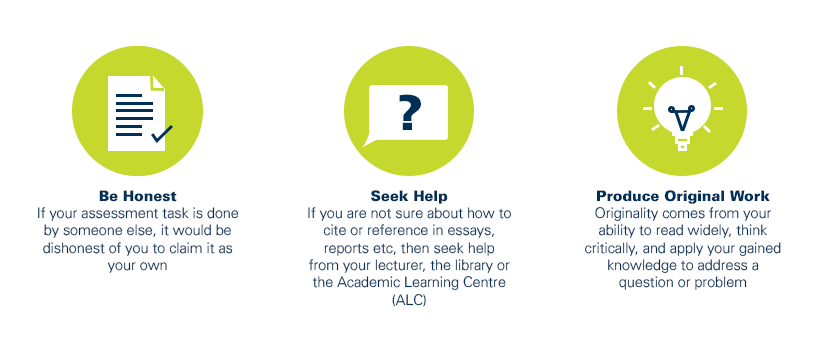
As a CQUniversity student you are expected to act honestly in all aspects of your academic work.
Any assessable work undertaken or submitted for review or assessment must be your own work. Assessable work is any type of work you do to meet the assessment requirements in the unit, including draft work submitted for review and feedback and final work to be assessed.
When you use the ideas, words or data of others in your assessment, you must thoroughly and clearly acknowledge the source of this information by using the correct referencing style for your unit. Using others’ work without proper acknowledgement may be considered a form of intellectual dishonesty.
Participating honestly, respectfully, responsibly, and fairly in your university study ensures the CQUniversity qualification you earn will be valued as a true indication of your individual academic achievement and will continue to receive the respect and recognition it deserves.
As a student, you are responsible for reading and following CQUniversity’s policies, including the Student Academic Integrity Policy and Procedure. This policy sets out CQUniversity’s expectations of you to act with integrity, examples of academic integrity breaches to avoid, the processes used to address alleged breaches of academic integrity, and potential penalties.
What is a breach of academic integrity?
A breach of academic integrity includes but is not limited to plagiarism, self-plagiarism, collusion, cheating, contract cheating, and academic misconduct. The Student Academic Integrity Policy and Procedure defines what these terms mean and gives examples.
Why is academic integrity important?
A breach of academic integrity may result in one or more penalties, including suspension or even expulsion from the University. It can also have negative implications for student visas and future enrolment at CQUniversity or elsewhere. Students who engage in contract cheating also risk being blackmailed by contract cheating services.
Where can I get assistance?
For academic advice and guidance, the Academic Learning Centre (ALC) can support you in becoming confident in completing assessments with integrity and of high standard.
What can you do to act with integrity?