Overview
Employees are at the heart of any organisation, so when they become disgruntled, they pose the risk of disrupting business as usual. Internal communication is a specialised function that is undertaken by strategic communicators as part of their reputation and relationship management role. In this unit, you will learn how to monitor, identify and address emerging issues affecting staff morale, engagement and participation in organisational activities, auditing the communication practices of an organisation so that you can design solutions for enhancing employee satisfaction. Professional communicators are often organisational counsellors who have the trust of both staff and senior managers, which is earned through authentic and transparent communication with both stakeholders. To prepare you for this role, this unit will develop your skills in persuasive communication, strategic and active listening, negotiation and consultation. The unit will also provide applied knowledge of internal communication research, communication audits and the design and evaluation of communication interventions. On completion of this unit, you will understand the different contexts in which internal communication is practiced and have the fundamental skills and knowledge required to develop an industry-standard internal communication strategy.
Details
Pre-requisites or Co-requisites
Students need to have completed 36 credit points within the Public Relations major or the Strategic Communications major prior to enrolling in this unit.
Important note: Students enrolled in a subsequent unit who failed their pre-requisite unit, should drop the subsequent unit before the census date or within 10 working days of Fail grade notification. Students who do not drop the unit in this timeframe cannot later drop the unit without academic and financial liability. See details in the Assessment Policy and Procedure (Higher Education Coursework).
Offerings For Term 2 - 2026
Attendance Requirements
All on-campus students are expected to attend scheduled classes - in some units, these classes are identified as a mandatory (pass/fail) component and attendance is compulsory. International students, on a student visa, must maintain a full time study load and meet both attendance and academic progress requirements in each study period (satisfactory attendance for International students is defined as maintaining at least an 80% attendance record).
Recommended Student Time Commitment
Each 6-credit Postgraduate unit at CQUniversity requires an overall time commitment of an average of 12.5 hours of study per week, making a total of 150 hours for the unit.
Class Timetable
Assessment Overview
Assessment Grading
This is a graded unit: your overall grade will be calculated from the marks or grades for each assessment task, based on the relative weightings shown in the table above. You must obtain an overall mark for the unit of at least 50%, or an overall grade of 'pass' in order to pass the unit. If any 'pass/fail' tasks are shown in the table above they must also be completed successfully ('pass' grade). You must also meet any minimum mark requirements specified for a particular assessment task, as detailed in the 'assessment task' section (note that in some instances, the minimum mark for a task may be greater than 50%). Consult the University's Grades and Results Policy for more details of interim results and final grades.
All University policies are available on the CQUniversity Policy site.
You may wish to view these policies:
- Grades and Results Policy
- Assessment Policy and Procedure (Higher Education Coursework)
- Review of Grade Procedure
- Student Academic Integrity Policy and Procedure
- Academic Progression Policy and Procedure
- Student Refund and Credit Balance Policy and Procedure
- Complaints Policy and Procedure
- Information and Communications Technology Acceptable Use Policy and Procedure
This list is not an exhaustive list of all University policies. The full list of University policies are available on the CQUniversity Policy site.
Feedback, Recommendations and Responses
Every unit is reviewed for enhancement each year. At the most recent review, the following staff and student feedback items were identified and recommendations were made.
Feedback from Student Satisfaction Survey
Clearly articulating that the assessments contribute to a professional portfolio would be beneficial
Re-categorise the final assessment as a Portfolio and clarify in the assessment description how it can support professional development and career outcomes.
Feedback from Student Satisfaction Survey
A wider range of scholarly or academic readings would strengthen students' theoretical knowledge of the topic
Provide a broader range of scholarly and academic references in the E-Reading list
Feedback from Student Satisfaction Survey
A guide for searching relevant readings and resources would be useful
Develop a guide with the library about how to use keywords and search terms related to the topic.
- Evaluate gaps and strengths in the internal communication practices of an organisation
- Understand the different contexts in which internal communication is practiced
- Identify strategic and targeted solutions for improving internal communication procedures
- Evaluate the effectiveness of message design and channel selection for internal communication
- Create research tools and materials to improve internal communication practices.
n/a
Alignment of Assessment Tasks to Learning Outcomes
| Assessment Tasks | Learning Outcomes | ||||
|---|---|---|---|---|---|
| 1 | 2 | 3 | 4 | 5 | |
| 1 - Case Study - 20% | |||||
| 2 - Presentation - 35% | |||||
| 3 - Project (applied) - 45% | |||||
Alignment of Graduate Attributes to Learning Outcomes
| Graduate Attributes | Learning Outcomes | ||||
|---|---|---|---|---|---|
| 1 | 2 | 3 | 4 | 5 | |
| 1 - Knowledge | |||||
| 2 - Communication | |||||
| 3 - Cognitive, technical and creative skills | |||||
| 4 - Research | |||||
| 5 - Self-management | |||||
| 6 - Ethical and Professional Responsibility | |||||
| 7 - Leadership | |||||
| 8 - First Nations Knowledges | |||||
| 9 - Aboriginal and Torres Strait Islander Cultures | |||||
Textbooks
There are no required textbooks.
IT Resources
- CQUniversity Student Email
- Internet
- Unit Website (Moodle)
All submissions for this unit must use the referencing style: American Psychological Association 7th Edition (APA 7th edition)
For further information, see the Assessment Tasks.
f.heaselgrave@cqu.edu.au
Week 1
Begin Date: 13 Jul 2026Module/Topic
Introduction to internal communication
Chapter
Events and Submissions/Topic
Week 2
Begin Date: 20 Jul 2026Module/Topic
Organisational communication – structures and culture
Chapter
Events and Submissions/Topic
Week 3
Begin Date: 27 Jul 2026Module/Topic
Employee communication – strategies and approaches
Chapter
Events and Submissions/Topic
Week 4
Begin Date: 03 Aug 2026Module/Topic
Researching internal communication gaps
Chapter
Events and Submissions/Topic
Assessment 1: Case study analysis
Week 5
Begin Date: 10 Aug 2026Module/Topic
Auditing internal communication outputs
Chapter
Events and Submissions/Topic
Week 6
Begin Date: 17 Aug 2026Module/Topic
Leadership communication
Chapter
Events and Submissions/Topic
Vacation Week
Begin Date: 24 Aug 2026Module/Topic
No class
Chapter
Events and Submissions/Topic
Week 7
Begin Date: 31 Aug 2026Module/Topic
Diversity, Equity, and Inclusion (DEI) in Internal Communication
Chapter
Events and Submissions/Topic
Week 8
Begin Date: 07 Sep 2026Module/Topic
Communicating change and crises
Chapter
Events and Submissions/Topic
Week 9
Begin Date: 14 Sep 2026Module/Topic
Strategy development and research tools
Chapter
Events and Submissions/Topic
Week 10
Begin Date: 21 Sep 2026Module/Topic
Creating internal communication content
Chapter
Events and Submissions/Topic
Week 11
Begin Date: 28 Sep 2026Module/Topic
Channel selection and message orientation
Chapter
Events and Submissions/Topic
Week 12
Begin Date: 05 Oct 2026Module/Topic
Measuring and evaluating effectiveness
Chapter
Events and Submissions/Topic
Exam Week
Begin Date: 12 Oct 2026Module/Topic
Chapter
Events and Submissions/Topic
Vacation/Exam Week
Begin Date: 19 Oct 2026Module/Topic
Chapter
Events and Submissions/Topic
Use of Generative Artificial Intelligence (AI) in Learning Materials in this Unit
Generative AI tools may have been used by academic/teaching staff in the development of learning materials and assessments (for example, for initial drafting, content organisation, activity generation, image creation, editing, summarisation, rubric creation or assessment design). Any AI-assisted content has been critically reviewed, refined, and contextualised by academic staff. The final learning materials, teaching activities, and guidance provided reflect academic judgement and align with CQUniversity learning, teaching, accessibility, and academic integrity requirements.
1 Case Study
Due: Monday 10 August (week 5), at 10pm
Weighting: 20%
Word count: 900 words
For Assessments 1, 2 and 3, you will base your work on one organisation selected from the approved case list below. You must use the same organisation across all three assessments, allowing your analysis, audit and strategy to build coherently over the term.
Approved case list
These organisations have been selected because they provide sufficient publicly available evidence about:
- employee engagement initiatives
- organisational values and culture
- leadership communication approaches
- internal communication tensions or gaps
You are not expected to have access to internal systems (e.g. intranets or internal emails). Instead, you will analyse internal communication practices using credible public sources, as outlined below.
You may also choose the organisation you work for, but this must be discussed with the unit coordinator in advance as you will need to obtain and show approval from your manager.
Internal communication evidence
Across all assessments, you may draw on any of the following:
- annual reports and people / culture sections
- CEO or senior leadership messages (forewords, speeches, media interviews)
- workforce or engagement strategies
- public consultation summaries or engagement reports
- credible case studies published by third parties
- media coverage that highlights internal tensions, change, or reform
You will be assessed on your analytical judgement, not on access to proprietary (organisationally owned) information.
Assessment structure
Your written response should address the following elements:
Step 1 - Organisational context (250 words): Describe the organisation's structure (open, flat, functional, matrix), culture and values and explain how these organisational attributes influence communication flows. You will need to conduct organisational research to address this step and draw on relevant academic literature
Step 2 - Employee Engagement Strategy Evaluation (300 words): Evaluate the overall effectiveness of 2 employee engagement strategies that are used by the organisation to build employee satisfaction. You should consider whether the communication channels and tools used in the strategies are the most appropriate and whether two-way communication mechanisms (feedback loops) are provided
Step 3 - Gap Analysis (200 words): Identify where communication gaps and opportunities exist for engaging employees based on your evaluation in step 2. Conduct online research (e.g. announcements, news articles, corporate website) to search for unresolved communication issues, such as misalignment in the messages or channels used and reflect on any successes resulting from the employee engagement strategies.
Step 4 - Conclusion (150 words): Provide a brief conclusion summarising the strengths and weaknesses of the employee engagement strategies, identifying actions that should be continued or adapted for improved communication.
Format
This assessment should be written in a report format with a title and headings that address the task requirements.
Use of Gen AI
In this assessment, you may use Al for planning, idea development, and research. Your final submission should show how you have developed and refined these ideas by including an AI disclosure statement. Any misuse or lack of disclosure regarding the use of AI tools will be considered a breach of academic integrity.
Week 5 Monday (10 Aug 2026) 10:00 pm AEST
Submit via Moodle
Vacation Week Monday (24 Aug 2026)
Feedback and comments returned via Moodle portal
The following marking criteria will be used for this assessment:
- Organisational Analysis (25%): Identifies and describes the organisational structure, culture, and values, and explains how these attributes influence communication flows
- Strategy Evaluation (35%): Evaluates two employee engagement strategies, including communication channel appropriateness and two-way feedback mechanisms, to determine communication effectiveness
- Gap Analysis and Research (25%): Identifies specific communication gaps and opportunities through relevant online research, reflecting on issues and strategy success.
- Communication and Presentation (15%): Presents analysis in clear report format with appropriate headings, professional writing, and logical structure; conclusion summarises strengths, weaknesses, and actionable recommendations for continued or adapted strategies.
- Evaluate gaps and strengths in the internal communication practices of an organisation
- Evaluate the effectiveness of message design and channel selection for internal communication
2 Presentation
Due: Monday 14th September (week 9), at 10pm
Weighting: 35%
Word count: 1250 words equivalent
Conducting an audit of an organisation's internal communication practices is essential for evaluating how effective and appropriate messages and channels are for engaging employees. You will assess and make recommendations for improving the communication processes of the same organisation you chose for Assessment 1.
This assessment builds directly on the organisational analysis and engagement gaps identified in Assessment 1 and provides the diagnostic foundation for the internal communication strategy that will be developed for Assessment 3.
Task description
You will prepare a professional audit presentation, as if briefing the organisation’s senior leadership team, addressing the following elements:
1. Organisational context and audit focus
- Briefly restate the organisation’s structure, workforce composition, and communication environment
- Identify the key internal communication issue(s) that warrant closer investigation
2. SWOT analysis of internal communication
- Evaluate strengths and weaknesses in current internal communication practices
- Identify opportunities and threats arising from organisational change, workforce diversity, or external pressures
- Use evidence from organisational documents and public commentary
3. Communication channel effectiveness This focuses on the distribution channels currently being used
- Analyse the effectiveness of the organisation’s primary internal communication channels (e.g. leadership messaging, use of digital platforms, team‑based communication).
- Identify gaps in reach, clarity, timeliness, or employee feedback mechanisms.
4. Information flow and coordination
- Evaluate how information appears to flow across levels, functions, or geographical locations
- Identify likely bottlenecks or breakdowns in communication due to the organisation's scale or structure
5. Leadership communication
- Analyse leadership communication approaches using publicly available messages (e.g. CEO statements, open letters, media releases, news stories).
- Consider tone, transparency, consistency, and alignment with organisational values
- Reflect on employee perceptions of leadership communication
6. Crisis/Issue Management:
- Consider potential or actual internal communication crises or issues affecting the organisation
- Reflect on how the management of these issues may be perceived by employees
7. Employee Engagement:
- Assess how internal communication practices may affect employee engagement, wellbeing, or inclusion
- Use employee engagement survey results or public workforce documents (i.e. annual reports) to assess which strategies might be more effective at building psychological commitment
8. Preliminary recommendations
- Propose three evidence‑based recommendations to address identified gaps.
- Clearly signal which recommendation will become the focus of the internal communication strategy in Assessment 3.
9. Reference slide
Presentation format
- Your presentation slide-deck should be no more than 12 slides (maximum 30 words per slide) and should include in-text references and a reference list slide
- You are not required to present verbally or to record a narration over the presentation
- You do need to include scripted content in the notes section on each slide, showing what you would say if you were presenting to the organisation's senior management team.
- The word count for the scripted content should not exceed 1000 words.
Use of AI in this assessment
This assessment uses the AI Assessment scale tool Level 2 - You may use Al for planning, idea development, and research. Your final submission should show how you have developed and refined these ideas by including an AI disclosure statement. Any misuse or lack of disclosure regarding the use of AI tools will be considered a breach of academic integrity.
Week 9 Monday (14 Sept 2026) 10:00 pm AEST
Submission via Moodle Portal
Week 11 Monday (28 Sept 2026)
Feedback and comments returned via Moodle portal
Student work will be assessed according to the following criteria:
- Analysis (25%): Identification of internal communication gaps and how to address them, demonstrated through a SWOT analysis
- Evaluation (35%): Ability to audit all required elements (channel effectiveness, information flow, leadership communication, crisis management, employee engagement) and to identify their implications for internal communication practice; includes specific examples from the provided case study materials to illustrate understanding
- Presentation format (15%): Appropriate and professional use of Powerpoint presented in a logical sequence, using titles, themes, design, fonts, visuals and bullet points to produce clear and uncluttered slides without typographical errors; adheres to 12-slides maximum and includes all required elements; notes section includes script elaborating on the auditing process and findings
- Recommendations (20%): Proposes 3 well-justified, specific, and actionable recommendations that directly address identified communication gaps and pain points; identifies required research tools and communication resources needed to enhance internal communication
- Research and referencing (5%): Integrates academic literature relevant to internal communication best practices; applies in-text citations on slides using APA 7 format and acknowledges use of AI
- Evaluate gaps and strengths in the internal communication practices of an organisation
- Understand the different contexts in which internal communication is practiced
- Identify strategic and targeted solutions for improving internal communication procedures
- Evaluate the effectiveness of message design and channel selection for internal communication
- Create research tools and materials to improve internal communication practices.
3 Project (applied)
Assessment 3: Internal communication plan
Weighting: 45%
Word count: 2000 words
Due: Monday 12 October (week 13), at 10pm
This assessment comprises the culmination of knowledge obtained throughout the Unit. Bringing together what you have learned about employee engagement and internal communication practices, you will produce a portfolio of work that demonstrates the analysis, audit, and strategic development of internal communication practices for a real organisation.
Building on the organisational analysis completed in Assessment 1 and the communication audit conducted in Assessment 2, you will design an internal communication plan (Plan) that supports an organisation in achieving its goals through more effective internal communication and a stronger, more engaged workforce.
The internal communication plan needs to address ONE of the priority communication issues that were identified in your Assessment 2 audit (as stated in the recommendations section), and must:
- be clearly linked to and supported by evidence from your audit
- relate to employee engagement and internal communication effectiveness
Examples of appropriate issues might include (but are not limited to):
- breakdowns in leadership communication
- ineffective communication channels or information flow
- low employee engagement or limited feedback mechanisms
- challenges related to organisational change, inclusion, or wellbeing
- changes in working practices (e.g. work from home, AI use)
You will be required to undertake additional independent research, drawing on scholarly literature, industry publications and relevant case studies to demonstrate an understanding of the tensions, challenges and opportunities of addressing these issues through strategic internal communication. You should approach this task as a communication advisor preparing a Plan for the senior executive team.
Task requirements
Your Internal Communication Plan must include the following elements:
1. Situation analysis
Clearly outline the internal communication situation facing your chosen organisation. You may draw on and elaborate evidence and insights generated from Assessment 2 in your Situation Analysis, rather than conducting another analysis. Identify the key communication gap or challenge your Plan is designed to address. You must clearly justify why the chosen issue has been prioritised.
2. Objectives
Establish clear and measurable internal communication objectives that will enable the effectiveness of the Plan to be evaluated.
3. Strategy and messaging
Identify the internal communication strategies that will be used to engage employees on the chosen issue. This should include:
- defining key messages
- identifying relevant employee groups or segments
4. Tactical implementation plan
Provide a practical implementation guide that:
- outlines the communication channels to be used, message timing and frequency, and roles or responsibilities for delivery
- includes the creation of two (2) original communication tactics*. These tactics should be included as appendices and referenced in your main report.
6. Evaluation
Identify appropriate methods for evaluating the success of the Plan among employees, including how feedback or engagement data would be gathered and used.
*You are required to design and develop two (2) original communication tactics as part of your Plan. These must be fully developed examples (e.g. script for a policy launch/announcement, an intranet post, an internal newsletter article, event poster/flyer, draft CEO email, media release), not brief descriptions. Each tactic should clearly demonstrate its purpose in enhancing communication with target audiences, and how it aligns with your overall strategy and key messages. Further guidance will be provided in Weeks 9–11.
Format
As such, this assessment should be presented in professional report format, using headings, page breaks and formatting features (e.g. tables, labelled sections, contents page) to enhance clarity and readability. In addition, references must be cited in‑text and a complete reference list provided, using APA 7th edition
Additional support
Optional one-to-one student consultations will be available in week 12 for you to discuss your assessment progress with the Unit Coordinator.
Use of Gen AI
You may use Al for planning, idea development, and research. A statement of declaration must be included where AI is used for these purposes and your final submission must demonstrate your own reasoning and synthesis of ideas. Any misuse or lack of disclosure regarding the use of AI tools will be considered a breach of academic integrity.
Exam Week Monday (12 Oct 2026) 10:00 pm AEST
Submission via Moodle portal
Vacation/Exam Week Friday (23 Oct 2026)
Feedback and comments returned via Moodle portal
Assessments will be marked using the following criteria:
- Situation Analysis (20%): Ability to analyse the organisational situation and its implications for internal communication; justifies the selection of the identified internal communication issue
- Objectives (5%): Development of clear and measurable internal communication objectives aligned to the identified issue
- Strategy and messaging (20%): Design of appropriate internal communication strategies, including relevant key messages and identification of target employee groups
- Implementation plan and tactics (30%): Development of a practical implementation plan, including development of channels, timing, and responsibilities; includes two well-developed tactics that demonstrate how the plan would be implemented in practice
- Evaluation (10%): Identification of suitable methods for evaluating the effectiveness of the internal communication plan.
- Presentation and writing (10%): Presents work in professional report format, using headings, section breaks and formatting tools (e.g. tables, labels) to enhance readability
- Research and referencing (5%): Use of relevant sources to support analysis and application, with accurate APA referencing.
- Understand the different contexts in which internal communication is practiced
- Identify strategic and targeted solutions for improving internal communication procedures
- Evaluate the effectiveness of message design and channel selection for internal communication
- Create research tools and materials to improve internal communication practices.
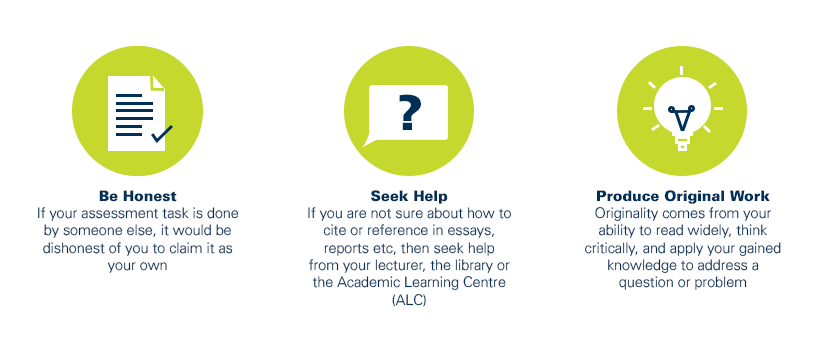
As a CQUniversity student you are expected to act honestly in all aspects of your academic work.
Any assessable work undertaken or submitted for review or assessment must be your own work. Assessable work is any type of work you do to meet the assessment requirements in the unit, including draft work submitted for review and feedback and final work to be assessed.
When you use the ideas, words or data of others in your assessment, you must thoroughly and clearly acknowledge the source of this information by using the correct referencing style for your unit. Using others’ work without proper acknowledgement may be considered a form of intellectual dishonesty.
Participating honestly, respectfully, responsibly, and fairly in your university study ensures the CQUniversity qualification you earn will be valued as a true indication of your individual academic achievement and will continue to receive the respect and recognition it deserves.
As a student, you are responsible for reading and following CQUniversity’s policies, including the Student Academic Integrity Policy and Procedure. This policy sets out CQUniversity’s expectations of you to act with integrity, examples of academic integrity breaches to avoid, the processes used to address alleged breaches of academic integrity, and potential penalties.
What is a breach of academic integrity?
A breach of academic integrity includes but is not limited to plagiarism, self-plagiarism, collusion, cheating, contract cheating, and academic misconduct. The Student Academic Integrity Policy and Procedure defines what these terms mean and gives examples.
Why is academic integrity important?
A breach of academic integrity may result in one or more penalties, including suspension or even expulsion from the University. It can also have negative implications for student visas and future enrolment at CQUniversity or elsewhere. Students who engage in contract cheating also risk being blackmailed by contract cheating services.
Where can I get assistance?
For academic advice and guidance, the Academic Learning Centre (ALC) can support you in becoming confident in completing assessments with integrity and of high standard.
What can you do to act with integrity?