Overview
Not everything happens according to plan. Sometimes crises occur with little or no warning, while other times issues build over time. How you manage the crisis as a leader can make or break an organisation. This unit will examine crisis management from a communications perspective. Communicating during and after a crisis is a complex strategy of message development and targeted delivery. You will examine the crisis lifecycle and the role of leadership during a crisis. You will develop messages for stakeholders as well as tools for managing intense media scrutiny. This unit is ideal for decision-makers in organisations or those who may be on the front line when a crisis occurs.
Details
Pre-requisites or Co-requisites
Admission to a postgraduate course or completion of 48 credit points in an undergraduate course.
Important note: Students enrolled in a subsequent unit who failed their pre-requisite unit, should drop the subsequent unit before the census date or within 10 working days of Fail grade notification. Students who do not drop the unit in this timeframe cannot later drop the unit without academic and financial liability. See details in the Assessment Policy and Procedure (Higher Education Coursework).
Offerings For Term 1 - 2026
Attendance Requirements
All on-campus students are expected to attend scheduled classes - in some units, these classes are identified as a mandatory (pass/fail) component and attendance is compulsory. International students, on a student visa, must maintain a full time study load and meet both attendance and academic progress requirements in each study period (satisfactory attendance for International students is defined as maintaining at least an 80% attendance record).
Recommended Student Time Commitment
Each 6-credit Postgraduate unit at CQUniversity requires an overall time commitment of an average of 12.5 hours of study per week, making a total of 150 hours for the unit.
Class Timetable
Assessment Overview
Assessment Grading
This is a graded unit: your overall grade will be calculated from the marks or grades for each assessment task, based on the relative weightings shown in the table above. You must obtain an overall mark for the unit of at least 50%, or an overall grade of 'pass' in order to pass the unit. If any 'pass/fail' tasks are shown in the table above they must also be completed successfully ('pass' grade). You must also meet any minimum mark requirements specified for a particular assessment task, as detailed in the 'assessment task' section (note that in some instances, the minimum mark for a task may be greater than 50%). Consult the University's Grades and Results Policy for more details of interim results and final grades.
All University policies are available on the CQUniversity Policy site.
You may wish to view these policies:
- Grades and Results Policy
- Assessment Policy and Procedure (Higher Education Coursework)
- Review of Grade Procedure
- Student Academic Integrity Policy and Procedure
- Academic Progression Policy and Procedure
- Student Refund and Credit Balance Policy and Procedure
- Complaints Policy and Procedure
- Information and Communications Technology Acceptable Use Policy and Procedure
This list is not an exhaustive list of all University policies. The full list of University policies are available on the CQUniversity Policy site.
Feedback, Recommendations and Responses
Every unit is reviewed for enhancement each year. At the most recent review, the following staff and student feedback items were identified and recommendations were made.
Feedback from Student Evaluation Survey.
Students valued the practical crisis communication plan but suggested a broader strategic perspective would deepen understanding.
Provide supplementary resources (e.g., templates, examples of mature strategies) and integrate strategy discussions into online classes to enhance understanding without adding extra assessment tasks.
Feedback from Student Evaluation Survey.
Students praised the lecturer’s support, flexibility, and real-world expertise, noting these as key strengths of the unit.
Maintain student-focused delivery and continue incorporating real-world examples and flexible support to sustain high engagement.
Feedback from Student Evaluation Survey.
While students found the unit engaging and relevant, some concerns persisted around assessment feedback and clarity, likely influenced by varied disciplinary expectations.
Refine assessment rubrics and instructions to better accommodate diverse disciplinary perspectives and ensure expectations are communicated clearly.
- Recognise different types of crises and how they can impact an organisation
- Critically evaluate potential risks to leadership throughout the crisis lifecycle
- Analyse the leadership role during and after a crisis
- Apply crisis communication techniques to mainstream and digital media
- Develop a crisis management communication plan.
Alignment of Assessment Tasks to Learning Outcomes
| Assessment Tasks | Learning Outcomes | ||||
|---|---|---|---|---|---|
| 1 | 2 | 3 | 4 | 5 | |
| 1 - Case Study - 10% | |||||
| 2 - Report - 30% | |||||
| 3 - Online Test - 30% | |||||
| 4 - Self assessment - 30% | |||||
Alignment of Graduate Attributes to Learning Outcomes
| Graduate Attributes | Learning Outcomes | ||||
|---|---|---|---|---|---|
| 1 | 2 | 3 | 4 | 5 | |
| 1 - Knowledge | |||||
| 2 - Communication | |||||
| 3 - Cognitive, technical and creative skills | |||||
| 4 - Research | |||||
| 5 - Self-management | |||||
| 6 - Ethical and Professional Responsibility | |||||
| 7 - Leadership | |||||
| 8 - First Nations Knowledges | |||||
| 9 - Aboriginal and Torres Strait Islander Cultures | |||||
Textbooks
There are no required textbooks.
IT Resources
- CQUniversity Student Email
- Internet
- Unit Website (Moodle)
All submissions for this unit must use the referencing style: American Psychological Association 7th Edition (APA 7th edition)
For further information, see the Assessment Tasks.
a.johnson2@cqu.edu.au
Week 1: Introduction to Crisis Communication
Begin Date: 09 Mar 2026Module/Topic
This week establishes the essential frameworks of crisis communication that shape how organisations respond when facing their most challenging moments.
Chapter
As per e-reading list
Events and Submissions/Topic
Week 2: Issues Management
Begin Date: 16 Mar 2026Module/Topic
This week explores the strategic practice of identifying emerging issues before they escalate, potentially saving organisations from significant operational and reputational damage.
Chapter
As per e-reading list
Events and Submissions/Topic
Week 3: Risk Management and Perception
Begin Date: 23 Mar 2026Module/Topic
This week examines how understanding risk perception fundamentally shapes effective communication strategies and stakeholder responses during potential crises.
Chapter
As per e-reading list
Events and Submissions/Topic
Assessment 1 - Case Study (10% weighting) - Due Week 3, Friday, 11.59pm
Crisis Communication Case Study Due: Week 3 Friday (27 Mar 2026) 11:59 pm AEST
Week 4: When Crisis Hits
Begin Date: 30 Mar 2026Module/Topic
This week focuses on the critical first phase of crisis response where timely decisions and carefully crafted messages can significantly influence outcomes.
Chapter
As per e-reading list
Events and Submissions/Topic
Week 5: Crisis Communication Planning
Begin Date: 06 Apr 2026Module/Topic
This week introduces systematic approaches to crisis preparation that transform potentially chaotic situations into manageable challenges through thoughtful planning and protocols.
Chapter
As per e-reading list
Events and Submissions/Topic
Week 6: Leadership During Crisis
Begin Date: 13 Apr 2026Module/Topic
This week examines how effective leadership during crises requires specific competencies that build trust, provide direction and maintain organisational cohesion under pressure.
Chapter
As per e-reading list
Events and Submissions/Topic
Assessment 2 - Crisis Communication Plan (30% weighting) - Due Week 6, Friday, 11.59pm
Crisis Communication Plan Due: Week 6 Friday (17 Apr 2026) 11:59 pm AEST
Break Week
Begin Date: 20 Apr 2026Module/Topic
Chapter
As per e-reading list
Events and Submissions/Topic
Week 7: Crisis Communication in Disasters and Emergencies
Begin Date: 27 Apr 2026Module/Topic
This week addresses the distinctive challenges of communicating during emergencies where public safety messaging and multi-agency coordination become paramount concerns.
Chapter
As per e-reading list
Events and Submissions/Topic
Week 8: Managing Activism and Opposition
Begin Date: 04 May 2026Module/Topic
This week examines strategies for engaging with activist stakeholders and opposition groups in ways that can transform potential conflicts into opportunities for meaningful dialogue.
Chapter
As per e-reading list
Events and Submissions/Topic
Week 9: Managing Social Media During Crises
Begin Date: 11 May 2026Module/Topic
This week explores how social media platforms dramatically transform crisis communication through speed, reach and audience participation—creating both significant challenges and strategic opportunities.
Chapter
As per e-reading list
Events and Submissions/Topic
Week 10: Crisis Week!
Begin Date: 18 May 2026Module/Topic
This week tests your ability to apply crisis communication principles in real-time through a simulated crisis scenario that replicates the time pressure and uncertainty that communicators face when managing actual organisational crises.
Chapter
No allocated readings this week
Events and Submissions/Topic
Assessment 3 - Online Exam (30% weighting) - Due Week 10, Friday, 11.59pm
Exam (Crisis Scenario) Due: Week 10 Friday (22 May 2026) 11:59 pm AEST
Week 11: Reputation Management and Recovery
Begin Date: 25 May 2026Module/Topic
This week focuses on evidence-based approaches to rebuilding trust and repairing organisational reputation following crisis events through transparent communication and demonstrated change.
Chapter
As per e-reading list
Events and Submissions/Topic
Week 12: GenAI in Crisis Communication
Begin Date: 01 Jun 2026Module/Topic
This week examines emerging technologies and methodologies that are reshaping crisis communication practice, preparing professionals for the evolving challenges of tomorrow's communication landscape.
Chapter
As per e-reading list
Events and Submissions/Topic
Assessment 4 - Critical Reflection (30% weighting) - Due Week 12, Friday, 11.59pm
Critical Reflection Due: Week 12 Friday (5 June 2026) 11:59 pm AEST
Review Week
Begin Date: 08 Jun 2026Module/Topic
Chapter
Events and Submissions/Topic
Vacation/Exam Week
Begin Date: 15 Jun 2026Module/Topic
Chapter
Events and Submissions/Topic
1 Case Study
Overview
Not everything happens to plan. Sometimes crises hit without warning, or issues build over time. How the leadership team, including communications professionals, respond to a crisis can make or break an organisation. In this assessment you will demonstrate your emergent understanding of crisis communication by applying early unit concepts and theories to a real-world case study. We want you to show your understanding of the definition of a crisis as well as analysing key aspects of an organisational response.
Task Description
You will choose one recent crisis communication event from a list provided to you on Moodle. Once you have chosen your event, you will write a ‘case study’ about this event.
In 500 words, you will:
- Provide a brief overall summary of the crisis communication event
- Explain why this event meets the definition of a crisis communication event
- Summarise the media publicity generated as a result of the crisis. Explain how social media and traditional news media reacted to the crisis
- Identify what lessons (positive and negative) might the organisation have learnt from this crisis event?
Other Information
You are welcome to supplement your writing with screen shots and links to communication pieces. For example, you might include links to media articles written about the crisis, or screenshots of their social media pages and responses uploaded.
The crisis examples provided for this assessment activity are genuine, contemporary events. The example list may contain real-life events which you have personal experience with, or which cause you discomfort. If this is the case, you are invited to speak to the unit coordinator and will be provided with an alternative event to complete the assessment. You will not be asked to explain or justify your request other than to provide general information which may help the unit coordinator source an appropriate example.
Information about writing and formatting your case study will be given on Moodle.
‘Choose your own adventure’ option: If you would prefer to analyse a crisis communication event not already on the approved list, please contact the unit coordinator for prior approval.
Research tells us that early assessment help students engage with the unit at the start of the term and gives an opportunity for students to build confidence, receive feedback and prepare for future assessments (Thomas et.al 2018; Gonzalez & Linden 2020). Extensions will be considered for students who enrol in the unit after the first day of term to ensure all students have a reasonable amount of time to review the materials and submit the task.
Use of GenAI tools in this assessment
Within this assessment, the use of Gen AI agents (including but not limited to ChatGPT and Microsoft CoPilot) is as follows:
Level 3: You may use AI to assist with specific tasks such as drafting text, refining and evaluating your work. You must critically evaluate and modify any AI-generated content you use. All students must include a statement about AI tool use (even if you did not use any AI tools). Guidance on completing this statement is provided on Moodle. Any misuse or lack of disclosure regarding the use of AI tools will be considered a breach of academic integrity.
All students must include a statement about AI tool use (even if you did not use any AI tools). Guidance on completing this statement is provided on Moodle.
Submission Instructions
This assessment will be submitted via Moodle. Information about submitting assessments will be provided on Moodle.
Week 3 Friday (27 Mar 2026) 11:59 pm AEST
Week 5 Friday (10 Apr 2026)
Marking Criteria
A detailed grading rubric is provided on Moodle, outlining the specific components and criteria used for evaluation. Students are assessed based on the following categories:
- Crisis Summary (Comprehensiveness and accuracy of crisis overview; clear explanation of why the event meets crisis communication criteria; correct identification and justification of crisis type (crisis, paracrisis, or issue) and depth of understanding in relating event details to crisis communication theory)
- Media Publicity Analysis (Through analysis of traditional media coverage, insightful examination of social media responses)
- Lessons Learned (Identification of key positive and negative lessons, depth of reflection on organisational learnings, applicability of lessons to future crisis management )
- Structure, Presentation and Referencing (Logical flow of ideas, clarity of writing, quality and relevance of sources, proper citation and referencing style)
- Recognise different types of crises and how they can impact an organisation
- Critically evaluate potential risks to leadership throughout the crisis lifecycle
- Analyse the leadership role during and after a crisis
- Apply crisis communication techniques to mainstream and digital media
2 Report
Overview
Crisis communication plans are essential organisational documents which outlay the policies and procedures to be followed in the event of an emergency or unexpected issue. They guide the organisation in assessing the event and delivering a swift response. Although they can look simple, they can be complex to prepare as they must address various potential scenarios and stakeholder concerns. This assessment will challenge you to develop a comprehensive crisis communication plan, which requires careful planning, strategic thinking, and anticipation of multiple potential crises.
This assessment will prepare you for the subsequent online test, where you will be presented with real-life crisis scenarios and expected to respond effectively using the principles and strategies outlined in your crisis communication plan.
Task Description
For this assessment, you will choose an organisation (from the provided list or your own selection, subject to unit coordinator approval) and prepare a crisis communication plan on its behalf. You will be supported with exemplars and templates.
Your crisis communication plan should include the following components:
- Identify potential vulnerabilities or crisis scenarios that could impact the chosen organisation
- Identify a crisis management team and establish a crisis command centre. Clearly define the roles, responsibilities, and communication channels for team members during a crisis
- Select a suitable spokesperson for the organisation and write draft 3-5 key messages for one of the identified crisis scenarios
Plan Structure
Present your crisis communication plan as an easy-to-read document in the style and manner of a real-world plan. Write the document as if it were being developed for the person in charge of the organisation, with a practical focus on implementation.
Additional Elements (optional): You may choose to include supplementary components such as:
Checklists of key actions typically taken during a crisis
Draft templates for media statements, press releases, or social media posts
Crisis response protocols and decision-making frameworks
Media handling guidelines and social media monitoring strategies
Gen AI content generation (for you to critique and review) can be used to assist you develop supplementary components (such as media releases etc. ) in alignment with unit expectations laid out in Moodle.
The crisis communication plan should be concise yet comprehensive, with a recommended length of 8-12 pages (excluding appendices or supplementary materials).
Use of GenAI tools in this assessment
Level 4: You may use AI extensively throughout your work either as you wish, or as specifically directed in your assessment. Focus on directing AI to achieve your goals while demonstrating your critical thinking. Any misuse or lack of disclosure regarding the use of AI tools will be considered a breach of academic integrity.
All students must include a statement about AI tool use (even if you did not use any AI tools). Guidance on completing this statement is provided on Moodle.
Week 6 Friday (17 Apr 2026) 11:59 pm AEST
Week 7 Friday (1 May 2026)
Marking Criteria
A detailed grading rubric is provided on Moodle, outlining the specific components and criteria used for evaluation. Students are assessed based on the following categories:
- Inclusion and Quality of Required Elements
- Application of Crisis Life Cycle Stages
- Identification and Addressing of Communication Challenges
- Incorporation of Course Concepts and Practical Application
- Research, Presentation, and Appropriate use of AI Tools
- Recognise different types of crises and how they can impact an organisation
- Critically evaluate potential risks to leadership throughout the crisis lifecycle
- Apply crisis communication techniques to mainstream and digital media
- Develop a crisis management communication plan.
3 Online Test
Overview
In this assessment, you will put your crisis communication planning skills to the test in a simulated real-world environment. Although we can anticipate potential crises, we rarely get extensive notification of an incoming emergency; this assessment will replicate the time pressure and stress of a real scenario and ask you to respond effectively, leveraging the principles and strategies you developed previously in your crisis communication plan.
Task Description
You are required to complete a timed, online exam. During the exam you will be given a crisis scenario and asked to answer a range of questions in response the crisis scenario, using your crisis communication plan as a reference to guide your responses. This assessment challenges your ability to think critically, respond effectively and apply your crisis communication knowledge in a realistic, time-sensitive environment.
Scenario and Requirements
You will be randomly assigned one crisis scenario from a pool of potential scenarios covering various crisis types, such as natural disasters, data breaches, reputational crises, etc. The scenarios will be based on realistic situations, drawing inspiration from past events or hypothetical but plausible circumstances.
You will use your previously prepared crisis communication plan as a reference to guide your responses throughout the exam. The exam will include a mix of short-answer questions and the production of various deliverables, such as key messages, media releases or social media posts.
Online Test Format
The assessment will be delivered through an online test environment (Moodle), accessible for a one-week period.
Once you have started the exam, it must be finished within two hours (or permitted time based on reasonable accommodations- see more information below).
Extensions will not be granted except in cases of extremely extenuating circumstances, as the time constraint is designed to simulate the urgent nature of real-world crisis response.
This assessment must be submitted by the specified due date and time. Due to the nature of this task, the standard 72-hour grace period does not apply to this assessment. We recognise that unexpected circumstances may arise, and encourage students to reach out as early as possible if they are experiencing difficulties, so that appropriate support or adjustments can be considered in line with university policy.
To ensure prompt return of results, individual feedback will not be provided for this assessment. Instead, comprehensive feedback will be delivered to the entire cohort during the class session and via forum announcements. This approach allows you to receive your marks quickly, enabling you to complete your written reflection within the required timeframe
Reasonable Accommodations
Students with an Accessibility Plan will be accommodated as per the reasonable education adjustments outlined in their plan. This may include additional time to complete the exam. Please contact the unit coordinator for more information if required.
Use of GenAI tools in this assessment
Level 1: You must not use Al at any point during the assessment*. You must demonstrate your core skills and knowledge.
*with the exception of any content which has been previously generated and included in your previous assessment.
Week 10 Friday (22 May 2026) 11:59 pm AEST
The online test will open Monday for Week 10 and close 2359 Friday of Week 10. Once the test has commenced, students must complete and submit their responses within two hours.
Week 11 Friday (29 May 2026)
To ensure prompt return of results, individual feedback will not be provided for this assessment.
Marking Criteria
The online test will assess your understanding of key unit concepts and your ability to apply them in practical scenarios. Here's what we'll be evaluating:
- Knowledge and Understanding: Demonstration of accurate comprehension of core principles, theories and terminology covered in the unit.
- Critical Analysis: Ability to analyse information, identify relevant concepts, and apply appropriate frameworks to the questions presented.
- Application of Theory: Skill in connecting theoretical knowledge to real-world contexts or case studies provided in the test.
- Clarity of Expression: Precision and conciseness in your responses, with proper use of subject-specific vocabulary.
- Comprehensiveness: Addressing all aspects of each question thoroughly whilst remaining focused on what is being asked, relevant to the scenario presented.
- Apply crisis communication techniques to mainstream and digital media
- Develop a crisis management communication plan.
4 Self assessment
Overview
Having developed your own crisis communication plan and had the experience of applying that plan to a simulated, real-world crisis scenario, you are now being asked to critically reflect on this experience, as well as your learning across the term. This assessment aims to promote deep reflection on the crisis communication planning and response process, and the application of key unit concepts.
Task Description
You will write an essay-style self-assessment, between 800-1000 words in length. Your critical self-assessment must incorporate references to relevant unit concepts, theories, and best practices discussed throughout the course. You will need to demonstrate critical thinking and self-reflection by analysing your decision-making processes, underlying assumptions, and the rationale behind your choices.
You will need to address the following areas:
- Reflection on crisis communication plan and online test performance. Evaluate the effectiveness of your crisis communication plan in addressing the scenario presented in the online test. Make sure you identify specific strengths and weaknesses in your plan.
- Application of unit concepts. Analyse how your crisis communication plan and online test responses aligned with, or deviated from, key crisis communication concepts and best practices. Include specific examples and provide evidence to support your analysis. Discuss how your understanding of crisis communication has evolved throughout the course and these assessments.
- Areas for improvement. Based on your experience with these assessments, outline areas where you can improve your crisis communication planning and response abilities. Propose specific strategies or approaches you could adopt to address the identified weaknesses or gaps in your knowledge and skills.
A minimum of 5 scholarly sources must be cited and referenced appropriately.
Use of GenAI tools in this assessment
Level 3: You may use AI to assist with specific tasks such as drafting text, refining and evaluating your work. You must critically evaluate and modify any AI-generated content you use. Any misuse or lack of disclosure regarding the use of AI tools will be considered a breach of academic integrity.
All students must include a statement about AI tool use (even if you did not use any AI tools). Guidance on completing this statement is provided on Moodle.
Week 12 Friday (5 June 2026) 11:59 pm AEST
Single document to be submitted via Moodle
Exam Week Friday (12 June 2026)
Grades and feedback will be returned to students within three weeks following submission
Marking Criteria
A detailed grading rubric is provided on Moodle, outlining the specific components and criteria used for evaluation. Students are assessed based on the following categories:
- Reflection on Crisis Communication Plan and Test Performnace
- Application of Unit Concepts
- Areas for Improvement
- Critical Thinking and Self-Reflection
- Research, Presentation, and Appropriate Use of GenAI Tools
- Recognise different types of crises and how they can impact an organisation
- Analyse the leadership role during and after a crisis
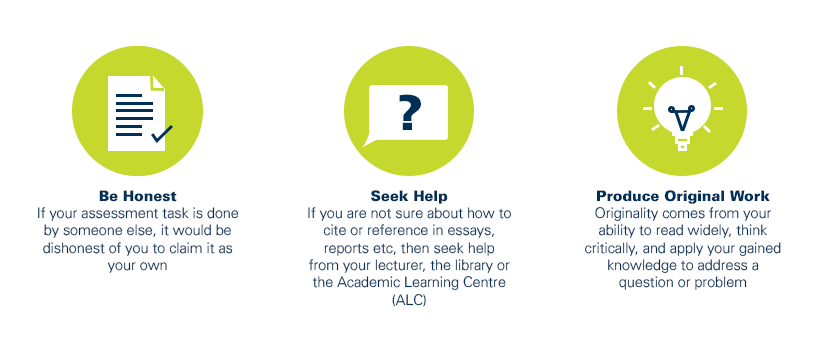
As a CQUniversity student you are expected to act honestly in all aspects of your academic work.
Any assessable work undertaken or submitted for review or assessment must be your own work. Assessable work is any type of work you do to meet the assessment requirements in the unit, including draft work submitted for review and feedback and final work to be assessed.
When you use the ideas, words or data of others in your assessment, you must thoroughly and clearly acknowledge the source of this information by using the correct referencing style for your unit. Using others’ work without proper acknowledgement may be considered a form of intellectual dishonesty.
Participating honestly, respectfully, responsibly, and fairly in your university study ensures the CQUniversity qualification you earn will be valued as a true indication of your individual academic achievement and will continue to receive the respect and recognition it deserves.
As a student, you are responsible for reading and following CQUniversity’s policies, including the Student Academic Integrity Policy and Procedure. This policy sets out CQUniversity’s expectations of you to act with integrity, examples of academic integrity breaches to avoid, the processes used to address alleged breaches of academic integrity, and potential penalties.
What is a breach of academic integrity?
A breach of academic integrity includes but is not limited to plagiarism, self-plagiarism, collusion, cheating, contract cheating, and academic misconduct. The Student Academic Integrity Policy and Procedure defines what these terms mean and gives examples.
Why is academic integrity important?
A breach of academic integrity may result in one or more penalties, including suspension or even expulsion from the University. It can also have negative implications for student visas and future enrolment at CQUniversity or elsewhere. Students who engage in contract cheating also risk being blackmailed by contract cheating services.
Where can I get assistance?
For academic advice and guidance, the Academic Learning Centre (ALC) can support you in becoming confident in completing assessments with integrity and of high standard.
What can you do to act with integrity?