Overview
Communications technologies have changed the way we live in profound ways and have determined the shape of contemporary culture around the world. At the same time, people play a role in cultural change by determining how such technologies are utilised. This unit examines the evolution of human communication, from non-verbal and visual forms to computer mediated interactions and AI collaborations. It will take you on an historical journey, exploring the innovative and creative discoveries and inventions of early civilisations and latter-day pioneers who shared a common desire to enhance and advance human interaction. The technological developments of the past are still very much connected to the way we live today, and how we will live in the future. Through this unit, you will develop a critical awareness of how new communication technologies are influenced by the same inherent needs of our ancestors; to communicate more effectively, more efficiently and on a global scale.
Details
Pre-requisites or Co-requisites
Prerequisite: Minimum of 36 credit points
Important note: Students enrolled in a subsequent unit who failed their pre-requisite unit, should drop the subsequent unit before the census date or within 10 working days of Fail grade notification. Students who do not drop the unit in this timeframe cannot later drop the unit without academic and financial liability. See details in the Assessment Policy and Procedure (Higher Education Coursework).
Offerings For Term 1 - 2026
Attendance Requirements
All on-campus students are expected to attend scheduled classes - in some units, these classes are identified as a mandatory (pass/fail) component and attendance is compulsory. International students, on a student visa, must maintain a full time study load and meet both attendance and academic progress requirements in each study period (satisfactory attendance for International students is defined as maintaining at least an 80% attendance record).
Recommended Student Time Commitment
Each 6-credit Undergraduate unit at CQUniversity requires an overall time commitment of an average of 12.5 hours of study per week, making a total of 150 hours for the unit.
Class Timetable
Assessment Overview
Assessment Grading
This is a graded unit: your overall grade will be calculated from the marks or grades for each assessment task, based on the relative weightings shown in the table above. You must obtain an overall mark for the unit of at least 50%, or an overall grade of 'pass' in order to pass the unit. If any 'pass/fail' tasks are shown in the table above they must also be completed successfully ('pass' grade). You must also meet any minimum mark requirements specified for a particular assessment task, as detailed in the 'assessment task' section (note that in some instances, the minimum mark for a task may be greater than 50%). Consult the University's Grades and Results Policy for more details of interim results and final grades.
All University policies are available on the CQUniversity Policy site.
You may wish to view these policies:
- Grades and Results Policy
- Assessment Policy and Procedure (Higher Education Coursework)
- Review of Grade Procedure
- Student Academic Integrity Policy and Procedure
- Academic Progression Policy and Procedure
- Student Refund and Credit Balance Policy and Procedure
- Complaints Policy and Procedure
- Information and Communications Technology Acceptable Use Policy and Procedure
This list is not an exhaustive list of all University policies. The full list of University policies are available on the CQUniversity Policy site.
Feedback, Recommendations and Responses
Every unit is reviewed for enhancement each year. At the most recent review, the following staff and student feedback items were identified and recommendations were made.
Feedback from Self-reflection
Assessment exemplars and assessment explainers provide additional support to students
Provide exemplar assessments and an assessment explainer for each task.
Feedback from Self-reflection Student Satisfaction Survey
Engage learners online through participatory activities
Build an online learning community by developing a continuous assessment that requires online participation from peers
- Explain how technological innovations shape communication practices and cultural exchange across diverse contexts
- Evaluate ethical, cultural, and social implications of communication technologies for human relationships and global connectivity
- Construct and present informed, evidence-based perspectives on the impact of technological change on communication
- Analyse how economic, social, environmental, or political conditions influence the development and adoption of communication technologies
- Apply theoretical concepts of communication and technology to interpret real-world examples and trends in global communication.
N/A
Alignment of Assessment Tasks to Learning Outcomes
| Assessment Tasks | Learning Outcomes | ||||
|---|---|---|---|---|---|
| 1 | 2 | 3 | 4 | 5 | |
| 1 - Reflective Practice Assignment - 20% | |||||
| 2 - Portfolio - 45% | |||||
| 3 - Essay - 35% | |||||
Alignment of Graduate Attributes to Learning Outcomes
| Graduate Attributes | Learning Outcomes | ||||
|---|---|---|---|---|---|
| 1 | 2 | 3 | 4 | 5 | |
| 1 - Communication | |||||
| 2 - Problem Solving | |||||
| 3 - Critical Thinking | |||||
| 4 - Information Literacy | |||||
| 5 - Team Work | |||||
| 6 - Information Technology Competence | |||||
| 7 - Cross Cultural Competence | |||||
| 8 - Ethical practice | |||||
| 9 - Social Innovation | |||||
| 10 - First Nations Knowledges | |||||
| 11 - Aboriginal and Torres Strait Islander Cultures | |||||
Textbooks
There are no required textbooks.
IT Resources
- CQUniversity Student Email
- Internet
- Unit Website (Moodle)
All submissions for this unit must use the referencing style: American Psychological Association 7th Edition (APA 7th edition)
For further information, see the Assessment Tasks.
f.heaselgrave@cqu.edu.au
Week 1
Begin Date: 09 Mar 2026Module/Topic
Where it all began - non-verbal communication
Chapter
Events and Submissions/Topic
Portfolio Due: Week 8 Friday (8 May 2026) 11:00 pm AEST
Essay Due: Week 12 Tuesday (2 June 2026) 11:00 pm AEST
Week 2
Begin Date: 16 Mar 2026Module/Topic
Language development and storytelling
Chapter
Events and Submissions/Topic
Week 3
Begin Date: 23 Mar 2026Module/Topic
The origins of writing - from hieroglyphs to emojis
Chapter
Events and Submissions/Topic
Week 4
Begin Date: 30 Mar 2026Module/Topic
Paper, printing and 3D technologies
Chapter
Events and Submissions/Topic
Week 5
Begin Date: 06 Apr 2026Module/Topic
Communication and the ancient art of trade
Chapter
Events and Submissions/Topic
Week 6
Begin Date: 13 Apr 2026Module/Topic
From photography to photoshop
Chapter
Events and Submissions/Topic
Vacation Week
Begin Date: 20 Apr 2026Module/Topic
Chapter
Events and Submissions/Topic
Week 7
Begin Date: 27 Apr 2026Module/Topic
The radio renaissance
Chapter
Events and Submissions/Topic
Week 8
Begin Date: 04 May 2026Module/Topic
Rotary dials to touchscreen mobiles
Chapter
Events and Submissions/Topic
Week 9
Begin Date: 11 May 2026Module/Topic
Scheduled TV to choose your own stream
Chapter
Events and Submissions/Topic
Week 10
Begin Date: 18 May 2026Module/Topic
From code cracking computers to The Legend of Zelda
Chapter
Events and Submissions/Topic
Week 11
Begin Date: 25 May 2026Module/Topic
WWW DOT to X
Chapter
Events and Submissions/Topic
Week 12
Begin Date: 01 Jun 2026Module/Topic
Navigating a globalised world
Chapter
Events and Submissions/Topic
Exam Week
Begin Date: 08 Jun 2026Module/Topic
Chapter
Events and Submissions/Topic
Vacation/Exam Week
Begin Date: 15 Jun 2026Module/Topic
Chapter
Events and Submissions/Topic
1 Reflective Practice Assignment
Communication and Global Technologies explores the way communication has changed culture. Naturally, the way people use communication technology plays a significant role in determining how these changes take place. This first assessment allows you to reflect on your communication and how this has been influenced through use of technologies over your lifetime.
The aim of this task is to get you to reflect on the Unit content so far and to think about how communication has evolved in conjunction with technological innovation.
Task Description
You will write an 800-word piece reflecting on how communication is affected by technological developments. You can choose to write in the first or third-person voice depending on the perspective you want to highlight but you must include TWO concrete examples in your discussion to illustrate how communication and technology interact. Examples can be drawn from your own life experiences and observations of everyday life (e.g. work, family or social activities etc) or from media texts (e.g. art, photography, film, poetry, social media etc).
Choose one topic from weeks 1-4 to base your reflection on and stipulate in the heading of the document the name of the topic you are focusing on.
Below are some prompts to help you focus your reflective piece:
1. Discuss how you have used non-verbal communication through and with technologies e.g. sending/receiving haptic feedback through a digital device, OR how you have used visual methods to communicate messages to others using ink, paint, lighting, etching, graffiti, dance, movement, mime or other forms of visual expression (Week 1 Topic).
2. Examine how sound technologies like amplifiers (microphones, speakers) or voice recognition software alter the tonality of speech, consider the pros and cons of oral storytelling compared to written accounts, OR reflect on how a sibling, child or grandchild acquired language through imitation (Week 2 Topic)
3. Examine how and why the written word has become abbreviated, abridged and transformed through technology e.g. text messaging, emojis, screen readers (Week 3 Topic)
4. Consider the impact of printing technologies on society e.g. how the printing press affected literacy levels, OR how the facsimile or 3D printing technology has changed business practice
References to and application of key theories, concepts and scholarly ideas must be included in the reflection.
Use of AI in this assessment:
Level 2 - You may use Al for planning, idea development, and research. Your final submission should show how you have developed and refined these ideas. Any misuse or lack of disclosure regarding the use of AI tools will be considered a breach of academic integrity.
Week 5 Monday (6 Apr 2026) 11:00 pm AEST
Week 7 Monday (27 Apr 2026)
Understanding of topic and unit content: Clearly articulates the topic, drawing on Unit content and key concepts to demonstrate how technological innovations shape communication practices (30%)
Relevance and application of real-world examples: Identifies two relevant real-world examples and discusses these in relation to unit concepts (20%)
Depth of reflection and critical thinking: Reflects on personal experiences and/or observations to illustrate the impact of technological change on communication and cultural exchange (20%)
Written expression: Quality and conciseness of writing, clarity and coherence (15%)
Referencing and research: Conducts an appropriate range of research and uses at least 2 scholarly or academic references to inform understanding of the task, applies correct use of APA 7 referencing and uses AI generated content appropriately (15%)
- Explain how technological innovations shape communication practices and cultural exchange across diverse contexts
- Apply theoretical concepts of communication and technology to interpret real-world examples and trends in global communication.
2 Portfolio
This assessment has a practical focus and gives you the opportunity to interview a person about their experience with communication technologies.
In this assessment you will plan, conduct and record a short interview with someone from another generation or cultural background and present your findings using a medium of your choice to show how innovations in communication and technology have influenced the lives of others. Choose one of the topics from Weeks 5 - 8 to base your interview around. Some themes you might want to consider include:
- Week 5 - How has currency/transaction systems/banking changed in the participant's lifetime and what impact have those changes had on how and what they spend? What are the pros and cons of digital currency? How has global trade and the production and exchange of goods internationally changed consumption patterns?
- Week 6 - What are the benefits and disadvantages of digital photography? How has photographic technology changed in the participant's lifetime and what impact have these changes had (e.g. work practices, personally)? What is the cultural value of a family portrait photo?
- Week 7 - What are the benefits/disadvantages of curating audio content? What impact did radio have on participants' lives? How does the experience of listening to a radio compare to listening later on an app? What are the cultural, financial or social issues related to subscription music streaming platforms such as Spotify or Amazon Music?
- Week 8 - How has telephone mobility changed in the participant's lifetime and what impact has it had? Has convergent technology (being able to make video calls, send text messages, make phone calls and send emails from a single device) enhanced or hindered communication? Do people communicate differently when using the phone compared to video call? How has communication been affected in the workplace with the introduction of video conferencing programs?
Once you have established the broad theme or topic you are interested in exploring you need to create ‘an interview guide’: a list of planned interview questions you will ask your participant. At this point, you should think about whether the topic you are investigating is suitable for the chosen participant or whether you need to find someone else more suitable. You will also need to organise your interview, including agreeing on a set time and place with your interviewee, printing the information and consent forms for your interviewee to sign (see sections below for more information on this process).
Presentation Format
Once you have completed your interview, you need to produce a 1500-word (or equivalent) summary and reflection of your findings and the things you’ve learnt about changes in communication and technology presented in a media format of your choosing.
Options include but are not limited to: a magazine article, short story, Powerpoint presentation or another slide format (Prezi, Canva), narrated audio (in the style of a podcast or radio broadcast) or an essay style written report.
If recording your reflection, you should produce a script to ensure the word count is met which can be uploaded to Moodle. Similarly, you can include scripted content in the Notes section of a PPT or uploaded separately with reference to relevant slides.
You also need to upload or include the following portfolio of items as appendices in your presentation:
1. A copy of the Participant Information Sheet and Consent Form signed by your interviewee
2. Your interview guide
3. A link to the recorded interview, preferably uploaded to OneDrive, with a link placed in your presentation or script notes.
Use of Generative AI
As this assessment involves designing and collecting original content from a participant, Al should not be used at any point during the assessment. You must demonstrate your core skills and knowledge. Any misuse or lack of disclosure regarding the use of AI tools will be considered a breach of academic integrity. Uploading the recorded interview provides evidence of originality.
Week 8 Friday (8 May 2026) 11:00 pm AEST
Week 10 Friday (22 May 2026)
Reflection and analysis of interview findings: Demonstrates clear understanding of the chosen topic and critically analyses interviewee responses in relation to core themes and concepts about changes in communication and technology, addressing cultural, social, or generational implications (35%).
Interview design and execution: Outlines the suitability of interview questions in relation to the research topic, including range, order, and style of questions; demonstrates ethical practice through appropriate use of consent and participant information (20%).
Presentation and communication: Presents findings in a clear, engaging, and logically structured format appropriate to the chosen medium, with effective written or spoken expression and alignment to task requirements (20%)
Portfolio presentation: Inclusion of all required elements, including the appendices (interview guide, participant information and consent forms, recorded interview link), presented in an organised and professional manner (15%)
Research and Referencing: Supports discussion with relevant scholarly sources and unit readings, using correct referencing conventions and appropriate integration of interviewee comments through paraphrasing or direct quotes (10%).
- Explain how technological innovations shape communication practices and cultural exchange across diverse contexts
- Evaluate ethical, cultural, and social implications of communication technologies for human relationships and global connectivity
- Construct and present informed, evidence-based perspectives on the impact of technological change on communication
- Analyse how economic, social, environmental, or political conditions influence the development and adoption of communication technologies
3 Essay
This final assessment brings together learnings from previous assessment tasks by encouraging you to evaluate the impact that changes in communication technology have on our lives, and on culture more broadly. For this task, you will write a 1500-word argumentative essay responding to the statement:
“Communication technology has really improved our lives.”
Task instructions
- Take a clear position (agree, disagree, or partly agree).
- Identify real-world examples that relate to two weekly topics (from weeks 1-12) to illustrate your argument. One topic must be the same as the one you chose for Assessment 2. You may use examples from your interview findings to support your position.
- Include at least one counterargument and respond to it (see Moodle site for examples).
- Support your discussion with at least 6 scholarly sources (from unit readings and independent research).
- Use APA 7 for all references, including interview excerpts (Personal Communication).
Additional information
An assessment guide and other resources are provided on the Moodle site to support development and writing of the essay.
Use of AI generated content in this assessment
Level 2 - You may use Al for planning, idea development, and research. Your final submission should show how you have developed and refined these ideas. Any misuse or lack of disclosure regarding the use of AI tools will be considered a breach of academic integrity.
Week 12 Tuesday (2 June 2026) 11:00 pm AEST
Exam Week Friday (12 June 2026)
Argument and understanding (30%): States a clear position in the introduction and relates the argument to key concepts and two appropriate topics to explain how technology shapes communication and culture.
Examples and evidence (30%): Uses appropriate real-world examples and evidence related to the chosen topics, including interview excerpts and at least six scholarly sources from unit readings and independent research.
Structure (15%): Applies appropriate use of essay writing conventions, including beginning (introduction), middle (presentation of core argument and counterargument) and end (conclusion).
Written expression (15%): Reflects quality and style of writing, including appropriate use of spelling and grammatical conventions such as paragraph breaks and line spacing; uses authoritative tone to present a cohesive and convincing argument.
Referencing and academic integrity (10%): Adheres to APA 7 referencing style for all sources, (including interview material where relevant), provides a complete reference list and acknowledges use of AI.
- Explain how technological innovations shape communication practices and cultural exchange across diverse contexts
- Evaluate ethical, cultural, and social implications of communication technologies for human relationships and global connectivity
- Construct and present informed, evidence-based perspectives on the impact of technological change on communication
- Analyse how economic, social, environmental, or political conditions influence the development and adoption of communication technologies
- Apply theoretical concepts of communication and technology to interpret real-world examples and trends in global communication.
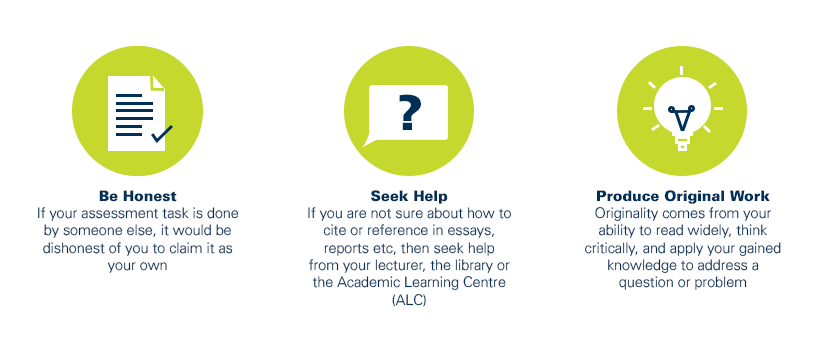
As a CQUniversity student you are expected to act honestly in all aspects of your academic work.
Any assessable work undertaken or submitted for review or assessment must be your own work. Assessable work is any type of work you do to meet the assessment requirements in the unit, including draft work submitted for review and feedback and final work to be assessed.
When you use the ideas, words or data of others in your assessment, you must thoroughly and clearly acknowledge the source of this information by using the correct referencing style for your unit. Using others’ work without proper acknowledgement may be considered a form of intellectual dishonesty.
Participating honestly, respectfully, responsibly, and fairly in your university study ensures the CQUniversity qualification you earn will be valued as a true indication of your individual academic achievement and will continue to receive the respect and recognition it deserves.
As a student, you are responsible for reading and following CQUniversity’s policies, including the Student Academic Integrity Policy and Procedure. This policy sets out CQUniversity’s expectations of you to act with integrity, examples of academic integrity breaches to avoid, the processes used to address alleged breaches of academic integrity, and potential penalties.
What is a breach of academic integrity?
A breach of academic integrity includes but is not limited to plagiarism, self-plagiarism, collusion, cheating, contract cheating, and academic misconduct. The Student Academic Integrity Policy and Procedure defines what these terms mean and gives examples.
Why is academic integrity important?
A breach of academic integrity may result in one or more penalties, including suspension or even expulsion from the University. It can also have negative implications for student visas and future enrolment at CQUniversity or elsewhere. Students who engage in contract cheating also risk being blackmailed by contract cheating services.
Where can I get assistance?
For academic advice and guidance, the Academic Learning Centre (ALC) can support you in becoming confident in completing assessments with integrity and of high standard.
What can you do to act with integrity?