Overview
Claims of misinformation and fake news frequently dominate media headlines- so how do we critically consume information in our current world? How can we produce information that is accurate and evidence-based? In this unit, you will build your media literacy skills to become a critical consumer and creator of information. You will reflect on how technology influences personal and professional information creation and consumption. You will learn how information is created, distorted, and shared in online environments and then interpret texts for information which could be misleading. By engaging with a range of contemporary topics you will build the skills you'll need to manage information on behalf of organisations. Finally, you will cumulate your learning by creating a media product suitable for disseminating accurate information in online media environments.
Details
Pre-requisites or Co-requisites
There are no requisites for this unit.
Important note: Students enrolled in a subsequent unit who failed their pre-requisite unit, should drop the subsequent unit before the census date or within 10 working days of Fail grade notification. Students who do not drop the unit in this timeframe cannot later drop the unit without academic and financial liability. See details in the Assessment Policy and Procedure (Higher Education Coursework).
Offerings For Term 2 - 2026
Attendance Requirements
All on-campus students are expected to attend scheduled classes - in some units, these classes are identified as a mandatory (pass/fail) component and attendance is compulsory. International students, on a student visa, must maintain a full time study load and meet both attendance and academic progress requirements in each study period (satisfactory attendance for International students is defined as maintaining at least an 80% attendance record).
Recommended Student Time Commitment
Each 6-credit Undergraduate unit at CQUniversity requires an overall time commitment of an average of 12.5 hours of study per week, making a total of 150 hours for the unit.
Class Timetable
Assessment Overview
Assessment Grading
This is a graded unit: your overall grade will be calculated from the marks or grades for each assessment task, based on the relative weightings shown in the table above. You must obtain an overall mark for the unit of at least 50%, or an overall grade of 'pass' in order to pass the unit. If any 'pass/fail' tasks are shown in the table above they must also be completed successfully ('pass' grade). You must also meet any minimum mark requirements specified for a particular assessment task, as detailed in the 'assessment task' section (note that in some instances, the minimum mark for a task may be greater than 50%). Consult the University's Grades and Results Policy for more details of interim results and final grades.
All University policies are available on the CQUniversity Policy site.
You may wish to view these policies:
- Grades and Results Policy
- Assessment Policy and Procedure (Higher Education Coursework)
- Review of Grade Procedure
- Student Academic Integrity Policy and Procedure
- Academic Progression Policy and Procedure
- Student Refund and Credit Balance Policy and Procedure
- Complaints Policy and Procedure
- Information and Communications Technology Acceptable Use Policy and Procedure
This list is not an exhaustive list of all University policies. The full list of University policies are available on the CQUniversity Policy site.
Feedback, Recommendations and Responses
Every unit is reviewed for enhancement each year. At the most recent review, the following staff and student feedback items were identified and recommendations were made.
Feedback from Student feedback received by email
Approachability and a virtual open-door policy was appreciated
Continue to provide opportunities for personalised learning support and assessment guidance through 1:1 consultations and assessment guidance
Feedback from Staff Reflection
Fewer HD grades and higher D grades compared to previous years may suggest that rubrics need to be modified
Review marking criteria and descriptors in assessment rubrics to ensure expectations for HD grades are achievable and realistic
Feedback from Unit Evaluation Survey
Updating learning resources and demonstrating the relevance and applicability of learning outcomes to different disciplines has had a positive impact
Continue to refresh learning materials and maintain messaging about how key concepts relate to personal experiences and professional contexts.
- Understand how social media influences information sharing and consumption
- Recognise why misinformation occurs online and how it impacts society
- Apply fact-checking techniques to verify the accuracy of online content
- Analyse differences in how information is presented across sources
- Identify and communicate accurate and ethical information on social media for diverse audiences.
N/A not linked to accreditation
Alignment of Assessment Tasks to Learning Outcomes
| Assessment Tasks | Learning Outcomes | ||||
|---|---|---|---|---|---|
| 1 | 2 | 3 | 4 | 5 | |
| 1 - Reflective Practice Assignment - 20% | |||||
| 2 - Written Assessment - 35% | |||||
| 3 - Portfolio - 45% | |||||
Alignment of Graduate Attributes to Learning Outcomes
| Graduate Attributes | Learning Outcomes | ||||
|---|---|---|---|---|---|
| 1 | 2 | 3 | 4 | 5 | |
| 1 - Communication | |||||
| 2 - Problem Solving | |||||
| 3 - Critical Thinking | |||||
| 4 - Information Literacy | |||||
| 5 - Team Work | |||||
| 6 - Information Technology Competence | |||||
| 7 - Cross Cultural Competence | |||||
| 8 - Ethical practice | |||||
| 9 - Social Innovation | |||||
| 10 - First Nations Knowledges | |||||
| 11 - Aboriginal and Torres Strait Islander Cultures | |||||
Textbooks
There are no required textbooks.
IT Resources
- CQUniversity Student Email
- Internet
- Unit Website (Moodle)
- Social Media
- Adobe Express (Free) or similar program
All submissions for this unit must use the referencing style: American Psychological Association 7th Edition (APA 7th edition)
For further information, see the Assessment Tasks.
f.heaselgrave@cqu.edu.au
Week 1
Begin Date: 13 Jul 2026Module/Topic
Module 1: Consuming Information Online
The Internet Never Lies?
Chapter
Events and Submissions/Topic
Week 2
Begin Date: 20 Jul 2026Module/Topic
The amazing true story of how arguments are made
Chapter
Events and Submissions/Topic
Week 3
Begin Date: 27 Jul 2026Module/Topic
Fake news is not fake news
Chapter
Events and Submissions/Topic
Week 4
Begin Date: 03 Aug 2026Module/Topic
Conspiracy theories
Chapter
Events and Submissions/Topic
Week 5
Begin Date: 10 Aug 2026Module/Topic
Module 2: Moderating Information Online
"New Research finds"...but does it really?
Chapter
Events and Submissions/Topic
Week 6
Begin Date: 17 Aug 2026Module/Topic
The truth about Santa (Where does belief come from?)
Chapter
Events and Submissions/Topic
Vacation Week
Begin Date: 24 Aug 2026Module/Topic
Vacation Period
Chapter
Events and Submissions/Topic
Week 7
Begin Date: 31 Aug 2026Module/Topic
Debunking myths
Chapter
Events and Submissions/Topic
Week 8
Begin Date: 07 Sep 2026Module/Topic
Whose job is it anyway?
Chapter
Events and Submissions/Topic
Week 9
Begin Date: 14 Sep 2026Module/Topic
Module 3: Producing Information Online
'But won't someone think of the children?'
Chapter
Events and Submissions/Topic
Week 10
Begin Date: 21 Sep 2026Module/Topic
Communication Law
Chapter
Events and Submissions/Topic
Week 11
Begin Date: 28 Sep 2026Module/Topic
The Dark Side of the Internet
Chapter
Events and Submissions/Topic
Week 12
Begin Date: 05 Oct 2026Module/Topic
Review Week
Chapter
Events and Submissions/Topic
Exam Week
Begin Date: 12 Oct 2026Module/Topic
Chapter
Events and Submissions/Topic
Vacation/Exam Week
Begin Date: 19 Oct 2026Module/Topic
Chapter
Events and Submissions/Topic
Use of Generative Artificial Intelligence (AI) in Learning Materials in this Unit
Generative AI tools may have been used by academic/teaching staff in the development of learning materials and assessments (for example, for initial drafting, content organisation, activity generation, image creation, editing, summarisation, rubric creation or assessment design). Any AI-assisted content has been critically reviewed, refined, and contextualised by academic staff. The final learning materials, teaching activities, and guidance provided reflect academic judgement and align with CQUniversity learning, teaching, accessibility, and academic integrity requirements.
1 Reflective Practice Assignment
Weighting: 20%
Length: 1000-1150 words
Due: Monday 10 August (Week 5), 10pm
This assessment will encourage you to become aware of your own media and information consumption habits, including what sources and types of information you are most frequently exposed to. The task has two parts. Both should be submitted as one document to Moodle. A Word template is provided on the Moodle site to help structure your response.
Part 1: Observation log (500-550 words total)
For this part, you will track and summarise your everyday information use over 3–5 days. You are not required to change your behaviour — simply notice and record what normally happens.
Step 1: Complete the observation template (Approx. 250 words)
Use the template below to record at least 5 examples of information you encounter online during the observation period.
Observation Template
For each example, note:
- Platform (e.g. Instagram, TikTok, Facebook, YouTube, X, news website)
- Type of content (e.g. news, opinion, video, meme, explainer, shared post)
- Topic (e.g. politics, health, crime, parenting, environment, entertainment)
- Source (e.g. news organisation, influencer, government account, friend/family member)
- How it appeared (e.g. recommended by algorithm, shared by someone I follow, searched for)
Tip: aim to be specific — for example, “ABC News Instagram Reel” rather than just “news”.
Step 2: Reflection on your own consumption patterns (250-300 words)
After completing your log, write a short reflection answering the following prompts:
- What platforms do you rely on most for information?
- What types of topics or content appear most often?
- How much of your information is pushed to you (algorithmic or shared) versus actively searched for?
- How does media (traditional and social) shape what information you see and how you perceive the world? Think about:
- Filter bubbles and echo chambers
- Rhetorical appeals and other argument formations
- Journalistic framing and opinion pieces
- Conspiratorial broadcasting and belief systems
You may write in the first person (“I”), and you should briefly link your observations to ideas from the unit (e.g. algorithms, speed of sharing, or platform design).
Part 2: Identifying and reflecting on misinformation (500-600 words)
For this section, you will find one example of information you have seen online that could be misleading, inaccurate, or oversimplified. You will be supported to answer each of these steps during the weekly online class.
Step 1: Describe the example (100 words)
Briefly explain:
- What was the claim or message?
- Where did you see it? (platform and source)
- What was the topic?
This does not need to be a famous or viral example — everyday content is fine.
Step 2: Misleading content (150-200 words)
Explain why this content could be considered misleading or problematic. For example, you might discuss:
- lack of evidence or sources
- emotionally persuasive language or visuals
- exaggeration, simplification, or missing context
- reliance on personal opinion presented as fact
You are not required to fully fact-check the claim, that will come later in the Unit. The focus here is on why misinformation occurs, not proving something right or wrong.
Step 3: Impact and personal response (250-300 words)
Finally, reflect on:
- How content like this could affect audiences or public understanding
- Why you think posts like this spread easily on social media
- Whether noticing this example has changed the way you think about:
- 1) your own information use, or
- 2) your responsibility when sharing content online
Support your response with unit readings or credible sources where appropriate.
Submission
Please use the assessment template to complete both parts of this task. Submit the complete template to the Moodle submissions site.
Use of AI in this assessment
Level 2 - You may use Al for planning, idea development, and research. Your final submission should show how you have developed and refined these ideas. Any misuse or lack of disclosure regarding the use of AI tools will be considered a breach of academic integrity.
Week 5 Monday (10 Aug 2026) 10:00 pm AEST
Submit via Moodle using the template provided
Vacation Week Monday (24 Aug 2026)
Feedback and comments returned via Moodle portal
Completion and quality of reflection (Part 1): Observation log and reflective discussion is complete and demonstrates understanding of personal information consumption patterns and how social media influences information sharing and exposure (30%)
Recognition and explanation of misinformation (Part 2): Identifies and explains an example of misleading or questionable online content, demonstrating understanding of why misinformation occurs online (25%)
Reflection on social impact and personal responsibility: Reflects on the potential impacts of misinformation on individuals or society and considers personal responsibility as an information consumer and/or sharer (20%)
Written expression and structure: Clarity, coherence, and organisation of written communication, including appropriate tone and structure for an academic reflective task (10%)
Research, referencing and appropriate use of AI: Uses an appropriate range of credible sources (including at least two academic or scholarly references) to support understanding of the task; applies APA 7 referencing conventions accurately and demonstrates appropriate and transparent use of AI‑generated content (15%)
- Understand how social media influences information sharing and consumption
- Recognise why misinformation occurs online and how it impacts society
2 Written Assessment
Length: 1,500 words
Weighting: 40%
Due: Monday 14 September, 10pm (Week 9)
Task overview
In this assessment, you will analyse how the same news issue is presented across three different information environments:
- an academic or evidence‑informed source,
- a traditional mainstream news outlet, and
- a social media platform that allows extended commentary.
The task is designed to help you understand how beliefs are formed, how misinformation or misleading impressions can arise, and how different media environments shape what audiences accept as credible or persuasive.
Issue selection
You will analyse coverage of the recent war on Iran by:
1. An evidence‑informed source such as:
- The Conversation (preferable)
- Brookings Institution
- Lowy Institute
2. A mass media source, such as:
- ABC News
- BBC News
- The Guardian
- Al Jazeera
- SBS
- Reuters
3. Social media source (long‑form*), such as:
- Truth Social
- Substack
- Facebook (public post)
- Medium
*Do not use platforms that rely on short‑form posts (e.g. X, Instagram).
Please choose articles/posts that discuss the implications or impacts of the Iran war as it relates to one or more of the following topics:
- War‑affected civilians
- International trade
- Political relations
- Petrol stations or fuel supply
- Tourism
- Airlines
- Farming and agriculture
- Ridesharing or delivery services
Written analysis (1500 words)
You will compare all three sources, focusing on how the war is communicated across different media environments. Your analysis should include TWO concepts and readings from Weeks 1–8, including:
- belief formation
- media bias
- misinformation vs missing context
- debunking theories (e.g. familiarity backfire, overkill, inoculation)
- conspiracy thinking
- moral panics and techno‑panics
- the role of repetition, emotion, and authority in shaping understanding
You can draw on your learnings and feedback from assessment 1 to inform this assessment. At least 4 scholarly references must be used in your analysis, from both the unit readings and independent research.
Guiding questions to consider when developing your analysis include:
1. What are audiences led to believe? What ideas, assumptions, or conclusions does each source encourage audiences to adopt? How might repeated exposure to this type of coverage influence public belief?
2. Are examples of evidence, expertise, and authority included? How does each source present evidence or expertise? Are claims supported, implied, asserted, or left unverified?
3. How are language, emotion, and persuasive techniques used? What emotional or persuasive elements are used? Are fear, urgency, blame, or certainty emphasised?
4. Are there examples of misinformation, omission, or debunking? Does any source risk misleading audiences through oversimplification, selective emphasis, or repetition? How might debunking concepts studied in the unit help explain why certain messages are persuasive or resistant to correction?
Although you will apply basic knowledge of fact-checking in this assessment, you should focus on how beliefs are created, reinforced, or challenged across different media contexts. Fact‑checking and corrective communication will be developed further in Assessment 3.
Use of GEN AI
You may use Al for planning, idea development, and research. Your final submission should show how you have developed and refined these ideas. You must acknowledge use of AI in your assessment. Any misuse or lack of disclosure regarding the use of AI tools will be considered a breach of academic integrity.
Week 9 Monday (14 Sept 2026) 10:00 pm AEST
Submission via Moodle Portal
Week 11 Monday (28 Sept 2026)
Feedback and comments returned via Moodle portal within two weeks of on-time submissions
Selection and understanding of sources: Selects appropriate evidence‑informed, traditional news, and long‑form social media sources about the same issue and demonstrates accurate understanding of the content across all three (20%)
Comparative analysis: Compares how the issue is communicated across different media environments and analyses how each source shapes audience understanding, assumptions, or interpretations (20%)
Theoretical application: Applies at least two relevant concepts from the unit (e.g. belief formation, media bias, debunking theories, moral or techno‑panics, conspiracy thinking) to analyse how misleading impressions may arise or be reinforced (20%)
Written expression and structure: Coherent structure, clarity, fluency, and organisation of ideas; accurate use of writing conventions; formatting tools used appropriately (15%)
Research: Applies 4 or more credible scholarly sources to support analysis, citing sources from unit readings, with evidence of independent research (15%)
Referencing, and appropriate use of AI: Applies APA 7 referencing conventions accurately, and demonstrates appropriate and transparent use of AI tools, including an AI use statement (10%)
- Recognise why misinformation occurs online and how it impacts society
- Apply fact-checking techniques to verify the accuracy of online content
- Analyse differences in how information is presented across sources
- Identify and communicate accurate and ethical information on social media for diverse audiences.
3 Portfolio
Word count: 2200 words (equivalent)
Weighting: 45%
Due date: Friday 9 October, 10pm
In this assessment, you will build on previous tasks and apply what you have learned about misinformation to undertake a fact-checking challenge that separates truth from fiction in online environments.
There are 3 components to this assessment: 1) A 1200-word fact-checking analysis of 5 online texts 2) The creation of a media product e.g. a social media post (equivalent to approx. 500 words) and a 500-word explanation of the design process and how it addresses the issue of misinformation 3) Submission of a self-assessed marking rubric.
For this task you will choose a current trending topic and analyse how that topic is reported on in five (5) different online texts, for example, news articles, official statements, academic journals, YouTube videos, social media posts or blogsites.
You will identify and factcheck instances of misinformation or misleading content within those texts, including illogical fallacies, defamatory statements and other wide-ranging issues that you will investigate throughout the term, through research. You will be required to include links to your chosen texts as part of your overall portfolio.
Step-by-step instructions
- Choose a current topic or event on trending social media or in mainstream news media
- Find five (5) texts online e.g. ABC media article, The Conversation article, Nine News Facebook page, a government website, an industry report, X post etc., about that topic to analyse
- Analyse the content of those texts for any dubious sources or unsupported claims, or any other information that could misinform or mislead readers, providing a 1200-word explanation of why and how these texts might be problematic. This analysis should be presented in a report format using appropriate headings to structure your work and should draw on scholarly and other credible references to assist with fact-checking your chosen texts
- Following your analysis, create a media product that contains accurate information about your topic that can be shared online e.g. a social media post, infographic, video, or any other relevant format for online distribution, that informs the public about the topic and encourages critical thinking among audiences.
- Your media product can be fun and engaging but needs to be accompanied by a short rationale (500 words) that outlines the decisions you made during the creative process. You should address the following:
- What was the motivation or intent behind the media product? What was the key message or idea you wanted to communicate?
- What were the theories/concepts and readings that informed your design process?
- Was it challenging to put together a piece that was both engaging for the audience, but also accurate? How did you address or overcome those challenges?
- Did you decide to include references in the visual piece? Why, or why not?
- Do you think your artefact has been effective in correcting misinformation about your chosen issue?
You will also be required to submit a self-assessed marking rubric (i.e. you have marked yourself against the marking criteria) to reflect that you have engaged with the requirements and attempted to critically evaluate yourself.
Additional Information
Allowing you a wide choice for your media product encourages you to be creative, build on your skill set and work with your existing strengths. As working professionals, you will likely be required to create visually-pleasing content for distribution on social media and web platforms, however, this is not a design unit and you are not expected to produce professional-quality material.
While you can choose to use any creative tools, we suggest trying Adobe Express (or a similar platform like Canva) for creating your visual material. Adapting an existing Adobe Express template is perfectly acceptable for this assessment.
If you choose to submit a video for your media product, your content should be less than 45 seconds.
Your report should be supported by a comprehensive reference list, with a minimum of 6 references (some of which you will have already used in previous assessments). You should use unit materials and readings along with your own research about the topic.
Use of GenAI tools
You may use Al for planning, idea development, and research. Your final submission should show how you have developed and refined these ideas. Any misuse or lack of disclosure regarding the use of AI tools will be considered a breach of academic integrity.
Submission Instructions
This assessment will be submitted to Moodle. Additional instructions about submitting your assessment are available on the unit Moodle site, or by asking the unit coordinator.
Week 12 Friday (9 Oct 2026) 10:00 pm AEST
Submit via Moodle
Vacation/Exam Week Friday (23 Oct 2026)
Feedback and grades will be returned via Moodle
Fact‑checking analysis and evaluation: Identifies and critically analyses instances of misinformation, misleading content, or unsupported claims across five online texts, applying appropriate fact‑checking techniques and credible evidence (30%)
Application of unit concepts: Applies relevant theories and concepts from the unit (e.g. debunking strategies, belief formation, bias, conspiracy thinking, backfire effects) to explain how misinformation operates and how it can be addressed (20%)
Quality and effectiveness of media product: Produces an engaging media product suitable for online distribution that communicates accurate information, models ethical information practices, and encourages critical thinking among audiences (20%)
Rationale and reflection on design: Provides a clear explanation of the design process and reflective discussion of creative decisions, challenges, and how theory and evidence informed the approach to correcting misinformation (15%)
Research and referencing: Includes a comprehensive reference list using a minimum of six credible sources, applies APA 7 referencing consistently in-text and in the reference list (10%)
Self‑assessment and appropriate use of AI: Submits a completed self‑assessed marking rubric and demonstrates appropriate and transparent use of AI tools (including for content creation where applicable) (5%)
- Understand how social media influences information sharing and consumption
- Apply fact-checking techniques to verify the accuracy of online content
- Analyse differences in how information is presented across sources
- Identify and communicate accurate and ethical information on social media for diverse audiences.
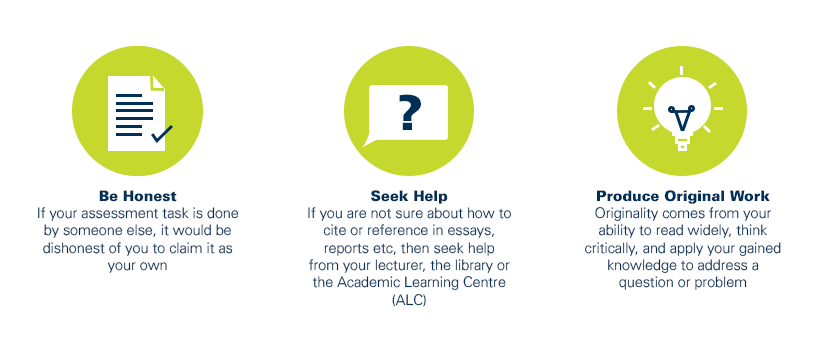
As a CQUniversity student you are expected to act honestly in all aspects of your academic work.
Any assessable work undertaken or submitted for review or assessment must be your own work. Assessable work is any type of work you do to meet the assessment requirements in the unit, including draft work submitted for review and feedback and final work to be assessed.
When you use the ideas, words or data of others in your assessment, you must thoroughly and clearly acknowledge the source of this information by using the correct referencing style for your unit. Using others’ work without proper acknowledgement may be considered a form of intellectual dishonesty.
Participating honestly, respectfully, responsibly, and fairly in your university study ensures the CQUniversity qualification you earn will be valued as a true indication of your individual academic achievement and will continue to receive the respect and recognition it deserves.
As a student, you are responsible for reading and following CQUniversity’s policies, including the Student Academic Integrity Policy and Procedure. This policy sets out CQUniversity’s expectations of you to act with integrity, examples of academic integrity breaches to avoid, the processes used to address alleged breaches of academic integrity, and potential penalties.
What is a breach of academic integrity?
A breach of academic integrity includes but is not limited to plagiarism, self-plagiarism, collusion, cheating, contract cheating, and academic misconduct. The Student Academic Integrity Policy and Procedure defines what these terms mean and gives examples.
Why is academic integrity important?
A breach of academic integrity may result in one or more penalties, including suspension or even expulsion from the University. It can also have negative implications for student visas and future enrolment at CQUniversity or elsewhere. Students who engage in contract cheating also risk being blackmailed by contract cheating services.
Where can I get assistance?
For academic advice and guidance, the Academic Learning Centre (ALC) can support you in becoming confident in completing assessments with integrity and of high standard.
What can you do to act with integrity?