Overview
In Introduction to Strategic Communication, you will explore how communication shapes our world, influences behaviour, and gives meaning to our lives. As a foundation unit serving students from various disciplines, you will engage with key communication theories and learn the art of strategic storytelling within our increasingly networked and digital society. You will examine how professional communicators create narratives to build brands, influence change, and connect with audiences across diverse contexts. Through real-world case studies and practical applications, you will develop essential skills in visual and written communication, providing a solid foundation whether you're pursuing a career in public relations or seeking valuable communication knowledge for your chosen field.
Details
Pre-requisites or Co-requisites
There are no requisites for this unit.
Important note: Students enrolled in a subsequent unit who failed their pre-requisite unit, should drop the subsequent unit before the census date or within 10 working days of Fail grade notification. Students who do not drop the unit in this timeframe cannot later drop the unit without academic and financial liability. See details in the Assessment Policy and Procedure (Higher Education Coursework).
Offerings For Term 1 - 2026
Attendance Requirements
All on-campus students are expected to attend scheduled classes - in some units, these classes are identified as a mandatory (pass/fail) component and attendance is compulsory. International students, on a student visa, must maintain a full time study load and meet both attendance and academic progress requirements in each study period (satisfactory attendance for International students is defined as maintaining at least an 80% attendance record).
Recommended Student Time Commitment
Each 6-credit Undergraduate unit at CQUniversity requires an overall time commitment of an average of 12.5 hours of study per week, making a total of 150 hours for the unit.
Class Timetable
Assessment Overview
Assessment Grading
This is a graded unit: your overall grade will be calculated from the marks or grades for each assessment task, based on the relative weightings shown in the table above. You must obtain an overall mark for the unit of at least 50%, or an overall grade of 'pass' in order to pass the unit. If any 'pass/fail' tasks are shown in the table above they must also be completed successfully ('pass' grade). You must also meet any minimum mark requirements specified for a particular assessment task, as detailed in the 'assessment task' section (note that in some instances, the minimum mark for a task may be greater than 50%). Consult the University's Grades and Results Policy for more details of interim results and final grades.
All University policies are available on the CQUniversity Policy site.
You may wish to view these policies:
- Grades and Results Policy
- Assessment Policy and Procedure (Higher Education Coursework)
- Review of Grade Procedure
- Student Academic Integrity Policy and Procedure
- Academic Progression Policy and Procedure
- Student Refund and Credit Balance Policy and Procedure
- Complaints Policy and Procedure
- Information and Communications Technology Acceptable Use Policy and Procedure
This list is not an exhaustive list of all University policies. The full list of University policies are available on the CQUniversity Policy site.
Feedback, Recommendations and Responses
Every unit is reviewed for enhancement each year. At the most recent review, the following staff and student feedback items were identified and recommendations were made.
Feedback from Student Evaluation Survey
Some students found it initially challenging to fully engage in the blended online / on-campus class format
Provide an enhanced orientation at the start of the unit to help students understand expectations and strategies for effective participation in the blended learning environment.
Feedback from Student Evaluation Survey
A student reported challenges balancing regular engagement expectations with other academic and personal commitments
Provide enhanced support to students to help them develop effective time management strategies for maintaining consistent engagement throughout the term, including promoting connections with the Academic Learning Centre and their time management resources and workshops.
- Define and situate public relations in contemporary society
- Demonstrate understanding of strategic communication theories and their practical application
- Apply ethical reasoning, standards and codes of practice through case study analysis
- Create compelling narratives and messages for diverse stakeholder groups
- Assess communication strategies and their impacts across various organisational contexts.
Not applicable
Alignment of Assessment Tasks to Learning Outcomes
| Assessment Tasks | Learning Outcomes | ||||
|---|---|---|---|---|---|
| 1 | 2 | 3 | 4 | 5 | |
| 1 - Group Discussion - 20% | |||||
| 2 - Case Study - 35% | |||||
| 3 - Portfolio - 45% | |||||
Alignment of Graduate Attributes to Learning Outcomes
| Graduate Attributes | Learning Outcomes | ||||
|---|---|---|---|---|---|
| 1 | 2 | 3 | 4 | 5 | |
| 1 - Communication | |||||
| 2 - Problem Solving | |||||
| 3 - Critical Thinking | |||||
| 4 - Information Literacy | |||||
| 5 - Team Work | |||||
| 6 - Information Technology Competence | |||||
| 7 - Cross Cultural Competence | |||||
| 8 - Ethical practice | |||||
| 9 - Social Innovation | |||||
| 10 - First Nations Knowledges | |||||
| 11 - Aboriginal and Torres Strait Islander Cultures | |||||
Textbooks
There are no required textbooks.
IT Resources
- CQUniversity Student Email
- Internet
- Unit Website (Moodle)
All submissions for this unit must use the referencing style: American Psychological Association 7th Edition (APA 7th edition)
For further information, see the Assessment Tasks.
a.johnson2@cqu.edu.au
Week 1
Begin Date: 09 Mar 2026Module/Topic
Introduction to Strategic Communication
Chapter
Events and Submissions/Topic
Week 2
Begin Date: 16 Mar 2026Module/Topic
Understanding the Communication Landscape
Chapter
Events and Submissions/Topic
Week 3
Begin Date: 23 Mar 2026Module/Topic
Strategic Theory & Planning
Chapter
Events and Submissions/Topic
Week 4
Begin Date: 30 Mar 2026Module/Topic
Ethics, Law & Professional Practice
Chapter
Events and Submissions/Topic
Week 5
Begin Date: 06 Apr 2026Module/Topic
Stakeholder Management & Relationships
Chapter
Events and Submissions/Topic
Week 6
Begin Date: 13 Apr 2026Module/Topic
Storytelling & Content Creation
Chapter
Events and Submissions/Topic
Vacation Week
Begin Date: 20 Apr 2026Module/Topic
Chapter
Events and Submissions/Topic
Week 7
Begin Date: 27 Apr 2026Module/Topic
Media & Channel Management
Chapter
Events and Submissions/Topic
Week 8
Begin Date: 04 May 2026Module/Topic
Issues & Crisis Management
Chapter
Events and Submissions/Topic
Week 9
Begin Date: 11 May 2026Module/Topic
Internal & Change Communication
Chapter
Events and Submissions/Topic
Week 10
Begin Date: 18 May 2026Module/Topic
Government & Political Communication
Chapter
Events and Submissions/Topic
Week 11
Begin Date: 25 May 2026Module/Topic
Future of Strategic Communication
Chapter
Events and Submissions/Topic
Week 12
Begin Date: 01 Jun 2026Module/Topic
Review / Revision
Chapter
Events and Submissions/Topic
Exam Week
Begin Date: 08 Jun 2026Module/Topic
Chapter
Events and Submissions/Topic
Vacation/Exam Week
Begin Date: 15 Jun 2026Module/Topic
Chapter
Events and Submissions/Topic
1 Group Discussion
Overview This assessment evaluates your ability to engage in meaningful discussions about strategic communication concepts, either through in-class participation or online forum engagement. The assessment supports Learning Outcomes 1, 2, and 3, developing your understanding of public relations, strategic communication theories, and ethical reasoning through collaborative dialogue.
Task Description
In this assessment, you will participate in weekly discussions about strategic communication, either in class or through the online forum. You'll engage with key concepts from the weekly materials, share your thoughts, and interact with your peers' ideas. This flexible assessment allows you to earn marks through regular participation between Weeks 2-10, with each week offering up to 2 marks for meaningful contribution. Whether you choose to participate in face-to-face discussions or engage online, the focus is on demonstrating your understanding of the concepts and contributing to collaborative learning. An additional 2 marks awarded based on the overall quality, consistency, and thoughtfulness of your engagement across the entire term.
You can mix and match your engagement by participating in class some weeks, and via the discussion forum in others. All online discussion posts must be completed by Week 11.
Participation Options
Option 1: In-Class Participation
Attend and actively participate in weekly class discussions
Earn up to 2 marks per week (Weeks 2-10)
Participation includes:
- Contributing to group discussions
- Engaging in class activities
- Responding to peer contributions
- Asking relevant questions
Option 2: Online Discussion Forum
Respond to weekly discussion prompts on Moodle
Earn up to 2 marks per week (Weeks 2-10)
Each post should:
- Address the weekly discussion question
- Demonstrate engagement with unit materials
- Include interaction with peers' posts
- Be completed by Week 11
Important Notes
- You may mix participation between in-class and online formats
- Perfect answers are not expected; the focus is on engagement and learning
- Basic familiarity with weekly readings will enhance discussion quality
- Regular participation is encouraged over last-minute forum posts
Due to the nature of this task, the standard 72-hour grace period does not apply to this assessment. We recognise that unexpected circumstances may arise, and encourage students to reach out as early as possible if they are experiencing difficulties, so that appropriate support or adjustments can be considered in line with university policy.
Use of GenAI Tools
Level 3: You may use AI to assist with specific tasks such as drafting text, refining and evaluating your work. You must critically evaluate and modify any AI-generated content you use. Any misuse or lack of disclosure regarding the use of AI tools will be considered a breach of academic integrity.
Assessment Support
- Weekly readings available on Moodle
- Discussion prompts posted at the start of each week
- Unit coordinator available during consultation hours
- Technical support available through TASAC Help Desk
Week 11 Friday (29 May 2026) 11:59 pm AEST
Week 12 Monday (1 June 2026)
You will receive 2 marks per week (Weeks 2-10 = 9 weeks × 2 marks = 18 marks) for participating in either scheduled class discussions OR online forum discussions. These marks are awarded for contribution.
An additional 2 marks are awarded based on the overall quality, consistency, and thoughtfulness of your engagement across the entire term-
Excellent Engagement (2 marks)
Contributions are consistently timely and well-considered
Actively contributes to the learning community by asking thoughtful questions, building on others' ideas, and sharing relevant examples
Demonstrates excellent understanding of unit concepts and their practical applications
Shows evidence of regular and meaningful engagement with weekly content
Good Engagement (1 mark)
Contributions are generally thoughtful and demonstrate good understanding of material
Makes meaningful contributions to discussions, though participation may be irregular or delayed
Shows adequate preparation and engagement, though there is room for more specific examples
Limited Engagement (0 marks)
Participation is irregular with several missing engagements
Contributions (when present) may lack depth, relevance, or connection to unit content
Limited contribution to the collaborative learning environment
Marking will be completed after the final contribution deadline (Friday, Week 11), at which point online discussion boards are locked to ensure accurate calculation. Final marks and feedback will be available by Monday, Week 12. Throughout the term, you will receive informal, formative feedback through in-class discussions, responses to your online forum posts, and email correspondence.
No submission method provided.
- Define and situate public relations in contemporary society
- Demonstrate understanding of strategic communication theories and their practical application
- Apply ethical reasoning, standards and codes of practice through case study analysis
- Create compelling narratives and messages for diverse stakeholder groups
2 Case Study
Overview Strategic communication is a complex interplay of theory, ethics, and practical skill. In this assessment, you will analyse a contemporary communication campaign or crisis, demonstrating your understanding of strategic communication theories, ethical frameworks, and stakeholder engagement as explored in the unit to date. Through critical analysis of a real-world case study, you will show how organisations navigate complex communication challenges in our rapidly evolving media landscape.
Task Description
In this written assessment you will analyse a real-world communication case study. You will be provided with a detailed case study brief that includes background information, media coverage and organisational responses. Your task is to read and understand this material and then write a 1,500 word analysis that examines the organisation’s handling of the event/case.
Think of yourself as a communication consultant looking back at how the situation was managed, and what we can learn from it.
This should be presented in an informal report style. You may use clear headings and sub-headings to organise your work. Your analysis should address the following sections:
Campaign Overview (approx. 200 words)
- Brief summary of the organisation and communication context
- Key timeline of events/activities
- Primary objectives of the communication strategy
Theoretical Analysis (approx. 400 words)
- Which communication theories from Weeks 1-3 are most relevant to this case, and why?
- How did the organisation's approach align (or not align) with these theories?
- What evidence can you find of strategic planning in their approach?
Stakeholder Analysis (approx. 400 words)
- Who were the key stakeholders in this situation?
- How did the organisation manage different stakeholder relationships?
- How effective was their stakeholder engagement?
Ethical Analysis (approx. 300 words)
- How well did the organisation follow professional codes of practice?
- What ethical challenges arose, or could have arisen, and how were they handled?
- Were there any conflicts between ethical obligations to different stakeholders?
Strategic Recommendations (200 words)
- Based on your analysis, what could the organisation have done better?
- Which alternative approaches might have been more effective?
- What are the three most important lessons from this case?
Your writing should be clear and professional, and you may write in the first person where appropriate (e.g., "I believe the organisation should have..."). Support your analysis with specific examples from the case and references to unit materials.
Case Study Options
To be provided on Moodle
Other Information
- You are encouraged to include relevant screenshots, social media examples, and media coverage to support your analysis
- All sources must be properly referenced using APA 7th style
- The word count excludes references and appendices (if applicable)
Alternative Case Selection
If you wish to analyse a different case study, you must obtain approval from the unit coordinator at least two weeks before the submission date. Your proposed case should be:
- From the last three years
- Well-documented with public information
- Relevant to the Asia Pacific region
- Demonstrate clear strategic communication elements
Use of GenAI Tools
Level 3: You may use AI to assist with specific tasks such as drafting text, refining and evaluating your work. You must critically evaluate and modify any AI-generated content you use. All students must include a statement about AI tool use (even if you did not use any AI tools). Guidance on completing this statement is provided on Moodle.
Any misuse or lack of disclosure regarding the use of AI tools will be considered a breach of academic integrity.
Assessment Support
Assessment briefing will be provided in Week 4
Draft review opportunities available during class in Week 6
Week 7 Friday (1 May 2026) 11:59 pm AEST
Submission via Moodle
Week 9 Friday (15 May 2026)
Feedback and grades via Moodle
This assessment is marked against six key criteria:
Attention to Assessment Requirements (5%) – Addresses all assignment requirements, uses an approved case study, and includes all required elements with appropriate detail.
Case Analysis and Understanding (20%) – Demonstrates comprehensive understanding of the case, identifies key issues and stakeholders, and shows insight into both explicit and implicit aspects of the situation.
Application of Strategic Communication Theories and Models (25%) – Effectively applies relevant theories and models from the unit to analyse the case, showing understanding of how theoretical concepts explain communication practices and outcomes.
Stakeholder Analysis (25%) – Identifies relevant stakeholders, analyses their interests and influences, and evaluates how stakeholder considerations shaped communication strategies and outcomes.
Critical Evaluation of Communication Strategies (15%) – Thoughtfully evaluates the effectiveness of communication strategies using appropriate criteria, considering context, constraints, and alternative approaches.
Research, Presentation, and Appropriate Use of AI Tools (10%) – Uses credible sources including unit readings, presents work professionally with minimal errors, and demonstrates original analysis with appropriate acknowledgement of any AI assistance.
Important Note: Excessive or inappropriate use of AI-generated content may result in grade reduction or academic integrity investigation. Students must produce original work demonstrating their own critical thinking and analysis.
A detailed marking rubric showing performance standards from Fail to High Distinction for each criterion is available on Moodle.
- Define and situate public relations in contemporary society
- Demonstrate understanding of strategic communication theories and their practical application
- Apply ethical reasoning, standards and codes of practice through case study analysis
- Assess communication strategies and their impacts across various organisational contexts.
3 Portfolio
Overview This final assessment invites you to step into the role of a communication professional by developing your own PR campaign. You'll create a practical portfolio that demonstrates your understanding of strategic communication while building valuable industry skills.
Task Description
Choose an organisation or cause that interests you and develop a strategic communication plan with supporting materials. This could be a brand you admire, a social cause, or a community organisation.
Components:
Communication Plan (20%) approx. 1000 words.
Your roadmap for success, including:
- Situation analysis (What's the current context?)
- Communication objectives (What do you want to achieve?)
- Target audience analysis (Who are you trying to reach?)
- Key messages (What do you want to communicate?)
- Strategy and tactics (How will you reach your audiences?)
- Timeline (When will activities take place?)
- Evaluation methods (How will you measure success?)
Communication Materials (20%) approx. 200-300 words each.
Create professional examples of (pick 2):
- Press release
- Social media post for one platform
- Professional email to stakeholders
- Blog post
- Newsletter
- Key messages document
- Fact sheet
- Media alert
Plus 1 visual element (required):
- Infographic
- Social media tile
- Campaign poster
- Other visual asset
Reflection (5%) approx. 500 words.
A thoughtful discussion of:
- Your strategic choices and rationale
- Application of unit theories
- Ethical considerations
- Challenges and solutions
Use of GenAI Tools
Level 3: You may use AI to assist with specific tasks such as drafting text, refining and evaluating your work. You must critically evaluate and modify any AI-generated content you use. All students must include a statement about AI tool use (even if you did not use any AI tools). Guidance on completing this statement is provided on Moodle.
Any misuse or lack of disclosure regarding the use of AI tools will be considered a breach of academic integrity.
Assessment Support
- Lecturer consultation hours: Booking information in Moodle
- In-class workshops
- Assessment Q&A forum on Moodle
- Draft review opportunities in tutorials
Week 12 Friday (5 June 2026) 11:59 pm AEST
Submit via Moodle
Vacation/Exam Week Friday (19 June 2026)
Feedback and grades via Moodle
This assessment is marked across three main sections:
Part A: Communication Plan
Situation Analysis – Comprehensive analysis of the communication context with application of unit concepts
Goal and Objectives – Clear, SMART objectives that align with the situation analysis
Strategies and Tactics – Appropriate strategies informed by unit theories and aligned with objectives
Target Audience and Key Messages – Thoughtful audience segmentation and tailored key messages
Timeline – Realistic scheduling of campaign activities with clear connections to campaign elements
Evaluation – Appropriate evaluation methods aligned with campaign objectives
Presentation and Referencing – Professional presentation with accurate referencing and evidence of original work
Part B: Communication Materials
Content Quality – Professional content pieces that effectively communicate key messages and adhere to format requirements
Visual Elements – Appropriate visual design that enhances key messages
Presentation and Referencing – Professional presentation with appropriate source acknowledgement
Reflection
Strategic Integration – Evidence of strategic thinking with cohesive portfolio elements working together
Reflection Quality – Thoughtful explanation of strategic choices with clear links to unit theories, discussion of ethical considerations and challenges, and demonstration of personal engagement with learning
A detailed marking rubric showing performance standards from Fail to High Distinction for each criterion is available on Moodle.
- Define and situate public relations in contemporary society
- Apply ethical reasoning, standards and codes of practice through case study analysis
- Create compelling narratives and messages for diverse stakeholder groups
- Assess communication strategies and their impacts across various organisational contexts.
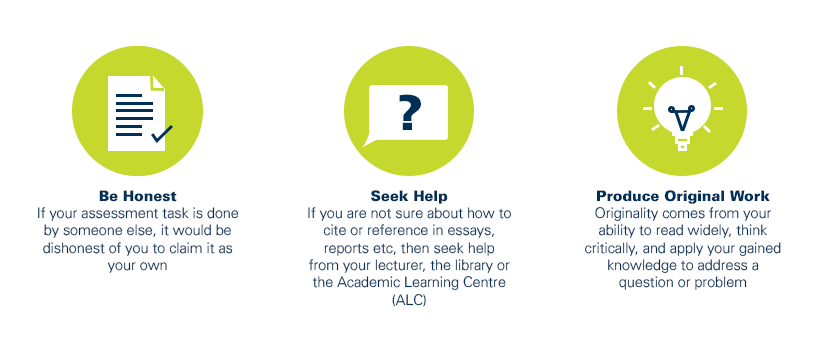
As a CQUniversity student you are expected to act honestly in all aspects of your academic work.
Any assessable work undertaken or submitted for review or assessment must be your own work. Assessable work is any type of work you do to meet the assessment requirements in the unit, including draft work submitted for review and feedback and final work to be assessed.
When you use the ideas, words or data of others in your assessment, you must thoroughly and clearly acknowledge the source of this information by using the correct referencing style for your unit. Using others’ work without proper acknowledgement may be considered a form of intellectual dishonesty.
Participating honestly, respectfully, responsibly, and fairly in your university study ensures the CQUniversity qualification you earn will be valued as a true indication of your individual academic achievement and will continue to receive the respect and recognition it deserves.
As a student, you are responsible for reading and following CQUniversity’s policies, including the Student Academic Integrity Policy and Procedure. This policy sets out CQUniversity’s expectations of you to act with integrity, examples of academic integrity breaches to avoid, the processes used to address alleged breaches of academic integrity, and potential penalties.
What is a breach of academic integrity?
A breach of academic integrity includes but is not limited to plagiarism, self-plagiarism, collusion, cheating, contract cheating, and academic misconduct. The Student Academic Integrity Policy and Procedure defines what these terms mean and gives examples.
Why is academic integrity important?
A breach of academic integrity may result in one or more penalties, including suspension or even expulsion from the University. It can also have negative implications for student visas and future enrolment at CQUniversity or elsewhere. Students who engage in contract cheating also risk being blackmailed by contract cheating services.
Where can I get assistance?
For academic advice and guidance, the Academic Learning Centre (ALC) can support you in becoming confident in completing assessments with integrity and of high standard.
What can you do to act with integrity?