Section: IT Resources
Corrections to the versions of Java and NetBeans to be used. This term students are to use:
- JDK 21 (not JDK 25)
- Apache NetBeans 20 (not Apache NetBeans 28)
Overview
In this unit, you will develop the skills to design and develop GUI-based object-oriented applications using a subset of the Java programming language and its libraries. Defensive programming – an integral component of secure programming – will be introduced and practiced. A focus of the unit will be an emphasis on current best practice in Java application development as it applies to processes, environments, design, coding, testing and documentation.
Details
Pre-requisites or Co-requisites
Pre-requisite: COIT20245 Introduction to Programming
Important note: Students enrolled in a subsequent unit who failed their pre-requisite unit, should drop the subsequent unit before the census date or within 10 working days of Fail grade notification. Students who do not drop the unit in this timeframe cannot later drop the unit without academic and financial liability. See details in the Assessment Policy and Procedure (Higher Education Coursework).
Offerings For Term 1 - 2026
Attendance Requirements
All on-campus students are expected to attend scheduled classes - in some units, these classes are identified as a mandatory (pass/fail) component and attendance is compulsory. International students, on a student visa, must maintain a full time study load and meet both attendance and academic progress requirements in each study period (satisfactory attendance for International students is defined as maintaining at least an 80% attendance record).
Recommended Student Time Commitment
Each 6-credit Postgraduate unit at CQUniversity requires an overall time commitment of an average of 12.5 hours of study per week, making a total of 150 hours for the unit.
Class Timetable
Assessment Overview
Assessment Grading
This is a graded unit: your overall grade will be calculated from the marks or grades for each assessment task, based on the relative weightings shown in the table above. You must obtain an overall mark for the unit of at least 50%, or an overall grade of 'pass' in order to pass the unit. If any 'pass/fail' tasks are shown in the table above they must also be completed successfully ('pass' grade). You must also meet any minimum mark requirements specified for a particular assessment task, as detailed in the 'assessment task' section (note that in some instances, the minimum mark for a task may be greater than 50%). Consult the University's Grades and Results Policy for more details of interim results and final grades.
All University policies are available on the CQUniversity Policy site.
You may wish to view these policies:
- Grades and Results Policy
- Assessment Policy and Procedure (Higher Education Coursework)
- Review of Grade Procedure
- Student Academic Integrity Policy and Procedure
- Academic Progression Policy and Procedure
- Student Refund and Credit Balance Policy and Procedure
- Complaints Policy and Procedure
- Information and Communications Technology Acceptable Use Policy and Procedure
This list is not an exhaustive list of all University policies. The full list of University policies are available on the CQUniversity Policy site.
Feedback, Recommendations and Responses
Every unit is reviewed for enhancement each year. At the most recent review, the following staff and student feedback items were identified and recommendations were made.
Feedback from Student evaluations, feedback from the teaching team and informal feedback.
The new unit materials are well-written and help the students to learn the new content in this unit.
Continue to provide teaching materials and resources of a similar standard.
Feedback from Information from the textbook publisher.
A new updated edition of the textbook will be released in March of 2026. It will have significant changes. We will be required to change the textbook for term 2 2026.
When the new textbook is released, the unit will require significant redevelopment to accommodate the change to the new textbook. Material will also need to be updated to include changes to the Java language.
Feedback from Knowledge about new Java releases.
A new LTS version of Java (25) has been released, and we need to transition to use the new LTS version in 2026. Other software (e.g. NetBeans) should also be transitioned to more recent, up-to-date versions.
Teaching resources will need to be tested and updated to reflect the changes to the Java language and new versions of software to be used in 2026 .
Feedback from Feedback from students and the teaching team.
Program assignments and tutorial exercises were engaging and helped students to understand the concepts being taught.
Continue with similar assessment items that reinforce the concepts being taught in the unit.
- Apply procedural concepts (methods, iteration, selection) to the realisation of object behaviour
- Apply the fundamental practices of defensive programming (encapsulation, testing, input validation), documentation and version control to software development
- Develop GUI based applications that employ inheritance, interfaces, polymorphism, exceptions, lambdas and sequential file processing
- Implement standard algorithms such as searching, sorting, and sequential processing for arrays and generic collections of objects
- Demonstrate command of the subset of the programming language presented in this unit, including its syntax, type system, data representations, scope rules, and libraries.
The Australian Computer Society (ACS), the professional association for Australia's ICT sector, recognises the Skills Framework for the Information Age (SFIA). SFIA is adopted by organisations, governments, and individuals in many countries and provides a widely used and consistent definition of ICT skills. SFIA is increasingly being used when developing job descriptions and role profiles. ACS members can use the tool MySFIA to build a skills profile.
This unit contributes to the following workplace skills as defined by SFIA 8 (the SFIA code is included):
- Software Design (SWDN)
- System Integration and Build (SINT)
- Programming/Software Development (PROG)
- Data modelling and design (DTAN)
- Database Design (DBDS)
- Testing (TEST)
- User experience analysis (UNAN)
- User experience design (HCEV).
Alignment of Assessment Tasks to Learning Outcomes
| Assessment Tasks | Learning Outcomes | ||||
|---|---|---|---|---|---|
| 1 | 2 | 3 | 4 | 5 | |
| 1 - Practical Assessment - 20% | |||||
| 2 - Practical Assessment - 10% | |||||
| 3 - Practical Assessment - 20% | |||||
| 4 - Examination - 50% | |||||
Alignment of Graduate Attributes to Learning Outcomes
| Graduate Attributes | Learning Outcomes | ||||
|---|---|---|---|---|---|
| 1 | 2 | 3 | 4 | 5 | |
| 1 - Knowledge | |||||
| 2 - Communication | |||||
| 3 - Cognitive, technical and creative skills | |||||
| 4 - Research | |||||
| 5 - Self-management | |||||
| 6 - Ethical and Professional Responsibility | |||||
| 7 - Leadership | |||||
| 8 - First Nations Knowledges | |||||
| 9 - Aboriginal and Torres Strait Islander Cultures | |||||
Textbooks
Java How to Program, Early Objects, Global Edition
- 11th Edition (2018)
- Authors: Paul Deitel and Harvey Deitel
- Pearson Education
- USA
- ISBN: 9781292223858
IT Resources
- CQUniversity Student Email
- Internet
- Unit Website (Moodle)
- SceneBuilder 23 (or higher) (available from https://gluonhq.com/products/scene-builder)
- JavaFX 23.0.1
- OpenJDK 25
- Apache NetBeans 28
All submissions for this unit must use the referencing styles below:
For further information, see the Assessment Tasks.
a.jayal@cqu.edu.au
Vacation Week
Begin Date: 22 Dec 2025Module/Topic
Chapter
Events and Submissions/Topic
Week 1
Begin Date: 09 Mar 2026Module/Topic
Java input/output, Arithmetic Operators, Introduction to String class
Chapter
1, 2 and online resources.
Events and Submissions/Topic
Install and test required software for the unit. Install the versions of the software specified in this unit profile (OpenJDK 25 and NetBeans 28). Follow the instructions in the NetBeans guide to test the software.
Week 2
Begin Date: 16 Mar 2026Module/Topic
Control Statements and More About Operators
Chapter
4, 5 and online resources
Events and Submissions/Topic
Week 3
Begin Date: 23 Mar 2026Module/Topic
Classes, Objects, Methods
Chapter
3, 6 and online resources
Events and Submissions/Topic
Tutorial assessment: Part 1 - due in week 3 tutorial class
(Assessment item 2 / Tutorial assessment commences: this work is to be developed and submitted in weekly tutorial classes from week 3 -12)
Week 4
Begin Date: 30 Mar 2026Module/Topic
Arrays and ArrayLists; Introduction to Searching and Sorting.
Chapter
7, 19 and online resources
Events and Submissions/Topic
Tutorial assessment: Part 2 - due in week 4 tutorial class
Programming Assignment 1 - phase 1 due Friday 9:00am (AEST) (Submission of completed assignment due in week 6)
Week 5
Begin Date: 06 Apr 2026Module/Topic
Classes and Objects: A Deeper Look
Chapter
8
Events and Submissions/Topic
Tutorial assessment: Part 3 - due in week 5 tutorial class
Week 6
Begin Date: 13 Apr 2026Module/Topic
Inheritance
Chapter
9
Events and Submissions/Topic
Tutorial assessment: Part 4 - due in week 6 tutorial class
Vacation Week
Begin Date: 20 Apr 2026Module/Topic
Chapter
Events and Submissions/Topic
Week 7
Begin Date: 27 Apr 2026Module/Topic
Polymorphism and Interfaces
Chapter
10
Events and Submissions/Topic
Tutorial assessment: Part 5 - due in week 7 tutorial class
Programming Assignment 1 Due: Week 7 Monday (27 Apr 2026) 9:00 am AEST
Week 8
Begin Date: 04 May 2026Module/Topic
Introduction to JavaFX GUI and Event-Driven Programming
Chapter
12 and online resources
Events and Submissions/Topic
Tutorial assessment: Part 6 - due in week 8 tutorial class
Week 9
Begin Date: 11 May 2026Module/Topic
Generic Collections
Chapter
16
Events and Submissions/Topic
Tutorial assessment: Part 7 - due in week 9 tutorial class
Programming Assignment 2: Phase 1 (GUI) due Tuesday 9:00am (AEST) (submission of completed assignment due in week 12)
Week 10
Begin Date: 18 May 2026Module/Topic
Exception Handling, Files
Chapter
11 and 15
Events and Submissions/Topic
Tutorial assessment: Part 8 - due in week 10 tutorial class
Week 11
Begin Date: 25 May 2026Module/Topic
Strings, Characters and Regular Expressions
Chapter
14 and online resources
Events and Submissions/Topic
Tutorial assessment: Part 9 - due in week 11 tutorial class
Week 12
Begin Date: 01 Jun 2026Module/Topic
Introduction to Version Control; Lambdas; Design Concepts; Review
Chapter
Online resources.
Events and Submissions/Topic
Tutorial assessment: Part 10 - due in week 12 tutorial class
Programming Assignment 2 Due: Week 12 Tuesday (2 June 2026) 5:00 pm AEST
Exam Week
Begin Date: 08 Jun 2026Module/Topic
Chapter
Events and Submissions/Topic
An examination will be scheduled for this unit during the examination block.
Vacation/Exam Week
Begin Date: 15 Jun 2026Module/Topic
Chapter
Events and Submissions/Topic
An examination will be scheduled for this unit during the examination block.
Unit Coordinator: Dr Jacqueline Jarvis
j.jarvis@cqu.edu. au
1 Practical Assessment
This is an individual assignment.
Note: Re-attempts are not allowed for the final submission of this assessment item.
The Task
In this assignment you will develop and test a software application in which you use procedural concepts (methods, iteration, selection) to achieve the realisation of object behaviour.
Note that:
- A separate phase 1 submission is required early in the development period for this assignment.
- You may be asked to demonstrate your understanding of the assignment to the unit coordinator before marks can be awarded.
Further details are in the Programming Assignment 1 specification document available on the Moodle unit website.
AI ASSESSMENT SCALE - AI PLANNING
You may use Al for planning, idea development, and research. Your final submission should show how you have developed and refined these ideas.
Note: For programming assignments you can get examples and ideas from AI, but you must not include code in your program that was generated by AI. You must write the code in your application yourself. If asked, you must be able to explain any of the code submitted and you must be capable of writing similar code under invigilated, test conditions if required to do so. In addition, you must only use the language features and techniques covered in the unit (and course) so far. These are the concepts being tested by the assessment item.
Week 7 Monday (27 Apr 2026) 9:00 am AEST
Note: Phase 1 is due in week 4 - Friday at 9:00am (AEST) (see Moodle for the exact date). The final submission is due Friday of week 6.
Two weeks after submission
- Design and Implementation (and functionality achieved).
- Language Use (Correct use of programming constructs and good programming practices).
- Documentation
- Testing
- Apply procedural concepts (methods, iteration, selection) to the realisation of object behaviour
2 Practical Assessment
This is an individual assignment
Note:
- This assessment is exempted from the 72-hour submission grace period and must be completed by the stated submission date/time, i.e. for on-campus students each weekly tutorial must be submitted in your tutorial and for distance education students each weekly tutorial must be submitted by the due date and time specified for the weekly tutorial in Moodle.
- Re-attempts are not allowed for this assessment item.
The Task
This assessment item is to be developed and submitted as part of your weekly tutorial sessions. It consists of a series of 10 practical tutorial submissions where the tutorial/lab work is to be developed and submitted in the tutorial class in weeks 3 – 12 (inclusive). For on campus students this work is due in the weekly tutorial, NOT the due date shown in Moodle. Moodle cannot have multiple due dates to cater for different tutorial times so the date specified in Moodle is to allow for tutorials held at the end of the week or on weekends. For on campus students no marks will be awarded for work submitted outside the tutorial class or for late submissions unless there are special circumstances (approved by the unit coordinator).
On-campus students
- Due Date: This assessment task must be developed and submitted in your weekly tutorial as and when you are directed to do so by your tutor.
- Marks may be deducted if your tutor is not satisfied with your progress or understanding of the work. Marks are not only awarded for the sample of work submitted during the class. Satisfactory participation in all tutorial class activities is also required to be awarded marks for this assessment item.
- If you have special circumstances (e.g. illness) that prevent you from attending a specific class, please contact your tutor and unit coordinator as soon as you are aware of this. You will be given instructions about what you need to do to complete the assessment work for that week.
Online students
- Submit the sample of your weekly work requested by the unit coordinator by the due date shown on the unit website for the corresponding week. Late submissions will be awarded 0 marks (unless you have been given approval to complete an alternative late submission due to special circumstances).
- The unit coordinator is your tutor and may make arrangements to discuss aspects of the weekly work with you before marks can be awarded.
AI ASSESSMENT SCALE - AI PLANNING
You may use Al for planning, idea development, and research. Your final submission should show how you have developed and refined these ideas.
However, note that there should be no need to use AI when developing solutions to your tutorial exercises. You must be able to demonstrate your understanding of and ability to complete the tutorial work to your tutor.
This task commences with an "in-class" submission of work in week 3 and continues with in-class weekly submissions until the end of week 12. There is a total of 10 weekly submissions. On-campus students must complete and submit the scheduled work in their weekly tutorial.
The marks will be returned to you within a week after the date of submission.
Practical questions in the weekly tutorial will be used to assess your understanding of the topics covered in that week.
To be awarded marks, on campus students are required to participate in all activities in the tutorial and submit the sample of work requested when instructed to do so during the class. The tutor will monitor student progress in class.
To be awarded marks, online students are required to submit their sample of work (i.e. answers to the questions specified by the unit coordinator) by the due date. Online students should contact the unit coordinator if they have any questions about the weekly work and may also be asked to make arrangements to discuss their work before marks can be awarded.
Note that although your are only required to submit answers to selected tutorial questions as part of this assessment item, all the tutorial exercises should be attempted each week. They are all important for your learning and understanding, not only those questions selected for submission.
Each week's work is worth 1 mark. Total for this assessment item is 10%.
- Apply procedural concepts (methods, iteration, selection) to the realisation of object behaviour
- Apply the fundamental practices of defensive programming (encapsulation, testing, input validation), documentation and version control to software development
- Develop GUI based applications that employ inheritance, interfaces, polymorphism, exceptions, lambdas and sequential file processing
- Implement standard algorithms such as searching, sorting, and sequential processing for arrays and generic collections of objects
3 Practical Assessment
This is an individual assignment.
Note: Re-attempts are not allowed for the final submission of this assessment item.
The Task
In this assignment you will use the key constructs and concepts introduced in weeks 1- 10 to develop and test a software application that employs a Graphical User Interface (GUI) and uses inheritance, interfaces, polymorphism, exceptions, generic collections and sequential file processing.
Note that:
- A separate phase 1 submission is required early in the development period for this assignment.
- You may be asked to demonstrate your understanding of the assignment to the unit coordinator before marks can be awarded.
Further details are in the detailed Programming Assignment 2 specification available on the Moodle unit website.
AI ASSESSMENT SCALE - AI PLANNING
You may use Al for planning, idea development, and research. Your final submission should show how you have developed and refined these ideas.
Note: For programming assignments you can get examples and ideas from AI, but you must not include code in your program that was generated by AI. You must write the code in your application yourself. If asked, you must be able to explain any of the code submitted and you must be capable of writing similar code under invigilated, test conditions if required to do so. In addition, you must only use the language features and techniques covered in the unit (and course) so far. These are the concepts being tested by the assessment item.
Week 12 Tuesday (2 June 2026) 5:00 pm AEST
Note: Phase 1 is due on Tuesday of week 9 at 9:00am (AEST) (See Moodle for the exact date). The final submission is due on Tuesday of week 12.
Two weeks after submission
- Design and Implementation (and functionality achieved).
- Language Use (including correct application of classes, inheritance, polymorphism, exception handling and good programming practices).
- Documentation
- Testing
- Apply the fundamental practices of defensive programming (encapsulation, testing, input validation), documentation and version control to software development
- Develop GUI based applications that employ inheritance, interfaces, polymorphism, exceptions, lambdas and sequential file processing
- Implement standard algorithms such as searching, sorting, and sequential processing for arrays and generic collections of objects
Examination
Calculator - non-programmable, no text retrieval, silent only
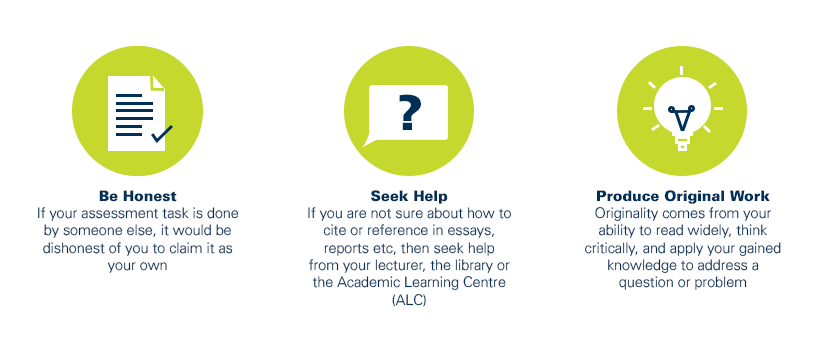
As a CQUniversity student you are expected to act honestly in all aspects of your academic work.
Any assessable work undertaken or submitted for review or assessment must be your own work. Assessable work is any type of work you do to meet the assessment requirements in the unit, including draft work submitted for review and feedback and final work to be assessed.
When you use the ideas, words or data of others in your assessment, you must thoroughly and clearly acknowledge the source of this information by using the correct referencing style for your unit. Using others’ work without proper acknowledgement may be considered a form of intellectual dishonesty.
Participating honestly, respectfully, responsibly, and fairly in your university study ensures the CQUniversity qualification you earn will be valued as a true indication of your individual academic achievement and will continue to receive the respect and recognition it deserves.
As a student, you are responsible for reading and following CQUniversity’s policies, including the Student Academic Integrity Policy and Procedure. This policy sets out CQUniversity’s expectations of you to act with integrity, examples of academic integrity breaches to avoid, the processes used to address alleged breaches of academic integrity, and potential penalties.
What is a breach of academic integrity?
A breach of academic integrity includes but is not limited to plagiarism, self-plagiarism, collusion, cheating, contract cheating, and academic misconduct. The Student Academic Integrity Policy and Procedure defines what these terms mean and gives examples.
Why is academic integrity important?
A breach of academic integrity may result in one or more penalties, including suspension or even expulsion from the University. It can also have negative implications for student visas and future enrolment at CQUniversity or elsewhere. Students who engage in contract cheating also risk being blackmailed by contract cheating services.
Where can I get assistance?
For academic advice and guidance, the Academic Learning Centre (ALC) can support you in becoming confident in completing assessments with integrity and of high standard.
What can you do to act with integrity?