Overview
In an increasingly complex and volatile business environment, efficient business processes are core to an organisation and its business partners in order to accomplish organisational goals. Managing business processes is vital to the designing and managing of organisations. This unit introduces you to the concepts of Business Process Management (BPM) and workflow within organisations. More specifically, this unit outlines concepts, methodologies and phases of BPM, with applicability to a wide range of domains. During the term, you are required to apply techniques to assess and recommend organisational processes. In addition, you will evaluate current business processes and propose improvements that align with organisational strategy. This unit provides you with the skills required to develop a report that: defines and models streamlined business processes; recommends improvements and sustainable practices; and identifies potential organisational change issues.
Details
Pre-requisites or Co-requisites
Pre-requisites: COIT20250 e-Business SystemsAnti-requisites: COIT20235 Business Process Modelling
Important note: Students enrolled in a subsequent unit who failed their pre-requisite unit, should drop the subsequent unit before the census date or within 10 working days of Fail grade notification. Students who do not drop the unit in this timeframe cannot later drop the unit without academic and financial liability. See details in the Assessment Policy and Procedure (Higher Education Coursework).
Offerings For Term 1 - 2026
Attendance Requirements
All on-campus students are expected to attend scheduled classes - in some units, these classes are identified as a mandatory (pass/fail) component and attendance is compulsory. International students, on a student visa, must maintain a full time study load and meet both attendance and academic progress requirements in each study period (satisfactory attendance for International students is defined as maintaining at least an 80% attendance record).
Recommended Student Time Commitment
Each 6-credit Postgraduate unit at CQUniversity requires an overall time commitment of an average of 12.5 hours of study per week, making a total of 150 hours for the unit.
Class Timetable
Assessment Overview
Assessment Grading
This is a graded unit: your overall grade will be calculated from the marks or grades for each assessment task, based on the relative weightings shown in the table above. You must obtain an overall mark for the unit of at least 50%, or an overall grade of 'pass' in order to pass the unit. If any 'pass/fail' tasks are shown in the table above they must also be completed successfully ('pass' grade). You must also meet any minimum mark requirements specified for a particular assessment task, as detailed in the 'assessment task' section (note that in some instances, the minimum mark for a task may be greater than 50%). Consult the University's Grades and Results Policy for more details of interim results and final grades.
All University policies are available on the CQUniversity Policy site.
You may wish to view these policies:
- Grades and Results Policy
- Assessment Policy and Procedure (Higher Education Coursework)
- Review of Grade Procedure
- Student Academic Integrity Policy and Procedure
- Academic Progression Policy and Procedure
- Student Refund and Credit Balance Policy and Procedure
- Complaints Policy and Procedure
- Information and Communications Technology Acceptable Use Policy and Procedure
This list is not an exhaustive list of all University policies. The full list of University policies are available on the CQUniversity Policy site.
Feedback, Recommendations and Responses
Every unit is reviewed for enhancement each year. At the most recent review, the following staff and student feedback items were identified and recommendations were made.
Feedback from Unit Coordinator's Reflection
Self and peer assessment encourages students to reflect on their own contributions while also providing structured feedback on the work of their peers.
Introduce a small self and peer assessment component within the group assessment to promote accountability and reflection.
Feedback from Unit Coordinator and Teaching Team's Reflection
The current e-portfolio tool (Portfolium) is being phased out. Explore alternatives that support ePortfolio development and alignment with assessment requirements.
Investigate alternative platforms (such as PebblePad, Mahara, or LMS-integrated ePortfolio tools) to ensure continuity of student portfolio activities.
- Define and describe the core concepts of business process management in organisations
- Distinguish between various methods, tools and techniques used for process identification, modelling and redesign
- Apply appropriate techniques to model and interpret existing 'as-is' against possible 'to-be' process scenarios
- Identify and evaluate organisational change issues that may arise owing to implementing new business processes and propose solutions
- Demonstrate team work and communication skills through case study analysis and presentation.
The Australian Computer Society (ACS) recognises the Skills Framework for the Information Age (SFIA). SFIA is in use in over 100 countries and provides a widely used and consistent definition of ICT skills. SFIA is increasingly being used when developing job descriptions and role profiles. ACS members can use the tool MySFIA to build a skills profile at https://www.acs.org.au/professionalrecognition/mysfia-b2c.html
This unit contributes to the following workplace skills as defined by SFIA (codes included):
- Information Analysis (INAN)
- Business Analysis (BUAN)
- Research (RSCH)
- Business Process Improvement (BPRE)
- Requirements Definition and Management (REQM)
- Business Modelling (BSMO)
- Change Management (CHMG)
- Technical Specialism (TECH)
- Stakeholder Relationship Management (RLMT)
- Business Risk Management (BURM)
Alignment of Assessment Tasks to Learning Outcomes
| Assessment Tasks | Learning Outcomes | ||||
|---|---|---|---|---|---|
| 1 | 2 | 3 | 4 | 5 | |
| 1 - Portfolio - 30% | |||||
| 2 - Presentation - 20% | |||||
| 3 - Written Assessment - 50% | |||||
Alignment of Graduate Attributes to Learning Outcomes
| Graduate Attributes | Learning Outcomes | ||||
|---|---|---|---|---|---|
| 1 | 2 | 3 | 4 | 5 | |
| 1 - Knowledge | |||||
| 2 - Communication | |||||
| 3 - Cognitive, technical and creative skills | |||||
| 4 - Research | |||||
| 5 - Self-management | |||||
| 6 - Ethical and Professional Responsibility | |||||
| 7 - Leadership | |||||
| 8 - First Nations Knowledges | |||||
| 9 - Aboriginal and Torres Strait Islander Cultures | |||||
Alignment of Assessment Tasks to Graduate Attributes
| Assessment Tasks | Graduate Attributes | ||||||||
|---|---|---|---|---|---|---|---|---|---|
| 1 | 2 | 3 | 4 | 5 | 6 | 7 | 8 | 9 | |
| 1 - Portfolio - 30% | |||||||||
| 2 - Presentation - 20% | |||||||||
| 3 - Written Assessment - 50% | |||||||||
Textbooks
BPM CBOK® Version 4.0: Guide to the Business Process Management Common Body of Knowledge
- Edition: Version 4.0 - English Version (2019)
- Authors: ABPMP International
- ABPMP
- ISBN: 9781704809342
Binding: Paperback
- Binding: Paperback
IT Resources
- CQUniversity Student Email
- Internet
- Unit Website (Moodle)
- Microsoft Visio
- Webcam, microphone and speakers (or headset)
All submissions for this unit must use the referencing style: Harvard (author-date)
For further information, see the Assessment Tasks.
g.galea@cqu.edu.au
Week 1
Begin Date: 09 Mar 2026Module/Topic
The BPM Professional and BPM CBOK®
Chapter
Chapters 1 and 2
Events and Submissions/Topic
Week 2
Begin Date: 16 Mar 2026Module/Topic
Business Process Management
Chapter
Chapter 3
Events and Submissions/Topic
Group formation for Assessments 2 and 3
Week 3
Begin Date: 23 Mar 2026Module/Topic
Process Analysis
Chapter
Chapter 5
Events and Submissions/Topic
Group confirmation and topic
Week 4
Begin Date: 30 Mar 2026Module/Topic
Business Process Modelling (Part 1)
Chapter
Chapter 4 (Sections 4.1.1 to 4.5.12)
Events and Submissions/Topic
e-portfolio 1: Process Analysis (Due Friday)
Week 5
Begin Date: 06 Apr 2026Module/Topic
Business Process Modelling (Part 2)
Chapter
Chapter 4 (Sections 4.6 to 4.12)
Events and Submissions/Topic
Group stand-up meeting
Week 6
Begin Date: 13 Apr 2026Module/Topic
Process Design and Process Performance Measurement
Chapter
Chapters 6 and 7
Events and Submissions/Topic
Presentations Begin (for on-campus and off-campus students)
Vacation Week
Begin Date: 20 Apr 2026Module/Topic
Chapter
Events and Submissions/Topic
Have a good break!
Week 7
Begin Date: 27 Apr 2026Module/Topic
Process Transformation and Architecture
Chapter
Chapters 8 (Sections 8.1 to 8.3.3.4)
Events and Submissions/Topic
e-portfolio 2: Business Process Modelling (Due Friday)
Presentations Continue (for on-campus and off-campus students)
Week 8
Begin Date: 04 May 2026Module/Topic
Process Technologies, Robotic Process Automation and Process Cybersecurity
Chapter
Chapter 8 (Sections 8.4 to 8.6.1.12), and
Additional Readings
Events and Submissions/Topic
Presentations Continue (for on-campus and off-campus students)
Week 9
Begin Date: 11 May 2026Module/Topic
Process Management Organisation and Culture
Chapter
Chapter 9
Events and Submissions/Topic
Presentations End (for on-campus and off-campus students)
Week 10
Begin Date: 18 May 2026Module/Topic
Process Improvement Methodologies - Lean and Six Sigma
Chapter
Harmon, P 2014, Business process change: a business process management guide for managers and process professionals, 3rd edn, Morgan Kaufmann-Elsevier, Waltham, MA. (Chapter 12)
Events and Submissions/Topic
e-portfolio 3: Robotic Process Automation and Process Cybersecurity (Due Friday)
Group stand-up meeting
Week 11
Begin Date: 25 May 2026Module/Topic
Enterprise Process Management
Chapter
Chapter 10
Events and Submissions/Topic
Week 12
Begin Date: 01 Jun 2026Module/Topic
AI and Business Process Management
Chapter
Events and Submissions/Topic
Complete the Unit and Teaching Evaluation.
Case Study Report Due: Week 12 Friday (5 June 2026) 11:45 pm AEST
Exam Week
Begin Date: 08 Jun 2026Module/Topic
Chapter
Events and Submissions/Topic
Vacation/Exam Week
Begin Date: 15 Jun 2026Module/Topic
Chapter
Events and Submissions/Topic
Unit Coordinator: Gitte Galea
Office: Cairns Campus
Email: g.galea@cqu.edu.au
GitHub Account
You are expected to use GitHub in this unit. You will need to create an account (if you do not already have one). Instructions for doing so will be provided on Moodle.
GitHub is a website that may be hosted overseas (including the United States). In setting up an account and using for your journal and project, you will be transferring personal information to GitHub. While there is some risk in transferring your personal information overseas, we believe the benefits to you far outweigh the risk. You will gain experience using a tool widely used in industry, you will have access to tools for version control, backup, and collaboration on your resources, and will have artefacts to show to potential employers. If you have concerns with using GitHub, please contact the Unit Coordinator to discuss options.
1 Portfolio
This is an individual assessment. The purpose of this assessment is for you to develop a portfolio demonstrating your learned knowledge in the discipline of business process management. You are required to create three e-portfolios during the term. An e-portfolio is a learning tool that enables you to accumulate evidence of learning achievement. In this assessment, GitHub will be used as the learning platform. Please refer to the Moodle unit website for instructions on how to develop a GitHub portfolio.
You will have to maintain your e-portfolio such that there is evidence of regular (at least weekly) contributions. Your e-portfolio must be created in a GitHub repository. As this is your own e-portfolio, you should not share with other students. The e-portfolio should use basic Markdown formatting (using just plaintext or uploading a Word document is insufficient). Details of creating the GitHub repository can be found on Moodle.
Your portfolio should capture rich ideas, resources, videos, images, diagrams, and innovative practices around business process management within the frame of the topics identified in the e-portfolio Assessment Details document in Moodle. Please refer to the unit's Moodle website for a detailed description of the task and the due dates for the three e-portfolios.
This assessment uses the default 72-hour grace period after the deadline.
AI ASSESSMENT SCALE - AI PLANNING
You may use AI for planning, idea development, and research. Your final submission should show how you have
developed and refined these ideas.
11 pm Friday of the relevant week
Within two weeks of submission
Your e-portfolio will be assessed on the demonstration of knowledge and understanding of the topic as depicted through the choice of relevant items, technical literacy, justification outlining summary and reasoning for the choice of items, communication and information literacy skills, and the use of correct referencing.
Please refer to the Moodle unit website for specific marking criteria for this assessment.
If your work is found to be copied from another source or done by someone else, academic misconduct penalties will be applied as per the University's policy. Therefore, it is in your best interest to do your own work.
- Define and describe the core concepts of business process management in organisations
- Distinguish between various methods, tools and techniques used for process identification, modelling and redesign
- Knowledge
- Communication
- Cognitive, technical and creative skills
- Research
- Self-management
2 Presentation
In this assessment item, you are required (as a group with three to four members) to design and deliver an oral presentation around a relevant topic of your choice but within the constraints of the Business Process Management (BPM) domain. In the presentation, you are required to demonstrate an understanding of the chosen topic (with critical context) and most importantly demonstrate your presentation skills. Please refer to the unit's Moodle website for a detailed description of the task.
AI ASSESSMENT SCALE - AI PLANNING
You may use AI for planning, idea development, and research. Your final submission should show how you have developed and refined these ideas.
IMPORTANT: This assessment is exempted from the 72-hour submission grace period and must be completed by the stated submission date and time during weeks 6 to 9 sessions.
During weeks 6 to 9
Within two weeks of all groups presenting
Your presentation will be assessed according to the degree to which you demonstrate your capability in the following areas:
1. Visual Appeal
2. Presenter Dynamics and Comprehension
3. Presentation Skills
4. Content and Coverage
5. Presentation Structure/Organisation
Please refer to the Moodle unit website for specific marking criteria for this assessment.
If your work is found to be copied from another source or done by someone else, academic misconduct penalties will be applied as per the University's policy. Therefore, it is in your best interest to do your own work.
- Identify and evaluate organisational change issues that may arise owing to implementing new business processes and propose solutions
- Demonstrate team work and communication skills through case study analysis and presentation.
- Knowledge
- Communication
- Cognitive, technical and creative skills
- Research
- Self-management
3 Written Assessment
For this assessment, your group, consisting of three to four members, is tasked with writing a report based on a given case study. In the report, you are required to analyse current processes, identify shortcomings and propose improvements related to the case study by analysing wider literature in the discipline. You need to demonstrate your analytical skills to evaluate the processes and utilise your communication skills to convey the findings clearly. Analysing and evaluating the effectiveness of the business process management approach in the case study is critical. Please refer to the Moodle unit website for more details about this term's case study.
This assessment uses the default 72-hour grace period after the deadline.
AI ASSESSMENT SCALE - AI COLLABORATION
You may use AI to assist with specific tasks such as drafting text, refining and evaluating your work. You must critically
evaluate and modify any AI-generated content you use.
Week 12 Friday (5 June 2026) 11:45 pm AEST
On the day of Certification of Grades
Your report will be assessed on your understanding of the content with rational arguments based on critical evaluation, your demonstrated capability in the selection and use of scholarly publications, and a combination of your communication, presentation and referencing skills. Please refer to the Moodle unit website for specific marking criteria for this assessment.
If your work is found to be copied from another source or done by someone else, academic misconduct penalties will be applied as per the University's policy. Therefore, it is in your best interest to do your own work.
- Define and describe the core concepts of business process management in organisations
- Apply appropriate techniques to model and interpret existing 'as-is' against possible 'to-be' process scenarios
- Identify and evaluate organisational change issues that may arise owing to implementing new business processes and propose solutions
- Demonstrate team work and communication skills through case study analysis and presentation.
- Knowledge
- Communication
- Cognitive, technical and creative skills
- Research
- Self-management
- Ethical and Professional Responsibility
- Leadership
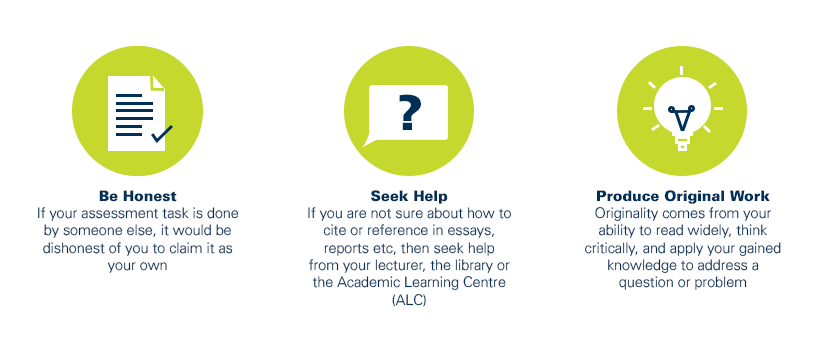
As a CQUniversity student you are expected to act honestly in all aspects of your academic work.
Any assessable work undertaken or submitted for review or assessment must be your own work. Assessable work is any type of work you do to meet the assessment requirements in the unit, including draft work submitted for review and feedback and final work to be assessed.
When you use the ideas, words or data of others in your assessment, you must thoroughly and clearly acknowledge the source of this information by using the correct referencing style for your unit. Using others’ work without proper acknowledgement may be considered a form of intellectual dishonesty.
Participating honestly, respectfully, responsibly, and fairly in your university study ensures the CQUniversity qualification you earn will be valued as a true indication of your individual academic achievement and will continue to receive the respect and recognition it deserves.
As a student, you are responsible for reading and following CQUniversity’s policies, including the Student Academic Integrity Policy and Procedure. This policy sets out CQUniversity’s expectations of you to act with integrity, examples of academic integrity breaches to avoid, the processes used to address alleged breaches of academic integrity, and potential penalties.
What is a breach of academic integrity?
A breach of academic integrity includes but is not limited to plagiarism, self-plagiarism, collusion, cheating, contract cheating, and academic misconduct. The Student Academic Integrity Policy and Procedure defines what these terms mean and gives examples.
Why is academic integrity important?
A breach of academic integrity may result in one or more penalties, including suspension or even expulsion from the University. It can also have negative implications for student visas and future enrolment at CQUniversity or elsewhere. Students who engage in contract cheating also risk being blackmailed by contract cheating services.
Where can I get assistance?
For academic advice and guidance, the Academic Learning Centre (ALC) can support you in becoming confident in completing assessments with integrity and of high standard.
What can you do to act with integrity?