In the Class and Assessment Overview section of the Unit Profile, 1. Online Quiz(zes) under Assessment Overview is changed to 1. Invigilated Quiz (Week 6 Tutorial)
In the Schedule section of the Unit Profile, under Week 6, within Events and Submissions/Topic, Online Quiz Due: Week 6 Friday (21 Aug 2026) 11:45 pm AEST is changed to Invigilated Quiz (Week 6 Tutorial).
In the Assessment Tasks section of the Unit Profile, the Assessment Title from 1 Online Quiz(zes) is changed to 1 Invigilated Quiz (Week 6 Tutorial), and Online Quiz is changed to Invigilated Quiz. Additionally, under Task Description, online quiz is changed to invigilated quiz.
Under Assessment Due Date, Week 6 Friday (21 Aug 2026) 11:45 pm AEST is changed to Week 6 Tutorial.
Overview
Artificial Intelligence (AI) involves developing systems that are autonomous and intelligent. This unit introduces you to contemporary and emerging AI technologies to address problems such as medical diagnosis, manufacturing optimisation and transport scheduling. You will investigate the application of AI technologies in areas such as computer vision, machine learning and deep learning. Fundamental AI concepts will be considered, including artificial neural networks and model validation techniques. You will develop AI systems using industry tools and learn to develop a business case for an AI system.
Details
Pre-requisites or Co-requisites
Pre-requisite: COIT11222 Programming Fundamentals
Important note: Students enrolled in a subsequent unit who failed their pre-requisite unit, should drop the subsequent unit before the census date or within 10 working days of Fail grade notification. Students who do not drop the unit in this timeframe cannot later drop the unit without academic and financial liability. See details in the Assessment Policy and Procedure (Higher Education Coursework).
Offerings For Term 2 - 2026
Attendance Requirements
All on-campus students are expected to attend scheduled classes - in some units, these classes are identified as a mandatory (pass/fail) component and attendance is compulsory. International students, on a student visa, must maintain a full time study load and meet both attendance and academic progress requirements in each study period (satisfactory attendance for International students is defined as maintaining at least an 80% attendance record).
Recommended Student Time Commitment
Each 6-credit Undergraduate unit at CQUniversity requires an overall time commitment of an average of 12.5 hours of study per week, making a total of 150 hours for the unit.
Class Timetable
Assessment Overview
Assessment Grading
This is a graded unit: your overall grade will be calculated from the marks or grades for each assessment task, based on the relative weightings shown in the table above. You must obtain an overall mark for the unit of at least 50%, or an overall grade of 'pass' in order to pass the unit. If any 'pass/fail' tasks are shown in the table above they must also be completed successfully ('pass' grade). You must also meet any minimum mark requirements specified for a particular assessment task, as detailed in the 'assessment task' section (note that in some instances, the minimum mark for a task may be greater than 50%). Consult the University's Grades and Results Policy for more details of interim results and final grades.
All University policies are available on the CQUniversity Policy site.
You may wish to view these policies:
- Grades and Results Policy
- Assessment Policy and Procedure (Higher Education Coursework)
- Review of Grade Procedure
- Student Academic Integrity Policy and Procedure
- Academic Progression Policy and Procedure
- Student Refund and Credit Balance Policy and Procedure
- Complaints Policy and Procedure
- Information and Communications Technology Acceptable Use Policy and Procedure
This list is not an exhaustive list of all University policies. The full list of University policies are available on the CQUniversity Policy site.
Feedback, Recommendations and Responses
Every unit is reviewed for enhancement each year. At the most recent review, the following staff and student feedback items were identified and recommendations were made.
Feedback from Unit coordinator's reflection
The current design of Assignment 1 does not adequately reflect the applied and analytical nature of the Applied Artificial Intelligence.
At present, Assessment 1 is designed as an online quiz, which may not effectively evaluate students’ depth of understanding and conceptual application in Applied Artificial Intelligence. It is recommended that this task be redesigned as a practical, coding-based assessment to more accurately measure students’ applied knowledge, analytical thinking, and problem-solving capabilities.
Feedback from Unit coordinator's reflection
Assignments 2 and 3 could be strengthened in terms of assessment rigour. The current format may not fully capture students’ depth of understanding.
Incorporate a viva or presentation component into Assignments 2 and 3 to more effectively assess students’ conceptual understanding. This will allow markers to directly assess each student’s understanding, confirm authorship of their work, and enhance the overall rigour and integrity of the assessment process.
- Select Artificial Intelligence (AI) techniques to solve authentic problems including social innovation challenges
- Apply industry tools to solve AI problems
- Critique business cases for AI systems against social and ethical frameworks.
The Australian Computer Society (ACS) recognises the Skills Framework for the Information Age (SFIA). SFIA provides a consistent definition of ICT skills. SFIA is adopted by organisations, governments, and individuals in many countries and is increasingly used when developing job descriptions and role profiles.
ACS members can use the tool MySFIA to build a skills profile at https://www.acs.org.au/professionalrecognition/mysfia-b2c.html.
The Australian Computer Society (ACS) recognises the Skills Framework for the Information Age (SFIA). SFIA is adopted by organisations, governments and individuals in many countries and provides a widely used and consistent definition of ICT skills. SFIA is increasingly being used when developing job descriptions and role profiles. ACS members can use the tool MySFIA to build a skills profile.
This unit contributes to the following workplace skills as defined by SFIA 7 (the SFIA code is included)
- Analytics (INAN)
- Systems design (DESN)
- Data modelling and design (DTAN)
- Programming/Software Development (PROG)
Alignment of Assessment Tasks to Learning Outcomes
| Assessment Tasks | Learning Outcomes | ||
|---|---|---|---|
| 1 | 2 | 3 | |
| 1 - Online Quiz(zes) - 35% | |||
| 2 - Group Work - 30% | |||
| 3 - Written Assessment - 35% | |||
Alignment of Graduate Attributes to Learning Outcomes
| Graduate Attributes | Learning Outcomes | ||
|---|---|---|---|
| 1 | 2 | 3 | |
| 1 - Communication | |||
| 2 - Problem Solving | |||
| 3 - Critical Thinking | |||
| 4 - Information Literacy | |||
| 5 - Team Work | |||
| 6 - Information Technology Competence | |||
| 7 - Cross Cultural Competence | |||
| 8 - Ethical practice | |||
| 9 - Social Innovation | |||
| 10 - First Nations Knowledges | |||
| 11 - Aboriginal and Torres Strait Islander Cultures | |||
Alignment of Assessment Tasks to Graduate Attributes
| Assessment Tasks | Graduate Attributes | ||||||||||
|---|---|---|---|---|---|---|---|---|---|---|---|
| 1 | 2 | 3 | 4 | 5 | 6 | 7 | 8 | 9 | 10 | 11 | |
| 1 - Online Quiz(zes) - 35% | |||||||||||
| 2 - Group Work - 30% | |||||||||||
| 3 - Written Assessment - 35% | |||||||||||
Textbooks
There are no required textbooks.
IT Resources
- CQUniversity Student Email
- Internet
- Unit Website (Moodle)
- Anaconda Data Science Platform (Individual - Free Distribution)
- Python 3.10 (or higher)
- Google Colab
All submissions for this unit must use the referencing style: American Psychological Association 7th Edition (APA 7th edition)
For further information, see the Assessment Tasks.
w.kwan@cqu.edu.au
Week 1
Begin Date: 13 Jul 2026Module/Topic
Introduction to AI and Use Cases
Chapter
Artificial Intelligence with Python (2nd edition), 2020, Artasanchez and Joshi,
ISBN 978-1-83921-953-5
• Chapter 1 and 2
Events and Submissions/Topic
Hands-on Workshop
Week 2
Begin Date: 20 Jul 2026Module/Topic
Machine Learning Part 1
Chapter
Artificial Intelligence Programming with Python - From Zero to Hero, 2022,
Perry Xiao, ISBN 978-1-119-82086-4
• Chapter 3.1 - 3.2
Events and Submissions/Topic
Hands-on Workshop
Week 3
Begin Date: 27 Jul 2026Module/Topic
Machine Learning Part 2
Chapter
Artificial Intelligence Programming with Python - From Zero to Hero, 2022,
Perry Xiao, ISBN 978-1-119-82086-4
• Chapter 3.3 - 3.4
Events and Submissions/Topic
Hands-on Workshop
Week 4
Begin Date: 03 Aug 2026Module/Topic
Machine Learning Part 3
Chapter
Artificial Intelligence Programming with Python - From Zero to Hero, 2022,
Perry Xiao, ISBN 978-1-119-82086-4
• Chapter 3.6
Events and Submissions/Topic
Hands-on Workshop
Week 5
Begin Date: 10 Aug 2026Module/Topic
Search Techniques
Chapter
Artificial Intelligence with Python (2nd edition), 2020, Artasanchez and Joshi,
ISBN 978-1-83921-953-5
• Chapter 10
Events and Submissions/Topic
Hands-on Workshop
Week 6
Begin Date: 17 Aug 2026Module/Topic
Metaheuristic Search
Chapter
Artificial Intelligence with Python (2nd edition), 2020, Artasanchez and Joshi,
ISBN 978-1-83921-953-5
• Chapter 11
Optimization Algorithms, 2024, Khamis, A., ISBN 978-1-63343-883-5
• Chapter 9
Events and Submissions/Topic
Hands-on Workshop
Online Quiz Due: Week 6 Friday (21 Aug 2026) 11:45 pm AEST
Vacation Week
Begin Date: 24 Aug 2026Module/Topic
Break Week
Chapter
Events and Submissions/Topic
Week 7
Begin Date: 31 Aug 2026Module/Topic
Artificial Neural Networks
Chapter
Artificial Intelligence with Python (2nd edition), 2020, Artasanchez and Joshi,
ISBN 978-1-83921-953-5
• Chapter 19
Artificial Intelligence Programming with Python - From Zero to Hero, 2022,
Perry Xiao, ISBN 978-1-119-82086-4
• Chapter 4
Events and Submissions/Topic
Hands-on Workshop
Week 8
Begin Date: 07 Sep 2026Module/Topic
Convolutional Neural Networks (CNN)
Chapter
Artificial Intelligence with Python (2nd edition), Artasanchez and Joshi, ISBN
978-1-83921-953-5
• Chapter 21
Artificial Intelligence Programming with Python - From Zero to Hero, 2022,
Perry Xiao, ISBN 978-1-119-82086-4
• Chapter 4.3 - 4.8
Events and Submissions/Topic
Hands-on Workshop
Project Due: Week 8 Friday (11 Sept 2026) 11:45 pm AEST
Week 9
Begin Date: 14 Sep 2026Module/Topic
CNN and Transfer Learning
Chapter
Artificial Intelligence Programming with Python - From Zero to Hero, 2022,
Perry Xiao, ISBN 978-1-119-82086-4
• Chapter 5
Events and Submissions/Topic
Hands-on Workshop
Week 10
Begin Date: 21 Sep 2026Module/Topic
Natural Language Processing (NLP)
Chapter
Artificial Intelligence Programming with Python - From Zero to Hero, 2022,
Perry Xiao, ISBN 978-1-119-82086-4
• Chapter 10
Events and Submissions/Topic
Hands-on Workshop
Week 11
Begin Date: 28 Sep 2026Module/Topic
Responsible AI Development
Chapter
Introduction to Responsible AI: Implement Ethical AI Using Python, 2023, Manure et al., ISBN 978-1-4842-9981-4
• Chapters 1 and 2
Responsible AI Algorithm Design, LinkedIn Learning, Berkun, I., URL:
https://www.linkedin.com/learning/responsible-ai-algorithm-design/welcome-to-responsible-ai?u=2147761
Events and Submissions/Topic
Hands-on Workshop
Week 12
Begin Date: 05 Oct 2026Module/Topic
Advanced AI Computing
Chapter
AI at the Edge: Solving Real-World Problems with Embedded Machine
Learning, 2023, Daniel Situnayake, Jenny Plunkett, ISBN 978-1-098-12020-7
• Chapters 1-2, 8-9
Events and Submissions/Topic
Hands-on Workshop
Individual Due: Week 12 Friday (9 Oct 2026) 11:45 pm AEST
Exam Week
Begin Date: 12 Oct 2026Module/Topic
Chapter
Events and Submissions/Topic
Vacation/Exam Week
Begin Date: 19 Oct 2026Module/Topic
Chapter
Events and Submissions/Topic
Unit Coordinator: Associate Professor Paul Kwan
Email: w.kwan@cqu.edu.au
Staff Profile: https://staff-profiles.cqu.edu.au/home/view/26855
1 Online Quiz(zes)
Assessment 1 consists of an online quiz based on the material covered in Weeks 1–5. The quiz is designed to assess students’ understanding of key AI concepts and their ability to apply AI knowledge, critical thinking, and reasoning skills to solve real-world problems.
Week 6 Friday (21 Aug 2026) 11:45 pm AEST
Scores will be made available.
Assessment 1 will consist of primarily scenario-based multiple-choice questions (MCQs) that require critical thinking. The questions are designed to evaluate your understanding of the topics covered in Lectures 1-5, with a specific focus on practical applications and problem-solving. Please review the relevant lecture materials to prepare for the assessment.
Additional information will be provided on the Moodle site.
- Select Artificial Intelligence (AI) techniques to solve authentic problems including social innovation challenges
- Problem Solving
- Critical Thinking
- Information Literacy
- Information Technology Competence
2 Group Work
Assignment 2 is a group-based project that requires students to collaboratively develop and evaluate an AI solution for a real-world problem. The assessment emphasises the application of AI concepts, tools, and techniques to practical scenarios, as well as the justification of design choices and critical evaluation of the proposed solution.
Detailed information, including the project description, datasets, and relevant resources, is available on the Moodle site. Groups may be formed with assistance from tutors, with a maximum group size of three students.
Although the project is completed in groups, individual contributions will be assessed. While group members may receive similar marks where contributions are comparable, each student's grade will reflect the quality and extent of their individual participation and contribution to the project.
Week 8 Friday (11 Sept 2026) 11:45 pm AEST
Submit via Moodle Link
Will be Released on Moodle
A detailed rubric and marking guide will be made available on Moodle as part of the comprehensive assessment description. This resource will provide clear information on the assessment requirements, performance standards, and marking criteria used to evaluate student submissions. Students are strongly encouraged to review the rubric carefully to gain a thorough understanding of the expectations for the assessment and how their work will be graded.
- Apply industry tools to solve AI problems
- Critique business cases for AI systems against social and ethical frameworks.
- Communication
- Problem Solving
- Critical Thinking
- Information Literacy
- Team Work
- Information Technology Competence
- Cross Cultural Competence
- Ethical practice
- Social Innovation
3 Written Assessment
Assignment 3 is an individual assessment task in which students are required to develop a written report based on a real-world use case provided. Drawing on the knowledge and skills acquired throughout the unit, students will analyse the case, evaluate potential AI solutions, and provide well-justified recommendations supported by relevant evidence and reasoning.
Week 12 Friday (9 Oct 2026) 11:45 pm AEST
Upon grade certification
The assessment will be evaluated based on the depth of understanding demonstrated from the unit content, the application of relevant AI concepts and principles, and the ability to critically analyse the real-world scenario using recognised international AI standards, ethical frameworks, and best practices. Students will be expected to provide well-reasoned arguments and evidence-based recommendations that reflect both technical and ethical considerations.
A detailed marking rubric and assessment guide will be made available on Moodle.
- Select Artificial Intelligence (AI) techniques to solve authentic problems including social innovation challenges
- Apply industry tools to solve AI problems
- Critique business cases for AI systems against social and ethical frameworks.
- Communication
- Problem Solving
- Critical Thinking
- Information Literacy
- Information Technology Competence
- Cross Cultural Competence
- Ethical practice
- Social Innovation
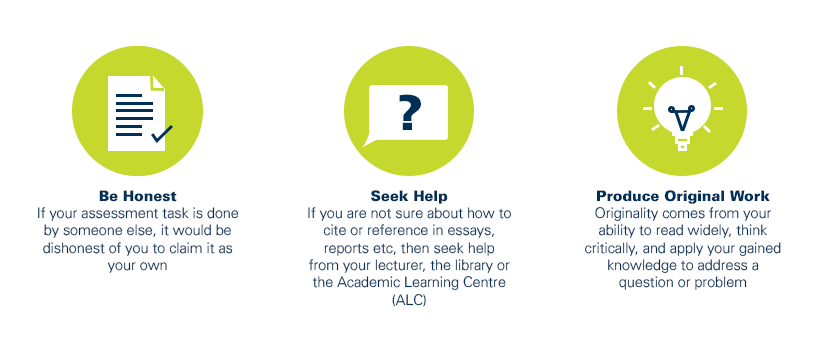
As a CQUniversity student you are expected to act honestly in all aspects of your academic work.
Any assessable work undertaken or submitted for review or assessment must be your own work. Assessable work is any type of work you do to meet the assessment requirements in the unit, including draft work submitted for review and feedback and final work to be assessed.
When you use the ideas, words or data of others in your assessment, you must thoroughly and clearly acknowledge the source of this information by using the correct referencing style for your unit. Using others’ work without proper acknowledgement may be considered a form of intellectual dishonesty.
Participating honestly, respectfully, responsibly, and fairly in your university study ensures the CQUniversity qualification you earn will be valued as a true indication of your individual academic achievement and will continue to receive the respect and recognition it deserves.
As a student, you are responsible for reading and following CQUniversity’s policies, including the Student Academic Integrity Policy and Procedure. This policy sets out CQUniversity’s expectations of you to act with integrity, examples of academic integrity breaches to avoid, the processes used to address alleged breaches of academic integrity, and potential penalties.
What is a breach of academic integrity?
A breach of academic integrity includes but is not limited to plagiarism, self-plagiarism, collusion, cheating, contract cheating, and academic misconduct. The Student Academic Integrity Policy and Procedure defines what these terms mean and gives examples.
Why is academic integrity important?
A breach of academic integrity may result in one or more penalties, including suspension or even expulsion from the University. It can also have negative implications for student visas and future enrolment at CQUniversity or elsewhere. Students who engage in contract cheating also risk being blackmailed by contract cheating services.
Where can I get assistance?
For academic advice and guidance, the Academic Learning Centre (ALC) can support you in becoming confident in completing assessments with integrity and of high standard.
What can you do to act with integrity?