Overview
In this unit, you will learn key concepts of Information and Communication Technology Project Management from both a traditional waterfall and Agile perspective. You will apply project management principles and use project management software with the aim of delivering successful projects. Industry standards, quality assurance, professional ethics, social, cultural, and legal issues relevant to the theories and principles of project management will also be covered.
Details
Pre-requisites or Co-requisites
Pre-requisite: COIT11226 Systems Analysis Anti-requisite: COIS13064 ICT Project Management
Important note: Students enrolled in a subsequent unit who failed their pre-requisite unit, should drop the subsequent unit before the census date or within 10 working days of Fail grade notification. Students who do not drop the unit in this timeframe cannot later drop the unit without academic and financial liability. See details in the Assessment Policy and Procedure (Higher Education Coursework).
Offerings For Term 1 - 2026
Attendance Requirements
All on-campus students are expected to attend scheduled classes - in some units, these classes are identified as a mandatory (pass/fail) component and attendance is compulsory. International students, on a student visa, must maintain a full time study load and meet both attendance and academic progress requirements in each study period (satisfactory attendance for International students is defined as maintaining at least an 80% attendance record).
Recommended Student Time Commitment
Each 6-credit Undergraduate unit at CQUniversity requires an overall time commitment of an average of 12.5 hours of study per week, making a total of 150 hours for the unit.
Class Timetable
Assessment Overview
Assessment Grading
This is a graded unit: your overall grade will be calculated from the marks or grades for each assessment task, based on the relative weightings shown in the table above. You must obtain an overall mark for the unit of at least 50%, or an overall grade of 'pass' in order to pass the unit. If any 'pass/fail' tasks are shown in the table above they must also be completed successfully ('pass' grade). You must also meet any minimum mark requirements specified for a particular assessment task, as detailed in the 'assessment task' section (note that in some instances, the minimum mark for a task may be greater than 50%). Consult the University's Grades and Results Policy for more details of interim results and final grades.
All University policies are available on the CQUniversity Policy site.
You may wish to view these policies:
- Grades and Results Policy
- Assessment Policy and Procedure (Higher Education Coursework)
- Review of Grade Procedure
- Student Academic Integrity Policy and Procedure
- Academic Progression Policy and Procedure
- Student Refund and Credit Balance Policy and Procedure
- Complaints Policy and Procedure
- Information and Communications Technology Acceptable Use Policy and Procedure
This list is not an exhaustive list of all University policies. The full list of University policies are available on the CQUniversity Policy site.
Feedback, Recommendations and Responses
Every unit is reviewed for enhancement each year. At the most recent review, the following staff and student feedback items were identified and recommendations were made.
Feedback from Student Unit and Teaching Evaluation
There are too many slides in week 4 (risks).
Reduce the number of slides in Week 4 by consolidating key concepts.
Feedback from Unit Coordinator's Reflection
Tutorials currently lack activities that introduce the hybrid methodology.
Include targeted activities in tutorials to support the introduction of the hybrid methodology.
- Apply Agile project scoping, scheduling, and velocity management tools and procedures
- Apply predictive project planning, scheduling, and resource management tools and procedures
- Evaluate project status and recommend appropriate corrective action where necessary
- Assess the ethical, social, cultural, and legal impacts of projects on diverse stakeholders.
Australian Computer Society (ACS) recognises the Skills Framework for the Information Age (SFIA). SFIA is in use in over 100 countries and provides a widely used and consistent definition of ICT skills. SFIA is increasingly being used when developing job descriptions and role profiles.
ACS members can use the tool MySFIA to build a skills profile at https://www.acs.org.au/professionalrecognition/mysfia-b2c.html
This unit contributes to the following workplace skills as defined by SFIA. The following version 7 SFIA codes are included:
- Strategic planning ITSP
- Business analysis BUAN
- Project management PRMG
- Programme management PGMG
- Portfolio management POMG
- Change management CHMG
Alignment of Assessment Tasks to Learning Outcomes
| Assessment Tasks | Learning Outcomes | |||
|---|---|---|---|---|
| 1 | 2 | 3 | 4 | |
| 1 - Presentation - 30% | ||||
| 2 - Online Quiz(zes) - 30% | ||||
| 3 - Written Assessment - 40% | ||||
Alignment of Graduate Attributes to Learning Outcomes
| Graduate Attributes | Learning Outcomes | |||
|---|---|---|---|---|
| 1 | 2 | 3 | 4 | |
| 1 - Communication | ||||
| 2 - Problem Solving | ||||
| 3 - Critical Thinking | ||||
| 4 - Information Literacy | ||||
| 5 - Team Work | ||||
| 6 - Information Technology Competence | ||||
| 7 - Cross Cultural Competence | ||||
| 8 - Ethical practice | ||||
| 9 - Social Innovation | ||||
| 10 - First Nations Knowledges | ||||
| 11 - Aboriginal and Torres Strait Islander Cultures | ||||
Alignment of Assessment Tasks to Graduate Attributes
| Assessment Tasks | Graduate Attributes | ||||||||||
|---|---|---|---|---|---|---|---|---|---|---|---|
| 1 | 2 | 3 | 4 | 5 | 6 | 7 | 8 | 9 | 10 | 11 | |
| 1 - Presentation - 30% | |||||||||||
| 2 - Online Quiz(zes) - 30% | |||||||||||
| 3 - Written Assessment - 40% | |||||||||||
Textbooks
There are no required textbooks.
IT Resources
- CQUniversity Student Email
- Internet
- Unit Website (Moodle)
- Microsoft Project
- Webcam and headset
- Access to Microsoft Office
- Taiga server
All submissions for this unit must use the referencing style: Harvard (author-date)
For further information, see the Assessment Tasks.
s.kutty@cqu.edu.au
1 Introduction
Begin Date: 09 Mar 2026Module/Topic
ICT project management concepts
Chapter
The weekly readings are available via the unit website:
- Part 1 Introduction and Overview (Haugan 2010). Haugan, GT 2010. Project management fundamentals: key concepts and methodology, 2nd ed, Oakland, Berrett-Hoehler.
- Pp. 26-42 of 2 Scrum and eXtreme programming (Hunt 2018). Hunt, A 2018. PMI-ACP project management institute agile certified practitioner exam study guide.
- Pp. 115-128 of 4 Agile Initiation and Stakeholder Engagement (Hunt 2018)
Events and Submissions/Topic
2 Agile
Begin Date: 16 Mar 2026Module/Topic
Agile scope and schedule
Chapter
- Pp. 180-189 of 6 Agile Estimation and Planning (Hunt 2018)
- Pp. 218-223 of 7 Effective Team Performance on Agile Projects (Hunt 2018)
Events and Submissions/Topic
3 Predictive Scope & Schedule
Begin Date: 23 Mar 2026Module/Topic
Modelling of ICT scenarios
Chapter
- 5 Developing the Schedule (Gido 2018). Gido, J 2018. Successful project management. 7th ed., Cengage.
Events and Submissions/Topic
4 Risks
Begin Date: 30 Mar 2026Module/Topic
Prioritisation, assessment and management of ICT risks
Chapter
- 4 Teams (Lientz & Larssen 2006). Lientz, BP & Larssen, L 2006. Risk management for IT projects: how to deal with over 150 issues and risks, Routledge.
- 7 Managing Risk (Larson & Gray 2024). Larson, EW & Gray, CF 2015. Project management - A Socio-Technical Approach. 9th ed., McGraw Hill.
Events and Submissions/Topic
Quiz 1 for Assessment 2 is now available. It will be open starting from Week 4 Monday (30 Mar 2026) 11:00 pm AEST.
5 Quality
Begin Date: 06 Apr 2026Module/Topic
Assessment using ICT metrics, Pareto charts and Fault Tree Analysis
Chapter
- 8 Project Quality Management (PMI 2013). PMI 2013, Software extension to the PMBOK guide. 5th edn, Project Management Institute.
Events and Submissions/Topic
6 Predictive Resourcing, COCOMO, PERT & Monte Carlo
Begin Date: 13 Apr 2026Module/Topic
Improving the estimation of ICT task durations
Chapter
- No specific chapter from any specific textbook. Custom made lecture slides are available on the Moodle unit website where the references are provided at the end of the lecture slides.
Events and Submissions/Topic
Assessment 2: Quiz 1
Due: Week 6 Friday (17 Apr 2026) 11:00 pm AEST
Assessment 3: Part A: Group formation. Due: Week 6 Monday (13 Apr 2026) 11:00 pm AEST
Non-teaching Week
Begin Date: 20 Apr 2026Module/Topic
Chapter
Non-teaching week
Events and Submissions/Topic
7 Predictive Costs including Earned Value Management
Begin Date: 27 Apr 2026Module/Topic
Evaluation of a project's schedule and costs
Chapter
- 7 Determining Costs, Budget and Earned Value (Gido 2018)
Events and Submissions/Topic
Quiz 2 for Assessment 2 is now available. It will be open starting from Week 7 Monday (27 Apr 2026) 11:00 pm AEST.
8 Costs & timelines of Agile projects; Lean & Kanban
Begin Date: 04 May 2026Module/Topic
Costs & timelines of Agile projects; Lean & Kanban
Chapter
- 3 Key Aspects of Additional Agile Methodologies (Hunt 2018)
Events and Submissions/Topic
Assessment 3: Part B - Milestone report Due: Week 8 Monday (4 May 2026) 11:00 pm AEST
9 Stakeholders & Organisational Structures
Begin Date: 11 May 2026Module/Topic
Designing organisational structures based on ICT systems architectures; Hybrid Project Management
Chapter
- No specific chapter from any specific textbook. Custom made lecture slides are available on the Moodle unit website where the references are provided at the end of the lecture slides.
Events and Submissions/Topic
Assessment 2: Quiz 2 Due: Week 9 Friday (15 May 2026) 11:00 pm AEST
10 Evaluating Social and Legal Impacts and Closing the Project
Begin Date: 18 May 2026Module/Topic
Evaluating Social and Legal Impacts and Closing the Project
Chapter
- Custom made lecture slides are available for social and legal impacts of Project on the Moodle unit website where the references are provided at the end of the lecture slides.
- 9 Closing the Project (Gido 2015). Gido, J 2015. Successful project management. 6th ed., Cengage.
Events and Submissions/Topic
11 Emerging Trends and Technologies
Begin Date: 25 May 2026Module/Topic
Emerging Trends & Technologies in Project Management
Chapter
- No specific chapter from any specific textbook. Custom made lecture slides are available on the Moodle unit website where the references are provided at the end of the lecture slides.
Events and Submissions/Topic
12 Unit Review/Industry Guest Speaker Session
Begin Date: 01 Jun 2026Module/Topic
Unit Review OR Industry Guest Speaker Session
Chapter
- Unit Review OR Industry Guest Speaker Session
Events and Submissions/Topic
Assessment 3: Part C - Final report & Part D - Individual reflection Due: Week 12 Monday (1 June 2026) 11:00 pm AEST
Assessment-3: Part E - In-class group presentations during Week-12 tutorial session.
Complete the Unit evaluation.
Unit Coordinator: Dr. Sangeetha Kutty
Level 21, 160 Ann Street, Brisbane Campus
Email: s.kutty@cqu.edu.au (Preferred Contact)
1 Presentation
Your work will be assessed individually, with this assignment contributing 30% to the final unit grade. The version provided here is a condensed overview; the full assignment details are available on the unit website.
Objectives
The objective of this assignment is to provide you with practical experience in adaptive project management. Your role will be that of a project manager overseeing an adaptive ICT project. You will be responsible for a range of tasks, including but not limited to:
- Create and maintain a product backlog
- Develop a sprint plan
- Manage risk issues
- Present a sprint review
- Identify ethical impacts
The project is scheduled to be completed in 2 sprints. The first sprint has already been finished, and now it's time to review it and plan for the second sprint.
1. Create a plan to reflect the project's progress
At the end of Sprint 1, you will receive a project plan and development files for an ICT project. Your task is to use the designated project management tool to create a plan that accurately reflects the progress made so far.
2. Create Sprint 2 Plan
You need to create a plan for Sprint 2.
3. Present Sprint 1 Review and Sprint 2 Plan
You will present a review of Sprint 1 and your Sprint 2 plan.
You will have 10-12 minutes to present your project. You must record and submit your presentation and the taiga project file (*.json). Your recorded video should be framed to include the presenter, your audience (if any), and your desktop showing the Taiga project.
Plagiarism
Sharing ideas about project management concepts and techniques between individuals is encouraged. Any ideas you reuse should be referenced. Sharing project management files or copying, for example, user stories, subtasks, issues, or controls, between individuals will be considered plagiarism. If you doubt whether you can share something, first obtain email consent from your lecturer.
AI Assessment Scale - AI Collaboration
You may use AI to assist with specific tasks such as drafting text, refining and evaluating your work. You must critically evaluate and modify any AI-generated content you use.
This assignment will be submitted online through the Moodle unit website.
The full specification for this assessment and the marking criteria are available on the Moodle unit website.
Week 5 Friday (10 Apr 2026) 11:00 pm AEST
Submit by the due date. The 72-hour grace period applies to this assessment unless you are notified otherwise.
Week 7 Friday (1 May 2026)
Within 2 weeks of the due date or within 2 weeks of submission (whichever is the later)
For this task, you will be assessed individually. Your work will be evaluated based on how well you implement and present various elements, including backlog, user stories, sprint plans, taskboard, issues, risks, ethical and legal considerations, individual presence, and presentation content. You can find a comprehensive marking template on the unit website along with the assignment details.
- Apply Agile project scoping, scheduling, and velocity management tools and procedures
- Assess the ethical, social, cultural, and legal impacts of projects on diverse stakeholders.
- Communication
- Problem Solving
- Critical Thinking
- Information Technology Competence
2 Online Quiz(zes)
For the complete version of the assignment, you can check out the unit website as this is just a summarised version.
Time Management
To prepare for Quiz 1, kindly complete all the activities in the unit, including those in Week 4. You can take Quiz 1 once you have finished the Week 5 activities. We suggest using the Week 5 and non-teaching week to finish Quiz 1.
To prepare for Quiz 2, please complete all the activities for the unit, including those for Week 8. Aim to finish them by the end of the Week 8. You may attempt the quiz as many times as needed.
Objectives
The purpose of this task is to provide you with hands-on experience in quality and risk management, as well as predictive project management. Your task is to carry out project management duties for a series of project scenarios and simulations.
Task Description
You will manage project constraints such as quality, risk, scope, schedule, human resources, and stakeholders using, for example, MS Project and MS Excel. You will create recommendations to manage or correct project issues proactively. You will complete scenarios such as the following:
- Model scenarios using MS Project
- Manage to schedule using the Critical Path Method (CPM).
- Manage quality using Fault Tree Analysis (FTA)
- Create and interpret control charts
- Calculate Risk Leverage Factors to assess the cost of risk responses
- Calculate Expected Monetary Values (EMV, not EVM) to assess risk responses
- Calibrate a COCOMO model to predict the duration of a project
- Apply PERT and Monte Carlo to understand a project’s duration better and
- Manage schedule and costs with Earned Value Management (EVM) techniques
The scenarios will be distributed to you in two quizzes.
Quiz 1
- Attempts: Although multiple submissions are possible; only the last submission of Quiz 1 will be marked.
- Feedback: You will receive feedback for Quiz 1 two weeks after the due date.
- Availability: Quiz 1 will be available by Week 4.
- Weight: Quiz 1 is worth 15% of the unit.
Quiz 2
- Attempts: You have unlimited attempts at Quiz 2 until the deadline; only the last submission of Quiz 2 will be marked.
- Feedback: Quiz 2 feedback is provided after each submission of the quiz.
- Availability: Quiz 2 will be available by Week 7.
- Weight: Quiz 2 is worth 15% of the unit.
IMPORTANT NOTE: This assessment is exempted from the 72-hour submission grace period and must be completed by the stated submission date/time.
Plagiarism
Please note that this assignment will be assessed individually, and any sharing of files related to this task will be considered plagiarism. Please ensure that all submissions are original, as they will be thoroughly checked for plagiarism.
AI Assessment Scale - AI Collaboration
You may use AI to assist with specific tasks such as drafting text, refining and evaluating your work. You must critically evaluate and modify any AI-generated content you use.
Assessment 2 consists of two quizzes, each with its own due date. Quiz 1 must be completed by Week 6 Friday (17 Apr 2026) 11:00 pm AEST, while Quiz 2 is due by Week 9 Friday (15 May 2026) 11:00 pm AEST.
The feedback for Quiz 1 will be given back in Week 8. As for Quiz 2, you will receive feedback in Week 11. Please note that both quizzes' feedback and marks may change during the moderation process.
Your assignment will be assessed individually, with evaluation based on various aspects (see the following table). The majority of criteria will be weighted similarly, so refer to the quizzes for question weights. However, certain criteria, such as those related to managing scope and schedule in MS Project, and utilising EVM for cost management, will carry more weight.
| Criteria | Description |
| Calculating risk leverage factors in assessing the cost-effectiveness of risk responses | Correct calculations |
| Create or interpret a decision tree and calculate expected monetary values to assess risk response options | Correct analysis of the scenario. Correct calculations. Appropriate interpretation of results. |
| Focus quality management through Fault Tree Analysis | Correct analysis of the scenario and calculations |
| Identify issues with testing and development processes by calculating defect rates | Appropriate interpretation and recommendations. Correct calculations. |
| Collect ICT project metrics such as defect rates, SLOC and cyclomatic complexity | Correct metrics collected and identified. |
| Focus code reviews through analysis of cyclomatic complexity | The correct interpretation of the scenario and general and specific function recommendations. |
| Predict the number of escaped bugs in a system | The correct interpretation of the scenario and correct calculations. |
| Develop or interpret run charts and control charts to analyse trends in project metrics, e.g. defect rates and requirements volatility | Appropriate interpretation and recommendations. Recommendations consider the context of the project. Trend lines only include relevant data. Correct calculations. Charts have appropriate titles, legends and units. Charts use correct data. |
| Focus quality management by developing and interpreting Pareto charts | Appropriate interpretation and recommendations. The analysis is specific to the generated results. Correct calculations. Charts have appropriate titles, legends and units. Charts use correct data. |
| Ethical, social, legal and cultural issues | Assess and address potential ethical, social, legal, and cultural impacts of the project. Apply relevant frameworks, guidelines, and standards to ensure responsible decision-making and stakeholder alignment. |
- Apply predictive project planning, scheduling, and resource management tools and procedures
- Evaluate project status and recommend appropriate corrective action where necessary
- Assess the ethical, social, cultural, and legal impacts of projects on diverse stakeholders.
- Problem Solving
- Critical Thinking
- Information Technology Competence
- Ethical practice
3 Written Assessment
This assessment contributes 40% to your overall unit grade and must be completed in groups of 2–3 students from the same tutorial class. It involves preparing a Project Management Plan (PMP) based on a complex real-world case study incorporating ICT components. The PMP must address project objectives, scope, delivery method, scheduling, budgeting, quality management, risk management, and ethical and legal considerations.
- You need to finalise and record your group details in the shared file by Monday, Week 6 for 1% of the final grade; if you’re not in a group, you will be automatically assigned one.
- Once groups are formed, no changes to membership are allowed.
This assignment consists of five parts, with the percentage of marks contributing to the final grade indicated in brackets:
-
- Part A – Group formation (1%)
- Part B – Milestone report (3%)
- Part C – Final written report, Microsoft Project file, Taiga file, and Microsoft PowerPoint presentation (23%). All files must be submitted online (via Moodle) as a group.
- Part D – Individual reflection (3%)
- Part E – Group presentation (10%)
- The milestone report is due by 11:00 PM on Monday of Week 8 and is worth 3% of the final grade.
- Your milestone report must include selected sections of the report, a list of group members, and a OneDrive link to the working document.
- The final report must include the entire report and a OneDrive link providing access to all project-related materials.
- The OneDrive folder should contain research sources, earlier drafts, team communications, meeting records, and other relevant documentation.
- No marks will be awarded if the OneDrive link is missing from the final submission.
- The quality and completeness of materials in the OneDrive folder may influence the final mark for Part C.
- Part D, including the individual reflection, must be submitted separately by 11:00 PM on Monday of Week 12.
- Part E, each team member is expected to participate in their group presentation during tutorials in Week 12.
- It is important to note that not presenting may result in a score of zero for the presentation component, which counts toward 10% of your overall grade.
All assignment details, submission instructions, and marking criteria can be found on the unit website. For any questions or clarification, students are encouraged to contact their Tutor or Unit Coordinator.
IMPORTANT NOTE: This assessment is exempted from the 72-hour submission grace period and must be completed by the stated submission date/time.
Plagiarism
Please note that any sharing of files related to this task apart from your group members will be considered plagiarism. Please ensure that all submissions are original, as they will be thoroughly checked for plagiarism.
AI Assessment Scale - AI Collaboration
You may use AI to assist with specific tasks such as drafting text, refining and evaluating your work. You must critically evaluate and modify any AI-generated content you use.
Assessment due dates: Part A – Week 6 (11:00 PM Monday), Part B – Week 8 (11:00 PM Monday), Parts C & D – Week 12 (11:00 PM Monday) and Part E - Week 12 (during tutorials). This assessment is exempted from the 72-hour submission grace period for all the parts.
You have a two-week window to submit your work, either from the due date or from the date of submission (whichever comes later). Marks and the marked assignments will be returned on the certification date.
This assignment has five parts: Parts A, B, C and E – Group Component and Part D – Individual Component. The criteria for evaluation encompasses various aspects, including the quality of answers provided for the Case Study questions, report formatting, referencing mechanics, and presentation of your answers. For more information, a comprehensive marking template will be accessible on the unit website alongside the assignment details.
- Apply Agile project scoping, scheduling, and velocity management tools and procedures
- Apply predictive project planning, scheduling, and resource management tools and procedures
- Evaluate project status and recommend appropriate corrective action where necessary
- Problem Solving
- Critical Thinking
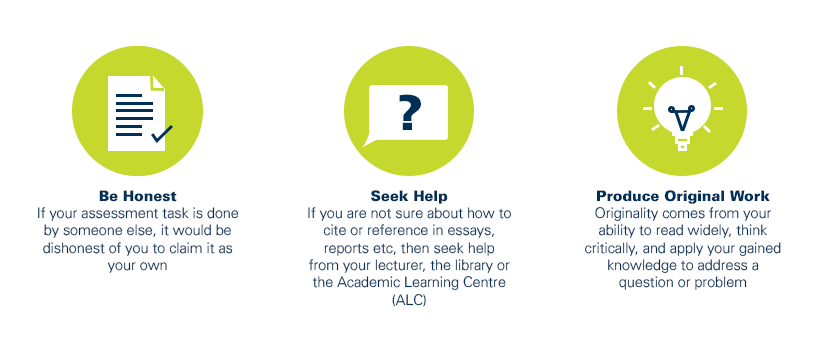
As a CQUniversity student you are expected to act honestly in all aspects of your academic work.
Any assessable work undertaken or submitted for review or assessment must be your own work. Assessable work is any type of work you do to meet the assessment requirements in the unit, including draft work submitted for review and feedback and final work to be assessed.
When you use the ideas, words or data of others in your assessment, you must thoroughly and clearly acknowledge the source of this information by using the correct referencing style for your unit. Using others’ work without proper acknowledgement may be considered a form of intellectual dishonesty.
Participating honestly, respectfully, responsibly, and fairly in your university study ensures the CQUniversity qualification you earn will be valued as a true indication of your individual academic achievement and will continue to receive the respect and recognition it deserves.
As a student, you are responsible for reading and following CQUniversity’s policies, including the Student Academic Integrity Policy and Procedure. This policy sets out CQUniversity’s expectations of you to act with integrity, examples of academic integrity breaches to avoid, the processes used to address alleged breaches of academic integrity, and potential penalties.
What is a breach of academic integrity?
A breach of academic integrity includes but is not limited to plagiarism, self-plagiarism, collusion, cheating, contract cheating, and academic misconduct. The Student Academic Integrity Policy and Procedure defines what these terms mean and gives examples.
Why is academic integrity important?
A breach of academic integrity may result in one or more penalties, including suspension or even expulsion from the University. It can also have negative implications for student visas and future enrolment at CQUniversity or elsewhere. Students who engage in contract cheating also risk being blackmailed by contract cheating services.
Where can I get assistance?
For academic advice and guidance, the Academic Learning Centre (ALC) can support you in becoming confident in completing assessments with integrity and of high standard.
What can you do to act with integrity?