Under Term Specific Information, Unit Coordinator contact details are now: Unit Coordinator: Dr Md Mamunur Rashid Email: m.rashid@cqu.edu.au
Overview
This unit provides you with an in-depth understanding of the role and function of TCP/IP protocols in contemporary network communication. The unit details the underlying technologies and relationships between the five network layers. You will gain an understanding of how data is encapsulated, addressed, and routed over networks. On completion of the unit, you will be able to explain the mechanisms used to facilitate communication between applications over the internet.
Details
Pre-requisites or Co-requisites
Prerequisite: COIT11233 - Information and Communication Technology Foundations or COIT11238 - Networked Infrastructure Foundations Note: Students who are currently enrolled in or who have previously completed COIT13147 - Networks cannot enrol in this unit.
Important note: Students enrolled in a subsequent unit who failed their pre-requisite unit, should drop the subsequent unit before the census date or within 10 working days of Fail grade notification. Students who do not drop the unit in this timeframe cannot later drop the unit without academic and financial liability. See details in the Assessment Policy and Procedure (Higher Education Coursework).
Offerings For Term 1 - 2026
Attendance Requirements
All on-campus students are expected to attend scheduled classes - in some units, these classes are identified as a mandatory (pass/fail) component and attendance is compulsory. International students, on a student visa, must maintain a full time study load and meet both attendance and academic progress requirements in each study period (satisfactory attendance for International students is defined as maintaining at least an 80% attendance record).
Recommended Student Time Commitment
Each 6-credit Undergraduate unit at CQUniversity requires an overall time commitment of an average of 12.5 hours of study per week, making a total of 150 hours for the unit.
Class Timetable
Assessment Overview
Assessment Grading
This is a graded unit: your overall grade will be calculated from the marks or grades for each assessment task, based on the relative weightings shown in the table above. You must obtain an overall mark for the unit of at least 50%, or an overall grade of 'pass' in order to pass the unit. If any 'pass/fail' tasks are shown in the table above they must also be completed successfully ('pass' grade). You must also meet any minimum mark requirements specified for a particular assessment task, as detailed in the 'assessment task' section (note that in some instances, the minimum mark for a task may be greater than 50%). Consult the University's Grades and Results Policy for more details of interim results and final grades.
All University policies are available on the CQUniversity Policy site.
You may wish to view these policies:
- Grades and Results Policy
- Assessment Policy and Procedure (Higher Education Coursework)
- Review of Grade Procedure
- Student Academic Integrity Policy and Procedure
- Academic Progression Policy and Procedure
- Student Refund and Credit Balance Policy and Procedure
- Complaints Policy and Procedure
- Information and Communications Technology Acceptable Use Policy and Procedure
This list is not an exhaustive list of all University policies. The full list of University policies are available on the CQUniversity Policy site.
Feedback, Recommendations and Responses
Every unit is reviewed for enhancement each year. At the most recent review, the following staff and student feedback items were identified and recommendations were made.
Feedback from Student Unit and Teaching Evaluations
Some questions in Assignment 1 were too broad in scope and should be refined for greater focus.
Redesign the assignment questions with a narrower scope and clearer criteria to reduce ambiguity and improve student understanding.
Feedback from Unit Coordinator’s Reflection
There is no team-based assessment in this unit.
Introduce a team-based assessment task (e.g., group presentation).
- Apply routing and forwarding principles to interconnect multiple computer networks
- Construct addressing schemes that achieve business goals while adhering to technical standards
- Illustrate the operation of application and transport protocols that are commonly used in delivering internet applications
- Justify the selection of network techniques and protocols to meet business requirements
- Apply testing and analysis tools to solve network design problems
- Explain the role of traditional networking protocols in contemporary technologies.
Australian Computer Society (ACS) recognises the Skills Framework for the Information Age (SFIA). SFIA is in use in over 100 countries and provides a widely used and consistent definition of ICT skills. SFIA is increasingly being used when developing job descriptions and role profiles.
ACS members can use the tool MySFIA to build a skills profile at https://www.acs.org.au/professionalrecognition/mysfia-b2c.html
This unit contributes to the following workplace skills as defined by SFIA. The SFIA code is included:
- Network Support (NTAS)
- Problem Management (PBMG)
- System Design (DESN)
- Service Desk and Incident Management (USUP)
The National Initiative for Cybersecurity Education (NICE) Framework defines knowledge, skills and tasks needed to perform various cyber security roles. Developed by the National Institute of Standards and Technology (NIST), the NICE Framework is used by organisations to plan their workforce, including recruit into cyber security positions.
This unit helps prepare you for roles such as Systems Security Analyst, Network Operations Specialist and Systems Administrator, contributing to the following knowledge and skills:
- K0001 Knowledge of computer networking concepts and protocols, and network security methodologies.
- K0050 Knowledge of local area and wide area networking principles and concepts including bandwidth management.
- K0061 Knowledge of how traffic flows across the network (e.g., Transmission Control Protocol [TCP] and Internet Protocol [IP], Open System Interconnection Model [OSI], Information Technology Infrastructure Library, current version [ITIL]).
- K0104 Knowledge of Virtual Private Network (VPN) security.
- K0159 Knowledge of Voice over IP (VoIP).
- K0180 Knowledge of network systems management principles, models, methods (e.g., end-to-end systems performance monitoring), and tools.
- K0322 Knowledge of embedded systems.
- K0332 Knowledge of network protocols such as TCP/IP, Dynamic Host Configuration, Domain Name System (DNS), and directory services.
- S0004 Skill in analyzing network traffic capacity and performance characteristics.
- S0035 Skill in establishing a routing schema.
- S0041 Skill in installing, configuring, and troubleshooting LAN and WAN components such as routers, hubs, and switches.
- S0056 Skill in using network management tools to analyze network traffic patterns (e.g., simple network management protocol).
- S0162 Skill in applying various subnet techniques (e.g., CIDR)
Alignment of Assessment Tasks to Learning Outcomes
| Assessment Tasks | Learning Outcomes | |||||
|---|---|---|---|---|---|---|
| 1 | 2 | 3 | 4 | 5 | 6 | |
| 1 - Written Assessment - 25% | ||||||
| 2 - Practical Assessment - 40% | ||||||
| 3 - Online Quiz(zes) - 35% | ||||||
Alignment of Graduate Attributes to Learning Outcomes
| Graduate Attributes | Learning Outcomes | |||||
|---|---|---|---|---|---|---|
| 1 | 2 | 3 | 4 | 5 | 6 | |
| 1 - Communication | ||||||
| 2 - Problem Solving | ||||||
| 3 - Critical Thinking | ||||||
| 4 - Information Literacy | ||||||
| 5 - Team Work | ||||||
| 6 - Information Technology Competence | ||||||
| 7 - Cross Cultural Competence | ||||||
| 8 - Ethical practice | ||||||
| 9 - Social Innovation | ||||||
| 10 - First Nations Knowledges | ||||||
| 11 - Aboriginal and Torres Strait Islander Cultures | ||||||
Textbooks
Computer Networking A Top-Down Approach, Global Edition
- 8th edition (2021)
- Authors: James Kurose, Keith Ross
- Pearson International
- Harlow Harlow , Essex , United Kingdom
- ISBN: 978-1-292-40551-3
Data Comms And Networking With Tcp/Ip Protocol Suite
- Edition: 6th edn (2021)
- Authors: Forouzan, B
- McGraw Hill
- New York New York , NY , USA
- ISBN: 9781260597820 print ; 9781264363353 ebook
- Binding: Paperback
IT Resources
- CQUniversity Student Email
- Internet
- Unit Website (Moodle)
- VirtualBox
- MS Teams
- Wireshark network protocol analyser
- Github.com Account
- GNS3 - Network Software Emulator
- Tailscale Account
All submissions for this unit must use the referencing style: Harvard (author-date)
For further information, see the Assessment Tasks.
m.rashid@cqu.edu.au
Week 1
Begin Date: 09 Mar 2026Module/Topic
Overview of Network Protocols and Services
Chapter
Events and Submissions/Topic
GitHub repository settings for the portfolio task (5%).
Week 2
Begin Date: 16 Mar 2026Module/Topic
Encapsulation and Decapsulation in Network Communication
Chapter
Events and Submissions/Topic
Week 3
Begin Date: 23 Mar 2026Module/Topic
The TCP and IP Protocols
Chapter
Events and Submissions/Topic
The first in-class test in the tutorial class (10%).
Week 4
Begin Date: 30 Mar 2026Module/Topic
The Advanced Routing
Chapter
Events and Submissions/Topic
Week 5
Begin Date: 06 Apr 2026Module/Topic
Switching and Virtual LANs
Chapter
Events and Submissions/Topic
Week 6
Begin Date: 13 Apr 2026Module/Topic
An Integrated Internetwork: Routing, Switching, and Network Management.
Chapter
Events and Submissions/Topic
Assessment 1 (20%) Portfolio due Friday.
Portfolio Due: Week 6 Friday (17 Apr 2026) 4:00 pm AEST
Vacation Week
Begin Date: 20 Apr 2026Module/Topic
Term Break
Chapter
Events and Submissions/Topic
Week 7
Begin Date: 27 Apr 2026Module/Topic
Supporting Protocols: DHCP and DNS
Chapter
Events and Submissions/Topic
The second in-class test in the tutorial class (15%).
Week 8
Begin Date: 04 May 2026Module/Topic
Web Services: HTTP and HTTPS
Chapter
Events and Submissions/Topic
Week 9
Begin Date: 11 May 2026Module/Topic
Network Security: Firewall and VPN
Chapter
Events and Submissions/Topic
Week 10
Begin Date: 18 May 2026Module/Topic
Cloud Networking
Chapter
Events and Submissions/Topic
The third in-class test in the tutorial class (10%).
Week 11
Begin Date: 25 May 2026Module/Topic
Network Automation
Chapter
Events and Submissions/Topic
Week 12
Begin Date: 01 Jun 2026Module/Topic
Guidance for Teamwork
Chapter
Events and Submissions/Topic
Exam Week
Begin Date: 08 Jun 2026Module/Topic
Chapter
Events and Submissions/Topic
Assessment 3 (40%) Written Assignment (teamwork for a small networking project)
Networking Project Due: Exam Week Friday (12 June 2026) 4:00 pm AEST
Vacation/Exam Week
Begin Date: 15 Jun 2026Module/Topic
Chapter
Events and Submissions/Topic
For any term-specific information, please contact the Unit Coordinator via email.
Unit Coordinator: Dr Yufeng Lin
E-mail: y.lin@cqu.edu.au
1 Written Assessment
Written Assessment Instructions:
Portfolio Maintenance:
- Maintain a GitHub portfolio for weekly tutorial activities (regularity will be assessed) in Weeks 1, 2, 4, 5, and 6.
- Include screenshots, testing results, reflections, and notes of key knowledge.
GitHub Repository:
- Create a private GitHub repository for this unit at the start of the term in Week 1 (5%).
- Record your portfolio weekly in this repository.
Submission:
- Provide the initiated GitHub repository link in Week 1, and a screenshot of running GNS3 in the quiz task.
- Submit the portfolio (Weeks 2, 4, 5 and 6) in Week 6 via Moodle.
- Provide the link to your private GitHub repository.
AI ASSESSMENT SCALE - AI COLLABORATION
You may use Al to assist with specific tasks such as drafting text, refining and evaluating your work. You must critically evaluate and modify any AI-generated content you use.
Week 6 Friday (17 Apr 2026) 4:00 pm AEST
Submit the link of your GitHub private repository for portfolio tasks via Moodle.
Week 8 Friday (8 May 2026)
Two weeks after submission due date. Late submissions with or without extension approvals may be returned after the above dates.
Portfolio Assessment Criteria:
- Clarity:
- How clearly you present your weekly contributions.
- Relevance:
- How relevant your entries are to the weekly tutorial questions.
- Quality:
- The overall quality of your portfolio entries.
- Regularity
- How frequently you update your portfolio in your GitHub repository.
5 marks for each weekly portfolio task.
- Construct addressing schemes that achieve business goals while adhering to technical standards
- Justify the selection of network techniques and protocols to meet business requirements
2 Practical Assessment
Group Assignment Instructions:
- Group Size: Form a group of three students (the tutor may adjust this based on class size).
- Task: Build a network service or implement security practices using the network created in your lab
- exercises.
- Report: Write a report explaining how to create a new network service, including steps and testing results. Security practices, network performance maintenance, and monitoring could be considered in your report.
Presentation
At the end of the term, your team must submit a recorded video demonstrating their network implementation and practices. The video should include a full live demonstration (demo) of the working topology and a clear explanation of the configuration and functionality.
Each group member must individually present and speak in the submitted video.
The video must be uploaded to Moodle. No physical or live in-class presentation is required.
AI ASSESSMENT SCALE - AI COLLABORATION
You may use Al to assist with specific tasks such as drafting text, refining and evaluating your work. You must critically evaluate and modify any AI-generated content you use.
IMPORTANT NOTE: This assessment is exempt from the 72-hour submission grace period and must be completed by the stated submission date/time.
Exam Week Friday (12 June 2026) 4:00 pm AEST
Late submissions are subject to the university's late submission penalty policies.
Assessments will be returned on the Certification date (required for the unit without an exam).
Marking Criteria for network Practice:
- Introduction:
- Introduce your network practice and highlight its novelty.
- Environment Description:
- Describe the network environment.
- Service/Security/Performance:
- Detail the service you built, the security practices you implemented, or the performance maintenance/monitoring you conducted.
- Presentation Slides:
- Quality and clarity of your presentation slides.
- Presentation:
- Effectiveness of your presentation.
Your group will be evaluated on teamwork, accuracy, clarity, and how well your work fits a chosen network practice.
Minimum Mark Requirement
You must achieve at least 50% for this assessment task. This minimum mark is a hurdle requirement for the unit. If you score below 50% on this task, you will not pass the unit regardless of your overall mark.
For more details, check the unit website.
- Apply routing and forwarding principles to interconnect multiple computer networks
- Illustrate the operation of application and transport protocols that are commonly used in delivering internet applications
- Apply testing and analysis tools to solve network design problems
- Explain the role of traditional networking protocols in contemporary technologies.
3 Online Quiz(zes)
Lab Exercises and Reports in Quiz:
Lab Exercises:
- Weeks 3, 7, and 10: Supervised in-class tests during tutorial classes.
- Collect materials for draft lab reports during these exercises.
Lab Reports:
- Complete the related quiz tasks and submit them after the respective lab exercise.
AI ASSESSMENT SCALE – NO AI
You must not use AI at any point during the in‑class test.
You must demonstrate your own skills and knowledge without assistance.
IMPORTANT NOTE: This assessment is exempt from the 72-hour submission grace period and must be completed at the scheduled time during your tutorial.
The lab reports in the Quiz tasks were due just after the tutorial classes in Week 03, 07 and 10.
The submission of lab reports for the in-class tests will be returned through Moodle Quizzes in two weeks after their due dates.
Lab Report Assessment Criteria:
- Clarity: How clearly you present your findings.
- Relevance: How relevant your report is to the lab exercises in Weeks 3, 7, and 10.
- Quality: The overall quality of your work.
Marks:
Week 3: 10% of total marks.
Week 7: 15% of total marks.
Week 10: 10% of total marks.
Additional Information:
More details will be provided on the unit Moodle website.
- Apply routing and forwarding principles to interconnect multiple computer networks
- Construct addressing schemes that achieve business goals while adhering to technical standards
- Illustrate the operation of application and transport protocols that are commonly used in delivering internet applications
- Justify the selection of network techniques and protocols to meet business requirements
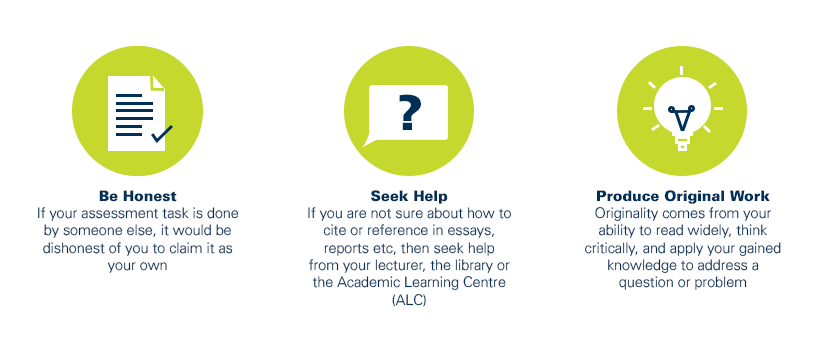
As a CQUniversity student you are expected to act honestly in all aspects of your academic work.
Any assessable work undertaken or submitted for review or assessment must be your own work. Assessable work is any type of work you do to meet the assessment requirements in the unit, including draft work submitted for review and feedback and final work to be assessed.
When you use the ideas, words or data of others in your assessment, you must thoroughly and clearly acknowledge the source of this information by using the correct referencing style for your unit. Using others’ work without proper acknowledgement may be considered a form of intellectual dishonesty.
Participating honestly, respectfully, responsibly, and fairly in your university study ensures the CQUniversity qualification you earn will be valued as a true indication of your individual academic achievement and will continue to receive the respect and recognition it deserves.
As a student, you are responsible for reading and following CQUniversity’s policies, including the Student Academic Integrity Policy and Procedure. This policy sets out CQUniversity’s expectations of you to act with integrity, examples of academic integrity breaches to avoid, the processes used to address alleged breaches of academic integrity, and potential penalties.
What is a breach of academic integrity?
A breach of academic integrity includes but is not limited to plagiarism, self-plagiarism, collusion, cheating, contract cheating, and academic misconduct. The Student Academic Integrity Policy and Procedure defines what these terms mean and gives examples.
Why is academic integrity important?
A breach of academic integrity may result in one or more penalties, including suspension or even expulsion from the University. It can also have negative implications for student visas and future enrolment at CQUniversity or elsewhere. Students who engage in contract cheating also risk being blackmailed by contract cheating services.
Where can I get assistance?
For academic advice and guidance, the Academic Learning Centre (ALC) can support you in becoming confident in completing assessments with integrity and of high standard.
What can you do to act with integrity?