Overview
As the Internet becomes more pervasive, so do the threats to the security of our computer systems and communications. This unit provides you with grounding in security technology. You will study common network security attacks, then the technologies to defend against those attacks. These technologies include cryptography, access control, authentication, firewalls, and wireless network protocols. This unit provides security knowledge that is required for industry standard certification exams, such as CompTIA.
Details
Pre-requisites or Co-requisites
Prerequisite: COIT12206 OR COIT13147
Important note: Students enrolled in a subsequent unit who failed their pre-requisite unit, should drop the subsequent unit before the census date or within 10 working days of Fail grade notification. Students who do not drop the unit in this timeframe cannot later drop the unit without academic and financial liability. See details in the Assessment Policy and Procedure (Higher Education Coursework).
Offerings For Term 2 - 2026
Attendance Requirements
All on-campus students are expected to attend scheduled classes - in some units, these classes are identified as a mandatory (pass/fail) component and attendance is compulsory. International students, on a student visa, must maintain a full time study load and meet both attendance and academic progress requirements in each study period (satisfactory attendance for International students is defined as maintaining at least an 80% attendance record).
Recommended Student Time Commitment
Each 6-credit Undergraduate unit at CQUniversity requires an overall time commitment of an average of 12.5 hours of study per week, making a total of 150 hours for the unit.
Class Timetable
Assessment Overview
Assessment Grading
This is a graded unit: your overall grade will be calculated from the marks or grades for each assessment task, based on the relative weightings shown in the table above. You must obtain an overall mark for the unit of at least 50%, or an overall grade of 'pass' in order to pass the unit. If any 'pass/fail' tasks are shown in the table above they must also be completed successfully ('pass' grade). You must also meet any minimum mark requirements specified for a particular assessment task, as detailed in the 'assessment task' section (note that in some instances, the minimum mark for a task may be greater than 50%). Consult the University's Grades and Results Policy for more details of interim results and final grades.
All University policies are available on the CQUniversity Policy site.
You may wish to view these policies:
- Grades and Results Policy
- Assessment Policy and Procedure (Higher Education Coursework)
- Review of Grade Procedure
- Student Academic Integrity Policy and Procedure
- Academic Progression Policy and Procedure
- Student Refund and Credit Balance Policy and Procedure
- Complaints Policy and Procedure
- Information and Communications Technology Acceptable Use Policy and Procedure
This list is not an exhaustive list of all University policies. The full list of University policies are available on the CQUniversity Policy site.
Feedback, Recommendations and Responses
Every unit is reviewed for enhancement each year. At the most recent review, the following staff and student feedback items were identified and recommendations were made.
Feedback from Discipline Reflection
Assessments in this unit may be vulnerable to inappropriate use of AI tools.
Submit a UUP request to design and revise all assessments.
Feedback from Student Feedback
I liked the knowledge quizzes in the lectures and think they should be used more often, with more time given for students to think before answering.
Add more interactive quizzes in lectures to improve student engagement.
Feedback from UC Reflection
The lecture slides were developed three years ago, and a new version of the textbook has since been published; therefore, the teaching content should be updated accordingly.
Submit a UUP request to update the teaching content.
- Describe key security concepts and principles
- Discuss how common security attacks and defences work
- Explain the role of cryptographic mechanisms in providing computer and network security
- Apply access control technologies, including firewalls and authentication, to secure computer networks
- Explain threats and defences that are specific to wireless networks.
Australian Computer Society (ACS) recognises the Skills Framework for the Information Age (SFIA). SFIA is in use in over 100 countries and provides a widely used and consistent definition of ICT skills. SFIA is increasingly being used when developing job descriptions and role profiles.
ACS members can use the tool MySFIA to build a skills profile at https://www.acs.org.au/professionalrecognition/mysfia-b2c.html
This unit contributes to the following workplace skills as defined by SFIA. The SFIA code is included:
- Information Security (SCTY)
- Penetration Testing (PENT)
- Network Support (NTAS)
- Security Administration (SCAD)
- Problem Management (PBMG)
- Data Analysis (DTAN)
- System Design (DESN)
- Incident Management (USUP)
The National Initiative for Cybersecurity Education (NICE) Framework defines knowledge, skills and tasks needed to perform various cyber security roles. Developed by the National Institute of Standards and Technology (NIST), the NICE Framework is used by organisations to plan their workforce, including recruit into cyber security positions.
This unit helps prepare you for roles such as Systems Security Analyst, Network Operations Specialist and Systems Administrator, contributing to the following knowledge and skills:
- K0002 Knowledge of risk management processes (e.g., methods for assessing and mitigating risk).
- K0003 Knowledge of laws, regulations, policies, and ethics as they relate to cybersecurity and privacy.
- K0004 Knowledge of cybersecurity and privacy principles.
- K0019 Knowledge of cryptography and cryptographic key management concepts
- K0038 Knowledge of cybersecurity and privacy principles used to manage risks related to the use, processing, storage, and transmission of information or data.
- K0049 Knowledge of information technology (IT) security principles and methods (e.g., firewalls, demilitarized zones, encryption).
- K0056 Knowledge of network access, identity, and access management (e.g., public key infrastructure, Oauth, OpenID, SAML, SPML).
- K0075 Knowledge of security system design tools, methods, and techniques.
- K0104 Knowledge of Virtual Private Network (VPN) security.
- K0158 Knowledge of organizational information technology (IT) user security policies (e.g., account creation, password rules, access control).
- K0160 Knowledge of the common attack vectors on the network layer.
- K0179 Knowledge of network security architecture concepts including topology, protocols, components, and principles (e.g., application of defense-in-depth).
- K0203 Knowledge of security models (e.g., Bell-LaPadula model, Biba integrity model, Clark-Wilson integrity model).
- K0260 Knowledge of Personally Identifiable Information (PII) data security standards.
- K0261 Knowledge of Payment Card Industry (PCI) data security standards.
- K0262 Knowledge of Personal Health Information (PHI) data security standards.
- K0263 Knowledge of information technology (IT) risk management policies, requirements, and procedures.
- K0274 Knowledge of transmission records (e.g., Bluetooth, Radio Frequency Identification (RFID), Infrared Networking (IR), Wireless Fidelity (Wi-Fi). paging, cellular, satellite dishes, Voice over Internet Protocol (VoIP)), and jamming techniques that enable transmission of undesirable information, or prevent installed systems from operating correctly.
- K0276 Knowledge of security management.
- K0284 Knowledge of developing and applying user credential management system.
- K0297 Knowledge of countermeasure design for identified security risks.
- K0333 Knowledge of network design processes, to include understanding of security objectives, operational objectives, and trade-offs.
- S0027 Skill in determining how a security system should work (including its resilience and dependability capabilities) and how changes in conditions, operations, or the environment will affect these outcomes.
- S0031 Skill in developing and applying security system access controls.
- S0036 Skill in evaluating the adequacy of security designs.
- S0040 Skill in implementing, maintaining, and improving established network security practices.
- S0076 Skill in configuring and utilizing software-based computer protection tools (e.g., software firewalls, antivirus software, anti-spyware).
- S0077 Skill in securing network communications.
- S0079 Skill in protecting a network against malware. (e.g., NIPS, anti-malware, restrict/prevent external devices, spam filters).
- S0084 Skill in configuring and utilizing network protection components (e.g., Firewalls, VPNs, network intrusion detection systems).
- S0141 Skill in assessing security systems designs.
- S0147 Skill in assessing security controls based on cybersecurity principles and tenets. (e.g., CIS CSC, NIST SP 800-53, Cybersecurity Framework, etc.).
- S0167 Skill in recognizing vulnerabilities in security systems. (e.g., vulnerability and compliance scanning).
- S0170 Skill in configuring and utilizing computer protection components (e.g., hardware firewalls, servers, routers, as appropriate).
- S0367 Skill to apply cybersecurity and privacy principles to organizational requirements (relevant to confidentiality, integrity, availability, authentication, non-repudiation).
Alignment of Assessment Tasks to Learning Outcomes
| Assessment Tasks | Learning Outcomes | ||||
|---|---|---|---|---|---|
| 1 | 2 | 3 | 4 | 5 | |
| 1 - Written Assessment - 25% | |||||
| 2 - Written Assessment - 45% | |||||
| 3 - Online Quiz(zes) - 30% | |||||
Alignment of Graduate Attributes to Learning Outcomes
| Graduate Attributes | Learning Outcomes | ||||
|---|---|---|---|---|---|
| 1 | 2 | 3 | 4 | 5 | |
| 1 - Communication | |||||
| 2 - Problem Solving | |||||
| 3 - Critical Thinking | |||||
| 4 - Information Literacy | |||||
| 5 - Team Work | |||||
| 6 - Information Technology Competence | |||||
| 7 - Cross Cultural Competence | |||||
| 8 - Ethical practice | |||||
| 9 - Social Innovation | |||||
| 10 - First Nations Knowledges | |||||
| 11 - Aboriginal and Torres Strait Islander Cultures | |||||
Textbooks
There are no required textbooks.
IT Resources
- CQUniversity Student Email
- Internet
- Unit Website (Moodle)
- VirtualBox
- WinSCP or FileZilla
- Wireshark
- PuTTY
- GNS3 - Network Software Emulator
All submissions for this unit must use the referencing style: Harvard (author-date)
For further information, see the Assessment Tasks.
s.d.gordon@cqu.edu.au
Week 1
Begin Date: 13 Jul 2026Module/Topic
Security Architecture
Chapter
Events and Submissions/Topic
Week 2
Begin Date: 20 Jul 2026Module/Topic
Cryptography & PKI
Chapter
Events and Submissions/Topic
Week 3
Begin Date: 27 Jul 2026Module/Topic
Password Security
Chapter
Events and Submissions/Topic
Week 4
Begin Date: 03 Aug 2026Module/Topic
SSH & Secure Administration
Chapter
Events and Submissions/Topic
Week 5
Begin Date: 10 Aug 2026Module/Topic
Kerberos & Enterprise Authentication
Chapter
Events and Submissions/Topic
Week 6
Begin Date: 17 Aug 2026Module/Topic
Firewalls & Network Defence
Chapter
Events and Submissions/Topic
Vacation Week
Begin Date: 24 Aug 2026Module/Topic
Chapter
Events and Submissions/Topic
Week 7
Begin Date: 31 Aug 2026Module/Topic
VPNs
Chapter
Events and Submissions/Topic
Week 8
Begin Date: 07 Sep 2026Module/Topic
Intrusion Detection
Chapter
Events and Submissions/Topic
Week 9
Begin Date: 14 Sep 2026Module/Topic
Wireless Security
Chapter
Events and Submissions/Topic
Week 10
Begin Date: 21 Sep 2026Module/Topic
Cloud Security
Chapter
Events and Submissions/Topic
Week 11
Begin Date: 28 Sep 2026Module/Topic
Network Security in Practice
Chapter
Events and Submissions/Topic
Activity Evidence Due: Week 11 Thursday (1 Oct 2026) 11:45 pm AEST
Secured Multi-Site Network Project Due: Week 11 Thursday (1 Oct 2026) 11:45 pm AEST
Week 12
Begin Date: 05 Oct 2026Module/Topic
Technical Interviews
Chapter
Events and Submissions/Topic
Technical Interview Held: Week 12 at scheduled time (e.g., tutorial class).
Exam Week
Begin Date: 12 Oct 2026Module/Topic
Chapter
Events and Submissions/Topic
Technical Interview Held: Week 13 (if needed)
Vacation/Exam Week
Begin Date: 19 Oct 2026Module/Topic
Chapter
Events and Submissions/Topic
Communicating with Staff
You should use your lecture and tutorial classes as the first point of contact with teaching staff. Ask questions of your lecturer/tutor in class each week.
Outside of class times, you are encouraged to ask questions in Microsoft Teams. A link to this units Teams site is available in the "Learning Community" tile on Moodle. You may post a question at anytime in the Teams General channel. All staff and students can see posts in the General channel, so avoid posting personal information (such as phone numbers or your assessment solutions). The teaching team will try to respond to Teams posts as soon as possible, often within an hour during work days and with an aim of within 24 hours. While response times by staff over weekends may be longer (and may not be until Monday morning), other students may respond to your question as well.
Avoid using private chat to contact staff members in Teams. Instead, post in the General channel so all staff and students can see and potentially respond to your question, and so the answer can be shared with all students. If you have a private matter that you do not want to share with others, then contact the Unit Coordinator via email. However if you ask questions about the unit content via email, then response may take longer than if using Teams, and the staff may choose to reply via Teams (so all students see the answer).
GitHub Account
You are expected to use GitHub in this unit. You will need to create an account (if you do not already have one). Instructions for doing so will be provided on Moodle.
GitHub is a website that may be hosted overseas (including the United States). In setting up an account and using for your assessment(s), you will be transferring personal information to GitHub. While there is some risk in transferring your personal information overseas, we believe the benefits to you far outweigh the risk. You will gain experience using a tool widely used in industry, you will have access to tools for version control, backup, and collaboration on your resources, and will have artefacts to show to potential employers. If you have concerns with using GitHub, please contact the Unit Coordinator to discuss options.
Microsoft Learn On Demand Account
You are expected to use Microsoft Learn On Demand in this unit. You will need to create an account (if you do not already have one). Instructions for doing so will be provided on Moodle.
CQUniversity uses Microsoft Learn On Demand to provide you free access to Microsoft Azure cloud services and training activities. The Microsoft Learn On Demand website and Microsoft Azure cloud services may be hosted overseas (including the United States). In setting up an account and using the cloud services, you will be transferring personal information to Microsoft. While there is some risk in transferring your personal information overseas, we believe the benefits to you far outweigh the risk. You will gain experience using an industry leading cloud service, gain access to Microsoft-developed learning resources, and prepare yourself to undertake industry certifications, such as Microsoft Security, Compliance and Identity Fundamentals SC900. If you have concerns with using Microsoft Learn On Demand or Microsoft Azure, please contact the Unit Coordinator to discuss options.
Use of Generative Artificial Intelligence (AI) in Learning Resources and Assessments
Generative artificial intelligence (AI) tools may have been used by educators in the development of learning resources and assessments (for example, for initial drafting, content organisation, activity generation, image creation, editing, summarisation, accessibility support, rubric development, or feedback scaffolding) in this unit. Any AI-assisted resources have been critically reviewed, refined, and contextualised by academic staff. The final learning resources, assessments and guidance provided reflect academic judgement and align with CQUniversity learning, teaching, accessibility, and academic integrity requirements.
1 Written Assessment
In this individual portfolio you build and harden a set of foundational network-security services in your own virtual lab and document them in a version-controlled GitHub repository, which serves as your report. Across the first weeks of the unit you stand up and secure foundational services - a certificate authority and HTTPS server, secure password storage with an account-lockout policy, and a hardened remote-administration service - committing your configurations, scripts and supporting evidence as you go. You also complete a set of interactive security activities and record a short video walkthrough in which you demonstrate your working services and explain your key design decisions in your own words. The site you build here is the basis for the group project in Assessment 2. A GitHub repository and a recorded video walkthrough are required for this assessment.
AI Assessment Scale - AI PLANNING: You may use AI for planning, idea development, and research. Your final submission should show how you have developed and refined these ideas.
The 72-hour submission grace period applies to this assessment.
Week 5 Thursday (13 Aug 2026) 11:45 pm AEST
Two weeks after submission
This is individual assessment. You will be assessed on:
- Correct and complete configuration of the required services, evidenced in your repository.
- Quality, clarity and organisation of the committed evidence (configurations, scripts and documentation).
- Completion of the required interactive activities.
- Quality of the video walkthrough: a clear demonstration that your services work and an accurate, well-justified explanation of your design decisions in your own words.
- Describe key security concepts and principles
- Discuss how common security attacks and defences work
- Explain the role of cryptographic mechanisms in providing computer and network security
2 Written Assessment
Working in a group of two to three students, you combine your individual sites from Assessment 1 into a single multi-site secured network and add the access-control and defence layers taught in the middle of the unit - enterprise authentication, firewalls with security zones, site-to-site VPN connectivity, and network intrusion detection - applying a consistent security policy across the sites. Your group submits its project files, a shared GitHub repository of all configurations, a multi-site network diagram, a security-justification report - which includes a required section explaining the wireless-specific threats and defences for extending the design to wireless - and a group demonstration video walking through the working network; each member's individual contribution is evidenced through their own site and version-control history. Group work, a shared GitHub repository, and a group demonstration video are required for this assessment.
AI Assessment Scale - AI COLLABORATION: You may use AI to assist with specific tasks such as drafting text, refining and evaluating your work. You must critically evaluate and modify any AI-generated content you use.
The 72-hour submission grace period applies to this assessment.
Week 11 Thursday (1 Oct 2026) 11:45 pm AEST
On Certification of Grades day
This is a group assessment, but you may received individual marks for some parts. You are assessed on:
- Correct, working integration of the required access-control and defence layers across the multi-site network.
- Quality of the security-justification report: architecture, trust boundaries between sites, and defence-in-depth reasoning, including the wireless-extension section.
- Clarity and accuracy of the multi-site network diagram.
- Evidence of individual contribution.
- Clarity of the group demonstration video.
- Apply access control technologies, including firewalls and authentication, to secure computer networks
- Explain threats and defences that are specific to wireless networks.
3 Online Quiz(zes)
This individual assessment confirms your own understanding of the unit and your personal contribution to the group project. The whole 30% is a live interview; a short online submission is the precondition for sitting it.
Activity evidence (precondition - ungraded). By the end of Week 11 you submit evidence online of completing the later interactive security activities (from Week 5 onward). This submission is not separately scored; it is the precondition for being allocated an interview slot.
Technical Interview (30%). You attend a short individual interview, conducted in the style of a technical job interview, in which you give a walkthrough of your own contribution to the Assessment 2 project (using your version-control history) and answer a small number of questions spanning the unit's outcomes. The interview is held in person during Weeks 12-13 (including the examination period); distance students attend by Zoom, and sessions are recorded for moderation. Attendance at a live interview is required for this assessment.
AI Assessment Scale - NO AI: You must not use AI at any point during the assessment. You must demonstrate your core skills and knowledge.
IMPORTANT NOTE: The interview is a scheduled appointment and is exempt from the 72-hour submission grace period - you must attend at your scheduled time unless an approved Assessment Extension Request applies. The 72-hour grace period may be used for the Week 11 activity-evidence submission.
Activity Evidence: Due Week 11 Thursday 11:45 PM AEST. Interview: held in Week 12 or 13.
On Certification of Grades day
This is individual assessment. You are assessed on:
- Accuracy and depth of your responses across the unit's outcomes; understanding of your own contribution to the group project.
- (Precondition) Submission of the required Week 5 onwards activity evidence.
- Describe key security concepts and principles
- Discuss how common security attacks and defences work
- Explain the role of cryptographic mechanisms in providing computer and network security
- Apply access control technologies, including firewalls and authentication, to secure computer networks
- Explain threats and defences that are specific to wireless networks.
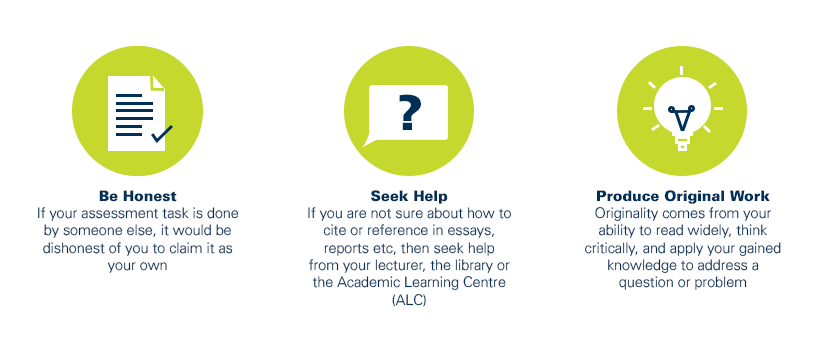
As a CQUniversity student you are expected to act honestly in all aspects of your academic work.
Any assessable work undertaken or submitted for review or assessment must be your own work. Assessable work is any type of work you do to meet the assessment requirements in the unit, including draft work submitted for review and feedback and final work to be assessed.
When you use the ideas, words or data of others in your assessment, you must thoroughly and clearly acknowledge the source of this information by using the correct referencing style for your unit. Using others’ work without proper acknowledgement may be considered a form of intellectual dishonesty.
Participating honestly, respectfully, responsibly, and fairly in your university study ensures the CQUniversity qualification you earn will be valued as a true indication of your individual academic achievement and will continue to receive the respect and recognition it deserves.
As a student, you are responsible for reading and following CQUniversity’s policies, including the Student Academic Integrity Policy and Procedure. This policy sets out CQUniversity’s expectations of you to act with integrity, examples of academic integrity breaches to avoid, the processes used to address alleged breaches of academic integrity, and potential penalties.
What is a breach of academic integrity?
A breach of academic integrity includes but is not limited to plagiarism, self-plagiarism, collusion, cheating, contract cheating, and academic misconduct. The Student Academic Integrity Policy and Procedure defines what these terms mean and gives examples.
Why is academic integrity important?
A breach of academic integrity may result in one or more penalties, including suspension or even expulsion from the University. It can also have negative implications for student visas and future enrolment at CQUniversity or elsewhere. Students who engage in contract cheating also risk being blackmailed by contract cheating services.
Where can I get assistance?
For academic advice and guidance, the Academic Learning Centre (ALC) can support you in becoming confident in completing assessments with integrity and of high standard.
What can you do to act with integrity?