Overview
Cybersecurity professionals are expected to design, analyse and validate computer systems and networks to maintain operational continuity in the face of attacks. In this unit, you will learn about common types of attacks and the tools and techniques used to prevent, detect and respond to them. You will develop skills in virtualisation and cloud services to address cybersecurity challenges. Additionally, you will gain experience with specialised cybersecurity tools for detecting vulnerabilities, monitoring network traffic and responding to attacks.
Details
Pre-requisites or Co-requisites
Pre-Requisite: COIT11238 Networked Infrastructure Foundations.
Important note: Students enrolled in a subsequent unit who failed their pre-requisite unit, should drop the subsequent unit before the census date or within 10 working days of Fail grade notification. Students who do not drop the unit in this timeframe cannot later drop the unit without academic and financial liability. See details in the Assessment Policy and Procedure (Higher Education Coursework).
Offerings For Term 1 - 2026
Attendance Requirements
All on-campus students are expected to attend scheduled classes - in some units, these classes are identified as a mandatory (pass/fail) component and attendance is compulsory. International students, on a student visa, must maintain a full time study load and meet both attendance and academic progress requirements in each study period (satisfactory attendance for International students is defined as maintaining at least an 80% attendance record).
Recommended Student Time Commitment
Each 6-credit Undergraduate unit at CQUniversity requires an overall time commitment of an average of 12.5 hours of study per week, making a total of 150 hours for the unit.
Class Timetable
Assessment Overview
Assessment Grading
This is a graded unit: your overall grade will be calculated from the marks or grades for each assessment task, based on the relative weightings shown in the table above. You must obtain an overall mark for the unit of at least 50%, or an overall grade of 'pass' in order to pass the unit. If any 'pass/fail' tasks are shown in the table above they must also be completed successfully ('pass' grade). You must also meet any minimum mark requirements specified for a particular assessment task, as detailed in the 'assessment task' section (note that in some instances, the minimum mark for a task may be greater than 50%). Consult the University's Grades and Results Policy for more details of interim results and final grades.
All University policies are available on the CQUniversity Policy site.
You may wish to view these policies:
- Grades and Results Policy
- Assessment Policy and Procedure (Higher Education Coursework)
- Review of Grade Procedure
- Student Academic Integrity Policy and Procedure
- Academic Progression Policy and Procedure
- Student Refund and Credit Balance Policy and Procedure
- Complaints Policy and Procedure
- Information and Communications Technology Acceptable Use Policy and Procedure
This list is not an exhaustive list of all University policies. The full list of University policies are available on the CQUniversity Policy site.
Feedback, Recommendations and Responses
Every unit is reviewed for enhancement each year. At the most recent review, the following staff and student feedback items were identified and recommendations were made.
Feedback from Teaching Team Reflections
Some students have computers that have difficulty running the required virtual machines.
Provide a cloud-hosted alternative for running virtual machines.
Feedback from Teaching Team Reflections and Student Evaluations
The assessment tasks are individual and overly prescriptive. Unfortunately, the assessment has lost the original 'detective hunt' experience.
Revise the recent assessment tasks to incorporate group work and exploratory learning.
- Explain cybersecurity challenges and the technologies available to address those challenges
- Apply cybersecurity tools to identify vulnerabilities and protect computer systems
- Apply cloud services tools to automate common IT processes and task.
The Australian Computer Society (ACS) recognises the Skills Framework for the Information Age (SFIA). SFIA is adopted by organisations, governments and individuals in many countries and provides a widely used and consistent definition of ICT skills. SFIA is increasingly being used when developing job descriptions and role profiles. ACS members can use the tool MySFIA to build a skills profile.
This unit contributes to the following workplace skills as defined by SFIA 9 (the SFIA code is included)
- Information security (SCTY)
- Risk management (BURM)
- Identity and access management (IAMT)
- Security administration (SCAD)
- Vulnerability assessment (VUAS)
- Penetration testing (PENT)
The National Initiative for Cybersecurity Education (NICE) Framework defines knowledge, skills and tasks needed to perform various cybersecurity roles. Developed by the National Institute of Standards and Technology (NIST), the NICE Framework is used by organisations to plan their workforce, including recruiting into cybersecurity positions.
This unit helps prepare you for roles such as Systems Security Analyst, Network Operations Specialist and Systems Administrator, contributing to the following knowledge and skills:
- K0003 Knowledge of laws, regulations, policies, and ethics as they relate to cybersecurity and privacy.
- K0004 Knowledge of cybersecurity and privacy principles.
- K0005 Knowledge of cyber threats and vulnerabilities.
- K0006 Knowledge of specific operational impacts of cybersecurity lapses.
- K0040 Knowledge of vulnerability information dissemination sources (e.g., alerts, advisories, errata, and bulletins).
- K0044 Knowledge of cybersecurity and privacy principles and organisational requirements (relevant to confidentiality, integrity, availability, authentication, and non-repudiation).
- K0071 Knowledge of remote access technology concepts.
- K0075 Knowledge of security system design tools, methods, and techniques.
- K0130 Knowledge of virtualisation technologies and virtual machine development and maintenance.
- K0135 Knowledge of web filtering technologies.
- K0160 Knowledge of the common attack vectors on the network layer.
- K0274 Knowledge of transmission records (e.g., Bluetooth, Radio Frequency Identification (RFID), Infrared Networking (IR), Wireless Fidelity (Wi-Fi). paging, cellular, satellite dishes, Voice over Internet Protocol (VoIP)), and jamming techniques that enable transmission of undesirable information, or prevent installed systems from operating correctly.
- K0290 Knowledge of systems security testing and evaluation methods.
- K0297 Knowledge of countermeasure design for identified security risks.
- K0318 Knowledge of operating system command-line tools.
- K0339 Knowledge of how to use network analysis tools to identify vulnerabilities.
- S0031 Skill in developing and applying security system access controls.
- S0060 Skill in writing code in a currently supported programming language (e.g., Java, C++).
- S0073 Skill in using virtual machines. (e.g., Microsoft Hyper-V, VMWare vSphere, Citrix XenDesktop/Server, Amazon Elastic Compute Cloud, etc.).
- S0154 Skill in installing system and component upgrades. (i.e., servers, appliances, network devices).
- S0167 Skill in recognising vulnerabilities in security systems. (e.g., vulnerability and compliance scanning).
Alignment of Assessment Tasks to Learning Outcomes
| Assessment Tasks | Learning Outcomes | ||
|---|---|---|---|
| 1 | 2 | 3 | |
| 1 - Written Assessment - 30% | |||
| 2 - Portfolio - 50% | |||
| 3 - Presentation - 20% | |||
Alignment of Graduate Attributes to Learning Outcomes
| Graduate Attributes | Learning Outcomes | ||
|---|---|---|---|
| 1 | 2 | 3 | |
| 1 - Communication | |||
| 2 - Problem Solving | |||
| 3 - Critical Thinking | |||
| 4 - Information Literacy | |||
| 5 - Team Work | |||
| 6 - Information Technology Competence | |||
| 7 - Cross Cultural Competence | |||
| 8 - Ethical practice | |||
| 9 - Social Innovation | |||
| 10 - First Nations Knowledges | |||
| 11 - Aboriginal and Torres Strait Islander Cultures | |||
Textbooks
There are no required textbooks.
IT Resources
- CQUniversity Student Email
- Internet
- Unit Website (Moodle)
- Suitable storage media, such as a removable USB 3.0 stick (≥128GB) for oncampus students without a laptop or as a fallback if you do not have enough harddrive space free
- Virtualbox (Version 7 or later)
- A computer with hardware resources suitable to run multiple virtual machines simultaneously, e.g. 12GB RAM, 128GB HDD free, Intel core i5 or above, Windows 7 or later.
All submissions for this unit must use the referencing style: Harvard (author-date)
For further information, see the Assessment Tasks.
j.shield@cqu.edu.au
Week 1
Begin Date: 09 Mar 2026Module/Topic
1 Introduction
Chapter
Refer to the unit website for the readings.
Events and Submissions/Topic
Week 2
Begin Date: 16 Mar 2026Module/Topic
2 PowerShell
Chapter
Chapter 6 of Hassell, J 2017, Learning PowerShell, Boston, DeG Press.
Events and Submissions/Topic
Week 3
Begin Date: 23 Mar 2026Module/Topic
3 Controls
Chapter
CIS Controls
Events and Submissions/Topic
Week 4
Begin Date: 30 Mar 2026Module/Topic
4 Threat Intelligence
Chapter
Chapter 3 of Thompson, E 2020, Designing a HIPAA-Compliant Security Operations Center, Apress L. P, Berkeley, CA.
Events and Submissions/Topic
Due A1 Reconnaissance (12.5%)
Week 5
Begin Date: 06 Apr 2026Module/Topic
5 Vulnerabilities
Chapter
Chapter 4 of (Thompson 2020)
Events and Submissions/Topic
Week 6
Begin Date: 13 Apr 2026Module/Topic
6 Monitoring
Chapter
Chapter 5 of (Thompson 2020)
Events and Submissions/Topic
Due A1 Vulnerability detection (12.5%)
Vacation Week
Begin Date: 20 Apr 2026Module/Topic
No classes
Chapter
Events and Submissions/Topic
Week 7
Begin Date: 27 Apr 2026Module/Topic
7 Risks
Chapter
Chapter 1 of Bijalwan, A 2021, Network Forensics, CRC Press.
Events and Submissions/Topic
Week 8
Begin Date: 04 May 2026Module/Topic
8 Linux
Chapter
Chapters 6, 9, 10, 16, 17, 19, 20, 26-29 and 33 of Shotts 2019, The Linux Command Line.
Events and Submissions/Topic
Due A1 Internal attacks (12.5%)
Week 9
Begin Date: 11 May 2026Module/Topic
9 Attacks
Chapter
Chapter 3 of Garbis, J & Chapman, J 2021. Zero Trust Security, Apress.
Events and Submissions/Topic
Week 10
Begin Date: 18 May 2026Module/Topic
10 Cloud and Python Scripting
Chapter
Chapter 1 of Collier, M & Shahan, R 2016, Foundations of Azure, 2nd edn, Microsoft.
Chapters 2-11 of Severance, C 2016, Python for Everybody.
Events and Submissions/Topic
Due A1 Network attacks (12.5%)
Week 11
Begin Date: 25 May 2026Module/Topic
11 Presentations
Chapter
Events and Submissions/Topic
Week 12
Begin Date: 01 Jun 2026Module/Topic
12 Inclass test
Chapter
Events and Submissions/Topic
Due A3 Inclass test (30%)
Unit Coordinator: Jamie Shield, Cairns,
j.shield@cqu.edu.au,
Office: 07 4037 4750
1 Portfolio
You will create a portfolio to demonstrate that you can apply malicious and defensive cybersecurity technologies such as file integrity monitors and network scanners. You will be provided with an information system such as a small organisation's network. To prepare the organisation's information system to survive an imminent attack from threat actors, you will:
- Week 4: Perform reconnaissance (12.5%)
- Week 6: Vulnerability detection (12.5%): search the information system for vulnerabilities, analyse Cyber Threat Intelligence (CTI) and prioritise vulnerabilities
- Week 8: Internal attacks (12.5%): implement defenses, develop, run and detect internal attacks
- Week 10: Network attacks (12.5%): implement defenses, develop, run and detect network attacks
AI Collaboration: You may use AI to assist with specific tasks such as drafting text, refining and evaluating your work. You must critically evaluate and modify any AI-generated content you use.
Re-attempts of this assignment are at the discretion of the unit coordinator.
Due Weeks 4, 6, 8 and 10. This assessment is exempt from the 72-hour submission grace period and must be completed by the stated submission date/time.
Feedback for each task be provided within 2 weeks of the due dates. Immediate feedback will be provided for some tasks.
You will be marked on aspects such as adherence to cybersecurity standards and frameworks, use of threat intelligence, quality of implementation, configuration and testing scripts and other artefacts including functionality, modularity, style, reuse and documentation, lack of deprecated features, level of automation and use tools.
- Apply cybersecurity tools to identify vulnerabilities and protect computer systems
- Apply cloud services tools to automate common IT processes and task.
2 Presentation
You will demonstrate the Assignment 2 activities. You will perform reconnaissance, vulnerability detection and run attacks on your information systems and demonstrate the detection, mitigation or protections in action.
AI Collaboration: You may use AI to assist with specific tasks such as drafting text, refining and evaluating your work. You must critically evaluate and modify any AI-generated content you use.
Re-attempts of this assignment are at the discretion of the unit coordinator.
Week 11 Friday (29 May 2026) 5:00 pm AEST
This assessment is not exempt from the 72-hour submission grace period.
Feedback for each task be provided within 2 weeks of the due dates.
You will be marked on aspects such as your stage presence (50%) and quality of the demonstration including the use of tools to perform reconnaissance, vulnerability detection, attacks and demonstrate detection, mitigation or protections in action (50%).
- Explain cybersecurity challenges and the technologies available to address those challenges
- Apply cybersecurity tools to identify vulnerabilities and protect computer systems
3 Written Assessment
You will be assessed on concepts in cybersecurity, networking, ICT and computer security technologies, offensive types of cybersecurity technologies, and applying defensive cybersecurity technologies. The test will involve short answer questions and activities such as writing shell commands and explaining cybersecurity tool output.
Oncampus students: you must attend the Week 12 tutorial. Distance students: prior to Week 11, you must organise your own exam including the location and supervisor to be vetted by the unit coordinator.
Duration: 90 minutes. Perusal time: 0 minutes. Exam conditions: Closed book. No calculators, computers or phones are permitted.
No AI: You must not use AI at any point during the assessment. You must demonstrate your core skills and knowledge.
Re-attempts of this assignment are at the discretion of the unit coordinator.
Oncampus: inclass Week 12 tutorial. Distance: in Week 12 by negotiation with unit coordinator. This assessment is exempt from the 72-hour submission grace period and must be completed by the stated submission date/time.
Feedback will be returned on the Certification of Grades day.
This assessment consists of short answer questions and small activities such as the use of PowerShell, Bash and Python commands for scripting, network defense, monitoring and attacks. Each question will be marked according to the correctness of the answer, for example, successful use of commands to start a SYN flood attack.
- Explain cybersecurity challenges and the technologies available to address those challenges
- Apply cloud services tools to automate common IT processes and task.
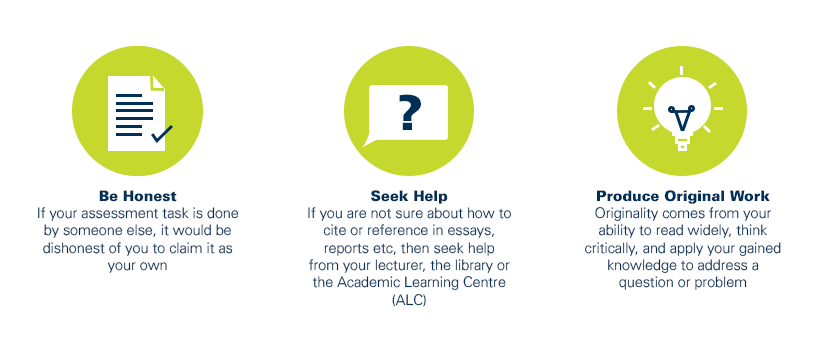
As a CQUniversity student you are expected to act honestly in all aspects of your academic work.
Any assessable work undertaken or submitted for review or assessment must be your own work. Assessable work is any type of work you do to meet the assessment requirements in the unit, including draft work submitted for review and feedback and final work to be assessed.
When you use the ideas, words or data of others in your assessment, you must thoroughly and clearly acknowledge the source of this information by using the correct referencing style for your unit. Using others’ work without proper acknowledgement may be considered a form of intellectual dishonesty.
Participating honestly, respectfully, responsibly, and fairly in your university study ensures the CQUniversity qualification you earn will be valued as a true indication of your individual academic achievement and will continue to receive the respect and recognition it deserves.
As a student, you are responsible for reading and following CQUniversity’s policies, including the Student Academic Integrity Policy and Procedure. This policy sets out CQUniversity’s expectations of you to act with integrity, examples of academic integrity breaches to avoid, the processes used to address alleged breaches of academic integrity, and potential penalties.
What is a breach of academic integrity?
A breach of academic integrity includes but is not limited to plagiarism, self-plagiarism, collusion, cheating, contract cheating, and academic misconduct. The Student Academic Integrity Policy and Procedure defines what these terms mean and gives examples.
Why is academic integrity important?
A breach of academic integrity may result in one or more penalties, including suspension or even expulsion from the University. It can also have negative implications for student visas and future enrolment at CQUniversity or elsewhere. Students who engage in contract cheating also risk being blackmailed by contract cheating services.
Where can I get assistance?
For academic advice and guidance, the Academic Learning Centre (ALC) can support you in becoming confident in completing assessments with integrity and of high standard.
What can you do to act with integrity?