Overview
While organisations can collect a large amount of data about their operations, a continual challenge they face is extracting useful information from that data. Dashboards summarise key information using visualisations and interactive reports. Dashboards are therefore an important tool in supporting decision making in an organisation. In this unit, you will learn how to design dashboards. You will develop skills to condense and encapsulate the characteristics of data, making it easier to analyse trends to drive effective decision-making. You will also learn creative ways to present the insights and findings of data using data visualisation tools and techniques.
Details
Pre-requisites or Co-requisites
There are no requisites for this unit.
Important note: Students enrolled in a subsequent unit who failed their pre-requisite unit, should drop the subsequent unit before the census date or within 10 working days of Fail grade notification. Students who do not drop the unit in this timeframe cannot later drop the unit without academic and financial liability. See details in the Assessment Policy and Procedure (Higher Education Coursework).
Offerings For Term 1 - 2026
Attendance Requirements
All on-campus students are expected to attend scheduled classes - in some units, these classes are identified as a mandatory (pass/fail) component and attendance is compulsory. International students, on a student visa, must maintain a full time study load and meet both attendance and academic progress requirements in each study period (satisfactory attendance for International students is defined as maintaining at least an 80% attendance record).
Recommended Student Time Commitment
Each 6-credit Undergraduate unit at CQUniversity requires an overall time commitment of an average of 12.5 hours of study per week, making a total of 150 hours for the unit.
Class Timetable
Assessment Overview
Assessment Grading
This is a graded unit: your overall grade will be calculated from the marks or grades for each assessment task, based on the relative weightings shown in the table above. You must obtain an overall mark for the unit of at least 50%, or an overall grade of 'pass' in order to pass the unit. If any 'pass/fail' tasks are shown in the table above they must also be completed successfully ('pass' grade). You must also meet any minimum mark requirements specified for a particular assessment task, as detailed in the 'assessment task' section (note that in some instances, the minimum mark for a task may be greater than 50%). Consult the University's Grades and Results Policy for more details of interim results and final grades.
All University policies are available on the CQUniversity Policy site.
You may wish to view these policies:
- Grades and Results Policy
- Assessment Policy and Procedure (Higher Education Coursework)
- Review of Grade Procedure
- Student Academic Integrity Policy and Procedure
- Academic Progression Policy and Procedure
- Student Refund and Credit Balance Policy and Procedure
- Complaints Policy and Procedure
- Information and Communications Technology Acceptable Use Policy and Procedure
This list is not an exhaustive list of all University policies. The full list of University policies are available on the CQUniversity Policy site.
Feedback, Recommendations and Responses
Every unit is reviewed for enhancement each year. At the most recent review, the following staff and student feedback items were identified and recommendations were made.
Feedback from Unit Coordinator's Reflection
A stronger theoretical background on dashboard design and analysis is required.
Include more theory-based content on dashboard design and analysis to strengthen students’ understanding of core principles.
Feedback from Student Unit Evaluation
Lack of full access to the Microsoft Power BI Service limited practical learning.
Provide students with full access to the Microsoft Power BI Service or a similar environment to support hands-on learning and project development.
- Explain the fundamentals of dashboard design and data visualisation
- Compare different dashboard design and data visualisation tools
- Explain the application of dashboard design and visualisation in summarising key information
- Identify the best practices in implementing dashboard design
- Design and implement a dashboard for a business case.
The Australian Computer Society (ACS) recognises the Skills Framework for the Information Age (SFIA). SFIA is adopted by organisations, governments and individuals in many countries and provides a widely used and consistent definition of ICT skills. SFIA is increasingly being used when developing job descriptions and role profiles. ACS members can use the tool MySFIA (https://www.acs.org.au/professionalrecognition/mysfia-b2c.html) to build a skills profile.
This unit contributes to the following workplace skills as defined by SFIA 7 (https://www.sfia-online.org/en). The SFIA code is included:
Data Visualisation VISL
Analytics INAN
Business Analysis BUAN
Alignment of Assessment Tasks to Learning Outcomes
| Assessment Tasks | Learning Outcomes | ||||
|---|---|---|---|---|---|
| 1 | 2 | 3 | 4 | 5 | |
| 1 - Online Quiz(zes) - 20% | |||||
| 2 - Practical Assessment - 30% | |||||
| 3 - Project (applied) - 30% | |||||
| 4 - Presentation - 20% | |||||
Alignment of Graduate Attributes to Learning Outcomes
| Graduate Attributes | Learning Outcomes | ||||
|---|---|---|---|---|---|
| 1 | 2 | 3 | 4 | 5 | |
| 1 - Communication | |||||
| 2 - Problem Solving | |||||
| 3 - Critical Thinking | |||||
| 4 - Information Literacy | |||||
| 5 - Team Work | |||||
| 6 - Information Technology Competence | |||||
| 7 - Cross Cultural Competence | |||||
| 8 - Ethical practice | |||||
| 9 - Social Innovation | |||||
| 10 - First Nations Knowledges | |||||
| 11 - Aboriginal and Torres Strait Islander Cultures | |||||
Alignment of Assessment Tasks to Graduate Attributes
| Assessment Tasks | Graduate Attributes | ||||||||||
|---|---|---|---|---|---|---|---|---|---|---|---|
| 1 | 2 | 3 | 4 | 5 | 6 | 7 | 8 | 9 | 10 | 11 | |
| 1 - Online Quiz(zes) - 20% | |||||||||||
| 2 - Practical Assessment - 30% | |||||||||||
| 3 - Project (applied) - 30% | |||||||||||
| 4 - Presentation - 20% | |||||||||||
Textbooks
Microsoft Power BI Dashboards Step by Step
- Edition: 1st (2018)
- Authors: Errin O'Connor
- Microsoft Press
- ISBN: 978150930833
Learning Microsoft Power BI
- (2022)
- Authors: Jeremey Arnold
- O'Reilly
- ISBN: 9781098112837
The Big Book of Dashboards: Visualizing Your Data Using Real-World Business Scenarios
- (2017)
- Authors: Steve Wexler, Jeffrey Shaffer, Andy Cotgreave
- Wiley
- ISBN: 9781119283089
IT Resources
- CQUniversity Student Email
- Internet
- Unit Website (Moodle)
- Tableau Desktop (Version 2019.4.1) (optional)
- Microsoft Power BI
All submissions for this unit must use the referencing style: Harvard (author-date)
For further information, see the Assessment Tasks.
p.poon@cqu.edu.au
Week 1
Begin Date: 09 Mar 2026Module/Topic
Data Visualization: Introduction to Power BI, Architecture & Administration
Chapter
Prescribed textbook: Chapters 1 & 2
Events and Submissions/Topic
Week 2
Begin Date: 16 Mar 2026Module/Topic
Dashboard Use: Visuals in Power BI & Report Development
Chapter
Prescribed textbook: Chapters 2 & 3
Events and Submissions/Topic
Week 3
Begin Date: 23 Mar 2026Module/Topic
Design of Executive Sales Dashboards & Report Generation Using Power BI
Chapter
Prescribed textbook: Chapter 5
2nd supplementary book (by Wexler et al.): Chapter 5
Events and Submissions/Topic
Week 4
Begin Date: 30 Mar 2026Module/Topic
Reports Using Microsoft Excel
Chapter
Prescribed textbook: Chapter 4
Events and Submissions/Topic
Assessment 1: First Quiz
Week 5
Begin Date: 06 Apr 2026Module/Topic
Data Analysis Expression (DAX)
Chapter
Power BI documentation from https://docs.microsoft.com/en-us/power-bi/
Prescribed textbook: Chapter 14
Events and Submissions/Topic
Week 6
Begin Date: 13 Apr 2026Module/Topic
Power BI Reports from Access Database
Chapter
Power BI documentation from https://docs.microsoft.com/en-us/power-bi/
Events and Submissions/Topic
Vacation Week
Begin Date: 20 Apr 2026Module/Topic
Chapter
Events and Submissions/Topic
Week 7
Begin Date: 27 Apr 2026Module/Topic
Visualization & Gateways
Chapter
Power BI documentation from https://docs.microsoft.com/en-us/power-bi/
Events and Submissions/Topic
Week 8
Begin Date: 04 May 2026Module/Topic
Power BI Pro (Service) & Dashboard Creation
Chapter
Power BI documentation from https://docs.microsoft.com/en-us/power-bi/
Events and Submissions/Topic
Week 9
Begin Date: 11 May 2026Module/Topic
Power BI Reports from MySQL
Chapter
Power BI documentation from https://docs.microsoft.com/en-us/power-bi/
Events and Submissions/Topic
Week 10
Begin Date: 18 May 2026Module/Topic
Emerging Trends & Technologies in Data Visualization
Chapter
N/A
Events and Submissions/Topic
Assessment 1: Second Quiz
Week 11
Begin Date: 25 May 2026Module/Topic
Case Study 1
Chapter
2nd supplementary book (by Wexler et al.): Chapters 9 & 13
Events and Submissions/Topic
Week 12
Begin Date: 01 Jun 2026Module/Topic
Case Study 2
Chapter
2nd supplementary book (by Wexler et al.): Chapter 15
Events and Submissions/Topic
Exam Week
Begin Date: 08 Jun 2026Module/Topic
Chapter
Events and Submissions/Topic
Vacation/Exam Week
Begin Date: 15 Jun 2026Module/Topic
Chapter
Events and Submissions/Topic
You should use your lecture and tutorial classes as the first point of contact with the teaching staff. Outside class times, you are encouraged to ask questions in MS Teams. A link to COIT11240 Teams site is available in the "Learning Committee" tile on Moodle. If you have a private matter that you do not want to share with others, then contact the Unit Coordinator (UC) via emails.
1 Online Quiz(zes)
You will undertake two (2) quizzes on Moodle throughout the term. The quizzes will assess your knowledge of the lecture content and tutorial activities. Some questions may require you to use software, e.g., software demonstrated in lectures and /or used in tutorial activities. Each quiz will consist of multiple questions which may be of various types (e.g., multiple-choice, matching etc.). All quizzes are individual assessments. The two quizzes will be conducted differently:
- Quiz 1 will be conducted online. You will have a set period of time during Week 4 to complete the Quiz. The quiz has time limits. The quiz time limits, topics, and open/close times can be found on Moodle.
- Quiz 2 will be conducted in-class, in the 1st hour only, under the supervision of your tutor. You must attend your allocated tutorial class in Week 10. Online students will need undertake Quiz in a Zoom session in week 10 (During the scheduled Online tutorial). Online students will need access to a webcam, speakers and microphone (e.g., headset).
You will not be allowed to take a quiz at any time outside of the specified open/close time unless an Assessment Extension Request is approved. In Quiz 2, if you arrive late for class, you will not be granted extra time. Changes to quiz time can only be granted with approval by the Unit Coordinator.
While quizzes will be open-book (e.g., you can use lecture slides), you will be expected to produce the answers yourself. That is, you are not allowed to communicate with others during the quiz (including other students or people online).
You are assumed to have a working computer and Internet connection during term, and especially during times when attempting a quiz. Technical problems, such as a computer crash or loss of Internet connection, will not usually be a reason for an extra attempt or extension. You are expected to prepare your computer before the quiz starts. If problems outside of your control occur during a quiz, report immediately to your tutor, who may either extend the time or allow you to undertake the quiz at another time (with the Unit Coordinator's approval).
Quiz 1: AI ASSESSMENT SCALE – AI PLANNING
You may use Al to assist with specific tasks such as drafting text, refining and evaluating your work. You must critically evaluate and modify any Al-generated content you use.
Quiz 2: AI ASSESSMENT SCALE - NO AI
You must not use AI at any point during the assessment. You must demonstrate your core skills and knowledge.
Quiz 1 is exempt from the 72-hour submission grace period and must be completed by the stated submission date/time.
Quiz 2 is exempt from the 72-hour submission grace period and must be completed in the first hour of your Week 10 tutorial class.
Weeks 4 and 10
One week after the due date
Each quiz is worth 10 marks.
- Compare different dashboard design and data visualisation tools
- Identify the best practices in implementing dashboard design
- Communication
- Problem Solving
- Critical Thinking
- Information Technology Competence
2 Practical Assessment
This is an individual task. In this assessment, you will compete data manipulation exercises using Power BI, enabling you to gain insights from data through interactive visualizations. This assessment is designed to strengthen your understanding of data formats, retrieval methods, and analysis techniques. More details of this assessment will be provided via Moodle unit website in Week 2.
AI ASSESSMENT SCALE: AI PLANNING: You may use AI for planning, idea development, and research. Your final submission should show how you have developed and refined these ideas. For example, you can use AI to explore data visualizations and explanations. You must not use AI to write your project report. You must complete all practical tasks yourself (e.g., Data Analysis Expression (DAX) function or create a bar chart).
Week 5 Friday (10 Apr 2026) 11:55 pm AEST
Week 7 Friday (1 May 2026)
This assessment will be evaluated based on the following two criteria:
- Knowledge & understanding: Demonstrates a clear understanding of the topic & the given problem.
- Analytical skills & technical literacy: Uses appropriate analysis techniques to interpret data effectively.
- Discussion & justification: Evaluates the relevance of the findings based on the analysis.
- Referencing & citation: Properly includes references & citations where necessary.
- Explain the fundamentals of dashboard design and data visualisation
- Compare different dashboard design and data visualisation tools
- Explain the application of dashboard design and visualisation in summarising key information
- Communication
- Problem Solving
- Critical Thinking
- Information Literacy
- Information Technology Competence
- Social Innovation
3 Project (applied)
This is an individual assessment. Your group will produce a business report in the standard business format. In this assessment, you will investigate an organization and provide it with recommendations regarding data processing and analysis. Your objective is to generate meaningful insights from the data. You will also develop an an analytical dashboard using Power BI for the organization and show your analysis on the developed dashboard.
AI ASSESSMENT SCALE: AI PLANNING: You may use AI for planning, idea development, and research. Your final submission should show how you have developed and refined these ideas. For example, you can use AI to explore data cleaning methods, dashboard layouts and understand the project. However, you must not use AI to write your project report. You must complete all practical tasks yourself (e.g., data processing and exploratory data analysis).
Week 11 Monday (25 May 2026) 11:55 pm AEST
Feedback and marks for this assessment will be released on the certification date as this unit does not have an exam.
Your business report will be evaluated based on the following criteria:
- Knowledge and understanding: Demonstrates a strong understanding of the topic through the selection, analysis, and presentation of relevant data.
- Communication and information literacy: Effectively conveys insights with clear discussion, logical structure, and well-supported interpretations. Engages in collaborative dialogue with group members, sharing ideas clearly and providing supporting evidence to help the group succeed.
- Technical literacy: Showcases proficiency in selecting and integrating appropriate elements within the report, including data visualization where applicable.
- Critical discussion: Assesses the relevance, accuracy, and appropriateness of the included elements, particularly with respect to the dashboard.
- Referencing and citations: Uses credible sources and correctly applies referencing standards to support findings.
- Report structure and presentation: Follows a professional structure with well-organized sections, proper formatting, and clear readability.
- Explain the fundamentals of dashboard design and data visualisation
- Explain the application of dashboard design and visualisation in summarising key information
- Identify the best practices in implementing dashboard design
- Design and implement a dashboard for a business case.
- Communication
- Problem Solving
- Critical Thinking
- Information Literacy
- Information Technology Competence
- Social Innovation
4 Presentation
It is an individual recorded presentation based on Assessment 3, where you will showcase your personal contributions through an in-depth analysis of the study, emerging technologies, and relevant tools used to address the case study.
All students are required to delivered an oral presentation that includes:
- A PowerPoint presentation (in .mp4) that lasts for 5-7 minutes. You must turn on the camera to show you are the person presenting the PowerPoint slides.
- A demonstration of the dashboard you developed in the assessment.
- A clear explanation of your design choices, data insights and the tools or technologies used.
AI ASSESSMENT SCALE: AI PLANNING: You may use AI for planning, idea development, and research. Your final submission should show how you have developed and refined these ideas.
Week 12 Monday (1 June 2026) 11:55 pm AEST
Feedback and marks for this assessment will be released on the certification date as this unit does not have an exam.
This assessment will be evaluated based on the following key aspects of the presentation:
- Analysis and critical thinking
- Presentation structure and content
- Slide design and visual presentation
- Delivery and engagement
- Accuracy and mechanics
- Design and implement a dashboard for a business case.
- Communication
- Problem Solving
- Information Literacy
- Information Technology Competence
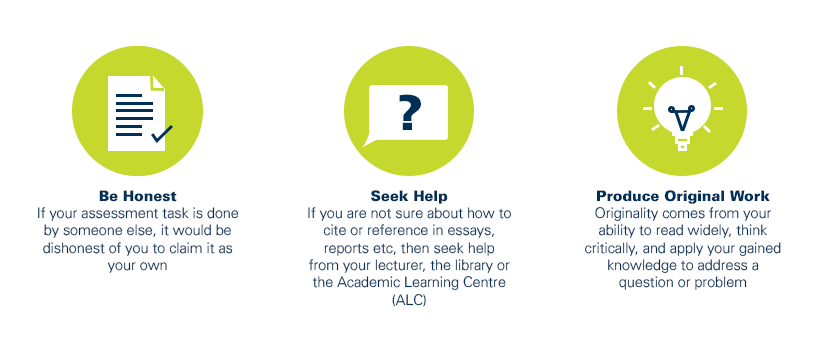
As a CQUniversity student you are expected to act honestly in all aspects of your academic work.
Any assessable work undertaken or submitted for review or assessment must be your own work. Assessable work is any type of work you do to meet the assessment requirements in the unit, including draft work submitted for review and feedback and final work to be assessed.
When you use the ideas, words or data of others in your assessment, you must thoroughly and clearly acknowledge the source of this information by using the correct referencing style for your unit. Using others’ work without proper acknowledgement may be considered a form of intellectual dishonesty.
Participating honestly, respectfully, responsibly, and fairly in your university study ensures the CQUniversity qualification you earn will be valued as a true indication of your individual academic achievement and will continue to receive the respect and recognition it deserves.
As a student, you are responsible for reading and following CQUniversity’s policies, including the Student Academic Integrity Policy and Procedure. This policy sets out CQUniversity’s expectations of you to act with integrity, examples of academic integrity breaches to avoid, the processes used to address alleged breaches of academic integrity, and potential penalties.
What is a breach of academic integrity?
A breach of academic integrity includes but is not limited to plagiarism, self-plagiarism, collusion, cheating, contract cheating, and academic misconduct. The Student Academic Integrity Policy and Procedure defines what these terms mean and gives examples.
Why is academic integrity important?
A breach of academic integrity may result in one or more penalties, including suspension or even expulsion from the University. It can also have negative implications for student visas and future enrolment at CQUniversity or elsewhere. Students who engage in contract cheating also risk being blackmailed by contract cheating services.
Where can I get assistance?
For academic advice and guidance, the Academic Learning Centre (ALC) can support you in becoming confident in completing assessments with integrity and of high standard.
What can you do to act with integrity?