Overview
This unit introduces you to devices, technologies, and techniques of emerging technologies such as cloud computing and Internet of Things (IoT), that enable you to deploy and manage smart applications. The fundamentals of cloud computing will be presented including cloud environment and services such as Infrastructure as a Service (IaaS), Platform as a Service (PaaS) and Software as a Service (SaaS). A cloud environment will be used to deploy and manage various cloud applications.
Details
Pre-requisites or Co-requisites
COIT11222 Programming Fundamentals and COIT11238 Networked Infrastructure Foundations.
Important note: Students enrolled in a subsequent unit who failed their pre-requisite unit, should drop the subsequent unit before the census date or within 10 working days of Fail grade notification. Students who do not drop the unit in this timeframe cannot later drop the unit without academic and financial liability. See details in the Assessment Policy and Procedure (Higher Education Coursework).
Offerings For Term 1 - 2026
Attendance Requirements
All on-campus students are expected to attend scheduled classes - in some units, these classes are identified as a mandatory (pass/fail) component and attendance is compulsory. International students, on a student visa, must maintain a full time study load and meet both attendance and academic progress requirements in each study period (satisfactory attendance for International students is defined as maintaining at least an 80% attendance record).
Recommended Student Time Commitment
Each 6-credit Undergraduate unit at CQUniversity requires an overall time commitment of an average of 12.5 hours of study per week, making a total of 150 hours for the unit.
Class Timetable
Assessment Overview
Assessment Grading
This is a graded unit: your overall grade will be calculated from the marks or grades for each assessment task, based on the relative weightings shown in the table above. You must obtain an overall mark for the unit of at least 50%, or an overall grade of 'pass' in order to pass the unit. If any 'pass/fail' tasks are shown in the table above they must also be completed successfully ('pass' grade). You must also meet any minimum mark requirements specified for a particular assessment task, as detailed in the 'assessment task' section (note that in some instances, the minimum mark for a task may be greater than 50%). Consult the University's Grades and Results Policy for more details of interim results and final grades.
All University policies are available on the CQUniversity Policy site.
You may wish to view these policies:
- Grades and Results Policy
- Assessment Policy and Procedure (Higher Education Coursework)
- Review of Grade Procedure
- Student Academic Integrity Policy and Procedure
- Academic Progression Policy and Procedure
- Student Refund and Credit Balance Policy and Procedure
- Complaints Policy and Procedure
- Information and Communications Technology Acceptable Use Policy and Procedure
This list is not an exhaustive list of all University policies. The full list of University policies are available on the CQUniversity Policy site.
Feedback, Recommendations and Responses
Every unit is reviewed for enhancement each year. At the most recent review, the following staff and student feedback items were identified and recommendations were made.
Feedback from SUTE feedback
Assignment specifications are confusing, lacking clarity, and providing little guidance.
Assessment details will be further refined to ensure the requirements are clearly clarified, guided, and specified.
Feedback from SUTE feedback
The unit content should reduce the focus on the Internet of Things over the cloud.
In the next offering, the unit content will be reviewed to ensure that the Internet of Things content balances with the cloud computing knowledge and concepts.
Feedback from SUTE feedback
The training content for AWS was passable but the Microsoft Azure training content was extremely basic and did not teach the required skills.
A combination of CQU-developed and AWS/Azure tutorials will be included in the next offering of this unit.
- Describe cloud computing concepts and IoT components for smart applications/systems management
- Demonstrate the use of cloud computing and IoT technologies in different scenarios
- Apply cloud computing and IoT technologies in a systematic manner to evaluate a real world business problem
- Prepare and demonstrate a design for a cloud based smart application
- Apply techniques to deploy and manage cloud based smart applications.
The Australian Computer Society (ACS) recognises the Skills Framework for the Information Age (SFIA). SFIA is adopted by organisations, governments and individuals in many countries and provides a widely used and consistent definition of ICT skills. SFIA is increasingly being used when developing job descriptions and role profiles. ACS members can use the tool MySFIA to build a skills profile.
This unit contributes to the following workplace skills as defined by SFIA 8. The SFIA code is included:
- Technology Service Management (ITMG)
- Systems Integration and Build (SINT)
- Configuration management (CFMG)
- Programming/Software Development (PROG)
- Business Intelligence (BINT)
- Release and Deployment (RELM)
- Emerging technology monitoring (EMRG)
Alignment of Assessment Tasks to Learning Outcomes
| Assessment Tasks | Learning Outcomes | ||||
|---|---|---|---|---|---|
| 1 | 2 | 3 | 4 | 5 | |
| 1 - Written Assessment - 20% | |||||
| 2 - Group Work - 30% | |||||
| 3 - Practical and Written Assessment - 50% | |||||
Alignment of Graduate Attributes to Learning Outcomes
| Graduate Attributes | Learning Outcomes | ||||
|---|---|---|---|---|---|
| 1 | 2 | 3 | 4 | 5 | |
| 1 - Communication | |||||
| 2 - Problem Solving | |||||
| 3 - Critical Thinking | |||||
| 4 - Information Literacy | |||||
| 5 - Team Work | |||||
| 6 - Information Technology Competence | |||||
| 7 - Cross Cultural Competence | |||||
| 8 - Ethical practice | |||||
| 9 - Social Innovation | |||||
| 10 - First Nations Knowledges | |||||
| 11 - Aboriginal and Torres Strait Islander Cultures | |||||
Textbooks
Cloud Computing: Concepts, Technology, and Architecture, Second Edition
- 2nd edition (2024)
- Authors: Kavis, MJ
- Pearson
- Hoboken Hoboken , NJ , USA
- ISBN: 978-0138052256
- Binding: Paperback
IT Resources
- CQUniversity Student Email
- Internet
- Unit Website (Moodle)
- AWS Academy Student Accounts
- Azure cloud, MSLE, Skillable student account
All submissions for this unit must use the referencing style: Harvard (author-date)
For further information, see the Assessment Tasks.
a.anwaarulhaq@cqu.edu.au
Week 1
Begin Date: 09 Mar 2026Module/Topic
Cloud computing and modern networking
Chapter
Online resources and recorded videos on Moodle
Events and Submissions/Topic
Practical work during the tutorial
- Creating AWS student account
- Creating Azure Student accoun
- Introduction to AWS Management Console
Week 2
Begin Date: 16 Mar 2026Module/Topic
Cloud-enabling Technologies and Virtualization
Chapter
Online resources and recorded videos on Moodle
Events and Submissions/Topic
Practical work during the tutorial
- Getting Started with the AWS Management Console
Week 3
Begin Date: 23 Mar 2026Module/Topic
Data Centers & Managing Data in the Cloud
Chapter
Chapter 5 from 'Cloud Computing: Concepts, Technology & Architecture by Erl, T., Mahmood, Z., and Puttini R.'
Events and Submissions/Topic
Practical work during the tutorial
- Creating a DB Instance on AWS using RDS
- Creating a Database on a DB Instance
Week 4
Begin Date: 30 Mar 2026Module/Topic
Cloud Architecture and Design Patterns
Chapter
Online resources and recorded videos on Moodle
Events and Submissions/Topic
Practical work during the tutorial
- Creating a Dynamic Website on AWS
Week 5
Begin Date: 06 Apr 2026Module/Topic
Designing Cloud-based Networks
Chapter
Online resources and recorded videos on Moodle
Events and Submissions/Topic
Practical work during the tutorial
- Understanding VPC and Security Groups
Assessment 1 - Written Report Due: Week 5 Thursday (9 Apr 2026) 11:45 pm AEST
Week 6
Begin Date: 13 Apr 2026Module/Topic
Reliability assurance and Edge/Fog Computing in cloud computing
Chapter
Online resources and recorded videos on Moodle
Events and Submissions/Topic
Practical work during the tutorial
- Creating a Template from an EC2 Instance
- Creating a Load balancer for an EC2 Instance
- Creating a Auto Scaling Group for an EC2 Instance
Vacation Week
Begin Date: 20 Apr 2026Module/Topic
Enjoy the break.
Chapter
Enjoy the break.
Events and Submissions/Topic
Enjoy the break.
Week 7
Begin Date: 27 Apr 2026Module/Topic
Internet of Things (IoT) and Digital Twin over the cloud
Chapter
Online resources and recorded videos on Moodle
Events and Submissions/Topic
Practical work during the tutorial
- Creating a Thing on AWS IoT
- Creating a Message Routing rule on AWS IoT
Week 8
Begin Date: 04 May 2026Module/Topic
Machine Learning on Cloud for Intelligent Applications
Chapter
Online resources and recorded videos on Moodle
Events and Submissions/Topic
Practical work during the tutorial.
- Saving IoT messages in an S3 bucket
- Sending IoT messages to CloudWatch logs
Assessment 2 - Group Project Due: Week 8 Thursday (7 May 2026) 11:45 pm AEST
Week 9
Begin Date: 11 May 2026Module/Topic
Cloud Security and Ethical Considerations
Chapter
Online resources and recorded videos on Moodle
Events and Submissions/Topic
Practical work during the tutorial
- Creating a Lambda function to process IoT messages
Week 10
Begin Date: 18 May 2026Module/Topic
Emerging Technologies over the Cloud
Chapter
Online resources and recorded videos on Moodle
Events and Submissions/Topic
Practical work during the tutorial.
- Creating MQTT nodes in NodeRED for environmental sensors
Week 11
Begin Date: 25 May 2026Module/Topic
Cloud-enabling convergence of Internet of Everything (IoE), bigdata and intelligence
Chapter
Online resources and recorded videos on Moodle
Events and Submissions/Topic
Practical work during the tutorial.
- Azure Cloud to explore the convergence of technologies
Week 12
Begin Date: 01 Jun 2026Module/Topic
Revision of content
Chapter
Events and Submissions/Topic
Assignment three project - discussion and address questions
Assignment-3: Practical project with reporting Due: Week 12 Friday (5 June 2026) 11:45 pm AEST
Exam Week
Begin Date: 08 Jun 2026Module/Topic
Chapter
Events and Submissions/Topic
Vacation/Exam Week
Begin Date: 15 Jun 2026Module/Topic
Chapter
Events and Submissions/Topic
Unit Coordinator:
Dr Anwaar Ulhaq
a.anwaarulhaq2cqu.edu.au
CQU Sydney
1 Written Assessment
This is an individual assignment.
In this assignment, you will write a report that will let you compare and contrast between two Platform as a Service (PaaS) cloud providers and their services. You are also required to create a simple application in each of the cloud services as part of your comparative exercise.
The assignment requires you to complete the following tasks:
1. Identify two PaaS cloud providers and investigate all the services they provide. You may create a trial account to try their services.
2. Create a simple application in both of the cloud platforms.
3. Compare and contrast your chosen cloud providers and services.
4. Prepare a report based on the criteria given in the assignment specification.
Detailed information about this assignment can be accessed from the Moodle unit website.
AI Assessment Scale - AI Planning
You may use Al for planning, idea development, and research. Your final submission should show how you have developed and refined these ideas.
Guidelines for AI Tool Usage for Students
Al may be used for pre-task activities such as brainstorming, outlining and initial research. You may use AI-assisted automatic speech recognition to transcribe notes, AI tools to convert notes into outlines, and AI tools to brainstorm or suggest improvements to already created work. Image generation technologies might be used to generate starting points for designs or tools used to explore possibilities for producing software. You must then use the AI-generated ideas as the starting point and apply your skills and knowledge to refine and improve the initial ideas to the final submission. No GenAI-created content without changes should be included in the final submissions.
Week 5 Thursday (9 Apr 2026) 11:45 pm AEST
Via Moodle website
Week 7 Thursday (30 Apr 2026)
Within 2 weeks of submission
The students are assessed mainly against their:
1. knowledge about existing cloud providers;
2. ability to identify and evaluate available services of a cloud provider;
3. analytical capability to compare and contrast between services of different service providers.
More detailed marking criteria can be accessed from Moodle.
- Describe cloud computing concepts and IoT components for smart applications/systems management
- Demonstrate the use of cloud computing and IoT technologies in different scenarios
2 Group Work
This is a group assignment and must be accomplished in a group of at least 3 and maximum 4 members.
This assessment requires students to analyse a provided on-premises scenario and redesign it using cloud infrastructure. The proposed solution should present a scalable, load-balanced, and secure cloud architecture, implemented on Microsoft Azure or AWS, to host a web application. Students must demonstrate capability in cost optimisation, network design, and high availability. The design should clearly separate application layers (e.g. web tier and database tier) and apply appropriate network and security controls to protect resources. Through this process, students will demonstrate their ability to integrate core cloud services, manage peak user demand, and maintain a resilient and efficient system. The solution should include a complete cloud network design, covering virtual networks, subnets, and security features, and should preferably adopt a serverless architecture where appropriate.
At the end of the project, each group will submit a report describing their planning with justifications, the architectural diagram they have developed, and details of design components. Each group will also create a 10-minute video, with every team member presenting some part of the project.
Detailed information about this assignment can be accessed from the Moodle unit website.
AI Assessment Scale - AI Planning
You may use Al for planning, idea development, and research. Your final submission should show how you have developed and refined these ideas.
Guidelines for AI Tool Usage for Students
Al may be used for pre-task activities such as brainstorming, outlining and initial research. You may use AI-assisted automatic speech recognition to transcribe notes, AI tools to convert notes into outlines, and AI tools to brainstorm or suggest improvements to already created work. Image generation technologies might be used to generate starting points for designs or tools used to explore possibilities for producing software. You must then use the AI-generated ideas as the starting point and apply your skills and knowledge to refine and improve the initial ideas to the final submission. No GenAI-created content without changes should be included in the final submissions.
Week 8 Thursday (7 May 2026) 11:45 pm AEST
Online via Moodle
Week 10 Thursday (21 May 2026)
Within 2 weeks of submission
The students are assessed mainly against:
1. Demonstrate knowledge in designing scalable and redundant cloud application;
2. Apply cloud computing technologies in a systematic manner on Azure/AWS to host a web application;
3. Prepare and demonstrate a optimised design for a cloud based application;
More detailed marking criteria can be accessed from Moodle.
- Demonstrate the use of cloud computing and IoT technologies in different scenarios
- Apply cloud computing and IoT technologies in a systematic manner to evaluate a real world business problem
- Prepare and demonstrate a design for a cloud based smart application
3 Practical and Written Assessment
This is a group assignment and must be accomplished in a group of at least 3 and maximum 4 members.
In this assignment, you need to analyse a given business case and issues within it, and design and develop a smart application that addresses the business problem(s). The assessment requires you to:
1. analyse the given business case and identify the issues involved;
2. develop a use case to resolve the issues identified;
3. design and develop a smart application to execute all the required tasks mentioned in the business case;
4. prepare a report to demonstrate the deployment process and operation of the smart application, and difficulties faced while design and deployment, and
5. prepare a video recording to demonstrate the deployment process of the smart application.
Detailed information about this assignment can be accessed from the Moodle unit website.
AI Assessment Scale - AI Planning
You may use Al for planning, idea development, and research. Your final submission should show how you have developed and refined these ideas.
Guidelines for AI Tool Usage for Stduents
Al may be used for pre-task activities such as brainstorming, outlining and initial research. You may use AI-assisted automatic speech recognition to transcribe notes, AI tools to convert notes into outlines, and AI tools to brainstorm or suggest improvements to already created work. Image generation technologies might be used to generate starting points for designs or tools used to explore possibilities for producing software. You must then use the AI-generated ideas as the starting point and apply your skills and knowledge to refine and improve the initial ideas to the final submission. No GenAI-created content without changes should be included in the final submissions.
Week 12 Friday (5 June 2026) 11:45 pm AEST
Online via Moodle
On the date of certification of grades
The students are assessed mainly against:
1. depth of the analysis to identify current and upcoming issues;
2. level of appropriateness of the solution and its justification;
3. completeness of the development and deployment of the solution;
4. quality and level of detail in the report.
More detailed marking criteria can be accessed from Moodle.
- Describe cloud computing concepts and IoT components for smart applications/systems management
- Apply cloud computing and IoT technologies in a systematic manner to evaluate a real world business problem
- Prepare and demonstrate a design for a cloud based smart application
- Apply techniques to deploy and manage cloud based smart applications.
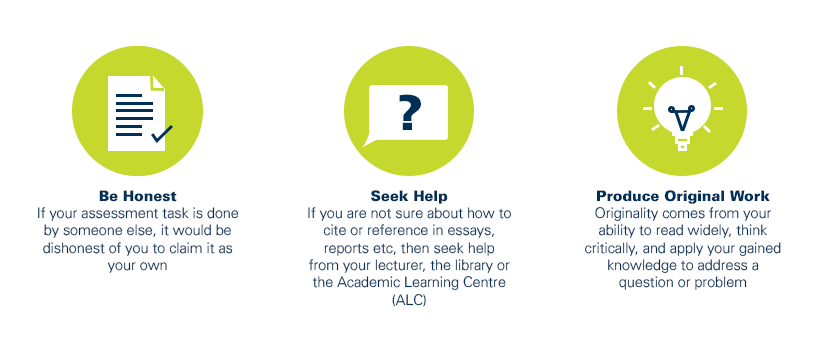
As a CQUniversity student you are expected to act honestly in all aspects of your academic work.
Any assessable work undertaken or submitted for review or assessment must be your own work. Assessable work is any type of work you do to meet the assessment requirements in the unit, including draft work submitted for review and feedback and final work to be assessed.
When you use the ideas, words or data of others in your assessment, you must thoroughly and clearly acknowledge the source of this information by using the correct referencing style for your unit. Using others’ work without proper acknowledgement may be considered a form of intellectual dishonesty.
Participating honestly, respectfully, responsibly, and fairly in your university study ensures the CQUniversity qualification you earn will be valued as a true indication of your individual academic achievement and will continue to receive the respect and recognition it deserves.
As a student, you are responsible for reading and following CQUniversity’s policies, including the Student Academic Integrity Policy and Procedure. This policy sets out CQUniversity’s expectations of you to act with integrity, examples of academic integrity breaches to avoid, the processes used to address alleged breaches of academic integrity, and potential penalties.
What is a breach of academic integrity?
A breach of academic integrity includes but is not limited to plagiarism, self-plagiarism, collusion, cheating, contract cheating, and academic misconduct. The Student Academic Integrity Policy and Procedure defines what these terms mean and gives examples.
Why is academic integrity important?
A breach of academic integrity may result in one or more penalties, including suspension or even expulsion from the University. It can also have negative implications for student visas and future enrolment at CQUniversity or elsewhere. Students who engage in contract cheating also risk being blackmailed by contract cheating services.
Where can I get assistance?
For academic advice and guidance, the Academic Learning Centre (ALC) can support you in becoming confident in completing assessments with integrity and of high standard.
What can you do to act with integrity?