Overview
The application of business intelligence and analytics have transformed the way in which organisations operate. Through the use of business intelligence and analytics tools, organisations are able to better understand how their businesses are performing, make well-informed decisions that improve business performance and create new strategic opportunities for growth. This unit equips you with the knowledge of various business intelligence concepts, tools and analytical techniques that organisations use for improving their decision making and to achieve competitive advantage. You will learn about the role of various information systems (Management Support Systems, Decision Support Systems, Knowledge-Based Systems, Group Support Systems) and how they are integrated at the enterprise level to support decision making. In this unit, you will specifically learn about data mining, data visualisation, text and web analytics and use a data mining tool to classify and analyse data.
Details
Pre-requisites or Co-requisites
Pre-requisites: (COIT12203 Workflow Analysis & Management and COIT11240 Dashboard Design and Visualisation) OR (COIT12203 Workflow Analysis & Management and HRMT11010 Organisational Behaviour).
Important note: Students enrolled in a subsequent unit who failed their pre-requisite unit, should drop the subsequent unit before the census date or within 10 working days of Fail grade notification. Students who do not drop the unit in this timeframe cannot later drop the unit without academic and financial liability. See details in the Assessment Policy and Procedure (Higher Education Coursework).
Offerings For Term 1 - 2026
Attendance Requirements
All on-campus students are expected to attend scheduled classes - in some units, these classes are identified as a mandatory (pass/fail) component and attendance is compulsory. International students, on a student visa, must maintain a full time study load and meet both attendance and academic progress requirements in each study period (satisfactory attendance for International students is defined as maintaining at least an 80% attendance record).
Recommended Student Time Commitment
Each 6-credit Undergraduate unit at CQUniversity requires an overall time commitment of an average of 12.5 hours of study per week, making a total of 150 hours for the unit.
Class Timetable
Assessment Overview
Assessment Grading
This is a graded unit: your overall grade will be calculated from the marks or grades for each assessment task, based on the relative weightings shown in the table above. You must obtain an overall mark for the unit of at least 50%, or an overall grade of 'pass' in order to pass the unit. If any 'pass/fail' tasks are shown in the table above they must also be completed successfully ('pass' grade). You must also meet any minimum mark requirements specified for a particular assessment task, as detailed in the 'assessment task' section (note that in some instances, the minimum mark for a task may be greater than 50%). Consult the University's Grades and Results Policy for more details of interim results and final grades.
All University policies are available on the CQUniversity Policy site.
You may wish to view these policies:
- Grades and Results Policy
- Assessment Policy and Procedure (Higher Education Coursework)
- Review of Grade Procedure
- Student Academic Integrity Policy and Procedure
- Academic Progression Policy and Procedure
- Student Refund and Credit Balance Policy and Procedure
- Complaints Policy and Procedure
- Information and Communications Technology Acceptable Use Policy and Procedure
This list is not an exhaustive list of all University policies. The full list of University policies are available on the CQUniversity Policy site.
Feedback, Recommendations and Responses
Every unit is reviewed for enhancement each year. At the most recent review, the following staff and student feedback items were identified and recommendations were made.
Feedback from Unit coordinator’s reflection from student feedback during class.
Limited opportunities for students to connect theoretical concepts with industry practices.
Incorporate short case studies and guest presentations from industry professionals into the unit. This will help students better understand the practical application of business intelligence frameworks and enhance their confidence in using professional tools.
- Apply the principles of decision theory to interpret the needs of decision-makers
- Analyse the needs of computerised support for managerial decision making and business performance reporting
- Evaluate the roles, trends and impacts of various business intelligence and analytics tools in organisations
- Analyse the technological architecture required for building business intelligence systems in organisations
- Evaluate the importance of data analysis, data processing and visualisation
- Apply business intelligence and analytics software tools to solve real-world problems and interpret results.
Australian Computer Society (ACS) recognises the Skills Framework for the Information Age (SFIA). SFIA is in use in over 100 countries and provides a widely used and consistent definition of ICT skills. SFIA is increasingly being used when developing job descriptions and role profiles.
ACS members can use the tool MySFIA to build a skills profile at https://www.acs.org.au/professionalrecognition/mysfia-b2c.html
This unit contributes to the following workplace skills as defined by SFIA. The SFIA code is included:
- Analytics (INAN)
- Business Analysis (BUAN)
- Data Analysis (DTAN)
- Data Visualisation (VISL)
Alignment of Assessment Tasks to Learning Outcomes
| Assessment Tasks | Learning Outcomes | |||||
|---|---|---|---|---|---|---|
| 1 | 2 | 3 | 4 | 5 | 6 | |
| 1 - Written Assessment - 30% | ||||||
| 2 - Written Assessment - 40% | ||||||
| 3 - Group Work - 30% | ||||||
Alignment of Graduate Attributes to Learning Outcomes
| Graduate Attributes | Learning Outcomes | |||||
|---|---|---|---|---|---|---|
| 1 | 2 | 3 | 4 | 5 | 6 | |
| 1 - Communication | ||||||
| 2 - Problem Solving | ||||||
| 3 - Critical Thinking | ||||||
| 4 - Information Literacy | ||||||
| 5 - Team Work | ||||||
| 6 - Information Technology Competence | ||||||
| 7 - Cross Cultural Competence | ||||||
| 8 - Ethical practice | ||||||
| 9 - Social Innovation | ||||||
| 10 - First Nations Knowledges | ||||||
| 11 - Aboriginal and Torres Strait Islander Cultures | ||||||
Alignment of Assessment Tasks to Graduate Attributes
| Assessment Tasks | Graduate Attributes | ||||||||||
|---|---|---|---|---|---|---|---|---|---|---|---|
| 1 | 2 | 3 | 4 | 5 | 6 | 7 | 8 | 9 | 10 | 11 | |
| 1 - Written Assessment - 30% | |||||||||||
| 2 - Written Assessment - 40% | |||||||||||
| 3 - Group Work - 30% | |||||||||||
Textbooks
Analytics, Data Science, & Artificial Intelligence: Systems for Decision Support
- 11th Global Edition (2020)
- Authors: Ramesh Sharda, Dursun Delen and Efraim Turban
- Pearson
- London London , England
- ISBN: 9781292341552
- Binding: Paperback
IT Resources
- CQUniversity Student Email
- Internet
- Unit Website (Moodle)
- Trueblue Visual DSS
- Tableau Desktop (optional)
- Microsoft Power BI Desktop
- WEKA
All submissions for this unit must use the referencing style: Harvard (author-date)
For further information, see the Assessment Tasks.
m.saiedurrahaman@cqu.edu.au
Week 1
Begin Date: 09 Mar 2026Module/Topic
Overview of Business Analytics and Intelligence
Chapter
Chapters 1 and 14
Events and Submissions/Topic
Week 2
Begin Date: 16 Mar 2026Module/Topic
Decision-Making with AI Support
Chapter
Chapters 2
Additional learning resources will be made available.
Events and Submissions/Topic
Week 3
Begin Date: 23 Mar 2026Module/Topic
Data Stack (Collection, Storage and Processing) for Business Analytics
Chapter
Learning materials will be accessible through the Moodle unit website.
Events and Submissions/Topic
Week 4
Begin Date: 30 Mar 2026Module/Topic
Business Reporting and Visual Analytics
Chapter
Chapter 3
Extra learning materials will be provided.
Events and Submissions/Topic
Week 5
Begin Date: 06 Apr 2026Module/Topic
Predictive Analytics with Data Mining
Chapter
Chapter 4
Events and Submissions/Topic
Week 6
Begin Date: 13 Apr 2026Module/Topic
Machine/Deep-learning and Analysis of Unstructured Data
Chapter
Chapter 5, 6 and 7
Events and Submissions/Topic
Mid-term break
Begin Date: 20 Apr 2026Module/Topic
Chapter
Events and Submissions/Topic
Week 7
Begin Date: 27 Apr 2026Module/Topic
Prescriptive Analysis: Optimisation and Simulation
Chapter
Chapter 8
Events and Submissions/Topic
Week 8
Begin Date: 04 May 2026Module/Topic
Dashboard Design, and Performance Management
Chapter
Learning materials will be provided via Moodle unit website.
Events and Submissions/Topic
Week 9
Begin Date: 11 May 2026Module/Topic
Group Decision Making and Knowledge Systems
Chapter
Chapters 11 and 12
Events and Submissions/Topic
Week 10
Begin Date: 18 May 2026Module/Topic
Emerging Trends and Future Impacts
Chapter
Chapter 14
Events and Submissions/Topic
Week 11
Begin Date: 25 May 2026Module/Topic
Workshop 1: Business Analytics Case Study
Chapter
Learning materials will be provided, and group discussions will be arranged.
Events and Submissions/Topic
Week 12
Begin Date: 01 Jun 2026Module/Topic
Workshop 2: Business Intelligence Application Scenarios
Chapter
Presentations and group discussions will be arranged.
Events and Submissions/Topic
Exam Week
Begin Date: 08 Jun 2026Module/Topic
Chapter
Events and Submissions/Topic
Vacation/Exam Week
Begin Date: 15 Jun 2026Module/Topic
Chapter
Events and Submissions/Topic
Unit coordinator: Dr. Mohammad Saiedur Rahaman
Office: Melbourne - 6.13
Email: m.saiedurrahaman@cqu.edu.au
1 Written Assessment
This assessment task is associated with learning outcomes 1, 2, and 6 as outlined in the unit profile. There are three parts in Assignment 1:
- Part 1- Business Intelligence (BI) case study: You will write a short report based on a given BI application scenario.
- Part 2- Business investment decision-making: You will develop models and derive solutions to support investment decisions.
- Part 3: Data and information visualisation — You will create Power BI visualisations to perform business analytics.
AI Assessment Scale - AI Planning: You may use Al for planning, idea development, and research. Your final submission should show how you have developed and refined these ideas.
More details will be provided on the unit website.
Week 6 Friday (17 Apr 2026) 11:59 pm AEST
Late submissions are subject to the university's late submission penalty policies.
Week 7 Friday (1 May 2026)
Assessments will be returned through Moodle. Late submissions with or without extension approvals may be returned after the above date.
Your assessment will be marked according to the following aspects:
- Discussion on your understanding of business intelligence and analytics.
- Appropriate use of BI tools for generating models and deriving business solutions
- Data visualisation and visual analytics
You will be assessed on your responses regarding accuracy, clarity, and suitability for the given contexts. More details will be provided on the unit website.
- Apply the principles of decision theory to interpret the needs of decision-makers
- Analyse the needs of computerised support for managerial decision making and business performance reporting
- Analyse the technological architecture required for building business intelligence systems in organisations
- Evaluate the importance of data analysis, data processing and visualisation
- Communication
- Problem Solving
- Critical Thinking
- Information Literacy
- Team Work
- Information Technology Competence
2 Written Assessment
This assessment item relates to course learning outcomes numbers 1, 2, 3, and 6 as outlined in the unit profile. There are three parts in Assignment 2:
- Part 1 - Data processing, modeling and analysis for an automated decision support systems: You are required to do modeling and in-depth analysis for building an automatic decision support system.
- Part 2 - Data mining: You are required to use a specific data mining tool to generate a classification tree and provide a summary of the classification result.
- Part 3 - Descriptive analytics: You will use an information management tool (Dashboard) that visually tracks, analyses, and displays key performance indicators (KPI), metrics, and so forth to monitor the overall business performance. You are required to design/discuss a business intelligence dashboard to facilitate decision-making.
AI Assessment Scale - AI Planning: You may use Al for planning, idea development, and research. Your final submission should show how you have developed and refined these ideas.
More details will be provided on the unit website.
Week 10 Friday (22 May 2026) 11:59 pm AEST
Late submissions are subject to the university's late submission penalty policies.
Assessments will be returned on the grade certification date.
Your second assignment will be marked according to the following aspects:
- Data modeling and analysis, automated decision support system discussion
- Appropriate use of data mining tools for data analysis
- A case study on information visualisation and analysis
You will be assessed on your responses regarding accuracy, clarity, and suitability for the given contexts. More details will be provided on the unit website.
- Apply the principles of decision theory to interpret the needs of decision-makers
- Analyse the needs of computerised support for managerial decision making and business performance reporting
- Evaluate the roles, trends and impacts of various business intelligence and analytics tools in organisations
- Apply business intelligence and analytics software tools to solve real-world problems and interpret results.
- Communication
- Problem Solving
- Critical Thinking
- Information Literacy
- Team Work
- Information Technology Competence
- Ethical practice
3 Group Work
This is a group assignment (group size: 3 students per group, although variations may need to be made by your tutor depending on the class size). Your group is required to prepare a report that critically evaluates a Business Intelligence (BI) application scenario from a provided list, demonstrating the use of a business analytics and intelligence framework within the chosen area. The assignment also includes a presentation showcasing the group's understanding of BI concepts and the technologies used to develop BI applications.
AI Assessment Scale - AI Planning: You may use Al for planning, idea development, and research. Your final submission should show how you have developed and refined these ideas.
More details will be provided on the unit website.
IMPORTANT NOTE: This assessment is exempted from the 72-hour submission grace period and must be completed by the stated submission date/time.
Week 12 Friday (5 June 2026) 11:59 pm AEST
Late submissions are subject to the university's late submission penalty policies.
Assessments will be returned on the grade certification date.
Your third assignment will be marked according to the following aspects:
- Introduction of the chosen BI application scenario
- The business analytics framework
- How to apply artificial intelligence to the business analytics model
- Presentation slides
- Presentation
Your group will be assessed on the responses regarding teamwork, accuracy, clarity, and suitability for a chosen BI application. More details will be provided on the unit website.
- Evaluate the roles, trends and impacts of various business intelligence and analytics tools in organisations
- Analyse the technological architecture required for building business intelligence systems in organisations
- Evaluate the importance of data analysis, data processing and visualisation
- Apply business intelligence and analytics software tools to solve real-world problems and interpret results.
- Communication
- Problem Solving
- Critical Thinking
- Information Literacy
- Team Work
- Information Technology Competence
- Ethical practice
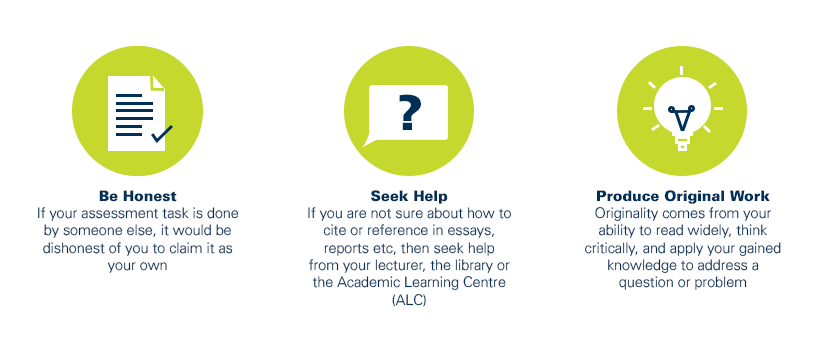
As a CQUniversity student you are expected to act honestly in all aspects of your academic work.
Any assessable work undertaken or submitted for review or assessment must be your own work. Assessable work is any type of work you do to meet the assessment requirements in the unit, including draft work submitted for review and feedback and final work to be assessed.
When you use the ideas, words or data of others in your assessment, you must thoroughly and clearly acknowledge the source of this information by using the correct referencing style for your unit. Using others’ work without proper acknowledgement may be considered a form of intellectual dishonesty.
Participating honestly, respectfully, responsibly, and fairly in your university study ensures the CQUniversity qualification you earn will be valued as a true indication of your individual academic achievement and will continue to receive the respect and recognition it deserves.
As a student, you are responsible for reading and following CQUniversity’s policies, including the Student Academic Integrity Policy and Procedure. This policy sets out CQUniversity’s expectations of you to act with integrity, examples of academic integrity breaches to avoid, the processes used to address alleged breaches of academic integrity, and potential penalties.
What is a breach of academic integrity?
A breach of academic integrity includes but is not limited to plagiarism, self-plagiarism, collusion, cheating, contract cheating, and academic misconduct. The Student Academic Integrity Policy and Procedure defines what these terms mean and gives examples.
Why is academic integrity important?
A breach of academic integrity may result in one or more penalties, including suspension or even expulsion from the University. It can also have negative implications for student visas and future enrolment at CQUniversity or elsewhere. Students who engage in contract cheating also risk being blackmailed by contract cheating services.
Where can I get assistance?
For academic advice and guidance, the Academic Learning Centre (ALC) can support you in becoming confident in completing assessments with integrity and of high standard.
What can you do to act with integrity?