Overview
Clinical Placement 6 provides you with your sixth block of practical experience within a chiropractic clinic. You will work independently while performing as a functional team member using the theoretical knowledge and practical skills developed in the previous five clinical units. You will be expected to demonstrate your increased knowledge and skill by delivering patient assessments and treatments. In addition, you will actively lead clinical decision making and management planning discussions. During this unit you will have the opportunity to have an external placement. The clinical placement experience is a valuable bridge between university and professional practice.
Details
Pre-requisites or Co-requisites
Prerequisite: CHIR20011 Clinical Practice 5
Important note: Students enrolled in a subsequent unit who failed their pre-requisite unit, should drop the subsequent unit before the census date or within 10 working days of Fail grade notification. Students who do not drop the unit in this timeframe cannot later drop the unit without academic and financial liability. See details in the Assessment Policy and Procedure (Higher Education Coursework).
Offerings For Term 3 - 2026
Attendance Requirements
All on-campus students are expected to attend scheduled classes - in some units, these classes are identified as a mandatory (pass/fail) component and attendance is compulsory. International students, on a student visa, must maintain a full time study load and meet both attendance and academic progress requirements in each study period (satisfactory attendance for International students is defined as maintaining at least an 80% attendance record).
Recommended Student Time Commitment
Each 12-credit Postgraduate unit at CQUniversity requires an overall time commitment of an average of 25 hours of study per week, making a total of 300 hours for the unit.
Class Timetable
Assessment Overview
| Assessment Task | Part Weighting (% of assessment) |
Assessment Security Level | Gen AI Guidance Levels |
|---|---|---|---|
| 1. Professional Practice Placement (Pass/Fail ) | |||
| Assessment 1 - Clinical requirements and competencies - must be completed by March 27th, 2027 (Professional Practice Placement) | 100% | Medium | AI-Assisted (Guided Collaboration) |
| 2. Portfolio (Pass/Fail · 2 parts ) | |||
| Part 1 – Part A: Written Reflection (Portfolio) | 50% | Low | AI-Assisted (Guided Collaboration) |
| Part 2 – Part B: Online Test (Portfolio) | 50% | High | No Gen AI Use |
| 3. Clinical Exit Practical (Pass/Fail ) | |||
| Clinic Exit Practical (Practical Assessment) | 100% | High | No Gen AI Use |
Assessment Grading
This is a pass/fail (non-graded) unit. To pass the unit, you must pass all of the individual assessment tasks shown in the table above.
All University policies are available on the CQUniversity Policy site.
You may wish to view these policies:
- Grades and Results Policy
- Assessment Policy and Procedure (Higher Education Coursework)
- Review of Grade Procedure
- Student Academic Integrity Policy and Procedure
- Academic Progression Policy and Procedure
- Student Refund and Credit Balance Policy and Procedure
- Complaints Policy and Procedure
- Information and Communications Technology Acceptable Use Policy and Procedure
This list is not an exhaustive list of all University policies. The full list of University policies are available on the CQUniversity Policy site.
Feedback, Recommendations and Responses
Every unit is reviewed for enhancement each year. At the most recent review, the following staff and student feedback items were identified and recommendations were made.
Feedback from SUTE Teacher Report. In-person from students to staff and supervisors.
One student provided student evaluation feedback, and multiple students have made in-person comments to staff and supervisors that Friday morning tutorials are inconvenient as they have work which is rostered on Friday mornings.
It is recommended that staff continue to remind students of the academic schedule and will upload recorded tutorials when possible. Clinic hours are arranged to support Friday tutorials and other key academic activities. Importantly, guest lecturers can be difficult to reschedule, and some may request that their sessions not be recorded. When applicable, tutorial recordings are made available via Zoom.
Feedback from In-person from students and staff
The 2024 Day 2 Clinical Exit Exam change to later in the term was well-received. In-clinic feedback was positive from students and staff, particularly in decreasing anxiety, and having more prompt feedback.
It is recommended to continue offering the Day 2 Clinical Exit Exam later in the term.
- Independently plan and perform a patient-centered clinical assessment.
- Appraise clinical data to determine differential diagnoses, formulate an appropriate working diagnosis and generate an appropriate treatment plan for complex cases.
- Use case studies to assess the need for a patient to receive emergency care and/or referral to another healthcare professional and demonstrate appropriate management of such cases.
- Prepare and present a health promotion plan as part of a patient's management plan.
- Explain a diagnosis and treatment plan to a patient, and produce professional written reports using effective communication skills.
- Independently and consistently comply with the duty of care of a primary health care practitioner and the Chiropractic Code of Conduct.
Even though this unit goes beyond the Chiropractic Council on Education Australasia's (CCEA) minimum standards, the Learning Outcomes address the majority of elements and performance indicators of those Accreditation Standards: Unit 3 Professional Interaction, Unit 6 Patient Assessment, Unit 7 Diagnostic Decision Making, Unit 8 Planning of Patient Care, and Unit 9 Implementation of Care. There will be some elements addressed from Unit 10 Disease Prevention and Health Promotion and Unit 11 Professional Scientific Development.
Alignment of Assessment Tasks to Learning Outcomes
| Assessment Tasks | Learning Outcomes | |||||
|---|---|---|---|---|---|---|
| 1 | 2 | 3 | 4 | 5 | 6 | |
|
1.
Assessment 1
(Pass/Fail )
Professional Practice Placement
|
||||||
|
2.
Assessment 2
(Pass/Fail · 2 parts
)
Part 1 -
Portfolio
Part 2 -
Portfolio
|
||||||
|
3.
Assessment 3
(Pass/Fail )
Practical Assessment
|
||||||
Alignment of Graduate Attributes to Learning Outcomes
| Graduate Attributes | Learning Outcomes | |||||
|---|---|---|---|---|---|---|
| 1 | 2 | 3 | 4 | 5 | 6 | |
| 1 - Knowledge | ||||||
| 2 - Communication | ||||||
| 3 - Cognitive, technical and creative skills | ||||||
| 4 - Research | ||||||
| 5 - Self-management | ||||||
| 6 - Ethical and Professional Responsibility | ||||||
| 7 - Leadership | ||||||
| 8 - First Nations Knowledges | ||||||
Textbooks
There are no required textbooks.
IT Resources
- CQUniversity Student Email
- Internet
- Unit Website (Moodle)
All submissions for this unit must use the referencing style: American Psychological Association 7th Edition (APA 7th edition)
For further information, see the Assessment Tasks.
m.fernandez@cqu.edu.au
d.comer@cqu.edu.au
k.deluca@cqu.edu.au
Week 1 - CP6 Orientation to Unit
Begin Date: 09 Nov 2026Module/Topic
Senior interns undertake patient care, reception, radiography and competency activities. Junior interns observe clinical procedures and complete relevant competencies with senior interns.
Chapter
Events and Submissions/Topic
Welcome to CP6
Zoom, Friday 10–11 am.
Week 2 - Transition to Practice - Continued Professional Development (CPD)
Begin Date: 16 Nov 2026Module/Topic
Senior interns continue patient care, reception, radiography and competency activities. Junior interns undertake direct observation and complete relevant competencies with senior interns.
Chapter
Events and Submissions/Topic
Zoom, Friday 10-11am
Week 3 - Clinical Practice and Competency Development
Begin Date: 23 Nov 2026Module/Topic
Senior and junior interns continue their allocated clinical duties, direct observation and competency activities.
Chapter
Events and Submissions/Topic
Zoom, Friday 10-11am
Week 4 - Transitions to Professional Practice
Begin Date: 30 Nov 2026Module/Topic
Senior interns continue patient care, reception, radiography and competency activities. Junior interns continue observation and competency development with senior interns.
Chapter
Events and Submissions/Topic
CBA presentation, on campus Friday 8–9 am.
Week 5 - Clinic Exit Exam Overview
Begin Date: 07 Dec 2026Module/Topic
Senior interns continue patient care, reception, radiography and competency activities. Junior interns continue observation and competency development with senior interns.
Chapter
Events and Submissions/Topic
Clinic Exit Practical Tutorial 1
Zoom, Friday 10-11am
Week 6 - Portfolio Task
Begin Date: 14 Dec 2026Module/Topic
Senior interns continue patient care, reception, radiography and competency completion. Junior interns are no longer rostered in clinic.
Chapter
All material will be available on Moodle
Events and Submissions/Topic
Assessment 2: Portfolio submission
Part A: Written Reflection Due: Week 6 Thursday (17 Dec 2026) 5:00 pm AEST
Mid-Term Break
Begin Date: 21 Dec 2026Module/Topic
Clinic Closure
Chapter
Events and Submissions/Topic
Week 7 - Clinic Exit Preparation
Begin Date: 04 Jan 2027Module/Topic
Preparing for Clinic Exit
Chapter
Events and Submissions/Topic
Zoom, Friday 10-11am
Week 8 - Clinic Exit Preparation
Begin Date: 11 Jan 2027Module/Topic
Case scenarios
Chapter
Events and Submissions/Topic
Zoom, Friday 10-11am
Week 9 - Clinic Exit Preparation
Begin Date: 18 Jan 2027Module/Topic
Case scenarios
Chapter
Events and Submissions/Topic
Zoom, Friday 10-11am
Week 10 - Clinical Handover Week
Begin Date: 25 Jan 2027Module/Topic
Senior interns continue clinical duties and complete patient handovers with junior interns. Junior interns directly observe and participate in the handover process.
Chapter
Events and Submissions/Topic
Zoom, Friday 10–11 am.
Week 11 - Clinic Exit Examination (OSLER)
Begin Date: 01 Feb 2027Module/Topic
Junior interns undertake their scheduled Friends and Family clinical activities.
Chapter
Events and Submissions/Topic
Study week and complete the 60-minute OSLER.
Clinic Exit Practical Due: Week 11 Friday (5 Feb 2027) 9:00 am AEST
Week 12 - Start of Clinic Check Out
Begin Date: 08 Feb 2027Module/Topic
Students who have completed their clinical hours, requirements and competencies arrange final checkout with their clinical supervisor.
The clinic is closed to junior interns.
Chapter
Events and Submissions/Topic
Exam Week - Clinic Check Out Begins
Begin Date: 15 Feb 2027Module/Topic
Online Examination and Final Clinical Completion.
Students complete the supervised online examination covering AHPRA and Chiropractic Board of Australia requirements.
Senior interns continue patient care, reception and radiography duties until all clinical requirements and checkout processes are complete.
Chapter
Events and Submissions/Topic
Assessment 2, Part B: Online Test February 18th, 9am.
Part B: Online Test Due: Exam Week Thursday (18 Feb 2027) 9:00 am AEST
1. Professional Practice Placement ( Pass/Fail )
Professional Practice Placement
This Pass/Fail assessment evaluates your attendance, clinical activity, competencies and overall performance during
placement.
Part A: Attendance and clinical requirements
You must complete and document the required term and/or final-year clinical activity totals, including:
- 300 follow-up patient visits;
- 50 new patient visits;
- 45 radiology reports;
- 30 radiographic procedures; and
- 5 learning objectives for the term (15 in total).
Clinical activities must be recorded in the approved logbook and verified as required.
The applicable term and final-year totals are provided in the Clinic Manual and Moodle.
Absences must be reported to both the clinical supervisor and Unit Coordinator and supported by appropriate
documentation. Missed clinical time must be completed unless otherwise formally approved. Scheduled public holidays
may be recorded as completed hours and do not need to be made up.
External placement opportunities are subject to approval, student progress and completion of the required Work
Integrated Learning documentation.
Part B: Clinical competencies and performance
Complete the following competencies by the published deadline:
- two history assessments;
- two reports of findings (ROF);
- one physical examination;
- one systems examination;
- one neurological examination;
- three treatment assessments;
- one rehabilitation assessment; and
- two file audits, comprising one term audit and one final audit.
Clinical performance is also evaluated through formative and summative Overall Clinical Competence Assessments (OCCA). The OCCA covers (1) professional behaviour, (2) communication, (3) patient assessment, (4) clinical reasoning and planning, (5) interventions and management, (6) evidence-informed practice, and (7) documentation and risk management.
All competency and OCCA documents must be complete, signed and submitted through Moodle. Further instructions, forms and scoring descriptors are provided in the Clinic Manual and Moodle.
Weighting
Pass/Fail
Minimum mark or grade
100% of all tasks must be completed successfully to achieve a pass grade in this task
Please note the due dates in the Assessment description.
To pass this assessment, you must for Part A:
- complete the required term or final-year clinical activity totals;
- successfully complete all required clinical competencies;
- complete the formative and summative OCCA;
- meet the required standard across all seven OCCA domains; and
- submit complete and signed documentation through Moodle.
For Part B, the full OCCA assessment criteria, scoring descriptors and required standards will be provided through Moodle.
Students who do not meet the formative standard will be identified as at risk and required to respond to feedback and undertake an improvement plan. Continued unsatisfactory performance may result in failure of this assessment.
Conduct or performance that creates an unacceptable risk to patients, staff, the clinical site or the University will be managed under the Student Conduct Policy and Procedure and other applicable professional, clinical and University procedures. This may include removal from placement and failure of the assessment.
Referencing Style
American Psychological Association 7th Edition (APA 7th edition)
Submission
Offline
- Independently plan and perform a patient-centered clinical assessment.
- Appraise clinical data to determine differential diagnoses, formulate an appropriate working diagnosis and generate an appropriate treatment plan for complex cases.
- Use case studies to assess the need for a patient to receive emergency care and/or referral to another healthcare professional and demonstrate appropriate management of such cases.
- Prepare and present a health promotion plan as part of a patient's management plan.
- Explain a diagnosis and treatment plan to a patient, and produce professional written reports using effective communication skills.
- Independently and consistently comply with the duty of care of a primary health care practitioner and the Chiropractic Code of Conduct.
2. Portfolio ( Pass/Fail · 2 parts )
Part 1 - Portfolio
Part A: Written Reflection
Submit an evidence-informed reflection of approximately 1,000 words based on a patient case you managed during
placement.
Using either Gibbs’ or Kolb’s reflective model:
- link the case to a relevant research paper discussed in case conference or provided in the unit;
- evaluate your clinical reasoning and management;
- identify what was done well and what could be improved;
- explain how the evidence informs your future clinical practice; and
- provide a specific plan for further learning or professional development.
Use professional language and APA 7 referencing where required.
Week 6 Thursday (17 Dec 2026) 5:00 pm AEST
You are required to upload your reflection on Moodle
Week 8 Thursday (14 Jan 2027)
You will receive formative feedback and your final result will be confirmed through Moodle.
Part A: Written Reflection
The reflection will be assessed on whether the student:
- selects and applies a relevant research paper;
- uses Gibbs’ or Kolb’s reflective model appropriately;
- critically reflects on clinical care and duty of care;
- identifies specific strengths and areas for improvement;
- provides a clear and practical improvement plan;
- uses appropriate evidence and APA 7 referencing;
- communicates using professional language and presentation; and
- complies with the stated requirement regarding generative AI
Both components A and B must be completed successfully.
Referencing Style
American Psychological Association 7th Edition (APA 7th edition)
Submission
Online
- Independently plan and perform a patient-centered clinical assessment.
- Appraise clinical data to determine differential diagnoses, formulate an appropriate working diagnosis and generate an appropriate treatment plan for complex cases.
- Use case studies to assess the need for a patient to receive emergency care and/or referral to another healthcare professional and demonstrate appropriate management of such cases.
Part 2 - Portfolio
Complete an online test of up to 120 minutes assessing:
- clinical knowledge and reasoning;
- synthesis of patient information;
- evidence-informed management;
- ethics and professional conduct;
- scope of practice;
- apply the Code of conduct adopted by the Chiropractic Board of Australia and relevant professional requirements;
- advertising requirements;
- mandatory notifications; and
- clinical record keeping.
A preparatory Zoom session will be provided. The test will be conducted in a designated computer laboratory, with details provided through Moodle
Exam Week Thursday (18 Feb 2027) 9:00 am AEST
Via Moodle
The test assesses the student’s ability to:
- interpret clinical information and apply clinical reasoning;
- develop an evidence-informed management plan;
- demonstrate entry-level professional knowledge and judgement;
- apply ethical and professional requirements;
- apply the AHPRA Code of Conduct and relevant Chiropractic Board of Australia requirements; and
- demonstrate knowledge of advertising, mandatory notification and clinical record-keeping requirements.
Both components must be completed successfully.
Referencing Style
American Psychological Association 7th Edition (APA 7th edition)
Submission
Online
- Independently plan and perform a patient-centered clinical assessment.
- Appraise clinical data to determine differential diagnoses, formulate an appropriate working diagnosis and generate an appropriate treatment plan for complex cases.
- Use case studies to assess the need for a patient to receive emergency care and/or referral to another healthcare professional and demonstrate appropriate management of such cases.
3. Clinical Exit Practical ( Pass/Fail )
Practical Assessment
The Clinic Exit Practical assesses readiness for entry-level chiropractic practice.
You will complete one Objective Structured Long Examination Record station of up to 60 minutes. Working through a new clinical case, you will be required to demonstrate:
- focused and diagnostically relevant history taking;
- appropriate examination planning and performance, including predicted findings where relevant;
- interpretation of clinical findings and any investigation results or images provided;
- differential and working diagnosis, with justification;
- selection of further investigations where appropriate, including what each investigation is intended to identify;
- evidence-informed management and rehabilitation planning, including referral or co-management;
- patient communication and explanation; and
- safe and professional conduct.
You must attend at the allocated time and present in appropriate clinical attire. Examination quarantine arrangements will apply, and late admission may not be possible after the first student has been released.
Academic and non-academic reviewers may form part of the examining panel. The assessment may be video recorded for moderation.
An overview Zoom session and the OSLER template will be provided through Moodle
Week 11 Friday (5 Feb 2027) 9:00 am AEST
This exam will be held on 5 February 2027. Students will be quarantined from 30 minutes prior to their allocated test time. No students will be admitted after the first students have been released.
Via Moodle
The practical assesses your ability to:
- obtain a focused and diagnostically relevant history;
plan and perform an appropriate clinical examination, including predicting relevant findings based on the differential diagnoses; - interpret clinical findings and identify differential diagnoses;
- formulate an appropriate working diagnosis;
- determine whether further investigation or referral is required, including interpreting provided investigation results or images;
- develop an evidence-informed management and rehabilitation plan, including appropriate outcome measures, reassessment and return-to-function goals;
- communicate findings and management clearly;
- demonstrate appropriate professional behaviour, scope of practice and duty of care; and
- perform at the level expected of an entry-level chiropractor.
This is a Pass/Fail assessment.
A minimum mark of 65% is required to pass.
Students who do not achieve a pass will be provided with a further opportunity to undertake the Clinic Exit Practical, in accordance with University assessment policy and procedures.
Referencing Style
American Psychological Association 7th Edition (APA 7th edition)
Submission
Offline
- Prepare and present a health promotion plan as part of a patient's management plan.
- Explain a diagnosis and treatment plan to a patient, and produce professional written reports using effective communication skills.
- Independently and consistently comply with the duty of care of a primary health care practitioner and the Chiropractic Code of Conduct.
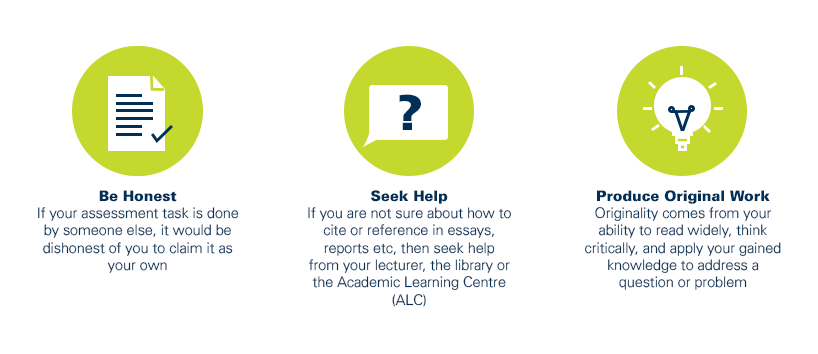
As a CQUniversity student you are expected to act honestly in all aspects of your academic work.
Any assessable work undertaken or submitted for review or assessment must be your own work. Assessable work is any type of work you do to meet the assessment requirements in the unit, including draft work submitted for review and feedback and final work to be assessed.
When you use the ideas, words or data of others in your assessment, you must thoroughly and clearly acknowledge the source of this information by using the correct referencing style for your unit. Using others’ work without proper acknowledgement may be considered a form of intellectual dishonesty.
Participating honestly, respectfully, responsibly, and fairly in your university study ensures the CQUniversity qualification you earn will be valued as a true indication of your individual academic achievement and will continue to receive the respect and recognition it deserves.
As a student, you are responsible for reading and following CQUniversity’s policies, including the Student Academic Integrity Policy and Procedure. This policy sets out CQUniversity’s expectations of you to act with integrity, examples of academic integrity breaches to avoid, the processes used to address alleged breaches of academic integrity, and potential penalties.
What is a breach of academic integrity?
A breach of academic integrity includes but is not limited to plagiarism, self-plagiarism, collusion, cheating, contract cheating, and academic misconduct. The Student Academic Integrity Policy and Procedure defines what these terms mean and gives examples.
Why is academic integrity important?
A breach of academic integrity may result in one or more penalties, including suspension or even expulsion from the University. It can also have negative implications for student visas and future enrolment at CQUniversity or elsewhere. Students who engage in contract cheating also risk being blackmailed by contract cheating services.
Where can I get assistance?
For academic advice and guidance, the Academic Learning Centre (ALC) can support you in becoming confident in completing assessments with integrity and of high standard.
What can you do to act with integrity?