Overview
Clinical Practice 5 provides you with your fifth block of practical experience within a chiropractic clinic. Under decreasing guidance from your clinic supervisors, you will work as a functional team member and use the theoretical knowledge and practical skills developed in the previous four clinical units. Therefore, you will be expected to demonstrate this increased knowledge and skill by delivering patient assessment and treatment. You will begin to actively lead clinical decision making and management planning discussions. During this unit you will be able to undertake many clinical tasks independently. This intern experience is a valuable bridge between university and professional practice.
Details
Pre-requisites or Co-requisites
Prerequisite: CHIR20009 Clinical Practice 4
Important note: Students enrolled in a subsequent unit who failed their pre-requisite unit, should drop the subsequent unit before the census date or within 10 working days of Fail grade notification. Students who do not drop the unit in this timeframe cannot later drop the unit without academic and financial liability. See details in the Assessment Policy and Procedure (Higher Education Coursework).
Offerings For Term 2 - 2026
Attendance Requirements
All on-campus students are expected to attend scheduled classes - in some units, these classes are identified as a mandatory (pass/fail) component and attendance is compulsory. International students, on a student visa, must maintain a full time study load and meet both attendance and academic progress requirements in each study period (satisfactory attendance for International students is defined as maintaining at least an 80% attendance record).
Recommended Student Time Commitment
Each 12-credit Postgraduate unit at CQUniversity requires an overall time commitment of an average of 25 hours of study per week, making a total of 300 hours for the unit.
Class Timetable
Assessment Overview
Assessment Grading
This is a pass/fail (non-graded) unit. To pass the unit, you must pass all of the individual assessment tasks shown in the table above.
All University policies are available on the CQUniversity Policy site.
You may wish to view these policies:
- Grades and Results Policy
- Assessment Policy and Procedure (Higher Education Coursework)
- Review of Grade Procedure
- Student Academic Integrity Policy and Procedure
- Academic Progression Policy and Procedure
- Student Refund and Credit Balance Policy and Procedure
- Complaints Policy and Procedure
- Information and Communications Technology Acceptable Use Policy and Procedure
This list is not an exhaustive list of all University policies. The full list of University policies are available on the CQUniversity Policy site.
Feedback, Recommendations and Responses
Every unit is reviewed for enhancement each year. At the most recent review, the following staff and student feedback items were identified and recommendations were made.
Feedback from SUTE
Some students would have liked more clinical genAI case prompts to be provided for practice.
It is recommended that the unit coordinator consider generating a library of genAI clinical case prompts.
Feedback from SUTE
Some students would have liked more information about the external placements earlier in the term.
It is recommended that the unit coordinator ensure information about the external placements is available from the start of term.
- Plan and perform an appropriate patient-centered clinical assessment, at a mastery level
- Independently appraise clinical data to determine differential diagnoses, formulate an appropriate working diagnoses and then generate an appropriate treatment plan
- Use case studies with minimal supervisor guidance to assess the need for a patient to receive emergency care and/or referral to another health care professional, and perform an appropriate course of care
- Prepare and present a health promotion plan as part of a patient’s management plan
- Explain a diagnosis and treatment plan to a patient, and produce professional written reports using effective communication skills
- Independently and consistently comply with the duty of care of a primary health care practitioner and the Chiropractic Code of Conduct.
The Learning Outcomes address the majority of elements and performance indicators of CCEA’s Accreditation Standards: Unit 3 Professional Interaction, Unit 6 Patient Assessment, Unit 7 Diagnostic Decision Making, Unit 8 Planning of Patient Care, and Unit 9 Implementation of Care. There will be some elements addressed from Unit 10 Disease Prevention and Health Promotion and Unit 11 Professional Scientific Development. These will be evidenced by the portfolio which will log each patient interaction.
Alignment of Assessment Tasks to Learning Outcomes
| Assessment Tasks | Learning Outcomes | |||||
|---|---|---|---|---|---|---|
| 1 | 2 | 3 | 4 | 5 | 6 | |
| 1 - In-class Test(s) - 0% | ||||||
| 2 - Professional Practice Placement - 0% | ||||||
| 3 - Professional Practice Placement - 0% | ||||||
Alignment of Graduate Attributes to Learning Outcomes
| Graduate Attributes | Learning Outcomes | |||||
|---|---|---|---|---|---|---|
| 1 | 2 | 3 | 4 | 5 | 6 | |
| 1 - Knowledge | ||||||
| 2 - Communication | ||||||
| 3 - Cognitive, technical and creative skills | ||||||
| 4 - Research | ||||||
| 5 - Self-management | ||||||
| 6 - Ethical and Professional Responsibility | ||||||
| 7 - Leadership | ||||||
| 8 - First Nations Knowledges | ||||||
| 9 - Aboriginal and Torres Strait Islander Cultures | ||||||
Textbooks
There are no required textbooks.
IT Resources
- CQUniversity Student Email
- Internet
- Unit Website (Moodle)
All submissions for this unit must use the referencing style: American Psychological Association 7th Edition (APA 7th edition)
For further information, see the Assessment Tasks.
b.zietsman@cqu.edu.au
Week 1 - Welcome and course overview
Begin Date: 13 Jul 2026Module/Topic
Lecture: Introduction to CP5
Clinical duties: Reception, Radiography and Clinical Management
Clinical performance: Direct observations of procedures, mini-CEX, participation in case pre-shift conferences.
Chapter
Relevant content will be available on moodle
Events and Submissions/Topic
Week 2
Begin Date: 20 Jul 2026Module/Topic
Clinical duties: Reception, Radiography and Clinical Management
Clinical performance: Direct observations of procedures, mini-CEX, participation in case pre-shift conferences.
Chapter
Relevant content will be available on moodle
Events and Submissions/Topic
Week 3
Begin Date: 27 Jul 2026Module/Topic
Clinical duties: Reception, Radiography and Clinical Management
Clinical performance: Direct observations of procedures, mini-CEX, participation in case pre-shift conferences.
Chapter
Relevant content will be available on moodle
Events and Submissions/Topic
Week 4
Begin Date: 03 Aug 2026Module/Topic
Clinical duties: Reception, Radiography and Clinical Management
Clinical performance: Direct observations of procedures, mini-CEX, participation in case pre-shift conferences.
Chapter
Relevant content will be available on moodle
Events and Submissions/Topic
Week 5
Begin Date: 10 Aug 2026Module/Topic
Clinical duties: Reception, Radiography and Clinical Management
Clinical performance: Direct observations of procedures, mini-CEX, participation in case pre-shift conferences.
Chapter
Events and Submissions/Topic
Week 6
Begin Date: 17 Aug 2026Module/Topic
Clinical duties: Reception, Radiography and Clinical Management
Clinical performance: Direct observations of procedures, mini-CEX, participation in case pre-shift conferences.
Chapter
Events and Submissions/Topic
Vacation Week
Begin Date: 24 Aug 2026Module/Topic
Vacation week
Chapter
Events and Submissions/Topic
Week 7
Begin Date: 31 Aug 2026Module/Topic
Multi-Discipline Case Conference: Online zoom discussion
Clinical duties: Reception, Radiography and Clinical Management
Clinical performance: Direct observations of procedures, mini-CEX, participation in case pre-shift conferences.
Chapter
Events and Submissions/Topic
Week 8
Begin Date: 07 Sep 2026Module/Topic
Clinical duties: Reception, Radiography and Clinical Management
Clinical performance: Direct observations of procedures, mini-CEX, participation in case pre-shift conferences.
Chapter
Events and Submissions/Topic
Week 9
Begin Date: 14 Sep 2026Module/Topic
Clinical duties: Reception, Radiography and Clinical Management
Clinical performance: Direct observations of procedures, mini-CEX, participation in case pre-shift conferences.
Chapter
Events and Submissions/Topic
Portfolio assessment due Friday 18th September 2026 at 17:00 via moodle.
Week 10
Begin Date: 21 Sep 2026Module/Topic
Clinical duties: Reception, Radiography and Clinical Management
Clinical performance: Direct observations of procedures, mini-CEX, participation in case pre-shift conferences.
Chapter
Events and Submissions/Topic
Competencies due: 25th September 2026 Friday 17:00
Portfolio Due: Week 9 Friday (25 Sept 2026) 5:00 pm AEST
Week 11
Begin Date: 28 Sep 2026Module/Topic
Clinical duties: Reception, Radiography and Clinical Management
Clinical performance: Direct observations of procedures, mini-CEX, participation in case pre-shift conferences.
Chapter
Events and Submissions/Topic
Final CP5 OCCA - schedule a sit down with your clinic lead
Week 12
Begin Date: 05 Oct 2026Module/Topic
Clinical duties: Reception, Radiography and Clinical Management
Clinical performance: Direct observations of procedures, mini-CEX, participation in case pre-shift conferences.
Chapter
.
Events and Submissions/Topic
Final CP5 OCCA - schedule a sit down with your clinic lead
ATTENDANCE, COMPETENCIES AND LOGBOOKS Due: Week 12 Friday (9 Oct 2026) 5:00 pm AEST
Exam Week
Begin Date: 12 Oct 2026Module/Topic
Chapter
Events and Submissions/Topic
End of term test: Thursday 15/10/2026 11:00-13:00 BNE 01/5.09, 01/1.06, 01/1.07
End of Term Test Due: Exam Week Thursday (15 Oct 2026) 11:00 am AEST
Vacation/Exam Week
Begin Date: 19 Oct 2026Module/Topic
Chapter
Events and Submissions/Topic
1 Professional Practice Placement
Clinical Reflective Portfolio – Podcast Reflection Task
This task requires you to engage critically with a selected podcast relevant to contemporary health care practice and produce a reflective portfolio that demonstrates your development as a chiropractic clinician. You will be provided with a choice of podcasts via Moodle, each addressing themes pertinent to patient-centred care, professional practice, and health promotion.
Task
After selecting and listening to your chosen podcast, you are required to reflect meaningfully on its content in the context of your chiropractic clinical practice. Your reflection should address the following central question: "Based on what you already know, how does this podcast influence your clinical chiropractic practice?"
Your response should draw on your existing clinical knowledge and experience to critically evaluate the podcast's key messages. Consider what you have learned or had reinforced, what challenged your current thinking, and how you might — or might not — incorporate the podcast's insights into your practice as a chiropractor. Strong submissions will move beyond surface-level summary to demonstrate genuine critical reflection, clinical reasoning, and professional growth.
Task Structure
This portfolio consists of two components:
Task A – Written Reflection (40%): A written reflective piece in which you analyse the podcast content, connect it to established clinical and professional frameworks, and articulate its relevance (or limitations) to chiropractic practice. Your writing should demonstrate effective communication skills and the ability to produce a professional, structured written report. Uploaded onto moodle as a word document.
Task B – Interactive Oral Component (60%): An oral discussion in which you present and defend your reflection, respond to questions, and demonstrate your capacity to engage in clinical reasoning and professional dialogue.
Assessment
The portfolio is assessed on a pass/fail basis; however, you must achieve a minimum of 65% to pass. Both tasks must be submitted and completed.
Learning Outcomes
Your reflection should demonstrate alignment with your learning outcomes, including your ability to communicate a clinical rationale effectively, uphold your duty of care as a primary health care practitioner, and comply with the Chiropractic Code of Conduct. You are encouraged to consider how the podcast's themes intersect with patient-centred care, health promotion, ethical practice, and professional responsibility.
High-quality reflections will show evidence of self-directed thinking, integration of prior clinical knowledge, awareness of your professional scope, and consideration of diverse patient populations — including the needs of First Nations, Aboriginal, and Torres Strait Islander peoples where relevant.
Key Reminders
- Select your podcast from the options provided on Moodle before beginning your reflection.
- Your written component should be carefully proofread and presented as a professional word document.
- Further assessment details, submission instructions, marking criteria, and podcast options are available on Moodle
- Level of GenAI use Level 1: GenAI is not allowed in this activity. This assessment is to be completed entirely without AI assistance in a controlled environment, ensuring you rely solely on your existing knowledge, understanding and skills.
Week 9 Friday (25 Sept 2026) 5:00 pm AEST
Submission via Moodle on Friday 5:00PM
Week 12 Friday (9 Oct 2026)
Grades will be returned via Moodle.
- Plan and perform an appropriate patient-centered clinical assessment, at a mastery level
- Prepare and present a health promotion plan as part of a patient’s management plan
- Independently and consistently comply with the duty of care of a primary health care practitioner and the Chiropractic Code of Conduct.
2 Professional Practice Placement
PART A -attendance and clinical requirements
As a health care professional your attendance is relied upon for the provision of quality patient care. Your absence and or tardiness impacts service delivery and safe patient care. It is expected that you attend 100% of the scheduled time during the clinical placement to achieve the required clinical attendance.
Public holidays are included as hours worked. You can log your shift hours worked for each public holiday. These do not need to be 'made up'.
Any time you are away from your clinical institution, you MUST supply a verifiable supporting document indicating why you have not attended. Both your clinical supervisor and the unit coordinator MUST be informed by you of any absences from your clinical placement. Any absence for part, or all of, a working day must be made up during the clinical placement.
Interns will have the opportunity at the discretion of the clinic supervisor and unit coordinator to go on an external clinical placement for a maximum of 4 weeks during terms 2 and 3. This will be decided based on the students’ progress towards reaching their clinical requirements and assessments. Please note there will not be an opportunity to do an external placement during Term 1. Interns will be responsible for ensuring all components of the Work Integrated Learning (WIL) agreement is completed in advance.
During your time in clinic, you MUST complete your total clinical requirements as detailed in the clinic manual (This term your target is 80 treatments, 15 new patient consultations, 2 systemic examinations, 10 radiology reports and 10 radiographic positioning encounters). The logbook MUST be kept UP TO DATE as logbook audits will be performed periodically throughout the term. It is your responsibility to ensure that all of these requirements are completed in order to attain a pass for this assessment.
*If the clinical supervisor deems your skills are not progressing well by week 6, remedial support will be offered and an additional OCCA will be performed.*
PART B - Overall Clinical Performance and Competency Assessments
Clinical placement occurs in a professional workplace. As a clinical student you are provided access to that workplace on the condition that you demonstrate behaviours and attributes of a healthcare professional and present a positive image to the staff and clients. As a student in the chiropractic profession in Australia, you are required to be in consistent compliance with the AHPRA Code of Conduct for Chiropractors (AHPRA Code of Conduct for Chiropractors).
This assessment considers your ability to communicate professionally with a diverse cultural audience of patients, staff and the general public, demonstrate professional respect for all, and function as a reliable, competent, well organised member of the health team.
It is your responsibility to ensure that the following competencies are completed by the end of week 10:
2 history taking scenarios (recorded, reflected upon and presented to a supervisor)
3 report of findings (1 in person and 2 recorded, reflected upon and presented to a supervisor)
1 ortho examination
1 neuro examination
1 systemic examination
4 adjustive techniques (3 spinal, 1 extremity)
1 rehabilitation functional screen
1 referral letter (to be signed off by supervisor)
1 patient centered management (will occur in conjunction with the OCCA discussions)
1 patient centered communication (will occur in conjunction with the OCCA discussions)
1 overall clinical competence assessment (OCCA)
1 social media to be assessed, 4 to be completed for formative feedback
10 Radiology reports submitted and approved
Your clinical supervisor, or delegate, will be working with you, directly observing your day-to-day performance, and/or obtaining feedback from supervising chiropractors who are doing so. These observations and completed competencies relating to your demonstrated knowledge, skills and behaviours over the term, will contribute to the grades awarded in the final Overall Clinical Competence Assessment provided on Moodle.
There are seven main sections to the OCCA form:
· Section 1: Professional Behaviour
· Section 2: Communication
· Section 3: Patient Assessment
· Section 4: Clinical Reasoning and Planning
· Section 5: Interventions / Management
· Section 6: Evidence-based/Informed Practice
· Section 7: Documentation
In each of the 7 sections there are multiple observable behaviours that you are REQUIRED to demonstrate throughout your placement. It is your responsibility to ensure that these are successfully completed. Your assessor will score your performance based on how frequently and to the extent you demonstrate each of the listed behaviours and your completed competency feedback. Your assessor is also encouraged to provide comments to expand on the scoring feedback. There will be a formative discussion trhoughout the term whereby some student specific learning outcomes will be given in line with the clinical gaps observed by supervisors, meaning its function is to provide you and your unit coordinator with formal documented feedback on your performance, but for the formative assessment there are no minimum required scores contributing to your final grade. You are expected to use that feedback to reflect on your performance, develop an action plan to address any areas of performance that are not yet at the target level for this placement, and use the remaining weeks to achieve those targets. The OCCA assessment occurs toward the end of the final weeks of the placement (weeks 11-12). The end-of-placement OCCA assessment is summative, in that its primary use is to evaluate and document your competence and performance relative to the stated competence targets. The minimum required scores are listed in the Assessment Criteria section below. Your final overall grade in this assessment depends on where you stand relative to those performance targets.
The OCCA form and marking criteria is available in the assessment block in the unit Moodle site. A copy has been given to the clinical supervisors. It is your responsibility to read the OCCA form carefully to ensure that you understand the criteria against which your professional and clinical behaviour will be evaluated. Your clinical supervisor will meet with you after completing each assessment to discuss it with you. This is your opportunity to get timely clarification on any score or comment on the assessment. Once you have had that discussion, you both need to sign and date the assessment. You should complete a brief summary of the discussion. It is your responsibility to ensure that each completed assessment form has all required documentation, including the name, and dated signature of your assessor as well as your dated signature. Your supervisor will provide you with a copy of the completed assessment form. You will then upload the OCCA and all completed competency assessments into the Moodle assessment item.
It is your responsibility to ensure that you remind your clinical supervisor at least one week prior to the assessment that it needs to be done, and book a meeting with him/her toward the end of the week that the assessment is due. This gives your supervisor the opportunity to collect and review feedback. Competencies should be completed by week 10 so that the OCCA meeting can take place in weeks 11-12 (due date on Moodle).
If there are extenuating circumstances at the clinical facility that prevent you from being assessed during the required weeks, you must contact the unit coordinator in a timely manner. This will require obtaining approval for an assessment extension via the unit Moodle site. It is also your responsibility to ensure regular access to the technology needed to upload your assessment by the submission due dates. In the absence of an approved assessment extension, if you have not met all of the requirements listed in the Assessment Criteria section by the stated due dates, you will fail this assessment, and because this is a pass/fail course that means you will receive a Fail grade for the unit.
On occasion, clinical sites inform us of student behaviours which either: compromise the reputation of the clinical site and/or the University, compromise patient / staff safety and/or well-being or breach the Code of Conduct for Chiropractors (examples of such behaviours include but are not limited to - data protection violations, radiation guideline violations, failure to complete file documentation, violation of approved treatment plans, treating patients outside of the clinic without supervision etc). In these instances students are notified that they must cease attendance at the clinical site and discuss their position with the unit coordinator and head of course. This may result in applying student behavioural misconduct procedures in line with the CQUniversity Student Behavioural Misconduct Procedure.
Please note, this is a pass/fail assessment task that means if you do not achieve a pass for this task you will not pass the unit. Supplementary assessments are not available for pass/fail assessment items.
Week 12 Friday (9 Oct 2026) 5:00 pm AEST
Logbooks must be kept up to date throughout the term however all requirements need to be completed by the end of week12.
Vacation/Exam Week Friday (23 Oct 2026)
Feedback will be given throughout term and after logbooks are locked for checking at the end of week 12.
PART A
To pass this assessment you must attend all scheduled shifts AND provide documented evidence of completion of the clinical requirements (Both term and final year totals see above for required numbers). Any days away from your clinical site must be documented and approved prior to leave being taken and must be signed by the primary clinical supervisor and reception. In addition, it is your responsibility to make this time up. Any shortfall in clinical requirement numbers or attendance hours must be completed before this task can be awarded a passing grade.
PART B
The criteria for assessment are detailed on the OCCA form, which details behaviours, attributes and competency assessments that will contribute to your score. The form will be avialble on moodle and in your logbooks. The required behaviours, attributes and competency assessments are grouped into 7 sections (examples of material that will inform your score are detailed in bullet point form -this list is not exhaustive -see scoring indicators on Moodle for further information), each section has its own minimum required scores.
For Section 1: Professional Behaviour demonstrated during:
Systemic examinations
Radiography competency
Patient centered management and communication competencies
Daily observations
For Section 2: Communication during: History taking competency
Physical examination competency
Report of findings competency
Adjustive technique competency
Written interprofessional skills
Written health promotion
Communication within the clinic environment with patients, peers and staff
Daily observations
For Section 3: Patient Assessment during:History taking competency
Physical examination competency
Rehabilitation functional screen
Physical examination planning discussions
Daily observations
For Section 4: Clinical Reasoning and Planning during: History taking competency
Physical examination competency
Case summary presentations/discussions
Case summary write ups
Daily observations
For Section 5: Interventions / management during: Case summary presentations
Case summary write ups
Adjustive technique competency
Rehabilitation skills
Patient records management
Daily observations
For Section 6: Evidence-based/informed Practice during: Case summary write ups
Treatment plans
Prognosis
Outcome measures
Report of findings competency
Case management
Daily observations
For Section 7: Documentation and risk management during: File audit competency x 2
Interprofessional communication (verbal or written)
Daily observations
For each of the 7 sections there are multiple required behaviours.
In order to achieve an overall grade of 'Pass' in this assessment task, you must:
Schedule and complete both the formative OCCA in week 8 and summative OCCA in week 11-12
On the overall placement assessment, meet the minimum required scores in all seven sections and successful completion of all associated competencies
Ensure the documentation of each OCCA is complete, signed and submitted with all completed competencies.
If minimum required scores in the formative OCCA are not met, you will be regarded as a "Student At Risk". The unit coordinator will contact you via email to advise you of the risk of failing CHIR20011 and provide formative feedback. You must respond to this email to show you understand the implications of this information and give details of your plans for immediate improvement. A phone call or visit will follow. If concerns continue, your supervisor or unit coordinator may request an OCCA, a review of your progress will be completed. Unsatisfactory scores at this second OCCA will result in a fail grade for CHIR20011.
When a student's behaviour is beyond acceptable risk to clinical sites (compromise the reputation of the clinical site and/or the University, compromise patient / staff safety and/or well-being or breaches the Code of Conduct for Chiropractors, or the the clinical sites policies and procedures), clinical supervisors are required to contact CQUniversity academics/unit coordinator immediately. An OCCA will be performed at this time, IF the outcome of this out of sync OCCA is unsatisfactory, and/or the site feedback indicates that they can no longer host you due to the risk incurred, then this one OCCA alone, or site refusal to host, will constitute a fail of CHIR20011. Where such risk exists your placement will terminate immediately. It is difficult to place such students in the clinical environment again. Your continued progress within the chiropractic course may be at risk.
During the term, clinical interns will be required to demonstrate an increasing level of competency in all aspects of clinical practice as described in the summative competencies. The supervisor will select from competent, requires improvement or incompetent in regards to individual performances - feedback will be provided.
All competency assessments must be successfully completed receiving a level of competency consistent with Clinical Practice 4 to pass the overall practical assessment activity. Some prompting or guidance from the clinical supervisor is acceptable, the competencies may be repeated if deemed necessary by the clinical supervisor. The competency forms will be available on moodle and in the clinic for your reference.
- Independently appraise clinical data to determine differential diagnoses, formulate an appropriate working diagnoses and then generate an appropriate treatment plan
- Use case studies with minimal supervisor guidance to assess the need for a patient to receive emergency care and/or referral to another health care professional, and perform an appropriate course of care
- Explain a diagnosis and treatment plan to a patient, and produce professional written reports using effective communication skills
3 In-class Test(s)
This end of term test will be made up of a mix of long and short case scenarios that have a higher level of complexity than the scenarios tested in Chiropractic Practice 4. You will be required to provide answers demonstrating appropriate clinical reasoning, diagnosis and patient management. The test will take place in a computer lab on-campus and will be invigilated by a staff member. An information guide will be provided during the term to provide study and preparation tips.
Level of GenAI use allowed:
Level 1: GenAI is not allowed in this activity. This assessment is to be completed entirely without AI assistance in a controlled environment, ensuring you rely solely on your existing knowledge, understanding and skills.
The 72-hour grace period does not apply to this assessment.
Exam Week Thursday (15 Oct 2026) 11:00 am AEST
This assessment starts at 11am please attend the computer lab as per the timetable 15 mins beforehand.
Vacation/Exam Week Friday (23 Oct 2026)
via Moodle
This end of term test will require you to demonstrate your knowledge and clinical reasoning skills as described above. For the short or long answer questions, these will be marked by the UC and clinical educators. The requirements will involve accuracy of the answers, grammar, spelling and completeness. Feedback will be provided after the results are released.
- Plan and perform an appropriate patient-centered clinical assessment, at a mastery level
- Independently appraise clinical data to determine differential diagnoses, formulate an appropriate working diagnoses and then generate an appropriate treatment plan
- Use case studies with minimal supervisor guidance to assess the need for a patient to receive emergency care and/or referral to another health care professional, and perform an appropriate course of care
- Prepare and present a health promotion plan as part of a patient’s management plan
- Explain a diagnosis and treatment plan to a patient, and produce professional written reports using effective communication skills
- Independently and consistently comply with the duty of care of a primary health care practitioner and the Chiropractic Code of Conduct.
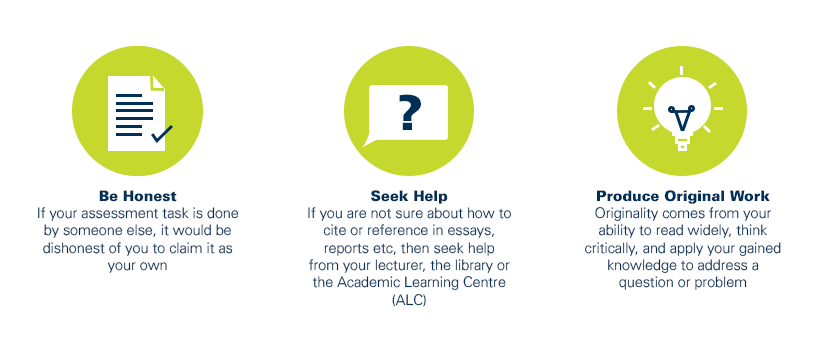
As a CQUniversity student you are expected to act honestly in all aspects of your academic work.
Any assessable work undertaken or submitted for review or assessment must be your own work. Assessable work is any type of work you do to meet the assessment requirements in the unit, including draft work submitted for review and feedback and final work to be assessed.
When you use the ideas, words or data of others in your assessment, you must thoroughly and clearly acknowledge the source of this information by using the correct referencing style for your unit. Using others’ work without proper acknowledgement may be considered a form of intellectual dishonesty.
Participating honestly, respectfully, responsibly, and fairly in your university study ensures the CQUniversity qualification you earn will be valued as a true indication of your individual academic achievement and will continue to receive the respect and recognition it deserves.
As a student, you are responsible for reading and following CQUniversity’s policies, including the Student Academic Integrity Policy and Procedure. This policy sets out CQUniversity’s expectations of you to act with integrity, examples of academic integrity breaches to avoid, the processes used to address alleged breaches of academic integrity, and potential penalties.
What is a breach of academic integrity?
A breach of academic integrity includes but is not limited to plagiarism, self-plagiarism, collusion, cheating, contract cheating, and academic misconduct. The Student Academic Integrity Policy and Procedure defines what these terms mean and gives examples.
Why is academic integrity important?
A breach of academic integrity may result in one or more penalties, including suspension or even expulsion from the University. It can also have negative implications for student visas and future enrolment at CQUniversity or elsewhere. Students who engage in contract cheating also risk being blackmailed by contract cheating services.
Where can I get assistance?
For academic advice and guidance, the Academic Learning Centre (ALC) can support you in becoming confident in completing assessments with integrity and of high standard.
What can you do to act with integrity?