Overview
In this unit, you will focus on examining, diagnosing and managing common paediatric and pregnancy related conditions. You will advance your understanding of a range of management topics related to the paediatric and pregnant population including injury prevention, advice on healthy lifestyles, self-managed care, rehabilitation, and treatment options. This unit will assist you with your clinical development in the student clinic by addressing the importance of integrating knowledge and skills to support clinical decision-making for this special population.
Details
Pre-requisites or Co-requisites
Pre-requisite: CHIR20006 Clinical Practice 3 and CHIR20007 Diagnostic Imaging 2 Co-requisite: CHIR20009 Clinical Practice 4
Important note: Students enrolled in a subsequent unit who failed their pre-requisite unit, should drop the subsequent unit before the census date or within 10 working days of Fail grade notification. Students who do not drop the unit in this timeframe cannot later drop the unit without academic and financial liability. See details in the Assessment Policy and Procedure (Higher Education Coursework).
Offerings For Term 1 - 2026
Attendance Requirements
All on-campus students are expected to attend scheduled classes - in some units, these classes are identified as a mandatory (pass/fail) component and attendance is compulsory. International students, on a student visa, must maintain a full time study load and meet both attendance and academic progress requirements in each study period (satisfactory attendance for International students is defined as maintaining at least an 80% attendance record).
Recommended Student Time Commitment
Each 6-credit Postgraduate unit at CQUniversity requires an overall time commitment of an average of 12.5 hours of study per week, making a total of 150 hours for the unit.
Class Timetable
Assessment Overview
Assessment Grading
This is a graded unit: your overall grade will be calculated from the marks or grades for each assessment task, based on the relative weightings shown in the table above. You must obtain an overall mark for the unit of at least 50%, or an overall grade of 'pass' in order to pass the unit. If any 'pass/fail' tasks are shown in the table above they must also be completed successfully ('pass' grade). You must also meet any minimum mark requirements specified for a particular assessment task, as detailed in the 'assessment task' section (note that in some instances, the minimum mark for a task may be greater than 50%). Consult the University's Grades and Results Policy for more details of interim results and final grades.
All University policies are available on the CQUniversity Policy site.
You may wish to view these policies:
- Grades and Results Policy
- Assessment Policy and Procedure (Higher Education Coursework)
- Review of Grade Procedure
- Student Academic Integrity Policy and Procedure
- Academic Progression Policy and Procedure
- Student Refund and Credit Balance Policy and Procedure
- Complaints Policy and Procedure
- Information and Communications Technology Acceptable Use Policy and Procedure
This list is not an exhaustive list of all University policies. The full list of University policies are available on the CQUniversity Policy site.
Feedback, Recommendations and Responses
Every unit is reviewed for enhancement each year. At the most recent review, the following staff and student feedback items were identified and recommendations were made.
Feedback from SUTE
Students desire better integration of practical skills into clinic settings.
It is recommended that workshops increase to three per year with guided checklists to simulate clinical scenarios.
Feedback from SUTE
A request for clinically relevant content delivered by experienced practitioners
It is recommended that the unit coordinator increases the hands-on workshops with real or simulated patients from two to three sessions with experienced practitioners in the field.
- Explain the morphology of a clinical condition according to its anatomy, biomechanics, etiology, epidemiology, pathophysiology and prevalence
- Interpret findings from a case history and physical assessment to formulate and develop a differential diagnosis or clinical impression in order to consider an appropriate management plan and prognosis, taking in consideration patient safety, absolute and relative contraindications
- Apply the appropriate chiropractic approach to treatment (within the scope of practice) that includes technique/skills, exercises/rehabilitation, health promotion, prevention, lifestyle advice and self-managed care in a professional and ethical way, in accordance with the chiropractic code of conduct and professional standards.
- Apply humanistic factors involving communication skills and bio-psychosocial awareness, relative to the patient-practitioner interface.
This is a specific preparatory unit to assist you to develop an individualised pathway towards strengthening the majority of elements and performance indicators of CCEA’s Accreditation Standards. There is also a loose alignment with the Clinical Interest Groups of the Chiropractors Association of Australia (National).
Alignment of Assessment Tasks to Learning Outcomes
| Assessment Tasks | Learning Outcomes | |||
|---|---|---|---|---|
| 1 | 2 | 3 | 4 | |
| 1 - On-campus Activity - 0% | ||||
| 2 - Portfolio - 25% | ||||
| 3 - Portfolio - 25% | ||||
| 4 - In-class Test(s) - 50% | ||||
Alignment of Graduate Attributes to Learning Outcomes
| Graduate Attributes | Learning Outcomes | |||
|---|---|---|---|---|
| 1 | 2 | 3 | 4 | |
| 1 - Knowledge | ||||
| 2 - Communication | ||||
| 3 - Cognitive, technical and creative skills | ||||
| 4 - Research | ||||
| 5 - Self-management | ||||
| 6 - Ethical and Professional Responsibility | ||||
| 7 - Leadership | ||||
| 8 - First Nations Knowledges | ||||
| 9 - Aboriginal and Torres Strait Islander Cultures | ||||
Textbooks
There are no required textbooks.
IT Resources
- CQUniversity Student Email
- Internet
- Unit Website (Moodle)
All submissions for this unit must use the referencing style: Vancouver
For further information, see the Assessment Tasks.
m.fernandez@cqu.edu.au
Week 1
Begin Date: 09 Mar 2026Module/Topic
Lecture: Introduction to the unit, pregnancy with respect to pain AND Maternal setting stages – is there a role for health providers?
Tutorial: Overview of the ACD1 unit and expectations
Online zoom tutorial
Chapter
Relevant reading and content will be available on Moodle
Events and Submissions/Topic
Week 2
Begin Date: 16 Mar 2026Module/Topic
Lecture : Musculoskeletal conditions associated with pregnancy.
Tutorial: Review lecture. Discussion / case scenario specifically related to lecture.
Online zoom tutorial
Chapter
Relevant reading and content will be available on Moodle
Events and Submissions/Topic
Week 3
Begin Date: 23 Mar 2026Module/Topic
Lecture: Pelvic floor incontinence and organ prolapse.
Tutorial: Review lecture. Discussion / case scenario specifically related to lecture.
Online zoom tutorial
Chapter
Relevant reading and content will be available on Moodle
Events and Submissions/Topic
Week 4
Begin Date: 30 Mar 2026Module/Topic
Lecture: Abdominal separation (diastasis recti)
Tutorial: Review lecture. Discussion / case scenario specifically related to lecture.
Online zoom tutorial
Chapter
Relevant reading and content will be available on Moodle
Events and Submissions/Topic
Week 5
Begin Date: 06 Apr 2026Module/Topic
Lecture: Pre and post pregnancy exercise
Tutorial: Review lecture. Discussion / case scenario specifically related to lecture.
Online zoom tutorial
Chapter
Relevant reading and content will be available on Moodle
Events and Submissions/Topic
Week 6
Begin Date: 13 Apr 2026Module/Topic
Lecture: Intercourse and pain
Tutorial: Review lecture. Discussion / case scenario specifically related to lecture.
Online zoom tutorial
Chapter
Relevant reading and content will be available on Moodle
Events and Submissions/Topic
Vacation Week
Begin Date: 20 Apr 2026Module/Topic
Chapter
Events and Submissions/Topic
Week 7
Begin Date: 27 Apr 2026Module/Topic
Lecture: Musculoskeletal paediatrics
Tutorial: Review lecture. Discussion / case scenario specifically related to lecture.
Online zoom tutorial
Video material reflection activity due (Friday 1st May 2026 - 25% of mark)
Chapter
Relevant reading and content will be available on Moodle
Events and Submissions/Topic
Assessment 1: Reflection activity Due: Week 7 Friday (1 May 2026) 11:59 pm AEST
Week 8
Begin Date: 04 May 2026Module/Topic
Lecture 8: Plagiocephaly
Tutorial: Review lecture. Discussion / case scenario specifically related to lecture.
Online zoom tutorial
Chapter
Relevant reading and content will be available on Moodle
Events and Submissions/Topic
Week 9
Begin Date: 11 May 2026Module/Topic
Lecture 9: Torticollis and otitis media
Tutorial: Review lecture. Discussion / case scenario specifically related to lecture.
Online zoom tutorial
Pregnancy / low back pain assignment due week 9 (Friday 15 May 2026) 11:59 pm AEST (25% of mark)
Chapter
Relevant reading and content will be available on Moodle
Events and Submissions/Topic
Assessment 2: Assignment Due: Week 9 Friday (15 May 2026) 11:59 pm AEST
Week 10
Begin Date: 18 May 2026Module/Topic
Lecture 10: Colic
Tutorial: Review lecture. Discussion / case scenario specifically related to lecture.
Online zoom tutorial
Chapter
Relevant reading and content will be available on Moodle
Events and Submissions/Topic
Week 11
Begin Date: 25 May 2026Module/Topic
Lecture 11: Breastfeeding and tongue-tie
Tutorial: Review lecture. Discussion / case scenario specifically related to lecture.
Online zoom tutorial
Chapter
Relevant reading and content will be available on Moodle
Events and Submissions/Topic
On campus activity: Friday May 29th, 8am - 12pm (Pass/Fail)
Assessment 3: On-campus activity Due: Week 11 Friday (29 May 2026) 11:45 pm AEST
Week 12
Begin Date: 01 Jun 2026Module/Topic
Lecture 12: Paediatrics History & Examination
Tutorial: Review lecture. Discussion / case scenario specifically related to lecture.
Online zoom tutorial
Chapter
Events and Submissions/Topic
On campus activity: Friday June 5th, 8am - 12pm (Pass/Fail)
Review/Exam Week/End of Term Test
Begin Date: 08 Jun 2026Module/Topic
Chapter
Events and Submissions/Topic
In class test 9am - 11am Tuesday June 9th, 2026
Assessment 4: End of Term Test Due: Exam Week Tuesday (9 June 2026) 11:00 am AEST
Vacation/Exam Week
Begin Date: 15 Jun 2026Module/Topic
Chapter
Events and Submissions/Topic
1 Portfolio
You will access a series of professionally produced instructional videos demonstrating pregnancy, post‑partum and paediatric history‑taking, physical examinations, and treatment procedures. These videos feature experienced chiropractors who clearly narrate their clinical reasoning and demonstrate safe, patient‑appropriate modifications. You are required to engage with these videos as part of your reflective assessment, as they provide the foundational clinical knowledge and confidence needed when entering the pregnancy and paediatrics module and associated workshops.
After viewing the assigned instructional videos, please write a 400 word reflection that responds to the prompts below. Your response must reference specific, identifiable moments from the videos (exact actions, wording, positioning, supportive aids, sequencing). Generic responses or content that doesn’t clearly link to the videos won’t meet the task requirements.
Prompts (respond to all):
1. The Shift in Understanding (100 words)
Identify one specific moment (an action or exact verbal cue) that changed or challenged a previous assumption you held. Describe exactly what occurred (e.g., the clinician’s words, hand placement, sequence, timing). State the assumption you held and how this moment shifted your understanding.
2. The Narrated Rationale (100 words)
What specific clinical reasoning did the clinician verbalise that you hadn’t previously considered? Quote or closely paraphrase their rationale. Explain precisely how this changes your execution of that skill in an OSCE (e.g., setup, safety check, dosage, cueing, sequence).
3. The Modification Audit (100 words)
Evaluate one modification made for patient comfort/safety (e.g., supportive aid, positioning, pacing, language framing). Is this feasible in a standard clinic (given typical equipment/time), or does it require specialised resources? Justify your answer and state how you would implement an equivalent if resources are limited.
4. The Clinical Gap (100 words)
Identify one moment that felt surprising or confronting. Why did it stand out? Name one specific physical skill you need to practise before the face‑to‑face workshop, and outline how you will practise it (e.g., lab practice with peer/infant mannequin, checklist, number of reps, feedback source).
Academic Integrity Note: This task requires detail only visible in this unit’s videos. Submissions without concrete video‑specific references are non‑compliant.
Level 1 (No AI). You must not use AI at any point during this assessment. You must demonstrate your core skills and knowledge.
Week 7 Friday (1 May 2026) 11:59 pm AEST
Submit in Moodle
Week 9 Friday (15 May 2026)
2 weeks following submission.
Minimum pass mark: 50%
A rubric will be available in Moodle. Your reflection will be marked on how specifically and accurately you engage with the video content, and how well you translate the clinicians’ narrated reasoning into practical/ready actions. You’ll also be assessed on your ability to critically evaluate a modification, identify your own clinical skill gap, and present a clear, feasible practice plan—demonstrating that the video learning can be directly applied to real clinical performance.
- Explain the morphology of a clinical condition according to its anatomy, biomechanics, etiology, epidemiology, pathophysiology and prevalence
- Interpret findings from a case history and physical assessment to formulate and develop a differential diagnosis or clinical impression in order to consider an appropriate management plan and prognosis, taking in consideration patient safety, absolute and relative contraindications
- Apply the appropriate chiropractic approach to treatment (within the scope of practice) that includes technique/skills, exercises/rehabilitation, health promotion, prevention, lifestyle advice and self-managed care in a professional and ethical way, in accordance with the chiropractic code of conduct and professional standards.
2 Portfolio
You will be provided with one pregnancy case study for this assignment. Briefly, patient is a 25-year-old primigravida (32 weeks gestation) presenting with 8/10 dull, central lumbosacral ache and secondary thoracolumbar stiffness. Full case will be available in Moodle
You will combine lecture, tutorial, podcast and other relevant literature, you will reflect on the management of this special population. This assignment should be no longer than 500 words (+/- 10%). Approximately 125 word per question.
Mandatory: you must provide at least one citation per section from the peer-reviewed literature. Made up, incorrect or missing references will not be accepted. The fours questions related to this case include:
1) Manual therapy and the "pain generator" (125 words)
Select one joint-based and one soft-tissue technique (including specific segments/muscles). For this patient specifically explain why you are prioritizing the asymptomatic T11–T12 stiffness over the 8/10 L5–S1 pain. Once you have justified your explanation, please name one manual technique you are ruling out specifically due to her 32-week status and "abdominal stretching" pain.
2) The Extension Paradox - Rehab (125 words)
Prescribe two exercises for sitting intolerance and night pain. You must also reconcile her "excessive lumbar curve" with the exam finding that spinal extension provided relief - why is extension indicated here despite her posture? Additionally, please identify one standard core/back exercise you have banned for this patient and explain the physiological risk (e.g., Diastasis Recti or intra-abdominal pressure).
3) Nutrition & Referral Scope (125 words)
Suggest one nutritional (or hydration) strategy targeting her fatigue and night-time muscle aches. Moreover, please name two substances (foods/supplements) she must avoid in the 3rd trimester and the specific physiological risk they pose. In addition to this strategy, specify one symptom in this case that warrants an immediate referral back to the obstetrician.
4) Lifestyle & Sleep Hygiene (125 words)
Please recommend a workplace cycle or micro-break routine for this receptionist. Also, detail a "no-heat" sleep strategy, so you are replacing her current habit of waking up to heat-packing the pain. Lastly, identify one functional or ROM metric (from her Oswestry or exam) that you expect to see improve within 7 days.
Rubric will be available in Moodle
Level 1 (No AI). You must not use AI at any point during this assessment. You must demonstrate your core skills and knowledge.
Week 9 Friday (15 May 2026) 11:59 pm AEST
Submitted into Moodle
Week 12 Friday (5 June 2026)
2 weeks following submission.
Please refer to rubric in Moodle.
Your response will be marked on how accurately you apply pregnancy‑specific clinical reasoning across manual therapy, exercise selection, nutrition/referral, and lifestyle planning, demonstrating that you can translate the case findings into safe, evidence‑supported decisions. You’ll be assessed on your ability to justify what you choose, what you rule out, how you reconcile exam findings with physiological constraints, and how clearly you link each recommendation to the patient’s trimester, symptom behaviour, and functional goals.
- Explain the morphology of a clinical condition according to its anatomy, biomechanics, etiology, epidemiology, pathophysiology and prevalence
- Interpret findings from a case history and physical assessment to formulate and develop a differential diagnosis or clinical impression in order to consider an appropriate management plan and prognosis, taking in consideration patient safety, absolute and relative contraindications
- Apply humanistic factors involving communication skills and bio-psychosocial awareness, relative to the patient-practitioner interface.
3 On-campus Activity
You will be required to attend three 4-hour practical sessions that will include learning how to assess and manage paediatric and pregnant patients. During the session you will be required to actively participate, and at the completion, you will be asked (in a small group) to demonstrate practical skills related to (i) a paediatric patient (i.e., demonstrating touch and hold palpation to the spine) and (ii) for a pregnant patient (i.e., demonstrating modified and safe adjustive procedures for the spine). This is a Pass/Fail task that will take place on the Friday of weeks 11 and 12. If students are unsuccessful in this Pass/Fail task they will be unable to complete the unit successfully.
Level 1 (No AI). You must not use AI at any point during this assessment. You must demonstrate your core skills and knowledge.
The 72-hour grace period does not apply to this assessment.
Week 11 Friday (29 May 2026) 11:45 pm AEST
Week 12 Friday (5 June 2026)
You will be required to demonstrate practical skills related to:
(i) a paediatric patient (i.e., demonstrating touch and hold palpation to the spine) and
(ii) for a pregnant patient (i.e., demonstrating modified and safe adjustive procedures for the spine).
No submission method provided.
- Apply the appropriate chiropractic approach to treatment (within the scope of practice) that includes technique/skills, exercises/rehabilitation, health promotion, prevention, lifestyle advice and self-managed care in a professional and ethical way, in accordance with the chiropractic code of conduct and professional standards.
- Apply humanistic factors involving communication skills and bio-psychosocial awareness, relative to the patient-practitioner interface.
4 In-class Test(s)
The final end of term (online) test will be in the format of an multiple choice questions, short answer, matching and true or false quiz to assess your knowledge and understanding of the lecture and tutorial components of paediatric conditions and related material presented through weeks 7-12 inclusive. Students will be required to demonstrate this by selecting the one best answer. You will be allowed one attempt for the quiz, which will need to be completed within the allotted time frame. This quiz is worth 50% of the final grade. In the absence of an approved extension, there will be no opportunity to complete the task after the assigned date.
Level 1 (No AI). You must not use AI at any point during this assessment. You must demonstrate your core skills and knowledge.
The 72-hour grace period does not apply to this assessment
Exam Week Tuesday (9 June 2026) 11:00 am AEST
Exam week Tuesday 9-11am
Exam Week Friday (12 June 2026)
Via Moodle
You should be able to demonstrate as specified in the learning outcomes:
1. understanding of the relationship between anatomy, aetiology, pathophysiology, diagnoses and treatment options of conditions seen in the paediatric population (neonate to adolescent).
2. understanding of the physiological processes associated with the pregnant patient and childbirth.
3. understanding of the relationship between anatomy, aetiology, pathophysiology, diagnoses and treatment options of conditions seen with the pregnant patient.
4. interpret findings from history and physical examination of paediatric and obstetrical patients.
The expectation is that you answer questions without the assistance of Generative AI tools.
Minimum pass mark: 50%
- Explain the morphology of a clinical condition according to its anatomy, biomechanics, etiology, epidemiology, pathophysiology and prevalence
- Interpret findings from a case history and physical assessment to formulate and develop a differential diagnosis or clinical impression in order to consider an appropriate management plan and prognosis, taking in consideration patient safety, absolute and relative contraindications
- Apply the appropriate chiropractic approach to treatment (within the scope of practice) that includes technique/skills, exercises/rehabilitation, health promotion, prevention, lifestyle advice and self-managed care in a professional and ethical way, in accordance with the chiropractic code of conduct and professional standards.
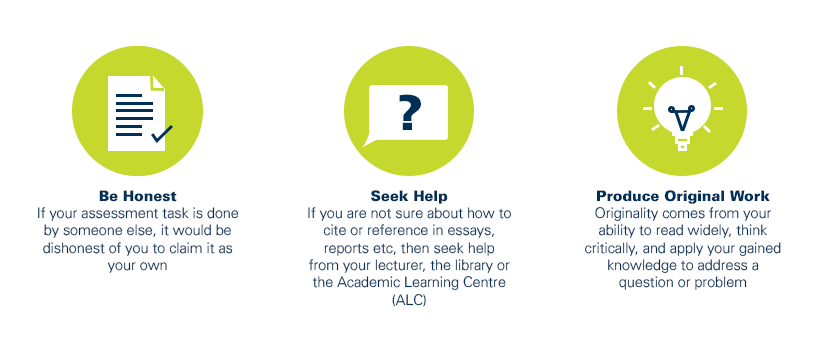
As a CQUniversity student you are expected to act honestly in all aspects of your academic work.
Any assessable work undertaken or submitted for review or assessment must be your own work. Assessable work is any type of work you do to meet the assessment requirements in the unit, including draft work submitted for review and feedback and final work to be assessed.
When you use the ideas, words or data of others in your assessment, you must thoroughly and clearly acknowledge the source of this information by using the correct referencing style for your unit. Using others’ work without proper acknowledgement may be considered a form of intellectual dishonesty.
Participating honestly, respectfully, responsibly, and fairly in your university study ensures the CQUniversity qualification you earn will be valued as a true indication of your individual academic achievement and will continue to receive the respect and recognition it deserves.
As a student, you are responsible for reading and following CQUniversity’s policies, including the Student Academic Integrity Policy and Procedure. This policy sets out CQUniversity’s expectations of you to act with integrity, examples of academic integrity breaches to avoid, the processes used to address alleged breaches of academic integrity, and potential penalties.
What is a breach of academic integrity?
A breach of academic integrity includes but is not limited to plagiarism, self-plagiarism, collusion, cheating, contract cheating, and academic misconduct. The Student Academic Integrity Policy and Procedure defines what these terms mean and gives examples.
Why is academic integrity important?
A breach of academic integrity may result in one or more penalties, including suspension or even expulsion from the University. It can also have negative implications for student visas and future enrolment at CQUniversity or elsewhere. Students who engage in contract cheating also risk being blackmailed by contract cheating services.
Where can I get assistance?
For academic advice and guidance, the Academic Learning Centre (ALC) can support you in becoming confident in completing assessments with integrity and of high standard.
What can you do to act with integrity?