Assessment number 3
Name: In-Class Test
Change details: Original date of 09/06/2026 Tuesday was correct but the 11:00 am start was incorrect. The new date is 09/06/2026 Tuesday for a 1.00 pm start.
Overview
This unit is the first of three clinical practice units in which you will gain experience by observing a real chiropractic clinic during a placement for part of the term. On placement, you will be expected to perform as a functional team member under guidance of the clinic supervisors and placement mentors whilst developing observational and reflective skills. While during your on-campus time in Clinical Practice 1 you will also learn how to communicate clearly and effectively with patients. You will also become immersed in the clinical experience by applying and integrating the clinical skills and knowledge you have gained up until this point in preparation for Clinical Practice 2.
Details
Pre-requisites or Co-requisites
Prerequisite: Student must be enrolled in CC71 - Master of Clinical Chiropractic and Corequisite: CHIR20001 Advanced Neurology and Skeletal Dysfunction
Important note: Students enrolled in a subsequent unit who failed their pre-requisite unit, should drop the subsequent unit before the census date or within 10 working days of Fail grade notification. Students who do not drop the unit in this timeframe cannot later drop the unit without academic and financial liability. See details in the Assessment Policy and Procedure (Higher Education Coursework).
Offerings For Term 1 - 2026
Attendance Requirements
All on-campus students are expected to attend scheduled classes - in some units, these classes are identified as a mandatory (pass/fail) component and attendance is compulsory. International students, on a student visa, must maintain a full time study load and meet both attendance and academic progress requirements in each study period (satisfactory attendance for International students is defined as maintaining at least an 80% attendance record).
Recommended Student Time Commitment
Each 12-credit Postgraduate unit at CQUniversity requires an overall time commitment of an average of 25 hours of study per week, making a total of 300 hours for the unit.
Class Timetable
Assessment Overview
Assessment Grading
This is a graded unit: your overall grade will be calculated from the marks or grades for each assessment task, based on the relative weightings shown in the table above. You must obtain an overall mark for the unit of at least 50%, or an overall grade of 'pass' in order to pass the unit. If any 'pass/fail' tasks are shown in the table above they must also be completed successfully ('pass' grade). You must also meet any minimum mark requirements specified for a particular assessment task, as detailed in the 'assessment task' section (note that in some instances, the minimum mark for a task may be greater than 50%). Consult the University's Grades and Results Policy for more details of interim results and final grades.
All University policies are available on the CQUniversity Policy site.
You may wish to view these policies:
- Grades and Results Policy
- Assessment Policy and Procedure (Higher Education Coursework)
- Review of Grade Procedure
- Student Academic Integrity Policy and Procedure
- Academic Progression Policy and Procedure
- Student Refund and Credit Balance Policy and Procedure
- Complaints Policy and Procedure
- Information and Communications Technology Acceptable Use Policy and Procedure
This list is not an exhaustive list of all University policies. The full list of University policies are available on the CQUniversity Policy site.
Feedback, Recommendations and Responses
Every unit is reviewed for enhancement each year. At the most recent review, the following staff and student feedback items were identified and recommendations were made.
Feedback from SUTE
Students appreciated the feedback they received on their assignments in this unit.
It is recommended that the Unit Coordinator continue to provide high quality feedback.
Feedback from SUTE
Students reported that completing the assessments in this unit enhanced their learning.
It is recommended that the unit continue to use engaging assessments.
Feedback from SUTE
Some students would have appreciated clearer unit requirements.
It is recommended that the Unit Coordinator review the current unit requirements to ensure that they are clear.
- Develop, refine and integrate problem solving skills through clinical assessment, decision making and management at an intermediate level
- Display behaviour appropriate to a professional health care provider, including ethical practice management and upholding the professional code of conduct
- Demonstrate empathetic communication skills in the practitioner-patient relationship, and other professional and personal relationships
- Demonstrate the ability to integrate sustainably within the broader health care system, including responsible use of health care resources, the ability to collaborate with other health care disciplines, and the employment of health promotion and preventative strategies through community education.
On successful completion of this unit you will meet certain CCEA requirements that will progress you towards applying for registration as a chiropractor in Australia.
The Learning Outcomes build towards CCEA’s Accreditation Standard 4.4.3 regarding Clinical Sciences.
This unit is designed to contribute towards you having adequate and early patient experiences and opportunities to acquire sufficient clinical knowledge, skills, and attitudes to assume appropriate clinical responsibility upon graduation.
It provides early, supervised patient contact leading to participation in patient care. Your clinical skills training includes physical, clinical and lab diagnosis, mental health assessment, orthopaedics, gynaecology, obstetrics, paediatrics, geriatrics, dermatology, otolaryngology, ophthalmology, diagnostic imaging procedures and interpretation, nutrition, rehabilitation, ergonomics, pharmacology (a working knowledge of commonly used medications and pharmaceuticals), and other appropriate subjects. Clinical skills include history taking, physical examination, spinal analysis, mental health assessment, first aid and emergency procedures, manual techniques, physical therapies (such as heat, cold, bracing, electrical therapies, etc.), and other treatment procedures, communication, leadership skills, etc. Appropriate clinical responsibility would include physical and mental health promotion, disease prevention and patient care, for the child, adolescent, adult, geriatric and medically compromised patient. Participation in patient care would include relevant community experience and teamwork with other health professions.
Alignment of Assessment Tasks to Learning Outcomes
| Assessment Tasks | Learning Outcomes | |||
|---|---|---|---|---|
| 1 | 2 | 3 | 4 | |
| 1 - Portfolio - 60% | ||||
| 2 - Professional Practice Placement - 0% | ||||
| 3 - In-class Test(s) - 40% | ||||
Alignment of Graduate Attributes to Learning Outcomes
| Graduate Attributes | Learning Outcomes | |||
|---|---|---|---|---|
| 1 | 2 | 3 | 4 | |
| 1 - Knowledge | ||||
| 2 - Communication | ||||
| 3 - Cognitive, technical and creative skills | ||||
| 4 - Research | ||||
| 5 - Self-management | ||||
| 6 - Ethical and Professional Responsibility | ||||
| 7 - Leadership | ||||
| 8 - First Nations Knowledges | ||||
| 9 - Aboriginal and Torres Strait Islander Cultures | ||||
Alignment of Assessment Tasks to Graduate Attributes
| Assessment Tasks | Graduate Attributes | ||||||||
|---|---|---|---|---|---|---|---|---|---|
| 1 | 2 | 3 | 4 | 5 | 6 | 7 | 8 | 9 | |
| 1 - Portfolio - 60% | |||||||||
| 2 - Professional Practice Placement - 0% | |||||||||
| 3 - In-class Test(s) - 40% | |||||||||
Textbooks
There are no required textbooks.
IT Resources
- CQUniversity Student Email
- Internet
- Unit Website (Moodle)
- SONIA (Online)
All submissions for this unit must use the referencing style: Vancouver
For further information, see the Assessment Tasks.
d.knight@cqu.edu.au
m.fernandez@cqu.edu.au
Week 1
Begin Date: 09 Mar 2026Module/Topic
Chiropractic Technique - Thoracic Spine
Case Work - Intake & History
Rehabilitation - Introduction & Stages and Principles of Rehab
Normal Radiographic Anatomy - Introduction to Diagnostic Imaging
Chapter
Chiropractic Technique - CP1 Technique Outline and Chiropractic Technique Bergmann & Peterson
Case Work - CP1 Case Work
Rehabilitation - Lecture material on Moodle
Normal Radiographic Anatomy - Lecture material on Moodle
Events and Submissions/Topic
Week 2
Begin Date: 16 Mar 2026Module/Topic
Chiropractic Technique - Thoracic Spine inc. Mechanically Assisted Adjusting
Case Work - History Continued
Rehabilitation - Models of Rehabilitation
Normal Radiographic Anatomy Review – cervical spine
Chapter
Chiropractic Technique - CP1 Technique Outline and Chiropractic Technique Bergmann & Peterson
Case Work - CP1 Case Work
Rehabilitation - Lecture material on Moodle
Normal Radiographic Anatomy - Lecture material on Moodle
Events and Submissions/Topic
Week 3
Begin Date: 23 Mar 2026Module/Topic
Chiropractic Technique - Cervical Spine
Case Work - Patient Reported Outcome Measures (PROMs)
Rehabilitation - Qualitative and Quantitative Rehab Testing
Normal Radiographic Anatomy Review – thoracic spine
Chapter
Chiropractic Technique - CP1 Technique Outline and Chiropractic Technique Bergmann & Peterson
Case Work - CP1 Case Work
Rehabilitation - Lecture material on Moodle
Normal Radiographic Anatomy - Lecture material on Moodle
Events and Submissions/Topic
Rehab biopsychosocial tutorial
Week 4
Begin Date: 30 Mar 2026Module/Topic
Chiropractic Technique - Cervical Spine inc. Mechanically Assisted Adjusting
Case Work - Using Clinical Guidelines and writing a Management Plan
Rehabilitation - Movement Patterns (Janda)
Normal Radiographic Anatomy Review – lumbar spine
Chapter
Chiropractic Technique - CP1 Technique Outline and Chiropractic Technique Bergmann & Peterson
Case Work - CP1 Case Work
Rehabilitation - Lecture material on Moodle
Normal Radiographic Anatomy - Lecture material on Moodle
Events and Submissions/Topic
Rehab Presentation Group1
Week 5
Begin Date: 06 Apr 2026Module/Topic
Chiropractic Technique - Lumbopelvic Region & Leg-Length analysis
Case Work - Written Case summary
Rehabilitation - Soft tissue therapy (Lewit)
Normal Radiographic Anatomy Review - Pelvis & Hip
Chapter
Chiropractic Technique - CP1 Technique Outline and Chiropractic Technique Bergmann & Peterson
Case Work - CP1 Case Work
Rehabilitation - Lecture material on Moodle
Normal Radiographic Anatomy - Lecture material on Moodle
Events and Submissions/Topic
Rehab Presentation Group2
Week 6
Begin Date: 13 Apr 2026Module/Topic
Chiropractic Technique - Mechanically Assisted Adjusting Lumbopelvic Region
Case Work - Case Presentation & ROF
Rehabilitation - Cervical Spine & TMJ
Normal Radiographic Anatomy Review – Knee
Chapter
Chiropractic Technique - CP1 Technique Outline and Chiropractic Technique Bergmann & Peterson
Case Work - CP1 Case Work
Rehabilitation - Lecture material on Moodle
Normal Radiographic Anatomy - Lecture material on Moodle
Events and Submissions/Topic
Rehab Presentation Group3
Vacation Week
Begin Date: 20 Apr 2026Module/Topic
Chapter
Events and Submissions/Topic
Placement nominations deadline.
Week 7
Begin Date: 27 Apr 2026Module/Topic
Chiropractic Technique - Coccyx, Sacrum & Pubic Symphysis
Case Work - ROF & Informed consent
Rehabilitation - Thoracic Spine
Normal Radiographic Anatomy Review - Ankle & Foot
Chapter
Chiropractic Technique - CP1 Technique Outline and Chiropractic Technique Bergmann & Peterson
Case Work - CP1 Case Work
Rehabilitation - Lecture material on Moodle
Normal Radiographic Anatomy - Lecture material on Moodle
Events and Submissions/Topic
Video Practical Assessments
Rehab Presentation Group4
Week 8
Begin Date: 04 May 2026Module/Topic
Chiropractic Technique - Extremity Mechanically Assisted Adjusting
Case Work - Practical Assessment
Rehabilitation - Lumbar Pelvis & Pelvis
Normal Radiographic Anatomy Review – Shoulder
Video and rehab portfolio due
Chapter
Chiropractic Technique - CP1 Technique Outline and Chiropractic Technique Bergmann & Peterson
Case Work - CP1 Case Work
Rehabilitation - Lecture material on Moodle
Normal Radiographic Anatomy - Lecture material on Moodle
Events and Submissions/Topic
Video Practical Assessments
Rehab Presentation Group5
Portfolio Due: Week 8 Friday (8 May 2026) 11:59 pm AEST
Week 9
Begin Date: 11 May 2026Module/Topic
Placement Week 1
Normal Radiographic Anatomy Review – Elbow
Chapter
Normal Radiographic Anatomy - Lecture material on Moodle
Events and Submissions/Topic
Week 10
Begin Date: 18 May 2026Module/Topic
Placement Week 2
Normal Radiographic Anatomy Review - Wrist & Hand
Chapter
Normal Radiographic Anatomy - Lecture material on Moodle
Events and Submissions/Topic
Week 11
Begin Date: 25 May 2026Module/Topic
Placement Week 3
Chapter
Events and Submissions/Topic
Week 12
Begin Date: 01 Jun 2026Module/Topic
Placement Week 4
Normal Radiographic Anatomy quiz
Chapter
Events and Submissions/Topic
Placement Submission (Log Sheet, History Reflection)
Normal Radiographic Anatomy Quiz Week 12
PLACEMENT Due: Week 12 Friday (5 June 2026) 9:00 am AEST
Exam Week
Begin Date: 08 Jun 2026Module/Topic
Chapter
Events and Submissions/Topic
In class test. June 9th, 2026. Time 3-5pm.
End of Term Test Due: Exam Week Tuesday (9 June 2026) 11:00 am AEST
Vacation/Exam Week
Begin Date: 15 Jun 2026Module/Topic
Chapter
Events and Submissions/Topic
1 Portfolio
Portfolio 60% - (divided into three components, each worth 20%)
- Rehab Presentation (20%)
- Video Practical Assessment (20%)
- Normal Radiographic Anatomy Quiz (20%)
N.B. quiz will be open for 1 week, 1 X 30-minute attempt permitted.
Please Note:
- The 72-hour grace period does not apply to this assessment.
- No AI: Level 1 - you must not use AI at any point during the quiz or video presentation. You must demonstrate your core skills and knowledge.
- AI level 2 - You may use AI for planning the rehab presentation, idea development, and research. Your final submission should show how you have developed and refined these ideas.
Week 8 Friday (8 May 2026) 11:59 pm AEST
Feedback will be provided in Moodle or in person.
Vacation/Exam Week Friday (19 June 2026)
Video Practical Assessment 20% - this is a practical video assessment of history taking and performing a ROF, submitted by week 8. History and Report of Findings (ROFs) rubrics are available on Moodle. Assessment rubrics and templates are provided within the unit and assessment material.
- AI level 1 - You must not use AI at any point during the video presentation. You must demonstrate your core skills and knowledge.
- The 72-hour grace period does not apply to this assessment.
Quiz (20%)
Normal Radiographic Anatomy Moodle Quiz (Week 12) - Comprises all regions, including the cervical, thoracic, lumbar spine, pelvis/hip, knee, ankle/foot, shoulder, elbow, and wrist/hand.
N.B. quiz open for 1 week, 1 X 30-minute attempt permitted.
AI level 1 - You must not use AI at any point during the quiz. You must demonstrate your core skills and knowledge.
The 72-hour grace period does not apply to this assessment.
Rehab Presentation (20%), submitted by week 8.
CP1 Rehab Presentation Instructions
Each group will deliver a 15‑minute presentation on one assigned condition.
You must also produce one combined handout covering all five conditions allocated to your group. This handout will form a shared clinical resource for use in the student clinic.
Your presentation must address the following:
1. History & Clinical Presentation
Brief aetiology and typical symptom pattern.
Key diagnostic features.
A short case scenario illustrating how the condition commonly presents.
2. Red Flags & Differential Diagnosis
Important red flags requiring referral.
One serious musculoskeletal differential + one systemic differential.
3. Outcome Measures (PROMs)
List 2–3 PROMs relevant to the condition.
Provide a brief explanation of one PROM (scoring, interpretation, clinical use).
4. Investigations / Imaging
Appropriate investigations (e.g., X‑ray, MRI, ultrasound) and the rationale for each.
Typical findings that support diagnosis.
5. Pathology Overview
Concise explanation of the underlying pathophysiology.
Link pathology to the patient’s symptoms and clinical findings.
6. Assessment Tests
One orthopaedic test, one quantitative test, and one qualitative test.
Demonstrate each test and explain its relevance.
7. Management Plan
Chiropractic + non‑chiropractic management strategies.
Visit schedule, expected progression timeline, home advice, and exercise program.
Show how exercises are progressed or regressed and explain the clinical reasoning.
Presentation Expectations:
- Focus on practical, clinically applicable strategies.
- Keep demonstrations clear, structured, and relevant.
- All group members must participate in the practical components.
- Use current evidence and cite primary academic sources where appropriate.
AI level 2 - You may use AI for planning the rehab presentation, idea development, and research. Your final submission should show how you have developed and refined these ideas.
The 72-hour grace period does not apply to this assessment.
- Develop, refine and integrate problem solving skills through clinical assessment, decision making and management at an intermediate level
- Demonstrate the ability to integrate sustainably within the broader health care system, including responsible use of health care resources, the ability to collaborate with other health care disciplines, and the employment of health promotion and preventative strategies through community education.
- Knowledge
- Communication
- Cognitive, technical and creative skills
- Research
- Ethical and Professional Responsibility
- Leadership
2 Professional Practice Placement
- 100 hours for this unit CP1 - a log of completed placement hours signed by the placement site manager or chiropractor and submitted via Moodle by 9:00 am Friday, Week 12.
- The professionalism survey is sent to all practitioners; a positive (50% or greater) response is required to pass the Placement assessment.
- Placement (history taking) reflection (250 words) must be completed and submitted to Moodle by 9:00 am Friday, week 12.
- Reflect upon your history taking video (inc. specific time-stamped moments of your own performance) and how you have developed throughout the term. You can draw on practice and experience from your in-class term, as well as placement experience.
- All students MUST attend weekly Placement Supervisors meetings (total 4) to discuss their experiences. If a meeting is missed without a valid reason, a reflective report will be required to pass the Placement assessment.
Our CQU 4th‑year students have the opportunity to gain additional clinical experience by volunteering at official CQU outreach activities. These outreach hours can be used to offset your required placement hours in Term 2 and Term 3. Outreach opportunities are available at all campuses. To participate, contact your local Clinic Team, and ensure you organise this in a timely manner with WIL and the Placement Coordinator.
In addition, you are encouraged to complete 30 hours of observation of a 5th‑year intern during Terms 2 and 3. These observation hours can also be counted toward your placement requirements for those terms.
Please note:
- It is your responsibility to log all outreach and observation hours.
- A clinic supervisor must sign your placement/log sheet at the end of each shift or session.
These activities will help you:
- Become familiar with clinic processes and procedures
- Apply classroom learning to real clinical environments
- Develop communication and patient‑interaction skills that are difficult to practice in classroom simulations (CP1-3)
- Build professional relationships with 5th‑year interns, their patients, and clinical staff.
Week 12 Friday (5 June 2026) 9:00 am AEST
Submitted via Moodle as PDF, Jpeg, Word
Exam Week Friday (12 June 2026)
This assessment relies on return survey from placement site, this sometimes causes a slight delay and occasionally PO (Practicum Outstanding).
Placement is a Pass/Fail assessment component, and each student must complete the required. Placement will be assessed from the point of finding the placement site to the point of the professionalism survey being completed by the placement practitioner. Placement requirements include
• 100 hours for CP1 - a log of completed placement hours must be kept and signed by the placement site manager or chiropractor and submitted via Moodle by CoB Friday week 12.
• Professionalism survey is sent to all practitioners, a positive response is required to pass the Placement assessment.
• All students must attend a weekly Placement Supervisors meetings (total 4) to discuss their placement experience. If a meeting is missed without a valid reason – a reflective report will be required to pass the Placement assessment.
• Placement (history taking) reflection must be completed and submitted to Moodle by CoB Friday week 12. This assessment is designed to be a reflection of a personal journey of growth, learning and understanding of a fundamental skill. The best marks will reflect submissions that highlight that personal learning journey.
The 72-hour grace period does not apply to this assessment.
AI level 1 - you must not use AI at any point during the assessment. You must demonstrate your core skills and knowledge.
- Develop, refine and integrate problem solving skills through clinical assessment, decision making and management at an intermediate level
- Display behaviour appropriate to a professional health care provider, including ethical practice management and upholding the professional code of conduct
- Demonstrate empathetic communication skills in the practitioner-patient relationship, and other professional and personal relationships
- Demonstrate the ability to integrate sustainably within the broader health care system, including responsible use of health care resources, the ability to collaborate with other health care disciplines, and the employment of health promotion and preventative strategies through community education.
- Knowledge
- Communication
- Cognitive, technical and creative skills
- Research
- Ethical and Professional Responsibility
- Leadership
3 In-class Test(s)
In-Class Test - Weighting: 40%,
To be completed during the university exam week. This assessment will assess material from all streams of the unit.
Clinical Cases and follow-up questions – 100 marks
A written assessment outline will be provided on Moodle. This will outline the exact number of cases, questions, and marks allocated.
Exam Week Tuesday (9 June 2026) 11:00 am AEST
Submitted via Moodle once exam time has elapsed
Vacation/Exam Week Friday (19 June 2026)
Students will be assessed on their ability to select / answer the correct answers posed in the assessment.
- Display behaviour appropriate to a professional health care provider, including ethical practice management and upholding the professional code of conduct
- Demonstrate empathetic communication skills in the practitioner-patient relationship, and other professional and personal relationships
- Knowledge
- Communication
- Cognitive, technical and creative skills
- Ethical and Professional Responsibility
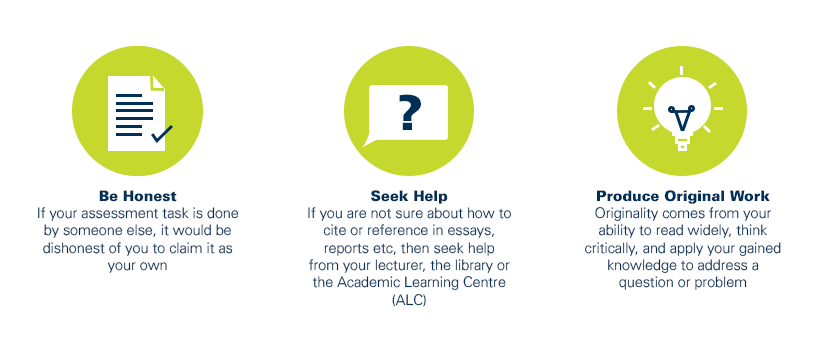
As a CQUniversity student you are expected to act honestly in all aspects of your academic work.
Any assessable work undertaken or submitted for review or assessment must be your own work. Assessable work is any type of work you do to meet the assessment requirements in the unit, including draft work submitted for review and feedback and final work to be assessed.
When you use the ideas, words or data of others in your assessment, you must thoroughly and clearly acknowledge the source of this information by using the correct referencing style for your unit. Using others’ work without proper acknowledgement may be considered a form of intellectual dishonesty.
Participating honestly, respectfully, responsibly, and fairly in your university study ensures the CQUniversity qualification you earn will be valued as a true indication of your individual academic achievement and will continue to receive the respect and recognition it deserves.
As a student, you are responsible for reading and following CQUniversity’s policies, including the Student Academic Integrity Policy and Procedure. This policy sets out CQUniversity’s expectations of you to act with integrity, examples of academic integrity breaches to avoid, the processes used to address alleged breaches of academic integrity, and potential penalties.
What is a breach of academic integrity?
A breach of academic integrity includes but is not limited to plagiarism, self-plagiarism, collusion, cheating, contract cheating, and academic misconduct. The Student Academic Integrity Policy and Procedure defines what these terms mean and gives examples.
Why is academic integrity important?
A breach of academic integrity may result in one or more penalties, including suspension or even expulsion from the University. It can also have negative implications for student visas and future enrolment at CQUniversity or elsewhere. Students who engage in contract cheating also risk being blackmailed by contract cheating services.
Where can I get assistance?
For academic advice and guidance, the Academic Learning Centre (ALC) can support you in becoming confident in completing assessments with integrity and of high standard.
What can you do to act with integrity?