Overview
Advanced Clinical Neurology and Diagnosis builds upon your knowledge and understanding of the human body which you achieved through your undergraduate studies. In this unit you will focus upon the clinical presentation of neurological conditions which may be encountered in chiropractic practice. You will develop an understanding of the pathophysiological processes underlying neurological symptoms and signs at clinical presentation, and extend your skills in the interpretation of these changes through client history and physical examination.
Details
Pre-requisites or Co-requisites
There are no requisites for this unit.
Important note: Students enrolled in a subsequent unit who failed their pre-requisite unit, should drop the subsequent unit before the census date or within 10 working days of Fail grade notification. Students who do not drop the unit in this timeframe cannot later drop the unit without academic and financial liability. See details in the Assessment Policy and Procedure (Higher Education Coursework).
Offerings For Term 1 - 2026
Attendance Requirements
All on-campus students are expected to attend scheduled classes - in some units, these classes are identified as a mandatory (pass/fail) component and attendance is compulsory. International students, on a student visa, must maintain a full time study load and meet both attendance and academic progress requirements in each study period (satisfactory attendance for International students is defined as maintaining at least an 80% attendance record).
Recommended Student Time Commitment
Each 6-credit Postgraduate unit at CQUniversity requires an overall time commitment of an average of 12.5 hours of study per week, making a total of 150 hours for the unit.
Class Timetable
Assessment Overview
Assessment Grading
This is a graded unit: your overall grade will be calculated from the marks or grades for each assessment task, based on the relative weightings shown in the table above. You must obtain an overall mark for the unit of at least 50%, or an overall grade of 'pass' in order to pass the unit. If any 'pass/fail' tasks are shown in the table above they must also be completed successfully ('pass' grade). You must also meet any minimum mark requirements specified for a particular assessment task, as detailed in the 'assessment task' section (note that in some instances, the minimum mark for a task may be greater than 50%). Consult the University's Grades and Results Policy for more details of interim results and final grades.
All University policies are available on the CQUniversity Policy site.
You may wish to view these policies:
- Grades and Results Policy
- Assessment Policy and Procedure (Higher Education Coursework)
- Review of Grade Procedure
- Student Academic Integrity Policy and Procedure
- Academic Progression Policy and Procedure
- Student Refund and Credit Balance Policy and Procedure
- Complaints Policy and Procedure
- Information and Communications Technology Acceptable Use Policy and Procedure
This list is not an exhaustive list of all University policies. The full list of University policies are available on the CQUniversity Policy site.
Feedback, Recommendations and Responses
Every unit is reviewed for enhancement each year. At the most recent review, the following staff and student feedback items were identified and recommendations were made.
Feedback from SUTE and unit coordinator reflection.
Students noted they did not have direct contact with the unit coordinator.
It is recommended to consider a structured coordination plan for oversight by subject-matter specialist to lead and maintain alignment in student-facing delivery.
- Explain the pathophysiological basis of neurological symptoms and signs
- Perform a neurological assessment based on the patient's presentation
- Formulate a differential diagnosis from neurological assessment findings
- Identify clinical scenarios which require referral and/or investigation.
The learning outcomes of this unit contribute to the following CCEA Competency Units (2017 version):
Practice Competency 3: Clinical Assessment
3.1 Obtains and records a History.
3.2 Performs a Clinical Examination.
3.3 Obtains the results of clinical, laboratory and other diagnostic procedures necessary to perform care.
3.4 Recognises determinants of health.
3.5 Critically analyses information available to generate a clinical impression.
Alignment of Assessment Tasks to Learning Outcomes
| Assessment Tasks | Learning Outcomes | |||
|---|---|---|---|---|
| 1 | 2 | 3 | 4 | |
| 1 - Online Quiz(zes) - 15% | ||||
| 2 - Practical Assessment - 35% | ||||
| 3 - In-class Test(s) - 50% | ||||
Alignment of Graduate Attributes to Learning Outcomes
| Graduate Attributes | Learning Outcomes | |||
|---|---|---|---|---|
| 1 | 2 | 3 | 4 | |
| 1 - Knowledge | ||||
| 2 - Communication | ||||
| 3 - Cognitive, technical and creative skills | ||||
| 4 - Research | ||||
| 5 - Self-management | ||||
| 6 - Ethical and Professional Responsibility | ||||
| 7 - Leadership | ||||
| 8 - First Nations Knowledges | ||||
| 9 - Aboriginal and Torres Strait Islander Cultures | ||||
Alignment of Assessment Tasks to Graduate Attributes
| Assessment Tasks | Graduate Attributes | ||||||||
|---|---|---|---|---|---|---|---|---|---|
| 1 | 2 | 3 | 4 | 5 | 6 | 7 | 8 | 9 | |
| 1 - Online Quiz(zes) - 15% | |||||||||
| 2 - Practical Assessment - 35% | |||||||||
| 3 - In-class Test(s) - 50% | |||||||||
Textbooks
There are no required textbooks.
IT Resources
- CQUniversity Student Email
- Internet
- Unit Website (Moodle)
All submissions for this unit must use the referencing style: American Psychological Association 7th Edition (APA 7th edition)
For further information, see the Assessment Tasks.
c.ieradi@cqu.edu.au
Week 1
Begin Date: 09 Mar 2026Module/Topic
Review of Neuroanatomy, Neurological Symptoms and Principles of Neurological Assessment
Chapter
Relevant reading and content will be made available on Moodle.
Textbook:
Fuller's Neurological Examination Made Easy - Chapter 1: History & Examination, Chapter 28: Summary of Standard Neurological Examination, Chapter 29: Passing Clinical Examinations.
Events and Submissions/Topic
Week 2
Begin Date: 16 Mar 2026Module/Topic
Higher Functions, Mental State, and Speech
Chapter
Relevant reading and content will be made available on Moodle.
Textbook:
Fuller's Neurological Examination Made Easy - Chapter 2: Speech, Chapter 3: Mental State and Higher Function.
Events and Submissions/Topic
Assessment 1: Online Quiz
Content from Weeks 1 & 2.
Due: Thursday 19th March
(Quiz available between 3-7pm).
Week 3
Begin Date: 23 Mar 2026Module/Topic
Cranial Nerves
Chapter
Relevant reading and content will be made available on Moodle.
Textbook:
Fuller's Neurological Examination Made Easy - Chapter 5-14: Cranial Nerves (General) to Cranial Nerve XI (Accessory Nerve) - inclusive.
Events and Submissions/Topic
Week 4
Begin Date: 30 Mar 2026Module/Topic
Motor Coordination and Movement Disorders
Chapter
Relevant reading and content will be made available on Moodle.
Textbook:
Fuller's Neurological Examination Made Easy - Chapter 15-20: Motor System (Introduction) to Motor System (What You Find and What It Means) - inclusive.
Events and Submissions/Topic
Assessment 1: Online Quiz
Content from Weeks 3 & 4.
Due: Thursday 2nd April
(Quiz available between 3-7pm).
Week 5
Begin Date: 06 Apr 2026Module/Topic
Motor Functions and Motor Deficits
Chapter
Relevant reading and content will be made available on Moodle.
Textbook:
Fuller's Neurological Examination Made Easy - Chapter 15-20: Motor System (Introduction) to Motor System (What You Find and What It Means) - inclusive.
Events and Submissions/Topic
Week 6
Begin Date: 13 Apr 2026Module/Topic
Somatosensory Function and Somatic Sensation Disorders
Chapter
Relevant reading and content will be made available on Moodle.
Textbook:
Fuller's Neurological Examination Made Easy - Chapter 21: Sensation (General), Chapter 22: Sensation (What You Find and What It Means).
Events and Submissions/Topic
Assessment 1: Online Quiz
Content from Weeks 5 & 6.
Due: Thursday 16th April
(Quiz available between 3-7pm).
Vacation Week
Begin Date: 20 Apr 2026Module/Topic
Chapter
Events and Submissions/Topic
Week 7
Begin Date: 27 Apr 2026Module/Topic
Cerebrovascular Haemodynamics and Diseases
Chapter
Relevant reading and content will be made available on Moodle.
Textbook:
Fuller's Neurological Examination Made Easy
Events and Submissions/Topic
Week 8
Begin Date: 04 May 2026Module/Topic
OSCE Revision & Preparation
Chapter
Events and Submissions/Topic
Assessment 2: OSCE - Practical
Content from Weeks 1-7.
Due: Thursday 7th May, 8.00am-11.00am (during the scheduled tutorial class)
Please note: This assessment will take place on-campus.
(BNE 20.07 & 20.08)
Assessment 2: OSCE - Practical assesssment Due: Week 8 Thursday (7 May 2026) 11:00 am AEST
Week 9
Begin Date: 11 May 2026Module/Topic
Headaches & Dizziness
Chapter
Relevant reading and content will be made available on Moodle.
Textbook:
Fuller's Neurological Examination Made Easy - Chapter 10: Cranial Nerves (Nystagmus), Chapter 12: Cranial Nerve VIII (Auditory Nerve)
Events and Submissions/Topic
Assessment 1: Online Quiz
Content from Weeks 7-9.
Due: Thursday 14th May
(Quiz available between 3-7pm).
Week 10
Begin Date: 18 May 2026Module/Topic
Neurodegenerative Diseases & Neoplasm
Chapter
Relevant reading and content will be made available on Moodle.
Textbook:
Fuller's Neurological Examination Made Easy
Events and Submissions/Topic
Week 11
Begin Date: 25 May 2026Module/Topic
Trauma, Infections & Metabolic Diseases
Chapter
Relevant reading and content will be made available on Moodle.
Textbook:
Fuller's Neurological Examination Made Easy
Events and Submissions/Topic
Assessment 1: Online Quiz
Content from Weeks 10 & 11.
Due: Thursday 28th May
(Quiz available between 3-7pm).
Assessment 1: Online Moodle Quizzes Due: Week 11 Thursday (28 May 2026) 11:45 pm AEST
Week 12
Begin Date: 01 Jun 2026Module/Topic
Revision
Chapter
Events and Submissions/Topic
Exam Week
Begin Date: 08 Jun 2026Module/Topic
Chapter
Events and Submissions/Topic
Assessment 3: End of Term Test
Content from all Weeks and materials.
Due: Thursday 11th June, 9.00am-11.00am
Please note: This assessment will take place on-campus
(BNE 1.06, 1.07, 5.09 & 8.09).
Assessment 3: End of Term Test Due: Exam Week Thursday (11 June 2026) 11:00 am AEST
Exam Week
Begin Date: 15 Jun 2026Module/Topic
Chapter
Events and Submissions/Topic
1 Online Quiz(zes)
These quizzes will occur in Weeks 2, 4, 6, 9 and 11. Each quiz will assess the content of the weeks prior (ie. content from Weeks 1-2, 3-4, 5-6, 7-9, and 10-11 inclusive and respectively).
The quizzes will be made available during a pre-determined day between 3-7pm to allow completion. Each quiz will permit one attempt only and this must be completed in the specified period.
Students are to complete the quiz alone and closed-book. That is to mean that collaboration, the use of resources or learning materials, and the use of generative AI are not be permitted.
NOTE:
- AI Descriptor 1: No AI - The assessment is completed entirely without Al assistance in a controlled environment, ensuring that students rely solely on their existing knowledge, understanding, and skills.
- There will be no 72-hour grace period associated with this assessment. Extensions will only be considered for formal applications that include the required documentation.
Week 11 Thursday (28 May 2026) 11:45 pm AEST
Quizzes will occur on the Thursday of Weeks 2, 4, 6, 9 and 11, during a specified time-frame. Please refer to Moodle for assessment information.
Exam Week Friday (12 June 2026)
Feedback will be provided via Moodle or in person.
The quizzes use objective question formats (eg. Multiple Choice). Responses are automatically marked as correct or incorrect. Some items assess factual knowledge, while others test a student’s ability to interpret and analyse clinical information.
This assessment will examine the following Learning Outcomes:
- Explain the pathophysiological basis of neuroanatomy as it relates to neurological disorders.
- Correlate neurological symptoms with underlying clinicoanatomical structures.
- Assess neurological findings and formulate an appropriate differential diagnosis.
- Identify clinical scenarios requiring referral and/or further investigation.
Successful completion of this assessment will ensure students have met the following Graduate Attributes:
- Knowledge
- Cognitive, technical and creative skills
- Self-management
NOTE:
- AI Descriptor 1: No AI - The assessment is completed entirely without Al assistance in a controlled environment, ensuring that students rely solely on their existing knowledge, understanding, and skills.
- There will be no 72-hour grace period associated with this assessment. Extensions will only be considered for formal applications that include the required documentation.
- Explain the pathophysiological basis of neurological symptoms and signs
- Formulate a differential diagnosis from neurological assessment findings
- Identify clinical scenarios which require referral and/or investigation.
- Knowledge
- Communication
- Cognitive, technical and creative skills
2 Practical Assessment
The assessment will consist of an one-station OSCE where students will demonstrate their ability to perform and interpret a neurologically-based clinical examination. This assessment may examine any of the following key elements:
- Conduct a detailed neurological observation of the body
- Conduct a basic cognitive and mental health assessment
- Conduct a basic assessment of a patient’s speech
- Conduct an examination of the cranial nerves
- Conduct a complete neurological examination of the upper limbs
- Conduct a complete neurological examination of the lower limbs
- Conduct an examination of cerebellar function to identify cerebellar dysfunction
- Conduct an examination of the extrapyramidal system
- Demonstrate how to assess for meningeal irritation
- Perform a targeted neurological examination for a given clinical scenario
- Understand the clinical usefulness of a range of external diagnostic imaging criteria
Weekly practical classes and a rubric will facilitate student learning and prepare them for the OSCE.
Further information and individual timeslots will be made available on Moodle in the lead up to the assessment.
NOTE:
- AI Descriptor 1: No AI - The assessment is completed entirely without Al assistance in a controlled environment, ensuring that students rely solely on their existing knowledge, understanding, and skills.
- There will be no 72-hour grace period associated with this assessment.
- This assessment will be recorded for moderation purposes. Recordings will not be made available for general review but will be accessed by staff to ensure grades are appropriately awarded.
Week 8 Thursday (7 May 2026) 11:00 am AEST
The OSCE will be completed in Week 8, during scheduled tutorial class time (8am-11am).
Week 10 Friday (22 May 2026)
Feedback will be provided via Moodle or in person.
Successful completion of this assessment will ensure student ability to:
- Select the appropriate examination routine required facilitate the recognition of specific disorders of the nervous system
- Perform appropriate neurologic examinations correctly
- Perform each neurological examination fluently
- Integrate all examination findings to determine a differential diagnosis
- Interpret the necessity for further external examination and/or imaging
NOTE:
- AI Descriptor 1: No AI - The assessment is completed entirely without Al assistance in a controlled environment, ensuring that students rely solely on their existing knowledge, understanding, and skills.
- There will be no 72-hour grace period associated with this assessment.
- This assessment will be recorded for moderation purposes. Recordings will not be made available for general review but will be accessed by staff to ensure grades are appropriately awarded.
- Perform a neurological assessment based on the patient's presentation
- Knowledge
- Communication
- Cognitive, technical and creative skills
- Ethical and Professional Responsibility
3 In-class Test(s)
This examination will take the form of an invigilated 90-minute on-campus test, completed in an assigned computer lab on campus.
Questions will be based on material covered throughout the term and may be provided in a variety of question types including MCQ, EMQ, short answer, fill-in-the-blank, clinical case scenarios, drag and drop or any combination of these.
NOTE:
- AI Descriptor 1: No AI - The assessment is completed entirely without Al assistance in a controlled environment, ensuring that students rely solely on their existing knowledge, understanding, and skills.
- There will be no 72-hour grace period associated with this assessment.
Exam Week Thursday (11 June 2026) 11:00 am AEST
Vacation/Exam Week Friday (19 June 2026)
Feedback may be provided via Moodle or in person.
On-campus, invigilated, closed-book assessment.
Students will be assessed on their ability to provide the correct answers to the questions posed in this assessment.
This assessment will examine students on the following Learning Outcomes:
- Explain the pathophysiological basis of neurological symptoms and signs
- Formulate a differential diagnosis from neurological assessment findings
- Identify clinical scenarios which require referral and/or investigation
This assessment will ensure students have successfully demonstrated the following Graduate Attributes:
- Knowledge
- Communication
- Cognitive, technical and creative skills
- Ethical and Professional Responsibility
- Leadership
NOTE:
- AI Descriptor 1: No AI - The assessment is completed entirely without Al assistance in a controlled environment, ensuring that students rely solely on their existing knowledge, understanding, and skills.
- There will be no 72-hour grace period associated with this assessment.
- Explain the pathophysiological basis of neurological symptoms and signs
- Formulate a differential diagnosis from neurological assessment findings
- Identify clinical scenarios which require referral and/or investigation.
- Knowledge
- Communication
- Cognitive, technical and creative skills
- Ethical and Professional Responsibility
- Leadership
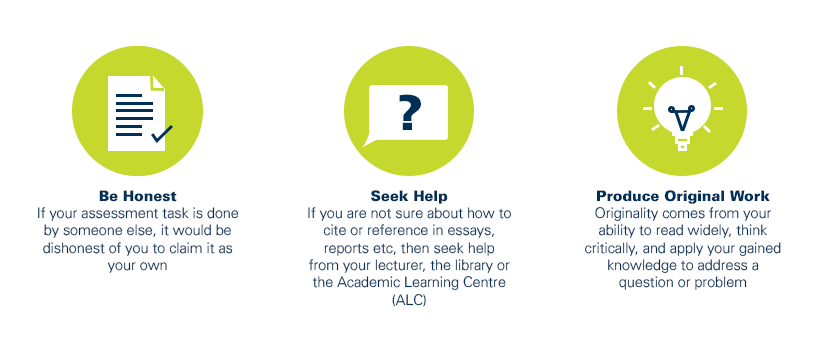
As a CQUniversity student you are expected to act honestly in all aspects of your academic work.
Any assessable work undertaken or submitted for review or assessment must be your own work. Assessable work is any type of work you do to meet the assessment requirements in the unit, including draft work submitted for review and feedback and final work to be assessed.
When you use the ideas, words or data of others in your assessment, you must thoroughly and clearly acknowledge the source of this information by using the correct referencing style for your unit. Using others’ work without proper acknowledgement may be considered a form of intellectual dishonesty.
Participating honestly, respectfully, responsibly, and fairly in your university study ensures the CQUniversity qualification you earn will be valued as a true indication of your individual academic achievement and will continue to receive the respect and recognition it deserves.
As a student, you are responsible for reading and following CQUniversity’s policies, including the Student Academic Integrity Policy and Procedure. This policy sets out CQUniversity’s expectations of you to act with integrity, examples of academic integrity breaches to avoid, the processes used to address alleged breaches of academic integrity, and potential penalties.
What is a breach of academic integrity?
A breach of academic integrity includes but is not limited to plagiarism, self-plagiarism, collusion, cheating, contract cheating, and academic misconduct. The Student Academic Integrity Policy and Procedure defines what these terms mean and gives examples.
Why is academic integrity important?
A breach of academic integrity may result in one or more penalties, including suspension or even expulsion from the University. It can also have negative implications for student visas and future enrolment at CQUniversity or elsewhere. Students who engage in contract cheating also risk being blackmailed by contract cheating services.
Where can I get assistance?
For academic advice and guidance, the Academic Learning Centre (ALC) can support you in becoming confident in completing assessments with integrity and of high standard.
What can you do to act with integrity?