Assessment number: 3
Name: Online Test
For the online test, no date information was entered. The original date 9/6/26 at 3-5pm Tuesday will now change to 9/6/26 (same day Tuesday) at a new time of 1-3pm.
Overview
This unit aims to provide you with the skills to apply the fundamental principles of human nutrition and pharmacology to enhance the musculoskeletal well-being of your future patients. It commences by reviewing the essential principles in these disciplines, ensuring your knowledge is comprehensive and evidence informed. Subsequently, you will focus on the elements of pharmacology and nutrition most pertinent to your role as a health professional.
Details
Pre-requisites or Co-requisites
Co-requisite:CHIR13010 Systems and Pathology
Important note: Students enrolled in a subsequent unit who failed their pre-requisite unit, should drop the subsequent unit before the census date or within 10 working days of Fail grade notification. Students who do not drop the unit in this timeframe cannot later drop the unit without academic and financial liability. See details in the Assessment Policy and Procedure (Higher Education Coursework).
Offerings For Term 1 - 2026
Attendance Requirements
All on-campus students are expected to attend scheduled classes - in some units, these classes are identified as a mandatory (pass/fail) component and attendance is compulsory. International students, on a student visa, must maintain a full time study load and meet both attendance and academic progress requirements in each study period (satisfactory attendance for International students is defined as maintaining at least an 80% attendance record).
Recommended Student Time Commitment
Each 6-credit Undergraduate unit at CQUniversity requires an overall time commitment of an average of 12.5 hours of study per week, making a total of 150 hours for the unit.
Class Timetable
Assessment Overview
Assessment Grading
This is a graded unit: your overall grade will be calculated from the marks or grades for each assessment task, based on the relative weightings shown in the table above. You must obtain an overall mark for the unit of at least 50%, or an overall grade of 'pass' in order to pass the unit. If any 'pass/fail' tasks are shown in the table above they must also be completed successfully ('pass' grade). You must also meet any minimum mark requirements specified for a particular assessment task, as detailed in the 'assessment task' section (note that in some instances, the minimum mark for a task may be greater than 50%). Consult the University's Grades and Results Policy for more details of interim results and final grades.
All University policies are available on the CQUniversity Policy site.
You may wish to view these policies:
- Grades and Results Policy
- Assessment Policy and Procedure (Higher Education Coursework)
- Review of Grade Procedure
- Student Academic Integrity Policy and Procedure
- Academic Progression Policy and Procedure
- Student Refund and Credit Balance Policy and Procedure
- Complaints Policy and Procedure
- Information and Communications Technology Acceptable Use Policy and Procedure
This list is not an exhaustive list of all University policies. The full list of University policies are available on the CQUniversity Policy site.
Feedback, Recommendations and Responses
Every unit is reviewed for enhancement each year. At the most recent review, the following staff and student feedback items were identified and recommendations were made.
Feedback from SUTE
Some students reported that some content felt disjointed which impacted their learning experience
It is recommended that the new Unit Coordinator review the content to ensure a smooth learning experience.
Feedback from SUTE
Some students felt having more real life cases and relevancy to chiropractic would have improved their learning experience.
It is recommended the new Unit Coordinator introduce clinical chiropractic focused cases during the review and update of content for next year.
- Analyse the role of nutrients in maintaining overall health and preventing chronic illness, through an understanding of the fundamentals of nutrition.
- Evaluate current evidence in the area of nutrition concerning dietary advice and interventions.
- Manage musculoskeletal conditions with an appreciation of the fundamental principles of pharmacology, including the effects and adverse reactions of commonly prescribed drugs.
- Analyse a food diary and provide evidence informed dietary advice for conditions that may present to a chiropractic clinic.
The learning outcomes in this unit contribute to the development of clinical and professional competencies as outlined by The Council on Chiropractic Education Australasia (CCEA) on behalf of The Chiropractic Board of Australia.
Alignment of Assessment Tasks to Learning Outcomes
| Assessment Tasks | Learning Outcomes | |||
|---|---|---|---|---|
| 1 | 2 | 3 | 4 | |
| 1 - Case Study - 25% | ||||
| 2 - Online Quiz(zes) - 25% | ||||
| 3 - Online Test - 50% | ||||
Alignment of Graduate Attributes to Learning Outcomes
| Graduate Attributes | Learning Outcomes | |||
|---|---|---|---|---|
| 1 | 2 | 3 | 4 | |
| 1 - Communication | ||||
| 2 - Problem Solving | ||||
| 3 - Critical Thinking | ||||
| 4 - Information Literacy | ||||
| 5 - Team Work | ||||
| 6 - Information Technology Competence | ||||
| 7 - Cross Cultural Competence | ||||
| 8 - Ethical practice | ||||
| 9 - Social Innovation | ||||
| 10 - First Nations Knowledges | ||||
| 11 - Aboriginal and Torres Strait Islander Cultures | ||||
Textbooks
There are no required textbooks.
IT Resources
- CQUniversity Student Email
- Internet
- Unit Website (Moodle)
No referencing style set.
i.scott@cqu.edu.au
m.fernandez@cqu.edu.au
Week 1
Begin Date: 09 Mar 2026Module/Topic
Food and Nutrition: Basics & Intro to Pharmacology
Chapter
Events and Submissions/Topic
Week 2
Begin Date: 16 Mar 2026Module/Topic
Indigenous & Australian diets & Nutritional guidelines; Pharmacodynamics and Pharmacokinetics
Chapter
Events and Submissions/Topic
Week 3
Begin Date: 23 Mar 2026Module/Topic
The Macronutrients & Food-Drug Interactions and Drugs of Abuse
Chapter
Events and Submissions/Topic
Week 4
Begin Date: 30 Mar 2026Module/Topic
Overview of Nutritional Assessment & Haemostasis and Anticoagulant Drugs
Chapter
Events and Submissions/Topic
Week 5
Begin Date: 06 Apr 2026Module/Topic
Water, Vitamins and Minerals & Inflammation, anti-inflammatory and analgesic drugs
Chapter
Events and Submissions/Topic
Online quiz opens on Friday at 12pm closes on Friday at 5pm
Week 6
Begin Date: 13 Apr 2026Module/Topic
Energy Intake and Weight Management & Drugs for Cardiovascular Diseases
Chapter
Events and Submissions/Topic
Vacation Week
Begin Date: 20 Apr 2026Module/Topic
Chapter
Events and Submissions/Topic
Week 7
Begin Date: 27 Apr 2026Module/Topic
Nutrition for Exercise and Sports & Drugs for lowering lipids, Modulate autonomic and neuromuscular junction functions
Chapter
Events and Submissions/Topic
Week 8
Begin Date: 04 May 2026Module/Topic
Preconception, Conception, Pregnancy and Lactation & Contraceptive and Sexual Dysfunction Pharmacology
Chapter
Events and Submissions/Topic
Week 9
Begin Date: 11 May 2026Module/Topic
Nutrition During Infancy, childhood and adolescence & Drugs for managing respiratory and allergic conditions
Chapter
Events and Submissions/Topic
Week 10
Begin Date: 18 May 2026Module/Topic
Nutrition in Pre-adolescence, adolescence and young adult & Pharmacology of the CNS
Chapter
Events and Submissions/Topic
Online quiz opens on Friday at 12pm closes on Friday at 5pm
Week 11
Begin Date: 25 May 2026Module/Topic
Nutrition During Adulthood and Prevention of Chronic Disease & Drugs to manage common non-cardiovascular diseases
Chapter
Events and Submissions/Topic
Week 12
Begin Date: 01 Jun 2026Module/Topic
Nutrition in Older Adult & Antibiotics, antiemetics, Drugs for Diabetes, Menopause and HRT, prostate enlargement
Chapter
Events and Submissions/Topic
Exam Week
Begin Date: 08 Jun 2026Module/Topic
Chapter
Events and Submissions/Topic
End of term test.
Date and time TBA. Please refer to timetable and Moodle forum for computer lab
details.
Vacation/Exam Week
Begin Date: 15 Jun 2026Module/Topic
Chapter
Events and Submissions/Topic
1 Case Study
You will be provided with a case study featuring a patient presenting to a chiropractic clinic with a musculoskeletal condition commonly influenced by nutrition. The case will include relevant medical history and a three-day food diary.
Your task is to: Evaluate the patient’s dietary habits based on the provided food diary, analyse how the patient’s current diet may be contributing to their condition. Formulate evidence-informed dietary recommendations that align with current research in nutrition and dietary interventions. Present your findings and recommendations in a concise video presentation (3 minutes) and submit your presentation slides.
Your response should integrate current evidence on nutrition and demonstrate an understanding of dietary modifications that could improve the patient's condition.
Generative AI
CQUniversity acknowledges the increasing presence and influence of Generative Artificial Intelligence (Gen AI) in academic work, including assessment development. While Gen AI tools may assist with structure, and language, students are reminded that all submitted work must be their own and reflect their understanding of the subject matter. The use of Gen AI must comply with the University’s Academic Integrity Policy. Any assistance from Gen AI tools (e.g., ChatGPT, GrammarlyGO, Microsoft Copilot) must be appropriately acknowledged, and students should ensure their use does not constitute contract cheating or plagiarism. Students are responsible for critically evaluating and verifying any AI-generated content, and for developing their own academic voice. Over-reliance on AI tools may undermine learning and breach academic integrity standards. When in doubt, students are encouraged to seek guidance from academic staff or the Academic Learning Centre (ALC).
Level of GenAI use allowed:
Level 2: Al may be used for pre-task activities such as brainstorming, outlining and initial research. This level focuses on the effective use of Al for planning, synthesis, and ideation, but assessments should emphasise the ability to develop and refine these ideas independently. You may use Al for planning, idea development, and research. Your final submission should show how you have developed and refined these ideas, the video recording must not use AI.
Week 7 Friday (1 May 2026) 3:00 pm AEST
Online Moodle submission: 1x Video File, 1x Slide Presentation
Week 9 Monday (11 May 2026)
The Case Study Presentation is assessed using a detailed rubric across 3 key areas:
1. Case analysis: 40%
- Evaluation of the patients dietary habits
- Analyse the link between diet and the patients outlined musculoskeletal condition
2. Dietary Recommendations: 30%
- Formulate evidence based dietary recommendations
3. Video and Slide Presentation, and Referencing: 30%
- Clarity and structure if the video presentation
- Use of presentation slides to support
- Academic writing and referencing
- Evaluate current evidence in the area of nutrition concerning dietary advice and interventions.
- Analyse a food diary and provide evidence informed dietary advice for conditions that may present to a chiropractic clinic.
2 Online Quiz(zes)
There will be two quizzes in this unit (week 5 and 10) that will assess your knowledge of nutrition and pharmacology. They will consist of multiple-choice and short-answer questions, content will be provided in Moodle weekly module/topics. Each quiz will be worth 12.5% of your final grade. The tests will open on the Friday of the designated week at 12pm and close at 5pm. Please make note that the quizzes will close at 5pm so leave yourself enough time to complete them.
The 72-hour grace period does not apply to this assessment.
Level of GenAI use allowed:
Level 1: You must not use Al at any point during the assessment. You must demonstrate your core skills and knowledge
The quizzes will open at 12pm and close at 5pm in week 5 (10th April 2026) and week 10 (22nd May 2026).
Results will be released to students within 2 weeks of the assessments being completed (ie/ week 7 and 12)
You will be assessed on your ability to select and or provide the correct answers posed in the quiz.
- Analyse the role of nutrients in maintaining overall health and preventing chronic illness, through an understanding of the fundamentals of nutrition.
- Manage musculoskeletal conditions with an appreciation of the fundamental principles of pharmacology, including the effects and adverse reactions of commonly prescribed drugs.
- Analyse a food diary and provide evidence informed dietary advice for conditions that may present to a chiropractic clinic.
3 Online Test
The final test will assess student knowledge of nutrition and pharmacology. It will consist of multiple-choice, short-answer questions and a few extended response questions, content tested will be provided in Moodle weekly module/topics across weeks 1-12. The Test will test both theoretical knowledge and clinical application relevant to Chiropractic practice.
The 72-hour grace period does not apply to this assessment.
Level of GenAI use allowed:
Level 1: You must not use Al at any point during the assessment. You must demonstrate your core skills and knowledge
The test date and time in week 13 (exam week) TBA. Please refer to timetable and Moodle forum for computer lab details.
The end of term test results will be visible in Moodle within 2 weeks of completing the task.
You will be assessed on your ability to select and or provide the correct answers posed in the end of term test.
- Analyse the role of nutrients in maintaining overall health and preventing chronic illness, through an understanding of the fundamentals of nutrition.
- Evaluate current evidence in the area of nutrition concerning dietary advice and interventions.
- Manage musculoskeletal conditions with an appreciation of the fundamental principles of pharmacology, including the effects and adverse reactions of commonly prescribed drugs.
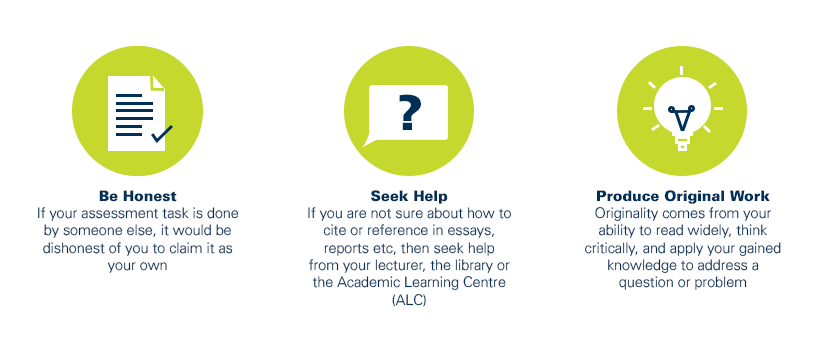
As a CQUniversity student you are expected to act honestly in all aspects of your academic work.
Any assessable work undertaken or submitted for review or assessment must be your own work. Assessable work is any type of work you do to meet the assessment requirements in the unit, including draft work submitted for review and feedback and final work to be assessed.
When you use the ideas, words or data of others in your assessment, you must thoroughly and clearly acknowledge the source of this information by using the correct referencing style for your unit. Using others’ work without proper acknowledgement may be considered a form of intellectual dishonesty.
Participating honestly, respectfully, responsibly, and fairly in your university study ensures the CQUniversity qualification you earn will be valued as a true indication of your individual academic achievement and will continue to receive the respect and recognition it deserves.
As a student, you are responsible for reading and following CQUniversity’s policies, including the Student Academic Integrity Policy and Procedure. This policy sets out CQUniversity’s expectations of you to act with integrity, examples of academic integrity breaches to avoid, the processes used to address alleged breaches of academic integrity, and potential penalties.
What is a breach of academic integrity?
A breach of academic integrity includes but is not limited to plagiarism, self-plagiarism, collusion, cheating, contract cheating, and academic misconduct. The Student Academic Integrity Policy and Procedure defines what these terms mean and gives examples.
Why is academic integrity important?
A breach of academic integrity may result in one or more penalties, including suspension or even expulsion from the University. It can also have negative implications for student visas and future enrolment at CQUniversity or elsewhere. Students who engage in contract cheating also risk being blackmailed by contract cheating services.
Where can I get assistance?
For academic advice and guidance, the Academic Learning Centre (ALC) can support you in becoming confident in completing assessments with integrity and of high standard.
What can you do to act with integrity?