Overview
This unit has been developed for you to begin your journey in the expansive field of research. This unit will introduce you to some fundamental principles of research practice and allow for a greater appreciation of research methodology, critical appraisal and basic statistical analysis. This unit will utilise the principle that ‘reading research’ should be the first goal of any research course. You will be given research articles to read in preparation for all weekly lectures and offered the opportunity to undertake formative assessment utilising lecture material, tutorial resources and additional readings. You will also learn how to utilise various critical appraisal techniques to allow you to confidently use research findings to help you make evidence-informed clinical decisions. By the end of this unit, you will be equipped to undertake the foundations of an Honours or Masters level research project and also be able to understand how research can be used to make evidence-informed clinical decisions.
Details
Pre-requisites or Co-requisites
Prerequisite: Completion of 96 credit points
Important note: Students enrolled in a subsequent unit who failed their pre-requisite unit, should drop the subsequent unit before the census date or within 10 working days of Fail grade notification. Students who do not drop the unit in this timeframe cannot later drop the unit without academic and financial liability. See details in the Assessment Policy and Procedure (Higher Education Coursework).
Offerings For Term 2 - 2026
Attendance Requirements
All on-campus students are expected to attend scheduled classes - in some units, these classes are identified as a mandatory (pass/fail) component and attendance is compulsory. International students, on a student visa, must maintain a full time study load and meet both attendance and academic progress requirements in each study period (satisfactory attendance for International students is defined as maintaining at least an 80% attendance record).
Recommended Student Time Commitment
Each 6-credit Undergraduate unit at CQUniversity requires an overall time commitment of an average of 12.5 hours of study per week, making a total of 150 hours for the unit.
Class Timetable
Assessment Overview
Assessment Grading
This is a graded unit: your overall grade will be calculated from the marks or grades for each assessment task, based on the relative weightings shown in the table above. You must obtain an overall mark for the unit of at least 50%, or an overall grade of 'pass' in order to pass the unit. If any 'pass/fail' tasks are shown in the table above they must also be completed successfully ('pass' grade). You must also meet any minimum mark requirements specified for a particular assessment task, as detailed in the 'assessment task' section (note that in some instances, the minimum mark for a task may be greater than 50%). Consult the University's Grades and Results Policy for more details of interim results and final grades.
All University policies are available on the CQUniversity Policy site.
You may wish to view these policies:
- Grades and Results Policy
- Assessment Policy and Procedure (Higher Education Coursework)
- Review of Grade Procedure
- Student Academic Integrity Policy and Procedure
- Academic Progression Policy and Procedure
- Student Refund and Credit Balance Policy and Procedure
- Complaints Policy and Procedure
- Information and Communications Technology Acceptable Use Policy and Procedure
This list is not an exhaustive list of all University policies. The full list of University policies are available on the CQUniversity Policy site.
Feedback, Recommendations and Responses
Every unit is reviewed for enhancement each year. At the most recent review, the following staff and student feedback items were identified and recommendations were made.
Feedback from SUTE student feedback
Students felt that tutorial activities could be further developed to encourage student interaction.
It is recommended that the Unit Coordinator continue using strategies and resources that foster student interaction during online tutorials
Feedback from SUTE student feedback
Students felt that pre-recorded lecture material could be better linked to real-world experiences.
It is recommended that the Unit Coordinator review and refine lecture and tutorial content to ensure alignment with supporting materials across both delivery modes.
- Critique the advantages and disadvantages of various research designs used in primary and secondary research
- Evaluate research using standardised and non-standardised critical appraisal methods
- Analyse basic research data and provide appropriate summaries for further evaluation
- Compose a research question in order to develop a collaborative proposal to investigate a selected field of enquiry
- Discuss the strengths and weaknesses of published research within a contextualised and patient-centred framework.
Alignment of Assessment Tasks to Learning Outcomes
| Assessment Tasks | Learning Outcomes | ||||
|---|---|---|---|---|---|
| 1 | 2 | 3 | 4 | 5 | |
| 1 - Portfolio - 30% | |||||
| 2 - Online Test - 30% | |||||
| 3 - Presentation - 40% | |||||
Alignment of Graduate Attributes to Learning Outcomes
| Graduate Attributes | Learning Outcomes | ||||
|---|---|---|---|---|---|
| 1 | 2 | 3 | 4 | 5 | |
| 1 - Communication | |||||
| 2 - Problem Solving | |||||
| 3 - Critical Thinking | |||||
| 4 - Information Literacy | |||||
| 5 - Team Work | |||||
| 6 - Information Technology Competence | |||||
| 7 - Cross Cultural Competence | |||||
| 8 - Ethical practice | |||||
| 9 - Social Innovation | |||||
| 10 - First Nations Knowledges | |||||
| 11 - Aboriginal and Torres Strait Islander Cultures | |||||
Textbooks
There are no required textbooks.
IT Resources
- CQUniversity Student Email
- Internet
- Unit Website (Moodle)
All submissions for this unit must use the referencing style: Vancouver
For further information, see the Assessment Tasks.
k.deluca@cqu.edu.au
Week 1: Ethics in Research
Begin Date: 13 Jul 2026Module/Topic
Lecture: Introduction to Research Literacy for Health Professionals and Ethics in Research
Online tutorial: Unit outline
Chapter
Relevant material will be available on Moodle.
Events and Submissions/Topic
Week 2: Clinical Epidemiology and Evidence-Based Medicine
Begin Date: 20 Jul 2026Module/Topic
Lecture: Clinical Epidemiology and Evidence-Based Medicine
Online tutorial: Evidence-based medicine
Chapter
Relevant material will be available on Moodle.
Events and Submissions/Topic
Week 3: Developing A Research Question and Searching the Literature
Begin Date: 27 Jul 2026Module/Topic
Lecture: Developing a Research Question and Searching the Literature
Online tutorial: PICO
Chapter
Relevant material will be available on Moodle.
Events and Submissions/Topic
Week 4: Critical Appraisal and Risk of Bias
Begin Date: 03 Aug 2026Module/Topic
Lecture: Critical Appraisal and Risk of Bias
Online tutorial: Critical appraisal (1)
Chapter
Relevant material will be available on Moodle.
Events and Submissions/Topic
Week 5: Research Study Designs
Begin Date: 10 Aug 2026Module/Topic
Lecture: Research Study Designs
Online tutorial: Critical appraisal (2)
Chapter
Relevant material will be available on Moodle.
Events and Submissions/Topic
Week 6: Sampling and Measurement
Begin Date: 17 Aug 2026Module/Topic
Lecture: Sampling and Measurement
Online tutorial: Sampling and measurement
Chapter
Relevant material will be available on Moodle.
Events and Submissions/Topic
Vacation Week
Begin Date: 24 Aug 2026Module/Topic
Chapter
Events and Submissions/Topic
Week 7: Fundamentals of Data Analysis
Begin Date: 31 Aug 2026Module/Topic
Lecture: Fundamentals of Data Analysis
Online tutorial: Fundamentals of Data Analysis
Chapter
Relevant material will be available on Moodle.
Events and Submissions/Topic
Week 8: Systematic Reviews and Meta-Analysis
Begin Date: 07 Sep 2026Module/Topic
Lecture: Systematic Reviews and Meta-Analysis
Online tutorial: Systematic reviews and PRISMA
Chapter
Relevant material will be available on Moodle.
Events and Submissions/Topic
Week 9: Clinical Practice Guidelines
Begin Date: 14 Sep 2026Module/Topic
Lecture: Clinical Practice Guidelines
Online tutorial: Clinical Practice Guidelines and AGREE II Instrument
Chapter
Relevant material will be available on Moodle.
Events and Submissions/Topic
Week 10: Qualitative Research
Begin Date: 21 Sep 2026Module/Topic
Lecture: Qualitative Research
Online tutorial: Qualitative Research
Chapter
Relevant material will be available on Moodle.
Events and Submissions/Topic
Week 11: Writing a Journal Paper
Begin Date: 28 Sep 2026Module/Topic
Lecture: Writing a Journal Paper
Online tutorial: Writing a Journal Paper
Chapter
Relevant material will be available on Moodle.
Events and Submissions/Topic
Week 12: Referencing
Begin Date: 05 Oct 2026Module/Topic
Lecture - Referencing
No online tutorial: OSCE week and self-directed study
Chapter
Relevant material will be available on Moodle.
Events and Submissions/Topic
Exam Week
Begin Date: 12 Oct 2026Module/Topic
Chapter
Events and Submissions/Topic
Assessment 3: Online Test (end of term test, invigilated and on campus; worth 30% and 50% mark to pass).
Online Test to be held in a CQUniversity computer lab on Brisbane campus from 1:00-3:00pm on Tuesday 13th October, 2026.
End of term test Due: Exam Week Tuesday (13 Oct 2026) 1:00 pm AEST
Vacation/Exam Week
Begin Date: 19 Oct 2026Module/Topic
Chapter
Events and Submissions/Topic
1 Portfolio
In this assessment students will move beyond identifying study characteristics to demonstrate independent critical thinking, evidence appraisal, and reflection on the strengths and limitations of research, including in the use of generative artificial intelligence (GenAI). This assessment is designed to progressively build research literacy skills and develop students' ability to critically assess both research evidence and a GenAI quality assessment output.
The assessment will include submitting an annotated article, critical appraisal checklist and critique of a prompted, GenAI quality assessment.
To help students use Generative AI tools in a transparent, flexible, and responsible way, students are encouraged to explore the following practical framework that guides ethical and effective AI use in assessment. All AI Assessment scale tool descriptors have been provided on the CHIR13012 Unit Documents & Materials.
For this assessment, AI Assessment descriptor 4 is applied.
Level of GenAI use allowed: Descriptor 4 - FULL AI
Al may be used to complete any elements of the task, with students directing AI to achieve the assessment goals. Assessments at this level may also require engagement with AI to achieve goals and solve problems.
Students may use Al extensively throughout this work either as they wish, or as specifically directed in your assessment. Focus on directing AI to achieve their goals while demonstrating critical thinking.
Week 6 Thursday (20 Aug 2026) 5:00 pm AEST
Week 8 Friday (11 Sept 2026)
In this assessment students need to critically appraise a peer-reviewed, journal article related to musculoskeletal health with the CASP Checklist and also using a GenAI quality assessment output. Students will critique the a prompted, GenAI quality assessment against their completed CASP Checklist. Acceptable, CQUniversity endorsed GenAI agents include Microsoft Copilot and Google Gemini.
Instructions:
1. Using PDF annotation software, annotate the journal article.
2. Complete a CASP Checklist for the journal article.
3. Upload the journal article and prompt the GenAI agent for quality assessment.
4. In ~750 words (one page) critique the GenAI quality assessment output. As an appendix, students must declare which GenAI agent was used, when the GenAI agent was used and include the complete GenAI quality assessment output with their submission.
- Critique the advantages and disadvantages of various research designs used in primary and secondary research
- Evaluate research using standardised and non-standardised critical appraisal methods
- Compose a research question in order to develop a collaborative proposal to investigate a selected field of enquiry
- Discuss the strengths and weaknesses of published research within a contextualised and patient-centred framework.
2 Presentation
Develop a one page (A4 size), single sided infographic that demonstrates your research literacy through critique, interpretation, and application. In addition, you are required to submit a 3 minute recorded video that highlights the infographic as a vehicle for communicating your research understanding.
Using a peer-reviewed article from a high-quality Q1 journal, develop an infographic that explains: what type of research design was used, the advantages and disadvantages of that design, what the data show, what conclusions can reasonably be drawn, and how the findings may inform patient-centred chiropractic practice.
To help you use Generative AI tools in a transparent, flexible, and responsible way, you are encouraged to explore the following practical framework that guides your ethical and effective AI use in your assessment. All AI Assessment scale tool descriptors have been provided on the CHIR13012 Unit Documents & Materials.
For this assessment, AI Assessment descriptor 2 is applied.
Level of GenAI use allowed: Descriptor 2 - AI PLANNING
Al may be used for pre-task activities such as brainstorming, outlining and initial research. This level focuses on the effective use of Al for planning, synthesis, and ideation, but assessments should emphasise the ability to develop and refine these ideas independently.
You may use Al for planning, idea development, and research. Your final submission should show how you have developed and refined these ideas.
Week 10 Thursday (24 Sept 2026) 5:00 pm AEST
Week 12 Wednesday (7 Oct 2026)
Instructions:
1. Design an infographic for a peer-reviewed journal article (visual communication).
2. Communicate through a 3 minute recorded video the research question, design and findings and reflect on the role of evidence in chiropractic practice (verbal communication).
- Critique the advantages and disadvantages of various research designs used in primary and secondary research
- Analyse basic research data and provide appropriate summaries for further evaluation
- Compose a research question in order to develop a collaborative proposal to investigate a selected field of enquiry
3 Online Test
This end of term test will be taken in person, in a CQUni computer lab, on Brisbane campus, in Week 13.
The end of term test will be open for two hours. The test will involve a mix of question types including multiple choice, short answer, essay and matching styles. The test will assess all theoretical content taught across weeks 1-12. This is NOT an open book quiz nor a group assessment and answers must be an individuals own work.
The 72-hour grace period does NOT apply to this assessment.
Students should arrive 15 minutes before the start of the end of term test. Reading time is allocated within the 120 minutes duration of the end of term test. Students should bring their student ID with them to confirm it is them taking the end of term test.
Once the end of term test has begun nobody can leave the room for the first 30 minutes. After that, no late students will be allowed to join the end of term test as per policy.
Students must finalise and submit the end of term test and show the invigilator the submission screen prior to leaving the CQUniversity computer lab.
To help students use Generative AI tools in a transparent, flexible, and responsible way, they are encouraged to explore the following practical framework that guides ethical and effective AI use in assessments. All AI Assessment scale tool descriptors have been provided on the CHIR13012 Unit Documents & Materials.
For this assessment, AI Assessment descriptor 1 is applied.
Descriptor 1: No AI - The assessment is completed entirely without Al assistance in a controlled environment, ensuring that students rely solely on their existing knowledge, understanding, and skills. Students must not use Al at any point during the assessment. Students must demonstrate core skills and knowledge.
Exam Week Tuesday (13 Oct 2026) 1:00 pm AEST
Vacation/Exam Week Friday (23 Oct 2026)
The assessment criteria will involve selecting or providing the most accurate and correct answers to the questions posed in this end of term test.
The end of term test is worth 30% of your total grade. The end of term test is graded and has a minimum mark to pass. You need a minimum mark of 50% mark to pass this assessment.
- Evaluate research using standardised and non-standardised critical appraisal methods
- Analyse basic research data and provide appropriate summaries for further evaluation
- Discuss the strengths and weaknesses of published research within a contextualised and patient-centred framework.
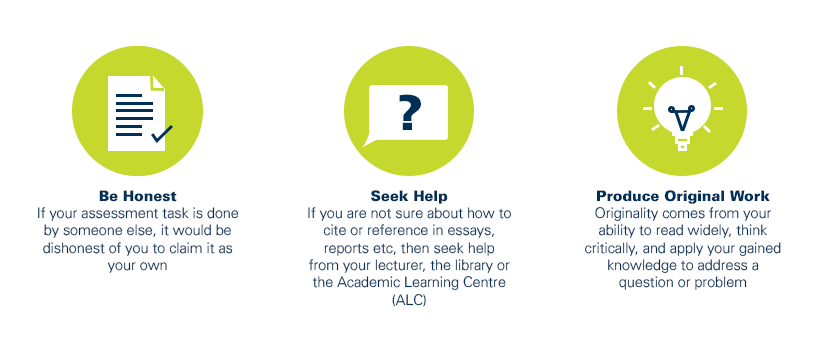
As a CQUniversity student you are expected to act honestly in all aspects of your academic work.
Any assessable work undertaken or submitted for review or assessment must be your own work. Assessable work is any type of work you do to meet the assessment requirements in the unit, including draft work submitted for review and feedback and final work to be assessed.
When you use the ideas, words or data of others in your assessment, you must thoroughly and clearly acknowledge the source of this information by using the correct referencing style for your unit. Using others’ work without proper acknowledgement may be considered a form of intellectual dishonesty.
Participating honestly, respectfully, responsibly, and fairly in your university study ensures the CQUniversity qualification you earn will be valued as a true indication of your individual academic achievement and will continue to receive the respect and recognition it deserves.
As a student, you are responsible for reading and following CQUniversity’s policies, including the Student Academic Integrity Policy and Procedure. This policy sets out CQUniversity’s expectations of you to act with integrity, examples of academic integrity breaches to avoid, the processes used to address alleged breaches of academic integrity, and potential penalties.
What is a breach of academic integrity?
A breach of academic integrity includes but is not limited to plagiarism, self-plagiarism, collusion, cheating, contract cheating, and academic misconduct. The Student Academic Integrity Policy and Procedure defines what these terms mean and gives examples.
Why is academic integrity important?
A breach of academic integrity may result in one or more penalties, including suspension or even expulsion from the University. It can also have negative implications for student visas and future enrolment at CQUniversity or elsewhere. Students who engage in contract cheating also risk being blackmailed by contract cheating services.
Where can I get assistance?
For academic advice and guidance, the Academic Learning Centre (ALC) can support you in becoming confident in completing assessments with integrity and of high standard.
What can you do to act with integrity?