Overview
In Environmental Chemistry, you will examine how chemical processes shape the condition of the environment and influence the decisions we make about managing land, water and energy. You will explore why certain problems emerge, how we detect them and what chemistry can tell us about the best way to respond. You will begin by looking at the major environmental spheres and the standards used to judge environmental quality. From there, you will investigate natural waters and the chemical signals that reveal whether an aquatic system is healthy or under stress. You will also study acid mine drainage and other forms of contamination to understand how pollutants move and why some sites are harder to remediate than others. As the term continues, you will turn your attention to the atmosphere. You will explore the chemistry behind ozone loss, air pollution, smog and the greenhouse effect, and you will examine the evidence that links human activity to climate change. You will then consider how energy choices, industrial processes and natural systems interact to influence emissions and long-term environmental quality. You will also work with the chemistry of toxic metals, sampling needs and environmental monitoring before finishing with radioactivity and risk communication. By the end of the term, you will be able to interpret environmental data and explain the chemical behaviour that drives major environmental issues.
Details
Pre-requisites or Co-requisites
Pre-requisites: CHEM11043 Atoms, Molecules and Matter
Important note: Students enrolled in a subsequent unit who failed their pre-requisite unit, should drop the subsequent unit before the census date or within 10 working days of Fail grade notification. Students who do not drop the unit in this timeframe cannot later drop the unit without academic and financial liability. See details in the Assessment Policy and Procedure (Higher Education Coursework).
Offerings For Term 1 - 2026
Attendance Requirements
All on-campus students are expected to attend scheduled classes - in some units, these classes are identified as a mandatory (pass/fail) component and attendance is compulsory. International students, on a student visa, must maintain a full time study load and meet both attendance and academic progress requirements in each study period (satisfactory attendance for International students is defined as maintaining at least an 80% attendance record).
Recommended Student Time Commitment
Each 6-credit Undergraduate unit at CQUniversity requires an overall time commitment of an average of 12.5 hours of study per week, making a total of 150 hours for the unit.
Class Timetable
Assessment Overview
Assessment Grading
This is a graded unit: your overall grade will be calculated from the marks or grades for each assessment task, based on the relative weightings shown in the table above. You must obtain an overall mark for the unit of at least 50%, or an overall grade of 'pass' in order to pass the unit. If any 'pass/fail' tasks are shown in the table above they must also be completed successfully ('pass' grade). You must also meet any minimum mark requirements specified for a particular assessment task, as detailed in the 'assessment task' section (note that in some instances, the minimum mark for a task may be greater than 50%). Consult the University's Grades and Results Policy for more details of interim results and final grades.
All University policies are available on the CQUniversity Policy site.
You may wish to view these policies:
- Grades and Results Policy
- Assessment Policy and Procedure (Higher Education Coursework)
- Review of Grade Procedure
- Student Academic Integrity Policy and Procedure
- Academic Progression Policy and Procedure
- Student Refund and Credit Balance Policy and Procedure
- Complaints Policy and Procedure
- Information and Communications Technology Acceptable Use Policy and Procedure
This list is not an exhaustive list of all University policies. The full list of University policies are available on the CQUniversity Policy site.
Feedback, Recommendations and Responses
Every unit is reviewed for enhancement each year. At the most recent review, the following staff and student feedback items were identified and recommendations were made.
Feedback from Student feedback
Some students requested more worked examples for the mathematical-based questions.
Review tutorial content to provide further worked examples where possible. Consider options for additional mathematical support for students.
Feedback from Student feedback
Some students experienced confusion with the lecture material labelling and understanding background textbook readings.
Review and update the organisation of unit content as necessary. Provide resources for key concept review.
- Explain the chemical principles relating to the chemistry of the different spheres of the environment: atmosphere, hydrosphere, lithosphere and biosphere
- Apply environmental chemical concepts and analytical reasoning to interpret water, air, soil, and pollutant information, and evaluate environmental quality using scientifically valid approaches
- Describe the important environment regulating authority and environmental guidelines
- Use research skills to obtain information relating to environmental chemical concepts, environmental issues and current approaches to solve these.
Nil.
Alignment of Assessment Tasks to Learning Outcomes
| Assessment Tasks | Learning Outcomes | |||
|---|---|---|---|---|
| 1 | 2 | 3 | 4 | |
| 1 - Written Assessment - 30% | ||||
| 2 - Presentation - 50% | ||||
| 3 - Online Test - 20% | ||||
Alignment of Graduate Attributes to Learning Outcomes
| Graduate Attributes | Learning Outcomes | |||
|---|---|---|---|---|
| 1 | 2 | 3 | 4 | |
| 1 - Communication | ||||
| 2 - Problem Solving | ||||
| 3 - Critical Thinking | ||||
| 4 - Information Literacy | ||||
| 5 - Team Work | ||||
| 6 - Information Technology Competence | ||||
| 7 - Cross Cultural Competence | ||||
| 8 - Ethical practice | ||||
| 9 - Social Innovation | ||||
| 10 - First Nations Knowledges | ||||
| 11 - Aboriginal and Torres Strait Islander Cultures | ||||
Textbooks
Environmental Chemistry
- Edition: 5 (2012)
- Authors: Colin Baird and Michael Cann
- WH Freeman and Co Ltd
- NY NY , NY , USA
- ISBN: 9781464162879
- Binding: Hardcover
IT Resources
- CQUniversity Student Email
- Internet
- Unit Website (Moodle)
- EndNote Bibliographical application
- MS Office
All submissions for this unit must use the referencing style: Vancouver
For further information, see the Assessment Tasks.
s.chandra@cqu.edu.au
Week 1
Begin Date: 09 Mar 2026Module/Topic
Introduction to Environmental Chemistry
Chapter
This week’s learning draws on selected chapters from the textbook. Refer to Moodle for guidance on which chapters to read.
Events and Submissions/Topic
Week 2
Begin Date: 16 Mar 2026Module/Topic
Natural Waters & Oxygen Demand
Chapter
This week’s learning draws on selected chapters from the textbook. Refer to Moodle for guidance on which chapters to read.
Events and Submissions/Topic
Week 3
Begin Date: 23 Mar 2026Module/Topic
Acid Mine Drainage (AMD) & Redox Chemistry
Chapter
This week’s learning draws on selected chapters from the textbook. Refer to Moodle for guidance on which chapters to read.
Events and Submissions/Topic
Week 4
Begin Date: 30 Mar 2026Module/Topic
Pollution
Chapter
This week’s learning draws on selected chapters from the textbook. Refer to Moodle for guidance on which chapters to read.
Events and Submissions/Topic
Week 5
Begin Date: 06 Apr 2026Module/Topic
Emerging Contaminants
Chapter
Peer reviewed literature plus this week’s learning draws on selected chapters from the textbook. Refer to Moodle for guidance on which chapters to read.
Events and Submissions/Topic
Week 6
Begin Date: 13 Apr 2026Module/Topic
Toxic Heavy Metals & Speciation
Chapter
This week’s learning draws on selected chapters from the textbook. Refer to Moodle for guidance on which chapters to read.
Events and Submissions/Topic
Vacation Week
Begin Date: 20 Apr 2026Module/Topic
Chapter
Events and Submissions/Topic
Week 7
Begin Date: 27 Apr 2026Module/Topic
Environmental Remediation
Chapter
Peer reviewed literature plus this week’s learning draws on selected chapters from the textbook. Refer to Moodle for guidance on which chapters to read.
Events and Submissions/Topic
Week 8
Begin Date: 04 May 2026Module/Topic
Climate Change - A Global Challenge
Chapter
This week’s learning draws on selected chapters from the textbook. Refer to Moodle for guidance on which chapters to read.
Events and Submissions/Topic
Week 9
Begin Date: 11 May 2026Module/Topic
Ground-Level Air Pollution & Smog
Chapter
This week’s learning draws on selected chapters from the textbook. Refer to Moodle for guidance on which chapters to read.
Events and Submissions/Topic
Week 10
Begin Date: 18 May 2026Module/Topic
Radioactivity, Nuclear & Renewables
Chapter
This week’s learning draws on selected chapters from the textbook. Refer to Moodle for guidance on which chapters to read.
Events and Submissions/Topic
Week 11
Begin Date: 25 May 2026Module/Topic
Integrated Management of our Environment
Chapter
Peer reviewed literature plus this week’s learning draws on selected chapters from the textbook. Refer to Moodle for guidance on which chapters to read.
Events and Submissions/Topic
Week 12
Begin Date: 01 Jun 2026Module/Topic
Chapter
Events and Submissions/Topic
Exam Week
Begin Date: 08 Jun 2026Module/Topic
Chapter
Events and Submissions/Topic
Vacation/Exam Week
Begin Date: 15 Jun 2026Module/Topic
Chapter
Events and Submissions/Topic
1 Written Assessment
Assessment 1 comprises of a writing task across water, air, energy, and pollution topics. It is aimed to build your research and critical writing skills. You will need to write a case study on an environmental issue in Australia. The Assessment Task requires some scientific research (i.e. you need to consult references outside of the textbook, including peer reviewed scientific literature such as journals). It is important to start on the Assessment Task as early as possible. Remember to always cite your sources throughout your report, including DOI for peer-reviewed scientific literature.
A 72 hour grace period applies to this Assessment Task.
Level of Gen-AI use allowed: Level 3 - You may use Al to assist with specific tasks such as drafting text, refining and evaluating your work. You must critically evaluate and modify any Al-generated content you use.
Week 4 Friday (3 Apr 2026) 11:00 am AEST
To be submitted via Moodle
Week 7 Friday (1 May 2026)
Returned via Moodle
Introduction and Background: 30%
Literature (including peer-reviewed sources): 30%
Cohesive writing with arguments clearly presented and justified: 30%
Overall Presentation (no typos), correct labeling of figures and tables, word-processed: 10%
- Explain the chemical principles relating to the chemistry of the different spheres of the environment: atmosphere, hydrosphere, lithosphere and biosphere
- Describe the important environment regulating authority and environmental guidelines
- Use research skills to obtain information relating to environmental chemical concepts, environmental issues and current approaches to solve these.
2 Presentation
For Assessment 2, you will prepare a presentation on a major global environmental challenge that applies chemical theory into contextualised application/evaluation. More information on the topic will be made available via Moodle. You will present this information in the form of PowerPoint slides on which you will voice-over and record as a video file for submission that does not exceed 6 minutes in length. Your submitted video must summarise your key findings, review the selected methods and demonstrate your understanding of the key environmental chemistry principles.
A 72 hour grace period applies to this Assessment Task.
Level of Gen-AI use allowed: Level 3 - You may use Al to assist with specific tasks such as drafting text, refining and evaluating your work. You must critically evaluate and modify any Al-generated content you use.
Week 9 Friday (15 May 2026) 11:00 am AEST
To be submitted via Moodle
Week 12 Wednesday (3 June 2026)
To be returned with feedback via Moodle
Relevance, reliability and depth of reviewed literature (including correct referencing) – 25%
Demonstrated understanding of key environmental chemistry concepts – 25%
Slide content and layout – 25%
Presentation delivery – 25%
- Explain the chemical principles relating to the chemistry of the different spheres of the environment: atmosphere, hydrosphere, lithosphere and biosphere
- Apply environmental chemical concepts and analytical reasoning to interpret water, air, soil, and pollutant information, and evaluate environmental quality using scientifically valid approaches
- Describe the important environment regulating authority and environmental guidelines
- Use research skills to obtain information relating to environmental chemical concepts, environmental issues and current approaches to solve these.
3 Online Test
The Online Test will be an assortment of problem-solving and extended-answer questions. The mark allocations per question will be provided on the Assessment with each question. The access to the Test will be for 24 hours. You must open the Test within the 24 hour period and attempt it. Once opened, you will have 2 hours to answer the questions. Access to the Test within the 24-hour period will only be once. Please ensure that you have given yourself sufficient time to attempt all the questions and upload your answers and that you have Internet connectivity for the duration of the Test.
Assessment Coverage
This assessment draws on the following learning materials:
Lecture slides
Recorded lecture videos
Recommended readings identified in the lecture slides
Recommended reading resources available on Moodle (including Additional Resources)
Tutorial materials, including recorded tutorial videos
No grace period applies to this Assessment Task.
Level of Gen-AI use allowed: Level 1 (No AI) - The assessment is completed entirely without Al assistance in a controlled environment, ensuring that you rely solely on your existing knowledge, understanding, and skills. You must not use Al at any point during the assessment. You must demonstrate your core skills and knowledge.
Week 12 Friday (5 June 2026) 11:00 am AEST
To be submitted via Moodle
Exam Week Friday (12 June 2026)
Marked and returned via Moodle
You must provide all relevant working for any question requiring a calculated answer. All submissions will be assessed as presented, so you are responsible for ensuring clarity, completeness, and accuracy in your responses.
- Explain the chemical principles relating to the chemistry of the different spheres of the environment: atmosphere, hydrosphere, lithosphere and biosphere
- Describe the important environment regulating authority and environmental guidelines
- Use research skills to obtain information relating to environmental chemical concepts, environmental issues and current approaches to solve these.
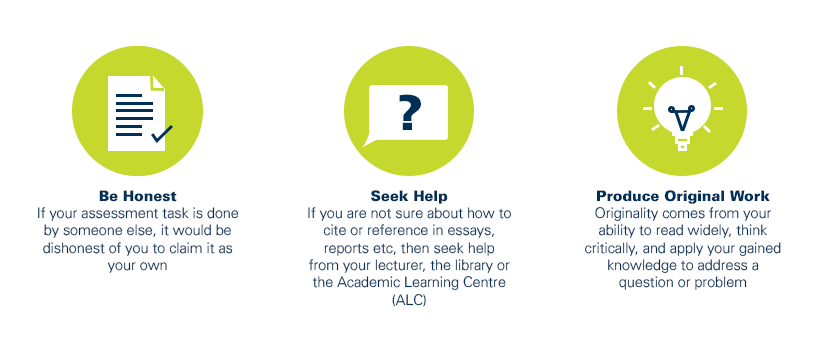
As a CQUniversity student you are expected to act honestly in all aspects of your academic work.
Any assessable work undertaken or submitted for review or assessment must be your own work. Assessable work is any type of work you do to meet the assessment requirements in the unit, including draft work submitted for review and feedback and final work to be assessed.
When you use the ideas, words or data of others in your assessment, you must thoroughly and clearly acknowledge the source of this information by using the correct referencing style for your unit. Using others’ work without proper acknowledgement may be considered a form of intellectual dishonesty.
Participating honestly, respectfully, responsibly, and fairly in your university study ensures the CQUniversity qualification you earn will be valued as a true indication of your individual academic achievement and will continue to receive the respect and recognition it deserves.
As a student, you are responsible for reading and following CQUniversity’s policies, including the Student Academic Integrity Policy and Procedure. This policy sets out CQUniversity’s expectations of you to act with integrity, examples of academic integrity breaches to avoid, the processes used to address alleged breaches of academic integrity, and potential penalties.
What is a breach of academic integrity?
A breach of academic integrity includes but is not limited to plagiarism, self-plagiarism, collusion, cheating, contract cheating, and academic misconduct. The Student Academic Integrity Policy and Procedure defines what these terms mean and gives examples.
Why is academic integrity important?
A breach of academic integrity may result in one or more penalties, including suspension or even expulsion from the University. It can also have negative implications for student visas and future enrolment at CQUniversity or elsewhere. Students who engage in contract cheating also risk being blackmailed by contract cheating services.
Where can I get assistance?
For academic advice and guidance, the Academic Learning Centre (ALC) can support you in becoming confident in completing assessments with integrity and of high standard.
What can you do to act with integrity?