Overview
In this unit, you will build a solid understanding of how organic molecules behave and how their chemistry underpins biological systems. You will learn how reaction mechanisms explain changes in functional groups, how to recognise key patterns in heterocyclic and pericyclic reactions, and how these ideas help you predict reaction outcomes. You will also work with common spectroscopic techniques so you can interpret nuclear magnetic resonance (NMR), infrared (IR), mass spectrometry (MS), and ultraviolet (UV) data to identify unknown compounds. As the unit progresses, you will explore the structures and properties of important biomolecules such as carbohydrates, lipids, nucleic acids and proteins. You will examine how their chemical features link to their roles in living systems and basic metabolic processes. In the laboratory, you will put your knowledge into practice through organic synthesis, purification and analysis, along with introductory bio-organic or biochemical assays. These activities will help you develop practical skills, understand safe laboratory practice and learn how to record and communicate scientific results clearly.
Details
Pre-requisites or Co-requisites
Pre-requisites:CHEM11043 Atoms, Molecules and MatterandCHEM11044 Chemical Reactions.
Important note: Students enrolled in a subsequent unit who failed their pre-requisite unit, should drop the subsequent unit before the census date or within 10 working days of Fail grade notification. Students who do not drop the unit in this timeframe cannot later drop the unit without academic and financial liability. See details in the Assessment Policy and Procedure (Higher Education Coursework).
Offerings For Term 1 - 2026
Attendance Requirements
All on-campus students are expected to attend scheduled classes - in some units, these classes are identified as a mandatory (pass/fail) component and attendance is compulsory. International students, on a student visa, must maintain a full time study load and meet both attendance and academic progress requirements in each study period (satisfactory attendance for International students is defined as maintaining at least an 80% attendance record).
Recommended Student Time Commitment
Each 6-credit Undergraduate unit at CQUniversity requires an overall time commitment of an average of 12.5 hours of study per week, making a total of 150 hours for the unit.
Class Timetable
Assessment Overview
Assessment Grading
This is a graded unit: your overall grade will be calculated from the marks or grades for each assessment task, based on the relative weightings shown in the table above. You must obtain an overall mark for the unit of at least 50%, or an overall grade of 'pass' in order to pass the unit. If any 'pass/fail' tasks are shown in the table above they must also be completed successfully ('pass' grade). You must also meet any minimum mark requirements specified for a particular assessment task, as detailed in the 'assessment task' section (note that in some instances, the minimum mark for a task may be greater than 50%). Consult the University's Grades and Results Policy for more details of interim results and final grades.
All University policies are available on the CQUniversity Policy site.
You may wish to view these policies:
- Grades and Results Policy
- Assessment Policy and Procedure (Higher Education Coursework)
- Review of Grade Procedure
- Student Academic Integrity Policy and Procedure
- Academic Progression Policy and Procedure
- Student Refund and Credit Balance Policy and Procedure
- Complaints Policy and Procedure
- Information and Communications Technology Acceptable Use Policy and Procedure
This list is not an exhaustive list of all University policies. The full list of University policies are available on the CQUniversity Policy site.
Feedback, Recommendations and Responses
Every unit is reviewed for enhancement each year. At the most recent review, the following staff and student feedback items were identified and recommendations were made.
Feedback from UC REFLECTION
Students were highly engaged and motivated during the residential school, reporting an enjoyable and valuable practical learning experience.
The teaching team will continue to apply an inquiry-oriented learning approach during residential schools to maintain high levels of student engagement and motivation.
Feedback from TEACHING TEAM REFLECTION
Some students appeared initially disoriented and overwhelmed at the start of the residential school due to the new inquiry-oriented learning approach.
The teaching team will continue to emphasize the importance of completing the self-review task prior to the residential school, as this preparation supports students in understanding and adjusting to the inquiry-oriented learning approach.
- Predict the products of common organic reactions using basic mechanistic ideas
- Analyse chemical data to determine the structure of organic compounds
- Describe the structures and key properties of major biomolecules
- Work safely in the laboratory while accurately recording observations and measurements.
Alignment of Assessment Tasks to Learning Outcomes
| Assessment Tasks | Learning Outcomes | |||
|---|---|---|---|---|
| 1 | 2 | 3 | 4 | |
| 1 - Written Assessment - 20% | ||||
| 2 - Practical Assessment - 30% | ||||
| 3 - Take Home Exam - 50% | ||||
Alignment of Graduate Attributes to Learning Outcomes
| Graduate Attributes | Learning Outcomes | |||
|---|---|---|---|---|
| 1 | 2 | 3 | 4 | |
| 1 - Communication | ||||
| 2 - Problem Solving | ||||
| 3 - Critical Thinking | ||||
| 4 - Information Literacy | ||||
| 5 - Team Work | ||||
| 6 - Information Technology Competence | ||||
| 7 - Cross Cultural Competence | ||||
| 8 - Ethical practice | ||||
| 9 - Social Innovation | ||||
| 10 - First Nations Knowledges | ||||
| 11 - Aboriginal and Torres Strait Islander Cultures | ||||
Textbooks
Organic Chemistry
- Edition: 9th (2016)
- Authors: John E. McMurry
- ISBN: 9781305080485
Textbooks can be accessed online at the CQUniversity Library website. If you prefer your own copy, you can purchase either paper or eBook versions at the CQUni Bookshop here: http://bookshop.cqu.edu.au (search on the Unit code)
IT Resources
- CQUniversity Student Email
- Internet
- Unit Website (Moodle)
- MS Office
All submissions for this unit must use the referencing style: Vancouver
For further information, see the Assessment Tasks.
m.naiker@cqu.edu.au
Week 1
Begin Date: 09 Mar 2026Module/Topic
Overview of Organic Reactions
Chapter
6
Events and Submissions/Topic
Week 2
Begin Date: 16 Mar 2026Module/Topic
Structure Determination: Mass Spectrometry and Infrared Spectroscopy
Chapter
12
Events and Submissions/Topic
Week 3
Begin Date: 23 Mar 2026Module/Topic
Structure Determination: Nuclear Magnetic Resonance Spectroscopy
Chapter
13
Events and Submissions/Topic
Week 4
Begin Date: 30 Mar 2026Module/Topic
Conjugated Dienes and Ultraviolet Spectroscopy
Chapter
14
Events and Submissions/Topic
Week 5
Begin Date: 06 Apr 2026Module/Topic
Benzene and Aromaticity
Chapter
15
Events and Submissions/Topic
Self-review Tasks Due: Week 5 Friday (10 April 2026) 11:45 pm AEST
Week 6
Begin Date: 13 Apr 2026Module/Topic
Chemistry of Benzene
(Residential School: 15 - 17 April)
Chapter
16
Events and Submissions/Topic
Vacation Week
Begin Date: 20 Apr 2026Module/Topic
Chapter
Events and Submissions/Topic
Week 7
Begin Date: 27 Apr 2026Module/Topic
Carbonyl a-Substitution Reactions
Chapter
22
Events and Submissions/Topic
Week 8
Begin Date: 04 May 2026Module/Topic
Carbonyl Condensation Reactions
Chapter
23
Events and Submissions/Topic
Week 9
Begin Date: 11 May 2026Module/Topic
Amines and Heterocycles
Chapter
24
Events and Submissions/Topic
Week 10
Begin Date: 18 May 2026Module/Topic
Orbitals and Organic Chemistry: Pericyclic Reactions
Chapter
30
Events and Submissions/Topic
Week 11
Begin Date: 25 May 2026Module/Topic
Review
Chapter
Events and Submissions/Topic
Week 12
Begin Date: 01 Jun 2026Module/Topic
Review/Exam
Chapter
Events and Submissions/Topic
Take-home Exam: Available to
download on June 2, 2025 at 9.00 am
AEST
Exam Week
Begin Date: 08 Jun 2026Module/Topic
Chapter
Events and Submissions/Topic
Vacation/Exam Week
Begin Date: 15 Jun 2026Module/Topic
Chapter
Events and Submissions/Topic
1 Written Assessment
This assessment aims to evaluate your understanding of the concepts covered in the unit (Weeks 1 - 4) by applying them to answer a series of questions. Marks will be allocated for each question as outlined in the assessment guidelines (refer to the Moodle site for more details). Ensure that explanations accompany each answer, and if calculations are necessary, include all workings. All calculations and workings must be detailed and entirely the student's own work. Collusion and/or external assistance is not permitted.
Level of GenAI use allowed: Level 1: You must not use Al at any point during the assessment. You must demonstrate your core skills and knowledge.
Week 8 Friday (8 May 2026) 11:45 pm AEST
To be submitted via Moodle as a Word document
Week 10 Friday (22 May 2026)
Via assessment task feedback file in Moodle
- Marks will be awarded for each question as indicated in the assessment item (please see the Moodle site for further details on this assessment item)
- Analyse chemical data to determine the structure of organic compounds
- Describe the structures and key properties of major biomolecules
2 Practical Assessment
Prior to attending the residential school, you are strongly recommended to complete the self-review tasks by 11 April 2025 and emailed (m.naiker@cqu.edu.au) to the coordinator as a Word document. More information on this will be provided in the Moodle page.
During the residential school you will be undertaking a range of chemical analysis and qualitative measurements to characterize various constituents in a natural matrix. At the end of the residential school, you will be required to submit an individual final report outlining the following:
- Title
- Introduction
- Objectives
- Results (tables, graphs etc.)
- Discussion
- Conclusions
- References
Your complete final report pertaining to all tasks undertaken during the residential school should be of no more than 2000 words. Include in-text references for all literature cited and a complete reference list at the end. The text must be Word processed and submitted as a Word document via Moodle. It is your responsibility to make sure that the submission is done by the due date.
The final report is compulsory and should be submitted collated into one Word file.
All calculations and workings must be detailed and entirely the student's own work. Collusion and/or external assistance is not permitted.
Level of GenAI use allowed: Level 1: You must not use Al at any point during the assessment. You must demonstrate your core skills and knowledge.
Week 11 Monday (25 May 2026) 11:45 pm AEST
To be submitted via Moodle as a Word document.
Week 12 Friday (5 June 2026)
Via assessment task feedback file in Moodle
- Refer to the marking rubric sheet that will be made available on Moodle
- Predict the products of common organic reactions using basic mechanistic ideas
- Analyse chemical data to determine the structure of organic compounds
- Work safely in the laboratory while accurately recording observations and measurements.
3 Take Home Exam
The take home exam will cover all the content you have studied this term. This assessment will be in the form of a written assessment that will be made available via Moodle during exam week. You will be allowed 48 hours to complete and upload this take-home exam via Moodle as a Word document.
In completing this assessment, you should note the following:
• Attempt all questions
• All submissions should be typed and saved as a Word document
• Show all calculations as required
• Completed assessment is to be submitted via upload on Moodle page.
The breakdown of topics to be covered in the take home exam and associated marks will be made available on Moodle. All calculations and workings must be detailed and entirely the student's own work. Collusion and/or external assistance is not permitted.
Level of GenAI use allowed: Level 1: You must not use Al at any point during the assessment. You must demonstrate your core skills and knowledge.
The 72-hour grace period does not apply to this assessment.
The take-home exam will be available for download at 9:00 AM (AEST) on June 2, 2026. It will remain accessible for 48 hours ONLY and must be submitted via Moodle no later than 48 hours after release.
Marks will be returned 14 days after the take-home exam is submitted via Gradebook in Moodle.
- The assessment marking criteria will be based on the marks allocated for each question in the take home exam
- Predict the products of common organic reactions using basic mechanistic ideas
- Analyse chemical data to determine the structure of organic compounds
- Describe the structures and key properties of major biomolecules
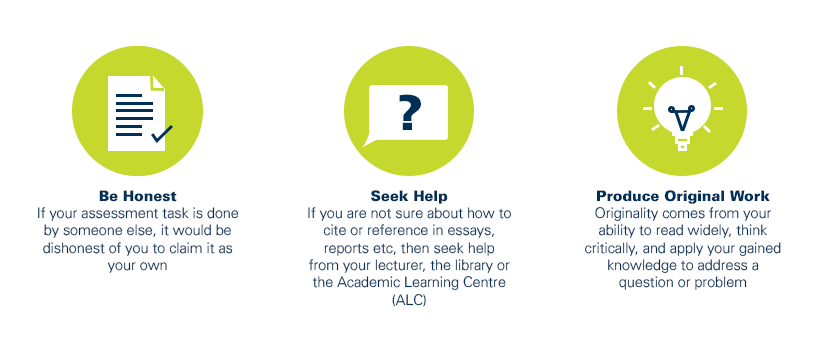
As a CQUniversity student you are expected to act honestly in all aspects of your academic work.
Any assessable work undertaken or submitted for review or assessment must be your own work. Assessable work is any type of work you do to meet the assessment requirements in the unit, including draft work submitted for review and feedback and final work to be assessed.
When you use the ideas, words or data of others in your assessment, you must thoroughly and clearly acknowledge the source of this information by using the correct referencing style for your unit. Using others’ work without proper acknowledgement may be considered a form of intellectual dishonesty.
Participating honestly, respectfully, responsibly, and fairly in your university study ensures the CQUniversity qualification you earn will be valued as a true indication of your individual academic achievement and will continue to receive the respect and recognition it deserves.
As a student, you are responsible for reading and following CQUniversity’s policies, including the Student Academic Integrity Policy and Procedure. This policy sets out CQUniversity’s expectations of you to act with integrity, examples of academic integrity breaches to avoid, the processes used to address alleged breaches of academic integrity, and potential penalties.
What is a breach of academic integrity?
A breach of academic integrity includes but is not limited to plagiarism, self-plagiarism, collusion, cheating, contract cheating, and academic misconduct. The Student Academic Integrity Policy and Procedure defines what these terms mean and gives examples.
Why is academic integrity important?
A breach of academic integrity may result in one or more penalties, including suspension or even expulsion from the University. It can also have negative implications for student visas and future enrolment at CQUniversity or elsewhere. Students who engage in contract cheating also risk being blackmailed by contract cheating services.
Where can I get assistance?
For academic advice and guidance, the Academic Learning Centre (ALC) can support you in becoming confident in completing assessments with integrity and of high standard.
What can you do to act with integrity?