Overview
This unit will provide you with an understanding of the fundamental principles of chemical kinetics, thermodynamics, redox chemistry, equilibrium, pH, basic spectroscopy and organic reactions and mechanisms. You will learn about reactions and how they can be manipulated. You will be introduced to a range of chemical calculations involving rates, cell potentials, equilibrium constants, and pH, as well as techniques for analysing spectral data for chemical structure determination. This unit will provide a strong foundation for further studies in analytical and materials sciences, physical and organic chemistry. This unit has a compulsory residential school. These laboratory sessions will emphasise laboratory safety and compliance, and introduce you to skills relating to sample preparation, data collection, synthesis, spectroscopic analyses and report writing.
Details
Pre-requisites or Co-requisites
Pre-requisite or Co-requisite: CHEM11043 Atoms, Molecules and Matter
Important note: Students enrolled in a subsequent unit who failed their pre-requisite unit, should drop the subsequent unit before the census date or within 10 working days of Fail grade notification. Students who do not drop the unit in this timeframe cannot later drop the unit without academic and financial liability. See details in the Assessment Policy and Procedure (Higher Education Coursework).
Offerings For Term 2 - 2026
Attendance Requirements
All on-campus students are expected to attend scheduled classes - in some units, these classes are identified as a mandatory (pass/fail) component and attendance is compulsory. International students, on a student visa, must maintain a full time study load and meet both attendance and academic progress requirements in each study period (satisfactory attendance for International students is defined as maintaining at least an 80% attendance record).
Recommended Student Time Commitment
Each 6-credit Undergraduate unit at CQUniversity requires an overall time commitment of an average of 12.5 hours of study per week, making a total of 150 hours for the unit.
Class Timetable
Assessment Overview
Assessment Grading
This is a graded unit: your overall grade will be calculated from the marks or grades for each assessment task, based on the relative weightings shown in the table above. You must obtain an overall mark for the unit of at least 50%, or an overall grade of 'pass' in order to pass the unit. If any 'pass/fail' tasks are shown in the table above they must also be completed successfully ('pass' grade). You must also meet any minimum mark requirements specified for a particular assessment task, as detailed in the 'assessment task' section (note that in some instances, the minimum mark for a task may be greater than 50%). Consult the University's Grades and Results Policy for more details of interim results and final grades.
All University policies are available on the CQUniversity Policy site.
You may wish to view these policies:
- Grades and Results Policy
- Assessment Policy and Procedure (Higher Education Coursework)
- Review of Grade Procedure
- Student Academic Integrity Policy and Procedure
- Academic Progression Policy and Procedure
- Student Refund and Credit Balance Policy and Procedure
- Complaints Policy and Procedure
- Information and Communications Technology Acceptable Use Policy and Procedure
This list is not an exhaustive list of all University policies. The full list of University policies are available on the CQUniversity Policy site.
Feedback, Recommendations and Responses
Every unit is reviewed for enhancement each year. At the most recent review, the following staff and student feedback items were identified and recommendations were made.
Feedback from SUTE
Students noted that some lectures were outdated, and the pre-recorded videos had poor sound and occasional glitches, making the content hard to follow.
To enhance learning, the Unit Coordinator should update lecture content to reflect current knowledge and, where possible, re-record or edit videos to improve comprehension and engagement.
Feedback from SUTE
Students praised the residential school for helping them apply their knowledge practically and supporting their personal growth.
Positive student feedback highlights the value of hands-on activities in the laboratory manual, which the Unit Coordinator and team should continue to use and update where possible to enhance engagement and practical application of theoretical knowledge.
- Apply concepts of kinetics, thermodynamics and redox chemistry
- Use critical reasoning to apply chemical theories to reactions
- Demonstrate an understanding of equilibrium and acid / base chemistry
- Synthesise organic compounds and examine these for purity
- Interpret a range of spectra and use these to identify compounds
- Demonstrate competency in experimental techniques and lab safety, data generation, analysis and report writing.
Alignment of Assessment Tasks to Learning Outcomes
| Assessment Tasks | Learning Outcomes | |||||
|---|---|---|---|---|---|---|
| 1 | 2 | 3 | 4 | 5 | 6 | |
| 1 - Written Assessment - 30% | ||||||
| 2 - Practical Assessment - 35% | ||||||
| 3 - Take Home Exam - 35% | ||||||
Alignment of Graduate Attributes to Learning Outcomes
| Graduate Attributes | Learning Outcomes | |||||
|---|---|---|---|---|---|---|
| 1 | 2 | 3 | 4 | 5 | 6 | |
| 1 - Communication | ||||||
| 2 - Problem Solving | ||||||
| 3 - Critical Thinking | ||||||
| 4 - Information Literacy | ||||||
| 5 - Team Work | ||||||
| 6 - Information Technology Competence | ||||||
| 7 - Cross Cultural Competence | ||||||
| 8 - Ethical practice | ||||||
| 9 - Social Innovation | ||||||
| 10 - First Nations Knowledges | ||||||
| 11 - Aboriginal and Torres Strait Islander Cultures | ||||||
Textbooks
Chemistry
- 5th edition (2023)
- Authors: Allan Blackman, Steven Bottle, Siegbert Schmid, Mauro Mocerino, Uta Willie
- John Wiley & Sons
- ISBN: 9780730396673
Additional Textbook Information
Paper copies (if preferred) may include an interactive eText. Copies can be purchased at the University Shop here: shop.cqu.edu.au (search on the Unit code)
IT Resources
- CQUniversity Student Email
- Internet
- Unit Website (Moodle)
- MS Office
All submissions for this unit must use the referencing styles below:
For further information, see the Assessment Tasks.
t.h.jones@cqu.edu.au
Week 1
Begin Date: 13 Jul 2026Module/Topic
Reaction Kinetics
Chapter
15
Events and Submissions/Topic
Week 2
Begin Date: 20 Jul 2026Module/Topic
Chemical Thermodynamics
Chapter
8
Events and Submissions/Topic
Week 3
Begin Date: 27 Jul 2026Module/Topic
Oxidation and Reduction
Chapter
12
Events and Submissions/Topic
Week 4
Begin Date: 03 Aug 2026Module/Topic
Organic Chemistry Review
Chapter
16 & 18
Events and Submissions/Topic
Week 5
Begin Date: 10 Aug 2026Module/Topic
Structure Determinations or Spectroscopy 1
Chapter
20
Events and Submissions/Topic
Week 6
Begin Date: 17 Aug 2026Module/Topic
Structure Determinations or
Spectroscopy 2
Chapter
20
Events and Submissions/Topic
Vacation Week
Begin Date: 24 Aug 2026Module/Topic
Chapter
Events and Submissions/Topic
Week 7
Begin Date: 31 Aug 2026Module/Topic
Stereochemistry / Organic Reactions 1
& Residential School
Chapter
17
Events and Submissions/Topic
Week 8
Begin Date: 07 Sep 2026Module/Topic
Resdential School
Chapter
Events and Submissions/Topic
Week 9
Begin Date: 14 Sep 2026Module/Topic
Organic Chemistry Reactions 2
Chapter
19, 21 and 23
Events and Submissions/Topic
Assessment 2 Unknown Compounds Practical Scientific Report Due: Week 9 Tuesday (15 Sept 2026) 5:00 pm AEST
Week 10
Begin Date: 21 Sep 2026Module/Topic
Chemical Equilibrium
Chapter
9
Events and Submissions/Topic
Week 11
Begin Date: 28 Sep 2026Module/Topic
Acids and Bases
Chapter
11
Events and Submissions/Topic
Week 12
Begin Date: 05 Oct 2026Module/Topic
Revision
Chapter
All chapters from Week 1 to Week 11.
Events and Submissions/Topic
Exam Week
Begin Date: 12 Oct 2026Module/Topic
Chapter
Events and Submissions/Topic
Vacation/Exam Week
Begin Date: 19 Oct 2026Module/Topic
Chapter
Events and Submissions/Topic
Attendance at the four-day Residential Schools at the North Rockhampton campus is mandatory for all students. To register for the T2 2025 CHEM11044 Residential School, students must log in to the MyCQU Student Portal atnhttp://my.cqu.edu.au/ using their Student ID and password. The instruction sheet can be found on Moodle under themLaboratory Residential School tile. Weekly Q&A sessions are also available; please refer to Moodle for more information. Students are responsible for upholding academic integrity in all aspects of their work when undertaking education in this unit, including assessment. It is expected that all assessments are their own work; no part of the assessment should be completed by another person, group or contract cheating.
1 Written Assessment
This assessment evaluates students’ understanding of the chemistry topics covered from Week 1 to Week 4. Students must apply concepts introduced in lectures, textbooks and tutorials to interpret and respond to short-answer questions. This is an open-book assessment.
All responses must be typed and submitted as a Word document. For calculation-based questions, students must show all workings, including correct the International System of Units (SI units), chemical equations, formulae, standard chemical notation, balanced chemical reactions, and physical states of substances where applicable. Short-answer questions may require explanation, justification, description, analysis, or evaluation. Responses should be clearly written, logically structured and sufficiently detailed to demonstrate understanding of the concepts.
Students must acknowledge all sources that are not their original work, including information obtained from textbooks, lecture notes, tutorial materials, chemical formulae, atomic mass data, web sites, AI or any other sources used in preparing their answers. All sources must be cited in the main body of the text and a reference list must be provided at the end of the assessment. Students may use either the Vancouver or APA (7th edition) referencing style, provided that one referencing style is used consistently throughout the assessment.
Marks for each question are indicated in the Assessment 2 – Questions Document, which will be available on the CHEM11044 Moodle site in Week 5 of the term. Marks will not be awarded for incorrect units, significant figures, formulae, chemical equations, or missing or incorrect citations.
The 72-hour grace period applies to this assessment.
Academic Integrity and Use of Generative AI
Students must read, understand and follow the Academic Integrity Declaration provided on the first page of the assessment questions document.
GenAI use allowed (Level 2):
Students may use Generative AI (GenAI) tools for planning, idea development, and research. However, the final submission must reflect the student’s own understanding and development of ideas. All written responses, calculations, and explanations must be the student’s original work and demonstrate their understanding of the unit concepts.
If GenAI tools are used, students must include annotated problem-solving logs as specified in the assessment instructions. Failure to provide these logs may constitute a breach of Academic Integrity. Collusion, copying responses from GenAI tools, or contract cheating is strictly prohibited. Students may be required to provide additional clarification to verify the authenticity of their work.
Week 5 Monday (10 Aug 2026) 5:00 pm AEST
Submit your work on the Moodle site as a Word document by Monday ,10 August 2026, 5:00 PM AEST
Week 8 Monday (7 Sept 2026)
Marks and feedback files will be returned via the Moodle site.
Marks will be awarded for:
- Application and explanation of chemical thermodynamic concepts.
- Relevance and clarity of diagrams where appropriate.
- Accurately drawing of structures, correct IUPAC naming, formula of organic chemistry compounds.
- Clarity of explanations, where appropriate.
- Correct formulas, calculations, units and use of significant figures.
- Correctly balanced chemical reactions with indications of the physical states of substances.
- Proper use of the Vancouver or APA (7th) citation and referencing style
Marks will not be awarded for incorrect units, significant figures, formulae, chemical equations, or missing or incorrect citations.
- Apply concepts of kinetics, thermodynamics and redox chemistry
- Use critical reasoning to apply chemical theories to reactions
2 Practical Assessment
Assessment 2 must be presented as a comprehensive scientific laboratory report, ensuring clarity, accuracy, and logical flow throughout. The report should detail the analysis of two unknown samples
conducted during the Residential School. The report must adhere to the comprehensive Guidelines for Writing a Practical Report provided in the Laboratory Manual and the Marking Rubric available on the Moodle site. The required scientific structure report includes: Title, Aim(s), Introduction, Materials and Procedure, Data Record, Calculations and Interpretation, Results, Discussion and Questions, Conclusion, and References. Please refer to the unit's Moodle site for the most up-to-date information on the Residential School schedule and the Unknown Compounds Practical Report. All responses must be typed and submitted as a Word document via the Moodle site. The report must follow the Vancouver or APA (7th) referencing style, which includes citing relevant sections from the textbook, lecture notes, tutorial materials, scientific journals, or any additional sources used in the report.
The 72-hour grace period DOES NOT apply to this assessment.
Academic Integrity and Use of Generative AI
Students must read, understand and follow the Academic Integrity strictly.
GenAI use allowed (Level 2):
Students may use Generative AI (GenAI) tools for planning, idea development, and research. However, the final submission must reflect the student’s own understanding and development of ideas.
If GenAI tools are used, students must include annotated problem-solving logs as specified in the assessment instructions. Failure to provide these logs may constitute a breach of Academic Integrity. Collusion, copying responses from GenAI tools, or contract cheating is strictly prohibited. Students may be required to provide additional clarification to verify the authenticity of their work.
Week 9 Tuesday (15 Sept 2026) 5:00 pm AEST
Submit your work on the Moodle site as a Word document by Tuesday, 15 September 2026, 5:00 PM AEST
Week 11 Friday (2 Oct 2026)
Marks and feedback files will be returned via the Moodle site.
Marks will be awarded for:
- Following the format of the Report Guidelines as detailed in the laboratory manual.
- Meeting the criteria outlined in the marking rubric.
- Logical, clear and cohesive report.
- Providing clear statement(s) of the aim(s) of the practical, i.e., what you expect to learn from the practical.
- Demonstrating a comprehensive understanding of the relevant theory.
- Accurately recording data in a clear and tabulated format.
- Correctly interpreting wet chemical tests and quatitative spectra, with comprehensive evidence to support valid
conclusions. - Performing data calculations accurately.
- Determining results correctly, including the use of appropriate units.
- Explaining experimental results using relevant terminology and theories, with guidance from the questions listed
in the Laboratory Manual. - Providing a concise conclusion that clearly summarises what was learned and its significance.
- Correct and consistent use of the Vancouver or APA (7th)referencing style.
- Synthesise organic compounds and examine these for purity
- Interpret a range of spectra and use these to identify compounds
- Demonstrate competency in experimental techniques and lab safety, data generation, analysis and report writing.
3 Take Home Exam
Assessment 3 is a written take-home examination designed to evaluate your understanding of the key chemistry concepts and topics covered throughout the term, encompassing both inorganic and organic chemistry. You will be required to demonstrate both theoretical knowledge and practical application by responding to a series of questions that include calculation-based and explanatory components.
For calculation-based questions, you must clearly show all workings and ensure the correct use of units, correctly balanced chemical reactions with indications of the physical states of substances, formulas, and standard chemical notations. Short-answer questions will assess your ability to explain, justify, describe, analyse, or evaluate information. Responses should be well-structured, appropriately detailed, and written in clear, academic language. All written responses must adhere to the Vancouver or APA (7th) referencing style consistently. This includes citing relevant sections of the textbook, lecture notes, tutorial materials, AI or any additional sources used in your answers for each question.
Marks for each question are indicated in the Assessment 3 – Questions Document, which will be available on the CHEM11044 Moodle site at the begining of Week 12 of the term. Marks will not be awarded for incorrect units, significant figures, formulae, chemical equations, or missing or incorrect citations.
The 72-hour grace period DOES NOT apply to this assessment
Academic Integrity and Use of Generative AI
Students must read, understand and follow the Academic Integrity Declaration provided on the first page of the assessment questions document.
GenAI use allowed (Level 2):
Students may use Generative AI (GenAI) tools for planning, idea development, and research. However, the final submission must reflect the student’s own understanding and development of ideas. All written responses, calculations, and explanations must be the student’s original work and demonstrate their understanding of the unit concepts.
If GenAI tools are used, students must include annotated problem-solving logs as specified in the assessment instructions. Failure to provide these logs may constitute a breach of Academic Integrity. Collusion, copying responses from GenAI tools, or contract cheating is strictly prohibited. Students may be required to provide additional clarification to verify the authenticity of their work.
Week 12 Wednesday (7 Oct 2026) 5:00 pm AEST
Submit your work on the Moodle site as a Word document by Wednedady, 07 October 2026, 5:00 PM AEST
Vacation/Exam Week Wednesday (21 Oct 2026)
Marks and feedback files will be returned via the Moodle site.
Marks will be awarded for correct answers, explanations, showing all working, accurate SI units, formulae, organic reactions, IUPAC names, balanced chemical equations with physical states, and correct Vancouver or APA (7th) citations.
Marks will not be given for incorrect units, significant figures, formulae, chemical equations, missing or incorrect citations, or errors in working.
- Apply concepts of kinetics, thermodynamics and redox chemistry
- Use critical reasoning to apply chemical theories to reactions
- Demonstrate an understanding of equilibrium and acid / base chemistry
- Interpret a range of spectra and use these to identify compounds
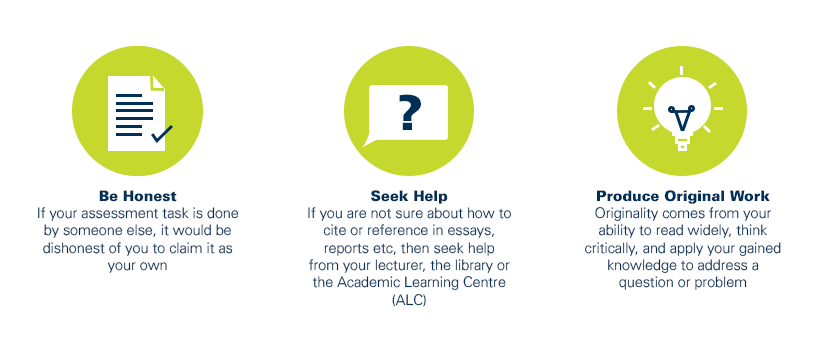
As a CQUniversity student you are expected to act honestly in all aspects of your academic work.
Any assessable work undertaken or submitted for review or assessment must be your own work. Assessable work is any type of work you do to meet the assessment requirements in the unit, including draft work submitted for review and feedback and final work to be assessed.
When you use the ideas, words or data of others in your assessment, you must thoroughly and clearly acknowledge the source of this information by using the correct referencing style for your unit. Using others’ work without proper acknowledgement may be considered a form of intellectual dishonesty.
Participating honestly, respectfully, responsibly, and fairly in your university study ensures the CQUniversity qualification you earn will be valued as a true indication of your individual academic achievement and will continue to receive the respect and recognition it deserves.
As a student, you are responsible for reading and following CQUniversity’s policies, including the Student Academic Integrity Policy and Procedure. This policy sets out CQUniversity’s expectations of you to act with integrity, examples of academic integrity breaches to avoid, the processes used to address alleged breaches of academic integrity, and potential penalties.
What is a breach of academic integrity?
A breach of academic integrity includes but is not limited to plagiarism, self-plagiarism, collusion, cheating, contract cheating, and academic misconduct. The Student Academic Integrity Policy and Procedure defines what these terms mean and gives examples.
Why is academic integrity important?
A breach of academic integrity may result in one or more penalties, including suspension or even expulsion from the University. It can also have negative implications for student visas and future enrolment at CQUniversity or elsewhere. Students who engage in contract cheating also risk being blackmailed by contract cheating services.
Where can I get assistance?
For academic advice and guidance, the Academic Learning Centre (ALC) can support you in becoming confident in completing assessments with integrity and of high standard.
What can you do to act with integrity?