Overview
Atoms, Molecules and Matter will provide you with an understanding of the basic principles of chemistry and how they apply to daily life. This unit will present fundamental chemical principles that are central to all sciences, including healthcare, biology, environmental science and agriculture. This unit will provide the foundation for further study in chemistry, biochemistry and molecular sciences. You will learn about matter and atomic structure, chemical bonding and the forces and chemical interactions between molecules. You will be introduced to the chemistry of electrolytes, acids, bases and buffers and enabled to perform calculations relating concentrations to the pH of strong and weak acids, bases and buffers. Understanding the naming and classification of chemical compounds will allow you to communicate effectively and precisely with your colleagues in science and industry. Basic nuclear radiation safety will be presented. This unit has a compulsory residential school. The residential school will emphasise laboratory safety and introduce you to skills relating to the preparation of standard solutions and volumetric procedures, titrimetric and spectrophotometric analyses and scientific report writing.
Details
Pre-requisites or Co-requisites
Anti-requisite: CHEM11041
Important note: Students enrolled in a subsequent unit who failed their pre-requisite unit, should drop the subsequent unit before the census date or within 10 working days of Fail grade notification. Students who do not drop the unit in this timeframe cannot later drop the unit without academic and financial liability. See details in the Assessment Policy and Procedure (Higher Education Coursework).
Offerings For Term 1 - 2026
Attendance Requirements
All on-campus students are expected to attend scheduled classes - in some units, these classes are identified as a mandatory (pass/fail) component and attendance is compulsory. International students, on a student visa, must maintain a full time study load and meet both attendance and academic progress requirements in each study period (satisfactory attendance for International students is defined as maintaining at least an 80% attendance record).
Recommended Student Time Commitment
Each 6-credit Undergraduate unit at CQUniversity requires an overall time commitment of an average of 12.5 hours of study per week, making a total of 150 hours for the unit.
Class Timetable
Assessment Overview
Assessment Grading
This is a graded unit: your overall grade will be calculated from the marks or grades for each assessment task, based on the relative weightings shown in the table above. You must obtain an overall mark for the unit of at least 50%, or an overall grade of 'pass' in order to pass the unit. If any 'pass/fail' tasks are shown in the table above they must also be completed successfully ('pass' grade). You must also meet any minimum mark requirements specified for a particular assessment task, as detailed in the 'assessment task' section (note that in some instances, the minimum mark for a task may be greater than 50%). Consult the University's Grades and Results Policy for more details of interim results and final grades.
All University policies are available on the CQUniversity Policy site.
You may wish to view these policies:
- Grades and Results Policy
- Assessment Policy and Procedure (Higher Education Coursework)
- Review of Grade Procedure
- Student Academic Integrity Policy and Procedure
- Academic Progression Policy and Procedure
- Student Refund and Credit Balance Policy and Procedure
- Complaints Policy and Procedure
- Information and Communications Technology Acceptable Use Policy and Procedure
This list is not an exhaustive list of all University policies. The full list of University policies are available on the CQUniversity Policy site.
Feedback, Recommendations and Responses
Every unit is reviewed for enhancement each year. At the most recent review, the following staff and student feedback items were identified and recommendations were made.
Feedback from SUTE Unit Comments Report.
Some students commented that the residential school was challenging but the teaching staff were helpful and knowledgeable.
Continue to support the students with experienced and enthusiastic academic staff members during the residential school.
Feedback from SUTE Unit Comments Report and personal observation.
Some students with prior chemistry experience completed some of the practical tasks in a shorter time frame than allocated and at a faster rate than the majority of the cohort.
If a similar occurrence is observed in T1 2026, then work with the Head of Course and other relevant staff (e.g. teaching, technical, and timetabling teams) to determine if future measures could be taken to address this.
Feedback from SUTE Unit Comments Report and personal observation.
The answers to a few of the questions in couple of the tutorial videos were slightly obscured by the tutor's hand.
Review these videos and update when possible.
Feedback from SUTE Unit Comments Report and personal observation.
The drop-in sessions (Zoom Q&A) were successful but were not always well attended. One student recommended offering the session later in the day.
Review the attendance at Zoom Sessions during Term 2 2025 and consider offering e.g., alternating morning and afternoon sessions during T1 2026.
- Describe the structure of the atom including its sub-atomic particles and relate these to the design of the Periodic Table
- Determine the nature of chemical bonding and intermolecular forces present in molecules and ions
- Identify types of chemical reactions, and balance and interpret chemical equations
- Perform chemical calculations relating to reaction equilibrium, yield and the pH of acids, bases and buffers
- Identify functional groups and use the International Union of Pure and Applied Chemists (IUPAC) nomenclature to name organic molecules and indicate their potential chemical interactions
- Outline the process of nuclear decay and discuss measures used to ensure safety when working with radiation
- Work safely in the laboratory to prepare samples and standards and perform titrimetric and spectrophotometric analysis.
Alignment of Assessment Tasks to Learning Outcomes
| Assessment Tasks | Learning Outcomes | ||||||
|---|---|---|---|---|---|---|---|
| 1 | 2 | 3 | 4 | 5 | 6 | 7 | |
| 1 - Online Quiz(zes) - 30% | |||||||
| 2 - Written Assessment - 40% | |||||||
| 3 - Practical Assessment - 0% | |||||||
| 4 - Online Test - 30% | |||||||
Alignment of Graduate Attributes to Learning Outcomes
| Graduate Attributes | Learning Outcomes | ||||||
|---|---|---|---|---|---|---|---|
| 1 | 2 | 3 | 4 | 5 | 6 | 7 | |
| 1 - Communication | |||||||
| 2 - Problem Solving | |||||||
| 3 - Critical Thinking | |||||||
| 4 - Information Literacy | |||||||
| 5 - Team Work | |||||||
| 6 - Information Technology Competence | |||||||
| 7 - Cross Cultural Competence | |||||||
| 8 - Ethical practice | |||||||
| 9 - Social Innovation | |||||||
| 10 - First Nations Knowledges | |||||||
| 11 - Aboriginal and Torres Strait Islander Cultures | |||||||
Textbooks
There are no required textbooks.
Additional Textbook Information
A study guide will be provided for this unit via the Moodle site. The study guide is the key reference material for this unit.
IT Resources
- CQUniversity Student Email
- Internet
- Unit Website (Moodle)
- Microsoft Word
- Calculator
All submissions for this unit must use the referencing style: Vancouver
For further information, see the Assessment Tasks.
a.anastasi@cqu.edu.au
Week 1
Begin Date: 09 Mar 2026Module/Topic
- Matter
- Atoms and Molecules
- The Periodic Table
Chapter
Foundations of Chemistry Study Guide: Topics 1, 2 and 3
Events and Submissions/Topic
Please visit https://my.cqu.edu.au and register to attend one of the blocks of classes for the compulsory residential school (4-day block of laboratory sessions).
Week 2
Begin Date: 16 Mar 2026Module/Topic
- Electrons, Valence Electrons and Ion Formation
- Ionic Bonding
- Covalent Bonding
- Intermolecular Forces
Chapter
Foundations of Chemistry Study Guide: Topics 4, 5, 6 and 7
Events and Submissions/Topic
Assessment 1 - Online Quiz Opens: Week 2 Friday (20 March 2026) 12:00 pm AEST.
Week 3
Begin Date: 23 Mar 2026Module/Topic
- The Mole and Mole-Mass Conversions
- Solutions, Concentrations and Dilutions
Chapter
Foundations of Chemistry Study Guide: Topics 8 and 9
Events and Submissions/Topic
Week 4
Begin Date: 30 Mar 2026Module/Topic
- Chemical Reactions
- Stoichiometric Calculations
Chapter
Foundations of Chemistry Study Guide: Topics 10 and 11
Events and Submissions/Topic
Assessment 1 - Online Quiz Closes: Week 4 Monday (30 March 2026) 11:55 pm AEST.
Week 5
Begin Date: 06 Apr 2026Module/Topic
- Chemical Equilibria and Le Chatelier's Principle
Chapter
Foundations of Chemistry Study Guide: Topic 12
Events and Submissions/Topic
Assessment 2 - Questions Document available on Moodle: Week 5 Wednesday (8 April 2026) 10:00 am AEST.
Week 6
Begin Date: 13 Apr 2026Module/Topic
- Electrolytes
- Acids, Bases, pH Calculations
Chapter
Foundations of Chemistry Study Guide: Topics 13 and 14
Events and Submissions/Topic
Vacation Week
Begin Date: 20 Apr 2026Module/Topic
Chapter
Events and Submissions/Topic
Week 7
Begin Date: 27 Apr 2026Module/Topic
- Buffer Solutions
- Introduction to Nuclear Chemistry Safety
Chapter
Foundations of Chemistry Study Guide: Topics 15 and 16
Events and Submissions/Topic
Assessment 3 - Laboratory Competency will be assessed during the residential school you registered for.
Assessment 3 - Laboratory Quizzes must be completed within a week of attending the residential school you registered for.
Week 8
Begin Date: 04 May 2026Module/Topic
- Introduction to Organic Chemistry
- Saturated Hydrocarbons (Alkanes)
Chapter
Foundations of Chemistry Study Guide: Topics 17 and 18
Events and Submissions/Topic
Assessment 3 - Laboratory Competency will be assessed during the residential school you registered for.
Assessment 3 - Laboratory Quizzes must be completed within a week of attending the residential school you registered for.
Assessment 2 - Calculations and Short Answer Questions Due: Week 8 Wednesday (6 May 2026) 11:55 pm AEST
Week 9
Begin Date: 11 May 2026Module/Topic
- Unsaturated Hydrocarbons (Alkenes, Alkynes)
- Aromatic Compounds
Chapter
Foundations of Chemistry Study Guide: Topics 19 and 20
Events and Submissions/Topic
Assessment 3 - Laboratory Competency will be assessed during the residential school you registered for.
Assessment 3 - Laboratory Quizzes must be completed within a week of attending the residential school you registered for.
Week 10
Begin Date: 18 May 2026Module/Topic
- Alcohols
- Ethers, Alkyl Halides, Thiols
- Amines
Chapter
Foundations of Chemistry Study Guide: Topics 21, 22 and 23
Events and Submissions/Topic
Week 11
Begin Date: 25 May 2026Module/Topic
- Aldehydes and Ketones
- Carboxylic Acids and derivatives
Chapter
Foundations of Chemistry Study Guide: Topics 24 and 25
Events and Submissions/Topic
Week 12
Begin Date: 01 Jun 2026Module/Topic
- Prepare for Assessment 4
Chapter
Foundations of Chemistry: Topics 17-25 (Review)
Events and Submissions/Topic
Assessment 4 - Timed 2-h Online Test Opens: Week 12 Thursday (4 June 2026) 10:00 am AEST.
Assessment 4 - Timed 2-h Online Test Closes: Week 12 Friday (5 June 2026) 10:00 am AEST.
Exam Week
Begin Date: 08 Jun 2026Module/Topic
Chapter
Events and Submissions/Topic
Vacation/Exam Week
Begin Date: 15 Jun 2026Module/Topic
Chapter
Events and Submissions/Topic
1 Online Quiz(zes)
Assessment 1 - Online Quiz, has been designed to assess your understanding of Topics 1-7 (weeks 1 & 2 lectures and tutorials) presented in this unit. This assessment requires you to apply concepts presented in lectures and tutorials to determine the answers for a series of multiple-choice questions.
The quiz is not timed, and you are allowed two attempts. The highest score of the two attempts will be recorded.
Note: Quiz questions are generated randomly, and you will receive different questions on subsequent attempts.
Level of GenAI use allowed:
Level 1: No AI. You must not use Al at any point during the assessment. You must demonstrate your core skills and knowledge.
All quiz responses must be your own. Collusion with others or the use of Gen AI to produce any part of the answers to this assessment is not permitted. You may be required to provide further information to demonstrate that the answers provided are your own and that you understand the concepts being assessed.
The 72-hour grace period does not apply to this assessment.
Assessment 1 - Online Quiz, opens Week 2 Friday (20 March 2026) at 12:00 pm AEST and closes Week 4 Monday (30 March 2026) 11:55 pm AEST
Marks will be released after the completion of each attempt.
All questions are of equal weighting. One mark will be awarded for each correct response.
- Describe the structure of the atom including its sub-atomic particles and relate these to the design of the Periodic Table
- Determine the nature of chemical bonding and intermolecular forces present in molecules and ions
2 Written Assessment
Assessment 2 - Calculations and Short Answer Questions, has been designed to assess your understanding of Topics 8-16 (weeks 3-7 lectures and tutorials) presented in this unit. This assessment requires you to demonstrate comprehension of concepts presented in the unit, and to apply those concepts to answer a series of questions.
All workings must be provided for answers to calculation questions. Inclusion of correct units and chemical notation is required. Short answer questions may require you to explain, reason, describe, analyse, or evaluate information, and to provide an appropriately detailed written response. All answers must be typed (not handwritten) and must be appropriately referenced.
Level of GenAI use allowed:
Level 1: No AI. You must not use Al at any point during the assessment. You must demonstrate your core skills and knowledge.
With the exception of in-built MS-Word grammar, punctuation and syntax checking tools, Gen AI tools should not be used to complete this assessment. All written responses, calculations, workings and other details presented in your assessment submission must be your own work. It is a requirement that you include detailed workings and that they clearly demonstrate your understanding of the unit content. Collusion with others or the use of Gen AI to produce any part of the answers to this assessment is not permitted. You may be required to provide further information to demonstrate that the answers provided are your own and that you understand the concepts being assessed.
Week 8 Wednesday (6 May 2026) 11:55 pm AEST
Upload your submission as a Microsoft Word document by following the instructions on the unit Moodle site.
Week 11 Wednesday (27 May 2026)
Marks and feedback file will be returned to students via the unit Moodle site.
Maximum marks available for each question will be indicated in the Assessment 2 - Questions Document, which will become available on the CHEM11043 Moodle site during week 5. Marks will be awarded for each question or partial question as indicated on the Questions Document. No marks will be given for incorrect answers, formulas, incorrect units, or explanations. All answers must be typed (not handwritten) and must be appropriately referenced.
- Identify types of chemical reactions, and balance and interpret chemical equations
- Perform chemical calculations relating to reaction equilibrium, yield and the pH of acids, bases and buffers
- Outline the process of nuclear decay and discuss measures used to ensure safety when working with radiation
3 Practical Assessment
Assessment 3 - Laboratory Competency and Quizzes, consists of a series of practical competencies (assessed during the laboratory sessions at the residential school) and two (2) associated laboratory theory and calculation quizzes (completed online).
Please visit MyCQU and register to attend one of the compulsory residential school blocks.
Assessment 3, has been designed to introduce and assess essential skills in chemistry laboratory work, including the associated chemical calculations. The laboratory sessions will be undertaken in a four-day residential school. The techniques and experiments conducted during these sessions have been designed to develop excellence in laboratory practices and to provide a solid foundation for future laboratory work. These skills scaffold into 2nd and 3rd year chemistry units, and into the workplace.
Laboratory Competency: During the laboratory sessions, you will develop skills in working safely in the laboratory; correctly using top pan and analytical balances; sample preparation including quantitative transfers; correctly using pipettes and volumetric flasks; preparing dilution series for spectroscopic analysis; using a spectrophotometer; graphing techniques with consideration of interpolation and extrapolation; performing relevant calculations to process data from spectroscopic analysis; correctly using a burette; calibrating a pH meter; choosing an appropriate indicator for a neutralisation reaction titration; conducting titrations with good technique and accuracy; performing relevant calculations to process titration data; maintaining data records.
Laboratory Quizzes: The quizzes will be available on the Moodle site for you to access during and after your respective residential school sessions. The topics of the quizzes are:
- Laboratory Quiz 1 - Laboratory Introduction, Safety, and Spectroscopy
- Laboratory Quiz 2 - pH and Titrations
Level of GenAI use allowed:
Level 1: No AI. You must not use Al at any point during the assessment. You must demonstrate your core skills and knowledge.
Gen AI tools are not permitted to be used to complete this assessment. Work presented in your laboratory notebook and answers selected to quiz questions must be your own work. You may be required to provide further information to demonstrate that the answers provided are your own and that you understand the concepts being assessed.
The 72-hour grace period does not apply to this assessment.
Laboratory competency will be assessed during the residential school. Both online laboratory quizzes must be completed within a week of attending the residential school.
Feedback on laboratory competencies will be given throughout the residential school. Quiz results will be released after the completion of each attempt. A Pass/Fail grade will be recorded for this assessment following completion of the Residential School and the online quizzes.
All students are required to attend and participate in all laboratory sessions scheduled for the four-day residential school. The specific assessment criteria for components of this task are as follows:
- Laboratory notebook must show records of laboratory data, calculations, and completion of discussion questions. Instructors will inspect notebooks randomly throughout the course of the residential school.
- Demonstration of competency in specific laboratory skills is required. This includes the correct usage of burettes, volumetric flasks, pipettes, balances, and pH meters. Competency will be assessed by instructors during the laboratory sessions.
- Two online practical laboratory quizzes must be completed by the due date. The quizzes will relate to associated theory and techniques (such as spectrophotometry and titration) that are used during the laboratory sessions.
- To pass the overall assessment, you must achieve a minimum mark of 50% in each of the quizzes and a Pass grade for the practical competencies.
- Work safely in the laboratory to prepare samples and standards and perform titrimetric and spectrophotometric analysis.
4 Online Test
Assessment 4 - Timed 2-hour Online Test, has been designed to assess your comprehension of concepts presented in this unit. This assessment relates to Topics 17-25 (weeks 8-11 lectures and tutorials). The test is timed. The maximum time to complete the test is 2 hours (120 minutes).
The Timed Online Test will be available on the unit Moodle site for a 24-hour period. You can complete the test at any time within the 24-hour period. The timer begins when you start the test.
The test may include multiple-choice questions, questions with drag and drop style answers, or questions requiring short written (typed) answers. You may be required to upload files to answer some questions. You must follow all instructions given on the Moodle site and within the test itself. Where indicated, you must show your working.
A practice test, to familiarise you with the online functionalities of Moodle quizzes, will be available prior to the real test.
Level of GenAI use allowed:
Level 1: No AI. You must not use Al at any point during the assessment. You must demonstrate your core skills and knowledge.
Gen AI tools are not permitted to be used to complete this assessment. All answers to the Online Test must be your own. Collusion with others or the use of Gen AI to produce any part of the answers to this assessment is not permitted. You may be required to provide further information to demonstrate that the answers provided are your own and that you understand the concepts being assessed.
The 72-hour grace period does not apply to this assessment.
The 2-hour Timed Online Test will be available on the unit Moodle site for a 24-hour period. It will be available from 10 am AEST Thursday 4 June 2026 and will close 2 hours after commencing the test or at 10 am AEST Friday 5 June 2026 (whichever is sooner).
Vacation/Exam Week Friday (19 June 2026)
Marks will be retured via the unit Moodle site.
Maximum marks available for each question will be indicated in the Online Test. Marks will be awarded for each question or partial question as indicated on the Online Test. No marks will be given for incorrect answers, formulas, explanations, organic nomenclatures, or incorrect organic structures.
- Identify functional groups and use the International Union of Pure and Applied Chemists (IUPAC) nomenclature to name organic molecules and indicate their potential chemical interactions
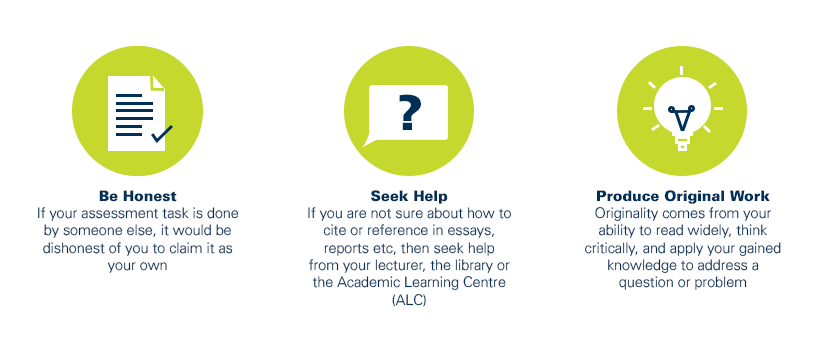
As a CQUniversity student you are expected to act honestly in all aspects of your academic work.
Any assessable work undertaken or submitted for review or assessment must be your own work. Assessable work is any type of work you do to meet the assessment requirements in the unit, including draft work submitted for review and feedback and final work to be assessed.
When you use the ideas, words or data of others in your assessment, you must thoroughly and clearly acknowledge the source of this information by using the correct referencing style for your unit. Using others’ work without proper acknowledgement may be considered a form of intellectual dishonesty.
Participating honestly, respectfully, responsibly, and fairly in your university study ensures the CQUniversity qualification you earn will be valued as a true indication of your individual academic achievement and will continue to receive the respect and recognition it deserves.
As a student, you are responsible for reading and following CQUniversity’s policies, including the Student Academic Integrity Policy and Procedure. This policy sets out CQUniversity’s expectations of you to act with integrity, examples of academic integrity breaches to avoid, the processes used to address alleged breaches of academic integrity, and potential penalties.
What is a breach of academic integrity?
A breach of academic integrity includes but is not limited to plagiarism, self-plagiarism, collusion, cheating, contract cheating, and academic misconduct. The Student Academic Integrity Policy and Procedure defines what these terms mean and gives examples.
Why is academic integrity important?
A breach of academic integrity may result in one or more penalties, including suspension or even expulsion from the University. It can also have negative implications for student visas and future enrolment at CQUniversity or elsewhere. Students who engage in contract cheating also risk being blackmailed by contract cheating services.
Where can I get assistance?
For academic advice and guidance, the Academic Learning Centre (ALC) can support you in becoming confident in completing assessments with integrity and of high standard.
What can you do to act with integrity?