Overview
In this unit you will be introduced to a range of contemporary and traditional materials, techniques and approaches used in the creation of contemporary visual art works. This unit’s structure combines technical workshops with individual studio investigations. In a studio environment, you will explore studio routines, methods and approaches in order to identify processes suitable for the development of your emerging professional practice. You will reflect on a range of issues including the use of representation, formalism and ready-mades.
Details
Pre-requisites or Co-requisites
There are no requisites for this unit.
Important note: Students enrolled in a subsequent unit who failed their pre-requisite unit, should drop the subsequent unit before the census date or within 10 working days of Fail grade notification. Students who do not drop the unit in this timeframe cannot later drop the unit without academic and financial liability. See details in the Assessment Policy and Procedure (Higher Education Coursework).
Offerings For Term 2 - 2026
Attendance Requirements
All on-campus students are expected to attend scheduled classes - in some units, these classes are identified as a mandatory (pass/fail) component and attendance is compulsory. International students, on a student visa, must maintain a full time study load and meet both attendance and academic progress requirements in each study period (satisfactory attendance for International students is defined as maintaining at least an 80% attendance record).
Recommended Student Time Commitment
Each 6-credit Undergraduate unit at CQUniversity requires an overall time commitment of an average of 12.5 hours of study per week, making a total of 150 hours for the unit.
Class Timetable
Assessment Overview
Assessment Grading
This is a graded unit: your overall grade will be calculated from the marks or grades for each assessment task, based on the relative weightings shown in the table above. You must obtain an overall mark for the unit of at least 50%, or an overall grade of 'pass' in order to pass the unit. If any 'pass/fail' tasks are shown in the table above they must also be completed successfully ('pass' grade). You must also meet any minimum mark requirements specified for a particular assessment task, as detailed in the 'assessment task' section (note that in some instances, the minimum mark for a task may be greater than 50%). Consult the University's Grades and Results Policy for more details of interim results and final grades.
All University policies are available on the CQUniversity Policy site.
You may wish to view these policies:
- Grades and Results Policy
- Assessment Policy and Procedure (Higher Education Coursework)
- Review of Grade Procedure
- Student Academic Integrity Policy and Procedure
- Academic Progression Policy and Procedure
- Student Refund and Credit Balance Policy and Procedure
- Complaints Policy and Procedure
- Information and Communications Technology Acceptable Use Policy and Procedure
This list is not an exhaustive list of all University policies. The full list of University policies are available on the CQUniversity Policy site.
Feedback, Recommendations and Responses
Every unit is reviewed for enhancement each year. At the most recent review, the following staff and student feedback items were identified and recommendations were made.
Feedback from Anecdotal feedback.
Students appreciated opportunities to receive timely, personal feedback about their projects.
Provide further time in tutorials to offer personalised student feedback.
- Demonstrate the use of design concepts, personal intention and the inherent qualities of materials to develop an integrated creative process
- Investigate and reflect on the use of a range of materials and processes suitable for the production of contemporary visual art works to adapt techniques and creative processes
- Create exploratory artworks which demonstrate the acquisition of skills and knowledge required to produce paraprofessional visual art works.
Alignment of Assessment Tasks to Learning Outcomes
| Assessment Tasks | Learning Outcomes | ||
|---|---|---|---|
| 1 | 2 | 3 | |
| 1 - Learning logs / diaries / Journal / log books - 40% | |||
| 2 - Portfolio - 60% | |||
Alignment of Graduate Attributes to Learning Outcomes
| Graduate Attributes | Learning Outcomes | ||
|---|---|---|---|
| 1 | 2 | 3 | |
| 1 - Communication | |||
| 2 - Problem Solving | |||
| 3 - Critical Thinking | |||
| 4 - Information Literacy | |||
| 5 - Team Work | |||
| 6 - Information Technology Competence | |||
| 7 - Cross Cultural Competence | |||
| 8 - Ethical practice | |||
| 9 - Social Innovation | |||
| 10 - First Nations Knowledges | |||
| 11 - Aboriginal and Torres Strait Islander Cultures | |||
Textbooks
There are no required textbooks.
IT Resources
- CQUniversity Student Email
- Internet
- Unit Website (Moodle)
All submissions for this unit must use the referencing style: American Psychological Association 7th Edition (APA 7th edition)
For further information, see the Assessment Tasks.
p.connor@cqu.edu.au
Week 1: Painting - Introduction to tools and media.
Begin Date: 13 Jul 2026Module/Topic
- Description of painting task.
- Introduction to painting tools and media.
- Opaque, transparent and semi-transparent paints.
- Description of procedure for developing your preparatory drawing.
- Materials list.
Chapter
- View/Read your week 1 learning resources prior to attending week 1 painting workshop/tutorial.
- Complete your week 1 learning activity.
- View/Read your Assessment documents for this unit.
Events and Submissions/Topic
- Develop a list of media and resources sufficient to complete the painting and the printmaking tasks.
- Complete your preparatory drawing.
- Raise any questions about assessment tasks.
Week 1 milestones:
- Order your painting and printmaking supplies.
- Complete your preparatory drawing.
Week 2: Painting - Grounds and underpainting
Begin Date: 20 Jul 2026Module/Topic
- What is 'academic painting'?
- Benefits of painting in layers.
- 'Fat' over 'Lean', 'Thick' over 'Thin'.
- Popular ground types.
- Apply a tonal ground.
- Canvas preparation and priming.
Chapter
- View/Read week 2 learning resources prior to attending week 2 painting workshop/tutorial.
- Complete your week 2 learning activity.
Events and Submissions/Topic
- Finalise your preparatory drawing.
- Consider your whether your canvas requires further priming.
- Transfer your design to your prepared canvas.
- Apply your tonal ground.
Week 2 milestones:
- Order remaining materials as required.
- Complete your tonal ground.
- Take photographs and record your process in your learning log.
Week 3 - Painting - Body colour.
Begin Date: 27 Jul 2026Module/Topic
- What is 'body colour'?
What are colour harmonies? - Colour systems for your palette.
- How might transparent, semi-transparent and opaque paint be used when painting in layers?
Chapter
- View/Read your week 3 learning resources prior to attending your week 3 painting workshop/tutorial.
- Complete your week 3 learning activity.
Events and Submissions/Topic
- Develop a palette of (complementary) hues which correspond to the tonal range in your preparatory drawing.
- Apply body colour (brushwork and limiting wet-into-wet techniques).
Week 3 milestone:
- Complete your body colour layer (amendments to this layer can be applied as required when this layer is cured).
- Take photographs and record your process in your learning log.
Week 4 - Painting - Glazing and varnishing.
Begin Date: 03 Aug 2026Module/Topic
- How to apply a glaze using a 'fat' medium or acrylic mediums?
- What is the difference between a glaze and a varnish?
- How long between layers must you wait, prior to applying glazes or varnishes?
Chapter
- View/Read your week 4 learning resources prior to attending your week 4 painting workshop/tutorial.
- Complete your week 4 learning activities.
Events and Submissions/Topic
- Glazing.
- Varnishing and framing (overview).
Week 4 milestone:
- Complete you glaze layer if your body colour is sufficiently cured.
- Finalise any remining printmaking supply purchases.
- Take photographs and record your process in your learning log.
Week 5 - Tutorial discussion & painting project feedback.
Begin Date: 10 Aug 2026Module/Topic
- Transforming raw into artifacts for the human imagination.
- The politics of different practices, art forms and venues.
- Aesthetic and anti-aesthetic traditions and your emerging value system.
- Feedback about your painting project.
Chapter
- View/Read your week 5 learning resources prior to attending your week 5 tutorial and feedback session.
- Read you week 5 Study Guide.
- Complete your week 5 learning activity.
Events and Submissions/Topic
- What kind of visual art practice might you pursue?
Week 5 milestone:
- Receive feedback on your painting project.
- Take photographs and record your process in your learning log (reflect and self-critique).
Week 6 - Printmaking - Introduction to printmaking, common tools and registration.
Begin Date: 17 Aug 2026Module/Topic
- Types of printmaking processes.
- Registration in multi-coloured prints.
- Image designs suitable for your print process.
- Designing your colour palette.
- Preparing your registration system.
- Cutting tools/cutting your design.
Chapter
- View/Read your week 6 learning resources prior to attending your week 6 printmaking workshop/tutorial.
- Complete your week 6 learning activity.
Events and Submissions/Topic
- Cutting your lino tile or woodblock.
- The importance of registration.
- Preparing your design.
- Safe use of relief tools.
Week 5 milestone:
- Complete your design.
- Cut your test block.
- Transfer your design to your lino tile.
- Take photographs and record your process in your learning log.
Vacation Week
Begin Date: 24 Aug 2026Module/Topic
There are no workshops, tutorials or lectures this week.
Chapter
NA
Events and Submissions/Topic
NA
Week 7 - Printmaking 2 - Design for relief printmaking.
Begin Date: 31 Aug 2026Module/Topic
- Image design feedback.
- Finalise your design. (colour, shape, line, space, edges, pattern, contrast, balance, repetition, rhythm.)
- Transfer your design.
- Printmaking inks and papers.
- Using a brayer (tips for good prints).
- Using a baren to create an impression.
- Safety and sustainability in the printmaking studio.
Chapter
- View/Read your week 7 learning resources prior to attending your week 7 printmaking workshop.
- Complete your week 7 learning activity.
Events and Submissions/Topic
- Relief inking techniques.
- Relief printing techniques (using an intaglio press, a relief press or hand printing).
- Safety and sustainability in the print studio.
Week 7 milestone:
- Complete your matrix by cutting/carving your design.
- Ink and print your test block using a barren.
- Take photographs and record your process in your learning log.
Week 8 - Printmaking 3 - Inking, printing and registration.
Begin Date: 07 Sep 2026Module/Topic
- Split fountain inking technique.
- Creative options for contemporary printmakers.
Chapter
- View/Read your week 8 learning resources prior to attending your week 8 printmaking workshop.
- Complete your week 8 learning activity.
Events and Submissions/Topic
- Split fountain.
- Creative options for contemporary printmakers.
Week 8 milestone:
- Print your first colour.
- When dry, print your second colour.
- Receive feedback on your print.
- Take photographs and record your process in your learning log.
Week 9 - Printmaking Project Feedback.
Begin Date: 14 Sep 2026Module/Topic
- Annotating and framing your prints.
- Final print task feedback.
Chapter
- View/Read your week 9 learning resources prior to attending your week 9 printmaking workshop/tutorial.
- Complete your week 9 learning activity.
Events and Submissions/Topic
- How do you annotate and frame your print?
- Final print task feedback.
- Creative options for contemporary print display.
Week 9 milestone:
- Complete and annotate your print.
- Receive feedback on your print.
- Take photographs and record your process in your learning log (reflect and self-critique).
Week 10 - Hybrid and Installation 1.
Begin Date: 21 Sep 2026Module/Topic
- What are installation and hybrid practices?
- How may materials and media transfer meanings?
- Does digital data constitute a form of media for the visual arts?
Chapter
- View/Read your week 10 learning resources prior to attending your week 10 printmaking workshop/tutorial.
- Read your week 10 Study Guide.
- Complete your week 10 learning activities.
Events and Submissions/Topic
- What are installations?
- What are hybrid art practices.
- Begin the conceptual development of your final workshop task.
Week 10 milestone:
- Plan your hybrid/installation task.
- Record your process in your learning log.
Week 11- Hybrid and Installation 2.
Begin Date: 28 Sep 2026Module/Topic
- When is an installation not just a pile of found objects?
- How do you plan and create a successful installation or hybrid artwork?
Chapter
- View/Read your week 11 learning resources prior to attending your week 11 printmaking workshop/tutorial.
- Complete your week 11 learning activities.
Events and Submissions/Topic
- Semiotic relationships, space and media.
- Working backwards to define a suitable creative process.
Week 9 milestone:
- Complete workshop/learning activity.
- Review your learning log (Assessment 1).
Week 12 - Hybrid and Installation 3 & Print project Feedback.
Begin Date: 05 Oct 2026Module/Topic
- Virtual Reality, Augmented Reality and installations.
- Creative processes and installations.
- Accessing technical support.
Chapter
- View/Read your week 12 learning resources prior to attending your week 12 printmaking workshop/tutorial.
- Complete your week 12 learning activities.
- Submit your Assessment 1 - Learning Log documents.
Events and Submissions/Topic
- VR and AR technologies enhancing exhibition experiences.
- Media lists, planning and production steps.
- Can you buy-in craft and technical support?
Week 12 milestone:
- Submit your Learning Log.
Learning Log Tasks Due: Week 12 Friday (9 Oct 2026) 11:45 pm AEST
Exam Week
Begin Date: 12 Oct 2026Module/Topic
Chapter
Events and Submissions/Topic
Vacation/Exam Week
Begin Date: 19 Oct 2026Module/Topic
Chapter
Events and Submissions/Topic
N. A.
1 Learning logs / diaries / Journal / log books
For this Learning Log assessment, you will complete the supplied Learning Log Work Sheets. When completed, this document will record the processes you have undertaken to complete the three (3) studio tasks developed during your workshop and tutorial sessions (painting, printmaking, hybrid/installation studio tasks). The learning logs will:
· Describe how you have applied design concepts, personal intention, and the inherent qualities/properties of your materials to develop an integrated creative process.
· Critically reflect upon your use of a range of materials and processes suitable for the production of contemporary visual artworks.
· Reflect on the significance of a range of visual art specific issues implicated in the production of paintings, prints, drawings, installations and hybrid practices.
Please note: It is essential that you complete the learning logs by completing the Learning Log Work Sheets document provided in Moodle.
The Learning Log Work Sheets require that you respond to simple activities and written tasks. The written tasks require 925-1400 words to document the development of your three (3) studio tasks (traditional oil painting, reduction relief print, hybrid/installation artist’s impression).
The word count excludes the cover page, abstract, contents page, reference page and appendices. No in-text references and direct quotations are required to complete this assessment.
Use of Generative Artificial Intelligence agents (Gen AI)
AI Assessment scale tool:
Level 1: You must not use Al at any point during the assessment. You must demonstrate your core skills and knowledge. Any misuse or lack of disclosure regarding the use of AI tools will be considered a breach of academic integrity.
Please note: Please complete the assessment declaration on the title page of the learning log worksheets prior to submission of your assessment.
Please refer to the Moodle Assessment tile for specific details.
Week 12 Friday (9 Oct 2026) 11:45 pm AEST
Please submit your Learning Log Worksheet (Assessment 1) via Moodle as a Microsoft Word document.
Exam Week Friday (16 Oct 2026)
Assessment results and feedback will be available via Moodle.
1. Record of application of design concepts. (15%)
2. List of materials and tools, their function, qualities and properties. (10%)
3. Record of procedure. (15%)
4. Critical reflection on application of design concepts, technical procedure and use of materials. (50%)
5. Record of workplace health and safety, studio processes, tool maintenance and storage. (10%)
- Demonstrate the use of design concepts, personal intention and the inherent qualities of materials to develop an integrated creative process
- Investigate and reflect on the use of a range of materials and processes suitable for the production of contemporary visual art works to adapt techniques and creative processes
- Create exploratory artworks which demonstrate the acquisition of skills and knowledge required to produce paraprofessional visual art works.
2 Portfolio
Across this term you will participate in a range of studio workshops and tutorials. These studio sessions intend to build skills and knowledge relevant to the disciplines of painting and printmaking and the practices involved in creating hybrid and installation artworks.
For this portfolio assessment you will complete and present three (3) practical projects. They are:
1. Using traditional techniques, design and complete a small oil painting that incorporates a simple still life arrangement.
(The painting task must reflect the procedure demonstrated during workshop sessions and incorporate the use of either a tonal or coloured ground and be completed in at least three layers using opaque and transparent paints.)
2. Using relief techniques, design and edition a small print. (Serigraph or intaglio techniques may be used upon approval from unit co-ordinator), (Your folio submission must include at least one artist’s proof and an edition of at least three impressions.)
3. Using traditional or digital media, design and complete an artist’s impression/illustration of your hypothetical hybrid or installation artwork.
(Your artist’s impression/illustration will involve situating your design in a selected or fictional exhibition space. Your artist’s impression/illustration will incorporate colour, and visually describe the lighting used in the space to bring the artwork to life. It is important that the artist’s impression does not take the perspective of top (plan) or end elevations but describe space as if seen by a gallery visitor. The artist’s impression/illustration will be no larger than 50 MB.)
Use of Generative Artificial Intelligence agents (Gen AI)
AI Assessment scale tool:
Level 1: You must not use Al at any point during the assessment. You must demonstrate your core skills and knowledge. Any misuse or lack of disclosure regarding the use of AI tools will be considered a breach of academic integrity.
Please note: Please complete the assessment declaration on the title page of the folio submission document prior to submitting your assessment.
Please refer to the Moodle Assessment tile for specific details.
Exam Week Friday (16 Oct 2026) 11:45 pm AEST
Please submit your Portfolio of Workshop Tasks as a single document via Moodle. This submission should be accompanied with the relevant marking criteria sheet (rubric), to which your name and student number has been added.
Vacation/Exam Week Friday (23 Oct 2026)
Results and feedback will be available via Moodle.
Assessment Criteria: Painting Task.
1. Design. (6.66%) (Application of 2-D Design concepts.)
2. Technique. (16.65%) (Application of media or digital design tools/software.)
3. Finish and presentation. (6.66%) (margins, cleanliness, annotations, painted edges.)
5. Adaptive or innovative use of media. (3.33%) (interpretative, expressive or engaging use of media.)
Assessment Criteria: Printmaking Task.
1. Design. (6.66%) (Application of 2-D Design concepts.)
2. Technique. (16.65%) (Application of media or digital design tools/software.)
3. Finish and presentation. (6.66%) (margins, cleanliness, annotations, painted edges.)
5. Adaptive or innovative use of media. (3.33%) (interpretative, expressive or engaging use of media.)
Assessment Criteria: Hybrid/Installation task.
1. Visual Communication. (16.65%) (Ability to communicate concepts visually.)
2. Illustration Technique. (13.32%) (Application of selected illustration techniques.)
3. Attention to requirements of task. (3.33%) (Incorporation of colour, sense of space/perspective and intended lighting.)
- Demonstrate the use of design concepts, personal intention and the inherent qualities of materials to develop an integrated creative process
- Investigate and reflect on the use of a range of materials and processes suitable for the production of contemporary visual art works to adapt techniques and creative processes
- Create exploratory artworks which demonstrate the acquisition of skills and knowledge required to produce paraprofessional visual art works.
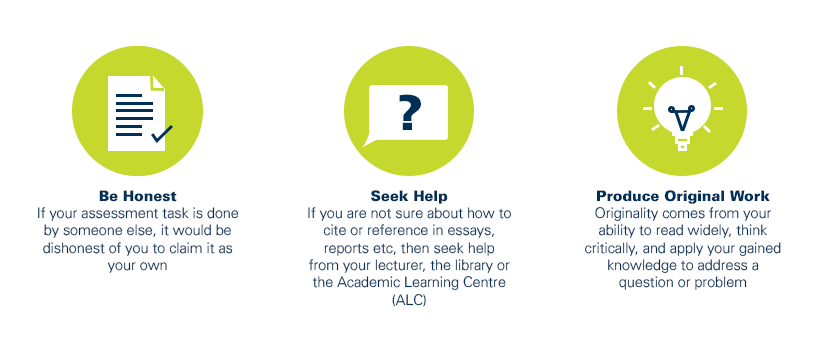
As a CQUniversity student you are expected to act honestly in all aspects of your academic work.
Any assessable work undertaken or submitted for review or assessment must be your own work. Assessable work is any type of work you do to meet the assessment requirements in the unit, including draft work submitted for review and feedback and final work to be assessed.
When you use the ideas, words or data of others in your assessment, you must thoroughly and clearly acknowledge the source of this information by using the correct referencing style for your unit. Using others’ work without proper acknowledgement may be considered a form of intellectual dishonesty.
Participating honestly, respectfully, responsibly, and fairly in your university study ensures the CQUniversity qualification you earn will be valued as a true indication of your individual academic achievement and will continue to receive the respect and recognition it deserves.
As a student, you are responsible for reading and following CQUniversity’s policies, including the Student Academic Integrity Policy and Procedure. This policy sets out CQUniversity’s expectations of you to act with integrity, examples of academic integrity breaches to avoid, the processes used to address alleged breaches of academic integrity, and potential penalties.
What is a breach of academic integrity?
A breach of academic integrity includes but is not limited to plagiarism, self-plagiarism, collusion, cheating, contract cheating, and academic misconduct. The Student Academic Integrity Policy and Procedure defines what these terms mean and gives examples.
Why is academic integrity important?
A breach of academic integrity may result in one or more penalties, including suspension or even expulsion from the University. It can also have negative implications for student visas and future enrolment at CQUniversity or elsewhere. Students who engage in contract cheating also risk being blackmailed by contract cheating services.
Where can I get assistance?
For academic advice and guidance, the Academic Learning Centre (ALC) can support you in becoming confident in completing assessments with integrity and of high standard.
What can you do to act with integrity?