Overview
The unit aims to develop your skills and abilities to communicate effectively in business environments. The unit recognises employer and graduate needs to improve communication in different contexts. You will be introduced to different communication concepts including, but not limited to, models, competence, culture, media choice, channels and climate. You will also be introduced to the elements of effective communication for participation in business meetings, presentations, interpersonal and group interaction.
Details
Pre-requisites or Co-requisites
There are no requisites for this unit.
Important note: Students enrolled in a subsequent unit who failed their pre-requisite unit, should drop the subsequent unit before the census date or within 10 working days of Fail grade notification. Students who do not drop the unit in this timeframe cannot later drop the unit without academic and financial liability. See details in the Assessment Policy and Procedure (Higher Education Coursework).
Offerings For Term 3 - 2026
Attendance Requirements
All on-campus students are expected to attend scheduled classes - in some units, these classes are identified as a mandatory (pass/fail) component and attendance is compulsory. International students, on a student visa, must maintain a full time study load and meet both attendance and academic progress requirements in each study period (satisfactory attendance for International students is defined as maintaining at least an 80% attendance record).
Recommended Student Time Commitment
Each 6-credit Postgraduate unit at CQUniversity requires an overall time commitment of an average of 12.5 hours of study per week, making a total of 150 hours for the unit.
Class Timetable
Assessment Overview
| Assessment Task | Part Weighting (% of assessment) |
Assessment Security Level | Gen AI Guidance Levels |
|---|---|---|---|
| 1. Being a Communication Consultant: Identifying the Problem and Finding the Evidence (25% of unit · 1 part ) | |||
| Part 1 – Evicence Portfolio (Written Assessment) | 100% of 25% | Low | No Gen AI Use |
| 2. Being a Communication Consultant: Promoting Effective Business Communication (55% of unit · 2 parts ) | |||
| Part 1 – The Sentence-Level Speaking Outline (SLSO) (Written Assessment) | 45% of 55% | Low | No Gen AI Use |
| Part 2 – Video Presentation (Presentation) | 55% of 55% | Low | No Gen AI Use |
| 3. Assessment Three: Evaluating Your Knowldge (20% of unit · 2 parts ) | |||
| Part 1 – Assessment Three - Part One (In-class Test(s)) | 50% of 20% | High | No Gen AI Use |
| Part 2 – Assesment Three - Part Two (In-class Test(s)) | 50% of 20% | High | No Gen AI Use |
Assessment Grading
This is a graded unit: your overall grade will be calculated from the marks or grades for each assessment task, based on the relative weightings shown in the table above. You must obtain an overall mark for the unit of at least 50%, or an overall grade of 'pass' in order to pass the unit. If any 'pass/fail' tasks are shown in the table above they must also be completed successfully ('pass' grade). You must also meet any minimum mark requirements specified for a particular assessment task, as detailed in the 'assessment task' section (note that in some instances, the minimum mark for a task may be greater than 50%). Consult the University's Grades and Results Policy for more details of interim results and final grades.
All University policies are available on the CQUniversity Policy site.
You may wish to view these policies:
- Grades and Results Policy
- Assessment Policy and Procedure (Higher Education Coursework)
- Review of Grade Procedure
- Student Academic Integrity Policy and Procedure
- Academic Progression Policy and Procedure
- Student Refund and Credit Balance Policy and Procedure
- Complaints Policy and Procedure
- Information and Communications Technology Acceptable Use Policy and Procedure
This list is not an exhaustive list of all University policies. The full list of University policies are available on the CQUniversity Policy site.
Feedback, Recommendations and Responses
Every unit is reviewed for enhancement each year. At the most recent review, the following staff and student feedback items were identified and recommendations were made.
Feedback from UC's review of current trends within unit content.
Bring in information about communication technology adoption in the workplace.
UC will develop a new area within Module 7.
- Recognise advanced knowledge and skills required in written, oral, and interpersonal communication to address complex business problems
- Apply professional business writing and oral communication skills to effectively inform or persuade a target audience
- Deliver effective presentations to transmit knowledge, skills and ideas to both specialist and non-specialist audiences and achieve business objectives
- Critically analyse communication challenges faced by organisations by applying established theories to develop innovative strategies to address them
- Apply autonomous thinking to reflect on good practices in workplace communication in different organizational contexts
Alignment of Assessment Tasks to Learning Outcomes
| Assessment Tasks | Learning Outcomes | ||||
|---|---|---|---|---|---|
| 1 | 2 | 3 | 4 | 5 | |
|
1.
Assessment 1
(25% of unit)
Part 1 -
Written Assessment
|
|||||
|
2.
Assessment 2
(55% of unit)
Part 1 -
Written Assessment
Part 2 -
Presentation
|
|||||
|
3.
Assessment 3
(20% of unit)
Part 1 -
In-class Test(s)
Part 2 -
In-class Test(s)
|
|||||
Alignment of Graduate Attributes to Learning Outcomes
| Graduate Attributes | Learning Outcomes | ||||
|---|---|---|---|---|---|
| 1 | 2 | 3 | 4 | 5 | |
| 1 - Knowledge | |||||
| 2 - Communication | |||||
| 3 - Cognitive, technical and creative skills | |||||
| 4 - Research | |||||
| 5 - Self-management | |||||
| 6 - Ethical and Professional Responsibility | |||||
| 7 - Leadership | |||||
| 8 - First Nations Knowledges | |||||
| 9 - Aboriginal and Torres Strait Islander Cultures | |||||
Textbooks
There are no required textbooks.
IT Resources
- CQUniversity Student Email
- Internet
- Unit Website (Moodle)
All submissions for this unit must use the referencing style: American Psychological Association 7th Edition (APA 7th edition)
For further information, see the Assessment Tasks.
c.j.white@cqu.edu.au
Week 1
Begin Date: 09 Nov 2026Module/Topic
Introduction to BUSN20017 Effective Business Communications and the business communication process
Chapter
Required textbook chapter, excerpted textbook chapter (eReading List), and recommended journal articles (see Moodle).
Events and Submissions/Topic
The unit content is presented in a series of short videos. Please watch these videos in advance of the workshop. The workshop contains a range of interactive activities, which are aimed at enhancing your competence as an effective business communicator.
Week 2
Begin Date: 16 Nov 2026Module/Topic
Interpersonal business communication
Chapter
Required textbook chapter, excerpted textbook chapter (eReading List), and recommended journal articles (see Moodle).
Events and Submissions/Topic
The unit content is presented in a series of short videos. Please watch these videos in advance of the workshop. The workshop contains a range of interactive activities, which are aimed at enhancing your competence as an effective business communicator.
Week 3
Begin Date: 23 Nov 2026Module/Topic
Team and group business communication
Chapter
Required textbook chapter, excerpted textbook chapter (eReading List), and recommended journal articles (see Moodle).
Events and Submissions/Topic
The unit content is presented in a series of short videos. Please watch these videos in advance of the workshop. The workshop contains a range of interactive activities, which are aimed at enhancing your competence as an effective business communicator.
Week 4
Begin Date: 30 Nov 2026Module/Topic
Internal organisational communications
Chapter
Required textbook chapter, excerpted textbook chapter (eReading List), and recommended journal articles (see Moodle).
Events and Submissions/Topic
The unit content is presented in a series of short videos. Please watch these videos in advance of the workshop. The workshop contains a range of interactive activities, which are aimed at enhancing your competence as an effective business communicator.
Evicence Portfolio Due: Week 4 Wednesday (2 Dec 2026) 8:00 am AEST
Week 5
Begin Date: 07 Dec 2026Module/Topic
Intercultural business communication
Chapter
Required textbook chapter, excerpted textbook chapter (eReading List), and recommended journal articles (see Moodle).
Events and Submissions/Topic
The unit content is presented in a series of short videos. Please watch these videos in advance of the workshop. The workshop contains a range of interactive activities, which are aimed at enhancing your competence as an effective business communicator.
Week 6
Begin Date: 14 Dec 2026Module/Topic
Business presentations
Chapter
Required textbook chapter, excerpted textbook chapter (eReading List), and recommended journal articles (see Moodle).
Events and Submissions/Topic
The unit content is presented in a series of short videos. Please watch these videos in advance of the workshop. The workshop contains a range of interactive activities, which are aimed at enhancing your competence as an effective business communicator.
Mid-Term Break
Begin Date: 21 Dec 2026Module/Topic
Chapter
Events and Submissions/Topic
Week 7
Begin Date: 04 Jan 2027Module/Topic
Written and mediated business communication
Chapter
Required textbook chapter, excerpted textbook chapter (eReading List), and recommended journal articles (see Moodle).
Events and Submissions/Topic
The unit content is presented in a series of short videos. Please watch these videos in advance of the workshop. The workshop contains a range of interactive activities, which are aimed at enhancing your competence as an effective business communicator.
Week 8
Begin Date: 11 Jan 2027Module/Topic
Business communication reflection and assessment support
Chapter
No assigned readings
Events and Submissions/Topic
Week 9
Begin Date: 18 Jan 2027Module/Topic
Business communication reflection and assessment support
Chapter
No assigned readings
Events and Submissions/Topic
Week 10
Begin Date: 25 Jan 2027Module/Topic
Business communication reflection and assessment
Chapter
No assigned readings
Events and Submissions/Topic
Assessment Three - Part One - MCQ Quiz Due: In-person, during your allocated workshop
Week 11
Begin Date: 01 Feb 2027Module/Topic
Business communication reflection and assessment
Chapter
No assigned readings
Events and Submissions/Topic
Assessment Three - Part Two - MCQ Quiz Due: In-person, during your allocated workshop
Week 12
Begin Date: 08 Feb 2027Module/Topic
Business communication reflection and assessment support
Chapter
No assigned readings
Events and Submissions/Topic
This unit may be run differently from other units that you are taking this term.
Weeks one through seven consist of weekly three-hour unit content modules.
Weeks eight through twelve will consist of one-hour content focusing, variably, on unit content reflection/assessment support/assessment modules (please look at Moodle for the specific activities).
You must attend all twelve weeks.
1. Being a Communication Consultant: Identifying the Problem and Finding the Evidence ( 25% of unit )
Part 1 - Written Assessment
Overview
Assessment 1 and Assessment 2 are linked. For Assessment 1, you will identify and analyse an internal communication problem in a business or organisation. The work you complete in this assessment will provide the evidence and foundation for Assessment 2.
For this assessment, choose a business or organisation where you currently work or have worked in the past. You will take on the role of a communication consultant who the CEO has asked to review an internal business communication problem.
Drawing on concepts and theories from Modules 1–7, your own experience of the organisation, and relevant academic research, you will prepare an Evidence Portfolio.
What You Need to Do
Your Evidence Portfolio must:
1. Introduce the organisation
- Briefly describe the business or organisation.
2. Identify and analyse one internal communication problem
- Identify a specific internal communication problem that you have personally observed or experienced. Your communication problem must clearly relate to one concept or theory from Modules 1–7.
- Discuss:
- the number and/or groups of people affected by the problem (quantitative significance);
- how those people are affected (qualitative significance);
- the broader impact of the problem on the organisation; and
- the probable causes of the problem.
3. Select three relevant journal articles
- Identify THREE academic journal articles that relate directly to your communication problem.
- All three articles must come from journals included on the Required Journal List (RJL).
- Explain how the evidence from each article will help you develop your understanding of the problem.
Choosing an Appropriate Communication Problem
Choose one specific internal communication problem that you have personally observed or experienced.
The problem should involve an action, interaction, practice, or process that is:
- ineffective;
- inefficient;
- inappropriate;
- unsatisfactory; or
- otherwise in need of improvement.
Your problem must be specific enough to analyse in depth.
For example, rather than identifying a broad issue such as “people do not communicate effectively”, identify the particular communication behaviour, practice, or process that is causing the problem. Explain who is affected, how they are affected, and why the problem is occurring.
Similarly, “emails are poorly written” is too broad. You would need to identify a more specific communication problem and explain its organisational context and consequences.
Important Requirements
Your chosen problem must:
- focus on internal business communication;
- be based on something you have personally observed or experienced within the organisation;
- clearly connect to one concept or theory from Modules 1–7; and
- allow you to demonstrate logical reasoning and depth of understanding.
- Your topic must not focus on external communication activities such as public relations, advertising, or marketing.
Academic Evidence
You must identify THREE academic journal articles that provide useful evidence for understanding or analysing your chosen communication problem. You may use these articles as evidence in Assessment 2.
The articles must come from journals included on the Required Journal List (RJL) located in the Assessment Tile in Moodle.
For each article, explain specifically how you will use the evidence to help you understand and analyse your communication problem. For example, you might use an article to:
- define or explain a communication concept or principle;
- provide evidence to support a claim about the significance of the problem;
- explain why the communication problem occurs; or
- present a relevant research finding.
- You should also identify ONE specific idea, finding, quotation, or paraphrased information from the article that you intend to use.
Important: You may only use articles published in journals included on the RJL for this part of the assessment. Using articles from journals that are not included on the RJL will affect your mark for the academic evidence component.
Structure of the Evidence Portfolio
Follow the structure below.
1. Organisation and Your Role
Suggested length: 100–150 words
In one paragraph:
- briefly introduce the organisation;
- provide enough information for the reader to understand its business or purpose;
2. The Internal Communication Problem
Suggested length: 200–250 words
In one paragraph:
- clearly identify the communication problem;
- explain what is happening;
- identify who is affected and the extent of the problem;
- explain how those people are affected;
- discuss the broader impact of the problem on the organisation;
- identify the probable causes of the problem; and
- explain how the problem relates to one concept or theory from Modules 1–7.
3. Academic Evidence
Write one paragraph for each of your three journal articles.
Suggested length: approximately 200–220 words per article (600–660 words in total).
For each article:
- provide the article citation;
- explain how the article relates to your communication problem;
- identify a specific quotation, finding, or paraphrased idea that provides important evidence about your problem; and
- briefly explain why this evidence is significant to your analysis of the problem.
4. Reference List
Provide a complete reference list on a separate page using APA 7th edition referencing.
Word Limit
The Evidence Portfolio must be no more than 1,000 words, excluding the reference list.
Available Resources
The following resources are available in the Assessment Tile in Moodle:
- A template for the evidence portfolio is available in the Assessment Tile on Moodle.
- The Required Journal List (RJL) is also available in Moodle.
Please ask questions—the unit coordinator and workshop leader are here to help.
Use of Artificial Intelligence
This assessment requires students to adhere to the guidelines for the use of artificial intelligence tools as specified in the Artificial Intelligence Assessment Scale (AIAS). Any misuse or failure to disclose the use of AI tools will be considered a breach of academic integrity.
This assessment must be completed entirely without AI assistance. You may not use AI tools at any stage of completing the assessment.
The purpose of this requirement is for you to demonstrate your own knowledge, understanding and skills.
Any use of AI, or failure to disclose AI use where required, may constitute a breach of academic integrity in accordance with the requirements of the assessment and the Assessment Scale (AIAS).
Why This Assessment Matters
Even if you don’t become a communication consultant, this task develops valuable skills for any workplace. All industries—engineering, HR, marketing, small business, and more—face internal communication challenges. Understanding how to identify these issues is an essential professional skill.
Week 4 Wednesday (2 Dec 2026) 8:00 am AEST
Please upload in Moodle. Assessments not uploaded to Moodle will not be marked.
Week 6 Wednesday (16 Dec 2026)
Please use the feedback you have received to work on Assessment Two.
The Evidence Portfolio is evaluated based on the following assessment criteria:
1. The presenting problem - 5 marks
1. Three individual bibliographic entries - 5 marks each -15 marks in total.
2. Written presentation - 2 marks*
3. References-3 marks
Assessment One is worth 25 marks.
*Turnitin score is one indicator evaluated as part of the written presentation criterion
No submission method provided.
- Recognise advanced knowledge and skills required in written, oral, and interpersonal communication to address complex business problems
- Apply professional business writing and oral communication skills to effectively inform or persuade a target audience
- Deliver effective presentations to transmit knowledge, skills and ideas to both specialist and non-specialist audiences and achieve business objectives
- Critically analyse communication challenges faced by organisations by applying established theories to develop innovative strategies to address them
2. Being a Communication Consultant: Promoting Effective Business Communication ( 55% of unit · 2 parts )
Part 1 - Written Assessment
Overview
Assessment Two builds on the work you completed in Assessment One and consists of two parts. The following information relates specifically to Assessment Two, Part One: Sentence-Level Speaking Outline (SLSO).
In the SLSO, you will outline the key ideas that you intend to present in your video presentation. You must follow the required SLSO structure provided in the Assessment Tile in Moodle.
The SLSO is not a script. Instead, think of it as a structured and detailed plan that will help you organise your ideas and prepare your speaking notes for the presentation.
What You Need to Do
1. Follow the Required SLSO Structure
- You must strictly follow the SLSO Required Structure available in the Assessment Tile in Moodle.
Building on Assessment One
Assessment Two builds directly on Assessment One. You should use your work from Assessment One, together with the feedback you received, to further develop this assignment.
You may change or modify the problem identified in Assessment One based on the feedback you received. However, if you choose to modify your problem, the original Assessment One requirements still apply.
Academic Evidence
You must identify SIX academic journal articles that provide relevant and credible evidence to support your presentation.
You may use the three articles you identified in your Assessment One Evidence Portfolio as part of these six articles.
All six articles must:
- come from journals included on the Required Journal List (RJL) available in the Assessment Tile in Moodle;
- be appropriately incorporated into your SLSO using in-text citations; and
- be included in the reference list using APA 7th edition referencing.
Word Limit
Your SLSO should be approximately 500–700 words.
Available Resources
The following resources are available in the Assessment Tile in Moodle:
- SLSO Required Structure – the required format that you must follow when preparing your SLSO.
- SLSO Example – although this example uses a different format, it illustrates the expected level of detail.
- Required Journal List (RJL) – the list of approved journals from which you must select your academic evidence.
Please ask questions - Your unit coordinator and workshop leader are here to help.
Use of Artificial Intelligence
This assessment requires students to adhere to the guidelines for the use of artificial intelligence tools as specified in the Artificial Intelligence Assessment Scale (AIAS). Any misuse or failure to disclose the use of AI tools will be considered a breach of academic integrity.
This assessment must be completed entirely without AI assistance. You may not use AI tools at any stage of completing the assessment.
The purpose of this requirement is for you to demonstrate your own knowledge, understanding and skills.
Any use of AI, or failure to disclose AI use where required, may constitute a breach of academic integrity in accordance with the requirements of the assessment and the Assessment Scale (AIAS).
Why This Assessment Matters
The Sentence-Level Speaking Outline is designed to help you move from researching and analysing an organisational problem to developing a clear, evidence-based and persuasive presentation.
By completing the SLSO, you will demonstrate your ability to organise a persuasive argument, apply credible academic evidence, develop an appropriate organisational solution, and communicate your ideas clearly and purposefully.
Week 8 Wednesday (13 Jan 2027) 8:00 am AEST
Please upload in Moodle. Assessments not uploaded to Moodle will not be marked.
Week 10 Wednesday (27 Jan 2027)
Please use the feedback you have received to work on Assessment Two.
The SLSO is evaluated based on the following criteria:
1. The content - 17 marks
2. The format - 3 marks
3. The written presentation - 2 marks
4. The use of journals from the Required Journal List (RJL) and correct application of the APA (7th Edition) referencing style - 3 marks.
This part of Assessment Two is worth 25 marks.
No submission method provided.
- Recognise advanced knowledge and skills required in written, oral, and interpersonal communication to address complex business problems
- Apply professional business writing and oral communication skills to effectively inform or persuade a target audience
- Deliver effective presentations to transmit knowledge, skills and ideas to both specialist and non-specialist audiences and achieve business objectives
- Critically analyse communication challenges faced by organisations by applying established theories to develop innovative strategies to address them
- Apply autonomous thinking to reflect on good practices in workplace communication in different organizational contexts
Part 2 - Presentation
Overview
After completing your SLSO, you will create a video presentation based on your outline. Please use the feedback you received on your SLSO as you develop your presentation.
What You Need to Do
You must record a video presentation based on the SLSO that includes both PowerPoint slides and a clear image of yourself presenting the information.
- Record your video using Zoom (instructions are available on Moodle).
Length and Structure
Your video should be 9–10 minutes long and should follow the structure set out in your SLSO:
- Introduction: approximately 2 minutes
- Body: approximately 6–7 minutes
- Conclusion: approximately 1 minute
Any content presented after the 10-minute limit will not be assessed.
Please rehearse your presentation to ensure that you stay within the required timeframe.
Delivery
- You must deliver your presentation rather than read directly from your SLSO or slides.
- Aim for a conversational tone, with clear explanations and audience engagement.
- Strong delivery must be supported by strong content. Delivery alone cannot compensate for weak ideas or analysis.
Slides. - You may use a maximum of six (6) slides, not including the title slide or reference slide(s).
- Your slide deck must include a reference list formatted according to APA 7th edition.
- Your video must clearly show your face while you are presenting.
- You must orally reference the same academic sources used in your SLSO and include the corresponding in-text references on your slides.
Important Requirements
- You must ensure that you follow the requirements of Assessment One and Assessment Two – Part One. For example, do not change the required structure of the presentation. You may revise or develop your content, but the required structure must remain the same.
- You must include six references from journals listed on the RJL. These may be the same six that you included in the SLSO.
Available Resources
The following resources are available to you on Moodle.
- Using Zoom with PowerPoint to record your presentation instructions
- Submitting your video assessment using Echo360 instructions
Please ask questions - your unit coordinator and workshop leader are here to help.
Use of Artificial Intelligence
This assessment requires students to adhere to the guidelines for the use of artificial intelligence tools as specified in the Artificial Intelligence Assessment Scale (AIAS). Any misuse or failure to disclose the use of AI tools will be considered a breach of academic integrity.
This assessment must be completed entirely without AI assistance. You may not use AI tools at any stage of completing the assessment.
The purpose of this requirement is for you to demonstrate your own knowledge, understanding and skills.
Any use of AI, or failure to disclose AI use where required, may constitute a breach of academic integrity in accordance with the requirements of the assessment and the Assessment Scale (AIAS).
Why this Assessment Matters
Presenting to an audience is a standard business communication event. While speaking in public may cause anxiety or apprehension, the more you do it, the better you will become. This part of the assessment is designed to build your confidence when speaking to a business audience.
Week 12 Friday (12 Feb 2027) 11:59 pm AEST
Please upload in Moodle. Assessments not uploaded to Moodle will not be marked. Video presentations must be uploaded using Echo360 (see instructions in Moodle)
The individual video presentation marks will be available on the grade certification date.
The video presentation is evaluated based on the following criteria:
1. The introduction - 5 marks
2. The body - 10 marks
3. The conclusion - 5 marks
4. The delivery - 10 marks
This part of Assessment Two is worth 30 marks.
The combined parts of Assessment Two are worth 55 marks.
No submission method provided.
- Recognise advanced knowledge and skills required in written, oral, and interpersonal communication to address complex business problems
- Apply professional business writing and oral communication skills to effectively inform or persuade a target audience
- Deliver effective presentations to transmit knowledge, skills and ideas to both specialist and non-specialist audiences and achieve business objectives
- Critically analyse communication challenges faced by organisations by applying established theories to develop innovative strategies to address them
- Apply autonomous thinking to reflect on good practices in workplace communication in different organizational contexts
3. Assessment Three: Evaluating Your Knowldge ( 20% of unit · 2 parts )
Part 1 - In-class Test(s)
Overview
Assessment Three consists of two quizzes, each containing 10 multiple-choice questions.
Assessment Three – Part One will be administered in Week 10 during your allocated workshop. This assessment covers Weeks 1 to 4 and consists of 10 multiple-choice questions.
What You Must Do
You must complete this assessment in person, ON CAMPUS, during your allocated workshop. Failure to complete the assessment in person during your workshop will result in a fail for this part of the assessment.
If you are undertaking this assessment in distance mode, the online invigilation protocol strictly applies. This protocol will be discussed during your workshop. Failure to adhere to the online invigilation protocol will result in a failing grade for this assessment.
You will have 20 minutes to complete the quiz. After 20 minutes, your responses will be automatically submitted.
Please note that the quiz link will only be available for a set period of time. For example, if the quiz is available from 10:00 am to 10:30 am and you begin at 10:20 am, you will have only 10 minutes to complete the quiz because access will close at 10:30 am.
Please arrive on time and be ready to begin the assessment when instructed.
You must follow the assessment protocol - NO EXCEPTIONS
Available Resources
The following resources are available to you on Moodle
- The weekly MCQ quizzes
Use of Artificial Intelligence
This assessment requires students to adhere to the guidelines on the use of artificial intelligence tools as specified in the Artificial Intelligence Assessment Scale (AIAS). Any misuse or lack of disclosure regarding the use of AI tools will be considered a breach of academic integrity.
This assessment is completed entirely without AI assistance in a controlled environment, ensuring that students rely solely on their existing knowledge, understanding, and skills. You may not use AI at any point during the assessment; you must demonstrate your core skills and knowledge.
Why this Assessment Matters
This assessment provides you with an opportunity to demonstrate your individual knowledge and understanding of the course content. This is the knowledge that provides the foundation upon which to develop your skills as an effective business communicator.
Assessment Three--Part One will be administered in the Week 10 workshop
The marks will be released once moderation is completed.
Assessment Three is evaluated based on the following criteria
1. The question is/is not answered correctly- one point is awarded for a correct answer. No point is awarded for an incorrect answer
2. Compliance with the instruction(s) (any part of), as set out in the Assessment Three Protocol--The mark of zero is awarded for Assessment Three (any of the parts) for failure to comply with these instructions. No marks will be deducted for compliance with the protocol. PLEASE READ THE ASSESSMENT PROTOCOL TO FULLY UNDERSTAND WHAT IS REQUIRED.
Assessment Three - Part One is worth 10 marks
The total marks for Assessment Three are 20 marks
No submission method provided.
- Critically analyse communication challenges faced by organisations by applying established theories to develop innovative strategies to address them
- Apply autonomous thinking to reflect on good practices in workplace communication in different organizational contexts
Part 2 - In-class Test(s)
Overview
Assessment Three consists of two quizzes, each containing 10 multiple-choice questions.
Assessment Three – Part Two will be administered in Week 11 during your allocated workshop. This assessment covers Weeks 5 to 7 and consists of 10 multiple-choice questions.
What You Must Do
You must complete this assessment in person, ON CAMPUS, during your allocated workshop. Failure to complete the assessment in person during your workshop will result in a fail for this part of the assessment.
If you are undertaking this assessment in distance mode, the online invigilation protocol strictly applies. This protocol will be discussed during your workshop. Failure to adhere to the online invigilation protocol will result in a failing grade for this assessment.
You will have 20 minutes to complete the quiz. After 20 minutes, your responses will be automatically submitted.
Please note that the quiz link will only be available for a set period of time. For example, if the quiz is available from 10:00 am to 10:30 am and you begin at 10:20 am, you will have only 10 minutes to complete the quiz because access will close at 10:30 am.
Please arrive on time and be ready to begin the assessment when instructed.
You must follow the assessment protocol - NO EXCEPTIONS
Available Resources
The following resources are available to you on Moodle
- The weekly MCQ quizzes
Use of Artificial Intelligence
This assessment requires students to adhere to the guidelines on the use of artificial intelligence tools as specified in the Artificial Intelligence Assessment Scale (AIAS). Any misuse or lack of disclosure regarding the use of AI tools will be considered a breach of academic integrity.
This assessment is completed entirely without AI assistance in a controlled environment, ensuring that students rely solely on their existing knowledge, understanding, and skills. You may not use AI at any point during the assessment; you must demonstrate your core skills and knowledge.
Why this Assessment Matters
This assessment provides you with an opportunity to demonstrate your individual knowledge and understanding of the course content. This is the knowledge that provides the foundation upon which to develop your skills as an effective business communicator.
Assessment Three--Part Two will be administered in the Week 11 workshop
Week 11 Monday (1 Feb 2027)
The marks will be released once moderation is completed.
Assessment Three is evaluated based on the following criteria
1. The question is/is not answered correctly- one point is awarded for a correct answer. No point is awarded for an incorrect answer
2. Compliance with the instruction(s) (any part of), as set out in the Assessment Three Protocol- a mark of zero is awarded for Assessment Three (any of the parts) for failure to comply with these instructions. No marks will be deducted for compliance with the protocol. PLEASE READ THE ASSESSMENT PROTOCOL TO FULLY UNDERSTAND WHAT IS REQUIRED.
Assessment Three - Part Two is worth 10 marks
The total marks for Assessment Three are 20 marks
No submission method provided.
- Critically analyse communication challenges faced by organisations by applying established theories to develop innovative strategies to address them
- Apply autonomous thinking to reflect on good practices in workplace communication in different organizational contexts
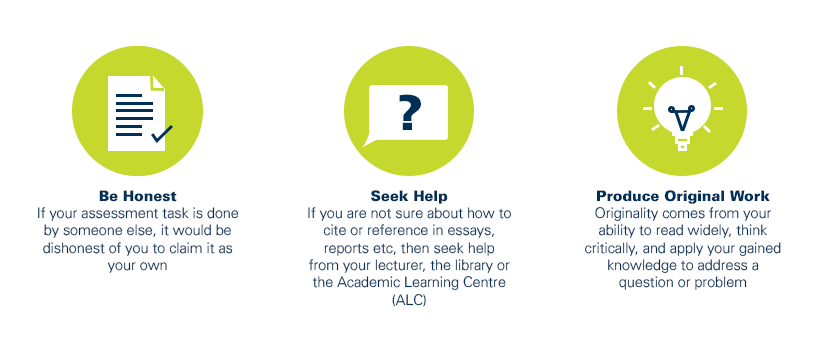
As a CQUniversity student you are expected to act honestly in all aspects of your academic work.
Any assessable work undertaken or submitted for review or assessment must be your own work. Assessable work is any type of work you do to meet the assessment requirements in the unit, including draft work submitted for review and feedback and final work to be assessed.
When you use the ideas, words or data of others in your assessment, you must thoroughly and clearly acknowledge the source of this information by using the correct referencing style for your unit. Using others’ work without proper acknowledgement may be considered a form of intellectual dishonesty.
Participating honestly, respectfully, responsibly, and fairly in your university study ensures the CQUniversity qualification you earn will be valued as a true indication of your individual academic achievement and will continue to receive the respect and recognition it deserves.
As a student, you are responsible for reading and following CQUniversity’s policies, including the Student Academic Integrity Policy and Procedure. This policy sets out CQUniversity’s expectations of you to act with integrity, examples of academic integrity breaches to avoid, the processes used to address alleged breaches of academic integrity, and potential penalties.
What is a breach of academic integrity?
A breach of academic integrity includes but is not limited to plagiarism, self-plagiarism, collusion, cheating, contract cheating, and academic misconduct. The Student Academic Integrity Policy and Procedure defines what these terms mean and gives examples.
Why is academic integrity important?
A breach of academic integrity may result in one or more penalties, including suspension or even expulsion from the University. It can also have negative implications for student visas and future enrolment at CQUniversity or elsewhere. Students who engage in contract cheating also risk being blackmailed by contract cheating services.
Where can I get assistance?
For academic advice and guidance, the Academic Learning Centre (ALC) can support you in becoming confident in completing assessments with integrity and of high standard.
What can you do to act with integrity?