Overview
Businesses are increasing wanting graduates who are work ready, who can apply their university developed knowledge, skills and attributes to successfully gain, maintain and participate in work and adapt to new contexts. Graduates want to develop knowledge, skills and attributes that enable them to future proof their careers. This unit achieves both of these purposes by providing you with the opportunity to consolidate your knowledge about your chosen profession/discipline through an authentic learning experience at your place of employment. You will undertake a project that will be a supervised project at an advanced level that relates to your discipline area. You will be assigned a supervisor who will guide, advise and mentor you throughout the project. The project will focus on a real issue at your workplace.
Details
Pre-requisites or Co-requisites
Pre-requisite BUSN19002 Business Research Methodology.
Important note: Students enrolled in a subsequent unit who failed their pre-requisite unit, should drop the subsequent unit before the census date or within 10 working days of Fail grade notification. Students who do not drop the unit in this timeframe cannot later drop the unit without academic and financial liability. See details in the Assessment Policy and Procedure (Higher Education Coursework).
Offerings For Term 2 - 2026
Attendance Requirements
All on-campus students are expected to attend scheduled classes - in some units, these classes are identified as a mandatory (pass/fail) component and attendance is compulsory. International students, on a student visa, must maintain a full time study load and meet both attendance and academic progress requirements in each study period (satisfactory attendance for International students is defined as maintaining at least an 80% attendance record).
Recommended Student Time Commitment
Each 6-credit Undergraduate unit at CQUniversity requires an overall time commitment of an average of 12.5 hours of study per week, making a total of 150 hours for the unit.
Class Timetable
Assessment Overview
Assessment Grading
This is a pass/fail (non-graded) unit. To pass the unit, you must pass all of the individual assessment tasks shown in the table above.
All University policies are available on the CQUniversity Policy site.
You may wish to view these policies:
- Grades and Results Policy
- Assessment Policy and Procedure (Higher Education Coursework)
- Review of Grade Procedure
- Student Academic Integrity Policy and Procedure
- Academic Progression Policy and Procedure
- Student Refund and Credit Balance Policy and Procedure
- Complaints Policy and Procedure
- Information and Communications Technology Acceptable Use Policy and Procedure
This list is not an exhaustive list of all University policies. The full list of University policies are available on the CQUniversity Policy site.
- Justify and communicate a project plan to investigate and analyse a business issue
- Critically analyse the relevance of the knowledge, skills and attributes developed through university studies to business contexts and future careers
- Investigate a business issue and develop solutions appropriate to the business context
- Critically reflect on the project experience to identify further areas of learning and professional development
- Synthesise university and practical business experience to demonstrate an understanding of self, careers, and the needs of businesses now and into the future.
Alignment of Assessment Tasks to Learning Outcomes
| Assessment Tasks | Learning Outcomes | ||||
|---|---|---|---|---|---|
| 1 | 2 | 3 | 4 | 5 | |
| 1 - Written Assessment - 0% | |||||
| 2 - Reflective Practice Assignment - 0% | |||||
Alignment of Graduate Attributes to Learning Outcomes
| Graduate Attributes | Learning Outcomes | ||||
|---|---|---|---|---|---|
| 1 | 2 | 3 | 4 | 5 | |
| 1 - Communication | |||||
| 2 - Problem Solving | |||||
| 3 - Critical Thinking | |||||
| 4 - Information Literacy | |||||
| 5 - Team Work | |||||
| 6 - Information Technology Competence | |||||
| 7 - Cross Cultural Competence | |||||
| 8 - Ethical practice | |||||
| 9 - Social Innovation | |||||
| 10 - First Nations Knowledges | |||||
| 11 - Aboriginal and Torres Strait Islander Cultures | |||||
Textbooks
There are no required textbooks.
IT Resources
- CQUniversity Student Email
- Internet
- Unit Website (Moodle)
All submissions for this unit must use the referencing style: American Psychological Association 7th Edition (APA 7th edition)
For further information, see the Assessment Tasks.
q.nisar@cqu.edu.au
Week 1
Begin Date: 13 Jul 2026Module/Topic
Why technology is now an ethics issue
Chapter
Accounting Professional & Ethical Standards Board. (2025). APES 110 code of ethics for professional accountants (including independence standards) (Compiled as at July 2025). APESB. https://www.apesb.org.au
Events and Submissions/Topic
- Self-assessment: rate your current awareness across five domains — AI tools, cloud platforms, data handling, cybersecurity, and automation software. You will revisit this in Week 11.
- Begin workbook: Section 1 — Technology at my workplace. Arrange a brief conversation with your workplace mentor to document the technologies your firm uses, data handling practices, and their initial view of the firm's awareness of the 2025 APES 110 obligations.
Week 2
Begin Date: 20 Jul 2026Module/Topic
What the Code actually requires
Chapter
- APES 110 (July 2025): R113.1, 113.1 A3 — competence includes technology awareness; R113.2 — supervision and training obligations; R113.3 — obligation to disclose limitations; R114.1, 114.1 A1 — confidentiality across the data lifecycle; 114.3 A3 — authorisation for AI training and technology development; R120.5, 120.5 A1–A3 — inquiring mind; 120.12 A2 — automation bias defined; 120.12 A3 — mitigating bias.
- Romney & Steinbart: Chapter 10: Control and Accounting Information Systems — prescribed reading; focus on the COSO and COBIT frameworks as the risk management context that underlies the APES 110 technology provisions.
Events and Submissions/Topic
- Guided reading exercise: annotate key paragraphs from ss. 113, 114, and 120.
- Workbook: Section 2 — Map each APES 110 provision to a real example from your workplace. Discuss your examples with your mentor and note their perspective.
Week 3
Begin Date: 27 Jul 2026Module/Topic
Reading your own workplace
Chapter
- APES 110 (July 2025): s. 113 — professional competence as a continuous obligation; s. 114.1 A1 — protection of confidential information across its lifecycle; s. 120.5 A1–A3 — inquiring mind applied to workplace observation.
- Romney & Steinbart: Chapter 11: Controls for Information Security — use as a best-practice benchmark when observing your firm's security controls; Chapter 12: Confidentiality and Privacy Controls — use to assess how your firm handles client data against recognised privacy control frameworks.
Events and Submissions/Topic
- Complete a structured observation checklist covering ss. 113, 114, and 120 obligations.
- Log findings in workbook: Section 3 — What I observed at my workplace.
- Draft a one-page problem statement: identify your chosen business issue and connect it to at least one APES 110 technology provision.
Week 4
Begin Date: 03 Aug 2026Module/Topic
Planning the investigation
Chapter
- APES 110 (July 2025): s. 113 — competence obligations framing the project scope; s. 114 — confidentiality considerations when conducting workplace research; s. 120.5 A7–A8 — using technology to analyse relevant data and consulting for appropriate challenge.
Events and Submissions/Topic
- Mentor feedback on Week 3 problem statements.
- Workbook: Section 4 — Project plan draft.
- Discuss your draft plan with your mentor — does your chosen issue feel realistic and relevant to them? Use their feedback to refine the scope before finalising.
- Refine plan based on feedback — this feeds directly into Assessment 1.
Week 5
Begin Date: 10 Aug 2026Module/Topic
Confidentiality and client data in practice
Chapter
- APES 110 (July 2025): R114.1 — the confidentiality principle; 114.1 A1 — protection across the full data lifecycle; 114.3 A2 — factors in deciding whether to disclose or use confidential information; 114.3 A3 — authorisation requirement for AI training, technology development, research, and benchmarking; AUST R114.3 — Australian-specific disclosure exceptions; R114.4 — confidentiality continues after the professional relationship ends.
- Romney & Steinbart: Chapter 12: Confidentiality and Privacy Controls.
Events and Submissions/Topic
- Case analysis involving cloud bookkeeping software, an AI writing tool, and a third-party analytics platform. Identify the specific s. 114 obligations, whether they are met, and what the firm should do.
- Map the scenarios to your own workplace in the workbook.
- Workbook: Section 5 — Confidentiality risks identified, assessed against Romney & Steinbart Chapter 12 controls.
Week 6
Begin Date: 17 Aug 2026Module/Topic
Automation bias — when not to trust the algorithm
Chapter
- APES 110 (July 2025): R120.5 — applying the conceptual framework with inquiring mind, professional judgement, and the reasonable and informed third party test; 120.5 A1–A3 — what an inquiring mind involves; 120.5 A7–A8 — managing complexity using technology; 120.12 A2 — automation bias and other cognitive biases; 120.12 A3 — actions to mitigate bias.
- Romney & Steinbart: Chapter 9: Computer Fraud and Abuse Techniques.
Events and Submissions/Topic
- Identify one instance in your current role where an automated output is routinely accepted without meaningful review — a tax calculation, reconciliation, or AI-drafted communication.
- Write a workbook entry (Section 6) assessing whether this meets the s. 120.5 A1 inquiring mind standard. Discuss your observation with your mentor and record their view.
Vacation Week
Begin Date: 24 Aug 2026Module/Topic
Chapter
Events and Submissions/Topic
Week 7
Begin Date: 31 Aug 2026Module/Topic
IT systems services and independence
Chapter
- APES 110 (July 2025): s. 606.1 — introduction to IT systems services in the audit context; 606.2 A1–A2 — scope of IT systems services; R606.3, 606.3 A1–A2 — management responsibility requirements; 606.4 A1–A3 — self-review threats created by IT services; 606.5 A1 — safeguards for non-PIE audit clients; R606.6 — prohibition for PIE audit clients.
- Romney & Steinbart: Chapter 11: Controls for Information Security — use as a best-practice benchmark to assess how IT systems services at your firm are structured and controlled.
Events and Submissions/Topic
- Case study: a firm implements a cloud-based accounting system for an audit client. Identify the s. 606 obligations, the threats created, and the appropriate response.
- Workbook Section 7: Does your firm provide any IT-related services that could create independence risks?
- Refine your project investigation based on Weeks 4–7 learning.
- End of Phase 2 — Mentor sign-off on Workbook Sections 4–7.
Week 8
Begin Date: 07 Sep 2026Module/Topic
Developing solutions that work
Chapter
- APES 110 (July 2025): s. 113.1 A3 — CPD as an ongoing obligation; R113.3 — obligation to make stakeholders aware of limitations; 120.5 A7–A8 — using technology and consultation to manage complexity.
- Romney & Steinbart: Chapter 11: Controls for Information Security — use as a reference when designing security and access control recommendations for your firm.
Events and Submissions/Topic
- Draft solutions outline anchored in specific APES 110 provisions.
- Workbook Section 8: Proposed solutions and their connection to the Code. Discuss your draft solutions with your mentor — their professional perspective on what is realistic and proportionate for the firm is directly relevant here.
- Begin preparing slides for the Workplace Presentation.
Week 9
Begin Date: 14 Sep 2026Module/Topic
The value a graduate brings
Chapter
APES 110 (July 2025): s. 113.1 A3 — technology awareness as a professional competence; R113.2 — supervision, training, and the obligations of those in authority.
Events and Submissions/Topic
- Skills audit: map your university-developed competencies — including AIS knowledge, ethics reasoning, and analytical skills — to the APES 110 technology obligations.
- 2. Workbook Section 9: Where do I add value? Where are my gaps? Share your skills audit with your mentor and ask for their perspective on where they see your strengths and where they would like to see you develop.
- 3. Continue refining Workplace Presentation slides and report draft.
Week 10
Begin Date: 21 Sep 2026Module/Topic
Where the profession is heading
Chapter
- APES 110 (July 2025): s. 113.1 A3 — ongoing technology awareness as a CPD obligation; s. 5120.5 A8 — Part 5: technology used to manage complexity in sustainability assurance (operative January 2026).
- Romney & Steinbart: Part II (Chapters 4–7): Introduction to Data Analytics, Transforming Data, Data Analysis and Presentation — not required reading; flagged as a suggested career pathway for students interested in data analytics as a specialisation
Events and Submissions/Topic
- Online guest session: a practitioner discusses emerging technology in their firm and what they look for in graduates.
- Workbook Section 10: Where do I want to go, and what do I need to get there?
- Finalise Workplace Presentation slides and complete the report draft for Assessment 1.
- Begin drafting Assessment 2: Reflection Document.
Week 11
Begin Date: 28 Sep 2026Module/Topic
Critical reflection — beyond describing what happened
Chapter
APES 110 (July 2025): s. 113.1 A3 — CPD as a continuous and structured obligation; 120.12 A3 — bias identification training as part of professional development.
Events and Submissions/Topic
- Guided reflection exercise using a structured template drawn from the workbook maintained since Week 1.
- Workbook Section 11: revisit your Week 1 self-assessment — what has changed, and what does that tell you about your development? Discuss your reflections with your mentor before the final sign-off.
- Finalise Assessment 1: Workplace Presentation Report and slides. 4. Continue drafting Assessment 2: Reflection Document.
Week 12
Begin Date: 05 Oct 2026Module/Topic
Finalise, present, submit
Chapter
APES 110 (July 2025): s. 113.1 A3 — CPD obligations as the foundation for the professional development plan; ss. 113, 114, 120 — synthesis of all technology provisions applied throughout the unit.
Events and Submissions/Topic
- Deliver Workplace Presentation to principal and key staff — mentor attends and countersigns Assessment 1.
- Workbook Section 12: final reflection entry — one key insight from the project and what you will do differently as a result.
- Submit Assessment 1: Workplace Presentation Report (including slides) and mentor countersignature.
- Submit Assessment 2: Reflection Document.
- Submit completed and fully signed workbook.
Presentation report and workbook Due: Week 12 Friday (9 Oct 2026) 11:55 pm AEST
Exam Week
Begin Date: 12 Oct 2026Module/Topic
Chapter
Events and Submissions/Topic
Vacation/Exam Week
Begin Date: 19 Oct 2026Module/Topic
Chapter
Events and Submissions/Topic
This is a general unit concerned with the professional development of accounting students who are already employed in an accounting environment.
This term, the focus is on the recent requirements of all professional accountants to be competent in the delivery of IT services and the use of IT services within the business. The unit will focus on 2024/2025 introduction of IT services requirements of APES110.
1 Written Assessment
By Week 12, you will make a presentation to your firm. The audience of this presentation will be up to your employer to decide. For this assessment, you will provide a report of that presentation, with will include:
- Attached slide deck
- A report of what was presented, and
- A summary of feedback.
Your workplace mentor must sign off on the accuracy of your report.
You will also submit your workbook, complete with workplace mentor sign-off at the four check points.
Week 12 Friday (9 Oct 2026) 11:55 pm AEST
Your assessment will be returned on Certification day.
This is a pass/fail assessment. To pass, the following criteria must be met:
- The business issue is clearly defined and connected to at least one APES 110 (July 2025) technology provision at the paragraph level.
- The analysis goes beyond description to critically assess the firm's practices against the Code.
- Recommendations are evidence-based, and realistic for the firm.
- The presentation was delivered (confirmed by mentor countersignature).
- The workbook is complete with mentor sign-off at all four phase checkpoints.
- Where Romney & Steinbart (Chapters 9, 10, 11, or 12) is relevant to the issue, it is used to support the technical analysis.
- All APES 110 references are accurate.
- All sources are cited in APA 7 format.
- Justify and communicate a project plan to investigate and analyse a business issue
- Critically analyse the relevance of the knowledge, skills and attributes developed through university studies to business contexts and future careers
- Investigate a business issue and develop solutions appropriate to the business context
2 Reflective Practice Assignment
A reflective document of approximately 1,500–2,000 words comprising two parts. Part A — Critical reflection (approx. 1,200 words): an honest analysis of the project experience — what you expected, what you found, what challenged your assumptions, and what this reveals about your professional development. Connect your reflection to the APES 110 (July 2025) technology provisions with specific paragraph references. Part B — Professional development plan (approx. 800 words): a structured plan with specific goals, actions, and timelines anchored in the CPD obligations of s. 113.1 A3. Identify at least three areas for further development arising directly from the project.
Exam Week Friday (16 Oct 2026) 11:55 pm AEST
Your assessment will be returned on Certification day.
Part A moves beyond description to critical analysis — you engage honestly with what the project revealed about assumptions and development. The reflection connects meaningfully to the APES 110 technology provisions. Part B contains specific, actionable goals — not general aspirations. The professional development plan is grounded in s. 113.1 A3. All APES 110 references are accurate. All sources are cited in APA 7 format.
- Justify and communicate a project plan to investigate and analyse a business issue
- Critically analyse the relevance of the knowledge, skills and attributes developed through university studies to business contexts and future careers
- Investigate a business issue and develop solutions appropriate to the business context
- Critically reflect on the project experience to identify further areas of learning and professional development
- Synthesise university and practical business experience to demonstrate an understanding of self, careers, and the needs of businesses now and into the future.
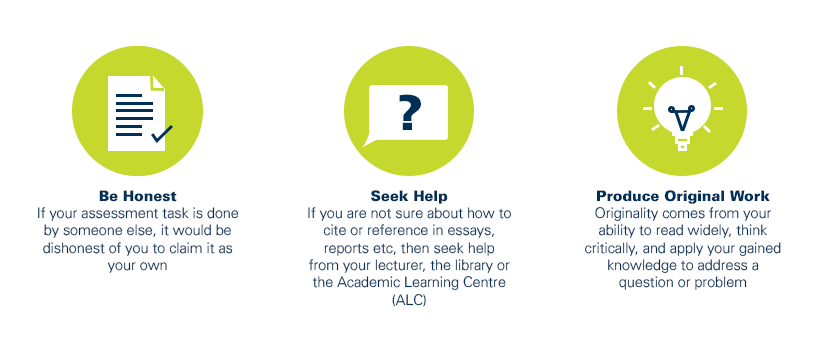
As a CQUniversity student you are expected to act honestly in all aspects of your academic work.
Any assessable work undertaken or submitted for review or assessment must be your own work. Assessable work is any type of work you do to meet the assessment requirements in the unit, including draft work submitted for review and feedback and final work to be assessed.
When you use the ideas, words or data of others in your assessment, you must thoroughly and clearly acknowledge the source of this information by using the correct referencing style for your unit. Using others’ work without proper acknowledgement may be considered a form of intellectual dishonesty.
Participating honestly, respectfully, responsibly, and fairly in your university study ensures the CQUniversity qualification you earn will be valued as a true indication of your individual academic achievement and will continue to receive the respect and recognition it deserves.
As a student, you are responsible for reading and following CQUniversity’s policies, including the Student Academic Integrity Policy and Procedure. This policy sets out CQUniversity’s expectations of you to act with integrity, examples of academic integrity breaches to avoid, the processes used to address alleged breaches of academic integrity, and potential penalties.
What is a breach of academic integrity?
A breach of academic integrity includes but is not limited to plagiarism, self-plagiarism, collusion, cheating, contract cheating, and academic misconduct. The Student Academic Integrity Policy and Procedure defines what these terms mean and gives examples.
Why is academic integrity important?
A breach of academic integrity may result in one or more penalties, including suspension or even expulsion from the University. It can also have negative implications for student visas and future enrolment at CQUniversity or elsewhere. Students who engage in contract cheating also risk being blackmailed by contract cheating services.
Where can I get assistance?
For academic advice and guidance, the Academic Learning Centre (ALC) can support you in becoming confident in completing assessments with integrity and of high standard.
What can you do to act with integrity?