Overview
Business Internship provides opportunity for you to gain supervised practical work experience. The purpose of this unit is to expose you to workplace practices so that you can apply your business knowledge gained from your business studies to the work environment. Completion of this unit may assist you in gaining employment or being able to engage with employers in employment opportunities. You will undertake an approved, generally unpaid, work placement to a maximum of 20 hours per week for a duration of 12 weeks. All your assessments will be closely aligned with the skills and experience you gain in the workplace and you will work closely with the unit coordinator and your workplace supervisor while undertaking the internship.
Details
Pre-requisites or Co-requisites
Pre-requisites: Successful completion of 48 credit points; ANDNo Failures on their Academic Record; ANDUnit Coordinator Approval: ANDA Grade Point Average of 5 or above; OR Successful completion of BUSN19024 Graduate Employability Skills.NOTE: Students who have not completed BUSN19024 Graduate Employability Skills will be required to complete an Online Preparation prior to undertaking BUSN12001 Business Internship.
Important note: Students enrolled in a subsequent unit who failed their pre-requisite unit, should drop the subsequent unit before the census date or within 10 working days of Fail grade notification. Students who do not drop the unit in this timeframe cannot later drop the unit without academic and financial liability. See details in the Assessment Policy and Procedure (Higher Education Coursework).
Offerings For Term 1 - 2026
Attendance Requirements
All on-campus students are expected to attend scheduled classes - in some units, these classes are identified as a mandatory (pass/fail) component and attendance is compulsory. International students, on a student visa, must maintain a full time study load and meet both attendance and academic progress requirements in each study period (satisfactory attendance for International students is defined as maintaining at least an 80% attendance record).
Recommended Student Time Commitment
Each 12-credit Undergraduate unit at CQUniversity requires an overall time commitment of an average of 25 hours of study per week, making a total of 300 hours for the unit.
Class Timetable
Assessment Overview
Assessment Grading
This is a graded unit: your overall grade will be calculated from the marks or grades for each assessment task, based on the relative weightings shown in the table above. You must obtain an overall mark for the unit of at least 50%, or an overall grade of 'pass' in order to pass the unit. If any 'pass/fail' tasks are shown in the table above they must also be completed successfully ('pass' grade). You must also meet any minimum mark requirements specified for a particular assessment task, as detailed in the 'assessment task' section (note that in some instances, the minimum mark for a task may be greater than 50%). Consult the University's Grades and Results Policy for more details of interim results and final grades.
All University policies are available on the CQUniversity Policy site.
You may wish to view these policies:
- Grades and Results Policy
- Assessment Policy and Procedure (Higher Education Coursework)
- Review of Grade Procedure
- Student Academic Integrity Policy and Procedure
- Academic Progression Policy and Procedure
- Student Refund and Credit Balance Policy and Procedure
- Complaints Policy and Procedure
- Information and Communications Technology Acceptable Use Policy and Procedure
This list is not an exhaustive list of all University policies. The full list of University policies are available on the CQUniversity Policy site.
Feedback, Recommendations and Responses
Every unit is reviewed for enhancement each year. At the most recent review, the following staff and student feedback items were identified and recommendations were made.
Feedback from Student feedback
Students preferred having one or more individual Zoom sessions scheduled through Moodle during the term to discuss any workplace issues and check on their progress towards completion of assessment tasks.
Schedule one or more Zoom sessions through Moodle for each student.
- Apply University knowledge and skills in the workplace
- Develop relevant skills and etiquette in the workplace
- Contribute to workplace tasks or projects
- Critically reflect on workplace experience to identify further areas of learning and professional development
- Establish networking skills for future employment opportunities.
Alignment of Assessment Tasks to Learning Outcomes
| Assessment Tasks | Learning Outcomes | ||||
|---|---|---|---|---|---|
| 1 | 2 | 3 | 4 | 5 | |
| 1 - Learning logs / diaries / Journal / log books - 30% | |||||
| 2 - Portfolio - 70% | |||||
Alignment of Graduate Attributes to Learning Outcomes
| Graduate Attributes | Learning Outcomes | ||||
|---|---|---|---|---|---|
| 1 | 2 | 3 | 4 | 5 | |
| 1 - Communication | |||||
| 2 - Problem Solving | |||||
| 3 - Critical Thinking | |||||
| 4 - Information Literacy | |||||
| 5 - Team Work | |||||
| 6 - Information Technology Competence | |||||
| 7 - Cross Cultural Competence | |||||
| 8 - Ethical practice | |||||
| 9 - Social Innovation | |||||
| 10 - First Nations Knowledges | |||||
| 11 - Aboriginal and Torres Strait Islander Cultures | |||||
Alignment of Assessment Tasks to Graduate Attributes
| Assessment Tasks | Graduate Attributes | ||||||||||
|---|---|---|---|---|---|---|---|---|---|---|---|
| 1 | 2 | 3 | 4 | 5 | 6 | 7 | 8 | 9 | 10 | 11 | |
| 1 - Learning logs / diaries / Journal / log books - 30% | |||||||||||
| 2 - Portfolio - 70% | |||||||||||
Textbooks
There are no required textbooks.
Additional Textbook Information
The students should read the following three standards during the term:
APES 110 Code of Ethics for Professional Accountants (including Independence Standards)
APES 205 Conformity with Accounting Standards
APES 210 Conformity with Auditing and Assurance Standards
The students should read material on the Workplace health and safety Australia (Work Health and Safety Act 2011
No. 137, 2011 - https://www.legislation.gov.au/C2011A00137/latest/text).
Further readings (if any) will be provided during the term.
IT Resources
- CQUniversity Student Email
- Internet
- Unit Website (Moodle)
No referencing style set.
a.abeygunasekera@cqu.edu.au
Week 1
Begin Date: 09 Mar 2026Module/Topic
Orientation, Induction & Professional Expectations
Chapter
Events and Submissions/Topic
Internship induction checklist; learning contract; weekly reflection.
Week 2
Begin Date: 16 Mar 2026Module/Topic
Connecting Business Theory to Practice
Chapter
Observe core business processes; identify where academic knowledge applies; discuss expectations with workplace mentor.
Events and Submissions/Topic
Mapping of tasks to accounting concepts and APESB standards.
Week 3
Begin Date: 23 Mar 2026Module/Topic
Understanding Ethical Obligations in Accounting Practice
Chapter
Study APES 110 Code of Ethics; identify ethical risks in the workplace (e.g., integrity, objectivity, confidentiality); discuss with supervisor how ethics guide daily decisions
Events and Submissions/Topic
Short ethics analysis; notes on ethical considerations in the workplace.
Week 4
Begin Date: 30 Mar 2026Module/Topic
Applying APESB Standards to Workplace Tasks
Chapter
Examine relevant standards (e.g., APES 205 Conformity with Accounting Standards, APES 315 Compilation of Financial Information); analyse how they apply to your assigned tasks.
Events and Submissions/Topic
Summary of applicable standards; supervisor‑verified task alignment.
Week 5
Begin Date: 06 Apr 2026Module/Topic
Skills Development & Ethical Decision‑Making
Chapter
Strengthen technical skills (e.g., using MYOB for bookkeeping, reconciliations, documentation); practice identifying ethical dilemmas and appropriate responses using APES 110.
Events and Submissions/Topic
Skills development reflection; ethical scenario notes.
Week 6
Begin Date: 13 Apr 2026Module/Topic
Deepening Engagement with Professional Standards
Chapter
Continue supervised tasks; evaluate how ethical principles influence judgement; reflect on independence, due care, and professional behaviour.
Events and Submissions/Topic
Workbook activities.
Vacation Week
Begin Date: 20 Apr 2026Module/Topic
Chapter
Events and Submissions/Topic
Week 7
Begin Date: 27 Apr 2026Module/Topic
Mid‑Placement Review & Ethical Reflection
Chapter
Events and Submissions/Topic
Meet with workplace mentor and unit coordinator; review progress; discuss ethical challenges encountered; adjust goals if needed.
Mid-term Placement Review Form Due: Week 7 Friday (1 May 2026) 11:55 pm AEST
Week 8
Begin Date: 04 May 2026Module/Topic
Applying Standards to a Workplace Issue or Improvement Activity
Chapter
Events and Submissions/Topic
Identify a small workplace process or task where ethical or professional standards can enhance quality; implement a minor improvement with workplace mentor guidance.
Update workbook with evidence of improvement activity; notes linking actions to APESB standards.
Week 9
Begin Date: 11 May 2026Module/Topic
Monitoring Impact & Evaluating Professional Conduct
Chapter
Events and Submissions/Topic
Workbook activities.
Week 10
Begin Date: 18 May 2026Module/Topic
Integrating Workplace Evidence with Ethical and Professional Standards
Chapter
Events and Submissions/Topic
Draft findings/discussion for assessment; conceptual map.
Week 11
Begin Date: 25 May 2026Module/Topic
Drafting Final Assessment & Professional Documentation
Chapter
Events and Submissions/Topic
Draft report/e-portportfolio; presentation slides; end‑of‑placement reflection.
Week 12
Begin Date: 01 Jun 2026Module/Topic
Finalisation, Reflection & Employability Development
Chapter
Events and Submissions/Topic
Final report/portfolio; presentation slides; end‑of‑placement reflection.
Portfolio of report, presentation slides and reflections Due: Week 12 Friday (5 June 2026) 11:55 pm AEST
Exam Week
Begin Date: 08 Jun 2026Module/Topic
Chapter
Events and Submissions/Topic
Vacation/Exam Week
Begin Date: 15 Jun 2026Module/Topic
Chapter
Events and Submissions/Topic
1 Learning logs / diaries / Journal / log books
This assessment evaluates your learning and performance across the first six weeks of your internship. It focuses on how you have conducted yourself professionally, how clearly you can communicate your workplace learning, and how deeply you can reflect on your development through the first six weeks.
Your Placement Review Form is provided in Moodle, together with your weekly workbook. You are to discuss your progress with your workplace mentor and update your learning plan when needed.
Week 7 Friday (1 May 2026) 11:55 pm AEST
Week 9 Friday (15 May 2026)
This return date only applies to assessments submitted by the due date.
Professional Conduct and Engagement with Workplace Expectations — 40%
What this assesses:
Your ability to behave professionally, meet workplace expectations, and demonstrate emerging ethical awareness during the first half of your internship.
Evidence may include:
- Examples of how you demonstrated reliability, punctuality, initiative, and appropriate workplace behaviour
- Clear descriptions of how you followed workplace procedures, communication protocols, and supervisor guidance
- Early evidence of ethical awareness (e.g., confidentiality, accuracy, integrity) linked to APESB principles
- Constructive engagement with feedback from your supervisor
- Professional tone and accuracy in your written report.
Why this matters:
Professional conduct is the foundation of employability. This criterion shows how well you are adapting to real workplace expectations and beginning to think like a business professional.
---
Communication of Workplace Learning and Progress — 30%
What this assesses:
Your ability to clearly and professionally communicate what you have learned during the first six weeks, using appropriate structure, language, and supporting evidence.
Evidence may include:
- A well‑structured mid‑term report that explains your tasks, responsibilities, and learning
- Clear, concise writing that demonstrates your understanding of workplace processes
- Accurate use of business and accounting terminology
- Effective integration of workplace examples, documents, or observations
- Logical flow and coherence across the report.
Why this matters:
Strong communication skills are essential in business and accounting roles. This criterion assesses your ability to translate your workplace experience into clear, professional writing.
---
Critical Reflection on Performance, Challenges, and Growth — 30%
What this assesses:
Your ability to reflect honestly and thoughtfully on your performance so far, including your strengths, challenges, and areas for improvement.
Evidence may include:
- Insightful reflection on what you’ve learned about yourself as a developing professional
- Discussion of challenges you’ve faced and how you responded to them
- Reflection on how theory from your degree connects to your workplace experience
- Identification of learning needs and goals for the remainder of the internship
- Consideration of ethical or professional dilemmas encountered so far.
Why this matters:
Critical reflection helps you grow. This criterion shows your ability to evaluate your own performance and use your experiences to guide your development for the rest of the internship.
- Apply University knowledge and skills in the workplace
- Develop relevant skills and etiquette in the workplace
- Critically reflect on workplace experience to identify further areas of learning and professional development
- Communication
- Problem Solving
- Critical Thinking
- Information Literacy
- Information Technology Competence
- Cross Cultural Competence
- Ethical practice
2 Portfolio
This assessment evaluates your learning and performance across the twelve weeks of your internship. It focuses on how you have conducted yourself professionally, how clearly you can communicate your workplace learning, and how deeply you can reflect on your development throughout the internship.
You are to provide a final report, including the slides used in your workplace presentation and your reflections on the internship. This can be either a combined report, or an e-Portfolio if one is provided by CQUniversity.
Week 12 Friday (5 June 2026) 11:55 pm AEST
Assessments will be returned on Certification Day.
Professional Conduct and Application of Ethical & Professional Standards — 40%
What this assesses:
Your ability to demonstrate professional behaviour, ethical awareness, and appropriate application of accounting and business standards throughout your internship and in your final report.
Evidence may include:
- Clear explanation of how you applied APESB ethical principles (e.g., integrity, confidentiality, due care) in real workplace situations
- Accurate descriptions of workplace processes, responsibilities, and expectations
- Demonstrated understanding of professional conduct through examples, decisions, and behaviours
- Integration of workplace evidence (documents, tasks, feedback) to support claims
- Professional tone, accuracy, and reliability in the written report.
---
Communication of Workplace Learning and Professional Insights — 30%
What this assesses:
Your ability to communicate your internship experience clearly, professionally, and effectively through both the written report and your presentation slides.
Evidence may include:
- Clear, logical structure in the written report
- Accurate and accessible explanation of workplace tasks, processes, and learning
- Professional‑quality presentation slides that communicate key insights succinctly
- Appropriate use of business language, visuals, and formatting
- Ability to translate complex workplace experiences into clear messages for an academic and professional audience.
---
Critical Reflection on Performance, Growth, and Learning — 30%
What this assesses:
Your ability to reflect deeply on your internship experience, evaluate your performance, and identify areas of growth and future development.
Evidence may include:
- Honest, thoughtful analysis of your strengths and challenges
- Reflection on how your skills developed over the 12 weeks
- Insight into how theory connected with practice
- Consideration of ethical dilemmas, workplace expectations, and professional identity
- Identification of future learning goals and employability pathways.
- Develop relevant skills and etiquette in the workplace
- Contribute to workplace tasks or projects
- Establish networking skills for future employment opportunities.
- Communication
- Problem Solving
- Critical Thinking
- Information Technology Competence
- Cross Cultural Competence
- Ethical practice
- Social Innovation
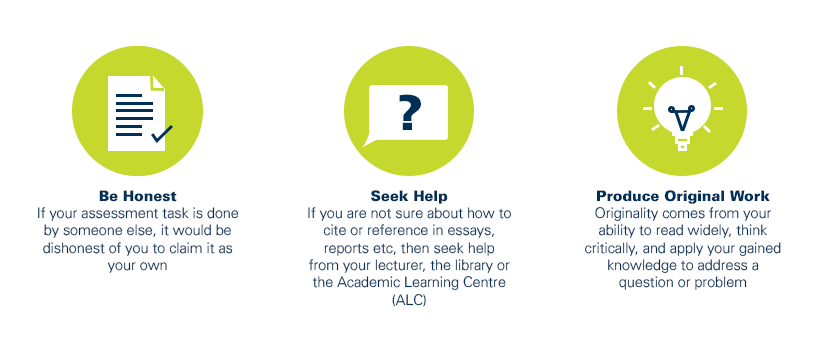
As a CQUniversity student you are expected to act honestly in all aspects of your academic work.
Any assessable work undertaken or submitted for review or assessment must be your own work. Assessable work is any type of work you do to meet the assessment requirements in the unit, including draft work submitted for review and feedback and final work to be assessed.
When you use the ideas, words or data of others in your assessment, you must thoroughly and clearly acknowledge the source of this information by using the correct referencing style for your unit. Using others’ work without proper acknowledgement may be considered a form of intellectual dishonesty.
Participating honestly, respectfully, responsibly, and fairly in your university study ensures the CQUniversity qualification you earn will be valued as a true indication of your individual academic achievement and will continue to receive the respect and recognition it deserves.
As a student, you are responsible for reading and following CQUniversity’s policies, including the Student Academic Integrity Policy and Procedure. This policy sets out CQUniversity’s expectations of you to act with integrity, examples of academic integrity breaches to avoid, the processes used to address alleged breaches of academic integrity, and potential penalties.
What is a breach of academic integrity?
A breach of academic integrity includes but is not limited to plagiarism, self-plagiarism, collusion, cheating, contract cheating, and academic misconduct. The Student Academic Integrity Policy and Procedure defines what these terms mean and gives examples.
Why is academic integrity important?
A breach of academic integrity may result in one or more penalties, including suspension or even expulsion from the University. It can also have negative implications for student visas and future enrolment at CQUniversity or elsewhere. Students who engage in contract cheating also risk being blackmailed by contract cheating services.
Where can I get assistance?
For academic advice and guidance, the Academic Learning Centre (ALC) can support you in becoming confident in completing assessments with integrity and of high standard.
What can you do to act with integrity?