Overview
In this unit, you will study plant ecophysiology, describing in vivo responses of plants to the environment in both an agricultural and environmental context. You will gain an understanding of plant structure and function, including water relations, transport pathways, gas exchange, photosynthesis, respiration, secondary metabolism, nutrition and growth regulation.
Details
Pre-requisites or Co-requisites
Prerequisite: minimum of 72 credit points
Important note: Students enrolled in a subsequent unit who failed their pre-requisite unit, should drop the subsequent unit before the census date or within 10 working days of Fail grade notification. Students who do not drop the unit in this timeframe cannot later drop the unit without academic and financial liability. See details in the Assessment Policy and Procedure (Higher Education Coursework).
Offerings For Term 1 - 2026
Attendance Requirements
All on-campus students are expected to attend scheduled classes - in some units, these classes are identified as a mandatory (pass/fail) component and attendance is compulsory. International students, on a student visa, must maintain a full time study load and meet both attendance and academic progress requirements in each study period (satisfactory attendance for International students is defined as maintaining at least an 80% attendance record).
Recommended Student Time Commitment
Each 6-credit Undergraduate unit at CQUniversity requires an overall time commitment of an average of 12.5 hours of study per week, making a total of 150 hours for the unit.
Class Timetable
Assessment Overview
Assessment Grading
This is a graded unit: your overall grade will be calculated from the marks or grades for each assessment task, based on the relative weightings shown in the table above. You must obtain an overall mark for the unit of at least 50%, or an overall grade of 'pass' in order to pass the unit. If any 'pass/fail' tasks are shown in the table above they must also be completed successfully ('pass' grade). You must also meet any minimum mark requirements specified for a particular assessment task, as detailed in the 'assessment task' section (note that in some instances, the minimum mark for a task may be greater than 50%). Consult the University's Grades and Results Policy for more details of interim results and final grades.
All University policies are available on the CQUniversity Policy site.
You may wish to view these policies:
- Grades and Results Policy
- Assessment Policy and Procedure (Higher Education Coursework)
- Review of Grade Procedure
- Student Academic Integrity Policy and Procedure
- Academic Progression Policy and Procedure
- Student Refund and Credit Balance Policy and Procedure
- Complaints Policy and Procedure
- Information and Communications Technology Acceptable Use Policy and Procedure
This list is not an exhaustive list of all University policies. The full list of University policies are available on the CQUniversity Policy site.
Feedback, Recommendations and Responses
Every unit is reviewed for enhancement each year. At the most recent review, the following staff and student feedback items were identified and recommendations were made.
Feedback from SUTE comments and unsolicited end of term emails
Residential school is essential
Agreed - the face-to-face interaction and the equipment use assist in understanding the material of this unit.
Feedback from SUTE comments
Quiz assessment opening and closing dates should match that in the unit profile.
The quiz on a given weeks material is generally due on the Monday of the second week post class, but this is adjusted in the last weeks of term in order to finish within term. This will be clarified in unit profile.
Feedback from SUTE comments
Cover all of the topic in the one recording.
This suggestion reflects disparity between students attending class physically and those watching recordings. I have been recording a weekly presentation made face-to-face to a small cohort, with the benefit that all material is fresh every offering. I need to look at how to break material while maintaining flow for the physical attendees. Separate recordings could be made for a series of concepts/topics, for use over multiple years, with the physical class evolved to a discussion.
Feedback from SUTE comments
Do not require students to use the internet for Assessment 4
Assignment 4 is an open-book exercise that is undertaken in a 3 h period within a 24 h period, on-line. As an open-book, on-line exercise, internet use is assumed. Therefore, questions need to be designed that recognize internet resources, including AIs, are available during the assessment exercise. While recognizing bandwidth limitations, more internet/AI use will be explored.
Feedback from SUTE comments
Include more pasture and grazing examples.
BOTN13002 services Science, Environmental and Agricultural students, with a balance in content/examples required to maintain relevance to all groups. Agricultural examples have tended to cropping rather than pasture, which can be addressed by inclusion of more pasture case studies.
- Describe and illustrate the principal physiological processes of angiosperms as an integrated system
- Apply knowledge of plant physiology in real life situations in agriculture, forestry and vegetation management
- Conduct plant physiology experiments, write experimental reports in the correct format and critique existing reports.
Alignment of Assessment Tasks to Learning Outcomes
| Assessment Tasks | Learning Outcomes | ||
|---|---|---|---|
| 1 | 2 | 3 | |
| 1 - Online Quiz(zes) - 10% | |||
| 2 - Written Assessment - 25% | |||
| 3 - Practical Assessment - 25% | |||
| 4 - Online Test - 40% | |||
Alignment of Graduate Attributes to Learning Outcomes
| Graduate Attributes | Learning Outcomes | ||
|---|---|---|---|
| 1 | 2 | 3 | |
| 1 - Communication | |||
| 2 - Problem Solving | |||
| 3 - Critical Thinking | |||
| 4 - Information Literacy | |||
| 5 - Team Work | |||
| 6 - Information Technology Competence | |||
| 7 - Cross Cultural Competence | |||
| 8 - Ethical practice | |||
| 9 - Social Innovation | |||
| 10 - First Nations Knowledges | |||
| 11 - Aboriginal and Torres Strait Islander Cultures | |||
Textbooks
Plants in Action
- Edition: 2nd (1999)
- Authors: ASPP
- ASPP
- on line on line , QLD , Australia
- ISBN: 0732944392
The publicly available on-line resource Plants in Action is used Plants in Action | A resource for teachers and students of plant science
rseco.org/index.html
Plant Physiology
- Edition: 4 (1992)
- Authors: Frank B. Salisbury, Cleon W. Ross
- Wadsworth Publishing Company
- Belmont Belmont , CA , USA
- ISBN: 0534151620, 9780534151621
- Binding: Paperback
IT Resources
- CQUniversity Student Email
- Internet
- Unit Website (Moodle)
- Computer with Microsoft Office and Endnote installed. The 'Real Statistics' add-In for Microsoft Excel is recommended for statistical analysis.
All submissions for this unit must use the referencing style: Harvard (author-date)
For further information, see the Assessment Tasks.
k.walsh@cqu.edu.au
Week 1
Begin Date: 09 Mar 2026Module/Topic
Introduction - what is plant physiology?
Chapter
Please read 'Plants in Action ed 1' sections : 'Preamble', 'A Plant Science Manifesto' [8], and 'Plant Science Applied: case study cotton' [11] (feel free to read other sections as your curiosity takes you!) from: Plants In Action — Australian Society of Plant Scientists
https://www.asps.org.au/plants-in-action.
Ed 2 can also be seen at https://www.rseco.org/content/about.html
Events and Submissions/Topic
This weeks' Weekly Online Quiz is for background - for me to understand how much you know about plants!
Week 2
Begin Date: 16 Mar 2026Module/Topic
Seed dormancy and germination
Chapter
Plants in Action ed 1: Dormancy - Chapters 8.1.1, 8.1.2 and case study 8.1 [225-227].
Study Guide Module 1
Events and Submissions/Topic
Let us get a discussion going each week - e.g., this week on the Global Seed Vault and the oldest seed to have germinated.
Week 3
Begin Date: 23 Mar 2026Module/Topic
Water potential
Chapter
Plants in Action ed 2: Chapter 3 (Water movement), 5 (Phloem transport) and section 7.3 (cell growth) (to be read over several weeks)
Study Guide Module 2
Events and Submissions/Topic
Week 1 Online Quiz closes Week 3 Monday night.
Lets keep the discussion board alive, e.g., with a discussion of the osmotic potential of sea water.
Week 4
Begin Date: 30 Mar 2026Module/Topic
Water uptake and transport
Chapter
As for week 3
plus Plants in Action ed 1, Chapter 15 [417-425]
Study Guide Module 3
Events and Submissions/Topic
Week 2 Online Quiz closes Week 4 Monday night.
We will keep a weekly discussion going keyed to the topic of the week.
Week 5
Begin Date: 06 Apr 2026Module/Topic
Water relations
Chapter
as for week 4 with extension into Plants in Action ed 1, Chapter 15 [426-433]
Events and Submissions/Topic
Week 3 Online Quiz closes Week 5 Monday night.
Residential School (Compulsory) is scheduled in Rockhampton (check Assessment block for dates)
(Optional - submission at Residential of draft of Assessment 2)
Week 6
Begin Date: 13 Apr 2026Module/Topic
Mineral nutrition
Chapter
Plants in Action ed 2: Chapter 4 and ed 1 Chapter 16 [446-459] (across this week and next)
Study Guide Module 4
Events and Submissions/Topic
Week 4 Online Quiz closes Week 6 Monday night.
Vacation Week
Begin Date: 20 Apr 2026Module/Topic
Chapter
Events and Submissions/Topic
Week 7
Begin Date: 27 Apr 2026Module/Topic
Nitrogen and sulphur
Chapter
as for week 6
Study Guide Module 5
Events and Submissions/Topic
Week 5 Online Quiz closes Week 7 Monday night.
Residential School reports due (see Assessment section for dates).
Practical reports Due: Week 7 Friday (1 May 2026) 11:59 pm AEST
Week 8
Begin Date: 04 May 2026Module/Topic
Photosynthesis
Chapter
Plants in Action ed 2: Chapters 1, 2, 12 and ed 1: chapter 13
Study Guide Module 6
Events and Submissions/Topic
Week 6 Online Quiz closes Week 8 Monday night.
Week 9
Begin Date: 11 May 2026Module/Topic
Carbohydrate metabolism
Chapter
Plants in Action: Chapters 2.4 and 11.3 to 11.7
Study Guide Module 7
Events and Submissions/Topic
Week 7 Online Quiz closes Week 9 Monday night.
Week 10
Begin Date: 18 May 2026Module/Topic
Plant growth - description and regulation
Chapter
Plants in Action: Chapter 6 ed 2) and ed 1 Chapter 9
Study Guide Module 8
Events and Submissions/Topic
Week 8 Online Quiz closes Week 10 Monday night.
Assignment due (check assessment block).
Making sense of plant processes Due: Week 10 Monday (18 May 2026) 11:59 pm AEST
Week 11
Begin Date: 25 May 2026Module/Topic
Plant growth modelling - bringing it all together
Chapter
Plants in Action ed 2: Chapter 6
Events and Submissions/Topic
Week 9 Online Quizzes close Week 11 Monday night.
Week 12
Begin Date: 01 Jun 2026Module/Topic
Review
Chapter
Events and Submissions/Topic
Week 10, 11 and 12 Online Quizzes close Week 12 Friday night.
Exam Week
Begin Date: 08 Jun 2026Module/Topic
Chapter
Events and Submissions/Topic
on-line assessment (see Assessment block)
End of Term Online Test Due: Exam Week Monday (8 June 2026) 3:00 pm AEST
Vacation/Exam Week
Begin Date: 15 Jun 2026Module/Topic
Chapter
Events and Submissions/Topic
1 Online Quiz(zes)
On-line quizzes are keyed to the material provided each week. The quizzes are open for two weeks (less in the last weeks of term). The 72 hour grace period does not apply to this assessment.
The quizzes are intended to pace you, providing incentive for weekly learning and to check that you have done the reading and understood the concepts associated with each weeks' learning. As items of continuous assessment, each quiz is of small ‘value', but understanding each week’s material will lead to better assignment scores!
For each quiz: there is no time limit; and one re-attempt of a quiz is allowed but not required. There is a 20 minute enforced time period between attempts. The highest grade of the two attempts will be used in assessment. Questions are generally multiple choice but include matching of terms and calculations. The questions in each quiz are taken from a question bank, so you may not get the same questions the second time you take the quiz. All quizzes must be attempted.
As this assessment involves multiple choice responses it is not possible to indicate the source/resource used, as would normally be done.
Level of GenAI use allowed: Level 3: AI COLLABORATION. AI may be used to help complete the task, assisting with specific tasks such as locating information and calculations. You must critically evaluate and modify any AI-generated content you use. The Discussion board will be used to explore experiences in use of AI in answering these questions (noting that AIs' have a propensity to hallucinate and to ‘invent’ references).
A window is provided on each quiz, with the latest date generally being the Monday of the second week following the content week being assessed (e.g., quiz of Week 1 is due Monday of Week 3), but this window is compressed in latter weeks. See the Schedule section of this Unit Profile and also the Moodle site for specific dates..
Quizzes are automatically marked on submission.
The quizzes cover understanding of technical terms and concepts. Questions may be in multiple choice, matching term or calculation answer formats. Answers will be automatically marked as correct or incorrect.
- Describe and illustrate the principal physiological processes of angiosperms as an integrated system
- Apply knowledge of plant physiology in real life situations in agriculture, forestry and vegetation management
2 Practical Assessment
Two practical reports (800 words each, excluding references, figure captions, tables and title page) are required in the format of a scientific paper or technical report. Each will describe one of the experiments undertaken at Residential School. The choice of the exercises will be discussed during the Residential School. These reports will each 'stand alone' but should be submitted as one document (with one section for each report).
Please submit your answers in a Word document (doc, docx or rtf). PDF documents will NOT be accepted. You can perform calculations or draw figures by hand and insert them as images (e.g. jpegs) in the word document. If you don’t have a scanner – take a photo on your mobile phone. You must make sure we know what question you're answering by putting the question number in front of the text. Please consider redrafting your calculations for clarity before photographing/scanning them.
Level of GenAI use allowed: Level 4: FULL AI. AI may be used to complete any elements of the task, with students directing AI to achieve the assessment goals. Assessments at this level may also require engagement with AI to achieve goals and solve problems. However, you must critically evaluate and modify any AI-generated content you use. As for traditional referencing, you are expected to clearly indicate the source/resource used. Please append this information to your answer, with indication of any steps taken to verify information.
Week 7 Friday (1 May 2026) 11:59 pm AEST
submit through Moodle site
Week 9 Friday (15 May 2026)
The reports will not be assessed on the 'success' of the experiment. Assessment will be based on:
1. Structure (as a scientific or technical report, with Title, Abstract, Keywords, Introduction, Materials and Methods, Results and Discussion, Acknowledgements, References, Appendices (if any; only the text between Introduction and Discussion are counted against the max word count of 800), appropriate citations (25%)
2. Context: an Introduction that 'sets the scene' (25%)
3. Results: appropriate data analysis, explanation of calculations, with explanation of units, appropriate Figures and/or Tables (25%)
4. Discussion: interpretation of data, with reference to existing knowledge (as presented in Introduction) (25%)
- Apply knowledge of plant physiology in real life situations in agriculture, forestry and vegetation management
- Conduct plant physiology experiments, write experimental reports in the correct format and critique existing reports.
3 Written Assessment
The 'Making Sense of Plant Processes' assessment item is meant to check and demonstrate your progress in various plant topics covered in the unit to the point of submission of the assignment.
This assessment item is comprised of a number of tasks, including calculations and descriptive/interpretive short answers. It will cover material from Weeks 1 - 10. The specific questions will be posted on the Moodle site by the end of Week 2. Start this assessment in Week 3 and work on questions as we cover material in each subsequent week...do not wait for the last week to do it!
Please submit your answers in a Word document (doc, docx or rtf). PDF documents will not be accepted. You can perform calculations or draw figures by hand and insert them as images (e.g., jpegs) in the Word document. If you don’t have a scanner – take a photo on your mobile phone, or use SnagIt or similar. Remember to attribute your sources. Please consider redrafting your calculations for clarity before photographing/scanning them. Also (although obvious, it's an issue each year) remember to number your answers.
Level of GenAI use allowed: Level 4: FULL AI. AI may be used to complete any elements of the task, with students directing AI to achieve the assessment goals. Assessments at this level may also require engagement with AI to achieve goals and solve problems. However, you must critically evaluate and modify any AI-generated content you use. As for traditional referencing, you are expected to clearly indicate the source/resource used. Please append this information to your answer, with indication of any steps taken to verify information.
Week 10 Monday (18 May 2026) 11:59 pm AEST
To be submitted through the Moodle site.
Week 12 Wednesday (3 June 2026)
For calculation-based tasks, marks are awarded for:
1. A statement of the principle and key relationship (20%);
2. Clear step by step calculations, with explanation and unit analysis (60%);
3. The correct numerical answer (20%).
For descriptive/interpretative tasks, marks are awarded for:
1. The quality of the background review, including a definition of the topic (30%);
2. The discussion of this information in context of the question asked (50%);
3. The clarity of English expression, spelling, grammar, accuracy of referencing, appropriate length (20%).
- Describe and illustrate the principal physiological processes of angiosperms as an integrated system
- Apply knowledge of plant physiology in real life situations in agriculture, forestry and vegetation management
4 Online Test
The End of Term Online Test involves a written response to questions drawn from topics covered in the unit. Students will access the questions on-line and will have 3.5 h to complete the task, to be undertaken within the nominated 24 h period (the test must be completed before the end of the 24-hour period). The 72 hour grace period does not apply to this assessment.
Please type your answers and, as in Assessment 3 - Making Sense of Plant Processes, please submit images of your calculations/figures embedded in the document. Please remember to number your answers to the corresponding question.
This is an 'open book' test.
Level of GenAI use allowed: Level 3: AI COLLABORATION. AI may be used to help complete the task, assisting with specific tasks such as locating information and calculations. You must critically evaluate and modify any AI-generated content you use. As for traditional referencing, you are expected to clearly indicate the source/resource used. Please append this information to your answer, with indication of any steps taken to verify information.
Exam Week Monday (8 June 2026) 3:00 pm AEST
A 3.5 hour window is provided for this activity, once commenced. It can be commenced any time during the nominated day, but must be completed within a continuous window once started.
Vacation/Exam Week Friday (19 June 2026)
This assessment item will not be returned.
Each sub-question of the assessment will have an associated mark. Please allocate your time proportional to the mark. Responses will be assessed in context of the demonstration of understanding of terms and concepts, to the level covered in the coursework of the unit.
- Describe and illustrate the principal physiological processes of angiosperms as an integrated system
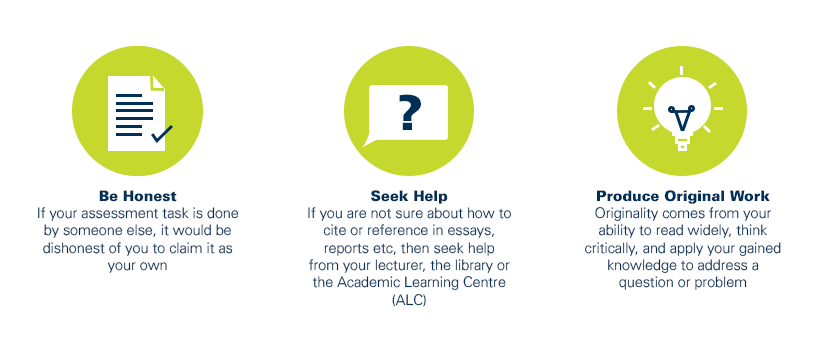
As a CQUniversity student you are expected to act honestly in all aspects of your academic work.
Any assessable work undertaken or submitted for review or assessment must be your own work. Assessable work is any type of work you do to meet the assessment requirements in the unit, including draft work submitted for review and feedback and final work to be assessed.
When you use the ideas, words or data of others in your assessment, you must thoroughly and clearly acknowledge the source of this information by using the correct referencing style for your unit. Using others’ work without proper acknowledgement may be considered a form of intellectual dishonesty.
Participating honestly, respectfully, responsibly, and fairly in your university study ensures the CQUniversity qualification you earn will be valued as a true indication of your individual academic achievement and will continue to receive the respect and recognition it deserves.
As a student, you are responsible for reading and following CQUniversity’s policies, including the Student Academic Integrity Policy and Procedure. This policy sets out CQUniversity’s expectations of you to act with integrity, examples of academic integrity breaches to avoid, the processes used to address alleged breaches of academic integrity, and potential penalties.
What is a breach of academic integrity?
A breach of academic integrity includes but is not limited to plagiarism, self-plagiarism, collusion, cheating, contract cheating, and academic misconduct. The Student Academic Integrity Policy and Procedure defines what these terms mean and gives examples.
Why is academic integrity important?
A breach of academic integrity may result in one or more penalties, including suspension or even expulsion from the University. It can also have negative implications for student visas and future enrolment at CQUniversity or elsewhere. Students who engage in contract cheating also risk being blackmailed by contract cheating services.
Where can I get assistance?
For academic advice and guidance, the Academic Learning Centre (ALC) can support you in becoming confident in completing assessments with integrity and of high standard.
What can you do to act with integrity?