Overview
This capstone unit will provide you with an opportunity to examine and critique current health practices issues prior to your entry into the Medical Laboratory Science professional workforce. Your study will focus on the contemporary legislative, social and economic trends in the Australian Pathology profession that will impact on your practice. You will be required to exhibit ethical decision-making and clinical/professional reasoning at a graduate level, in preparation for practice.
Details
Pre-requisites or Co-requisites
Prerequisites: BMSC13001 Advanced Haematology AND BMSC13002 Advanced Clinical Biochemistry AND BMSC13003 Medical Microbiology 2 AND BMSC13009 Immunology OR BMSC13023 Applied Immunology AND BMSC13010 Pharmacology OR BMSC13020 Drug Discovery and Clinical Trials AND BMSC13011 Advanced Transfusion Science OR BMSC13015 Molecular Targeted Therapies AND BMSC13016 Advanced Histopathology and Cytopathology
Important note: Students enrolled in a subsequent unit who failed their pre-requisite unit, should drop the subsequent unit before the census date or within 10 working days of Fail grade notification. Students who do not drop the unit in this timeframe cannot later drop the unit without academic and financial liability. See details in the Assessment Policy and Procedure (Higher Education Coursework).
Offerings For Term 1 - 2026
Attendance Requirements
All on-campus students are expected to attend scheduled classes - in some units, these classes are identified as a mandatory (pass/fail) component and attendance is compulsory. International students, on a student visa, must maintain a full time study load and meet both attendance and academic progress requirements in each study period (satisfactory attendance for International students is defined as maintaining at least an 80% attendance record).
Recommended Student Time Commitment
Each 6-credit Undergraduate unit at CQUniversity requires an overall time commitment of an average of 12.5 hours of study per week, making a total of 150 hours for the unit.
Class Timetable
Assessment Overview
Assessment Grading
This is a graded unit: your overall grade will be calculated from the marks or grades for each assessment task, based on the relative weightings shown in the table above. You must obtain an overall mark for the unit of at least 50%, or an overall grade of 'pass' in order to pass the unit. If any 'pass/fail' tasks are shown in the table above they must also be completed successfully ('pass' grade). You must also meet any minimum mark requirements specified for a particular assessment task, as detailed in the 'assessment task' section (note that in some instances, the minimum mark for a task may be greater than 50%). Consult the University's Grades and Results Policy for more details of interim results and final grades.
All University policies are available on the CQUniversity Policy site.
You may wish to view these policies:
- Grades and Results Policy
- Assessment Policy and Procedure (Higher Education Coursework)
- Review of Grade Procedure
- Student Academic Integrity Policy and Procedure
- Academic Progression Policy and Procedure
- Student Refund and Credit Balance Policy and Procedure
- Complaints Policy and Procedure
- Information and Communications Technology Acceptable Use Policy and Procedure
This list is not an exhaustive list of all University policies. The full list of University policies are available on the CQUniversity Policy site.
Feedback, Recommendations and Responses
Every unit is reviewed for enhancement each year. At the most recent review, the following staff and student feedback items were identified and recommendations were made.
Feedback from Student feedback, personal reflection
Outdated lecture/tutorial videos and PowerPoint slides
Update all videos and slides prior to 2026 offering.
Feedback from Student feedback
Confusion around standards required for assessments
Update rubric and improve scaffolding for assessments 1+3.
Feedback from Personal reflection
Few students able to attend live tutorials due to time allocated
Ensure a more suitable tutorial time for future offerings that is outside standard working hours.
- Apply knowledge of legal, economic and ethical issues that impact the provision of health care services and best practice in Medical Laboratory Science
- Investigate the current trends in the provision of professional services to rural/remote and regional Australia
- Discuss the principles underlying effective leadership and communication skills in health care settings, demonstrating cultural safety
- Discuss current Australian Standards for laboratory accreditation and how these impact on service delivery in rural/remote and regional Australia
- Discuss the role of a Medical Laboratory Scientist in the Safety and Risk Management framework in healthcare.
Alignment of Assessment Tasks to Learning Outcomes
| Assessment Tasks | Learning Outcomes | ||||
|---|---|---|---|---|---|
| 1 | 2 | 3 | 4 | 5 | |
| 1 - Reflective Practice Assignment - 20% | |||||
| 2 - Portfolio - 40% | |||||
| 3 - Oral Examination - 40% | |||||
Alignment of Graduate Attributes to Learning Outcomes
| Graduate Attributes | Learning Outcomes | ||||
|---|---|---|---|---|---|
| 1 | 2 | 3 | 4 | 5 | |
| 1 - Communication | |||||
| 2 - Problem Solving | |||||
| 3 - Critical Thinking | |||||
| 4 - Information Literacy | |||||
| 5 - Team Work | |||||
| 6 - Information Technology Competence | |||||
| 7 - Cross Cultural Competence | |||||
| 8 - Ethical practice | |||||
| 9 - Social Innovation | |||||
| 10 - First Nations Knowledges | |||||
| 11 - Aboriginal and Torres Strait Islander Cultures | |||||
Textbooks
There are no required textbooks.
IT Resources
- CQUniversity Student Email
- Internet
- Unit Website (Moodle)
- Zoom (both microphone and webcam capability)
All submissions for this unit must use the referencing style: Vancouver
For further information, see the Assessment Tasks.
s.j.burgess@cqu.edu.au
Week 1
Begin Date: 09 Mar 2026Module/Topic
Ethics, Professional Conduct, Privacy & Confidentiality and Freedom of Information
Chapter
e-Reading List on Moodle
Events and Submissions/Topic
Tutorial - Introduction
Tutorial - covering Week 1
Week 2
Begin Date: 16 Mar 2026Module/Topic
Cultural Awareness, Equal Opportunities, Anti-discrimination and Anti-Bullying
Chapter
e-Reading List on Moodle
Events and Submissions/Topic
Tutorial - covering Week 2
Week 3
Begin Date: 23 Mar 2026Module/Topic
Accreditation - NATA, ISO & IATA (ISO15189/AS4308:2008/AS/NZS 4760:2019) and TGA
Chapter
e-Reading List on Moodle
Events and Submissions/Topic
Tutorial - covering Week 3
Week 4
Begin Date: 30 Mar 2026Module/Topic
Competency Standards, Continuing Professional Development, Professional Memberships and Certification of Medical Scientists
Chapter
e-Reading List on Moodle
Events and Submissions/Topic
Tutorial - covering Week 4
Week 5
Begin Date: 06 Apr 2026Module/Topic
Quality Control, Quality Assurance & Total Quality Management, Risk Management and Customer Service & Complaint Resolution
Chapter
e-Reading List on Moodle
Events and Submissions/Topic
Tutorial - covering Week 5
Week 6
Begin Date: 13 Apr 2026Module/Topic
Budgets & Finance, Medicare - the Medicare Benefits Scheme & Private Health Insurance
Chapter
e-Reading List on Moodle
Events and Submissions/Topic
Tutorial - covering Week 6
Assessment 1 due before the end of this week.
Reflective Practice Due: Week 6 Friday (17 Apr 2026) 5:00 pm AEST
Break Week
Begin Date: 20 Apr 2026Module/Topic
No Lecture this week.
Chapter
N/A
Events and Submissions/Topic
N/A
Week 7
Begin Date: 27 Apr 2026Module/Topic
Workplace Health & Safety, Incident Reporting & Investigation, Root Cause Analysis and Corrective & Preventative Action
Chapter
e-Reading List on Moodle
Events and Submissions/Topic
Tutorial - covering Week 7
Week 8
Begin Date: 04 May 2026Module/Topic
Human Resources 1 - Teamwork, Leadership & Conflict Resolution
Chapter
e-Reading List on Moodle
Events and Submissions/Topic
Tutorial - covering Week 8
Week 9
Begin Date: 11 May 2026Module/Topic
Human Resources 2 - Recruitment & Performance Management; Awards & EBA and Disciplinary Action
Chapter
e-Reading List on Moodle
Events and Submissions/Topic
Tutorial - covering Week 9
Assessment 2 due before the end of this week.
Portfolio of work Due: Week 9 Friday (15 May 2026) 5:00 pm AEST
Week 10
Begin Date: 18 May 2026Module/Topic
Technology - Automation, LIS, interfacing, report formats, TeleHealth / Tele-Medicine, Videoconferencing, virtual microscopy - Wayne Pederick
Chapter
e-Reading List on Moodle
Events and Submissions/Topic
Tutorial - covering Week 10
Week 11
Begin Date: 25 May 2026Module/Topic
Revision week
Chapter
N/A
Events and Submissions/Topic
Tutorial - TBA
Week 12
Begin Date: 01 Jun 2026Module/Topic
Preparation for End of Term Interactive Oral Exam
Chapter
N/A
Events and Submissions/Topic
Tutorial - Preparation for Interactive Oral Exam
Exam Week
Begin Date: 08 Jun 2026Module/Topic
Chapter
Events and Submissions/Topic
Oral assessments will take place during exam week.
Interactive Oral Examination Due: Exam Week Friday (12 June 2026) 5:00 pm AEST
Your Unit Coordinator and tutor for this Unit is Sue Burgess who can be contacted by e-mail (s.j.burgess@cqu.edu.au) or via the Moodle forums.
Lectures are pre-recorded in smaller 'modules' and will be posted on the Moodle page.
There are weekly Tutorials/ Q&A sessions that will be linked to Zoom, and the Tutorials are also recorded and posted in Moodle.
There is no prescribed textbook for this unit.
A number of readings will be suggested or made available to you as resource materials for this unit.
As per Australian educational standards, you are expected to commit 150 hours of engagement to your study of this unit. This is broken down as:
1 - 2 hours per week watching recorded lectures and revising the content through study notes
3 - 4 hours per week completing the weekly study questions on the unit's Moodle page
1 - 2 hours per week attending the weekly tutorial and reflecting on your answers to the weekly study questions
4 - 5 hours per week preparing your assessments or studying for your end of term test
1 Reflective Practice Assignment
You will have completed at least two Work Integrated Learning units totalling a minimum of 360 hours of clinical placement. You may also be or have been employed in the Medical Laboratory Science field during your studies.
You are required to reflect upon your previous clinical placements (Work Integrated Learning) and work experience if applicable and how the role of the Medical Scientists was guided by the legal, economic and ethical framework and how they displayed effective leadership and communication skills in the execution of their role. You may also reflect upon the process of laboratory accreditation and workplace health and safety and how they guided practice.
Mode: Written
Length: 1000 words (±10%)
Format: MS Word only.
Please use 1.5pt line spacing, and a professional and easy to read font (e.g. Calibri, Arial, Tahoma, Noto Sans, Aptos).
Referencing Style: Vancouver
Use of GenAI: As this is a reflective assessment, the use of GenAI is strictly prohibited.
Level 1: You must not use Al at any point during the assessment. You must demonstrate your core skills and knowledge.
It is NOT permissible to use GenAI to generate text for this written task. All other uses of GenAI are strictly prohibited and are a breach of Academic Integrity rules. This can result in serious consequences up to and including termination of your enrolment at CQUni.
Submission: Submit via the submission link in Moodle by the due date.
Week 6 Friday (17 Apr 2026) 5:00 pm AEST
Upload assessment to Moodle.
Marked assignments will be posted to Moodle
A marking guide for the reflective practice item will be made available on the Moodle page.
- Apply knowledge of legal, economic and ethical issues that impact the provision of health care services and best practice in Medical Laboratory Science
- Discuss current Australian Standards for laboratory accreditation and how these impact on service delivery in rural/remote and regional Australia
- Discuss the role of a Medical Laboratory Scientist in the Safety and Risk Management framework in healthcare.
2 Portfolio
A number of case studies will be provided during the term. You are required to submit your responses to four of these cases as a portfolio of work. Topics for the case studies may include Quality Management, Personnel Management, Professional Development, Legislation and the Regulatory Framework of Pathology, Workplace Health and Safety and Emerging Technology in Pathology. You will be required to consider each case and to describe how the cases were all guided by legislation, standards or professional guidelines and suggest areas for potential improvement.
Mode: Written
Length: 2000-3000 words total (excluding references)
Format: MS Word only.
Please use 1.5pt line spacing, and a professional and easy to read font (e.g. Calibri, Arial, Tahoma, Noto Sans, Aptos).
Referencing Style: Vancouver
Use of GenAI:
Level 2: You may use Al for planning, idea development and research. Your final submission should show how you have developed and refined these ideas.
All other uses of GenAI are strictly prohibited and are a breach of Academic Integrity rules. This can result in serious consequences up to and including termination of your enrolment at CQUni.
Submission: Submit via the submission link in Moodle by the due date.
Week 9 Friday (15 May 2026) 5:00 pm AEST
Upload assignment to Moodle. Assessment will be due before the end of Week 9.
Marked assignments will be posted to Moodle
A marking Guide for this assessment will be provided on the Moodle page.
- Investigate the current trends in the provision of professional services to rural/remote and regional Australia
- Discuss the principles underlying effective leadership and communication skills in health care settings, demonstrating cultural safety
- Discuss the role of a Medical Laboratory Scientist in the Safety and Risk Management framework in healthcare.
3 Oral Examination
In the oral exam there will be 4 questions, based on your answers in Assessments 1 & 2 to further assess your understanding of the topics discussed and regulatory frameworks.
The discussion should take between 20 and 30 minutes and you will be provided with an opportunity to have a 'practice run' at the oral examination prior to the actual exam if required and feedback will be provided.
More details regarding the date, time and structure of the oral exam will be provided in the assessment tile on Moodle.
Mode: Oral
Length: 30 minutes maximum
Use of GenAI:
Level 1: You must not use Al at any point during the assessment. You must demonstrate your core skills and knowledge.
It is NOT permissible to use GenAI to assist with this task. All uses of GenAI are strictly prohibited and are a breach of Academic Integrity rules. This can result in serious consequences up to and including termination of your enrolment at CQUni.
The 72-hour grace period does not apply to this assessment.
Exam Week Friday (12 June 2026) 5:00 pm AEST
The exact day and time to be negotiated with each individual student, however they must be completed by the end of Exam week.
The grades will be finalised by the Certification of Grades
Your responses will be assessed on Relevance (50 marks), Coherence (40 marks) and Overall organisation, expression and flow (10 marks).
A detailed marking rubric will be provided on the Moodle page.
- Apply knowledge of legal, economic and ethical issues that impact the provision of health care services and best practice in Medical Laboratory Science
- Discuss the principles underlying effective leadership and communication skills in health care settings, demonstrating cultural safety
- Discuss current Australian Standards for laboratory accreditation and how these impact on service delivery in rural/remote and regional Australia
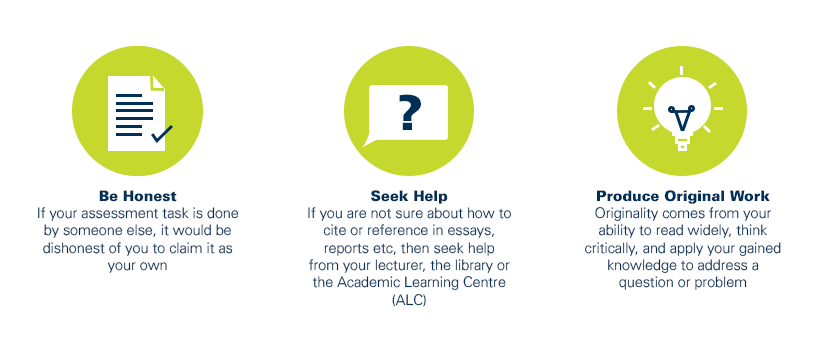
As a CQUniversity student you are expected to act honestly in all aspects of your academic work.
Any assessable work undertaken or submitted for review or assessment must be your own work. Assessable work is any type of work you do to meet the assessment requirements in the unit, including draft work submitted for review and feedback and final work to be assessed.
When you use the ideas, words or data of others in your assessment, you must thoroughly and clearly acknowledge the source of this information by using the correct referencing style for your unit. Using others’ work without proper acknowledgement may be considered a form of intellectual dishonesty.
Participating honestly, respectfully, responsibly, and fairly in your university study ensures the CQUniversity qualification you earn will be valued as a true indication of your individual academic achievement and will continue to receive the respect and recognition it deserves.
As a student, you are responsible for reading and following CQUniversity’s policies, including the Student Academic Integrity Policy and Procedure. This policy sets out CQUniversity’s expectations of you to act with integrity, examples of academic integrity breaches to avoid, the processes used to address alleged breaches of academic integrity, and potential penalties.
What is a breach of academic integrity?
A breach of academic integrity includes but is not limited to plagiarism, self-plagiarism, collusion, cheating, contract cheating, and academic misconduct. The Student Academic Integrity Policy and Procedure defines what these terms mean and gives examples.
Why is academic integrity important?
A breach of academic integrity may result in one or more penalties, including suspension or even expulsion from the University. It can also have negative implications for student visas and future enrolment at CQUniversity or elsewhere. Students who engage in contract cheating also risk being blackmailed by contract cheating services.
Where can I get assistance?
For academic advice and guidance, the Academic Learning Centre (ALC) can support you in becoming confident in completing assessments with integrity and of high standard.
What can you do to act with integrity?