Overview
This is the second of the two placement units within your course. In this unit, you will be placed within diverse healthcare settings in the regional communities of Central Queensland and the Wide Bay. The placements are observational in nature, and will provide you with experiential learning opportunities that will enable you to continue to connect with regional communities. You will gain a greater appreciation of the diversity and complexity of healthcare delivery in a regional context, following on from earlier placements. Through the placement experiences you will enhance your knowledge and develop conceptual understanding of clinical conditions. You will observe a variety of communication skills in healthcare settings and reflect on these to further develop your personal and professional attributes in communication and cultural awareness. You will apply reflective practice to appreciate the social accountability of the role of healthcare professionals in regional communities.Mandatory on-campus activities at the Rockhampton and Bundaberg campuses form a key aspect of this unit.
Details
Pre-requisites or Co-requisites
Pre-requisite: Completion of 96cp in CM17 course
Important note: Students enrolled in a subsequent unit who failed their pre-requisite unit, should drop the subsequent unit before the census date or within 10 working days of Fail grade notification. Students who do not drop the unit in this timeframe cannot later drop the unit without academic and financial liability. See details in the Assessment Policy and Procedure (Higher Education Coursework).
Offerings For Term 1 - 2026
Attendance Requirements
All on-campus students are expected to attend scheduled classes - in some units, these classes are identified as a mandatory (pass/fail) component and attendance is compulsory. International students, on a student visa, must maintain a full time study load and meet both attendance and academic progress requirements in each study period (satisfactory attendance for International students is defined as maintaining at least an 80% attendance record).
Recommended Student Time Commitment
Each 6-credit Undergraduate unit at CQUniversity requires an overall time commitment of an average of 12.5 hours of study per week, making a total of 150 hours for the unit.
Class Timetable
Assessment Overview
Assessment Grading
This is a pass/fail (non-graded) unit. To pass the unit, you must pass all of the individual assessment tasks shown in the table above.
All University policies are available on the CQUniversity Policy site.
You may wish to view these policies:
- Grades and Results Policy
- Assessment Policy and Procedure (Higher Education Coursework)
- Review of Grade Procedure
- Student Academic Integrity Policy and Procedure
- Academic Progression Policy and Procedure
- Student Refund and Credit Balance Policy and Procedure
- Complaints Policy and Procedure
- Information and Communications Technology Acceptable Use Policy and Procedure
This list is not an exhaustive list of all University policies. The full list of University policies are available on the CQUniversity Policy site.
Feedback, Recommendations and Responses
Every unit is reviewed for enhancement each year. At the most recent review, the following staff and student feedback items were identified and recommendations were made.
Feedback from Staff reflection
The four modules need to be completed early in the term so that students can use this information whilst on observational placement if required.
Complete all four modules in the first week of term as part of the orientation process for the unit.
Feedback from SUTE feedback
Guest lecturers made the module content more interesting and enjoyable.
Increase the number of guest lectures where possible for the delivery of module content.
- Demonstrate professional behaviour using appropriate interpersonal skills in accordance with CQUniversity's graduate attributes
- Reflect on your knowledge and conceptual understanding of clinical conditions
- Reflect on your understanding of social accountability in the delivery of healthcare in regional communities
- Critically analyse professional practice factors that facilitate quality healthcare in a culturally safe environment
Alignment of Assessment Tasks to Learning Outcomes
| Assessment Tasks | Learning Outcomes | |||
|---|---|---|---|---|
| 1 | 2 | 3 | 4 | |
| 1 - Professional Practice Placement - 0% | ||||
| 2 - Reflective Practice Assignment - 0% | ||||
| 3 - Portfolio - 0% | ||||
Alignment of Graduate Attributes to Learning Outcomes
| Graduate Attributes | Learning Outcomes | |||
|---|---|---|---|---|
| 1 | 2 | 3 | 4 | |
| 1 - Communication | ||||
| 2 - Problem Solving | ||||
| 3 - Critical Thinking | ||||
| 4 - Information Literacy | ||||
| 5 - Team Work | ||||
| 6 - Information Technology Competence | ||||
| 7 - Cross Cultural Competence | ||||
| 8 - Ethical practice | ||||
| 9 - Social Innovation | ||||
| 10 - First Nations Knowledges | ||||
| 11 - Aboriginal and Torres Strait Islander Cultures | ||||
Textbooks
There are no required textbooks.
IT Resources
- CQUniversity Student Email
- Internet
- Unit Website (Moodle)
- SONIA
All submissions for this unit must use the referencing styles below:
For further information, see the Assessment Tasks.
r.clapperton@cqu.edu.au
Week 1
Begin Date: 09 Mar 2026Module/Topic
Mandatory face-to-face workshops.
Chapter
There is no textbook required for this unit.
Events and Submissions/Topic
Week 2
Begin Date: 16 Mar 2026Module/Topic
Observational placements
Chapter
Events and Submissions/Topic
Assessment 3: Workshop reflections - self-reflections for each week 1 workshops are due within 1 (one) week of completing each workshop.
Week 3
Begin Date: 23 Mar 2026Module/Topic
Observational placements
Chapter
Events and Submissions/Topic
Week 4
Begin Date: 30 Mar 2026Module/Topic
Observational placements
Chapter
Events and Submissions/Topic
Week 5
Begin Date: 06 Apr 2026Module/Topic
Observational placements
Chapter
Events and Submissions/Topic
Week 6
Begin Date: 13 Apr 2026Module/Topic
Observational placements
Chapter
Events and Submissions/Topic
Vacation Week
Begin Date: 20 Apr 2026Module/Topic
Chapter
Events and Submissions/Topic
Week 7
Begin Date: 27 Apr 2026Module/Topic
Chapter
Events and Submissions/Topic
Week 8
Begin Date: 04 May 2026Module/Topic
Chapter
Events and Submissions/Topic
Week 9
Begin Date: 11 May 2026Module/Topic
Chapter
Events and Submissions/Topic
Week 10
Begin Date: 18 May 2026Module/Topic
Chapter
Events and Submissions/Topic
Assessment 2: Reflective Practice Assignment Presentation - due Week 10 (date, time, and location to be provided during term)
Week 11
Begin Date: 25 May 2026Module/Topic
Chapter
Events and Submissions/Topic
Week 12
Begin Date: 01 Jun 2026Module/Topic
Chapter
Events and Submissions/Topic
Assessment 1: Professional Practice Placement - all placement
hours should have been completed and the confirmation email lodged as documentation for proof of hours for this assessment task by this point of the term.
Assessment 3: Workshop reflections - final PDF document of ePortfolio demonstrating inclusion of all relevant assessment documents (e.g., reflections) should have been lodged by this point of the term.
Exam Week
Begin Date: 08 Jun 2026Module/Topic
Chapter
Events and Submissions/Topic
Vacation/Exam Week
Begin Date: 15 Jun 2026Module/Topic
Chapter
Events and Submissions/Topic
Contact Information:
The unit coordinator for BMSC13024 Immersive Learning 2 is Roslyn Clapperton. You can contact Roslyn using a number of pathways:
- The discussion forums on the unit's Moodle site; or
- Through email: r.clapperton@cqu.edu.au.
Pre-placement Checks:
Please note that all pre-placement checks must be completed prior to commencing placement. Please confirm with the Clinical Placement Officer that all pre-placement checks have been completed and approved in Sonia.
Observational Placement Information:
There are no prescribed textbooks for this unit, and any associated readings, content and/or activities will be uploaded to the unit Moodle site and students informed if/when this occurs. Students will be required to attend all mandatory workshops provided for this unit. Students will then undertake 35 - 40 hours of mandatory observational placement in either a hospital setting and/or a community health setting. Placements will be arranged by CQUniversity and will be ideally undertaken early in Term 1.
Professional Behaviour and Uniform:
On your placement you are representing yourself, the University and the profession, so professional behaviour is required at all times.
Please purchase the appropriate student uniform from the CQUniversity Bookshop. Black or navy long pants should be worn with the polo shirt and enclosed shoes are also required.
Ensure that you have a current student ID card, and also purchase a clear badge holder from an office supply store to fit your ID card. Place your student ID card into the badge holder and wear this as your name identifier during the placement.
Absenteeism:
Work placement is an integral part of the course. If you are unable to attend your scheduled placement for any reason, please advise the Work Integrated Learning (WIL) Officers of the School of Health, Medical and Applied Science as soon as possible before the start of the scheduled placement.
Medical certificates: In case you are unable to attend any part of your placement due to sickness, please submit a medical or health related certificate to the Unit Coordinator as soon as practical. Medical or health-related certificates must be in the approved formats articulated in the CQUniversity Assessment Policy and Procedure (Higher Education Coursework).
In the event that your condition could harm or negatively impact either yourself or those around you (e.g. put you at risk of exacerbating an injury, or pass on viral or bacterial infections to other students and staff) you will be sent home and you will need to provide acceptable medical documentation for your absence, as stated above.
Students who are sick and / or injured and cannot attend more than three (3) days of work placement must notify the Unit Coordinator and their Work Placement Supervisor by e-mail or telephone. They should then submit a medical certificate to the Unit Coordinator via email.
In such event, alternative arrangements to complete the remaining hours of work placement may be made after consultation with the placement provider and the Unit Coordinator.
1 Professional Practice Placement
Part A: Pre-Placement Requirements
Prior to attending observational placements, you will be required to complete all pre-placement checks and attend all mandatory face-to-face preparatory workshops in week 1. Any student who has not completed their pre-placement checks and/or attended the preparatory placement workshops will not be eligible to attend placement.
Level of GenAI use allowed:
Level 1 - you may not use AI at any point during the assessment. You must demonstrate your core skills and knowledge.
Part B: Placement Activities
Whilst on placement you are to complete five (5) placement activities from the Reflective Placement Activity Workbook provided on the Moodle site. The first (2) activities listed in the workbook are compulsory activities that everyone needs to complete. For the remaining three (3) activities, you can choose the activities from the workbook that you want to complete based on the types of observational placements that you attend. Please ensure that you read the task summary provided on the Moodle site thoroughly . All five (5) activities need to be submitted within two (2) weeks of completing the required observational placement hours. The Reflective Placement Activity Workbook also contains a marking guide for each of the activities.
Level of GenAI use allowed:
Level 2 - you may use AI for planning, idea development, and research. Your final submission should show how you have developed and refined these ideas.
Part C: Placement Hours
You must demonstrate 35 to 40 hours of observational placement. Your attendance and time spent with each placement provider will be confirmed by the Work Integrated Learning (WIL) team involved in organising the placements. Once your 35 to 40 hours of placement have been confirmed, the WIL team will send an email confirming that the required hours for placement have been satisfied. You are required to save this confirmation email as a PDF and uploaded this to Assessment 1 Part C as documentation of completed hours.
Due to the flexible nature of how clinical placements are scheduled, the due dates for submission of the PDF document confirming completion of hours will be individual. However, it must be submitted within two (2) weeks of receiving the confirmation of placement email, and failure to do so will incur a late submission penalty.
Level of GenAI use allowed:
Level 1 - you may not use AI at any point during the assessment. You must demonstrate your core skills and knowledge.
Assessment Submission:
If any assessment task does not meet the minimum standard for a pass you will be given one opportunity to re-submit the assessment following the provision of feedback. A final fail grade for any assessment task will result in an overall fail for the unit.
All placement activities are due within two (2) weeks of completing placement hours; PDF confirming all placement hours are completed are due within two (2) weeks of receiving email confirming completion of hours.
Feedback will generally be provided within two (2) weeks of submission.
- Demonstrate professional behaviour using appropriate interpersonal skills in accordance with CQUniversity's graduate attributes
- Reflect on your knowledge and conceptual understanding of clinical conditions
- Reflect on your understanding of social accountability in the delivery of healthcare in regional communities
- Critically analyse professional practice factors that facilitate quality healthcare in a culturally safe environment
2 Reflective Practice Assignment
This assignment also provides you with an opportunity to reflect on your observations as to how healthcare is delivered in regional communities and it is comprised of two parts.
Part A: Development of a poster that reflects on an observational placement and how it has enhanced your your knowledge and understanding of clinical conditions. This assignment also provides an opportunity to reflect on your understanding of social accountability in the delivery of healthcare in regional communities. The poster should include:
1. Introduction (3-4 dot points)
- State the setting of the observational placement (e.g., the regional hospital, GP practice, community clinic).
- How long you were there and the purpose of the observational placement.
- Identify one clinical condition or clinical focus area you expected to learn about.
2. Key Experience (3-4 dot points)
- Describe one specific moment or interaction you observed that relates to the clinical condition/focus identified in the introduction (e.g., assessment, consultation, patient education).
- Maintain confidentiality (no names or identifying details).
- Keep this section very brief—focus on what you saw and heard.
3. Reflection on Knowledge of Clinical Conditions (Learning Outcome 1)
- What did you learn about the clinical condition you observed (e.g., symptoms, assessment approach, treatment decisions, communication around care)?
- How did what you observed support or challenge your existing understanding?
- What questions or curiosities did it raise about clinical care?
4. Reflection on Social Accountability in Regional Healthcare (Learning Outcome 2)
- How did the interaction highlight the responsibilities of healthcare providers toward regional patients and communities? Consider access to services, cultural safety, communication, patient‑centred care, or teamwork.
- How did this experience influence your thinking about the unique needs of regional populations?
5. Personal and Professional Growth
- Identify one area of personal improvement related to understanding clinical conditions or understanding regional health delivery
- Describe one thing you will do differently in future placements.
- Explain how this learning contributes to your developing healthcare identity.
6. Conclusion (2-3 dot points)
- Summarise your key insight about clinical understanding and social accountability.
- Reinforce why this observational placement was valuable for your learning.
Please review the Task Summary document and associated marking guide/rubric for more details about the assessment task on the Moodle site.
Poster due: Week 9 Monday (11th May 2026), 9:00 am AEST
Part B: A live 4 minute presentation of the black and white poster to your fellow students followed by a 2 minute question and answer session of the poster/presentation material.
Presentations to be completed by: Week 10 Friday (22nd May 2026), 5:00 pm AEST.
Level of GenAI use allowed:
Level 2 - permits students to use GenAI only for pre-task cognitive support, not for producing assessable content.
- AI may be used for brainstorming, planning, outlining, and initial research.
- GenAI use is not allowed for the personal reflection aspect of the poster.
- Final poster and oral presentation must represent independent student work with no AI-generated text or content included verbatim as this is a self-reflection task.
The 72-hour grace period does not apply to this assessment.
Assessment Submission:
If the assessment task does not meet the minimum standard for a pass you will be given one opportunity to re-submit the assessment following the provision of feedback. A final fail grade for any assessment task will result in an overall fail for the unit.
Week 9 Monday (11 May 2026) 9:00 am AEST
Feedback will generally be provided within two (2) weeks of submission.
- Reflect on your knowledge and conceptual understanding of clinical conditions
- Reflect on your understanding of social accountability in the delivery of healthcare in regional communities
3 Portfolio
An ePortfolio can be used to keep track of, and display, your proficiencies and skills. This ePortfolio can be shared with your employers to showcase your experience, skills, achievements and knowledge that you gain during your studies at CQUniversity. You are encouraged to include any study certificates and your "artifacts" of reflective writing within this portfolio and continue to build this portfolio throughout your degree. ePortfolio platforms / formats such as Wix, etc. may be used for recording your achievements and reflections.
A variety of healthcare and/or professional related workshops will be held during the term. You will be required to provide a short reflection relating to the workshops using the CARL framework of reflection. Please review the Task Summary document and associated marking guide/rubric for specific details about each workshop assessment task on the Moodle site.
At the end of term once all assessments are completed, you will need to submit a URL link to your preferred ePortfolio profile via the Moodle Submission link as evidence that all assessments have been added to your Portfolium. Please ensure that your Portfolio profile privacy settings are adjusted to allow the marker to vie your ePortfolio profile.
Level of GenAI use allowed:
Level 1 - As these responses are self-reflection, you must not use AI at any point during the assessment. You must demonstrate your core skills and knowledge.
Assessment Submission:
If any assessment task does not meet the minimum standard for a pass you will be given one opportunity to re-submit the assessment following the provision of feedback. A final fail grade for any assessment task will result in an overall fail for the unit.
Each relevant reflection to be uploaded within one (1) week of the workshop. The final URL evidencing inclusion of all assessments and reflections in BMSC13024 to be submitted once all assessments are completed.
Within two (2) weeks of the assessment being completed.
- Demonstrate professional behaviour using appropriate interpersonal skills in accordance with CQUniversity's graduate attributes
- Critically analyse professional practice factors that facilitate quality healthcare in a culturally safe environment
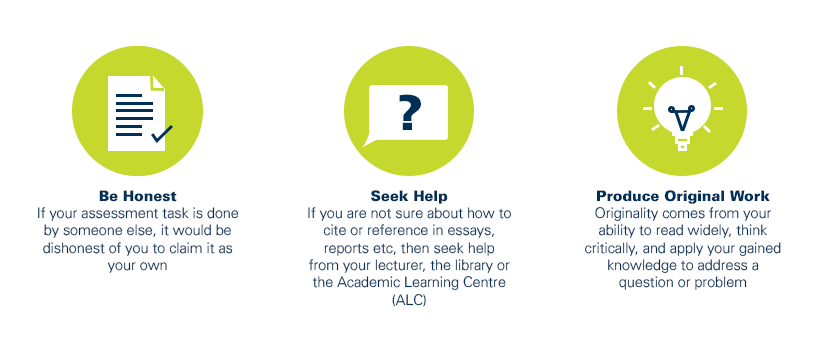
As a CQUniversity student you are expected to act honestly in all aspects of your academic work.
Any assessable work undertaken or submitted for review or assessment must be your own work. Assessable work is any type of work you do to meet the assessment requirements in the unit, including draft work submitted for review and feedback and final work to be assessed.
When you use the ideas, words or data of others in your assessment, you must thoroughly and clearly acknowledge the source of this information by using the correct referencing style for your unit. Using others’ work without proper acknowledgement may be considered a form of intellectual dishonesty.
Participating honestly, respectfully, responsibly, and fairly in your university study ensures the CQUniversity qualification you earn will be valued as a true indication of your individual academic achievement and will continue to receive the respect and recognition it deserves.
As a student, you are responsible for reading and following CQUniversity’s policies, including the Student Academic Integrity Policy and Procedure. This policy sets out CQUniversity’s expectations of you to act with integrity, examples of academic integrity breaches to avoid, the processes used to address alleged breaches of academic integrity, and potential penalties.
What is a breach of academic integrity?
A breach of academic integrity includes but is not limited to plagiarism, self-plagiarism, collusion, cheating, contract cheating, and academic misconduct. The Student Academic Integrity Policy and Procedure defines what these terms mean and gives examples.
Why is academic integrity important?
A breach of academic integrity may result in one or more penalties, including suspension or even expulsion from the University. It can also have negative implications for student visas and future enrolment at CQUniversity or elsewhere. Students who engage in contract cheating also risk being blackmailed by contract cheating services.
Where can I get assistance?
For academic advice and guidance, the Academic Learning Centre (ALC) can support you in becoming confident in completing assessments with integrity and of high standard.
What can you do to act with integrity?