Overview
This unit enables you to develop an advanced knowledge and understanding of the principles of Transfusion Science, building on the knowledge and understanding of the principles gained in earlier units. You will gain vital knowledge on topics such as safe blood storage and handling, blood typing and the detection and identification of antibodies significant in transfusion. You will also perform compatibility testing and discuss the potential adverse outcomes of blood transfusions plus pre-natal, antenatal and postnatal screening. You will be required to attend a compulsory residential school in Rockhampton and an assessment task will be completed on campus during this residential school. The theoretical and practical sessions will allow you to develop skills in critical steps necessary in providing safe blood for transfusion in routine and emergency situations.
Details
Pre-requisites or Co-requisites
Pre-requisites: BMSC12003 Haematology and Transfusion Science AND BMSC13009 Immunology OR BMSC13023 Applied Immunology
Important note: Students enrolled in a subsequent unit who failed their pre-requisite unit, should drop the subsequent unit before the census date or within 10 working days of Fail grade notification. Students who do not drop the unit in this timeframe cannot later drop the unit without academic and financial liability. See details in the Assessment Policy and Procedure (Higher Education Coursework).
Offerings For Term 2 - 2026
Attendance Requirements
All on-campus students are expected to attend scheduled classes - in some units, these classes are identified as a mandatory (pass/fail) component and attendance is compulsory. International students, on a student visa, must maintain a full time study load and meet both attendance and academic progress requirements in each study period (satisfactory attendance for International students is defined as maintaining at least an 80% attendance record).
Recommended Student Time Commitment
Each 6-credit Undergraduate unit at CQUniversity requires an overall time commitment of an average of 12.5 hours of study per week, making a total of 150 hours for the unit.
Class Timetable
Assessment Overview
Assessment Grading
This is a graded unit: your overall grade will be calculated from the marks or grades for each assessment task, based on the relative weightings shown in the table above. You must obtain an overall mark for the unit of at least 50%, or an overall grade of 'pass' in order to pass the unit. If any 'pass/fail' tasks are shown in the table above they must also be completed successfully ('pass' grade). You must also meet any minimum mark requirements specified for a particular assessment task, as detailed in the 'assessment task' section (note that in some instances, the minimum mark for a task may be greater than 50%). Consult the University's Grades and Results Policy for more details of interim results and final grades.
All University policies are available on the CQUniversity Policy site.
You may wish to view these policies:
- Grades and Results Policy
- Assessment Policy and Procedure (Higher Education Coursework)
- Review of Grade Procedure
- Student Academic Integrity Policy and Procedure
- Academic Progression Policy and Procedure
- Student Refund and Credit Balance Policy and Procedure
- Complaints Policy and Procedure
- Information and Communications Technology Acceptable Use Policy and Procedure
This list is not an exhaustive list of all University policies. The full list of University policies are available on the CQUniversity Policy site.
Feedback, Recommendations and Responses
Every unit is reviewed for enhancement each year. At the most recent review, the following staff and student feedback items were identified and recommendations were made.
Feedback from SUTE
Some students struggled to find time within the 12 hour availability to start the quizzes.
Review quiz availability to allow access to start the quizzes for a longer period of time.
Feedback from SUTE; self-reflection
Students found the volume of content high though necessary.
Review content volume and sequencing to ensure it is manageable.
Feedback from SUTE; Face to face
Students appreciated the unit coordinator's wealth of experience in real working laboratories and appreciated helping students better prepare for the real world.
Maintain sharing real life experiences as part of the teaching tool to meet current industry expectations.
- Discuss the production, labelling, storage and transportation of human blood products and their medical uses
- Perform advanced testing in Transfusion Science including pre-transfusion, compatibility testing, antenatal and the testing for autoantibodies
- Demonstrate the correct interpretation and reporting of test results in Transfusion Science in accordance with quality control requirements for laboratory practices.
- Examine the role of antibodies in erythrocyte destruction and their effect on the principles of transfusion including adverse transfusion outcomes
- Critique the importance of quality control in transfusion science and explain the results
- Discuss the factors contributing to adverse transfusion outcomes and their effects in transfusion science.
Competency Based Standards for Medical Scientists, reviewed 2022.
Unit 1: Collection, preparation and analysis of clinical material - Elements 1.1.1 - 1.1.3; 1.1.6 - 1.1.8; 1.2.4; 1.3.1 - 1.3.5; 1.5.1 - 1.5.5 & 1.6.1 - 1.6.8;
Unit 2: Correlation and validation of results of investigations using knowledge of method(s) including analytical principles and clinical information - Elements 2.1.1 - 2.1.2; 2.2.1; 2.3.1 & 2.3.2
Unit 3: Interpretation, reporting and issuing of laboratory results - Elements 3.1.1
Unit 4: Maintenance of documentation, equipment, resources and stock - Elements 4.2.1 - 4.2.6
Unit 5: Maintenance and promotion of safe working practices - Elements 5.1.3; 5.2.1; 5.3.4; 5.3.9; 5.4.1 - 5.4.5
Unit 6: Professional accountability and participation in continuing professional development - Elements 6.5.6 & 6.5.7
Alignment of Assessment Tasks to Learning Outcomes
| Assessment Tasks | Learning Outcomes | |||||
|---|---|---|---|---|---|---|
| 1 | 2 | 3 | 4 | 5 | 6 | |
| 1 - Online Quiz(zes) - 50% | ||||||
| 2 - Practical Assessment - 0% | ||||||
| 3 - Examination - 50% | ||||||
Alignment of Graduate Attributes to Learning Outcomes
| Graduate Attributes | Learning Outcomes | |||||
|---|---|---|---|---|---|---|
| 1 | 2 | 3 | 4 | 5 | 6 | |
| 1 - Communication | ||||||
| 2 - Problem Solving | ||||||
| 3 - Critical Thinking | ||||||
| 4 - Information Literacy | ||||||
| 5 - Team Work | ||||||
| 6 - Information Technology Competence | ||||||
| 7 - Cross Cultural Competence | ||||||
| 8 - Ethical practice | ||||||
| 9 - Social Innovation | ||||||
| 10 - First Nations Knowledges | ||||||
| 11 - Aboriginal and Torres Strait Islander Cultures | ||||||
Textbooks
Modern Blood Banking and Transfusion Practices
- Edition: 7th (2018)
- Authors: Denise M Harmening
- F.A. Davis Company
- Pennsylvania Pennsylvania , PA , USA
- ISBN: 9780803668881
- Binding: Hardcover
Basic & Applied Concepts of Blood Banking and Transfusion Practices
- Edition: 4th (2016)
- Authors: Paula R Howard
- Elsevier - Health Sciences Division
- St Louis St Louis , Missouri , USA
- ISBN: 9780323697392
- Binding: Paperback
Immunohaematology: Principles and Practice
- Edition: 3rd (2011)
- Authors: Eva D. Quinley
- Jones & Bartlett ( now BPS )
- Sydney Sydney , NSW , Australia
- ISBN: 978-0781782043
- Binding: Hardcover
Transfusion and Transplantation Science
- Edition: 2nd edn (2017)
- Authors: Avent, Neil
- Oxford University Press UK
- Oxford Oxford , UK
- ISBN: 9780198735731
- Binding: Paperback
Additional Textbook Information
If you prefer to study with a paper copy, they can be purchased at the CQUni Bookshop at: http://bookshop.cqu.edu.au (search on the Unit code).
eBook version of the prescribed textbook can be purchased at: https://www.fadavis.com/product/modern-blood-banking-transfusion-practices-harmening-7
Electronic access to prescribed and supplementary textbooks are available via the eReading Lists on the Moodle page.
IT Resources
- CQUniversity Student Email
- Internet
- Unit Website (Moodle)
All submissions for this unit must use the referencing styles below:
For further information, see the Assessment Tasks.
r.r.sharma@cqu.edu.au
Week 1
Begin Date: 13 Jul 2026Module/Topic
- Introduction to Advanced Transfusion Science
- Genetics
- Immunological Principles
Chapter
Part I – Chapter 1, pages 1-4; Chapters 2 and 3
Events and Submissions/Topic
Tutorial - Revision
Week 2
Begin Date: 20 Jul 2026Module/Topic
Blood Components and Blood Products
Chapter
Part 1 - Chapter 1, pages 4-11
Part III – Chapters 13, 14, 15, 16, 18
Events and Submissions/Topic
Tutorial - Week 1 content
Week 3
Begin Date: 27 Jul 2026Module/Topic
ABO and Rh Blood Group Systems
Chapter
Part I - Chapter 4
Part II – Chapters 6 and 7
Events and Submissions/Topic
Tutorial - Week 2 content
Week 4
Begin Date: 03 Aug 2026Module/Topic
- Other Common Blood Group Systems
- Uncommon Blood Group Systems
- Atypical Antibodies and the Coombs Test
Chapter
Part II - chapters 8, 9, 5
Events and Submissions/Topic
Tutorial - Week 3 content
Week 5
Begin Date: 10 Aug 2026Module/Topic
Principles of Serologic and Pretransfusion Compatibility Testing
Chapter
Part II – Chapters 10, 11
Events and Submissions/Topic
Tutorial - Week 4 content
Week 6
Begin Date: 17 Aug 2026Module/Topic
Clinical and Non-clinical Conditions Associated with Transfusion Science
Chapter
Part III – Chapters 17 and 21
Events and Submissions/Topic
Tutorial - Week 5 content
Vacation Week
Begin Date: 24 Aug 2026Module/Topic
Independent study week - an opportunity for self-directed learning and mid-unit revision.
Chapter
Events and Submissions/Topic
No lectures or tutorials
Week 7
Begin Date: 31 Aug 2026Module/Topic
Haemolytic Disease of the Foetus and the Newborn (HDFN)
Chapter
Part III – Chapter 20
Events and Submissions/Topic
Tutorial - Week 6 content
Week 8
Begin Date: 07 Sep 2026Module/Topic
Compulsory Residential School - Monday September 7th - Thursday September 10th, 2026.
Chapter
Laboratory Manual
Laboratory/Practical Workbook
Practical Assessment
Events and Submissions/Topic
No tutorials this week.
During this Residential School, your competency will be assessed on your ability to safely perform and correctly interpret and analyse a number of transfusion science techniques.
Week 9
Begin Date: 14 Sep 2026Module/Topic
- The HLA System
- Laboratory Processes of Haemopoietic Stem Cell Transplant (HSCT)
Chapter
Part II - chapters 19
Part IV - Chapters 23 and 24
Events and Submissions/Topic
Tutorial - Week 7 content
Week 10
Begin Date: 21 Sep 2026Module/Topic
Quality Assurance, Quality Control, Regulatory and Compliance Issues
Chapter
Part V – Chapters 25, 26, 28, 29
Events and Submissions/Topic
Tutorial - Week 9 content
Week 11
Begin Date: 28 Sep 2026Module/Topic
- Transfusion of Specific Blood Factions
- Automation in Transfusion Science
Chapter
Part I - Chapter 1 - pages 11-19
Part III - Chapter 16
Part II – Chapter 12
Events and Submissions/Topic
Tutorial - Week 10 content
Week 12
Begin Date: 05 Oct 2026Module/Topic
Unit revision and exam preparation.
- Transfusion Science in Summary.
Chapter
Events and Submissions/Topic
Tutorial - Week 11 content
Discussion forum + Revision
Exam Week
Begin Date: 12 Oct 2026Module/Topic
Chapter
Events and Submissions/Topic
The End-of-unit exam will be scheduled in the CQUniversity examination period between 12/10/26 - 20/10/26.
Vacation/Exam Week
Begin Date: 19 Oct 2026Module/Topic
Chapter
Events and Submissions/Topic
This unit will be coordinated and delivered by Ms Roxzina (Roxina) Sharma; email: r.r.sharma@cqu.edu.au
Ms Sharma is a Brisbane based lecturer with over 32 years of industry experience (specialised haematology and transfusion science) and over 16 years of teaching experience in the field of transfusion science.
PRE-REQUISITES
BMSC12003 Haematology and Transfusion Science AND BMSC13009 Immunology OR BMSC13023 Applied Immunology
TEXTBOOKS
Students have e-access to their prescribed textbook, additional reading resources and some of the supplementary textbooks via the eReading Lists on the Moodle page.
LECTURES
Pre-recorded lectures will be used throughout the term and will be available to students at least a week prior to the start of each lecture week. Students are to watch the lectures and complete the weekly study questions prior to the weekly tutorials.
TUTORIALS
Live tutorial / discussion forum / quiz sessions will be delivered online in all weeks except in residential school week. You must participate in both tutorials and pre-recorded lectures to obtain all necessary information for the unit. It is advisable to review the weekly lectures before each tutorial / discussion / quiz session. Weekly study questions are also provided to reinforce the knowledge you have gained from the lectures and to support your learning experience in this unit. Studies have shown that students who attend the tutorials and participate in discussions have higher rates of success (Karnik et al., 2020).
RESIDENTIAL SCHOOL
Attendance to the Residential School at the Rockhampton campus is COMPULSORY for all students, further details are provided on your Moodle page.
COMMUNICATION
Students are encouraged to use the Moodle Q&A for all communication purposes, except for those of a personal nature. This will be monitored and responded to in a timely manner (within 48 hours).
WORK EXPECTATION
There are no resubmissions of assessments in this unit. You must earn an overall grade of 50% to pass this unit.
As per Australian educational standards, you are expected to commit 150 hours of engagement to your study of this unit. This is broken down as:
3 - 4 hours per week watching pre-recorded lectures and revising the content through study notes and weekly reading materials from the e-Reading Lists.
2 - 3 hours per week completing the weekly study questions and other material on the unit's Moodle site.
1 - 2 hours per week attending the weekly tutorial and contributing to discussions and reflecting on your answers to the weekly study questions.
3 - 4 hours per week preparing your assessments or studying for end of term exams.
Karnik, A., Kishore, P., & Meraj, M. (2020). Examining the linkage between class attendance at university and academic performance in an International Branch Campus setting. Research in Comparative and International Education, 15(4), 371-390. https://doi.org/10.1177/1745499920958855
1 Online Quiz(zes)
These quizzes will cover key concepts, theories, and practical applications discussed in the lectures, tutorials and readings.
- There will be two (2) separate online quizzes to assess your knowledge of the unit material. Each quiz will consist of true/false statements, short and long answer questions.
- The topics examined, weighting and the open and closing dates are outlined below. Each quiz MUST BE completed during the specific times. In the absence of an approved extension, there will be no opportunity to complete the task after the assigned date. A 72-hour grace period does not apply to this assessment items.
- You are allowed ONE (1) attempt on each quiz. Once you start the quiz, you will have a set time to complete it.
- You MUST PASS this assessment. The minimum overall mark required to pass this assessment task is 50% of the cumulative marks of both quizzes (1and 2).
Level of GenAI use allowed:
Level 1: You must not use Al at any point during this assessment. You must demonstrate your core skills and knowledge.
| QUIZ | TOPICS ASSESSED | WEIGHTING | DATE QUIZ OPENS | DATE QUIZ CLOSES |
| 1 | Weeks 1 - 5 | 25% | week 7, Thursday 03.09.26, 7 am | week 7, Friday 04.09.26, 7 am |
| 2 | Weeks 6 - 9 | 25% | Week 10, Thursday 24.09.26, 7am | Week 10, Friday 25.09.26, 7am |
See "Task Description" above.
Results and feedback will be released after completion of each quiz.
These quizzes will evaluate the following.
- Your understanding of key concepts.
- Your ability to problem solve using key concepts.
- Your retention of the course material throughout the term.
- Discuss the production, labelling, storage and transportation of human blood products and their medical uses
- Demonstrate the correct interpretation and reporting of test results in Transfusion Science in accordance with quality control requirements for laboratory practices.
- Examine the role of antibodies in erythrocyte destruction and their effect on the principles of transfusion including adverse transfusion outcomes
- Critique the importance of quality control in transfusion science and explain the results
- Discuss the factors contributing to adverse transfusion outcomes and their effects in transfusion science.
2 Practical Assessment
For Medical Scientists working in a Transfusion Laboratory, it is essential that laboratory techniques are performed and interpreted correctly each and every time. Failure to do so may lead to potentially fatal consequences. For this reason, demonstration of individual practical competence is vital.
During the residential school you will complete the following.
Part (A) Compulsory Practical Workbook (Pass/Fail): Students are required to transcribe all results and interpretations of each practical task in the relevant sections of this workbook. Completion of the workbook will evidence student engagement and understanding of the principles behind compatibility testing for safe transfusion practices. Use of pencils and correcting fluid are not permitted for transcription in this assessment item. You must achieve a minimum of 80% marks to pass this assessment.
Part (B) Laboratory Practical Assessment (Pass/Fail): You will undertake an invigilated practical assessment in the last session of the residential school. You will be provided with a patient sample and a number of donor units to determine compatibility for safe transfusion outcomes. You will be required to accurately perform routine blood banking techniques to obtain valid results leading to the prevention of adverse transfusion outcomes. Use of pencils and correcting fluid are not permitted for transcription in this assessment item. You must achieve a minimum of 80% marks to pass this assessment.
Students that are unable to achieve a pass grade in their first attempt will be offered one (1) reattempt on the same day at the residential school.
Please note a 72-hour grace period does not apply to Part A and Part B of this assessment item.
Level of GenAI use allowed:
Level 1: You must not use Al at any point during the assessment. You must demonstrate your core skills and knowledge.
This assessment task must be completed during the mandatory residential schools.
Results and feedback will be provided at the end of the Residential School Session, after completion of Part A and Part B of this assessment task.
Part (A) Compulsory Practical Workbook (Pass/Fail): will be marked in class during the course of the Residential School at completion of each task.
Students will be assessed on the following criteria.
- Correct interpretation and explanation of results.
- Demonstrate critical thinking ability in how you derived your conclusions from the clinical information provided.
- Ability to define key concepts related to practical task performed during residential school.
Part (B) Laboratory Practical Assessment (Pass/Fail):
You will be assessed on accurately performing the following criteria.
- Correct patient and sample identification.
- Correct interpretation of testing techniques.
- Obtain and correctly transcribe valid results.
- Correctly analyse results using critical thinking.
- Determine compatibility of the donor units with a patient sample.
- Explain how your results have achieved safe transfusion outcomes.
Students who fail the 1st attempt will be granted a second attempt. The second attempt will be conducted in the second half of the final day, prior to completion of the residential school session.
- Perform advanced testing in Transfusion Science including pre-transfusion, compatibility testing, antenatal and the testing for autoantibodies
- Demonstrate the correct interpretation and reporting of test results in Transfusion Science in accordance with quality control requirements for laboratory practices.
- Examine the role of antibodies in erythrocyte destruction and their effect on the principles of transfusion including adverse transfusion outcomes
Examination
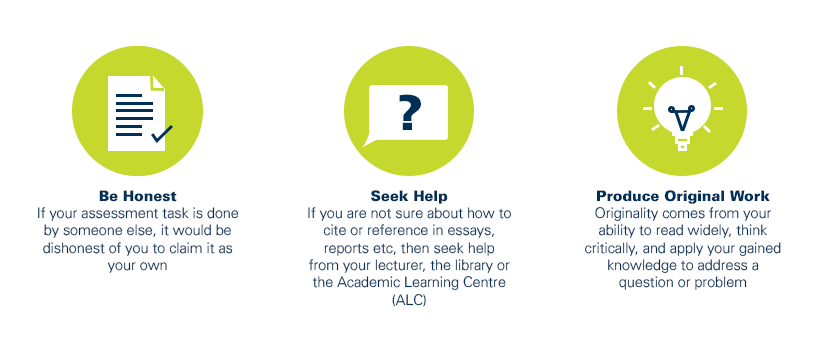
As a CQUniversity student you are expected to act honestly in all aspects of your academic work.
Any assessable work undertaken or submitted for review or assessment must be your own work. Assessable work is any type of work you do to meet the assessment requirements in the unit, including draft work submitted for review and feedback and final work to be assessed.
When you use the ideas, words or data of others in your assessment, you must thoroughly and clearly acknowledge the source of this information by using the correct referencing style for your unit. Using others’ work without proper acknowledgement may be considered a form of intellectual dishonesty.
Participating honestly, respectfully, responsibly, and fairly in your university study ensures the CQUniversity qualification you earn will be valued as a true indication of your individual academic achievement and will continue to receive the respect and recognition it deserves.
As a student, you are responsible for reading and following CQUniversity’s policies, including the Student Academic Integrity Policy and Procedure. This policy sets out CQUniversity’s expectations of you to act with integrity, examples of academic integrity breaches to avoid, the processes used to address alleged breaches of academic integrity, and potential penalties.
What is a breach of academic integrity?
A breach of academic integrity includes but is not limited to plagiarism, self-plagiarism, collusion, cheating, contract cheating, and academic misconduct. The Student Academic Integrity Policy and Procedure defines what these terms mean and gives examples.
Why is academic integrity important?
A breach of academic integrity may result in one or more penalties, including suspension or even expulsion from the University. It can also have negative implications for student visas and future enrolment at CQUniversity or elsewhere. Students who engage in contract cheating also risk being blackmailed by contract cheating services.
Where can I get assistance?
For academic advice and guidance, the Academic Learning Centre (ALC) can support you in becoming confident in completing assessments with integrity and of high standard.
What can you do to act with integrity?